
society
Ambassador Ajadi Pays Homage to Head of His Father’s Lineage, CCII President-General Chief Bode Amoo

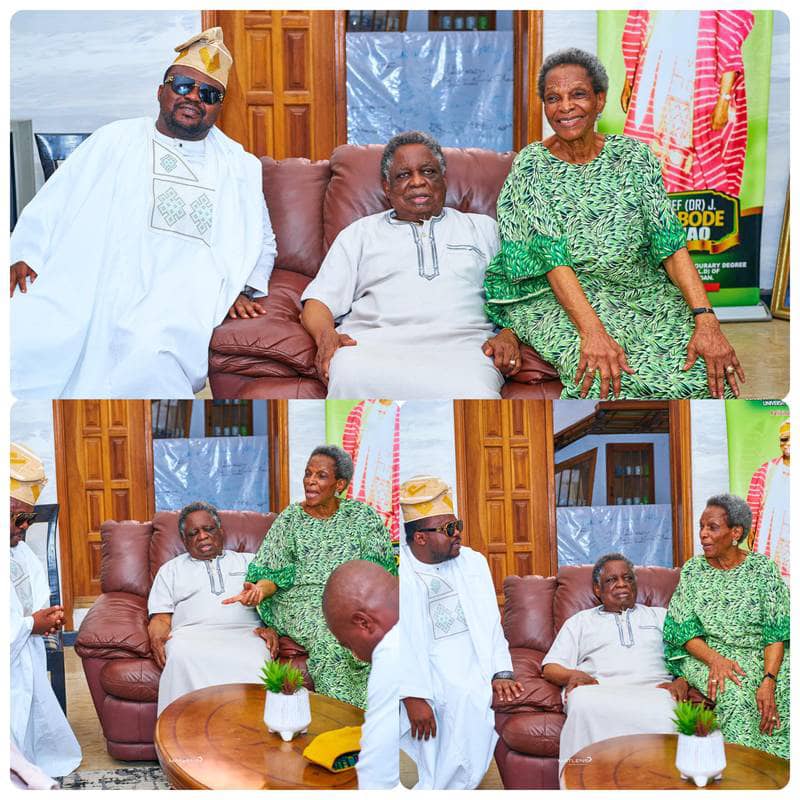
Ambassador Ajadi Pays Homage to Head of His Father’s Lineage, CCII President-General Chief Bode Amoo
In a momentous visit blending family heritage with tradition and legacy, the South West Chieftain of the New Nigeria People’s Party (NNPP), Ambassador Olufemi Ajadi Oguntoyinbo, on Thursday, June 19, paid a courtesy visit to the patriarch of his family lineage, Chief Bode Amoo—Head of his father’s lineage, revered industrialist, and Chairman of Bode Foams—at his residence in Ibadan, Oyo State.
Chief Bode Amoo stands as a towering figure not only in Ibadan’s illustrious history but also within the distinguished Amoo family. As the elder brother to the late Ajadi SOLA-WEST of Ibadan, a highlife musician—father of Ambassador Olufemi Ajadi Oguntoyinbo—Chief Amoo has long held the torch of family integrity, discipline, and purposeful leadership. He is more than a patriarch; he is a living testament to the values that have guided generations of the Amoo family and inspired broader societal development.
A renowned industrialist and business magnate, Chief Amoo carved his name into Nigeria’s economic narrative by becoming the first Nigerian to introduce the Sony President brand into the country. Through his leadership as Chairman of Bode Foams, he played a pivotal role in boosting indigenous manufacturing, creating employment opportunities, and fostering entrepreneurship long before it became a mainstream policy.
Beyond business, Chief Amoo is celebrated for his extensive social contributions. As a two-time leader of the Central Council of Ibadan Indigenes (CCII)—first as President and now as President-General—his tenure has been marked by unity, innovation, and infrastructural progress for Ibadanland. His leadership within the CCII has left a legacy of peace, purposeful dialogue, and cultural preservation, earning deep respect across Oyo State and beyond.
To the Amoo family, he is the steadfast elder who has upheld the bond of kinship through consistency, godly counsel, and visible commitment to the wellbeing of the clan. His quiet investments in education, moral discipline, and youth mentorship have earned him reverence from both his contemporaries and the younger generation.
As the elder brother to the late Ajadi, Chief Bode Amoo played a foundational role in shaping the values and future of the next generation—including his nephew, Ambassador Olufemi Ajadi Oguntoyinbo, who today embodies the family’s enduring legacy of integrity and service to humanity. The values Ajadi demonstrates in politics—truthfulness, godliness, and philanthropy—are, in no small measure, rooted in the moral heritage sustained by Chief Amoo.
At over 90 years old, Chief Amoo remains a national symbol of elder statesmanship, entrepreneurial excellence, and family-centered leadership. His life is a continuous story of how personal discipline and a sense of communal duty can shape history.
The meeting was not just familial—it became a convergence of history, vision, and counsel, as Chief Amoo offered fatherly advice and political blessings to Ajadi.
Legacy Meets Leadership
Chief Amoo shared personal anecdotes from his leadership journey, emphasizing that he never sought power for selfish gain. “The day I agreed to become the president, I was elected unopposed. I told them someone else should be given the opportunity, but they insisted,” Amoo recalled.
He noted that Ajadi’s character aligns with the legacy of integrity that defines their lineage. “A good name is better than gold and silver, and that has always been my legacy. I’m happy that you’re upholding that,” he added.
A Call for God-Fearing Leadership
Chief Amoo lamented the state of Nigeria’s economy. “Many white-owned companies are leaving the country due to the moribund economy. We pray that Almighty God helps us in reviving the bad occurrences into good ones.”
His prayer was heartfelt and clear: “May Almighty God grant peace in Ibadan, Oyo State, and the entire land.”
He also expressed satisfaction upon hearing positive reports about Ajadi. “Ajadi, continue in what you are known for—a politician with the fear of God and reliable promises.”
Ajadi Responds with Humility
In response, Ambassador Ajadi expressed gratitude for the warm reception and words of wisdom, pledging to live up to the expectations placed upon him.
“Chief Bode Amoo is not just a family head; he is a symbol of discipline, entrepreneurship, and public service. To receive his blessing and advice is a great honour,” Ajadi said.
Known for his grassroots engagement and youth development advocacy, Ajadi is increasingly seen as a rising political figure in South West Nigeria. He has maintained a reputation for transparency, philanthropy, and a pro-people ideology through his initiatives in both the private and political sectors.
Dignitaries in Attendance
Prominent individuals who accompanied Ajadi included Comrade Kilamuwaye Badmus Bako, the NNPP South West Public Relations Officer, and Hon. Kehinde Teluwo, the party’s 2023 Ogun Central Senatorial candidate.




FOPCHEN Seeks Wider Engagement As Court Defers Hearing
OTA, OGUN STATE — The High Court of Ogun State, Ota Division, on Thursday resumed hearing in the ongoing matter involving cultural and societal concerns, before adjourning proceedings till Thursday, July 2, 2026, for continuation of hearing.
At the resumed sitting on May 28, 2026, counsel representing the various parties revisited key issues in the case and made further submissions before the court.
The matter, which has continued to generate public interest across different sectors, again drew attention from legal observers and stakeholders who described the case as one with significant implications for societal values, cultural identity and constitutional interpretation.
Speaking after the proceedings, the Foundation for the Protection of Cultural Heritage in Nigeria, popularly known as FOPCHEN, renewed its appeal for dialogue and constructive engagement among Nigerians, stressing that sensitive cultural and moral issues should not be left entirely within the confines of the courtroom.
According to the group, broader conversations involving traditional institutions, civil society organisations, religious leaders and policy stakeholders remain necessary in addressing issues relating to national values and social responsibility.
Legal analysts at the court premises noted that arguments being canvassed by parties in the suit could shape future legal interpretations surrounding cultural and moral questions in the country.
Following submissions by counsel, the presiding judge adjourned the matter till Thursday, July 2, 2026, to enable parties further prepare and respond to issues raised during the hearing.
The development has continued to spark reactions among observers, with many Nigerians closely monitoring the proceedings ahead of the next hearing date.

US-Based Society Lady, Fehintola-Brat Extends Eid-El-Kabir Greetings To Muslims
United States based fahionista of class, Chief (Mrs) Ayoola Fehintola-Brat has extended a warm greetings to Muslim faithful all over the world on the occasion of the 2026 Eid-El-Kabir celebration.
Fehintola-Brat who is the Balogun Egbe Obaneye Obinrin Akile Ijebu, and the Yeye Asofin of Idenaland in her message to Journalists urged Muslim to continually uphold the enduring values of sacrifice, obedience, faith, and compassion, which are central to the significance of Eid-El-Kabir festival.
A quiet philantropist whose humanitarian services has won her several laurels urged Muslims to use the spiritual occasion to pray for the peace co-existence of Nigerians regardless of religious, social and political leanings stressing that the oneness of the country should not be underplay.
In a related development, she expressed her felicitations to all sons and daughters of Ijebuland on the forthcoming Ojude Oba 2026 celebration, tasking age-groups otherwise known as Regbregbe to be more proactive in giving back to their immediate communities.
According to her, the beauty of the age-groups in Ijebuland is the need to contribute immensely to the development of the land in no small means. “This we will continue to achieve with God on our side”, she concluded.
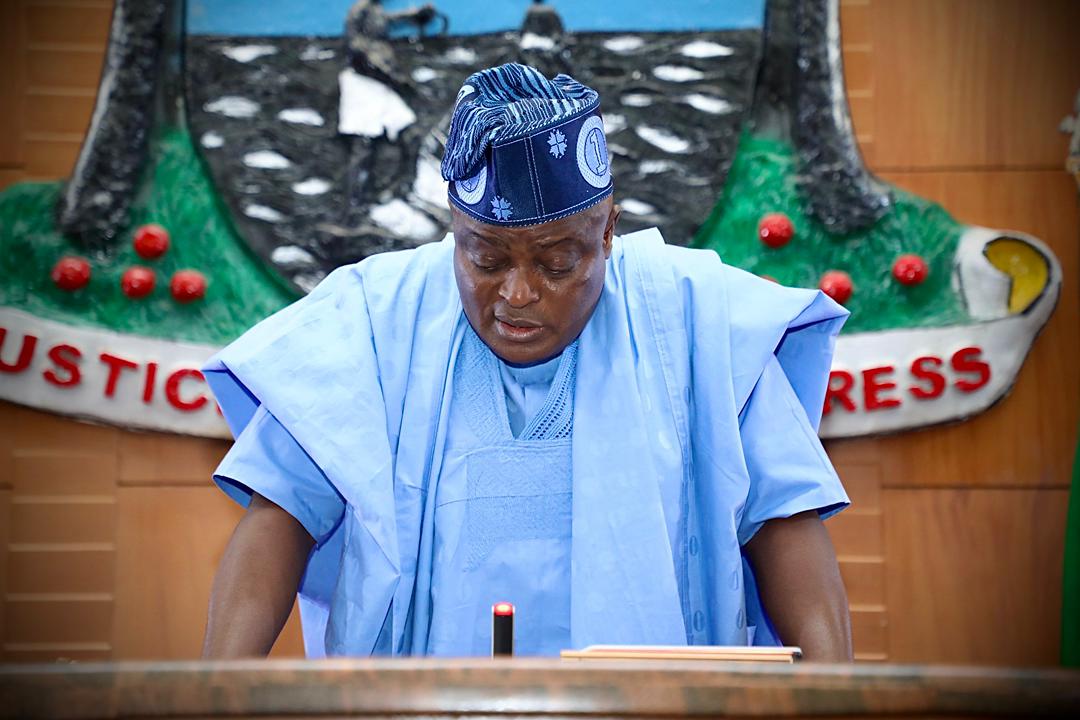
Sallah: Obasa Felicitates Muslim Ummah, Commends Nigerians for APC Primaries Turnout
The Speaker of the Lagos State House of Assembly, Rt. Hon. Mudashiru Obasa has extended warm felicitations to Muslims in Lagos State and across Nigeria on the occasion of Eid al-Adha.
In a statement released by his Chief Press Secretary, Mr. Dave Agboola, Obasa described the festival as a season of sacrifice, reflection, and gratitude, urging the faithful to continue to uphold the values of peace, unity, and love that strengthen the nation.
He noted that the celebration of Eid al-Adha is not only a spiritual milestone but also a reminder of the importance of togetherness and collective responsibility in building a stronger society.
He, likewise, emphasized that the festival provides an opportunity for Nigerians to renew their commitment to national progress and to support leadership that prioritizes development and prosperity.
Obasa, however, commended Nigerians, particularly members of the All Progressives Congress (APC), for their massive turnout during the recently concluded party primaries. He described the participation as a clear demonstration of the people’s confidence in the government of President Bola Ahmed Tinubu and their belief in the administration’s vision for a greater Nigeria.
“The APC primaries have shown the resilience of our democracy and the confidence Nigerians have in the leadership of President Bola Ahmed Tinubu and the Renewed Hope Agenda. This is a strong message that our people are ready to continue supporting policies that will drive growth and prosperity,” Obasa stated.
The Speaker further encouraged Muslims to celebrate responsibly, stressing that the joy of Eid should be accompanied by prayers for the continued peace and progress of Lagos State and Nigeria.
“As you celebrate with family and loved ones, may this season bring joy, peace, and prosperity to your homes. Let us remain united in our resolve to build a stronger nation,” he added.
On behalf of the Lagos State House of Assembly, Obasa wished all Muslims a happy and fulfilling Eid al-Adha celebration.


- Société Nationale des Pétroles du Congo (SNPC) Chief Ominga to Speak at African Energy Week (AEW) 2026 as Congo Accelerates Gas Expansion May 29, 2026
- South Africa: Deputy President Mashatile arrives in India for a Working Visit May 29, 2026
- Seychelles: President Visits Key Development Sites on Coetivy Island May 29, 2026
- Accelerating regional action to advance mental health care in Africa May 29, 2026
- President of the Republic of Seychelles Meets Young La Digue Talent Ahead of London Showcase May 29, 2026
- United Nations Economic Commission for Africa (ECA) launches regional initiative to accelerate women’s digital entrepreneurship across four African countries May 29, 2026
- Ethiopia: International community must act to safeguard press freedom ahead of national election May 29, 2026
- CORRECTION: Annual Meetings 2026 (AM2026): African Development Bank (AfDB) 2025 Trade Finance Report Highlights Resilience of African Financial Institutions After Covid-19 May 29, 2026
- Why Big Tech Could Become Nigeria’s New Gas Partner May 29, 2026
- African Energy Chamber (AEC)-Venezuela Alliance Accelerates Pathways into South-South Energy Expansion May 29, 2026
- Société Nationale des Pétroles du Congo (SNPC) Chief Ominga to Speak at African Energy Week (AEW) 2026 as Congo Accelerates Gas Expansion May 29, 2026
- South Africa: Deputy President Mashatile arrives in India for a Working Visit May 29, 2026
- Seychelles: President Visits Key Development Sites on Coetivy Island May 29, 2026
- Accelerating regional action to advance mental health care in Africa May 29, 2026
- President of the Republic of Seychelles Meets Young La Digue Talent Ahead of London Showcase May 29, 2026
- United Nations Economic Commission for Africa (ECA) launches regional initiative to accelerate women’s digital entrepreneurship across four African countries May 29, 2026
- Ethiopia: International community must act to safeguard press freedom ahead of national election May 29, 2026
-

 news6 months ago
WHO REALLY OWNS MONIEPOINT? The $290 Million Deal That Sold Nigeria’s Top Fintech to Foreign Interests
-

 society4 weeks ago
SOCIAL MEDIA IS NOT A BATTLEFIELD COMMAND – WHY THE NIGERIAN ARMY’S ACTION AGAINST JUSTICE CRACK IS A NATIONAL SECURITY IMPERATIVE
-

 celebrity radar - gossips4 months ago
Dr. Chris Okafor Returns with Power and Fire of the Spirit -Mounts Grace Nation Altar with Fresh Anointing and Restoration Grace on February 1, 2026
-

 celebrity radar - gossips6 months ago
Prophet Kingsley Aitafo Releases 2026 Prophecy: ‘Nigeria Will Rise, but the World Must Prepare for Turbulence’