Connect with us

Politics

Ambode Planning To Leave APC? Ah Ah, Haba!

Published

on

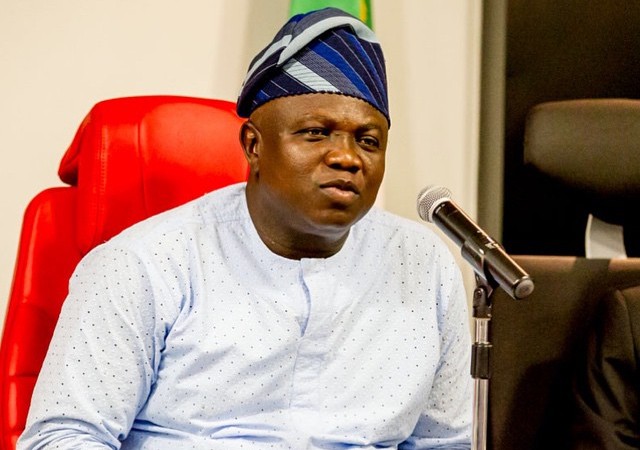
Yesterday, I again stumbled on a report making the rounds that Lagos State Governor, Akinwunmi Ambode is planning to defect to another party over alleged conclusion of All Progressives Congress, APC leadership, especially Asiwaju Bola Ahmed Tinubu to replace him with another governorship candidate in the 2019 elections. Haba! Kilode?
The report specifically claimed that Ambode had told his aides that he was pondering defecting to either the Peoples Democratic Party (PDP) or the African Democratic Congress (ADC) should the APC leadership deny him a second term ticket.
The same report also claimed that former Speaker of the Lagos State House of Assembly, Hon. Adeyemi Ikuforiji, who is also an indigene of Epe, is being touted as Ambode’s likely replacement by the APC leadership.
Before addressing the tissue of lies the author of such malicious report purported, I need to quickly place it on record that this same Ikuforiji came out openly to dismiss such claim, describing it as the handiwork of mischief makers and detractors within the party. So I would rather not dwell on that issue, since we have heard from the horses’ mouth.
However, what baffles me is the wicked suggestion that our Governor intends to leave the APC, a party that he has struggled to build over the last three years. This is sacrilege, unbelievable and absolutely despicable! As a keen follower of the political developments in the Centre of Excellence, I know for sure that this is a hoax and a cheap blackmail. It is totally baseless and unfounded.
This is the pastime of detractors and more so in this era of social media where anybody with access to the internet can sit down and conjure falsehood and present it as the truth, one would not be too surprised about this report. Personally, I am not surprised that shameless elements are again up in arms and putting up crass report since it aligns with their evil agenda to cling to any straw in a desperate attempt to denigrate the government of the day in Lagos.
What we all know to be true is that there is no such plan by the governor to seek reelection in 2019 on the platform of another party other than the APC. Why should he anyway when he is the acknowledged poster boy of the party right now!
The Governor has spent the last three years in transforming the State through sterling projects and programmes and it is glaring even to his critics that the State has been moved a notch higher since he assumed office and he is ever ready to surpass what he has already achieved in the second term.
People should also care to note that this is the season of political jobbers and more of such baseless, unfounded and irresponsible report would find its way to the open space before the elections and so, the public should be wary of such malicious fabrications targeted at creating disaffection and confusion where none exists.
By Mr. Henry Gbadebo

Politics

Hon. Olusegun Amore Clears APC Screening for Ogun Assembly Race, Promises Purposeful Representation for Yewa South

Published

on

Hon. Olusegun Amore Clears APC Screening for Ogun Assembly Race, Promises Purposeful Representation for Yewa South


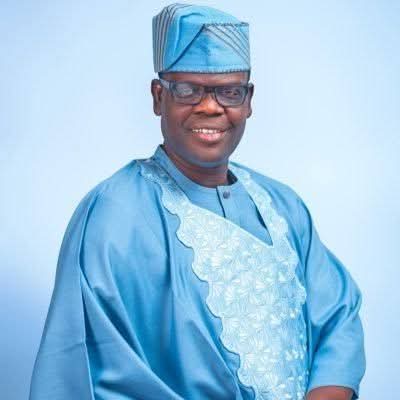
ABEOKUTA, OGUN STATE, NIGERIA – In a bold and strategic move towards deepening quality representation, grassroots development, and people-oriented governance, Hon. Olusegun Olugbemileke Amore has officially obtained and successfully passed the screening exercise of the All Progressives Congress (APC) to contest for the Yewa South Local Government State Constituency seat at the Ogun State House of Assembly.

This development has continued to generate excitement, hope, and widespread acceptance among party faithful, political stakeholders, youths, women groups, and residents across Yewa South, many of whom see Hon. Amore as a vibrant, visionary, and grassroots-oriented leader with the competence, capacity, and character required to deliver purposeful representation.

Hon. Amore, who is widely respected for his humility, accessibility, leadership qualities, and unwavering commitment to community development, explained that his decision to join the race was driven by his passion to serve the people, attract meaningful development, and become a strong voice for the aspirations of Yewa South at the state legislative level.

According to him, the time has come for a new era of responsive representation anchored on youth inclusion, infrastructural advancement, educational support, empowerment initiatives, and people-centered legislation capable of positively impacting every ward and community within the constituency.

Speaking shortly after successfully scaling through the APC screening exercise, Hon. Amore expressed appreciation to party leaders, members, supporters, political associates, and well-wishers for their encouragement, trust, and overwhelming support.

He reaffirmed his loyalty and commitment to the ideals and progressive philosophy of the APC, while promising to run an issue-based, peaceful, and inclusive campaign that would further unite the people and strengthen the party ahead of the forthcoming elections.

Hon. Amore further stressed that Yewa South deserves quality representation that will prioritize youth empowerment and employment opportunities, improved educational support and scholarship initiatives, better road infrastructure and rural development, agricultural and economic advancement, enhanced healthcare delivery, and effective legislative advocacy capable of attracting greater government presence and developmental projects to the constituency.

As consultations, mobilization, and political engagements continue across Yewa South, many supporters have expressed confidence that Hon. Olusegun Olugbemileke Amore possessed the experience, credibility, leadership capacity, and political will needed to effectively represent the interests of the constituency and contribute meaningfully to the continued progress and development of Ogun State.

Indeed, the journey towards a greater, stronger, and more prosperous Yewa South appears to have gained renewed momentum with the emergence of Hon. Olusegun Olugbemileke Amore as a formidable aspirant under the progressive banner of the APC.

Political observers and supporters have also described Hon. Amore’s aspiration as a welcome development, citing his longstanding relationship with the grassroots, dedication to humanitarian causes, and passion for community growth and political inclusiveness.

The Ogun State House of Assembly remains the legislative arm responsible for lawmaking, oversight functions, and the promotion of effective governance across the state.

Continue Reading

Politics

2027 BATTLE: How Much Nigeria Can Save, Invest In Infrastructure By Rotating Power Among Six Geo-political Zones For A Single Term Of Five Or Six Years

Published

on

2027 BATTLE: How Much Nigeria Can Save, Invest In Infrastructure By Rotating Power Among Six Geo-political Zones For A Single Term Of Five Or Six Years

As a Southernern, particularly from the South East Geo-Political Zone, I believe the most potent argument for us in 2027 is that the North/South zoning arrangement of political power at the center is a scam. It’s a scam because it has only benefitted the South West and the North West geo-political zones since the return of ‘democracy’ (civil rule) in Nigeria on May 29, 1999. Nigeria, it must be clarified has six geo-political zones, not two.

Nigeria was divided into six geo-political zones in 1996 by the military government of General Sanni Abacha. This new zoning arrangement was a brainchild of the 1994/1995 Constitutional Conference chaired by the late Justice Adolphus Karibi-Whyte and empaneled by General Sanni Abacha.

At that Conference, no less a person than former Vice President Chief Alex Ekwueme and a group called Mkpoko Igbo proposed that since Nigeria will now be divided into six geo-political zones, to give all zones a sense of belonging within the Nigerian State, that power at the center should rotate among the six geo-political zones for a single term of five or six years. In their thinking, if power was rotated among the six geo-political zones for a single term of five or six years, within 30 years or 36 years, all six zones would have had one of their own leading Nigeria, particularly, from their first 11 (primus inter pares). The North and the South West delegations at that conference pooh-poohed Chief Alex Ekwueme and summarily shut down that all-important proposal. The rest they say is history.

More than 30 years later, there is yet no national peace, national cohesion, national political stability, national unity, and national loyalty to the Nigerian State. Had the proposal of Chief Alex Ekwueme and Mkpoko Igbo been adopted and implemented since 1999, at least, the 5th Geo-Political Zone would have had one of their own in Aso Villa today, and by 2035, the last geo-political zone would have being sending us one of their own to contest the Presidency across Nigeria’s current 18 political parties. This mathematics is if we had gone with a single term of six years (the maximum limit) as proposed by Dr. Ekwueme and the South East and South South delegates in that 1994/1995 Constitutional Conference.

Fast forward to today, in his recent Arise TV interview, and in some other public and private fora, H.E. Atiku Abubakar asked for Dr. Ekwueme’s forgiveness as he was among key Northern delegates in that Constitutional Conference from the Shehu Musa Yar’Adua group that opposed the rotational presidency among Nigeria’s geo-political zones. Waziri Adamawa had disclosed that he even apologized to Alex Ekwueme when he visited Oko, Anambra State, to pay homage to the former late vice president sometime in 2017/2018.

By and large, for 2027, I believe that the most potent argument that will sell in the South East is that the North East where Waziri Adamawa hails from, just like the South East (our region), had also been marginalized in the scheme of things in Nigeria. Aside from Alhaji Tafawa Balewa from Bauchi State (North East), nobody from the region/zone has been head of national government, head of state, or even president since 1966.

So, H.E. Atiku Abubakar is right in contesting the Presidential election billed for January 16, 2027, to right this wrong, and return Nigeria’s presidency to an equitable distribution of power at the center. When elected, and it’s entrenched in the Nigerian 1999 Constitution (as amended), that power rotates among the six geo-political zones for a single term of five or six years, this new formula will bring about national peace, national cohesion, national unity, and tremendously commandeer national loyalty among Nigerians from across the six geo-political zones for their beloved country, the Nigerian State.

As a budding political scientist of repute and ardent student of contemporary Nigerian history and politics, let me tell us what this formular would do for the Nigerian State. The battle for the soul of the Nigerian State will be ferocious at the zonal level, while the center will become unattractive. So, let’s say it is the turn of the North East Geo-Political Zone to produce the Presidency in 2027, the battle to gift Nigerians their First 11 (primus inter pares) will be ferocious across the States in the region. The people of Adamawa, Bauchi, Borno, Gombe, Taraba, and Yobe will now be more interested in partisan politics, thus being proactive participants within the current 18 political parties in Nigeria.

Giving Nigeria’s configurations and peculiarities, one of the positives of this political proactiveness is that it’s a win-win situation for the entire region if a man from Adamawa becomes President of Nigeria in 2027. The people from Yobe, Borno, Taraba, Gombe, and Bauchi will be largely happy, contented, hold their peace, love Nigeria better, and be more loyal to the Nigerian State because one of their own is now the GCFR, the primus inter pares, and the No. 1 Citizen of the Federal Republic of Nigeria. The steep insecurity that has ravaged the North East Geo-Political Zone since 2009, largely owing to perceived agelong marginalisation, oppression, injustices, would largely die down.

This will be the same case for the South East Geo-Political Zone. Biafra secessionist agitations, IPOB, ESN led by Nnamdi Kanu, will die a natural death. Justice and equity for all breeds contentment among men, and contentment among men births peace, unity, commandeers loyalty, and tremendously brings about prosperity. I stand to be challenged on this self-evident truth on any national television station.

When it is the turn of another region to produce the Presidency, after the North East has had their turn, all political parties in Nigeria must constitutionally present a Presidential candidate from the region whose turn it is to produce the presidency for a single term of six years. This rotational presidency formula must be entrenched in Nigeria’s 1999 Constitution (as amended) by May 29, 2027.

I avow that rotational presidency among Nigeria’s six geo-political zones for a single term of five or six years is the best political science solution to the agelong hydra-headed problem of Nigeria, especially in the guise of disunity, unpeaceful, and disloyalty problems among Nigerian citizens. Doing this will also largely curtail the executive rascalities, legislative rascalities, and judicial rascalities currently being perpetrated by the Bola Ahmed Tinubu led Executive arm; the Godswill Akpabio led Legislative arm; and the CJN Kudirat Motonmori Olatokunbo Kekere-Ekun led Judiciary arm.

The over desperation of getting re-elected for a second term in office, as shown today by Bola Tinubu, will be eraced for future Nigerian Presidents. The humongous money and depletion of Nigeria’s national treasury just for seeking re-election at all cost, and conducting elections will also be erased.

The Highfalutin, Draining Cost Of Conducting Elections In Nigeria?

For the 2023 general election, the Independent National Electoral Commission (INEC) proposed N305 billion in May 2022, which was a 62 percent increase over the 2019 budget. Ultimately, the National Assembly approved N355 billion for the exercise, though the commission spent N313.4 billion as of September 2023.

For the 2027 general election, INEC Chairman Prof. Joash Amupitan proposed a total budget of N873.78 billion to the National Assembly in February 2026. This proposal includes N375.75 billion for election operations, N209.21 billion for technology, and N92.31 billion for administrative costs. The Bola Ahmed Tinubu led APC regime had previously allocated N1.01 trillion to INEC in the 2026 budget presented in January 2026.

Ladies and gentlemen, INEC’s election budget ballooned from N355 billion in 2023 to a whopping N873.78 billion for a re-election season in 2027? This is approximately a percentage increase of 146.13%. This is unacceptable, opprobrious, and insalubrious.

If we entrench in the Nigerian 1999 Constitution (as amended), zoning the presidency among the six geo-political zones for a single term of five or six years, this proposed N873.78 billion to coduct the 2027 re-election season would have been eliminated.

What Can N873.78 billion Do For Nigerians In Terms Of Infrastructural Developmental Projects?

If hypothetically redirected or matched in scale for infrastructure development, N873.78 billion could significantly advance Nigeria’s infrastructure across key sectors:

1. Roads and Transportation: This amount could fund the rehabilitation of over 10,000 kilometers (6213.712 miles) of rural and urban roads, especially when combined with technical support from institutions like the World Bank’s RAAMP-SU project.

It could complete critical projects like the Lagos-Ibadan Expressway or support the Lagos-Calabar Coastal Highway, enhancing regional connectivity and trade.

2. Railway Development: Based on past projects, N873 billion could finance a new 600–800 km (373-497 miles) standard gauge rail line, similar to the Abuja-Kaduna or Lagos-Ibadan lines, which were partially funded by Chinese loans.

Rail expansion would boost freight movement, reduce road congestion, and create thousands of jobs.

3. Power and Energy: The sum could support renewable energy projects, such as solar mini-grids for 10,000 rural communities, or fund transmission infrastructure to reduce power losses.

For context, Power Africa facilitated $63 million in renewable energy investments over 26 months—N873 billion could scale such efforts dramatically.

4. Water and Sanitation: Funds could build or upgrade water treatment plants, boreholes, and sanitation systems in underserved urban and rural areas, improving public health and reducing waterborne diseases.

5. Agricultural Infrastructure: The NSIA’s Multipurpose Industrial Platform Ltd (MIPL) in Akwa Ibom, including an ammonia and fertilizer plant, is a multi-billion-dollar project. N873 billion could fund multiple such agro-industrial hubs, boosting food security and reducing import dependence.

Analyzing The Current Infrastructure Spending In Nigeria In Relation To N873.78 Billion?

For comparison, Nigeria’s actual infrastructure allocations are much lower than the humongous money INEC is proposing to conduct the shaky 2027 general elections in Nigeria.

The 2025 Federal Budget allocated ₦4.06 trillion ($2.7 billion) for infrastructure—about 7.4% of total spending.
The National Integrated Infrastructure Master Plan (NIIMP) aims to raise infrastructure stock to 70% of GDP by 2043, requiring $100 billion annually—far above current spending levels.

Pension funds invested ₦262.57 billion in infrastructure in the first 10 months of 2025. This is below N873.78 billion being earmarked for the 2027 elections.

Without mincing words, let me aver that the N873.78 billion could transform infrastructural developmental projects in Nigeria, But the fact that this amount is proposed for elections, not infrastructural developmental projects, highlights a mismatch between public needs and government spending priorities in Nigeria, especially under the disastrous APC regime of Bola Tinubu.

Conclusion

While N873.78 billion is earmarked for elections, its scale underscores what Nigeria could achieve in infrastructure if similar resources were consistently invested. Redirecting even a fraction of election budgets toward roads, power, rail, water, and agriculture could accelerate economic growth, create jobs, and improve quality of life in Nigeria. However, transparency, accountability, and long-term planning are essential to ensure such investments yield lasting benefits.

Finally, ladies and gentlemen, let’s consider the substantial ingredients of this political seminal and fix this mess of power rotation at the center among Nigeria’s six geo-political zones for a single term of five or six years. Let’s stop wasting scarce resources in Nigeria conducting re-elections at the center and across state levels. Let’s stop wasting everybody’s time in Nigeria.

Ikenna Asomba is a political scientist and journalist. He writes from the State of Illinois, United States.

Continue Reading

Politics

2027 BOMBSHELL: Dismantling The Myth Around Kwankwaso’s So-Called Electoral Dominance In Kano

Published

on

2027 BOMBSHELL: Dismantling The Myth Around Kwankwaso’s So-Called Electoral Dominance In Kano

2027 BOMBSHELL: Dismantling The Myth Around Kwankwaso’s So-Called Electoral Dominance In Kano

As political permutations ahead of the 2027 presidential election gather momentum, there is a growing attempt by supporters of Alhaji Rabiu Musa Kwankwaso and elements within the Kwankwasiyya Movement to rewrite history by claiming that Kwankwaso was solely responsible for delivering massive votes to late President Muhammadu Buhari in Kano during previous elections.
But historical electoral records tell a completely different story.
For years, Muhammadu Buhari enjoyed a cult-like political following across Kano and the wider Arewa North long before any alliance with Kwankwaso emerged. The numbers consistently show that Buhari’s popularity in Kano was deeply personal and independent of Kwankwaso’s political structure.
Consider the facts:
• In 2003, Buhari secured over 1.6 million votes in Kano despite Kwankwaso serving as governor under the PDP. Kwankwaso failed to deliver Kano to President Olusegun Obasanjo.
• In 2007, Buhari again polled about 1 million votes in Kano, while Kwankwaso could not swing the state for Umaru Musa Yar’Adua and the PDP.
• In 2011, Buhari received about 1.6 million votes in Kano even with then-Governor Ibrahim Shekarau also commanding influence in the state. Ironically, Kwankwaso himself benefited from Buhari’s grassroots popularity while reclaiming the governorship.
• In 2019, Buhari secured about 1.4 million votes in Kano, yet Kwankwaso failed to deliver the state for Atiku Abubakar and the PDP. His political camp also lost all senatorial seats and struggled badly in House of Representatives contests.
• In 2023, Kwankwaso contested as a presidential candidate but failed to reach the symbolic 1 million-vote mark in Kano, polling 997,279 votes in his supposed political stronghold.
2027 BOMBSHELL: Dismantling The Myth Around Kwankwaso’s So-Called Electoral Dominance In Kano
These realities raise serious questions about the repeated claim that Kwankwaso “delivered” 1.9 million votes to Buhari in 2015. The evidence instead suggests that Kwankwaso rode on Buhari’s unmatched northern popularity to strengthen his own political relevance.
History has consistently shown that Kano voters separate presidential politics from local political alliances. Buhari’s electoral strength predated Kwankwaso and survived multiple political realignments.
This is why many political observers believe Peter Obi and sections of the Obidient Movement may be overestimating Kwankwaso’s actual electoral influence ahead of 2027. Similar calculations failed for Obasanjo, Yar’Adua, Jonathan, and Atiku in previous election cycles.
Political noise on social media does not always translate to electoral dominance at the ballot box.
As 2027 approaches, Nigerians will once again witness whether Kwankwaso truly commands independent electoral machinery capable of determining presidential outcomes in Kano and the wider North, or whether his perceived influence has been exaggerated over the years.
By the time the ballots are counted, the difference between online propaganda and political reality may become clearer than ever before.
Continue Reading

Cover Of The Week

Trending