
society
America Borrows Power, Nigeria Borrows Survival* By Blaise Udunze

*America Borrows Power, Nigeria Borrows Survival*
By Blaise Udunze
Findings show that the United States owes more than $36 trillion while Nigeria owes over N159.28 trillion, with external debt now standing at approximately $51.8 billion. At a first glance, when comparing the debt profiles of the world’s largest economy and Africa’s largest economy, it may though seem misplaced. America can borrow almost indefinitely because it issues the world’s reserve currency. Nigeria cannot. Yet both countries are confronting a similar worry. This has led to asking, when does debt cease to be a tool for development and become a permanent feature of national survival?
The difference is that while America may be testing the limits of how much debt a superpower can carry, Nigeria is testing how much debt a fragile developing economy can sustain before it begins to mortgage its future.
The latest proposal by the Federal Government to secure another $1.25 billion World Bank facility under the Nigeria Actions for Investment and Jobs Acceleration Programme has once again reignited a debate that refuses to disappear. What appears to be far from the daily lived experience of Nigerians over the years, is having government officials insisting that the loan will support investment, expand access to finance, improve electricity, enhance digital services, and create jobs. According to the claims, these are worthy objectives. But Nigerians have heard similar promises before.
The more important question is no longer whether Nigeria should borrow. Virtually every modern economy borrows. The real question which calls for critical concern, is what exactly Nigeria is borrowing for, and why the benefits of decades of borrowing remain largely invisible in the everyday lives of millions of citizens. This is where the national conversation becomes uncomfortable.
Funny enough over the years, successive governments have justified borrowing as a necessary response to development deficits. Yet despite rising debt levels, many Nigerians struggle to identify corresponding improvements in their lived experiences. This justification has kept many wondering as the roads remain dilapidated, public hospitals are overwhelmed, electricity supply also remains unreliable. Talk of the public education system, this has continued to deteriorate badly and unemployment remains stubbornly high. Inflation has eroded incomes with the cost of cooking gas hitting N2,400 per kg, while businesses struggle under the weight of high operating costs.
If borrowing is supposed to finance development, where is the development? The concern becomes even more urgent when and highly alarming when viewed against the backdrop of Nigeria’s worsening fiscal position. According to the Debt Management Office, public debt has climbed to over N159 trillion. With this outrageous figure, more troubling is the fact that debt servicing now consumes an alarming share of government revenue, which has continued to cripple economic growth and compromising the future. This development caught the attention of the Nigerian Economic Summit Group as it recently noted that Nigeria’s debt-service-to-revenue ratio remains among the highest in the world. In simple and practical terms, this implies that government is spending an increasingly large portion of what it earns paying creditors rather than investing in infrastructure, healthcare, education, security, or economic expansion.
This is the hallmark of a debt trap. The danger is not necessarily that Nigeria will default tomorrow. The danger is that the nation becomes trapped in a vicious cycle where governments borrow to finance deficits, then borrow again to service existing obligations, and then borrow even more to cover the consequences of previous borrowing. That cycle is already becoming visible.
Come to think of it, President Bola Tinubu’s administration has boldly defended borrowing as necessary to support reforms, cushion economic shocks, and stimulate growth. Yet critics have continued to point to the fact that since May 2023, borrowing has accelerated significantly.
According to economic analyst Dele Oye, the current administration has added approximately N65.9 trillion to Nigeria’s debt stock within just two years, a figure that exceeds several multiples of what Nigeria accumulated during its first five decades after independence.
Whether one agrees with the politics surrounding that claim is secondary. The underlying concern remains valid since debt is growing far faster than the visible capacity of the economy to generate sustainable revenue. This is why comparisons with the United States are useful.
America’s debt is enormous, but debt sustainability is not determined by the size of debt alone. It is determined by economic productivity. The United States supports its debt burden through a diversified economy, deep capital markets, technological innovation, globally competitive corporations, advanced research institutions, and an unmatched ability to attract global investment.
Debt is not what sustains America. Productivity does. Unlike Nigeria and by contrast, it continues to rely heavily on crude oil revenues, a narrow tax base, volatile foreign exchange earnings, and a fragile manufacturing sector. The critical difference is that every dollar borrowed by Nigeria therefore carries greater risks than every dollar borrowed by the United States.
When America borrows, it borrows largely in its own currency. When Nigeria borrows externally, it exposes itself to exchange-rate risks that can dramatically increase repayment costs whenever the naira weakens as this call for utmost caution. Every currency depreciation effectively inflates the burden of external obligations. What appears manageable today can become overwhelming tomorrow. This reality makes Nigeria’s current debt trajectory particularly concerning which is but the truth.
The World Bank itself has raised concerns about governance risks and structural weaknesses within Nigeria’s fiscal architecture. Even more troubling are recent revelations indicating that more than N34.5 trillion was reportedly deducted through pre-distribution mechanisms before revenues reached the Federation Account between 2023 and 2025. According to the findings, approximately 41 percent of government revenues were removed as first-line charges before distribution.
Whichever way it is viewed, perhaps as fiscal leakages, weak oversight, or institutional inefficiency, the implications are profound and of critical concern. If we must begin to tell ourselves the factual truth, a nation cannot continue borrowing aggressively while simultaneously failing to maximise the value of revenues it already generates.
This brings us to the central question confronting Nigeria today. The point is, are these loans building future productive capacity, or are they merely financing continuity?
Borrowing can be justified when it funds projects that expand economic output. Investments in power generation, transport infrastructure, agriculture, industrialisation, technology, and education can create long-term growth that eventually pays for the debt itself. In such cases, debt becomes a bridge to prosperity.
But it must be known that borrowing to fund recurrent expenditure, sustain bloated government structures, finance consumption, cover inefficiencies, or service previous debts transforms borrowing into a treadmill. The irony here is that the country runs harder every year but remains trapped in the same place. Unfortunately, much of Nigeria’s fiscal reality increasingly resembles the latter.
The tragedy is that this debt burden is not abstract. It is already affecting ordinary Nigerians. The adverse implication and critical point are that every naira directed toward debt servicing is a naira unavailable for schools, hospitals, security, electricity, or social protection. Every external loan increases future repayment obligations. Every missed opportunity to invest borrowed funds productively transfers today’s policy failures to future generations.
The consequences are visible everywhere. Businesses face prohibitively high borrowing costs. Today in Nigeria, it is no longer news that manufacturers struggle with energy expenses, which rob off adversely on the citizens. The same applies to youth unemployment, which remains widespread. Also, infrastructure deficits persist. Another, critical issue is that states remain heavily dependent on monthly allocations from federal level. With the developments, economic growth remains too weak to significantly improve living standards.
The result is a contradictory in which debt rises while prosperity stagnates. This is perhaps the greatest lesson Nigeria must learn from America’s debt experience.
The debate should not focus exclusively on how much debt a nation carries. The more important progressive question is whether the economy is productive enough to sustain that debt.
What every Nigerians should know is that Nigeria as a country cannot borrow its way to prosperity because it must first strengthen the foundations that generate sustainable growth. With the lingering challenging surrounding the borrowing and the mountain of debts, one key fact is that it cannot rely indefinitely on external creditors while neglecting domestic productivity. Also, it cannot continue to depend on oil revenues while failing to broaden its tax base. Another loosed end that has been a critical matter is that it cannot expect debt-financed development without strong institutions, transparency, accountability and effective project execution.
The solutions are neither mysterious nor impossible. This entails that Nigeria must aggressively expand domestic revenue mobilisation without suffocating businesses and ensure it must digitise tax administration, eliminate leakages, enforce fiscal responsibility laws. Also, it must reduce the cost of governance, strengthen public procurement systems while it ensures that every borrowed naira and kobo is linked to measurable economic outcomes.
Equally important, government must rebuild public trust. The truth is that citizens are more willing to support reforms when they can see tangible results. Some of the developments in the past that have continued to erode public trust are when subsidy savings are announced, people expect better roads, improved healthcare, reliable electricity, and enhanced security. When new loans are obtained, they expect visible projects and measurable returns but the reverse have been the case. Those at the helms of affairs of this country must understand that transparency is not merely good governance; it is an economic necessity. History offers a warning.
In 2006, under the leadership of Olusegun Obasanjo, Nigeria celebrated its exit from the Paris Club debt burden after securing one of Africa’s most significant debt relief achievements. Not too long but for a brief period, the country stood relatively free from the crushing obligations that had constrained development for decades. Two decades later, that achievement appears increasingly distant.
The danger is not simply that Nigeria is borrowing. The danger is that borrowing is becoming normalised as a substitute for difficult reforms.
A nation can borrow to build industries or borrow to pay bills. It can borrow to create future wealth or borrow to postpone present challenges. One path expands prosperity; the other compounds dependency.
America’s debt mountain demonstrates that even wealthy nations are not immune from the consequences of structural borrowing. Nigeria’s debt burden demonstrates how much more dangerous that reality becomes when economic productivity fails to keep pace. Borrowing can buy time. It cannot buy prosperity.
Sooner or later, every nation must generate the economic value necessary to justify the debts it accumulates. Nigeria’s future will depend not on how much it can borrow, but on how effectively it can produce, innovate, industrialise, and grow.
That is the lesson hidden underneath America’s debt mountain. It is also the lesson Nigeria ignores at its own peril.


Blaise, a journalist and PR professional, writes from Lagos and can be reached via: [email protected]




celebrity radar - gossips
Where Words Fail, Worship Speaks: The Life-Changing Ministry of Dr. Paul Enenche’s Music
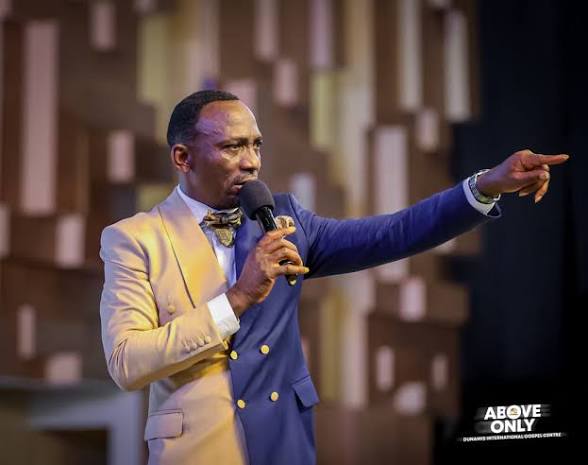
THE MELODIC MIRACLE: How Dr. Paul Enenche’s Prophetic Songs Are Healing Broken Hearts and Restoring Hope
For countless worshippers, every melody is more than music; it is a lifeline, a prayer, and a divine encounter
By Femi Oyewale
ABUJA — In a nation weighed down by economic hardship, insecurity, uncertainty and emotional exhaustion, an unusual sound is rising above the noise, a sound many worshippers describe as carrying healing for wounded hearts and hope for weary souls.

It is the sound of worship led by Dr. Paul Enenche, Senior Pastor of Dunamis International Gospel Centre, whose songs have become more than gospel music. For many, they have become the soundtrack of survival.
Inside the sprawling Glory Dome in Abuja, thousands lift their voices in worship every week. But beyond the magnificent auditorium, the songs are echoing through hospitals, lonely apartments, prayer altars, classrooms, offices and prison cells, where listeners say they have found renewed courage to face life’s battles.

For many Nigerians, these melodies have become companions in the darkest nights, reminding them that despair does not have the final word.
When Words Fail, Worship Speaks

There are pains language cannot fully express, the grief of losing a loved one, the frustration of unanswered prayers, the burden of financial struggles or the silent battles of anxiety and loneliness.
Many worshippers say it is in these moments that Dr Enenche’s songs become more than lyrics. They become prayers rising from broken hearts.

Whether through the surrender of “Let Me Want What You Want,” the reassurance of “You Are Always There,” the gratitude expressed in “Ogayoloo,” or the atmosphere of expectancy created during prophetic worship sessions, listeners describe experiencing peace that transcends circumstances.
To them, the music is not entertainment but ministry.
The Testimonies That Keep Coming
Across social media platforms and church gatherings, stories continue to emerge from worshippers who say the songs helped them navigate seasons of despair.

Some speak of rediscovering hope after prolonged disappointment.
Others recount how worship became their therapy after emotional trauma, helping them forgive, heal and begin again.
Parents tell stories of families reunited after years of conflict. Young professionals say the songs sustained them through unemployment and uncertainty. Students describe finding calm in the face of overwhelming academic pressure.
While each testimony is deeply personal and reflects individual faith experiences, together they paint a portrait of music that has become a source of comfort and resilience for many believers.

A Physician Treating the Soul
Long before he became a globally recognised preacher, Dr. Paul Enenche was trained as a medical doctor.
Today, many followers see a remarkable continuity between those two callings.
If medicine heals the body, they say, worship ministers to the soul.
His compositions often combine scriptural truths with heartfelt cries for divine intervention, creating an atmosphere where listeners are invited not merely to sing but to reflect, surrender and reconnect with God.
It is this authenticity that many believe explains the enduring appeal of his music.
A Generation Searching for Hope
In a society where countless young people wrestle daily with fear, disappointment and uncertainty, Dr. Enenche’s worship ministry has become a refuge for many. His songs do not deny pain; they acknowledge it while pointing listeners toward faith, perseverance and the possibility of restoration.

Perhaps that is why worship gatherings under his ministry often move people to tears, not tears of despair, but tears of release, gratitude and renewed expectation. Many leave believing tomorrow can be different from yesterday.
The Soundtrack of a Spiritual Awakening
Music critics and ministry observers increasingly describe Dr. Enenche’s style as worship with purpose—a fusion of scripture, prayer and melody designed to inspire transformation rather than mere applause.

His songs have found their way into morning devotions, midnight prayers, family altars and revival meetings across Nigeria and beyond, becoming part of the spiritual rhythm of countless believers.
From bustling cities to remote villages, from packed auditoriums to solitary bedrooms where only God hears the whispers of the heart, these melodies continue to travel, carrying with them a message of hope.
More Than Music
For those who have encountered these songs in moments of brokenness, they are more than compositions.

They are reminders that God still speaks in the silence.
That faith can survive the storm.
That worship can steady a trembling heart.
And that sometimes, when life offers no answers, heaven sends a song.
As one worshipper quietly remarked after a recent service at the Glory Dome:
“I came carrying burdens too heavy for words. I left with the same circumstances, but with a different heart. Sometimes, the greatest miracle is not that your situation changes immediately. It is that God changes you while you wait.”
For thousands across Nigeria and beyond, that may well be the enduring legacy of Dr. Paul Enenche’s music: not simply songs that are heard, but songs that heal, restore and rekindle hope in a generation yearning for divine reassurance.


society
AT 67: Afa Igbo Efuna Celebrates Ralph Nwosu, Salutes His Contributions to Nigeria’s Democracy, Nation Building*
*AT 67: Afa Igbo Efuna Celebrates Ralph Nwosu, Salutes His Contributions to Nigeria’s Democracy, Nation Building*
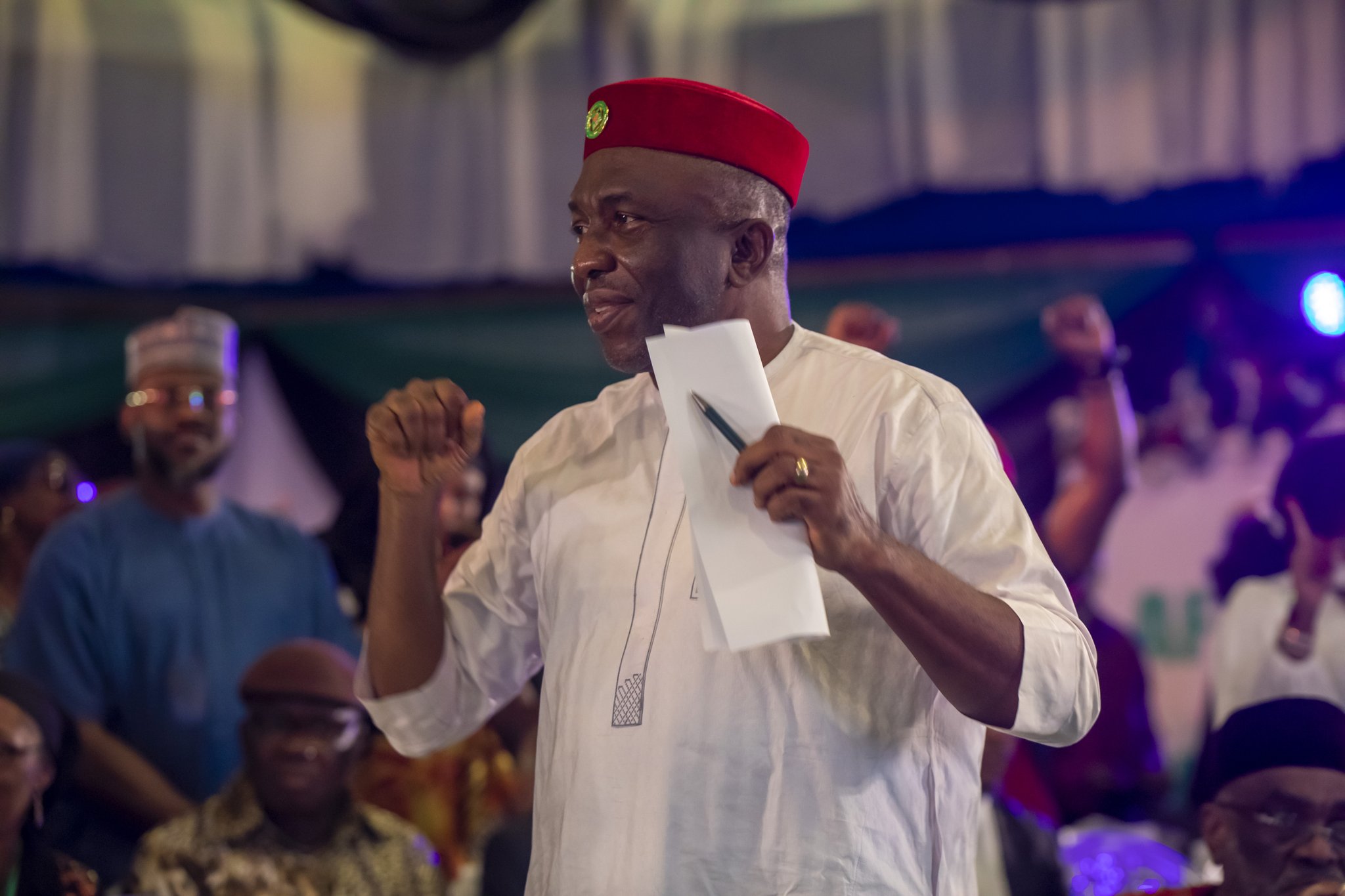
Afa Igbo Efuna Worldwide, a socio-cultural and political advocacy organization committed to the unity, advancement, and protection of Ndi Igbo across the globe, joins family members, friends, political associates, and well-wishers across Nigeria and beyond in celebrating Chief Ralph Okey Nwosu, Founder and Founding National Chairman of the African Democratic Congress (ADC), as he marks his 67th birthday.
On this special occasion, we pay tribute to a distinguished statesman, patriot, and political leader whose contributions to democratic development and nation-building have earned him respect across political, ethnic, and religious divides.
Chief Ralph Okey Nwosu has remained a steadfast advocate of democratic values, good governance, political inclusion, and national unity. Through his vision and leadership, he played a significant role in building and nurturing the African Democratic Congress into a respected political platform, providing millions of Nigerians with a credible voice in the democratic process.
As an illustrious son of Igboland, Chief Nwosu has continued to uphold the virtues of diligence, integrity, courage, and service to humanity. His commitment to justice, equity, and the advancement of democratic ideals remains a source of inspiration to many, especially younger generations who look to his example for guidance and leadership.
Today, as he celebrates 67 remarkable years of life, service, and accomplishment, we salute his enduring contributions to Nigeria’s political evolution and his unwavering dedication to the cause of a better, fairer, and more prosperous nation.
On behalf of Afa Igbo Efuna Worldwide and Ndi Igbo everywhere, we extend our warmest congratulations and best wishes to Chief Ralph Okey Nwosu. We pray that Almighty God grants him continued good health, wisdom, strength, peace of mind, and many more fruitful years in service to God, humanity, Ndi Igbo, and the Federal Republic of Nigeria.
Happy 67th Birthday, Chief Ralph Okey Nwosu.
Signed:
Mazi Nzubechi Maduagwu,
Publicity Secretary General,
Afa Igbo Efuna Worldwide.
*Moremi Ojudu Visits Affected Oyo Families, Reaffirms Support for Safe Return of Victims*
The Senior Special Assistant to the President on Community Engagement (South-West), Moremi Ojudu, on Monday visited families affected by the recent abduction incident in Oyo State, assuring them that their concerns have been heard and that efforts towards securing the safe return of the victims remain a priority.
The visit formed part of ongoing engagements by the Presidential Community Engagement Office (South-West) to assess the situation, interact directly with affected families, and convey the concern of the Federal Government over the unfortunate incident.
Prior to the visit, Moremi also met with officials of the Department of State Services (DSS), Oyo State Command, to receive updates and engage relevant stakeholders on developments surrounding the case.
Speaking during her interaction with the families, Moremi expressed sympathy for the parents and relatives affected by the abduction, acknowledging the emotional burden they have endured since the incident.
“Meeting the families and listening to their experiences was deeply moving. Behind every report are parents and loved ones living through uncertainty and pain. Our thoughts remain with them, and we continue to hope and pray for the safe return of those still in captivity,” she said.
She assured the families that their concerns would continue to receive attention and that the government remains committed to supporting efforts aimed at resolving the situation.
Several family members and community representatives used the opportunity to share their experiences and concerns, while calling for sustained efforts towards securing the release of the victims and improving security within affected communities.
Moremi noted that community engagement remains an important part of ensuring that the voices of citizens are heard, particularly during periods of difficulty and uncertainty.
“The families deserve to know that they are not alone. Their concerns matter, and it is important that we continue to listen, engage, and support them during this difficult period,” she said.
She also commended security agencies for their ongoing efforts and called for continued cooperation and support for all lawful measures aimed at ensuring the safe return of the abducted victims.
The visit concluded with prayers for the affected families and renewed hope for the safe reunion of the victims with their loved ones.
Signed:
Media Department
Presidential Community Engagement Office (South-West)


- President El-Sisi Receives President of the Democratic Republic of the Congo Tshisekedi June 10, 2026
- Eritrea: President Isaias visits industrial plants and logistics facilities June 10, 2026
- Venezuela Energy Week 2026 to Define New Investment Pathways as Hydrocarbons and Power Sector Reforms Move into Implementation June 10, 2026
- President Museveni Assures World Health Organization (WHO) of Uganda's Readiness to Contain Ebola and Calls for Stronger Regional Collaboration June 10, 2026
- Uganda: Ministers take oath as ex officio Members of Parliament June 10, 2026
- Democratic Republic of Congo (DR Congo): Rwanda, M23 Forcibly Recruit, Detain Thousands June 10, 2026
- Uganda: Government (Gov't) to review policy on payment of medical interns June 10, 2026
- Africa Centres for Disease Control and Prevention (Africa CDC) Science Advisors Call for Stronger Cross-Border Preparedness as Ebola Response Intensifies June 10, 2026
- Libya Energy & Economic Summit (LEES) 2027 to Host In-Country Value Forum on Youth, Women in Energy, Artificial Intelligence (AI) and Workforce Development June 10, 2026
- Vaccination: A thread of protection across generations June 10, 2026
- President El-Sisi Receives President of the Democratic Republic of the Congo Tshisekedi June 10, 2026
- Eritrea: President Isaias visits industrial plants and logistics facilities June 10, 2026
- Venezuela Energy Week 2026 to Define New Investment Pathways as Hydrocarbons and Power Sector Reforms Move into Implementation June 10, 2026
- President Museveni Assures World Health Organization (WHO) of Uganda's Readiness to Contain Ebola and Calls for Stronger Regional Collaboration June 10, 2026
- Uganda: Ministers take oath as ex officio Members of Parliament June 10, 2026
- Democratic Republic of Congo (DR Congo): Rwanda, M23 Forcibly Recruit, Detain Thousands June 10, 2026
- Uganda: Government (Gov't) to review policy on payment of medical interns June 10, 2026
-

 news6 months ago
WHO REALLY OWNS MONIEPOINT? The $290 Million Deal That Sold Nigeria’s Top Fintech to Foreign Interests
-

 society1 month ago
SOCIAL MEDIA IS NOT A BATTLEFIELD COMMAND – WHY THE NIGERIAN ARMY’S ACTION AGAINST JUSTICE CRACK IS A NATIONAL SECURITY IMPERATIVE
-

 celebrity radar - gossips5 months ago
Dr. Chris Okafor Returns with Power and Fire of the Spirit -Mounts Grace Nation Altar with Fresh Anointing and Restoration Grace on February 1, 2026
-

 celebrity radar - gossips6 months ago
Prophet Kingsley Aitafo Releases 2026 Prophecy: ‘Nigeria Will Rise, but the World Must Prepare for Turbulence’