
society
Analysing Shehu Mohammed’s sagacity and how FRSC emerged best in Website performance barely 4 months as Corps Marshal

Analysing Shehu Mohammed’s sagacity and how FRSC emerged best in Website performance barely 4 months as Corps Marshal
Nigeria is one of the few African countries that has leveraged on some road safety principles and have recorded remarkable progress in road safety administration and management despite a ‘gloomy’ beginning. The road safety situation in Nigeria was so deplorable that the World Health Organisation once described the country as ‘worst in the world to travel on’ only next to Ethiopia.
That narrative changed through government’s efforts by establishing the Federal Road Safety Commission as the Lead Agency to guarantee safety on every centimetre of Nigeria’s expansive road network of 204,000km. This establishment was done ten years prior to United Nations recommendation for all member states to establish agencies directly situated under the central government for ease of unfretted operation.
In its three decades of unbroken services to humanity as a lead agency in traffic and safety management, FRSC has recorded tremendous achievements in the area of Traffic Engineering, Road Safety Administration, Traffic Management and Crash reduction.
The Corps has now come of age after going through good times and tides. Through the use of state of the art Information Technology facilities, the Corps has been able to enhance its operational capacity aimed at promoting public safety and security. Having been propelled by the imperatives of entrenching ease of doing business as well as align with international standards in all fronts, the Corps has successfully designed and operated over 30 web applications for its operational activities so as to create an accessible platform for the general public.
Some of these applications cover, the Uniform Licensing scheme, under which is the ONE DRIVER ONE RECORD which enables FRSC track and match records of drivers with their drivers licence, vehicle number plate, traffic offences and others in a single view.
Introduction of the toll free 122 emergency number and a 24 hours call center established to reduce response time for crash victims; a single step that has reduced emergency response time from 50 minutes to 15 minutes thereby decreasing the number of fatalities in crash situations. More so, the introduction of Verification Portal for drivers licence and number plates, the introduction of the Road Transport Safety Standardisation Scheme (RTSSS) for uniformity and harmonization of fleet operators in the country, the Driving School Standardisation Scheme (DSSP), the introduction of the speed limiting device whose enforcement began on 1st February, 2017, introduction of vehicle and body worn cameras to monitor patrol operations, and the vehicle tracking system among others, are policies formulated and implemented to fight road traffic crash in the country to extinction.
The Corps led that foundation for itself, knowing that the road transportation sector in Nigeria accounts for over 90% of passengers and freight movement, and this exerts undue pressure on the FRSC in discharging its cardinal responsibilities. In view of the growing need to surmount these visible and invisible challenges, the Corps embarked on several reforms which include but not limited to the following: Development of a national road safety strategy roadmap, improved operational efficiency, enhanced regulatory environment, and accelerated response capability to situations that needed immediate actions, amongst others.
Added to the aforementioned, the Corps took a step further, defined it’s path in tandem with UN decade of action as well as the mantra of functional 21st century organization by chatting a path to meet the Accra declaration of 50% reduction in fatality by 2015. That aside, it went all the way to institute modalities to achieve UN decade of action on road Safety of 50% fatality reduction by 2020, and place Nigerian roads within the league of 20 global safest roads by 2020, as well as UN Decade of Action 2021-2030 which aims at having a society where crashes result in no deaths.
To achieve the stated targets, the Corps developed transformational initiatives focused on People, Processes and Technology (PPT). That is why today, not only does its staff pride as the most disciplined, but the Corps stands as the best Information Technology (IT) driven organization in Nigeria with its robust data base and over 95 percentage digitalized administrative and operational procedures. Mm
Having given that background, it is noteworthy to look at how the Corps, under the leadership of the present Corps Marshal, Shehu Mohammed who of course, was amongst members of the group who blazed the trail to set up what is now known as a technology driven organization, emerged the best amongst over 315 MDAs in Website performance and ranking.
It may interest you to know that the 2023-2024 Federal Government Scorecard for ranking Websites of Ministries, Departments and Agencies is an essential benchmark for evaluating the current state of government websites in Nigeria. FRSC’s Website was selected as the best following a very meticulous, highly diligent and extremely objective review of the Websites of 315 MDAs which were subjected to evaluation for the period under consideration.
The Bureau of Public Service Reforms, a Federal Government agency under the Presidency that organised and issued the award on behalf of President Bola Ahmed Tinubu GCFR justified the relevance of the ranking. According to them, the effectiveness and functionality of government websites have become a critical component of Nigeria’s public service reform agenda as the nation increasingly adopts digital platforms as the primary means of communication, service delivery and information dissemination. As such, FRSC’s Website was found to host a huge collection of information about all products and services of the Corps for the consumption of the general public. This feat placed the Corps ahead of its contemporaries in public service.
That said, to unravel the mystery behind how FRSC made it to the top in information technology and eventually emerged best amongst peers, it is important to look at the direction of leadership and policy focus of the administration of Corps Marshal Shehu Mohammed.
The trajectory of his career as a road safety professional from the day he joined the services of the Agency till date are the very factors that have shaped him as an all-rounder in road safety management and administration with a firm and fair handling of goal-oriented affairs as the Corps Marshal.
Upon assumption of office, Shehu Mohammed alongside his team of management, designed and implemented programmes of action, as well as a proactive template to advance the growth of the Corps in all ramifications, with the aim of trending down road crashes and fatality rate.
Being a believer of technology, the Corps Marshal made the digitisation of FRSC operations a cardinal part of his policy thrust. To that end, he took a bold step that was the first of its kind since the establishment of the Corps, by appointing a Technical Adviser who will mount the wheels that would eventually bring FRSC to speed in the deployment of information technology in the work place. This placement of round pegs in round holes was the catalyst, the propellant force, as well as the icing on the cake that catapulted the Corps to more enviable heights and achievements in digitisation.
Retrospectively, Corps Marshal Shehu Mohammed has been an integral part of the digitalization process and has driven the technology feat of this noble organization for years now, beginning from Corps Marshal Osita Chidoka who started the revolution to the erstwhile Corps Marshal, Dr. Boboye Oyeyemi who sustained the expertise, through to the immediate past Corps Marshal, Dauda Ali Biu who kept the momentum.
To say the least, his experience has seen the Corps measure to billing as he is already on the glorious path of unravelling the mystery that would finally bring about the overall digitisation of FRSC operations.
Additionally, just as stated in my last piece, part of the major initiatives introduced by Corps Marshal Shehu Mohammed that brought about the needed result for the Corps, is the ongoing digital revolution.
The introduction of Electronic Document Management System ( Paperless) in the workplace would surely make FRSC the first Federal Government Agency to go paperless. This initiative, apart from the speed it will bring to the workplace, will also enhance ease of doing business and bring down the cost of governance. In the same vein, adequate progress is being recorded on the operational front too, he, Shehu Mohammed has gone a step further by initiating and launching the first FRSC Mobile Application, a one-stop shop for all FRSC products and services, for quality service delivery. The FRSC Mobile App was introduced to generate and analyse real-time data on operations, Traffic Crashes data management, and road conditions, and provide customers with feedback on the Corps’ products.
The introduction of the National Crash Information Recording System portal (NACRIS) is another ground breaking robust data collation initiative that will help in policy formulation, planning, and education. With this portal, Nigerians could easily report cases of crashes from the point of crash. This initiative will boost data legitimacy and change global perception of FRSC crash data reports for good.
The Corps under his purposeful leadership, has proven to be right on track to allay the menace of road traffic crashes on Nigerian roads and usher in a season where there would be no crashes; where even if crashes will occur, it would not result in the death of any Nigerian. Achievements of such would be recorded based on many pillars and strict implementation of his policy thrust fused in the Corporate Strategic goals of the Corps.
To this end, suffice it to state that as a performance driven organization, with clearly set measurable Key performance Indicators, FRSC is today, the only law enforcement organization in Nigeria certified by the International Standard Organization.
Bisi Kazeem, a veteran road safety professional and a public relations expert, writes from Lagos, Nigeria.





Police Officers Detained as Family Property Dispute Sparks Demolition Controversy in Lagos
By Ifeoma Ikem
A property dispute within the Omotayo-Ojo family has taken a dramatic turn following a controversial demolition exercise at a residential building in Ikosi-Ketu, Lagos State, which reportedly left tenants displaced and led to the detention of some police officers allegedly involved in the operation.

The property, located at 23B Loveall Street, Ikosi-Ketu, has been the subject of a prolonged ownership tussle since the death of its owner, Chief Oludola Omotayo Ojo, the Babaalaje of Imesi-Ile, Osun State, in 2019.
Residents said tension erupted when a group of individuals, accompanied by security operatives, stormed the premises and commenced demolition activities.
According to eyewitnesses, portions of the building were pulled down while tenants rushed to salvage their belongings from affected apartments.
The residents alleged that windows, doors and roofing sheets were damaged during the exercise, exposing parts of the building to the elements and causing significant losses to occupants.
At the centre of the dispute is Mrs Mojisola Omotayo Ojo Alolagbe, who claimed that the property was allocated to her by her late father during his lifetime as a source of financial support.
She alleged that some family members had persistently challenged her ownership claim despite ongoing legal proceedings relating to the administration of the deceased’s estate.
Alolagbe further claimed that the latest incident was part of a series of attempts to wrest control of the property, citing previous cases of alleged vandalism and partial demolition in November 2025, January 2026 and February 2026.
The situation escalated further when reports emerged that police officers allegedly involved in the demolition were later apprehended and conveyed in a Black Maria vehicle over questions surrounding the legality of their participation in the operation.
Sources familiar with the matter said those behind the demolition had initially claimed to be acting on approval from the Lagos State Ministry of Lands. However, the authenticity and extent of such approval could not be independently verified as of the time of filing this report.
The development has generated concern among residents and community members, who questioned the involvement of security personnel in what they described as a civil matter.
Some tenants, who said they had recently renewed their tenancy agreements, lamented the destruction of their property and appealed to the authorities for protection and possible compensation.

They also called for a thorough investigation into the circumstances surrounding the demolition, insisting that the rights of all parties involved should be protected.
Stakeholders have urged the Lagos State Government, security agencies and the judiciary to intervene and ensure that the dispute is resolved through lawful means to prevent further escalation.
The controversy has continued to draw public attention, raising concerns over property rights, estate administration and the role of law enforcement agencies in civil disputes.

UKA Gears Up for Final ATC Exchangeability Test Run as June Preparations Begin.
May 30, 2026 – As the month of June gathers momentum, the *United Kingdom of Atlantis, UKA*, a sovereign nation has unveiled a series of vital guidelines and preparatory packages to ensure citizens and stakeholders run the *ATC Exchangeability* process effectively.
In an official update, the *President of Atlantic Crown Limited, Empress of Attica Empire UKA*, confirmed that the *Final Test Run of ATC Exchangeability* is scheduled for the month of June 2026. The exercise marks a key phase ahead of the *Official Exchangeability Window, set to run from July 2026 to February 2027*.
### Key Highlights from the Presidential Briefing
1. *Final Test Run – June 2026*
The test run is designed to validate systems, procedures, and user readiness before full activation. Citizens, partners, and designated participants are urged to follow all official advisories released by UKA authorities during this period.
2. *Official Exchangeability Period*
Following the successful completion of the June test run, the Official Exchangeability will commence in july 2026 and we are Expecting Full Exchange ability between July Ending, 2026 to February 2026.
UKA stated that detailed schedules, eligibility requirements, and step-by-step instructions will be communicated progressively through verified UKA channels.
3. *Benefiting Packages for June*
In line with UKA’s commitment to citizen empowerment, the month of June will feature “benefiting packages” aimed at education, preparation, and seamless onboarding. These packages are intended to equip the people of UKA with the knowledge and tools needed for effective participation.
4. *Commitment to Transparency*
Addressing the nation, the Empress of Attica Empire UKA emphasized:
_“Final Test Run of ATC Comes up in The Month of June, As We Prepare For The Official Exchangeability, Between July 2026 To Feb 2027. All Information Will Be Communicated.”_
UKA reaffirmed that only information released through official UKA platforms should be regarded as authoritative.
The United Kingdom of Atlantis is encouraging all citizens, representatives, and interested parties to remain alert to official communications, attend designated orientation sessions, and avoid unofficial sources. UKA’s dedication to order, clarity, and the collective benefit of its people as the nation moves into this significant phase.
For updates, advisories, and participation guidelines, citizens are advised to monitor official UKA communication channels.
United Kingdom of Atlantis, UKA, is a sovereign nation, committed to national development, citizen welfare, and structured economic participation through initiatives such as ATC Exchangeability.
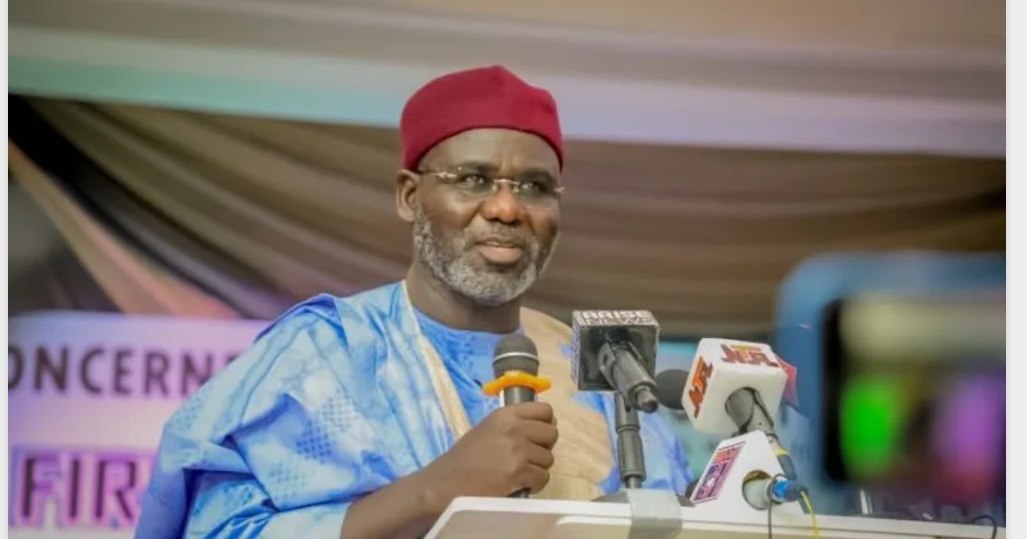
Three Years On, General Buratai Hails Tinubu’s Economic, Security Achievements
Former Chief of Army Staff, Lt. Gen. Tukur Buratai (retd.), has commended President Bola Ahmed Tinubu for what he described as bold economic reforms and improved security efforts as the President marks three years in office.
In a goodwill message on Thursday to commemorate Tinubu’s third anniversary as President and Commander-in-Chief of the Armed Forces, Buratai said the administration had taken courageous decisions that would leave a lasting impact on Nigeria’s development.

According to him, President Tinubu broke a long-standing cycle that had hindered national growth by removing fuel subsidy and implementing foreign exchange reforms aimed at stabilising the naira and strengthening the economy.
He noted that the reforms were beginning to yield positive results, citing the global acceptance of Nigerian debit cards, the gradual revival of local refineries, access to student loans, and ongoing road and infrastructure projects across the country.
“The FCT Administration has also recorded remarkable progress, completing major road projects that remained unfinished for over 16 years,” Buratai stated.
The former army chief also praised the administration’s security efforts, saying renewed military offensives against insurgents, terrorists and bandits had led to notable successes across various parts of the country.
He specifically lauded recent joint operations involving Nigerian and United States forces against Boko Haram and ISWAP in the North-East, as well as intensified counter-banditry operations in the North-West.
“We have seen notorious ISWAP commanders being neutralised. I congratulate the Commander-in-Chief, the Minister of Defence, the Chief of Defence Staff, the Service Chiefs, the Inspector-General of Police and heads of intelligence agencies for their efforts,” he said.
Buratai, however, acknowledged that challenges remained, stressing the need for more aggressive military operations and intelligence-driven strategies in the coming year.
While urging Nigerians to remain hopeful, he said celebrating the President’s achievements did not amount to ignoring the difficulties facing the nation.
“Because you truly care, you have shown the courage to trade short-term comfort for long-term hope. Nigerians need your reassurances, and that is why we remain optimistic and full of confidence,” he added.
The retired military officer reaffirmed his support for the Tinubu administration and expressed confidence that the foundation being laid by the government would deliver a brighter future for the country.
He also prayed for God’s guidance, wisdom, strength and good health for the President as he continues to lead Nigeria.


- Uganda: Parliament concludes vetting of ministers June 2, 2026
- Fund for Export Development in Africa (FEDA) Board Appoints Mr. Emmanuel Assiak as Chief Executive Officer June 2, 2026
- Ecobank Group Launches World First Nature Bond Mobilising Global Capital to Protect Africa’s Natural Ecosystems June 2, 2026
- Merck Foundation Chief Executive Officer (CEO) Dr. Rasha Kelej together with Kenya First Lady support the education of 47 Kenyan Schoolgirls by providing Annual Scholarships till they Graduate June 2, 2026
- Annual Meetings 2026: Governors Back the Bank’s Platform Solutions to Transform Aviation and Health Systems in Africa June 2, 2026
- ThinkMarkets launches ChelseaAI, bringing live CFD trading into Artificial Intelligence (AI) assistants June 2, 2026
- Afreximbank Invites Rugby Africa President Herbert Mensah to Address the 33rd Annual Meetings on a Panel Exploring Sport as a Driver of African Industrialisation June 2, 2026
- Afreximbank Deepens Commitment to Economic Progress in The Bahamas June 1, 2026
- African Electric Vehicle (EV) platform Spiro raises $215M in equity to scale electric mobility and energy infrastructure across Africa June 1, 2026
- Africa Centres for Disease Control and Prevention (Africa CDC) Statement on Attacks Against Health Facilities During the Bundibugyo Virus Disease Response in the Democratic Republic of the Congo June 1, 2026
- Uganda: Parliament concludes vetting of ministers June 2, 2026
- Fund for Export Development in Africa (FEDA) Board Appoints Mr. Emmanuel Assiak as Chief Executive Officer June 2, 2026
- Ecobank Group Launches World First Nature Bond Mobilising Global Capital to Protect Africa’s Natural Ecosystems June 2, 2026
- Merck Foundation Chief Executive Officer (CEO) Dr. Rasha Kelej together with Kenya First Lady support the education of 47 Kenyan Schoolgirls by providing Annual Scholarships till they Graduate June 2, 2026
- Annual Meetings 2026: Governors Back the Bank’s Platform Solutions to Transform Aviation and Health Systems in Africa June 2, 2026
- ThinkMarkets launches ChelseaAI, bringing live CFD trading into Artificial Intelligence (AI) assistants June 2, 2026
- Afreximbank Invites Rugby Africa President Herbert Mensah to Address the 33rd Annual Meetings on a Panel Exploring Sport as a Driver of African Industrialisation June 2, 2026
-

 news6 months ago
WHO REALLY OWNS MONIEPOINT? The $290 Million Deal That Sold Nigeria’s Top Fintech to Foreign Interests
-

 society4 weeks ago
SOCIAL MEDIA IS NOT A BATTLEFIELD COMMAND – WHY THE NIGERIAN ARMY’S ACTION AGAINST JUSTICE CRACK IS A NATIONAL SECURITY IMPERATIVE
-

 celebrity radar - gossips4 months ago
Dr. Chris Okafor Returns with Power and Fire of the Spirit -Mounts Grace Nation Altar with Fresh Anointing and Restoration Grace on February 1, 2026
-

 celebrity radar - gossips6 months ago
Prophet Kingsley Aitafo Releases 2026 Prophecy: ‘Nigeria Will Rise, but the World Must Prepare for Turbulence’