
Politics
APC, 2023 Presidential Primary: Kayode Fayemi as the Way Out

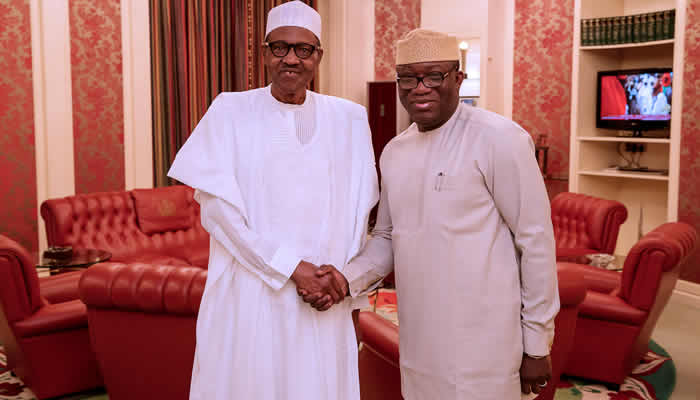
APC, 2023 Presidential Primary: Kayode Fayemi as the Way Out By Alaba Osatuyi
As the 2023 presidential election kicks off with parties now conducting elections to pick standard bearers, one party that has continued to attract intense attention is the governing All Progressives Party (APC). It is normal that the ruling party faces more challenges about how to pick its candidate where the incumbent is not seeking a return ticket having exhausted the constitutional limit.
During a transition like this, the intensity of contestation and complexity of intrigues can sometimes get to the breaking point for the ruling party.
One should therefore sympathizes with the APC at this time, even, as it is locked in a flux in the high octane of succession politics. With twenty-three aspirants jolting to win the ticket of the party, there is no doubt that the battle is going to be sulfuric, combustible and explosive.
In spite of the motley of characters pretending to be aspiring, simply because they could pay the one hundred million naira ticket fee, what seems to be too plain to ignore is that fact that the main contenders are about four of the lots. For me, the primary will revolve around Rotimi Amaechi, Kayode Fayemi, Yemi Osinbajo and Bola Ahmed Tinubu. Of these major contenders however, it seems, destiny is waiting for the youngest of them to succeed President Muhammadu Buhari.
Even as the days get closer, what is now apparent to Asiwaju Bola Ahmed Tinubu and his fanatics is that he might not secure the ticket of the party, despite his dominant presence and larger-than-life posture. Nothing buttresses this position than his bare-knuckle but self-inflicting jibes that he threw in Ogun state on June 02, 2022.
Signs indicating all will not be too well with his campaign began to emerge when he ran through many northern states last week and he was told almost the same thing by almost all the governors he met, that, whomever the president supports and directs them to follow, they would follow. This practically devastated Asiwaju, irretrievably.
He had hoped naively that Buhari, who though, had not shown any commitment to him or to anyone, would stay neutral to allow the most “prepared” win. So, he had virtually become a traffic warder on the political streets of the northern states in the last one month. But all the hopes seemed to have collapsed with the choreographed answers he got whenever he went, including from the Borno state governor, whom many had thought was a forgone conclusion.
It was therefore an unexpected anti-climax when the president disclosed in a meeting with the progressive governors on June 1, 2022 that he would want to play a critical role in the selection of his successor. To many political observers, this was a major challenge for Asiwaju. This is because there was no doubt that Asiwaju and the president have not been best of friends since Buhari became president. Indeed, there had been instances when Asiwaju had had to publicly criticize the administration. One would even recall instances Chief Bisi Akande wrote bitter letters that clearly condemned Buhari and even asked him to resign at some point.
But, Asiwaju had another graver problem. He is not in the good books of most of the governors because of the annihilating politics he and Oshiomhole played going into 2019 election as part of his ultimate long-term plan to plant his sympathizers in all the states as governors, ahead of this day.
As a survival strategy, Asiwaju has been courting the national assembly and practically secured an alliance with them. In fact, the electoral law was amended to cure what Asiwaju thought could hinder him going into the election. So, many clauses were deliberately infused into the law to serve the political end of the NASS members and Asiwaju in particular.
Unfortunately, they were caught in their web of political conspiracy with the exclusion of statutory delegates from those eligible to vote at the convention. All their desperate effort to cure this grave self-infliction has been blocked by the president. As it stands now, the major electors at the primary will be national delegates who would have emerged from the political structure of the governors.
Worse still, to leave nothing to chances, the president seems to be interested in a consensus arrangement that will ensure a seamless process of candidate selection for the party.
So, when a frustrated Asiwaju spoke rather boisterously to the embarrassment of reasonable observers, it was obvious that he probably has gone for the broke. Much as his battalion of online supporters have tried to rationalize his intemperate speech, there is no doubt that it has caused an irredeemable damage that has eroded any possible clue for a makeup situation between him and Buhari.
For some unclear reason, the Tinubu supporters have made Osinbajo the focus of their acerbic campaigns and there seems to be the feeling that he is the only “real” challenge to Asiwaju’s passage. His sights generally irritates them and every of his steps is scrutinized bitterly.
Indeed, Osinbajo is a formidable figure in this contest. He has a lovable and easily ingratiating personality. His intelligence, charm and confidence can truly rankle a jealous competitor. Indeed, if the party ticket were to be decided directly by Nigerian generally, Osinbajo will be the undisputed winner of the ticket; however the politics of this particular primary election seems to be out of his pick for some factors beyond his control.
And this is understandable. Anywhere in the world, the primary election of any party is mainly a product of intense political horse-trading among the conclaves of party caucuses. In the Nigeria political environment, the governors of the ruling party are the most potent and dominant caucus. The National Assembly can sometimes provide a strong voice, but during a national election where their own political survival is at the local level, their ability to deploy their number to an advantage is grossly hampered.
In this particular instance, unfortunately, the NASS members have amputated and castrated themselves out of relevance. The Asiwaju factor, which Buhari usually tried hard to propitiate to, is, unfortunately now under a testy situation that only days can tell, if it has not completely lost its potency.
Consequently, those who would eventually decide who will be the party’s standard bearers are not those whose consideration would be the sartorial photogenicity of Professor Osinbajo or the monarchial carriage of Asiwaju, but cold power brokers who would negotiate to ensure their own continued relevance in the scheme of things.
According to analysts the ticket seems to be between Kayode Fayemi and Rotimi Amaechi. But the current political configuration of APC and the need to get the middle position may work for the former. According to some insiders, the two forces at play are the governors who want one of them to succeed the president and the inner circle of the president who seem to prefer Rotimi Amaechi for some obvious reasons.
Luckily for Kayode Fayemi, he also enjoys a good relationship with the so-called inner caucus of the Buhari administration. In fact, the Tinubu forces recognized this since 2016, when Fayemi led the political master stroke that produced Akeredolu in spite of all the machinations of Asiwaju to ensure Akeredolu never won the primary and the governorship election. Thereafter, the Tinubu forces started a barrage of media hostilities against Fayemi whom they first derided as a “traitor”, an “ingrate” and an “Akintola”, among other uncomplimentary expletives used to umbrage him then. All these they now direct at Osinbajo.
Similarly, Kayode Fayemi is a man personally loved by the president for his sound intellect, maturity and ability to build bridges and consensus among diverse interests. The president said this much in a speech he gave when Kayode Fayemi was quitting Buhari’s cabinet to re-contest for the Ekiti State governorship election in 2018.
Since becoming the Chairman of Governors’ Forum, Fayemi has steered the Forum from unhealthy acrimony and controversies that used to be its hallmark to that of potent policy peer-review platform that has worked cooperatively with the federal government on so many socioeconomic programmes. He has worked with uncommon maturity to ensure mutual respect between the federal government and the Forum without any major antagonism as it used to be.
What observers have come to the conclusion about is that Kayode Fayemi is the median candidate for all the converging factors. Being Yoruba will assuage the thirst of the South West and be easy to placate Asiwaju. His age, education, Teflon image and ability to build network will easily sell him across board. Even though there will be an initial shock and pushback, the emergence of Fayemi, will ultimately represent the finest hours of the political shift that the nation has been yearning for a long time.
Even those who have become so fanatical about some of the candidates will be easy to persuade to accept the compromised candidate because of his less problematic nature. It will be a ticket that the youths, the not too old, the old and many other interests can easily connect with.
Except if it is not God’s wish, it seems the Fayemi presidency has become inevitable. This will be Ekiti’s finest hour, even as we wait for the outcome of the APC convention over the next few days.
Alaba Osatuyi
Ado-Ekiti




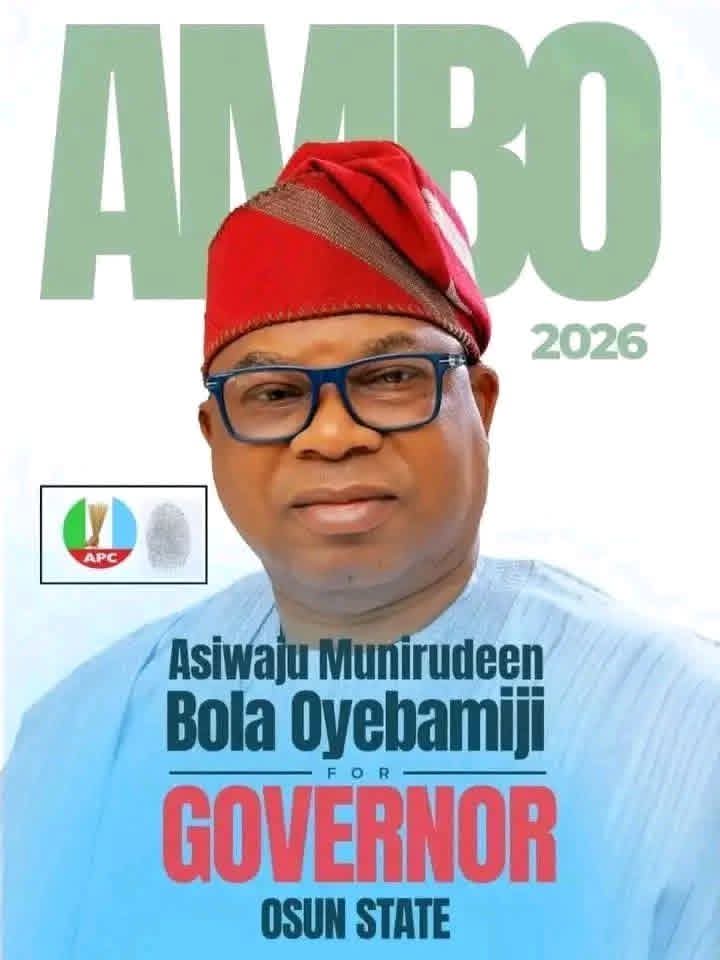
AMBO and the Osun Governorship Race: Assessing the Man, the Politics and the Vision
As political activities gather momentum ahead of the 2026 Osun State governorship election, a public affairs commentator, Oluseyi Olonade, has described the emergence of Asiwaju Munirudeen Bola Oyebamiji, popularly known as AMBO, as a significant development in the state’s political landscape.
In an article titled “Oyebamiji: The Man, The Politics and The Aspiration,” Olonade argued that the All Progressives Congress governorship hopeful possesses the character, experience and vision needed to reposition Osun State for sustainable growth.
According to the writer, Oyebamiji’s appeal stems from his extensive background in the banking sector, where he spent nearly three decades working with institutions including Wema Bank, Trans International Bank, Spring Bank and Enterprise Bank.
A native of Ikire in Irewole Local Government Area, Oyebamiji was described as a technocrat whose experience in corporate governance, finance and risk management has shaped his approach to public administration.
The article noted that his public service journey gained prominence in 2012 when he was appointed to oversee the then Osun State Investment Company Limited. Under his leadership, the organisation was reportedly restructured and transformed into Omoluabi Holdings Limited.
The writer further highlighted Oyebamiji’s tenure as Commissioner for Finance under successive APC administrations, where he was credited with managing the state’s finances during challenging economic periods.
Olonade also referenced Oyebamiji’s appointment as Managing Director of the National Inland Waterways Authority, describing it as further evidence of his administrative and leadership capabilities.
The article contrasted Oyebamiji’s governance philosophy with that of the current administration in Osun State, arguing that the APC aspirant favours institutional reforms, economic diversification and fiscal discipline.

According to the writer, Oyebamiji’s proposed agenda includes strengthening transparency in government spending, expanding internally generated revenue, attracting private-sector investments and promoting industrial and agricultural development.
The article also highlighted youth empowerment, entrepreneurship development and digital skills acquisition as key components of his vision for the state.
Olonade concluded that the forthcoming governorship election would present voters with a choice between different approaches to governance, expressing confidence that Oyebamiji’s experience and developmental agenda make him a strong contender in the race.
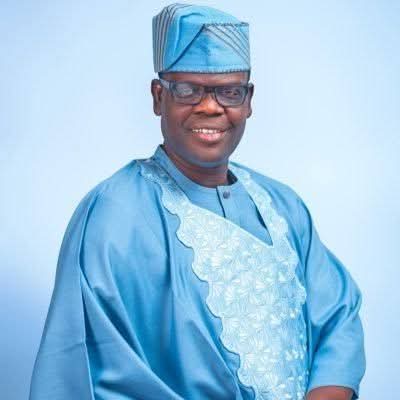
*Oselu Tiwa nTiwa Endorses Oriyomi Hamzat for Oyo Governorship*
A sociopolitical support group in Oyo State, Oselu Tiwa nTiwa, has declared its support for Alhaji Oriyomi Hamzat as the authentic governorship candidate of the Accord Party ahead of the forthcoming governorship election in the state.
The group made its position known in a statement jointly signed by its President, Mr. Adewale Oluwaseyi and Secretary, Alh. Adebayo Oyewole, on Thursday, describing Hamzat as a grassroots figure with strong connection to the people and a track record of humanitarian interventions across Oyo State.

According to the group, the endorsement followed what it described as careful observation of Hamzat’s leadership qualities, compassion and dedication to the welfare of ordinary citizens.
“Oriyomi Hamzat has consistently demonstrated empathy, courage and selfless commitment to humanity. Through his numerous interventions in the lives of ordinary citizens, he has become a symbol of hope to many families and communities,” the statement read.
Oselu Tiwa nTiwa also appealed to the national leadership of the Accord Party to prioritise the long-term future and electoral growth of the party in its decision-making process.
The group noted that Hamzat’s candidacy presents an opportunity for the party to strengthen its grassroots support base and expand its political relevance across Oyo State.
“We respectfully appeal to the National Leadership of the Accord Party to look beyond immediate political calculations and consider the bigger picture, the future growth, stability and electoral success of the party in Oyo State and beyond,” the statement added.
The group further expressed confidence in the leadership of the party, saying it believes the party’s national officers and stakeholders would take decisions that reflect fairness, inclusiveness and the collective interest of members.
While calling on party loyalists to remain calm and united, Oselu Tiwa nTiwa said continued consultations among stakeholders would help strengthen the Accord Party ahead of the election.
Signed:
Alh. Adebayo Oyewole,
Secretary.
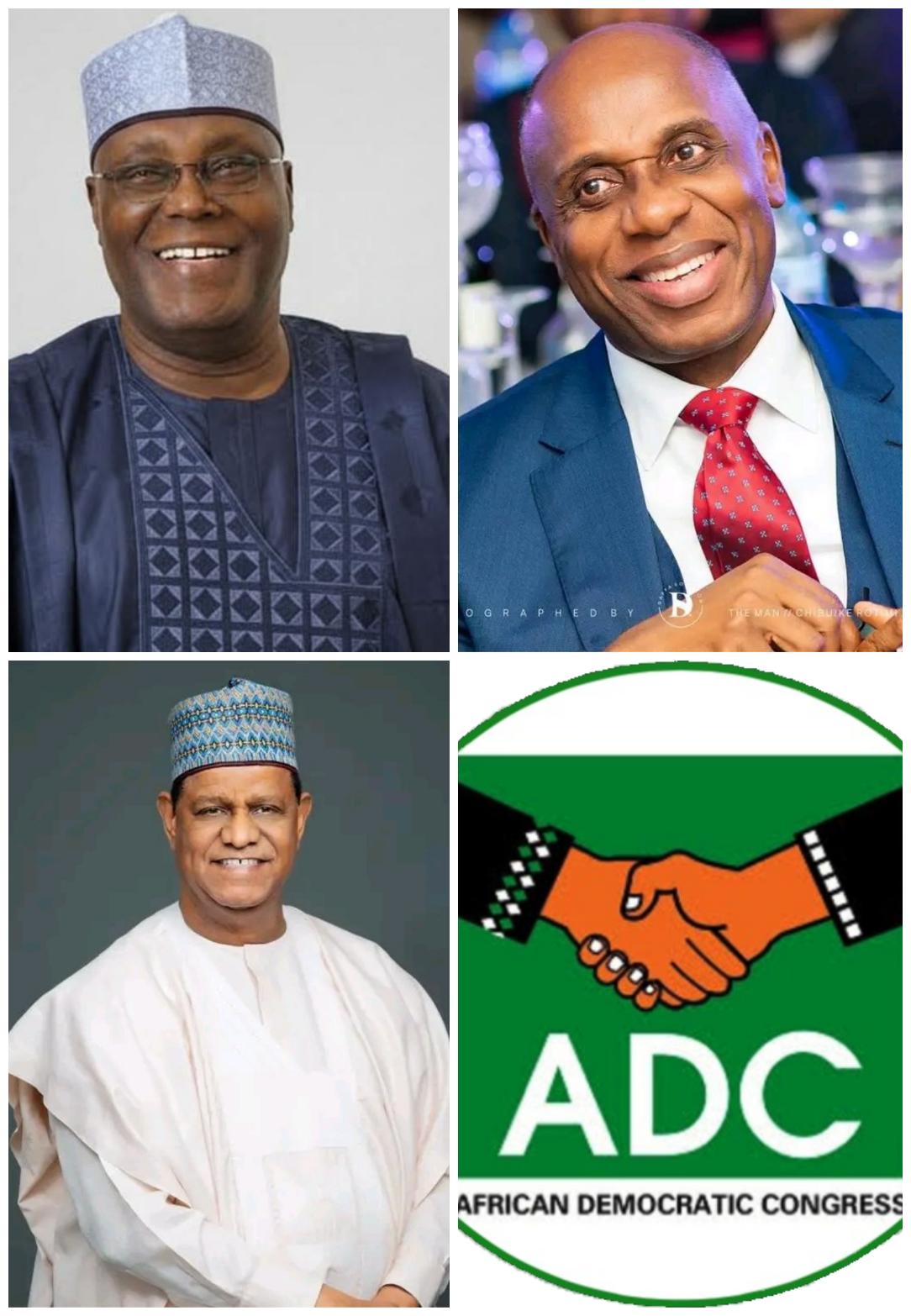
Atiku Set To Clinch ADC Presidential Ticket, Leads Amaechi, Hayatu-Deen In 34 States
Former Vice President of Nigeria and frontline presidential aspirant of the African Democratic Congress (ADC), Atiku Abubakar, is projected to emerge winner of the party’s presidential primaries, according to impeccable sources in Abuja.
The primaries, conducted across over 8,000 wards in the 36 states of the federation and the Federal Capital Territory, reportedly placed Atiku far ahead of his closest rivals — former Rivers State Governor, Rotimi Amaechi, and former Chairman of the Nigerian Economic Summit Group, Mohammed Hayatu-Deen.

Highly placed party insiders disclosed that Atiku is currently leading in 34 states, including the FCT, after securing dominance across the 19 Northern states, the five South-East states, and the six South-West states, while also maintaining a strong showing in at least three states in the South-South geopolitical zone.
The sources added that the outcome reflects what they described as “an overwhelming nationwide acceptance” of the former vice president within the opposition party ahead of the 2027 general election.
Meanwhile, the ADC leadership has invited members of the press to the official announcement of the final collated results scheduled for 11:00 a.m. on Tuesday, May 26, 2026, in Abuja.
The declaration of results is expected to be broadcast live on ARISE Television and two other major television stations, while also being livestreamed on the party’s official social media platforms on X and Facebook.
Speaking ahead of the announcement, the founding National Chairman of the ADC, Chief Ralph Nwosu, said the decision to televise the exercise live was aimed at promoting transparency and democratic accountability.
“We want millions of Nigerians at home and in the Diaspora to witness democracy in action,” Nwosu said.
He further revealed that the party leadership would encourage all three presidential aspirants to publicly embrace a peace accord and commit themselves to working together in unity for the party’s success.
According to him, the move is necessary to strengthen internal cohesion and position the ADC for victory in the presidential election scheduled for January 16, 2027.
Details later.


- When women farm better, Eswatini eats better June 3, 2026
- Togo Hosts the 8th Annual Forum of National Volunteer Agencies in the Economic Community of West African States (ECOWAS) Region June 3, 2026
- Indigenous Peoples gravely vulnerable to Ebola epidemic, warn United Nations (UN) independent experts June 3, 2026
- Meeting between Parliamentary Vice-Minister ONISHI and His Excellency (H.E.) Mr. Cosgrow, Principal Minister and Minister for Agriculture, Fisheries and Blue Economy of Seychelles June 3, 2026
- Eritrea: Construction of Elementary School in Gogni Sub-Zone June 3, 2026
- African Union Commission (AUC) Chairperson His Excellency (H.E.) Mahmoud Ali Youssouf highlighted thePermanent Representatives’ Committee (PRC) critical role in advancing the Union’s agenda and laying the groundwork for the forthcoming Mid-Year Coordination Meeting (MYCM) June 3, 2026
- Eritrea: Eighth Grade National Examination Commences June 3, 2026
- Many Africans see justice system as unequal, costly, and slow, Afrobarometer survey reveals June 3, 2026
- Prof. Benedict Oramah to Chair Finance Summit as African Energy Week (AEW) 2026 Prepares for Major Deal Flow June 3, 2026
- The Islamic Development Bank (IsDB) Group Affiliates to Host the 14th Private Sector Forum in Baku, Azerbaijan (16-19 June 2026) June 3, 2026
- When women farm better, Eswatini eats better June 3, 2026
- Togo Hosts the 8th Annual Forum of National Volunteer Agencies in the Economic Community of West African States (ECOWAS) Region June 3, 2026
- Indigenous Peoples gravely vulnerable to Ebola epidemic, warn United Nations (UN) independent experts June 3, 2026
- Meeting between Parliamentary Vice-Minister ONISHI and His Excellency (H.E.) Mr. Cosgrow, Principal Minister and Minister for Agriculture, Fisheries and Blue Economy of Seychelles June 3, 2026
- Eritrea: Construction of Elementary School in Gogni Sub-Zone June 3, 2026
- African Union Commission (AUC) Chairperson His Excellency (H.E.) Mahmoud Ali Youssouf highlighted thePermanent Representatives’ Committee (PRC) critical role in advancing the Union’s agenda and laying the groundwork for the forthcoming Mid-Year Coordination Meeting (MYCM) June 3, 2026
- Eritrea: Eighth Grade National Examination Commences June 3, 2026
-

 news6 months ago
WHO REALLY OWNS MONIEPOINT? The $290 Million Deal That Sold Nigeria’s Top Fintech to Foreign Interests
-

 society1 month ago
SOCIAL MEDIA IS NOT A BATTLEFIELD COMMAND – WHY THE NIGERIAN ARMY’S ACTION AGAINST JUSTICE CRACK IS A NATIONAL SECURITY IMPERATIVE
-

 celebrity radar - gossips4 months ago
Dr. Chris Okafor Returns with Power and Fire of the Spirit -Mounts Grace Nation Altar with Fresh Anointing and Restoration Grace on February 1, 2026
-

 celebrity radar - gossips6 months ago
Prophet Kingsley Aitafo Releases 2026 Prophecy: ‘Nigeria Will Rise, but the World Must Prepare for Turbulence’