
Politics
APC and 2023: Finding the Right Man for the Task Ahead

APC and 2023: Finding the Right Man for the Task Ahead
APC– The zoning of the presidency under the principle of rotation between North and South has been one of the distinguishing features of the Nigerian political space since the return of Democracy in 1999. And this has always pitted the South against the North. As 2023 beckons, nothing appears to have changed in this regard.

Of course, the zoning policy predated the current 4th Republic. And, it has never ceased being an important issue in any election cycle since the 2nd Republic when it first became a strong political leadership recruitment mantra.
As we get into gear for the 2023 elections after President Buhari, a Northerner, has completed two terms, it again appears that in the bid to force the zoning arrangement to be respected, southern political players are coming out forcefully to stake a strong claim for the post. As at the last count, the South accounts for roughly 80% of APC Presidential aspirants that have declared intention to contest the post and continue APC’s stay in power at the centre.
The overarching argument being canvassed is that electing a northern candidate in 2023 brings the prospect of the region holding power for an unbroken 12 to 16 years. That is exactly the type of fear-inducing scenario that the zoning arrangement is created to forestall.
It could therefore be that most of the Southern aspirants coming out to dominate the field have resolved to massively buy the party’s nomination form and launch their campaigns to force the hands of the party on the issue of zoning. It would look impolitic and inelegant if APC should give its ticket to one of the few Northern aspirants in the field while neglecting the multitude of Southern contestants who, among them, parade all the qualities required to occupy the post.
However, where the party may face a headache is in the fact that majority of the Southern aspirants have their political roots in the Bola Ahmed Tinubu (BAT) Political family, led by the founder and leader of the group, Ashiwaju Bola Tinubu himself. Given that the BAT political family has got the vice presidency since 2015, the need to micro-manage the process of picking a southern candidate in a way that will assuage the fear of those who see the Ashiwaju influence looming on the presidency and, by extension, sweeping all over Nigeria if he or any of his political proxies get the plum job, cannot be discountenanced.
Ashiwaju Ahmed Bola Tinubu and his political offshoots have been branded, on the evidence of past actions, as likely to continue their well-known autocratic style of governance, especially the tendency to emasculate both the executive and legislative branches of government and ride roughshod over the people. This patently ACN political tool of pocketing the citizenry which has sustained the clique in the politics of Lagos State, has become the defining ethos of the BAT political philosophy. For a country walking the thin line of insecurity, disunity and growing citizen discontent, to be saddled with such perceived slave masters at this point in time is a recipe for disaster.
The whole nation and, indeed all lovers of Nigeria, agree that National Unity, more than any other factor, would rank highly among the imperatives the country cannot afford to toy with post 2023 election. Given the foregoing, which of the Southern aspirants currently angling for the job is the least catastrophic option for APC and Nigeria? Which of them can inspire national inter-regional trust, galvanise inclusiveness and navigate the potential time bomb of ethnic and regional distrust threatening to ambush the future of the country?
Of all the Southern aspirants, the former governor of Ogun State, Ibikunle Amosun provides an intriguing scenario. The only South West aspirant that is not a creation of the Tinubu School of Politics, Senator Amosun has an interesting political trajectory that has established him among key political interests in the North and the South, long before the ascendancy of APC in 2015. In 2003, he was elected a Senator on the platform of the All Nigeria People’s Party (ANPP), at a time when the South West was still trapped in its regional politics of exclusiveness. On this evidence alone, one could say that of all the South West APC contestants on the field today, Amosun could be described as the first to embrace true Nigerianness that was devoid of opportunistic streak.
A vastly experienced political maestro with ample experience in deft but under-the-table management of temperamental political issues, Amosun is also a Chartered accountant, with vast professional experience and network as well as a thriving accounting practice firm. He therefore represents an important bridge between the business or financial world and the political world. As an acclaimed talent groomer and discoverer, his liberal political leaning has facilitated the emergence of some brilliant government appointees at both state and federal levels from under his wings. His role in 2015 in breaking the logjam that threatened the emergence of the current Vice president has been well exposed and is uncontroverted by any of the dramatis persona. Ditto how he facilitated the emergence of a former minister of finance and another minister currently in office. Amosun is, therefore, one of South West’s astute political groundbreakers with wide and strong network across the Northern part of the country. Yet, even as a power broker of immense stature, he has managed to remain largely behind the scene.
With his pedigree, Ibikunle Amosun seems to be the one among the aspiring options that presents the only near perfect profile of a change agent that possesses the persona, contacts, network, vision, level-headedness, discipline and charisma that could help Nigeria navigate the post Buhari challenges that stare the country in the face.
He is, comparatively, the best bet the South can present to assure the genuine trust and deep respect of the North, calm nerves and engender national reconciliation quickly. However, the question is, will APC see the danger ahead and present the right man for the task? May 31st is almost here.




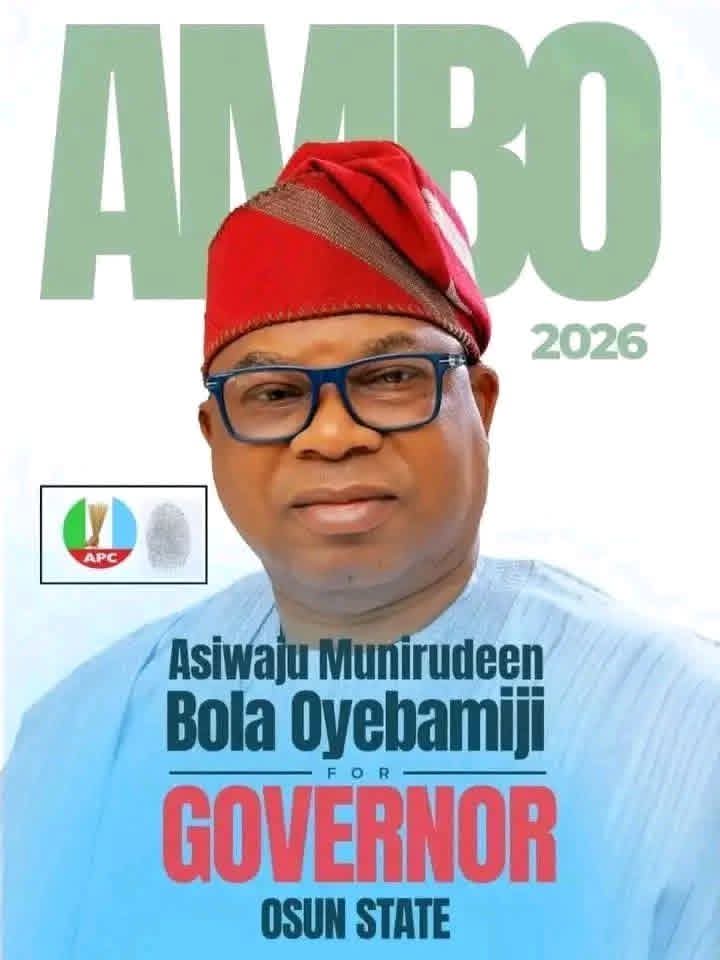
AMBO and the Osun Governorship Race: Assessing the Man, the Politics and the Vision
As political activities gather momentum ahead of the 2026 Osun State governorship election, a public affairs commentator, Oluseyi Olonade, has described the emergence of Asiwaju Munirudeen Bola Oyebamiji, popularly known as AMBO, as a significant development in the state’s political landscape.
In an article titled “Oyebamiji: The Man, The Politics and The Aspiration,” Olonade argued that the All Progressives Congress governorship hopeful possesses the character, experience and vision needed to reposition Osun State for sustainable growth.
According to the writer, Oyebamiji’s appeal stems from his extensive background in the banking sector, where he spent nearly three decades working with institutions including Wema Bank, Trans International Bank, Spring Bank and Enterprise Bank.
A native of Ikire in Irewole Local Government Area, Oyebamiji was described as a technocrat whose experience in corporate governance, finance and risk management has shaped his approach to public administration.
The article noted that his public service journey gained prominence in 2012 when he was appointed to oversee the then Osun State Investment Company Limited. Under his leadership, the organisation was reportedly restructured and transformed into Omoluabi Holdings Limited.
The writer further highlighted Oyebamiji’s tenure as Commissioner for Finance under successive APC administrations, where he was credited with managing the state’s finances during challenging economic periods.
Olonade also referenced Oyebamiji’s appointment as Managing Director of the National Inland Waterways Authority, describing it as further evidence of his administrative and leadership capabilities.
The article contrasted Oyebamiji’s governance philosophy with that of the current administration in Osun State, arguing that the APC aspirant favours institutional reforms, economic diversification and fiscal discipline.

According to the writer, Oyebamiji’s proposed agenda includes strengthening transparency in government spending, expanding internally generated revenue, attracting private-sector investments and promoting industrial and agricultural development.
The article also highlighted youth empowerment, entrepreneurship development and digital skills acquisition as key components of his vision for the state.
Olonade concluded that the forthcoming governorship election would present voters with a choice between different approaches to governance, expressing confidence that Oyebamiji’s experience and developmental agenda make him a strong contender in the race.
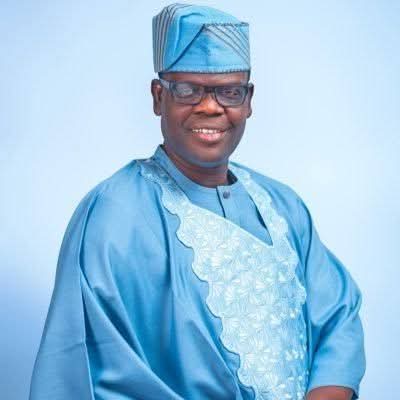
*Oselu Tiwa nTiwa Endorses Oriyomi Hamzat for Oyo Governorship*
A sociopolitical support group in Oyo State, Oselu Tiwa nTiwa, has declared its support for Alhaji Oriyomi Hamzat as the authentic governorship candidate of the Accord Party ahead of the forthcoming governorship election in the state.
The group made its position known in a statement jointly signed by its President, Mr. Adewale Oluwaseyi and Secretary, Alh. Adebayo Oyewole, on Thursday, describing Hamzat as a grassroots figure with strong connection to the people and a track record of humanitarian interventions across Oyo State.

According to the group, the endorsement followed what it described as careful observation of Hamzat’s leadership qualities, compassion and dedication to the welfare of ordinary citizens.
“Oriyomi Hamzat has consistently demonstrated empathy, courage and selfless commitment to humanity. Through his numerous interventions in the lives of ordinary citizens, he has become a symbol of hope to many families and communities,” the statement read.
Oselu Tiwa nTiwa also appealed to the national leadership of the Accord Party to prioritise the long-term future and electoral growth of the party in its decision-making process.
The group noted that Hamzat’s candidacy presents an opportunity for the party to strengthen its grassroots support base and expand its political relevance across Oyo State.
“We respectfully appeal to the National Leadership of the Accord Party to look beyond immediate political calculations and consider the bigger picture, the future growth, stability and electoral success of the party in Oyo State and beyond,” the statement added.
The group further expressed confidence in the leadership of the party, saying it believes the party’s national officers and stakeholders would take decisions that reflect fairness, inclusiveness and the collective interest of members.
While calling on party loyalists to remain calm and united, Oselu Tiwa nTiwa said continued consultations among stakeholders would help strengthen the Accord Party ahead of the election.
Signed:
Alh. Adebayo Oyewole,
Secretary.
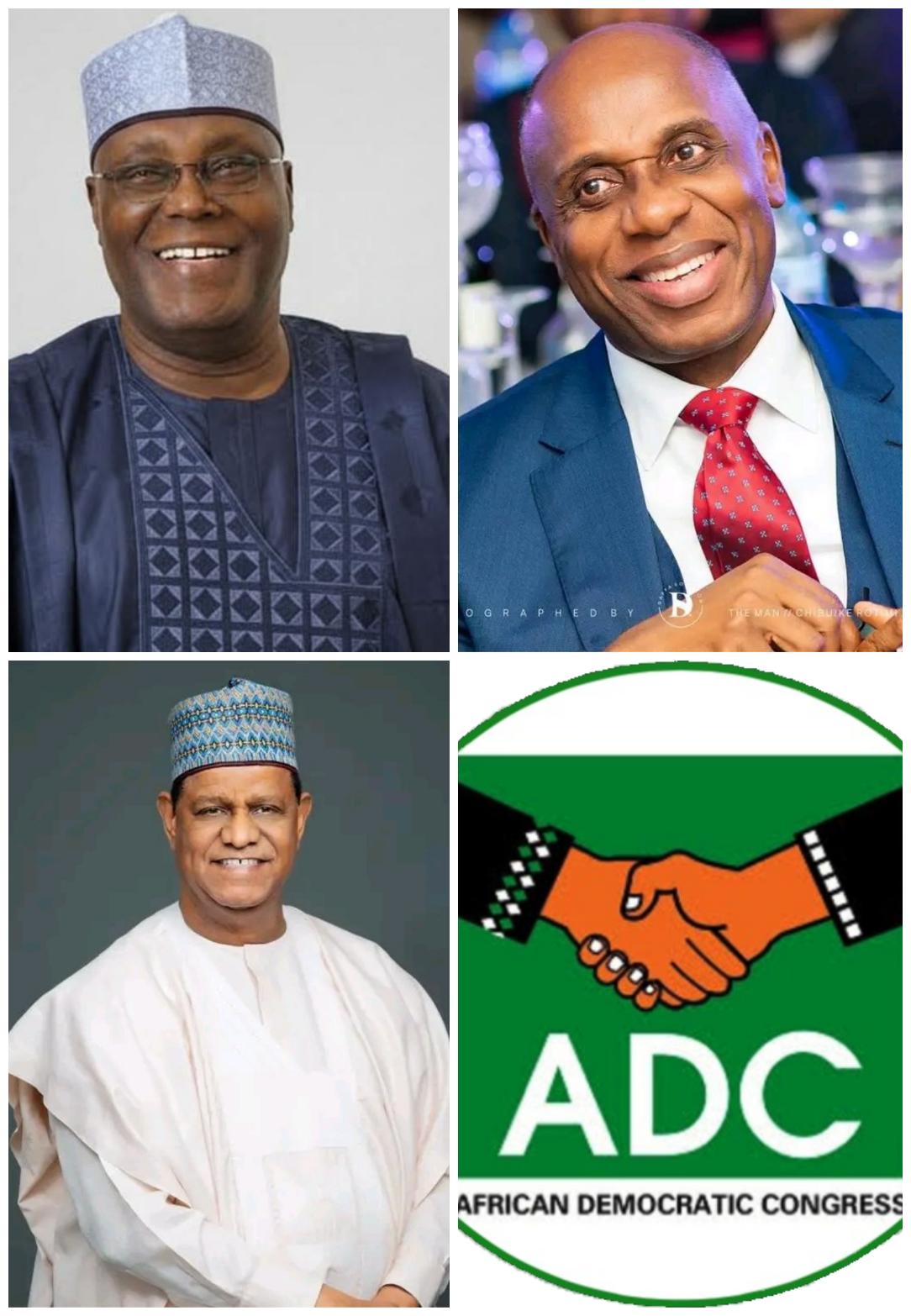
Atiku Set To Clinch ADC Presidential Ticket, Leads Amaechi, Hayatu-Deen In 34 States
Former Vice President of Nigeria and frontline presidential aspirant of the African Democratic Congress (ADC), Atiku Abubakar, is projected to emerge winner of the party’s presidential primaries, according to impeccable sources in Abuja.
The primaries, conducted across over 8,000 wards in the 36 states of the federation and the Federal Capital Territory, reportedly placed Atiku far ahead of his closest rivals — former Rivers State Governor, Rotimi Amaechi, and former Chairman of the Nigerian Economic Summit Group, Mohammed Hayatu-Deen.

Highly placed party insiders disclosed that Atiku is currently leading in 34 states, including the FCT, after securing dominance across the 19 Northern states, the five South-East states, and the six South-West states, while also maintaining a strong showing in at least three states in the South-South geopolitical zone.
The sources added that the outcome reflects what they described as “an overwhelming nationwide acceptance” of the former vice president within the opposition party ahead of the 2027 general election.
Meanwhile, the ADC leadership has invited members of the press to the official announcement of the final collated results scheduled for 11:00 a.m. on Tuesday, May 26, 2026, in Abuja.
The declaration of results is expected to be broadcast live on ARISE Television and two other major television stations, while also being livestreamed on the party’s official social media platforms on X and Facebook.
Speaking ahead of the announcement, the founding National Chairman of the ADC, Chief Ralph Nwosu, said the decision to televise the exercise live was aimed at promoting transparency and democratic accountability.
“We want millions of Nigerians at home and in the Diaspora to witness democracy in action,” Nwosu said.
He further revealed that the party leadership would encourage all three presidential aspirants to publicly embrace a peace accord and commit themselves to working together in unity for the party’s success.
According to him, the move is necessary to strengthen internal cohesion and position the ADC for victory in the presidential election scheduled for January 16, 2027.
Details later.


- Deputy (Dep.) Finance Minister Courts Investors to Transform Ghana’s rice Economy June 4, 2026
- Mobile health services in Kenya reduce the risk of stillbirths June 4, 2026
- JustMarkets Research Highlights Global Growth Divergence as a Key Market Driver June 4, 2026
- African Development Bank Group approves $125 million investment in African Trade and Investment Development Insurance (ATIDI) to expand risk insurance capacity in Africa June 4, 2026
- Congo Energy & Investment Forum 2027 to Position Brazzaville as a Hub for Global Energy Deal-Making June 4, 2026
- Africa Skills Hub (ASH) Transitions to ASH Africa as it Marks 10 Years of Impact June 4, 2026
- When women farm better, Eswatini eats better June 3, 2026
- Togo Hosts the 8th Annual Forum of National Volunteer Agencies in the Economic Community of West African States (ECOWAS) Region June 3, 2026
- Indigenous Peoples gravely vulnerable to Ebola epidemic, warn United Nations (UN) independent experts June 3, 2026
- Meeting between Parliamentary Vice-Minister ONISHI and His Excellency (H.E.) Mr. Cosgrow, Principal Minister and Minister for Agriculture, Fisheries and Blue Economy of Seychelles June 3, 2026
- Deputy (Dep.) Finance Minister Courts Investors to Transform Ghana’s rice Economy June 4, 2026
- Mobile health services in Kenya reduce the risk of stillbirths June 4, 2026
- JustMarkets Research Highlights Global Growth Divergence as a Key Market Driver June 4, 2026
- African Development Bank Group approves $125 million investment in African Trade and Investment Development Insurance (ATIDI) to expand risk insurance capacity in Africa June 4, 2026
- Congo Energy & Investment Forum 2027 to Position Brazzaville as a Hub for Global Energy Deal-Making June 4, 2026
- Africa Skills Hub (ASH) Transitions to ASH Africa as it Marks 10 Years of Impact June 4, 2026
- When women farm better, Eswatini eats better June 3, 2026
-

 news6 months ago
WHO REALLY OWNS MONIEPOINT? The $290 Million Deal That Sold Nigeria’s Top Fintech to Foreign Interests
-

 society1 month ago
SOCIAL MEDIA IS NOT A BATTLEFIELD COMMAND – WHY THE NIGERIAN ARMY’S ACTION AGAINST JUSTICE CRACK IS A NATIONAL SECURITY IMPERATIVE
-

 celebrity radar - gossips4 months ago
Dr. Chris Okafor Returns with Power and Fire of the Spirit -Mounts Grace Nation Altar with Fresh Anointing and Restoration Grace on February 1, 2026
-

 celebrity radar - gossips6 months ago
Prophet Kingsley Aitafo Releases 2026 Prophecy: ‘Nigeria Will Rise, but the World Must Prepare for Turbulence’