
celebrity radar - gossips
Appeal at the Crossroads: Nnamdi Kanu’s Legal Gamble and the Unresolved Question of Nigeria’s National Unity


Appeal at the Crossroads: Nnamdi Kanu’s Legal Gamble and the Unresolved Question of Nigeria’s National Unity
By George Omagbemi Sylvester | Published by SaharaWeeklyNG
“As the detained IPOB leader challenges his life sentence, the case reopens deep constitutional debates over terrorism, self-determination and the credibility of Nigeria’s justice system.”
The legal battle surrounding Nnamdi Kanu, the detained leader of the Indigenous People of Biafra (IPOB), has entered a new and potentially decisive phase. In early February 2026, Kanu formally filed an appeal against his terrorism conviction and life sentences, asking the Court of Appeal in Abuja to quash the judgment delivered against him in November 2025.
The appeal does not merely represent a routine judicial process. It revives one of the most controversial political trials in modern Nigerian history, a case that has long straddled the uneasy line between national security enforcement and constitutional freedoms. For supporters, Kanu is a political agitator fighting perceived injustice against the Igbo people. For the Nigerian state, he is the leader of a proscribed organisation whose rhetoric and activities were deemed to have crossed into the territory of terrorism.
Now, with his appeal before the higher courts, the question is no longer only about Kanu’s fate. It is about the legal, political and moral direction of the Nigerian federation itself.
The conviction and its legal foundations.
Kanu was convicted on terrorism-related charges by the Federal High Court in Abuja on November 20, 2025. The court found him guilty on multiple counts linked to acts deemed preparatory to terrorism, inciting the public through broadcasts, and leading a proscribed organisation.

The judgment imposed multiple life sentences and additional prison terms, all to run concurrently, effectively keeping him incarcerated for life.
The conviction followed years of legal controversy, including his arrest, flight from Nigeria, re-arrest and protracted court proceedings. At one stage in 2025, senior lawyers withdrew from his defence, leaving him to represent himself temporarily in court.
In his appeal, Kanu listed more than twenty grounds, arguing that the trial court erred in law and occasioned what he described as a “grave miscarriage of justice.”
He contended that the court failed to address foundational disruptions in the trial process, including the 2017 military operation at his residence, which he claims undermined the legal continuity of the case.
The appeal: a direct challenge to the state’s narrative.
The core of Kanu’s appeal is a demand for the appellate court to overturn his conviction entirely.
Reports indicate that he is seeking acquittal on all charges, arguing that the evidence and legal procedures used against him were flawed.
The appeal comes after his legal team signalled their intention to challenge the ruling immediately after the conviction, questioning the precedent being set.
Politically, the appeal is likely to re-energise the long-running debate about IPOB and the broader Biafra agitation. The organisation seeks the secession of Nigeria’s southeast region, the traditional homeland of the Igbo ethnic group, a demand the federal government has consistently rejected as unconstitutional and dangerous to national unity.
A case with deep historical and ethnic sensitivities
To understand the gravity of the appeal, one must appreciate the historical roots of the Biafra agitation. The original attempt at secession in 1967 led to a brutal civil war that claimed over a million lives, many from starvation and disease. The trauma of that conflict still shapes Nigeria’s political psyche.
In the decades since, agitation for greater autonomy or outright secession has periodically resurfaced, often driven by perceptions of marginalisation among the Igbo population. Kanu’s IPOB movement represents the most organised expression of that sentiment in recent years.

His supporters argue that the case against him is politically motivated. Some political figures have echoed such concerns. Former Senate President Adolphus Wabara, for instance, described the life sentence as unjust, claiming it was not only Kanu who was imprisoned but symbolically “the entire Igbo race.”
Such statements underscore the ethnic and emotional dimensions of the case and dimensions that no court ruling alone can resolve.
The legal and constitutional stakes.
Beyond politics, the appeal raises serious constitutional questions. Nigeria’s 1999 Constitution guarantees freedom of expression and association, but it also empowers the state to restrict such freedoms in the interest of national security.
Where the line lies between political agitation and terrorism remains a contentious legal issue. Kanu’s conviction rested partly on broadcasts that the court ruled were intended to intimidate the population and incite unrest.
Legal scholars often caution against broad interpretations of terrorism laws. As Professor Ben Saul, a leading expert on international terrorism law, has argued, “Overbroad definitions of terrorism risk criminalising political dissent and undermining the legitimacy of counter-terrorism measures.”
Similarly, the late constitutional scholar Professor Yash Ghai once warned that “when security laws are used to silence political grievances rather than address them, they deepen the crisis they seek to contain.”
These perspectives reflect the broader global debate about how democratic states should respond to separatist movements without eroding civil liberties.
International attention and human rights concerns
Kanu’s case has drawn international attention over the years, particularly regarding the circumstances of his arrest and trial. Human rights advocates have previously questioned aspects of Nigeria’s handling of terrorism trials, including issues of due process and transparency.
While the Nigerian government maintains that it is enforcing the law against a proscribed organisation, critics argue that the prolonged legal saga and the severity of the sentence risk fuelling further unrest in the southeast.
Political analysts warn that heavy-handed legal responses to political agitation can backfire. As political scientist Robert Rotberg once observed, “States that mistake political grievances for purely security threats often end up strengthening the very movements they seek to suppress.”

The broader political implications.
The timing of the appeal is politically sensitive. Nigeria continues to grapple with insecurity, economic hardship, and regional distrust. The southeast, in particular, has experienced periodic unrest, sit-at-home orders and confrontations between security forces and armed groups.
A high-profile appeal such as Kanu’s is almost certain to inflame passions on all sides. For his supporters, it represents a final legal lifeline. For the federal government, it is a test of the judiciary’s credibility and the state’s resolve to maintain territorial integrity.
Some analysts argue that the case should never have been handled purely as a criminal matter. They suggest that it reflects deeper political grievances that require dialogue rather than courtroom battles.
Nobel laureate Wole Soyinka has repeatedly emphasised this point in similar contexts, arguing that “the solution to agitation is not brute force, but the courage to confront the causes of that agitation.”
A judiciary under scrutiny
The appeal also places Nigeria’s judiciary under intense scrutiny. The courts are now expected to navigate a case loaded with political tension, ethnic sensitivities and international attention.
If the Court of Appeal upholds the conviction, it may reinforce the state’s authority but risk deepening resentment in parts of the southeast. If it overturns the conviction, it could trigger political backlash and raise questions about the handling of terrorism cases.
Either outcome will have consequences far beyond the courtroom.
The uncertain road ahead
For now, the appeal represents a legal process that could take months, if not years, to resolve. It will likely pass through several stages of judicial review, potentially reaching the Supreme Court before a final decision is made.
Though regardless of the outcome, the case has already reshaped Nigeria’s political landscape. It has reignited debates about federalism, minority rights and the limits of state power. It has also exposed the fragility of national unity in a country still wrestling with the ghosts of its civil war.
As the appeal proceeds, Nigeria stands at a delicate crossroads. The courts will decide the legal questions. The political and moral questions (about justice, inclusion and the meaning of nationhood) will linger long after the final judgment is delivered.
In that sense, Nnamdi Kanu’s appeal is more than a personal legal battle. It is a test of Nigeria’s democracy and it is constitutional maturity and its ability to reconcile security with justice in a deeply divided society.




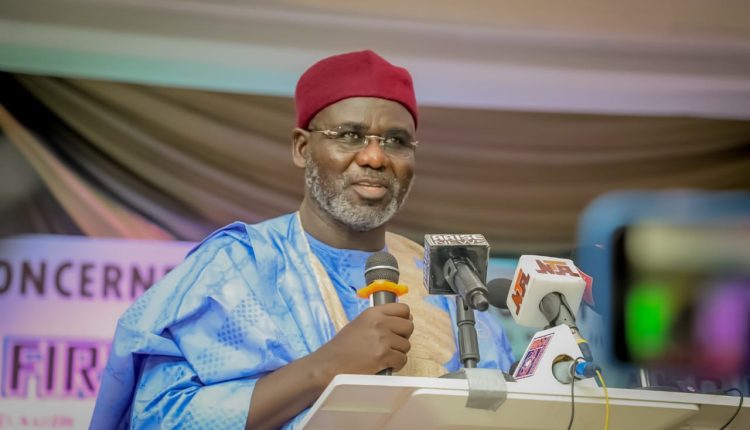
BURATAI URGES ECOWAS UNITY, CALLS FOR RETURN OF SAHEL STATES AT VON FORUM
ABUJA – In a powerful appeal for regional stability, former Chief of Army Staff, Lt. Gen. TY Buratai (rtd), has called on ECOWAS and the African Union (AU) to prioritize the return of the Association of Sahel States (AES) to ensure the survival of West African integration.
Speaking Thursday at the Voice of Nigeria (VON) Forum 2026 in Abuja, Buratai warned that the region’s progress could become a “mirage” without the inclusion of Mali, Burkina Faso, and Niger Republic.
A Legacy of Sacrifice

Buratai highlighted Nigeria’s historic role as the “unshakable anchor” of the sub-region. He pointed to Nigeria’s decades of leadership in ECOMOG missions across Liberia, Sierra Leone, The Gambia, and Guinea-Bissau as evidence of the nation’s commitment.
”Nigeria has sacrificed and invested in blood, treasure, and diplomacy to defend democracy,” Buratai stated. “Our stability is inseparable from the security of our neighbours.”
The Path to Unity
The General urged ECOWAS to deepen its engagement with the African Union to bridge the current diplomatic rift with the AES nations. He emphasized that the collective security of West Africa depends on a unified front, noting that democracy and regional safety are “two sides of the same coin.”
”The unity of ECOWAS cannot be complete without Mali, Burkina Faso, and Niger Republic. Without unity, progress in the region may be a mirage,” Buratai cautioned.
Celebrating 51 Years of VON
The forum also served as a celebration of Voice of Nigeria’s 51st anniversary. Buratai lauded the broadcaster as a “Nigerian voice with an African heart,” praising its professionalism and pan-African vision.
He paid tribute to veteran journalists, including the late Mohammed Okorejor and retired director Ben Shamang, while commending the current Director General for revitalizing the agency.
The retired General concluded his message with a call to strengthen regional institutions, urging leaders to honor the legacy of ECOWAS through renewed cooperation and institutional integrity.
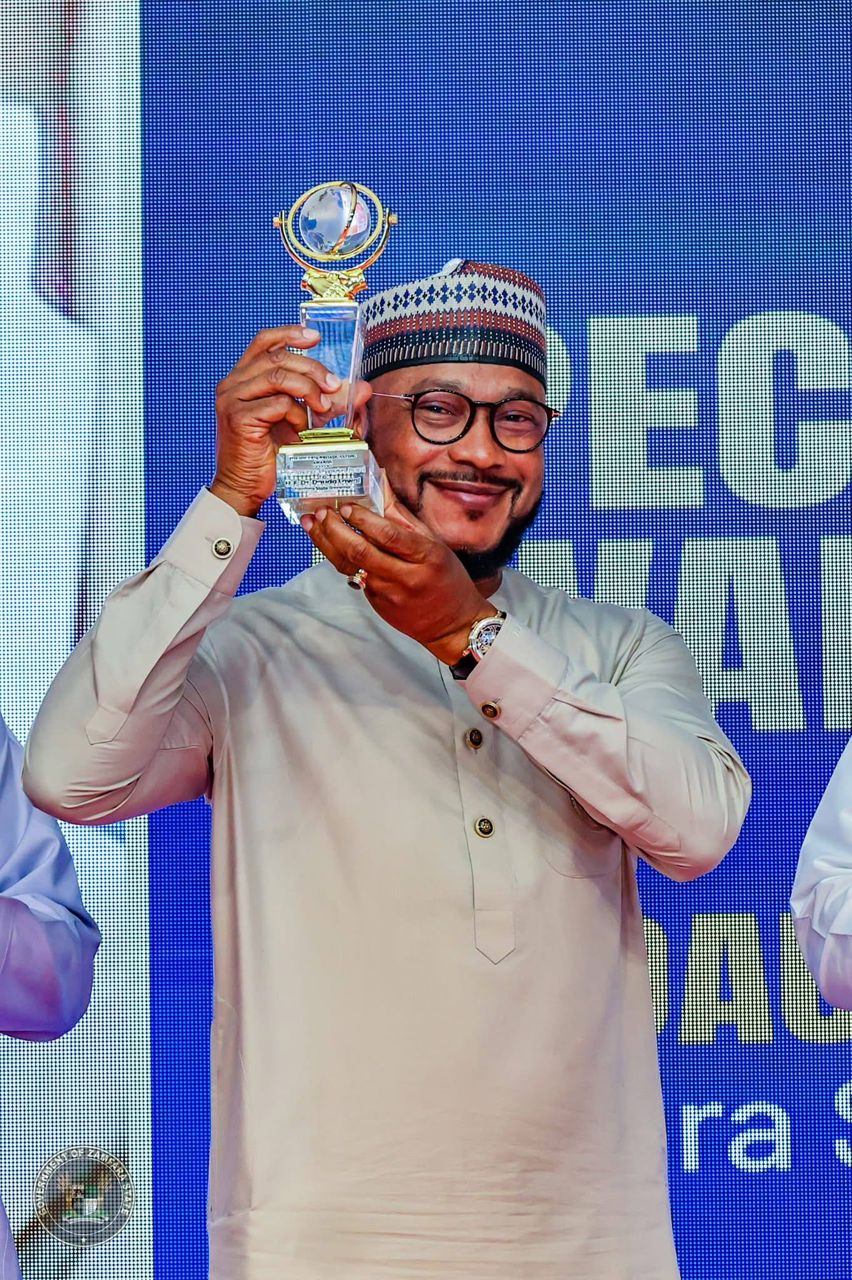
GOV. LAWAL WINS BON GOVERNOR OF THE YEAR FOR ZAMFARA’S INFRASTRUCTURE
The Broadcasting Organisations of Nigeria (BON) has awarded Governor Dauda Lawal the Infrastructure Governor of the Year honour for his administration’s giant strides in the Urban Renewal project across Zamfara.
The governor received the award at the second edition of the Broadcasting Organisations of Nigeria (BON) held at the NAF conference centre, Abuja.
A statement by the governor’s spokesperson, Sulaiman Bala Idris, revealed that the BON acknowledged Zamfara state’s unprecedented and transformative achievements in infrastructure, recognising excellence beyond the broadcasting industry.
He added that Governors Bassey Otu of Cross River and Uba Sani of Kaduna, the minister of information and national orientation, Mohammed Idris, along with John Momoh, Shyngle Wigwe, Abubakar Jijiwa, and Sa’a Ibrahim, were among the prominent Nigerians honoured at the 2026 Nigeria Broadcasting Awards.
The statement read in parts, “The Broadcasting Organisation of Nigeria, an umbrella body for public and private broadcasters in Nigeria, was established in 1973 to promote the interests of the broadcasting industry and ensure high standards in media practices.
“The organisation conducted a thorough months-long selection process aimed at recognising professional excellence and raising standards for media practice across Nigeria.
“The Awards Selection Committee was chaired by Dr Danladi Bako, former Director-General of the National Broadcasting Commission (NBC). The awards panel included veterans and representatives from the Advertising Regulatory Council of Nigeria (ARCON) and the NBC..

“The selection committee cited numerous reasons for awarding Governor Dauda Lawal, notably his significant progress across sectors, particularly for transforming Gusau into a modern State Capital.
“Zamfara has witnessed unprecedented achievements under Governor Dauda Lawal, including the historic construction of a modern International Airport in the State.
“Apart from urban renewal projects, as well as the construction and outfitting of General Hospitals, Governor Dauda Lawal’s administration has built, refurbished, and equipped over 800 schools across the 14 local government areas of the State.

“This recognition by the highest broadcasting authority in Nigeria will motivate the governor to dedicate more effort to his mission to serve and rebuild Zamfara state.”
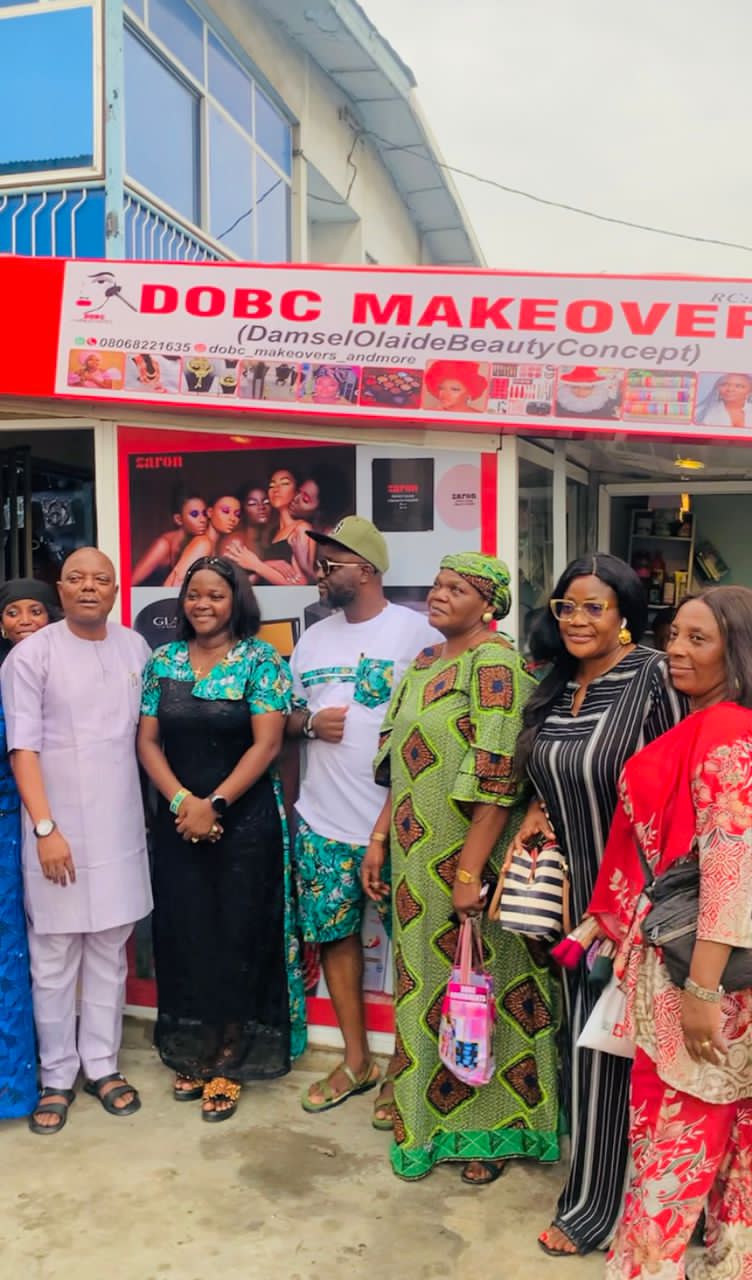
Beauty Meets Glamour as Olaide Ogunyemi Opens New Studio in Mushin
Popular Nollywood actress and professional makeup artiste, Olaide Ogunyemi Oluwayemisi aka Damilola, has expanded her footprint in the beauty industry with the grand opening of her new makeup studio in Lagos.
The talented thespian, who is also the Chief Executive Officer of @Dobc_makeovers_andmore, officially unveiled the ultra-modern beauty space last Thursday, April 2, 2026, in a colourful ceremony filled with glamour, fashion, and pageantry.
Strategically located at 101 Palm Avenue, right beside FitPlus and Sparklight Hospital in Mushin area of Lagos, the new studio is designed to offer top-notch beauty services, reflecting Ogunyemi’s commitment to excellence and professionalism in the ever-growing makeup industry.
The opening ceremony attracted friends, colleagues from the Nollywood industry, beauty enthusiasts, and well-wishers who came out in large numbers to celebrate the entrepreneur’s latest milestone. Guests were treated to a vibrant atmosphere that showcased creativity, style, and the evolving standards of the beauty business in Lagos.
Speaking at the event, Ogunyemi expressed her excitement and gratitude, noting that the new studio represents years of hard work, dedication, and passion for her craft. She reaffirmed her commitment to delivering premium beauty services while empowering aspiring makeup artistes.
The launch of the studio further cements her reputation as a dynamic force, successfully blending her career in Nollywood with a thriving beauty brand.
With this latest development, Olaide Damilola Ogunyemi continues to inspire many young entrepreneurs, proving that talent, consistency, and vision remain key drivers of success in Nigeria’s creative and business landscape.


- African financial institutions call for coordinated financing solutions to unlock Africa’s digital transformation April 9, 2026
- African Energy Chamber (AEC) Supports Perenco Partnership to Advance Industry 4.0 Skills in Central Africa April 9, 2026
- Youth Charter Calls for “Commonwealth Youth Legacy” Ahead of Glasgow 2026 April 9, 2026
- Securing the bridge between legacy and smart April 9, 2026
- Africa’s Lithium Pipeline Gains Momentum as Global Supply Deficits Loom April 9, 2026
- Afreximbank delivers strong FY2025 results; with a total assets and contingencies base of US$48.5 billion April 9, 2026
- National Council for Curriculum Development (NCDC) seeks Shs17 Billion for curriculum review, teacher training April 9, 2026
- Senegal: A Decade of Unresolved Climate Displacement April 9, 2026
- Uganda engages its diaspora in Japan on national policy framework for inclusive development April 9, 2026
- Afreximbank supports Dangote Group as it targets US$100 billion annual revenue by 2030 April 8, 2026
- African financial institutions call for coordinated financing solutions to unlock Africa’s digital transformation April 9, 2026
- African Energy Chamber (AEC) Supports Perenco Partnership to Advance Industry 4.0 Skills in Central Africa April 9, 2026
- Youth Charter Calls for “Commonwealth Youth Legacy” Ahead of Glasgow 2026 April 9, 2026
- Securing the bridge between legacy and smart April 9, 2026
- Africa’s Lithium Pipeline Gains Momentum as Global Supply Deficits Loom April 9, 2026
- Afreximbank delivers strong FY2025 results; with a total assets and contingencies base of US$48.5 billion April 9, 2026
- National Council for Curriculum Development (NCDC) seeks Shs17 Billion for curriculum review, teacher training April 9, 2026
-

 news4 months ago
WHO REALLY OWNS MONIEPOINT? The $290 Million Deal That Sold Nigeria’s Top Fintech to Foreign Interests
-

 society7 months ago
“You Are Never Without Help” – Pastor Gebhardt Berndt Inspires Hope Through Empower Church (Video)
-

 celebrity radar - gossips2 months ago
Dr. Chris Okafor Returns with Power and Fire of the Spirit -Mounts Grace Nation Altar with Fresh Anointing and Restoration Grace on February 1, 2026
-

 celebrity radar - gossips4 months ago
Prophet Kingsley Aitafo Releases 2026 Prophecy: ‘Nigeria Will Rise, but the World Must Prepare for Turbulence’