
celebrity radar - gossips
Appeal at the Crossroads: Nnamdi Kanu’s Legal Gamble and the Unresolved Question of Nigeria’s National Unity


Appeal at the Crossroads: Nnamdi Kanu’s Legal Gamble and the Unresolved Question of Nigeria’s National Unity
By George Omagbemi Sylvester | Published by SaharaWeeklyNG
“As the detained IPOB leader challenges his life sentence, the case reopens deep constitutional debates over terrorism, self-determination and the credibility of Nigeria’s justice system.”
The legal battle surrounding Nnamdi Kanu, the detained leader of the Indigenous People of Biafra (IPOB), has entered a new and potentially decisive phase. In early February 2026, Kanu formally filed an appeal against his terrorism conviction and life sentences, asking the Court of Appeal in Abuja to quash the judgment delivered against him in November 2025.
The appeal does not merely represent a routine judicial process. It revives one of the most controversial political trials in modern Nigerian history, a case that has long straddled the uneasy line between national security enforcement and constitutional freedoms. For supporters, Kanu is a political agitator fighting perceived injustice against the Igbo people. For the Nigerian state, he is the leader of a proscribed organisation whose rhetoric and activities were deemed to have crossed into the territory of terrorism.
Now, with his appeal before the higher courts, the question is no longer only about Kanu’s fate. It is about the legal, political and moral direction of the Nigerian federation itself.
The conviction and its legal foundations.
Kanu was convicted on terrorism-related charges by the Federal High Court in Abuja on November 20, 2025. The court found him guilty on multiple counts linked to acts deemed preparatory to terrorism, inciting the public through broadcasts, and leading a proscribed organisation.

The judgment imposed multiple life sentences and additional prison terms, all to run concurrently, effectively keeping him incarcerated for life.
The conviction followed years of legal controversy, including his arrest, flight from Nigeria, re-arrest and protracted court proceedings. At one stage in 2025, senior lawyers withdrew from his defence, leaving him to represent himself temporarily in court.
In his appeal, Kanu listed more than twenty grounds, arguing that the trial court erred in law and occasioned what he described as a “grave miscarriage of justice.”
He contended that the court failed to address foundational disruptions in the trial process, including the 2017 military operation at his residence, which he claims undermined the legal continuity of the case.
The appeal: a direct challenge to the state’s narrative.
The core of Kanu’s appeal is a demand for the appellate court to overturn his conviction entirely.
Reports indicate that he is seeking acquittal on all charges, arguing that the evidence and legal procedures used against him were flawed.
The appeal comes after his legal team signalled their intention to challenge the ruling immediately after the conviction, questioning the precedent being set.
Politically, the appeal is likely to re-energise the long-running debate about IPOB and the broader Biafra agitation. The organisation seeks the secession of Nigeria’s southeast region, the traditional homeland of the Igbo ethnic group, a demand the federal government has consistently rejected as unconstitutional and dangerous to national unity.
A case with deep historical and ethnic sensitivities
To understand the gravity of the appeal, one must appreciate the historical roots of the Biafra agitation. The original attempt at secession in 1967 led to a brutal civil war that claimed over a million lives, many from starvation and disease. The trauma of that conflict still shapes Nigeria’s political psyche.
In the decades since, agitation for greater autonomy or outright secession has periodically resurfaced, often driven by perceptions of marginalisation among the Igbo population. Kanu’s IPOB movement represents the most organised expression of that sentiment in recent years.

His supporters argue that the case against him is politically motivated. Some political figures have echoed such concerns. Former Senate President Adolphus Wabara, for instance, described the life sentence as unjust, claiming it was not only Kanu who was imprisoned but symbolically “the entire Igbo race.”
Such statements underscore the ethnic and emotional dimensions of the case and dimensions that no court ruling alone can resolve.
The legal and constitutional stakes.
Beyond politics, the appeal raises serious constitutional questions. Nigeria’s 1999 Constitution guarantees freedom of expression and association, but it also empowers the state to restrict such freedoms in the interest of national security.
Where the line lies between political agitation and terrorism remains a contentious legal issue. Kanu’s conviction rested partly on broadcasts that the court ruled were intended to intimidate the population and incite unrest.
Legal scholars often caution against broad interpretations of terrorism laws. As Professor Ben Saul, a leading expert on international terrorism law, has argued, “Overbroad definitions of terrorism risk criminalising political dissent and undermining the legitimacy of counter-terrorism measures.”
Similarly, the late constitutional scholar Professor Yash Ghai once warned that “when security laws are used to silence political grievances rather than address them, they deepen the crisis they seek to contain.”
These perspectives reflect the broader global debate about how democratic states should respond to separatist movements without eroding civil liberties.
International attention and human rights concerns
Kanu’s case has drawn international attention over the years, particularly regarding the circumstances of his arrest and trial. Human rights advocates have previously questioned aspects of Nigeria’s handling of terrorism trials, including issues of due process and transparency.
While the Nigerian government maintains that it is enforcing the law against a proscribed organisation, critics argue that the prolonged legal saga and the severity of the sentence risk fuelling further unrest in the southeast.
Political analysts warn that heavy-handed legal responses to political agitation can backfire. As political scientist Robert Rotberg once observed, “States that mistake political grievances for purely security threats often end up strengthening the very movements they seek to suppress.”

The broader political implications.
The timing of the appeal is politically sensitive. Nigeria continues to grapple with insecurity, economic hardship, and regional distrust. The southeast, in particular, has experienced periodic unrest, sit-at-home orders and confrontations between security forces and armed groups.
A high-profile appeal such as Kanu’s is almost certain to inflame passions on all sides. For his supporters, it represents a final legal lifeline. For the federal government, it is a test of the judiciary’s credibility and the state’s resolve to maintain territorial integrity.
Some analysts argue that the case should never have been handled purely as a criminal matter. They suggest that it reflects deeper political grievances that require dialogue rather than courtroom battles.
Nobel laureate Wole Soyinka has repeatedly emphasised this point in similar contexts, arguing that “the solution to agitation is not brute force, but the courage to confront the causes of that agitation.”
A judiciary under scrutiny
The appeal also places Nigeria’s judiciary under intense scrutiny. The courts are now expected to navigate a case loaded with political tension, ethnic sensitivities and international attention.
If the Court of Appeal upholds the conviction, it may reinforce the state’s authority but risk deepening resentment in parts of the southeast. If it overturns the conviction, it could trigger political backlash and raise questions about the handling of terrorism cases.
Either outcome will have consequences far beyond the courtroom.
The uncertain road ahead
For now, the appeal represents a legal process that could take months, if not years, to resolve. It will likely pass through several stages of judicial review, potentially reaching the Supreme Court before a final decision is made.
Though regardless of the outcome, the case has already reshaped Nigeria’s political landscape. It has reignited debates about federalism, minority rights and the limits of state power. It has also exposed the fragility of national unity in a country still wrestling with the ghosts of its civil war.
As the appeal proceeds, Nigeria stands at a delicate crossroads. The courts will decide the legal questions. The political and moral questions (about justice, inclusion and the meaning of nationhood) will linger long after the final judgment is delivered.
In that sense, Nnamdi Kanu’s appeal is more than a personal legal battle. It is a test of Nigeria’s democracy and it is constitutional maturity and its ability to reconcile security with justice in a deeply divided society.




celebrity radar - gossips
General Buratai to deliver University of Ilorin’s distinguished personality lecture
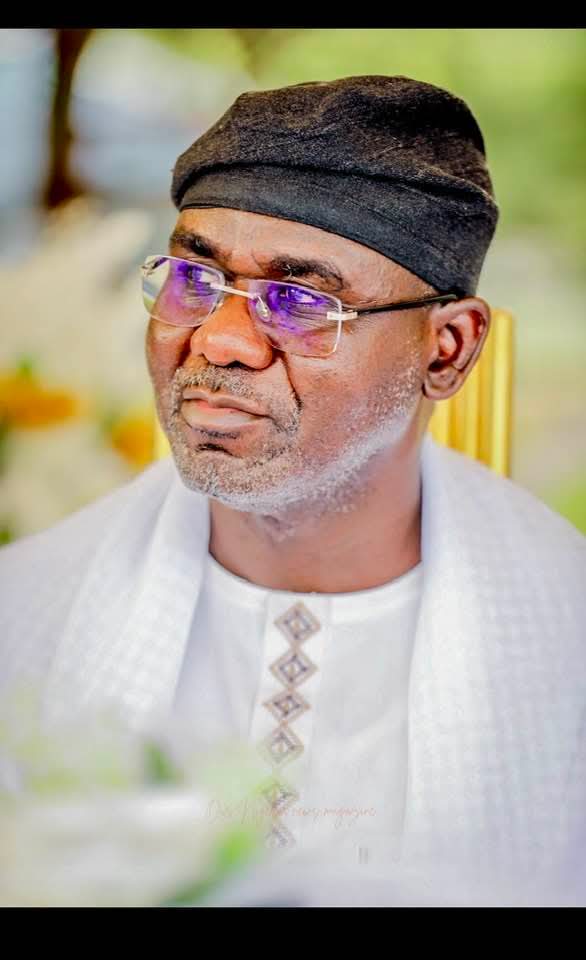
General Buratai to deliver University of Ilorin’s distinguished personality lecture
The Department of Criminology and Security Studies at the University of Ilorin has announced that a former Chief of Army Staff and former Ambassador to the Republic of Benin, Ambassador Lt. General (Rtd) Tukur Buratai (CFR), will deliver its prestigious Distinguished Personality Lecture.

The lecture is scheduled to take place on Saturday, 23rd May 2026, at the University Auditorium by 10:00 a.m. The Vice-Chancellor of the University, Prof. Wahab Olasupo Egbewole (SAN), is expected to be the Chief Host, while Dr. Monsurat Isiaka (Ph.D.), Head of the Department, will serve as Host.
Buratai, who brings a wealth of unmatched experience from his military and diplomatic service, will be speaking on the critical theme: “The Armed Forces of Nigeria and National Security: The Youth and National Aspirations.”
The lecture aims to foster critical conversation about Nigeria’s future security landscape, the pivotal role of the armed forces in national stability, and the interplay between national aspirations and the country’s youth population.
celebrity radar - gossips
From Global Stages to Public Service: Media Mogul Fidelis Duker Officially Joins House of Reps Race for Akpabuyo/Bakassi/Calabar South
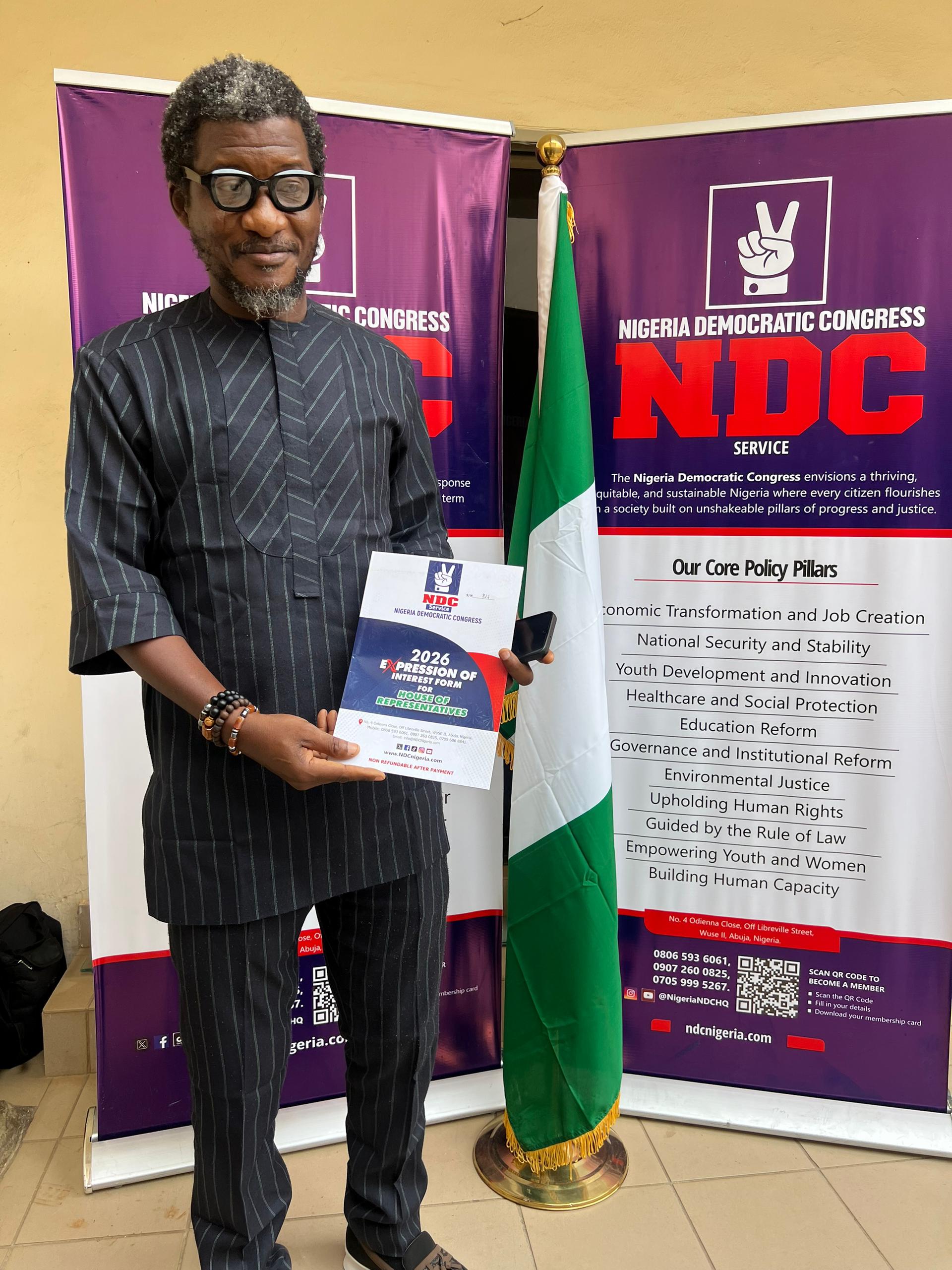
From Global Stages to Public Service: Media Mogul Fidelis Duker Officially Joins House of Reps Race for Akpabuyo/Bakassi/Calabar South
CALABAR, NIGERIA – Renowned media practitioner, veteran filmmaker, and global cultural ambassador, Fidelis Duker, has officially declared his intention to run for the Federal House of Representatives, representing the Akpabuyo/Bakassi/Calabar South Federal Constituency.
In a definitive move that bridges the gap between international enterprise and grassroots governance, the Henshaw Town-born pioneer has successfully picked up his Expression of Interest (EOI) form under the platform of the NNigeria Democratic Congress (NDC).
Duker’s entry into the legislative race brings an unprecedented level of global exposure and professional pedigree to Cross River State’s political landscape. For over three decades, he has stood as a towering figure in Africa’s creative economy.
As the founder of the Abuja International Film Festival West Africa’s longest-running film festival, and the Regional Secretary General for the Federation of Pan African Filmmakers (FEPACI), Duker has consistently flown Nigeria’s flag at prestigious international fora worldwide. From presenting the brilliance of African storytelling at the legendary Cannes Film Festival in France to driving strategic industry dialogues across Europe and Africa, his extensive global travels have positioned him as a master of international relations and resource mobilization.
“Our constituency does not suffer from a lack of potential; it suffers from a lack of structured, globally competitive representation,” Duker stated following the collection of his nomination documents. “My career has been defined by creating wealth, building platforms, and placing Nigerian talent on the world map. I am stepping into this race to deploy that exact same global network, corporate discipline, and innovative leadership to bring sustainable development, youth empowerment, and infrastructure to Akpabuyo, Bakassi, and Calabar South.”
Duker’s visionary campaign is backed by an elite, multi-disciplinary educational background curated from top-tier local and international institutions. He holds credentials from the prestigious Nigerian Institute of Journalism and Crawford University, alongside advanced professional training from the University of California, Los Angeles (UCLA). His world-class expertise in broadcasting and mass communications was further sharpened at the globally acclaimed BBC Training Academy and the Deutsche Welle Training Akademie, complementing his academic roots at the Cross River University of Technology.
As the Chief Executive Officer of FAD Media Productions—the powerhouse behind FAD 93.1 FM Calabar, FAD FM 101.3 Abuja and FAD 360 TV, Duker is already one of the largest private-sector employers of youth in Cross River State. His legislative blueprint vows to replicate this success on a macro scale by introducing bills that will be tech-driven youth development projects, positioning bills that will attract foreign direct investment to the constituency’s coastal assets, and ensuring uncompromising transparency in the execution of constituency projects.
The NDC leadership and various community support groups have warmly received his candidacy, describing it as a breath of fresh air and a critical step toward elevating the constituency to international standards of governance and economic growth.
celebrity radar - gossips
Ileya Tonic : King Saheed Osupa Announces New 2-in-1 Album, Acapella & Metamorphosis

Ileya Tonic : King Saheed Osupa Announces New 2-in-1 Album, Acapella & Metamorphosis
By Alhaji Arems (Baba Fuji)
Veteran Fuji musician King Saheed Osupa is set to release a new 2-in-1 album titled Acapella & Metamorphosis on May 26, 2026.
The announcement was revealed through promotional materials shared across the singer’s official social media pages, where anticipation has already started building among longtime fans of the Fuji icon. The artwork for the project presents Osupa in a calm and regal setting, matching the mature image he has maintained throughout his career.
While full details about the tracklist and featured artists are yet to be officially released, the title of the project has already sparked conversations online. “Metamorphosis” suggests a new phase or evolution, while “Acapella” hints at a more raw or expressive musical direction. Together, both titles point toward a project that may combine classic Fuji elements with a refreshed sound and message.
Over the years, Osupa has remained one of the most respected voices in Fuji music, known for his deep lyrical style, cultural storytelling, and loyal fanbase across Nigeria and beyond. Even as the music industry continues to evolve, the singer has maintained strong relevance, especially among audiences who appreciate traditional Yoruba-rooted sounds blended with contemporary production.
The decision to release a 2-in-1 album also stands out at a time when many artists are focusing on shorter projects and singles. For established acts like Osupa, larger releases often serve as a statement of longevity, consistency, and artistic confidence.
Fans have continued to react positively to the announcement online, with many already counting down to the release date. The project is expected to arrive on major streaming platforms including Spotify, Apple Music, Audiomack, Boomplay, YouTube Music, TIDAL, and Deezer.
With the official release now scheduled for May 26, listeners will be watching closely to see what King Saheed Osupa delivers on Acapella & Metamorphosis and whether the project marks another defining moment in his long-running career.


- Seychelles: Minister Faure and Ambassador Azais Tatistscheff discuss humanitarian and healthcare cooperation May 22, 2026
- African Energy Chamber (AEC) to Position Africa as South America’s Next Strategic Energy Frontier at Association of Oil, Gas and Renewable Energy Companies of Latin America and the Caribbean (ARPEL) Conference 2026 May 22, 2026
- Afreximbank Posts Robust Q1 2026 Results with 25% Growth in Net Income and Improved Profitability May 22, 2026
- Africa: Soil Mapping for Resilient Agrifood Systems (SoilFER) programme scales up soil fertility monitoring through Mid-Infrared Spectroscopy May 22, 2026
- Food and Agriculture Organization of the United Nations (FAO) receives USD 4 million from the Regional Humanitarian Fund to save lives and protect the livelihoods of the most vulnerable households in Chad May 22, 2026
- Algeria: Mr. Attaf received by the President of the Arab Republic of Egypt May 22, 2026
- Seychelles: President Herminie Engages Tourism Office on La Digue on Visitor Safety and Infrastructure May 22, 2026
- Meeting between State-Minister Kunimitsu and H.E. Mr. João Jorge Matlombe, Minister of Transport and Logistics of Mozambique May 22, 2026
- Ebola response support: United Nations Organization Stabilization Mission in the Democratic Republic of the Congo (MONUSCO) airlifts nearly 30 tons of equipment to Bunia May 22, 2026
- Liberia: President Boakai Congratulates Cameroon on National Day May 22, 2026
- Seychelles: Minister Faure and Ambassador Azais Tatistscheff discuss humanitarian and healthcare cooperation May 22, 2026
- African Energy Chamber (AEC) to Position Africa as South America’s Next Strategic Energy Frontier at Association of Oil, Gas and Renewable Energy Companies of Latin America and the Caribbean (ARPEL) Conference 2026 May 22, 2026
- Afreximbank Posts Robust Q1 2026 Results with 25% Growth in Net Income and Improved Profitability May 22, 2026
- Africa: Soil Mapping for Resilient Agrifood Systems (SoilFER) programme scales up soil fertility monitoring through Mid-Infrared Spectroscopy May 22, 2026
- Food and Agriculture Organization of the United Nations (FAO) receives USD 4 million from the Regional Humanitarian Fund to save lives and protect the livelihoods of the most vulnerable households in Chad May 22, 2026
- Algeria: Mr. Attaf received by the President of the Arab Republic of Egypt May 22, 2026
- Seychelles: President Herminie Engages Tourism Office on La Digue on Visitor Safety and Infrastructure May 22, 2026
-

 news5 months ago
WHO REALLY OWNS MONIEPOINT? The $290 Million Deal That Sold Nigeria’s Top Fintech to Foreign Interests
-

 society3 weeks ago
SOCIAL MEDIA IS NOT A BATTLEFIELD COMMAND – WHY THE NIGERIAN ARMY’S ACTION AGAINST JUSTICE CRACK IS A NATIONAL SECURITY IMPERATIVE
-

 celebrity radar - gossips4 months ago
Dr. Chris Okafor Returns with Power and Fire of the Spirit -Mounts Grace Nation Altar with Fresh Anointing and Restoration Grace on February 1, 2026
-

 celebrity radar - gossips5 months ago
Prophet Kingsley Aitafo Releases 2026 Prophecy: ‘Nigeria Will Rise, but the World Must Prepare for Turbulence’