
society
Appraising Regulatory Excellence through Komolafe’s Lens

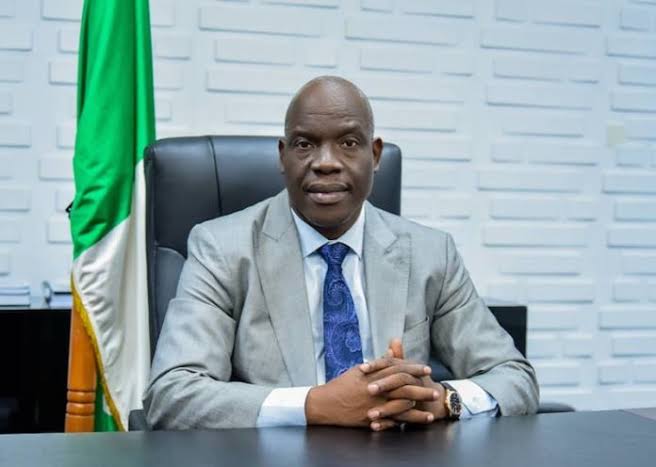
*Appraising Regulatory Excellence through Komolafe’s Lens*
By Ibrahim Idris
When the momentous task of leading a constituted regulatory edifice like NUPRC is entrusted to a single person, the world expects two things: fidelity to statutory duty and demonstrable outcomes. In Nigeria’s upstream petroleum sector, it is no surprising that those expectations have been largely met, and have been exceeded on many occasions by Engineer Gbenga Komolafe. Being the Chief Executive of the Nigerian Upstream Petroleum Regulatory Commission (NUPRC), Komolafe is a living metonym for “Regulatory Excellence”, one who is meticulous in method, and relentless in his delivery.
Komolafe’s regulatory excellence is a precis of performance. His ability to expressly use technological modernity to reorient the upstream governance from an era of opaque process to one that’s characterized by clearer rules, timelier approvals, and an insistence on environmental and fiscal accountability, speaks a lot about the valuable experiences he has gotten over decades of commitment.
Trained as an engineer and a lawyer, and steeped in decades of hands-on experience at the Nigerian National Petroleum Corporation and its subsidiaries, Komolafe is a practitioner-turned-regulator who understands the idiosyncrasies of Nigeria’s oil industry from the pumpjack to the policy memo. His appointment as the inaugural CEO of the NUPRC in 2021 placed him at the fulcrum of the Petroleum Industry Act’s (PIA) ambitious reordering of upstream governance.
Is arrival at the NUPRC with credentials that signal both technical proficiency and institutional knowledge, present him as the perfect leader who could translate the PIA text from just abstract into implementable regulations, and pragmatic decision that would uplift investor confidence while protecting the national patrimony. Komolafe as proven himself capable.
In a capital-intensive industry such as upstream oil and gas, it is well-known that one of the strongest indicators of regulatory is the predictability and timeliness of approvals. Under Komolafe’s leadership, the NUPRC proven this efficiency rationalizing transactional approvals while insisting on enforceable conditions that protect communities and the environment. A salient example is the commission’s approvals of onshore asset sales in 2024 which saw a sign-offs on transactions involving major operators.
However, this action created a new willingness to clear transactions that has been long affected by regulatory uncertainty, on the condition that buyers accept responsibility for remediation and community compensation. This accelerated market orderliness while ensuring that liabilities linked to environmental damage are not abdicated. It further enabled market continuity and protected public interest. This posture which is neither reflexively permissive nor immovably obstructionist, has produced a healthier investment rhythm. By setting clear conditions and timelines, Komolafe and his team have sent a market signal: Nigeria’s upstream sector can transact with greater legal certainty, and the regulator will enforce compliance without needlessly obstructing legitimate commercial pathways.
Komolafe’s NUPRC understood that regulatory excellence in the contemporary petroleum sector is inseparable from environmental stewardship, and a regulator that fails to harmonize extractive activity with climate commitments, will over time, undermine both national credibility and long-term resource value. Therefore on this note, the commission foregrounded decarbonization as an operational requirement rather than a rhetorical afterthought that is hardly being implemented.
Moreover, the launching and enforcement of the Upstream Petroleum Decarbonisation Template (UPDT), and the insistence that licence applicants demonstrate low-carbon credentials and evidence of renewable-energy integration, constitute an important normative shift. The NUPRC, on the 1st of January 2025, stipulated a regulatory condition that aligns Nigeria’s upstream licensing with expectations of global nations’ governance and investor desire for lower-carbon portfolios. These administrative structuring operationalize decarbonization by embedding measurable mitigation commitments into the licence lifecycle. This has become a blueprint for good governance whereby, applicants must present verifiable plans, timelines to work with, and monitoring structure.
Komolafe has made his policy more persuasive by proving it with real data. Under his leadership, the NUPRC reported a notable growth in national oil reserves and a substantial uptick in production between April 2023 and November 2024, accompanied by a marked reduction in theft and deferments. This was made possible due to the good relationship the commission fostered with security agencies and its deployment of monitoring systems contributed to these improvements. These outcomes are mot accidental; they are results from all elements of a regulatory strategy that prizes accountability.
Regulation often plays a catalytic role in attracting and preserving investment. Metrics like, rig count, capital commitments, and licensing round outcomes that investors watch out for, has shown progressive movement under Komolafe’s watch. It is reported that active rig count has increased geometrically from eight in 2021 to 69 as of October 2025, revealing a 763% increase, and substantial investments flowing into exploration and production activities indicate a renewed operational momentum. These shifts are consistent with a regulatory environment that has become less volatile and more adjudicatively certain.
In practical terms, this is consequential because, higher rig counts mean more acreage is being tested and developed; new investments translate into jobs, forward and backward linkages, and enhanced fiscal inflows for the state. The regulator’s role here has been to create an enabling framework, one that clarifies title transfers, streamlines licencing, and enforces compliance, thereby lowering perceived sovereign risk and unlocking capital that had hitherto been reticent.
Under Komolafe, the NUPRC has been proactive in institutionalizing technical and procedural tools that make oversight more effective and less discretionary: the promulgation of measurement regulations, the introduction of the Advanced Cargo Declaration Mechanism, and the modernization of the licensing apparatus are illustrative. This action of his aligns with the popular saying that, “Great regulators are not only arbiters; they are architects of process. “
There is an often observed strain among public figures where they substitute verbosity for efficacy. If you are looking for a talkative then you may seek salvation elsewhere, because unlike most, Komolafe’s modus operandi, by contrast, privileges “speaking with action.” To be clear, Komolafe’s leadership has been accompanied by tangible communication of policy direction, stakeholder consultations, and public reporting. The difference is tone: where many an official indulges in florid programmes of rhetorical self-congratulation, Komolafe’s communications tend to be utilitarian, one that is aimed at clarity and compliance rather than propaganda.
The validations from local and international bodies are innumerable. Under Komolafe, the commission has garnered multiple awards and recognition for service delivery and regulatory ingenuity. These accolades are not end-goals; they are signposts that the industry and peer institutions acknowledge the seriousness of the reform trajectory. Awards and commendations, when paired with measurable results, strengthen the claim that the NUPRC is not merely performing administratively but is effecting legitimate sectoral transformation.
Komolafe’s NUPRC has been an early adopter of the emergent architecture of next generation: one that integrated digital tracking, balance measurements, and embeds climate-related frameworks within licencing. This is a blueprint that is instructive, making regulators synthesizing being business-friendly and being accountable together, rather than choosing one when it’s possible t have both through rule-making and consistent enforcement.
Komolafe leadership style is a deliberate one which is result oriented, and synonymous with outcomes. He is the procedural craftsman who gets things done. Believe me, if you are interested in an administrator who gives priority to Law and demonstrable gains, Komolafe is the perfect exemplary figure: the “Sure Plug” for a sector that needs a good blend of legalism and pragmatism.
There is no doubt that Nigeria’s upstream sector remains complex and evolving. But the successes under Komolafe are credible progress markers that ensure sustenance. They have proven that when a leader combines transparency with technological tools and strategic partnerships, the result is governance that produces both public value and investor confidence. For that reason, Gbenga Komolafe is not merely a regulator among many, he is a case study in how regulatory institutions can be rebuilt, not by rhetoric, but by disciplined action.
Idris is an oil and gas expert contributed this piece NNPC Quarters, KAduna.




society
Buratai Highlights Leadership, Community Support In Defeating Insurgency As Shettima, Defence Chiefs Rally Support For Counterterrorism Documentation At Book Launch
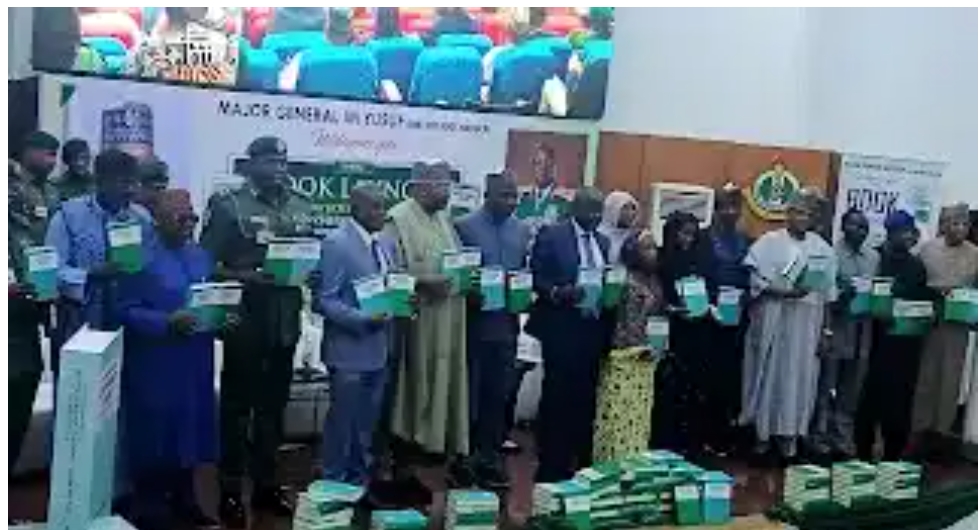
Buratai Highlights Leadership, Community Support In Defeating Insurgency As Shettima, Defence Chiefs Rally Support For Counterterrorism Documentation At Book Launch
Prominent Nigerians including Vice President Kashim Shettima, Defence Minister Christopher Musa, senior military officers, and political leaders on Thursday underscored the importance of documentation, collective national responsibility, and sustained military professionalism in the fight against terrorism during the unveiling of a new book titled “Counterterrorism and Counterinsurgency Operations in North East Nigeria (Volumes 1 & 2)” authored by retired Major-General Ibrahim Yusuf.

Representing Vice President Kashim Shettima, the Special Adviser on General Duties, Dr. Aliyu Modibbo, described the publication as a timely and strategic contribution to Nigeria’s national security discourse.
According to him, Nigeria’s experience with terrorism and insurgency in the North-East reflects not a nation defeated by insecurity, but the resilience and courage of citizens and security forces defending the country’s shared destiny.
He noted that the conflict in the North-East remained a deep human tragedy affecting communities with rich historical and cultural heritage, stressing that terrorism requires sustained vigilance, intelligence gathering, diplomacy, technology, and strong civil-military cooperation.
The Vice President further commended the author for documenting operational experiences and strategic lessons from the theatre of operations, saying such insights would prove invaluable to policymakers, scholars, and future military leaders.
He also reaffirmed the commitment of President Bola Ahmed Tinubu’s administration to strengthening the operational readiness, welfare, and dignity of members of the Armed Forces.
In his goodwill message, the Minister of Defence, Christopher Musa, praised the author as a respected mentor whose professionalism and leadership continued to inspire younger officers even after retirement.
“The lion may be retired, but he is certainly not tired,” he remarked.
Musa described the insurgency in the North-East as one of Nigeria’s most complex security challenges, noting that the asymmetric nature of the conflict means it cannot be won by military force alone.
According to him, victory against terrorism depends on collective national responsibility involving the Armed Forces, civil authorities, and citizens working together to deny insurgents support and legitimacy.
He also urged serving military officers to study the publication carefully, noting that it contains valuable operational lessons from years of counterinsurgency operations.
The Chief of Defence Staff, Olufemi Oluyede, described the two-volume publication as a major intellectual contribution bridging theory and practice in counterterrorism and counterinsurgency operations.
Oluyede commended the author for preserving decades of operational knowledge gained from commanding the 21 Brigade, 7 Division, and the Multinational Joint Task Force.
He stressed that modern security threats demand continuous learning, adaptation, and proper documentation of operational experiences, adding that the publication would serve as a useful resource for military practitioners, researchers, and policymakers.
Former Chief of Army Staff, Lt. Gen. Tukur Buratai, also applauded the author for documenting operational experiences from the counterinsurgency campaign in the North-East.
Buratai stated that operational success in counterinsurgency warfare depends largely on the quality of commanders in the field and the ability of military leaders to adapt to complex realities.
He recalled the significance of operations such as Deep Punch I and Deep Punch II, as well as the critical role played by the Nigerian Air Force in degrading terrorist capabilities between 2015 and 2017.
According to him, resilient leadership and community support remain crucial elements in defeating insurgency.
Earlier, retired Major-General Ibrahim Yusuf said the publication represented the fulfilment of an eight-year intellectual ambition aimed at contributing to military scholarship and national security discourse.
He explained that the book was inspired by a desire to provide younger military officers and policymakers with first-hand insights into the successes and challenges of counterterrorism operations in Nigeria.
The retired general added that the publication drew from over a decade of operational experience in the North-East and the Lake Chad Basin while deliberately avoiding sensitive information capable of compromising ongoing operations.
He also urged retired military officers to document their operational experiences for future generations, stressing that such efforts are essential for institutional memory and national development.
Reviewing the publication, renowned scholar Eghosa Osaghae described the work as a landmark contribution to military scholarship.
Osaghae noted that the two volumes combine academic depth with practical operational experience, offering insights into intelligence-led operations, joint force coordination, psychological warfare, and post-conflict management.
He added that the publication effectively situates Nigeria’s counterinsurgency experience within the broader realities of modern asymmetric warfare and evolving global security threats.
The event attracted senior serving and retired military officers, heads of security agencies, members of the diplomatic corps, academics, and policymakers from across the country.
society
Oduduwa Integrity Association Announces Adoption of Governor Ademola Adeleke as “Performing Governor” in the Southwest*
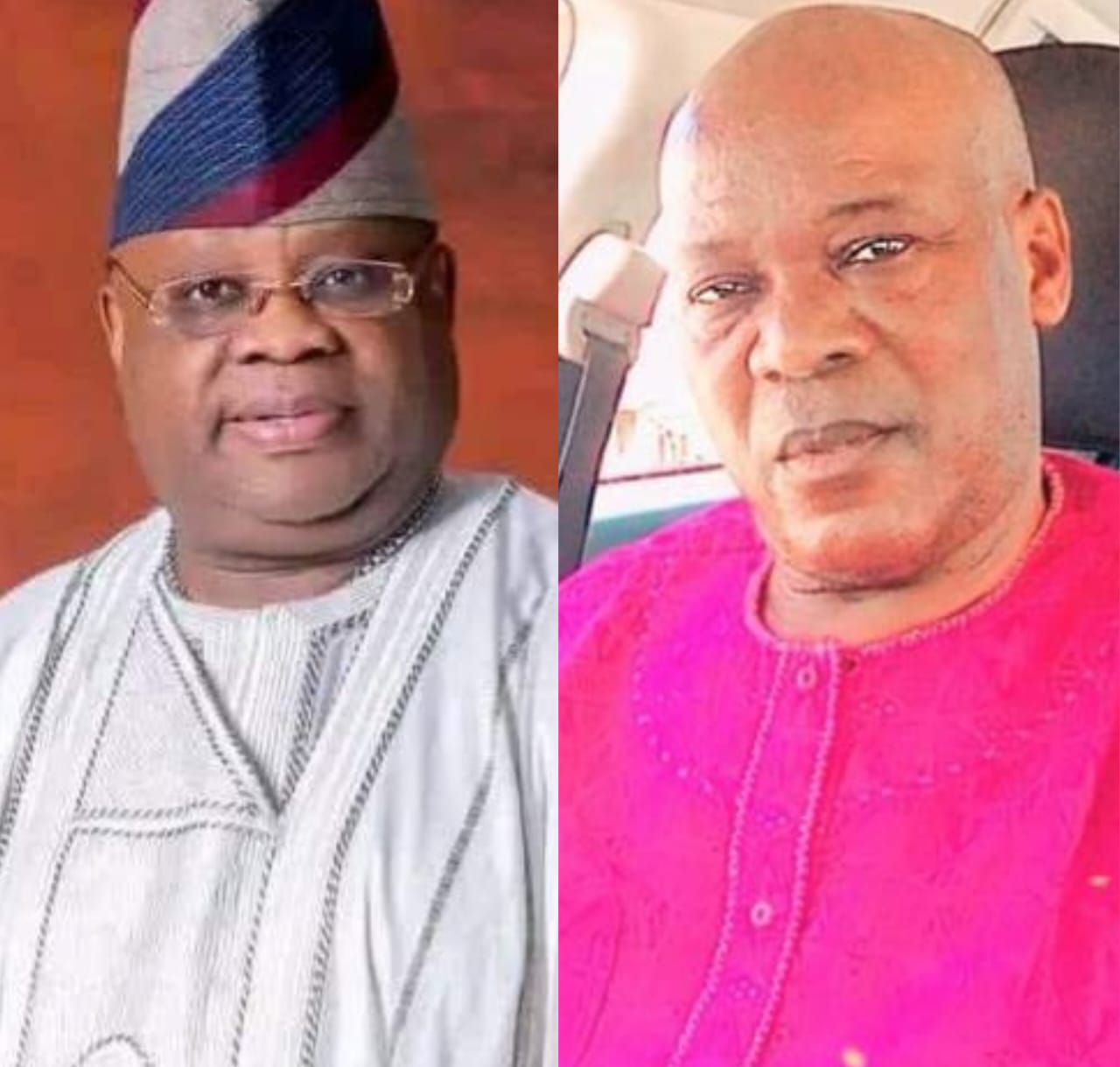
Oduduwa Integrity Association Announces Adoption of Governor Ademola Adeleke as “Performing Governor” in the Southwest*
*Osun State, Nigeria* – The Oduduwa Integrity Association, one of the prominent socio-cultural and advocacy groups in the Southwest region, has announced its decision to adopt and publicly recognize Governor Ademola Adeleke of Osun State as a performing governor in the Southwest.
According to the Association, the adoption is based on its independent monitoring of governance and project delivery across the region. The group stated that Governor Adeleke’s administration has demonstrated measurable progress in areas including infrastructure, workers’ welfare, education, and youth empowerment, which aligns with the association’s mandate to promote accountability and good governance.
“This adoption is our way of encouraging performance and responsible leadership,” Evang /Hon Omotoso Banji, the President and Founder of Oduduwa Integrity Association said. “We believe that recognizing leaders who are delivering on their mandate helps strengthen democratic values and motivates others to prioritize the people.”
The Association noted that its adoption does not imply political affiliation but is a non-partisan endorsement of what it describes as visible and verifiable governance outcomes within Osun State. It added that the move is part of its broader initiative to highlight and support public officials across the Southwest who meet its standards for transparency, service delivery, and integrity.
Governor Adeleke’s administration has been marked by policy focus on infrastructural renewal, payment of salary arrears, and investment in grassroots development since assuming office. The Oduduwa Integrity Association said it will continue to monitor and document these efforts as part of its civic oversight role.
The formal adoption ceremony and presentation of recognition materials are expected to be announced in the coming weeks.
The Oduduwa Integrity Association is a Southwest-based civil society and advocacy group committed to promoting good governance, transparency, and accountability across Yoruba-speaking states presided by Evang / Hon Omotoso Banji.The Association conducts independent assessments of public service delivery and engages in community enlightenment programs.

AjilalaOso Day 2026: Women Union Make Donations To Hospital
The women wing of the Ede Descendants Union has donated 42 bedsheets and 44 pillow cases to Cottage Hospital, Ede, in Osun State, as part of activities marking preparations for AjilalaOso Day 2026.
The donation was aimed at supporting healthcare services at the hospital while also demonstrating the union’s commitment to community development and humanitarian service.
Members of the union said the gesture formed part of efforts to give back to society and contribute meaningfully to the wellbeing of patients receiving treatment at the health facility.
Speaking during the presentation, the leader of the women wing, Mrs Silifat Shittu, described the initiative as a reflection of the values of compassion, unity and service which AjilalaOso Day represents.
She noted that the annual cultural celebration is not only about showcasing the rich heritage of Ede but also about promoting development-oriented projects capable of impacting lives positively.
The group further urged individuals, organisations and stakeholders in Edeland to continue supporting community-based initiatives aimed at improving the welfare of residents.
Speaking on behalf of the hospital management, the Chief Medical Officer, Dr Isiaka Alade, appreciated the women group for the donation, describing the items as timely and beneficial to patients and the hospital environment.
Chairman of the AjilalaOso Day 2026 Planning Committee, Prince Adewale Laoye while addressing the gathering appealed to other well-meaning individuals and organisations to extend similar gestures to the hospital, noting that some roofing sections of the facility require urgent repairs.
He also commended the women wing of the union for the initiative and support shown to Cottage Hospital.
Prince Laoye, who spoke extensively on the objectives of the AjilalaOso festival, explained that the annual celebration would not only be about funfair and merriment but would also focus on touching the lives of the needy through impactful community projects.
According to him,“We also want associations to have a project executed in Ede every year, such as what the women wing of EDU has done today.”


- Africa’s $65 Billion Fintech Industry Under the Spotlight in Latest Pan African Visions Magazine Special Edition May 21, 2026
- TotalEnergies Expands Angola Offshore Strategy as Martin Deffontaines Returns to Angola Oil & Gas (AOG) 2026 May 21, 2026
- New Africa Centres for Disease Control and Prevention (Africa CDC)–Global Fund Partnership to Strengthen Africa’s Health Systems May 21, 2026
- U.S. International Development Finance Corporation (DFC's) Vibhuti Jain Joins African Mining Week (AMW) as United States (U.S.) Expands Regional Critical Mineral Partnerships May 21, 2026
- PAC Capital Limited Secures Seven Prestigious International Awards, Reinforcing Leadership in Investment Banking and Advisory May 21, 2026
- African Energy Chamber (AEC) Strengthens Strategic Engagement with African Petroleum Producers’ Organization (APPO), Venezuela to Advance Regional Energy Cooperation May 21, 2026
- How the Product Leadership Accelerator (PLA) is Re-Engineering African Enterprises for a Digital-First Economy May 20, 2026
- Congo’s Minister Onanga to Fast-Track Deals, Drive Local Content and Expand Floating Liquefied Natural Gas (FLNG) in New Investment Push May 20, 2026
- PayPal Brings PayPal USD to Users Across 70 Markets Worldwide and Expands Access in Africa May 20, 2026
- Afreximbank Extends USD 15 Million Facility to Ecobank Zimbabwe Limited to Support Small and Medium Enterprises (SME) Participation in Export Value Chains May 20, 2026
- Africa’s $65 Billion Fintech Industry Under the Spotlight in Latest Pan African Visions Magazine Special Edition May 21, 2026
- TotalEnergies Expands Angola Offshore Strategy as Martin Deffontaines Returns to Angola Oil & Gas (AOG) 2026 May 21, 2026
- New Africa Centres for Disease Control and Prevention (Africa CDC)–Global Fund Partnership to Strengthen Africa’s Health Systems May 21, 2026
- U.S. International Development Finance Corporation (DFC's) Vibhuti Jain Joins African Mining Week (AMW) as United States (U.S.) Expands Regional Critical Mineral Partnerships May 21, 2026
- PAC Capital Limited Secures Seven Prestigious International Awards, Reinforcing Leadership in Investment Banking and Advisory May 21, 2026
- African Energy Chamber (AEC) Strengthens Strategic Engagement with African Petroleum Producers’ Organization (APPO), Venezuela to Advance Regional Energy Cooperation May 21, 2026
- How the Product Leadership Accelerator (PLA) is Re-Engineering African Enterprises for a Digital-First Economy May 20, 2026
-

 news5 months ago
WHO REALLY OWNS MONIEPOINT? The $290 Million Deal That Sold Nigeria’s Top Fintech to Foreign Interests
-

 society3 weeks ago
SOCIAL MEDIA IS NOT A BATTLEFIELD COMMAND – WHY THE NIGERIAN ARMY’S ACTION AGAINST JUSTICE CRACK IS A NATIONAL SECURITY IMPERATIVE
-

 celebrity radar - gossips4 months ago
Dr. Chris Okafor Returns with Power and Fire of the Spirit -Mounts Grace Nation Altar with Fresh Anointing and Restoration Grace on February 1, 2026
-

 celebrity radar - gossips5 months ago
Prophet Kingsley Aitafo Releases 2026 Prophecy: ‘Nigeria Will Rise, but the World Must Prepare for Turbulence’