
Politics
As Biden Wins US Election, world looks at how new White House will shift policies

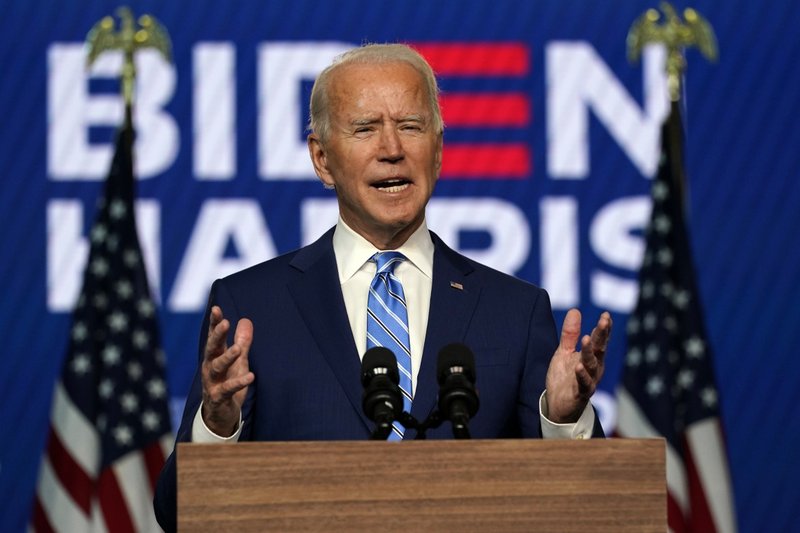
As Joe Biden becomes victorious in the US presidential election, the focus among America’s friends and rivals around the world turned to predicting what a Democratic administration would mean for their engagement with the United States. On Saturday, foreign leaders still largely refrained from commenting on the contest or congratulating Biden in the absence of a final vote tally

Here are the latest developments:
- Newspapers across the globe declared an almost-certain Biden victory, declining to wait for most major U.S. media outlets to call it.
- Most world leaders say they will work with whoever wins the White House, though most stopped short of offering congratulations before the count is settled.
- President Trump continued to make unsubstantiated allegations of electoral fraud, retweeting misleading claims about the integrity of the vote count.
- Trump’s far-right allies, notably Brexit party leader Nigel Farage, encouraged him to keep up the fight and railed against mail-in ballots.
- The prime minister of Fiji was among the first leaders to publicly congratulate Biden, saying he hoped for greater U.S. action on climate change.

With Joe Biden in the driver’s seat to win the presidency, countries around the world looked ahead to what a Democratic administration would mean for them. Many hope the period of American isolationism and country-first populism under President Trump will give way to an era of renewed U.S. global leadership and embrace of multilateralism to tackle common challenges.
Australia’s Prime Minister Scott Morrison, when asked Saturday about the relationship with a future Biden administration, said the Australia-U. S. alliance is “bigger than any one individual.” Morrison, a conservative, said he would wait for the vote count to be over and then get on with working with Washington. Morrison and Trump have long been close. In 201
Frank Bainimarama, the prime minister of Fiji, was among the first to congratulate Biden outright, saying in a tweet that they must work together to confront a warming planet and rebuild the global economy.
“Now, more than ever, we need the USA at the helm of these multilateral efforts (and back in the #ParisAgreement — ASAP!),” he wrote.
As the Democratic candidate extended his vote lead in key battleground states, newspapers around the world began analyzing the policy implications under a Biden administration. Others continued to focus on the battered image of American democracy — sometimes with open glee
“Who’s the Banana Republic now?” Publimetro, a Colombian daily newspaper, asked on its front page.

The Times of India, which effectively declared Biden the winner with the headline ” Bye Don, Its Biden Finally,” said that H1-B work visas — allowing nonimmigrants to work in the United States — are unlikely to return in their previous scale or numbers, even if the Biden administration has a more favorable immigration policy. But it noted that the Democrats could be stronger on human rights violations in India. The newspaper also described celebrations in Sen. Kamala D. Harris’ ancestral village in southern India — the birthplace of her maternal grandfather — where residents were feeling festive ahead of the traditional Diwali celebrations.
In China, relations with the United States have plummeted to their lowest ebb in 40 years amid bitter disputes over trade, technology, human rights and the coronavirus pandemic. But hopes have been stirred that, despite fundamental differences, a Biden win might act as a circuit-breaker and offer a window for cooperation in certain areas.
From Beijing’s perspective, “a Biden presidency is more likely to put a floor under the current free-fall in relations, judging by his recent remarks on China and those of his foreign policy advisers,” wrote Wang Xiangwei, a columnist and editorial adviser at the Hong Kong-based South China Morning Post. Chinese officials, he said, are hoping for at least a short-term respite to the vitriol that has dominated Sino-U. S. relations under Trump.
Still, an-op-ed in the nationalistic Global Times tabloid noted deep partisan divisions in the United States that it said would not be easily eased.
“The U.S. will remain united from outside but divided from within, no matter who is president,” wrote Zhang Jiadong, a professor at the Center for American Studies at Fudan University.
Iranian officials have largely avoided commenting on the election impasse and its possible implications for U.S. policies, such as the future of economic sanctions and the fate of the 2015 nuclear deal negotiated by the Obama-Biden administration. Trump withdrew from the pact two years ago and has stepped up sanctions on Tehran.
“For us, the individual and the party are not important; rather, what matters is the policies to be adopted by the U.S. government,” Iranian President Hassan Rouhan said saturday. Rouhani has urged the U.S. to return to its commitments under the nuclear deal, known officially as the Joint Comprehensive Plan of Action, and rejected Trump’ calls to renegotiate it.
The Chairman of Tehran’s City Council, Mohsen Hashemi Rafsanjani, on Saturday congratulated the family of Qasem Soleimani, the former commander of Iran’s elite Quds Force, who was killed in a U.S. military drone strike in January near Baghdad. Rafsanjani said the targeted killing helped cause “Trump’s heavy defeat,” BBC Persian reported.
Iranians, battered by an economic crisis alongside the coronavirus, have been following the election with intense scrutiny. Aftab-e Yazd, an Iranian reformist newspaper, declared on its Saturday front page: “A world without Trump.”
The global pandemic added urgency to Biden’s pledge to reverse Trump’s approach, which has left the United States estranged from the World Health Organization and facing the highest numbers of deaths and new cases at home.
After Trump withdrew from the World Health Organization — in protest of what he claim was a bias toward China — Biden this summer pledged to rejoin the U.N.’s health agency on his first day in office. Biden is a “globalist at heart,” wrote Natasha Kassam a research fellow at Sydney’s Lowy Institute political think tank, in the Guardian.
“When it comes to global public health,” she added, “America has literally left the building.”




*Renewed Hope Ambassadors Step Into the Next Phase
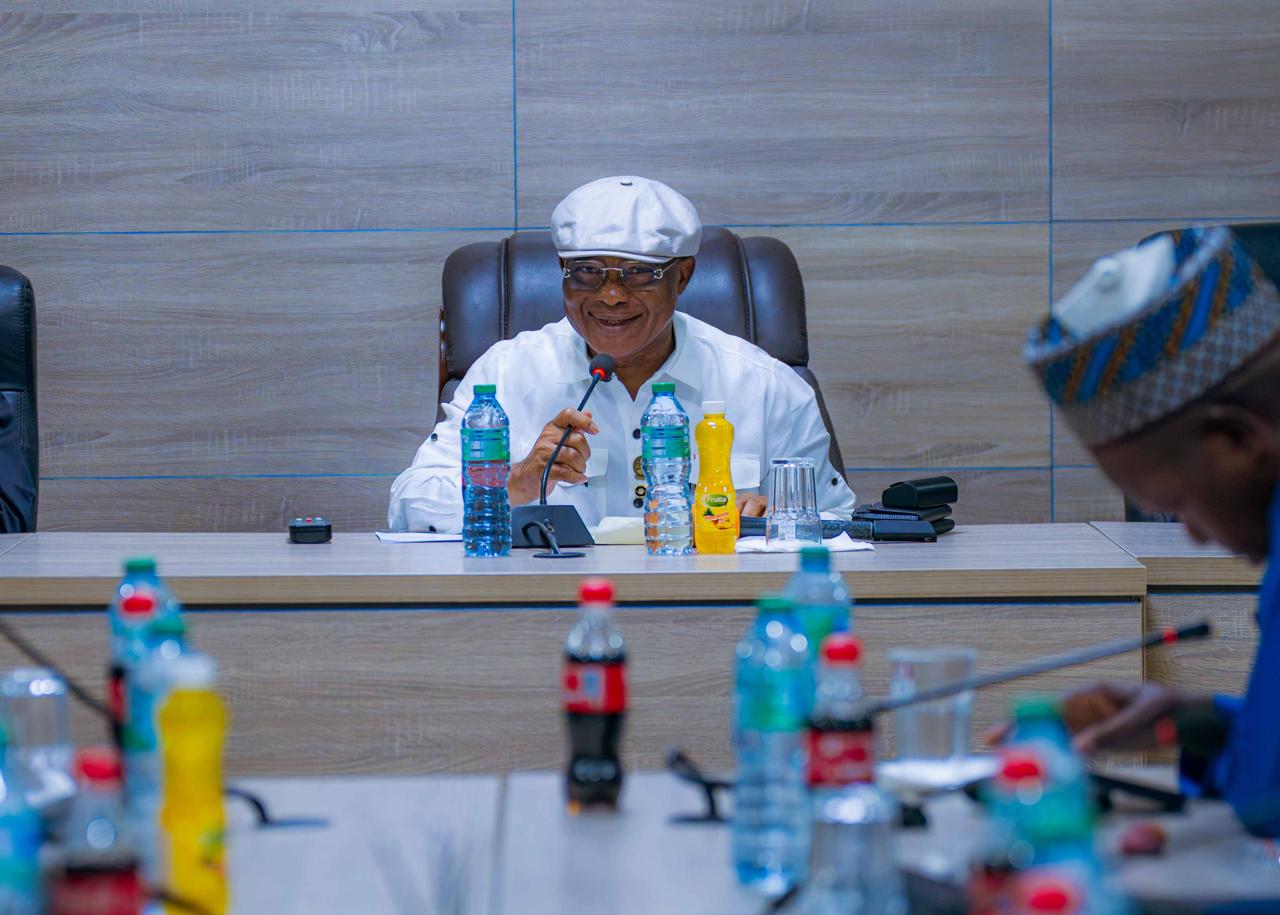
Fresh from the successful APC 2026 National Convention, the Renewed Hope Ambassadors National, Zonal, and State leadership gathered in Abuja over the weekend, for its fourth strategic meeting, setting the tone for nationwide grassroots activation ahead of 2027.
Chaired by Governor Hope Uzodinma (Imo State) the Director General and National Coordinator of the Renewed Hope Ambassadors, alongside Deputy Director-General, Governor Uba Sani of Kaduna State, and Governor Inuwa Yahaya of Gombe State as Secretary, the session reinforced one clear direction: One Party. One Message. One Mobilization whilst also laying out a strategic roadmap for the activation of the network across all communities in Nigeria.
Backed by the strength of 31 APC-led states, the Renewed Hope Agenda is taking Bola Ahmed Tinubu’s message of progress and reform to every corner of Nigeria.
From bold economic restructuring to initiatives like NELFUND, the increase in the national minimum wage from ₦30,000 to ₦70,000, and strategic investments in critical sectors, including PNiCGI, the mission remains clear: helping Nigerians understand both the purpose and the progress of the Renewed Hope vision.
This is coordination at scale. This is grassroots engagement with purpose. This is the next phase of Renewed Hope with One Party, One Message, and One Mobilisation framework
#RenewedHopeAmbassadors #APC #WeAreAPC


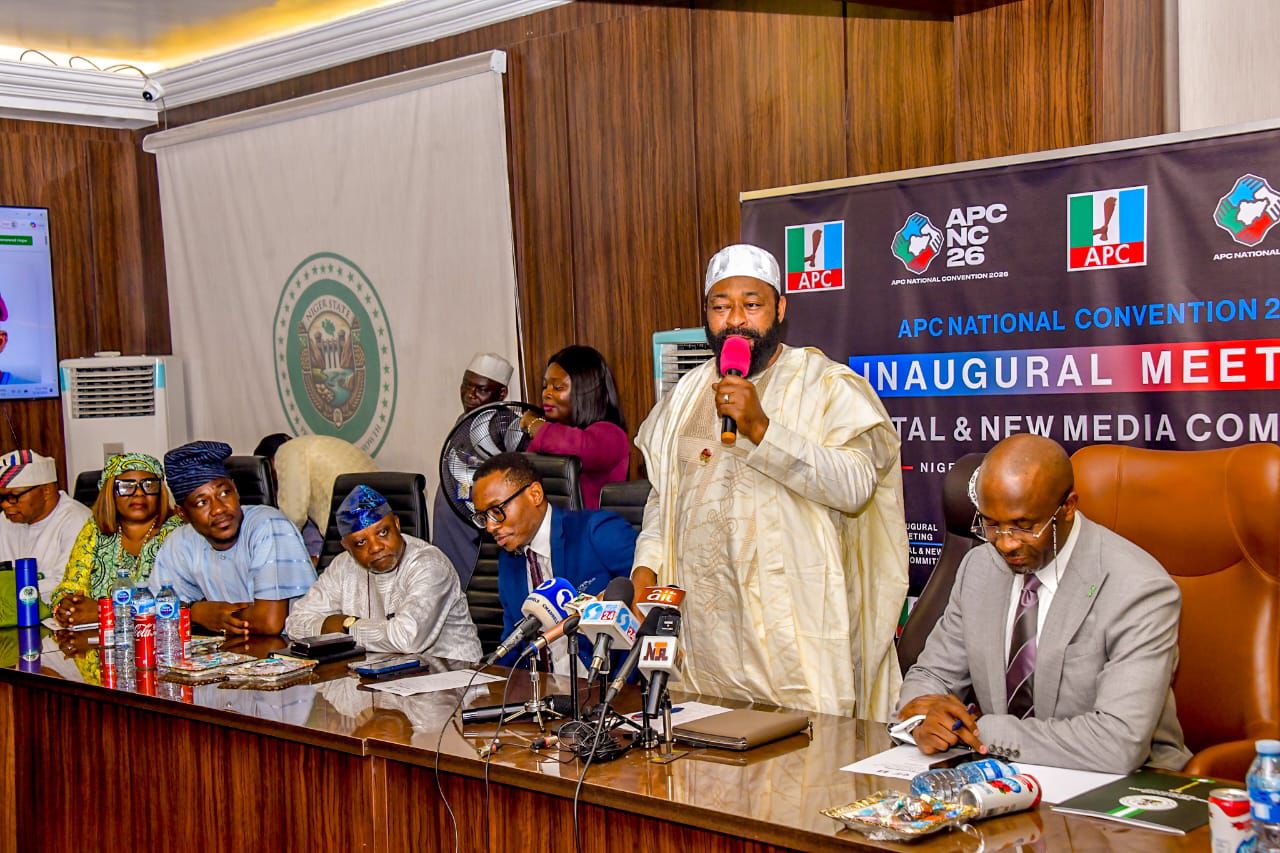
Governor Bago Inaugurates APC Digital Media Sub-Committee Ahead of National Convention.
Governor Umaru Bago has inaugurated the Digital Media Sub-Committee for the forthcoming National Convention of the All Progressives Congress (APC), scheduled to hold on March 27 and 28, 2026 in Abuja.
Chairing the sub-committee, Governor Bago tasked members with the responsibility of effectively communicating the party’s manifesto to the public.
He emphasized the need to leverage social media platforms to highlight the achievements and ongoing efforts of President Bola Ahmed Tinubu, noting that communication gaps have posed challenges that must now be decisively addressed.
The Co-Chair of the sub-committee, Hon. Benjamin Kalu, Deputy Speaker of the House of Representatives, echoed the Governor’s position, urging members to project the activities of both the party and the government to a broader audience.
He called for a deliberate and coordinated effort to showcase the party’s achievements and policy direction, stressing the importance of shaping a compelling and consistent narrative across all digital platforms.
Delivering a presentation to the committee, Otega Ogra, SSA to the President on New Media, who serves as Secretary of the sub-committee, outlined strategic focus areas to guide the team’s operations.
His presentation highlighted communication priorities and actionable steps to achieve the committee’s mandate and strengthen the party’s digital engagement.


VP Shettima Set to Lead Delegation to Zamfara as Governor Dauda Lawal Formally Joins APC
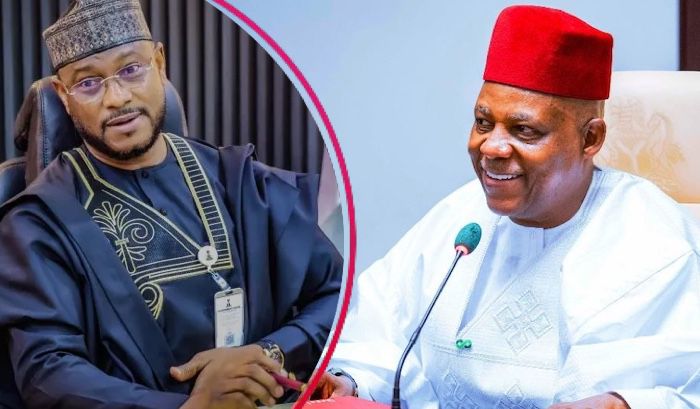
The Zamfara State chapter of the All Progressives Congress (APC) has finalized plans to receive Vice President Kashim Shettima for the formal defection and reception of Governor Dauda Lawal into the ruling party, scheduled to take place on Tuesday.
State APC Chairman, Tukur Danfulani Maikatako, disclosed this during a high-level stakeholders’ meeting held in Gusau, the state capital. He noted that the Vice President would be joined by the party’s national leadership to mark what he described as a landmark political realignment in the state.
Maikatako expressed the party’s excitement over Governor Lawal’s return, recalling that Zamfara had historically been an APC stronghold and that the Governor was previously a bona fide member of the party before his earlier exit.
“We all know that Zamfara has long been one of the APC’s stronghold states, where the defected Governor was once a bona fide member. Now that he has decided to return home, having been satisfied that the APC remains his second choice after the one he left for obvious reasons,” Maikatako stated.
The Chairman called on all party faithful across the 147 wards in the state’s 14 local government areas to turn out en masse to honour the Vice President’s visit. He emphasized that the event was strategically positioned to bolster the party’s popularity and strengthen its structures ahead of the 2027 general elections.
In a strong appeal for unity, Maikatako urged members to set aside all factional tendencies, stressing that the APC remained one political family with shared goals, particularly the ambition to make Zamfara and Nigeria great again.
Echoing similar sentiments, a former state APC Chairman, Lawal M. Liman, appealed to members to cascade the message to their wards and local government areas. He reinforced the need for cohesion, noting that the party’s collective strength would be critical to achieving success in future elections.

All eyes are now on Gusau as the ruling party prepares for a high-profile political gathering expected to further consolidate its influence in Zamfara State.


-

 society6 months ago
Religion: Africa’s Oldest Weapon of Enslavement and the Forgotten Truth
-

 news4 months ago
WHO REALLY OWNS MONIEPOINT? The $290 Million Deal That Sold Nigeria’s Top Fintech to Foreign Interests
-

 society6 months ago
“You Are Never Without Help” – Pastor Gebhardt Berndt Inspires Hope Through Empower Church (Video)
-

 celebrity radar - gossips2 months ago
Dr. Chris Okafor Returns with Power and Fire of the Spirit -Mounts Grace Nation Altar with Fresh Anointing and Restoration Grace on February 1, 2026