
Politics
Asiwaju Tinubu’s Political Track-record and Achievement My Reason to form a Path in Politics – Seun Olufemi-White

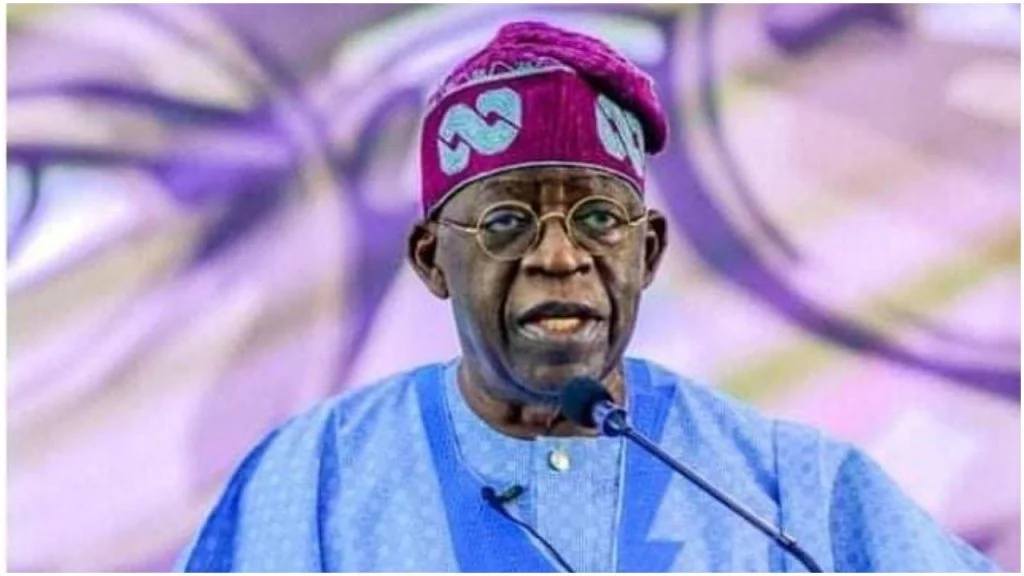
Asiwaju Tinubu’s Political Track-record and Achievement My Reason to form a Path in Politics – Seun Olufemi-White

Many of us grow up with the belief that the political process in Nigeria is designed by and for those with the worst character traits, no scruples, talent or wherewithal to succeed at anything else.
Until now, this negative perception has made me a bit unsure about how to explain my transition to my peers; that, I, mid-twenty, left a promising legal career with a world-leading firm, for a seemingly less prestigious field they see as marred by violence, mal-practice, avarice and unrestrained ambition. So I have been quiet, up until now.
As a young Nigerian lawyer, qualified in Britain and in New York and having trained at one of the world’s most preeminent law firms, Clifford Chance, I have worked on some of the largest finance deals in history. In my time in practice, I advised and invested in impact ventures. In selecting leaders for the venture, we would assess past records of candidates. If there’s a proven track record, the odds are higher that success can be repeated.
Having become an active investor in project ‘a better Nigeria’, I have chosen to align myself with the leader who has the best track record, capacity and doggedness to renew hope in our country. My abiding belief is that through democracy and progressive governance, Nigeria will grow and achieve its best destiny. This is why I have pitched my tent where I have.
It is almost a year into the change in my career path and political orientation, I am now convinced and ready to discuss why I have pitched my tent where I have. In doing so, I hope to encourage more young people, who look like me, wherever they can and with whomever they find the conviction, to pull up a chair and sit at a table with the intention to shape Nigeria for the better. If we do not, we leave our destinies in the hands of others.
June 12, 1993
My record goes back to 1993 when Chief Moshood Kashimawo Olawale (‘MKO’) Abiola won the landmark presidential election on June 12 and the subsequent events that follows, but my point of attention is to how a young senator representing the Lagos West district was bold and unrelenting in the quest for reestablishing democracy. That senator, was Bola Ahmed Tinubu.
Investigation revealed how young Tinubu took his elderly mother, Alhaja Mogaji, who had known Babangida for years to plead with the general to affirm the democratic election, when he realized that the emotional appeal failed to persuade the military head of state he turned to another branch of state; the judiciary, to seek the redress of justice. Assembling an outstanding team led by Professor Alfred Kasunmu SAN, he ‘engineered and proposed’ one of the ‘most significant court cases in Nigeria’.
At the trial, the legal team assembled by Tinubu were able to establish the illegality of the military-imposed ING. Proving that the Babangida signed Decree 59 had officially ended his eight-year reign with effect from August 26, 1993. Whereas the Decree 61 that establish ING was signed on August 26 when technically he’s no longer the military president of Nigeria. Though the judgement of the court that restrain the extension of the military rule through the ING was disobeyed, it was the case instituted by the young senator that snowballed into the fight for democracy that would take several years and, unfortunately, claim many lives including that of MKO Abiola.
Tinubu’s role in the formation of the National Democracy Coalition (NADECO), when the military ignored the courts and continued their hold onto power is also very important. In response to the decision of the military to hold on to power, on May 1994 a group of veteran politicians and pro-democracy groups, under the leadership of Pa Ajasin, formed the NADECO. Tinubu was also one of the founding member of NADECO and its backbone for financial support.
It was during this struggle when the leadership of NADECO gave the military government a deadline by which to resign that Tinubu’s popular quotes of ‘the lovers of democracy in the country will…make this country ungovernable’ was made when he was asked what would happen if the dictatorship refused to obey the step down deadline of NADECO. This was the reason he had to go into exile since he was seen as threat to their continued stay in power, and his name was subsequently burnt and dragnet set to arrest him. While in exile, he continued to support NADECO and Abiola’s judicial trial. Lawyers like Alao Aka-Bashorun, Femi Falana and Ajibola Olanipekun all worked closely with him.
After more than four years of fierce advocacy outside the shore of the country Tinubu, the former Mobil executive was elected governor of Lagos State as the AD candidate after the sudden death of Abacha and the subsequent death of MKO Abiola. His journey into executive role in politics was also bedeviled by the interest of many party leaders who had been active in politics in previous periods of civilian rule. Tinubu had to grapple with serious internal and external political threats during his first term. He drew the anger of influential AD party elders early on by appointing political outsiders to ministerial positions. In interviews, some of the former governor’s critics said he installed his clique. Most interviewers however, emphasized the high caliber of top Tinubu appointees.
It was his competency as a consummate professional adept at building excellent teams that attracted new people, people like me, then, to public service in Lagos state. It was therefore not surprising when he decided not to follow the order of the leaders of AD who want all governors under their party to give President Obasanjo their platform to campaign, this was rejected by Tinubu and the result apart from him being the last man standing as other governors of AD were defeated at the polls, this also largely responsible for the numerous clash Lagos State had with Obasanjo led Federal Government.
In 1994, Robert Kaplan wrote that Lagos’s “crime, pollution, and overcrowding makes it the cliché par excellence of Third World urban dysfunction.”
This was the kind of Lagos Tinubu was appointed to govern and he immediately hit the ground running overhauling the old tax system by increasing compliance, he also ensured government accountability on expenditure, building roads, improving security, and the revenues shot up from $190 million in 1999 to over $1 billion, in an unprecedented move, Tinubu’s government began the payment of WAEC fees for all final year students in Lagos public schools irrespective of the state of origin; this singular act prompted mass migration to Lagos from all regions, of the country.
His mida’s touch and the blueprint he designed for the development of Lagos attracted a different type of international attention, not for the disorder but instead as a possible model of effective governance—in Nigeria and in Africa.
Jagaban of Borgu, Asiwaju of Nigeria
One thing that made Tinubu exemplary is his decision to take excellence above everything else a situation that that sees Lagos becoming the template of what Nigerian unity truly could be; cabinet members from various regions of the country – chosen for excellence, and long-term development planning, focused on bringing jobs, opportunity and a fair chance to people previously disregarded.
The unity his appointment brings makes it easy for his party to easily merge with others to form the All Progressive Congress that eventually end the political dominance of the PDP in the country, Tinubu’s openness and his philanthropy giving is what has prompted the loyal following he has.
Many in my generation reading this, would not have known that among those vying for the presidency, he alone has a consistent track record of personal sacrifice for our democracy, adept governance and progressive reform, in spite of deep difficulty. In reading this, whether you like the man or not, I hope you understand he is not the enemy and at the very least you now have facts, not opinions or emotions to form your conclusions.
I now serve as the youngest aide to Bola Ahmed Tinubu and also serve as the youngest (female) executive in his Presidential Campaign Council. In my service, I hope to draw more attention to the multi-dimensionality of human ability and excellence. I continue to devote myself to becoming a polymath per excellence, pioneering a unique path. I remain dedicated to creating impact and amplifying the voice of young people, particularly the heretofore.
Seun Olufemi-White (Clifford Chance Trained Lawyer and Investment Adviser)




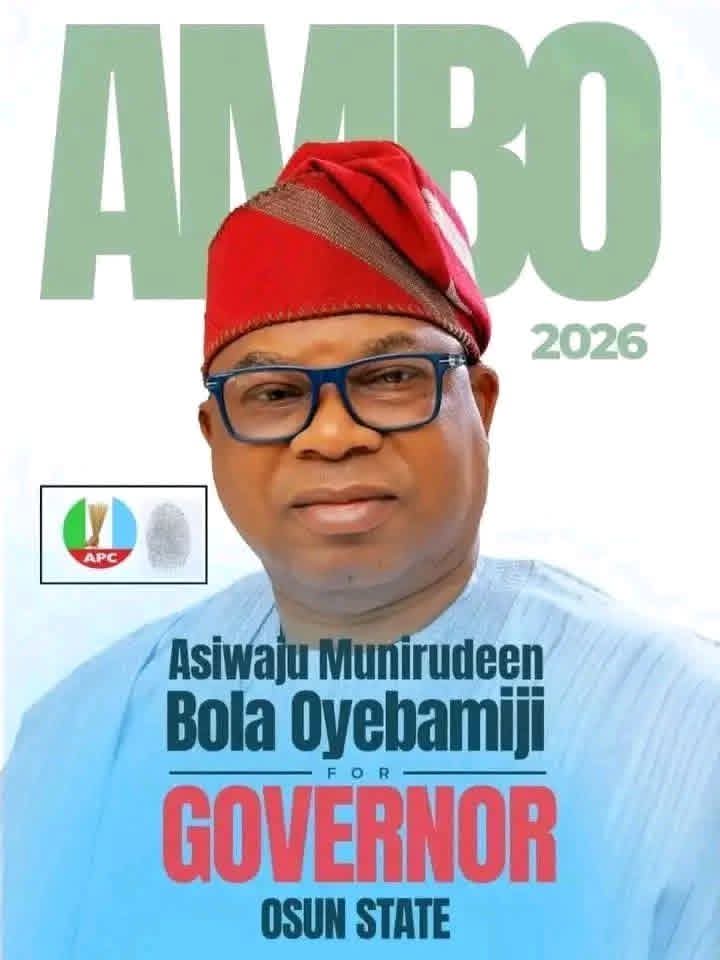
AMBO and the Osun Governorship Race: Assessing the Man, the Politics and the Vision
As political activities gather momentum ahead of the 2026 Osun State governorship election, a public affairs commentator, Oluseyi Olonade, has described the emergence of Asiwaju Munirudeen Bola Oyebamiji, popularly known as AMBO, as a significant development in the state’s political landscape.
In an article titled “Oyebamiji: The Man, The Politics and The Aspiration,” Olonade argued that the All Progressives Congress governorship hopeful possesses the character, experience and vision needed to reposition Osun State for sustainable growth.
According to the writer, Oyebamiji’s appeal stems from his extensive background in the banking sector, where he spent nearly three decades working with institutions including Wema Bank, Trans International Bank, Spring Bank and Enterprise Bank.
A native of Ikire in Irewole Local Government Area, Oyebamiji was described as a technocrat whose experience in corporate governance, finance and risk management has shaped his approach to public administration.
The article noted that his public service journey gained prominence in 2012 when he was appointed to oversee the then Osun State Investment Company Limited. Under his leadership, the organisation was reportedly restructured and transformed into Omoluabi Holdings Limited.
The writer further highlighted Oyebamiji’s tenure as Commissioner for Finance under successive APC administrations, where he was credited with managing the state’s finances during challenging economic periods.
Olonade also referenced Oyebamiji’s appointment as Managing Director of the National Inland Waterways Authority, describing it as further evidence of his administrative and leadership capabilities.
The article contrasted Oyebamiji’s governance philosophy with that of the current administration in Osun State, arguing that the APC aspirant favours institutional reforms, economic diversification and fiscal discipline.

According to the writer, Oyebamiji’s proposed agenda includes strengthening transparency in government spending, expanding internally generated revenue, attracting private-sector investments and promoting industrial and agricultural development.
The article also highlighted youth empowerment, entrepreneurship development and digital skills acquisition as key components of his vision for the state.
Olonade concluded that the forthcoming governorship election would present voters with a choice between different approaches to governance, expressing confidence that Oyebamiji’s experience and developmental agenda make him a strong contender in the race.
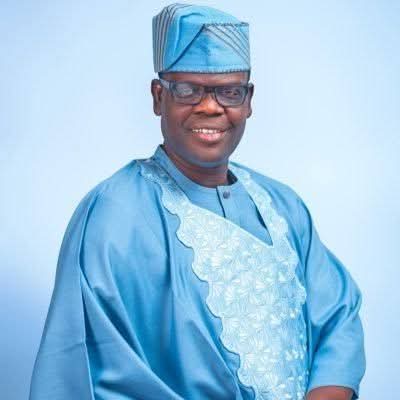
*Oselu Tiwa nTiwa Endorses Oriyomi Hamzat for Oyo Governorship*
A sociopolitical support group in Oyo State, Oselu Tiwa nTiwa, has declared its support for Alhaji Oriyomi Hamzat as the authentic governorship candidate of the Accord Party ahead of the forthcoming governorship election in the state.
The group made its position known in a statement jointly signed by its President, Mr. Adewale Oluwaseyi and Secretary, Alh. Adebayo Oyewole, on Thursday, describing Hamzat as a grassroots figure with strong connection to the people and a track record of humanitarian interventions across Oyo State.

According to the group, the endorsement followed what it described as careful observation of Hamzat’s leadership qualities, compassion and dedication to the welfare of ordinary citizens.
“Oriyomi Hamzat has consistently demonstrated empathy, courage and selfless commitment to humanity. Through his numerous interventions in the lives of ordinary citizens, he has become a symbol of hope to many families and communities,” the statement read.
Oselu Tiwa nTiwa also appealed to the national leadership of the Accord Party to prioritise the long-term future and electoral growth of the party in its decision-making process.
The group noted that Hamzat’s candidacy presents an opportunity for the party to strengthen its grassroots support base and expand its political relevance across Oyo State.
“We respectfully appeal to the National Leadership of the Accord Party to look beyond immediate political calculations and consider the bigger picture, the future growth, stability and electoral success of the party in Oyo State and beyond,” the statement added.
The group further expressed confidence in the leadership of the party, saying it believes the party’s national officers and stakeholders would take decisions that reflect fairness, inclusiveness and the collective interest of members.
While calling on party loyalists to remain calm and united, Oselu Tiwa nTiwa said continued consultations among stakeholders would help strengthen the Accord Party ahead of the election.
Signed:
Alh. Adebayo Oyewole,
Secretary.
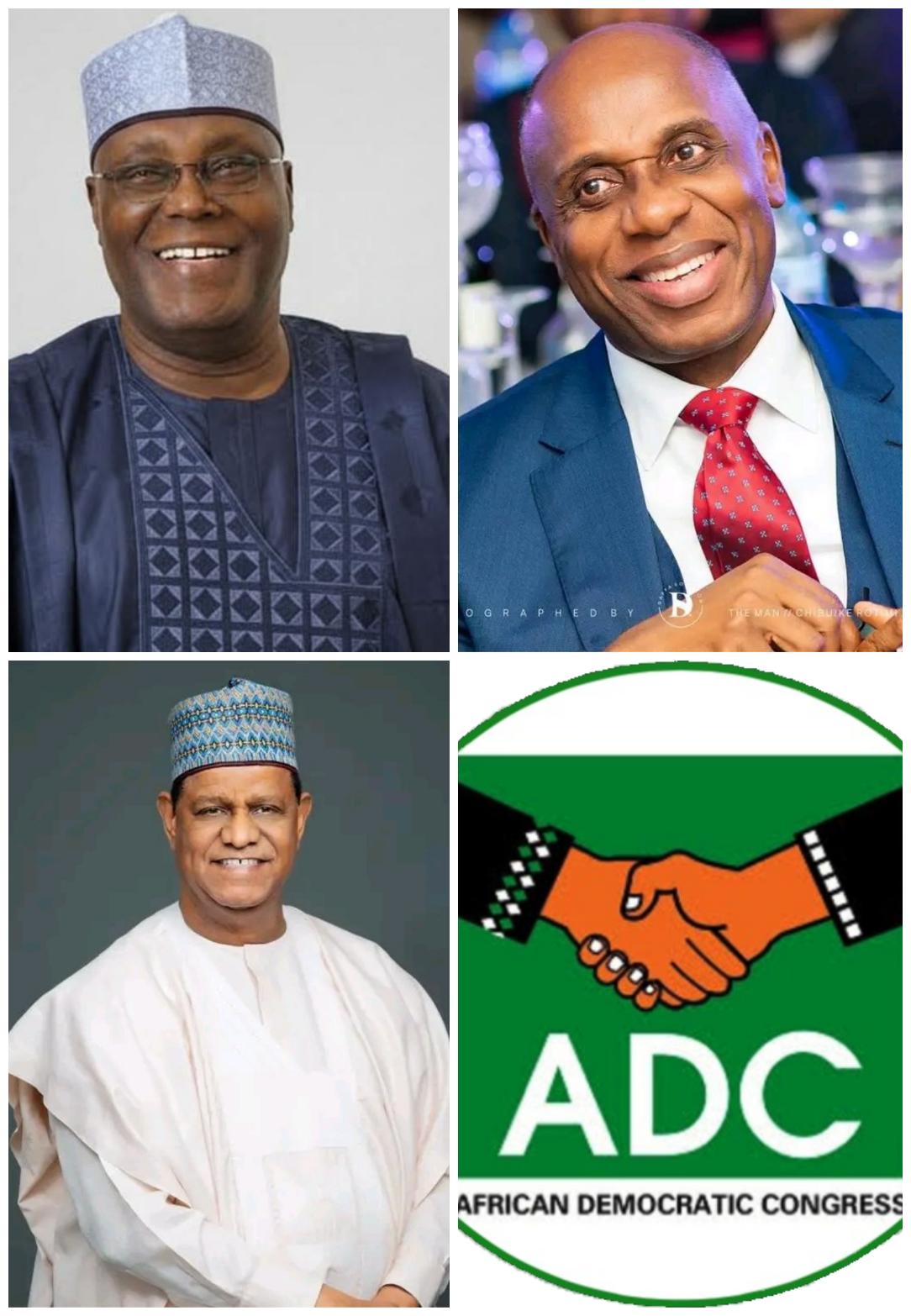
Atiku Set To Clinch ADC Presidential Ticket, Leads Amaechi, Hayatu-Deen In 34 States
Former Vice President of Nigeria and frontline presidential aspirant of the African Democratic Congress (ADC), Atiku Abubakar, is projected to emerge winner of the party’s presidential primaries, according to impeccable sources in Abuja.
The primaries, conducted across over 8,000 wards in the 36 states of the federation and the Federal Capital Territory, reportedly placed Atiku far ahead of his closest rivals — former Rivers State Governor, Rotimi Amaechi, and former Chairman of the Nigerian Economic Summit Group, Mohammed Hayatu-Deen.

Highly placed party insiders disclosed that Atiku is currently leading in 34 states, including the FCT, after securing dominance across the 19 Northern states, the five South-East states, and the six South-West states, while also maintaining a strong showing in at least three states in the South-South geopolitical zone.
The sources added that the outcome reflects what they described as “an overwhelming nationwide acceptance” of the former vice president within the opposition party ahead of the 2027 general election.
Meanwhile, the ADC leadership has invited members of the press to the official announcement of the final collated results scheduled for 11:00 a.m. on Tuesday, May 26, 2026, in Abuja.
The declaration of results is expected to be broadcast live on ARISE Television and two other major television stations, while also being livestreamed on the party’s official social media platforms on X and Facebook.
Speaking ahead of the announcement, the founding National Chairman of the ADC, Chief Ralph Nwosu, said the decision to televise the exercise live was aimed at promoting transparency and democratic accountability.
“We want millions of Nigerians at home and in the Diaspora to witness democracy in action,” Nwosu said.
He further revealed that the party leadership would encourage all three presidential aspirants to publicly embrace a peace accord and commit themselves to working together in unity for the party’s success.
According to him, the move is necessary to strengthen internal cohesion and position the ADC for victory in the presidential election scheduled for January 16, 2027.
Details later.


- Deputy (Dep.) Finance Minister Courts Investors to Transform Ghana’s rice Economy June 4, 2026
- Mobile health services in Kenya reduce the risk of stillbirths June 4, 2026
- JustMarkets Research Highlights Global Growth Divergence as a Key Market Driver June 4, 2026
- African Development Bank Group approves $125 million investment in African Trade and Investment Development Insurance (ATIDI) to expand risk insurance capacity in Africa June 4, 2026
- Congo Energy & Investment Forum 2027 to Position Brazzaville as a Hub for Global Energy Deal-Making June 4, 2026
- Africa Skills Hub (ASH) Transitions to ASH Africa as it Marks 10 Years of Impact June 4, 2026
- When women farm better, Eswatini eats better June 3, 2026
- Togo Hosts the 8th Annual Forum of National Volunteer Agencies in the Economic Community of West African States (ECOWAS) Region June 3, 2026
- Indigenous Peoples gravely vulnerable to Ebola epidemic, warn United Nations (UN) independent experts June 3, 2026
- Meeting between Parliamentary Vice-Minister ONISHI and His Excellency (H.E.) Mr. Cosgrow, Principal Minister and Minister for Agriculture, Fisheries and Blue Economy of Seychelles June 3, 2026
- Deputy (Dep.) Finance Minister Courts Investors to Transform Ghana’s rice Economy June 4, 2026
- Mobile health services in Kenya reduce the risk of stillbirths June 4, 2026
- JustMarkets Research Highlights Global Growth Divergence as a Key Market Driver June 4, 2026
- African Development Bank Group approves $125 million investment in African Trade and Investment Development Insurance (ATIDI) to expand risk insurance capacity in Africa June 4, 2026
- Congo Energy & Investment Forum 2027 to Position Brazzaville as a Hub for Global Energy Deal-Making June 4, 2026
- Africa Skills Hub (ASH) Transitions to ASH Africa as it Marks 10 Years of Impact June 4, 2026
- When women farm better, Eswatini eats better June 3, 2026
-

 news6 months ago
WHO REALLY OWNS MONIEPOINT? The $290 Million Deal That Sold Nigeria’s Top Fintech to Foreign Interests
-

 society1 month ago
SOCIAL MEDIA IS NOT A BATTLEFIELD COMMAND – WHY THE NIGERIAN ARMY’S ACTION AGAINST JUSTICE CRACK IS A NATIONAL SECURITY IMPERATIVE
-

 celebrity radar - gossips4 months ago
Dr. Chris Okafor Returns with Power and Fire of the Spirit -Mounts Grace Nation Altar with Fresh Anointing and Restoration Grace on February 1, 2026
-

 celebrity radar - gossips6 months ago
Prophet Kingsley Aitafo Releases 2026 Prophecy: ‘Nigeria Will Rise, but the World Must Prepare for Turbulence’