
Politics
Awolowo’s Love And Abiola’s Organic Followership Reincarnate In Aregbesola’s Tour Of Osun

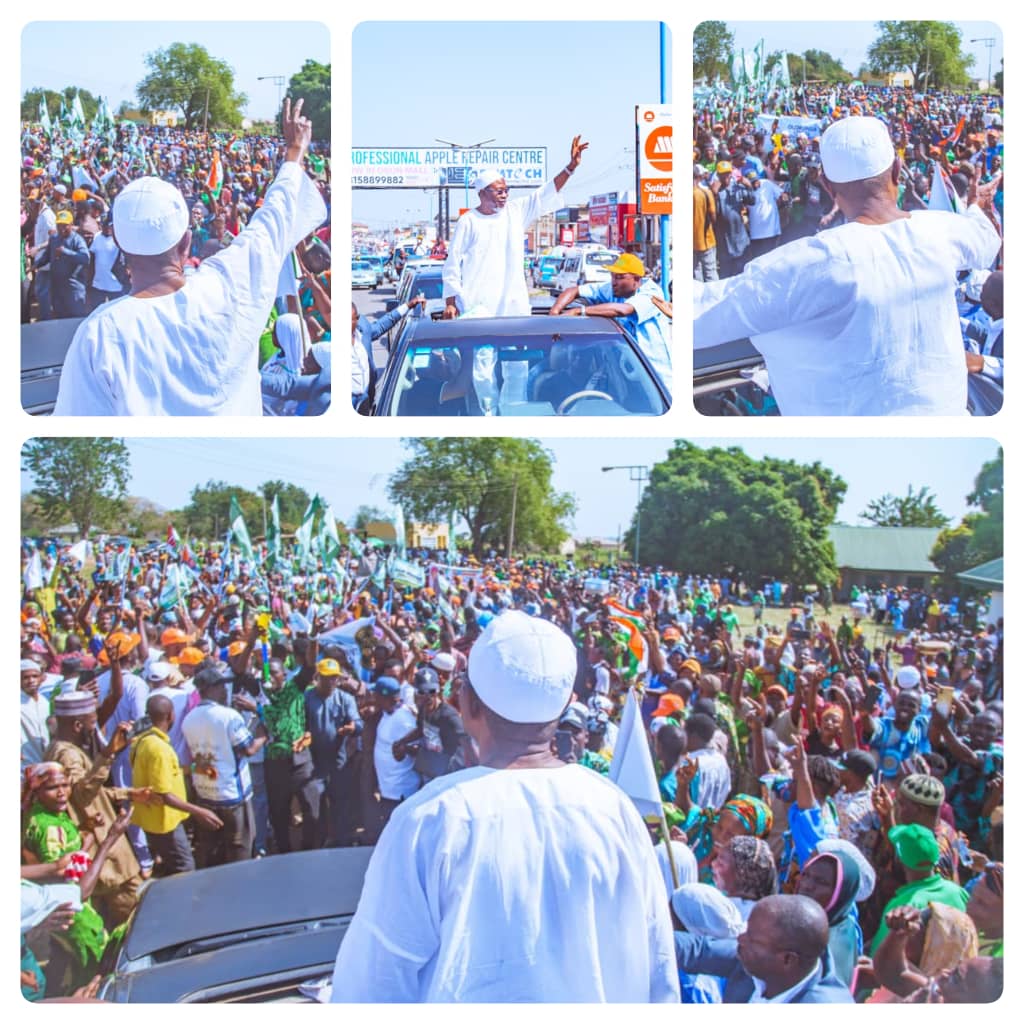
Awolowo’s Love And Abiola’s Organic Followership Reincarnate In Aregbesola’s Tour Of Osun
The Bible states in John 15:13, “Greater love has no one than this: to lay down one’s life for one’s friends.” This verse aptly describes the recent tour of Osun State Federal Constituencies by the African Democratic Congress, ADC, ably led by Ogbeni Rauf Aregbesola.
Since Ogbeni Aregbesola left office as Governor of Osun State in 2018, after serving two terms from 2010 to 2018, the people of the state have been yearning, hoping, and praying for another leader of his calibre.
The past three weeks allowed me to tour the length and breadth of Osun State with the former Governor and former Interior Minister. In every Federal Constituency we visited, the mood suggested that the people were waiting for a messiah. Osun indigenes desire a compassionate leader, one who understands their needs, speaks their language, believes in social welfare, and prioritises human capital development, a leader reminiscent of the late Chief Obafemi Awolowo, the revered leader of Western Nigeria.
True progressives are defined by their actions. They are not swayed by rhetoric, nor do they assign blame. They simply act. Unlike what Osun currently experiences, leaders like Obafemi Awolowo focused on policies that promoted welfare and modernisation, including free primary education and free healthcare for children under eighteen. He championed federalism, fiscal discipline, and the strategic use of state resources for social and economic development. He believed that education was essential for national progress and that the government should invest resources in social services to uplift citizens.
For nearly eight years, the general voice in Osun has been clear: the state needs another leader like Ogbeni Aregbesola, someone who puts the people first and cushions them from the hardships that have devastated businesses and livelihoods.
During his eight years as Governor, Ogbeni Aregbesola left a legacy of progressive governance marked by significant investments in infrastructure, public education, and social programs. Key accomplishments include:
Infrastructure and Urban Development
Roads: Oversaw the construction and rehabilitation of over three hundred kilometres of township roads and completed five bridges.
Education: Built 170 new schools and renovated existing ones, creating 1,694 standard classrooms.
Urban Planning: Implemented urban renewal projects in the state capital.
Education and Youth Empowerment
Opon-Imo: Distributed free electronic tablets to final-year high school students to aid their studies.
School Feeding: Introduced the Osun Elementary School Feeding Programme, providing free meals to primary school students.
Teacher Recruitment: Hired more than twelve thousand teachers to strengthen the education system.
Youth Empowerment: Launched the Osun Youth Empowerment Scheme, creating twenty thousand jobs for young people within its first one hundred days.
Training: Provided free tailoring training for three thousand youths and sent thirty unemployed youths to Germany for modern agricultural training.
Social Programs and Health
Health: Upgraded nine state hospitals, with the State Hospital at Asubiaro transformed into a specialist facility.
Elderly Care: Provided monthly stipends and healthcare for the elderly and indigent.
Free Health Insurance: Extended free health insurance to over thirty thousand pensioners and performed free surgeries for over sixty thousand residents.
Agriculture and Economic Development
Agriculture: Established farm settlements to train unemployed graduates and sold affordable fertilisers to farmers.
Market Development: Built modern markets to support traders.
Job Creation: Created over twenty thousand jobs through youth empowerment programs and other initiatives.
Since his departure in 2018, Osun has struggled with ineffective leadership. This explains why Ogbeni Aregbesola’s tour of Osun Federal Constituencies as General Secretary of the African Democratic Congress was warmly received. The love from his people was organic. They truly desire the return of his style of leadership.
The tour began at Ifedayo, Ila, Boluwaduro Federal Constituency, where thousands of supporters and party leaders gathered at the ancient palace of the Orangun of Ila Orangun, Oba Wahab Kayode Adedeji Oyedotun Bibiire I, to welcome the former Governor. Ogbeni Aregbesola noted that critical sectors of governance, including security, infrastructure, education, and the economy, have deteriorated.
“When your people are hungry and suffering, and you do not show compassion, you cannot claim to be an Omoluabi. Awolowo and our other founding fathers would not be pleased seeing Nigeria in this state,” he declared. From Ila Orangun, the tour continued to Ayedaade, Irewole, and Isokan Federal Constituency in the ancient town of Ikire.
From the Naira and Kobo junction to Obada Market, the Akire’s palace, and Sango, residents turned out in large numbers to show love, solidarity, and support for the party and its leader. From Ikire, the tour proceeded to Obokun and Oriade Federal Constituency in Ijebu-Jesa, where a similar outpouring of love and belief in the ADC was witnessed.
“Aregbesola’s journey this time is different. He has come to work assiduously for the betterment of the people of Osun. I am for Aregbesola and will never leave him. Wherever he goes, we shall follow,” declared His Royal Majesty Oba Jimoh Oyetunji Olanipekun, Laroye II, Ataoja of Osogbo, as he endorsed Ogbeni Aregbesola and the ADC during the Osogbo, Olorunda, Irepodun, and Orolu Federal Constituency leg of the tour.
Oba Oyetunji emotionally expressed his support for Ogbeni Aregbesola, declaring that he would follow him wherever he goes. From the Ataoja’s Palace, the tour continued through Oke Fia, Osogbo Grammar School, the NUJ Secretariat along Dada Estate, to the Government Technical College open field, where thousands of indigenes and residents gathered under the scorching sun to hear words of hope, social welfare initiatives, and human capital development plans from Ogbeni Rauf Aregbesola.
The reception across the state clearly demonstrates the organic love and unwavering commitment of Nigerians to restoring good governance. It also highlights the widespread dissatisfaction with the current administration, whose policies have worsened hunger, poverty, and insecurity. Osun is ready for meaningful change, the kind that the ADC and Ogbeni Rauf Aregbesola represent.




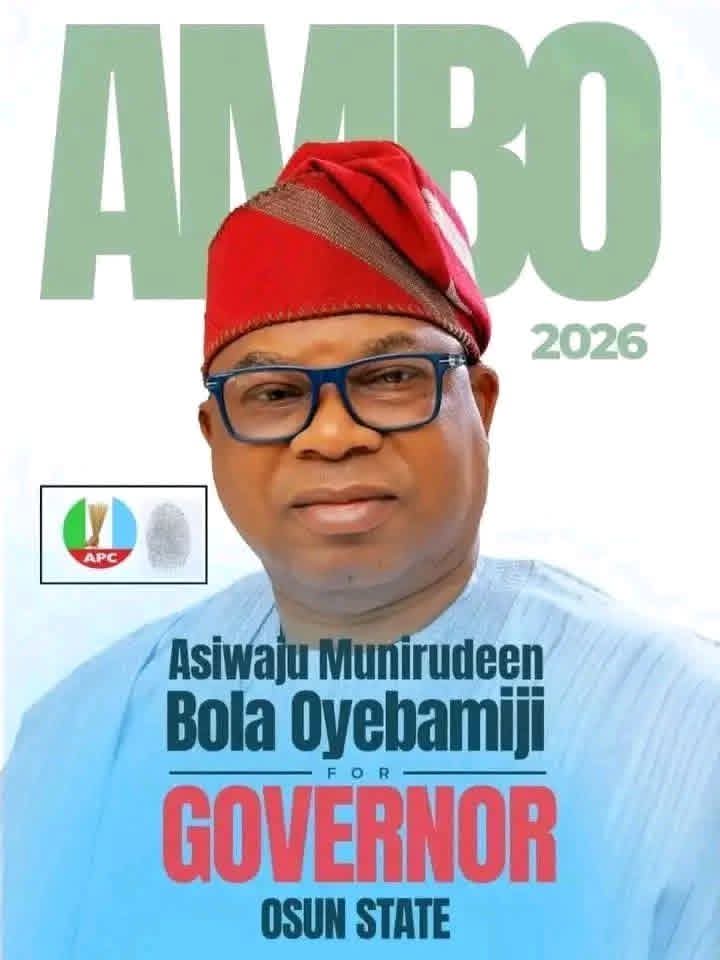
AMBO and the Osun Governorship Race: Assessing the Man, the Politics and the Vision
As political activities gather momentum ahead of the 2026 Osun State governorship election, a public affairs commentator, Oluseyi Olonade, has described the emergence of Asiwaju Munirudeen Bola Oyebamiji, popularly known as AMBO, as a significant development in the state’s political landscape.
In an article titled “Oyebamiji: The Man, The Politics and The Aspiration,” Olonade argued that the All Progressives Congress governorship hopeful possesses the character, experience and vision needed to reposition Osun State for sustainable growth.
According to the writer, Oyebamiji’s appeal stems from his extensive background in the banking sector, where he spent nearly three decades working with institutions including Wema Bank, Trans International Bank, Spring Bank and Enterprise Bank.
A native of Ikire in Irewole Local Government Area, Oyebamiji was described as a technocrat whose experience in corporate governance, finance and risk management has shaped his approach to public administration.
The article noted that his public service journey gained prominence in 2012 when he was appointed to oversee the then Osun State Investment Company Limited. Under his leadership, the organisation was reportedly restructured and transformed into Omoluabi Holdings Limited.
The writer further highlighted Oyebamiji’s tenure as Commissioner for Finance under successive APC administrations, where he was credited with managing the state’s finances during challenging economic periods.
Olonade also referenced Oyebamiji’s appointment as Managing Director of the National Inland Waterways Authority, describing it as further evidence of his administrative and leadership capabilities.
The article contrasted Oyebamiji’s governance philosophy with that of the current administration in Osun State, arguing that the APC aspirant favours institutional reforms, economic diversification and fiscal discipline.

According to the writer, Oyebamiji’s proposed agenda includes strengthening transparency in government spending, expanding internally generated revenue, attracting private-sector investments and promoting industrial and agricultural development.
The article also highlighted youth empowerment, entrepreneurship development and digital skills acquisition as key components of his vision for the state.
Olonade concluded that the forthcoming governorship election would present voters with a choice between different approaches to governance, expressing confidence that Oyebamiji’s experience and developmental agenda make him a strong contender in the race.
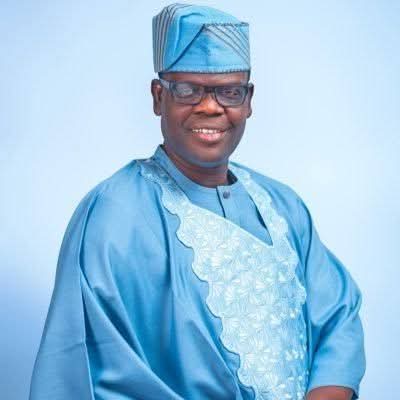
*Oselu Tiwa nTiwa Endorses Oriyomi Hamzat for Oyo Governorship*
A sociopolitical support group in Oyo State, Oselu Tiwa nTiwa, has declared its support for Alhaji Oriyomi Hamzat as the authentic governorship candidate of the Accord Party ahead of the forthcoming governorship election in the state.
The group made its position known in a statement jointly signed by its President, Mr. Adewale Oluwaseyi and Secretary, Alh. Adebayo Oyewole, on Thursday, describing Hamzat as a grassroots figure with strong connection to the people and a track record of humanitarian interventions across Oyo State.

According to the group, the endorsement followed what it described as careful observation of Hamzat’s leadership qualities, compassion and dedication to the welfare of ordinary citizens.
“Oriyomi Hamzat has consistently demonstrated empathy, courage and selfless commitment to humanity. Through his numerous interventions in the lives of ordinary citizens, he has become a symbol of hope to many families and communities,” the statement read.
Oselu Tiwa nTiwa also appealed to the national leadership of the Accord Party to prioritise the long-term future and electoral growth of the party in its decision-making process.
The group noted that Hamzat’s candidacy presents an opportunity for the party to strengthen its grassroots support base and expand its political relevance across Oyo State.
“We respectfully appeal to the National Leadership of the Accord Party to look beyond immediate political calculations and consider the bigger picture, the future growth, stability and electoral success of the party in Oyo State and beyond,” the statement added.
The group further expressed confidence in the leadership of the party, saying it believes the party’s national officers and stakeholders would take decisions that reflect fairness, inclusiveness and the collective interest of members.
While calling on party loyalists to remain calm and united, Oselu Tiwa nTiwa said continued consultations among stakeholders would help strengthen the Accord Party ahead of the election.
Signed:
Alh. Adebayo Oyewole,
Secretary.
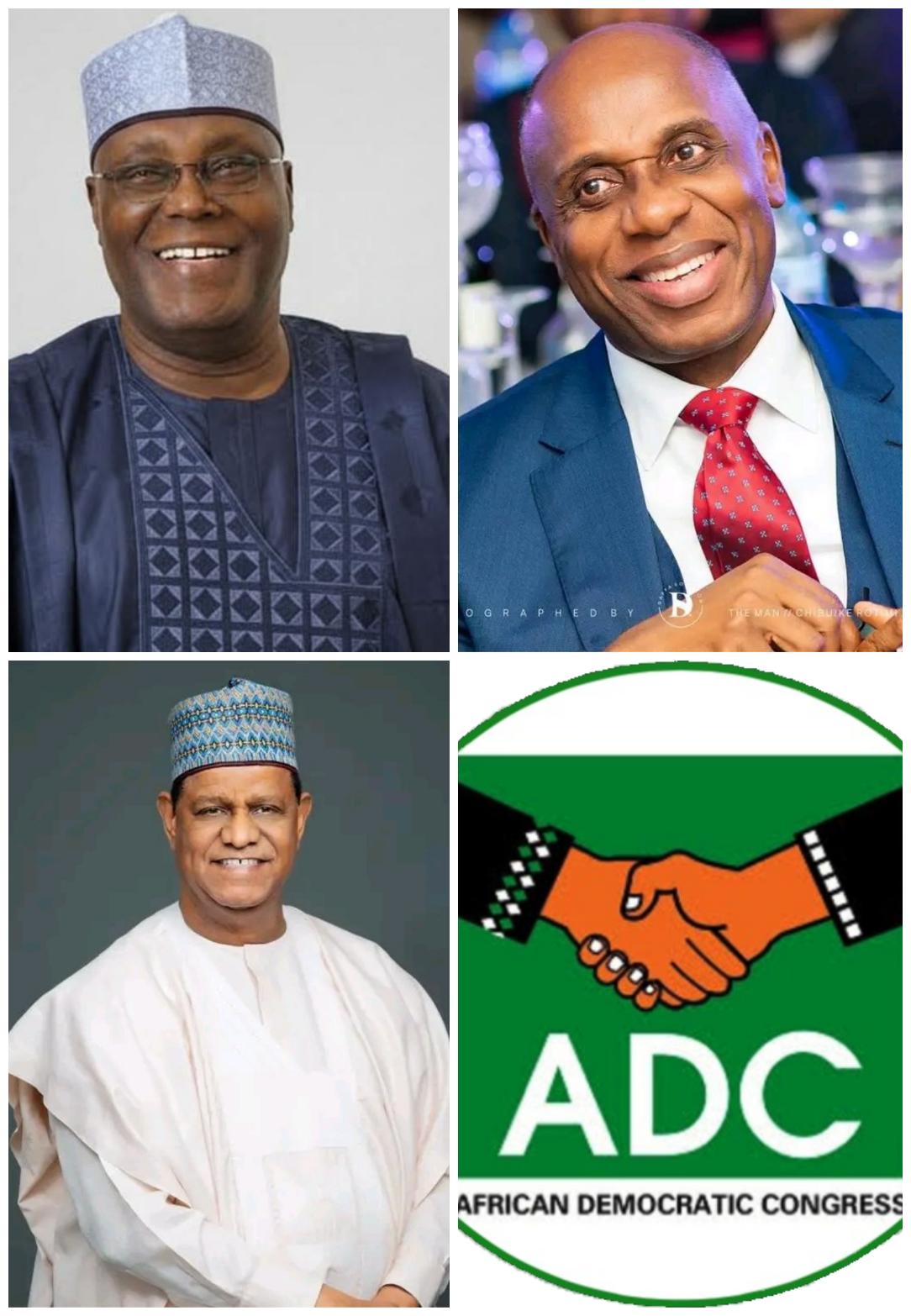
Atiku Set To Clinch ADC Presidential Ticket, Leads Amaechi, Hayatu-Deen In 34 States
Former Vice President of Nigeria and frontline presidential aspirant of the African Democratic Congress (ADC), Atiku Abubakar, is projected to emerge winner of the party’s presidential primaries, according to impeccable sources in Abuja.
The primaries, conducted across over 8,000 wards in the 36 states of the federation and the Federal Capital Territory, reportedly placed Atiku far ahead of his closest rivals — former Rivers State Governor, Rotimi Amaechi, and former Chairman of the Nigerian Economic Summit Group, Mohammed Hayatu-Deen.

Highly placed party insiders disclosed that Atiku is currently leading in 34 states, including the FCT, after securing dominance across the 19 Northern states, the five South-East states, and the six South-West states, while also maintaining a strong showing in at least three states in the South-South geopolitical zone.
The sources added that the outcome reflects what they described as “an overwhelming nationwide acceptance” of the former vice president within the opposition party ahead of the 2027 general election.
Meanwhile, the ADC leadership has invited members of the press to the official announcement of the final collated results scheduled for 11:00 a.m. on Tuesday, May 26, 2026, in Abuja.
The declaration of results is expected to be broadcast live on ARISE Television and two other major television stations, while also being livestreamed on the party’s official social media platforms on X and Facebook.
Speaking ahead of the announcement, the founding National Chairman of the ADC, Chief Ralph Nwosu, said the decision to televise the exercise live was aimed at promoting transparency and democratic accountability.
“We want millions of Nigerians at home and in the Diaspora to witness democracy in action,” Nwosu said.
He further revealed that the party leadership would encourage all three presidential aspirants to publicly embrace a peace accord and commit themselves to working together in unity for the party’s success.
According to him, the move is necessary to strengthen internal cohesion and position the ADC for victory in the presidential election scheduled for January 16, 2027.
Details later.


- Africa: UNAIDS calls for renewed global solidarity as UN Secretary-General’s report warns that AIDS is not over and fragile gains are at risk June 4, 2026
- Eritrea: Vocational training provided to college students June 4, 2026
- World Bank Group Launches Ten-Year Strategy to Drive Jobs and Prosperity in Uganda June 4, 2026
- Prof Oramah’s appointments to the Royal African Society Patronage and Kenya’s National Infrastructure Fund herald continued recognition of his global leadership and pan-African impact June 4, 2026
- Africa Finance Corporation Raises Record US$2 Billion Syndicated Loan in Landmark Show of Confidence in Transformational Infrastructure Strategy June 4, 2026
- Libya Energy & Economic Summit (LEES) 2027 to Define Libya’s Next Phase of Energy Expansion in Tripoli June 4, 2026
- Uganda: President delivers State of the Nation Address today June 4, 2026
- United Nations High Commissioner for Refugees (UNHCR): Refugees in Eastern and Southern Africa remain in exile for nearly 16 years June 4, 2026
- 85% of Ministry of Food and Agriculture's (MoFA) 2026 Budget Released to Boost Food Production — Deputy Finance Minister June 4, 2026
- Deputy (Dep.) Finance Minister Courts Investors to Transform Ghana’s rice Economy June 4, 2026
- Africa: UNAIDS calls for renewed global solidarity as UN Secretary-General’s report warns that AIDS is not over and fragile gains are at risk June 4, 2026
- Eritrea: Vocational training provided to college students June 4, 2026
- World Bank Group Launches Ten-Year Strategy to Drive Jobs and Prosperity in Uganda June 4, 2026
- Prof Oramah’s appointments to the Royal African Society Patronage and Kenya’s National Infrastructure Fund herald continued recognition of his global leadership and pan-African impact June 4, 2026
- Africa Finance Corporation Raises Record US$2 Billion Syndicated Loan in Landmark Show of Confidence in Transformational Infrastructure Strategy June 4, 2026
- Libya Energy & Economic Summit (LEES) 2027 to Define Libya’s Next Phase of Energy Expansion in Tripoli June 4, 2026
- Uganda: President delivers State of the Nation Address today June 4, 2026
-

 news6 months ago
WHO REALLY OWNS MONIEPOINT? The $290 Million Deal That Sold Nigeria’s Top Fintech to Foreign Interests
-

 society1 month ago
SOCIAL MEDIA IS NOT A BATTLEFIELD COMMAND – WHY THE NIGERIAN ARMY’S ACTION AGAINST JUSTICE CRACK IS A NATIONAL SECURITY IMPERATIVE
-

 celebrity radar - gossips4 months ago
Dr. Chris Okafor Returns with Power and Fire of the Spirit -Mounts Grace Nation Altar with Fresh Anointing and Restoration Grace on February 1, 2026
-

 celebrity radar - gossips6 months ago
Prophet Kingsley Aitafo Releases 2026 Prophecy: ‘Nigeria Will Rise, but the World Must Prepare for Turbulence’