
society
Bandits Roam Free While Citizens Face Trial: A Scathing Rebuke of Nigerian Governance and Judicial Hypocrisy

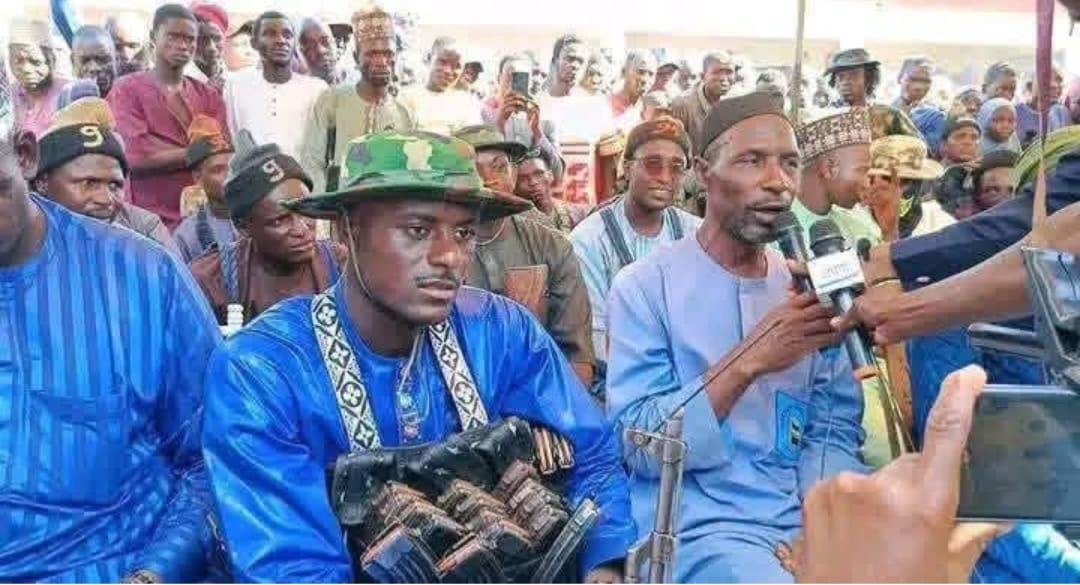
Bandits Roam Free While Citizens Face Trial: A Scathing Rebuke of Nigerian Governance and Judicial Hypocrisy.
By George Omagbemi Sylvester | For SaharaWeeklyNG.com
“How the Persecution of Omoyele Sowore Exposes the Failure of the State to Protect Its People and Safeguard Freedoms.”
Nigeria today stands at a grim crossroads. On one path lies STATE REPRESSION where DISSIDENTS, JOURNALISTS and CRITICS are hauled before courts on dubious charges. On the other lies RAMPANT BANDITRY, ABDUCTIONS and VIOLENCE, terrorizing thousands of innocent citizens with apparent impunity. The recent pronouncements by the lawyer of human-rights activist Omoyele Sowore (that “bandits roam free while citizens face trial”) are not mere rhetoric. They are a sobering indictment of a government that seems more intent on silencing dissent than protecting lives.
This essay delves into the details of this accusation, unpacks the broader political and security context and argues forcefully why this moment demands not just outrage, but a national reckoning.

The Sowore Case: A Microcosm of State Misplaced Priorities. On 3 December 2025, Sowore’s lead counsel, Abubakar Marshal, delivered a blistering critique of the government’s latest prosecution of his client. According to Marshal, the government under Bola Ahmed Tinubu has embarked on a deliberate campaign to “shrink Nigeria’s civic space” by targeting ordinary citizens who demand accountability.
Marshal argued that while armed bandits (those who ABDUCT, KILL, RAPE, LOOT and DESTABILIZE WHOLE COMMUNITIES) roam freely, innocent Nigerians who only demand good governance are arrested, tried and harassed.
Consider the facts:
Sowore was arraigned on five-count charges by the Department of State Services (DSS), based on his social-media posts criticizing President Tinubu.
His lawyer challenged the competence of the suit and questioned the jurisdiction of the court.
Despite the protestations and even though the prosecution had only just received the defence’s objection, the court proceeded to grant bail on self-recognition.
The court noted that there was no evidence that Sowore posed a flight risk, that his passport had been deposited with the court registry and that he had attended previous hearings and yet he was still being prosecuted for exercising his right to expression.

Marshal’s conclusion was stark and unambiguous: a government that “NEGOTIATES WITH BANDITS AND PAYS RANSOM TO CRIMINALS” yet goes after citizens who only ask for accountability has perverted justice.
He called on Nigerians to “RISE and RESIST” such suppression, insisting that “until we are all free, we are not free.”
In short: the treatment of Sowore is not an isolated case, it is emblematic of a much deeper malaise, one that strikes at the heart of constitutional freedoms, the rule of law and state legitimacy.
The Reality of Banditry: Why the Complaint Is Not Hyperbole. To understand why the “BANDITS ROAM FREE” charge resonates (even beyond political circles) one must confront the stark truth about Nigeria’s security collapse. The state’s failure to stem banditry is well documented. A 2023 report by Human Rights Watch (HRW) laid bare how violent groups in the northwest and other regions carried out widespread killings, kidnappings for ransom, rape, looting, mass displacement and even in areas near the seat of government.
Academic research confirms what many analysts and victims already know: banditry in Nigeria has evolved into a form of modern slavery and one in which vulnerable populations are terrorized, traumatized, exploited and stripped of basic human dignity.
More than that, analysts have tied this security collapse to deeper failures of governance. A recent study published by the International Institute of Academic Research and Development shows how institutional breakdowns, weak law enforcement, chronic corruption, youth unemployment, poverty, neglect of rural infrastructure and social services have all combined to create fertile ground for bandits to thrive.
In the words of one security analyst recently quoted by a major African media outlet: Nigeria’s insecurity is “rooted in governance failure.”
Thus, when Sowore’s lawyer condemns the government for focusing on silencing critics instead of combating criminal terror, he is not exaggerating. He is calling attention to a tragic inversion of priorities: JUSTICE for DISSENTERS, IMPUNITY for KILLERS.
Governance Failure: The Bigger Crime. What we see today is not merely a spike in crime; it is the gradual unraveling of social contract and the implicit agreement between government and governed that promises safety, justice and dignity. Political scientists often define “good governance” as the ability of a government to uphold the rule of law, ensure transparency, deliver public goods (security, infrastructure, social services) and respect civil liberties.

When these pillars crumble, governance failure follows and the consequences are catastrophic. Banditry, insurgency, fear, social dislocation these become the norm rather than the exception.
Scholars studying Nigeria’s bandit crisis increasingly argue that military strikes alone cannot resolve the problem. These strategies (which often target hideouts deep in forests) do little to deal with root causes: poverty, despair, exclusion, neglect.
Without systemic reform (strengthening local governance, boosting rural development, creating economic opportunities, restoring trust between communities and security agencies) the cycle of violence and impunity will only deepen.
Moreover, when the same state that fails to protect its citizens turns around to suppress dissent, it forfeits moral and legal legitimacy. That is precisely what has happened in the Sowore case: a government that cannot guarantee safety still seeks to wield the courts like weapons.
The Cost — to Democracy, to Citizens, to Nigeria’s Soul. The suppression of dissent is not simply a violation of individual rights; it corrodes democracy itself. As veteran Nigerian human-rights lawyer and activist Richard Akinnola once argued, a free press, a robust civil society and respect for speech and assembly are not optional extras but they are indispensable to a functioning democracy.
When governments imprison critics instead of bandits, they send a chilling message to every journalist, activist or ordinary citizen: your voice is a liability.

The consequences are not hypothetical. They are real: in countless communities, people live in fear and are afraid to demand accountability, report abuses, or protest injustice. Meanwhile, bandits kill, rape, abduct, extort but with impunity. That is the opposite of security: it is a reign of terror.
In a broader moral sense, such selective justice erodes the very foundations of citizenship. A state that punishes the powerless and legitimizes the powerful becomes no longer a protector, but a predator.
What Must Be Done: A Call to Action. The moment demands more than outrage. It demands clarity of purpose and collective resolve.
Reprioritise Security — The government must shift focus: from criminalising dissent to dismantling criminal networks. It must strengthen local policing, intelligence gathering, community-based defence and socio-economic support for vulnerable regions. Scholars warn that banditry cannot be tackled only by guns; root causes must be addressed.
Protect Civic Space — The courts should not be used as tools of repression. The charges against dissenters like Sowore must be carefully reviewed; merit and constitutional rights must guide judicial actions, not political expedience.
Institutional Reform — Governance deficits (corruption, neglect of rural infrastructure, unequal development, lack of accountability) must be confronted. Good governance demands transparency, fairness, responsiveness and respect for human dignity.
Empower Communities — Local leaders, civil-society organisations, ordinary citizens must be involved in restoring security and governance. Community policing, rural development, and empowerment of youth are part of the solution — not just militarisation.
Defend Democracy — Citizens must rise to resist any attempt to silence dissent, even more so when the state fails to secure basic rights. As Sowore’s lawyer said: “until we are all free, we are not free.”
Final Take – No More Excuses, No More Silence.
The Nigerian state today faces two concurrent crises: the collapse of security, and the erosion of civil liberties. Though these crises are not separate; they are intimately linked. A state that forfeits its responsibility to protect its citizens while punishing those who call for accountability is a state that has lost its soul.
The words of Abubakar Marshal are not hyperbole, they are a sober diagnosis: “bandits roam free while citizens face trial.” The tragedy is not only in the violence inflicted by criminals, though that devastation is real, daily and heartbreaking. The greater tragedy is in the state’s betrayal of its core mandate: to secure lives, uphold justice and preserve freedom.
If Nigeria is to heal, rebuild and redeem itself, it must start by re-committing to the dignity of every citizen and by defending freedom, delivering security and honoring the rule of law. Anything less is not governance; it is TYRANNY hidden behind the ROBES of LEGITIMACY.




society
Court Warns Police: Your Role in Debt Recovery is Illegal; Awards N50m in Favour of Man Detained for 6 Months Over Failed Forex Deal
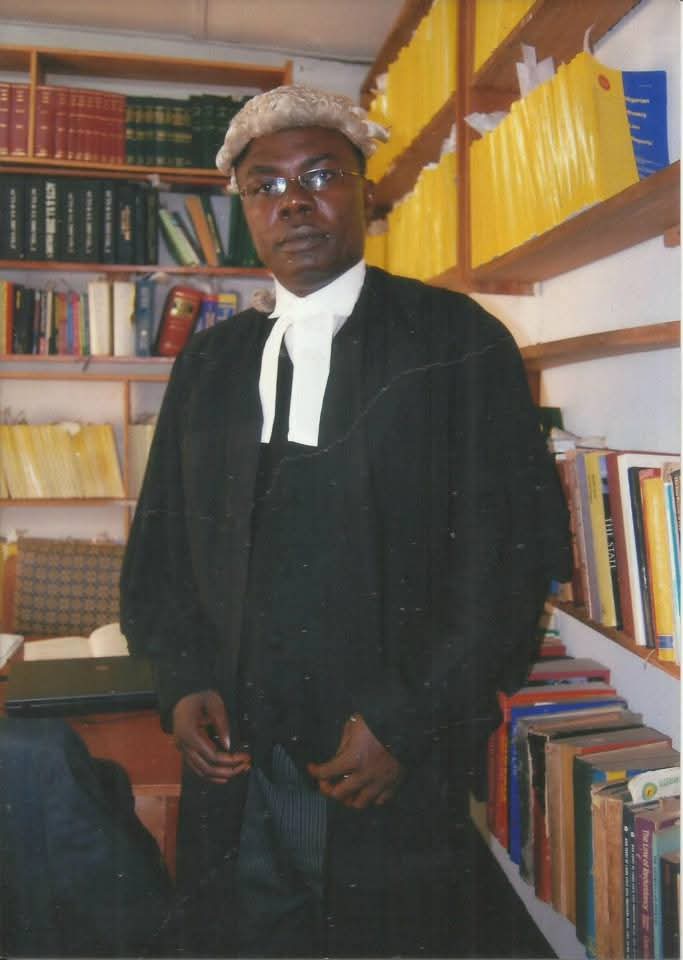
Court Warns Police: Your Role in Debt Recovery is Illegal; Awards N50m in Favour of Man Detained for 6 Months Over Failed Forex Deal
The Lagos State High Court has declared the six-month detention of businessman Bassey Ikpi Ubi over a failed foreign exchange transaction illegal and unconstitutional, ordering the police and private respondents to pay N50 million in damages for torture and unlawful detention.
Justice O. O. Adewunmi-Oshin held that the Nigeria Police Force has no legal authority to act as a debt recovery agency or to mediate private civil disputes.
The ruling was delivered on Monday, 11 May 2026, at the Lagos Judicial Division, High Court No. 49, in Suit No. LD/18019MFHR/2024.
Mr. Ubi, Managing Director of MC COY IKPI BUSINESS INTERNATIONAL LIMITED, had sued the Inspector General of Police, the Assistant Inspector General Zone 2, the DSS, the EFCC, and 11 private individuals and corporate entities.
He alleged that he was arrested and detained on Friday,16 February 2024, tortured almost to death in custody, denied bail, and had his Samsung Galaxy Z Flip 4 and Tecno phones forcibly taken and hacked.
The applicant told the court that the dispute arose from a failed foreign exchange transaction and that the police were being used by private respondents to recover civil debts.
Justice Adewunmi-Oshin stated unequivocally that “the police are not debt collectors and the detention cell is not a venue for settling private disputes.”
The court observed with concern what it called a recurring trend whereby officers of the Nigeria Police Force arrest and detain citizens under the pretext of criminality while the underlying dispute amounts to nothing more than a breach of contract or a failed commercial transaction.
“This Court observes with concern the recurring trend whereby officers of the Nigeria Police Force arrest and detain Citizens under the pretext of Criminality, while the underlying dispute amounts to nothing more than a breach of contract or a failed commercial transaction,” the judge said.
“Such conduct finds no warrant in law. Sections 4 of the Police Act 2020 above cited does not confer any power to act as debt collectors or to mediate private civil disputes.”
Citing _Fawehimi V Inspector General of Police_ (2002) 7 NWLR pt 767 pg 606, the court reiterated that
“the Police must not allow themselves to be used as tools for the enforcement of Civil obligations.”
The judge also referenced Section 6 of the Administration of Criminal Justice Act 2015, which makes clear that arrest shall only be made for a reasonable suspicion of a criminal offence, not for the recovery of debts or enforcement of contractual obligations.
On the applicant’s detention, the court found that holding him for six months without bringing him before a court violated Sections 33, 34, 35, 36, 37 and 41 of the 1999 Constitution, as well as Articles 4, 5, 6 and 7 of the African Charter on Human and Peoples’ Rights.
The judge further declared that the seizure and hacking of the applicant’s phones by the 4th respondent infringed his right to privacy and personal liberty guaranteed under Sections 35 and 37 of the Constitution.
Consequently, the court granted 11 orders. It restrained the 1st to 5th respondents from acting as recovery agents or from further arresting and detaining the applicant and officers of his company.
It ordered the 4th respondent to unconditionally release the seized phones. The court awarded N50,000,000 jointly and severally against all respondents for general, aggravated and exemplary damages, to be paid within 30 days.
It also directed the respondents to publish a public apology to the applicant in a full-page advertorial in a national daily newspaper within 14 days, in line with Section 35(6) of the Constitution.
“The practice is condemned in the strongest terms and the leadership of the Nigeria Police Force is expected to take immediate disciplinary and administrative steps to eradicate it,” Justice Adewunmi-Oshin ruled.
The applicant was represented by Kennedy Osunwa with J. Akor, while M. O. Bajela appeared for the 4th respondent. The 18th and 24th respondents had earlier been struck out of the suit.
society
2027 PRESIDENTIAL POLL: Nwosu, Akobundu, Ihedioha, Nwajiuba, Ikeobasi- Political Juggernauts Who Will Lead ADC To Landslide Victory In The South East
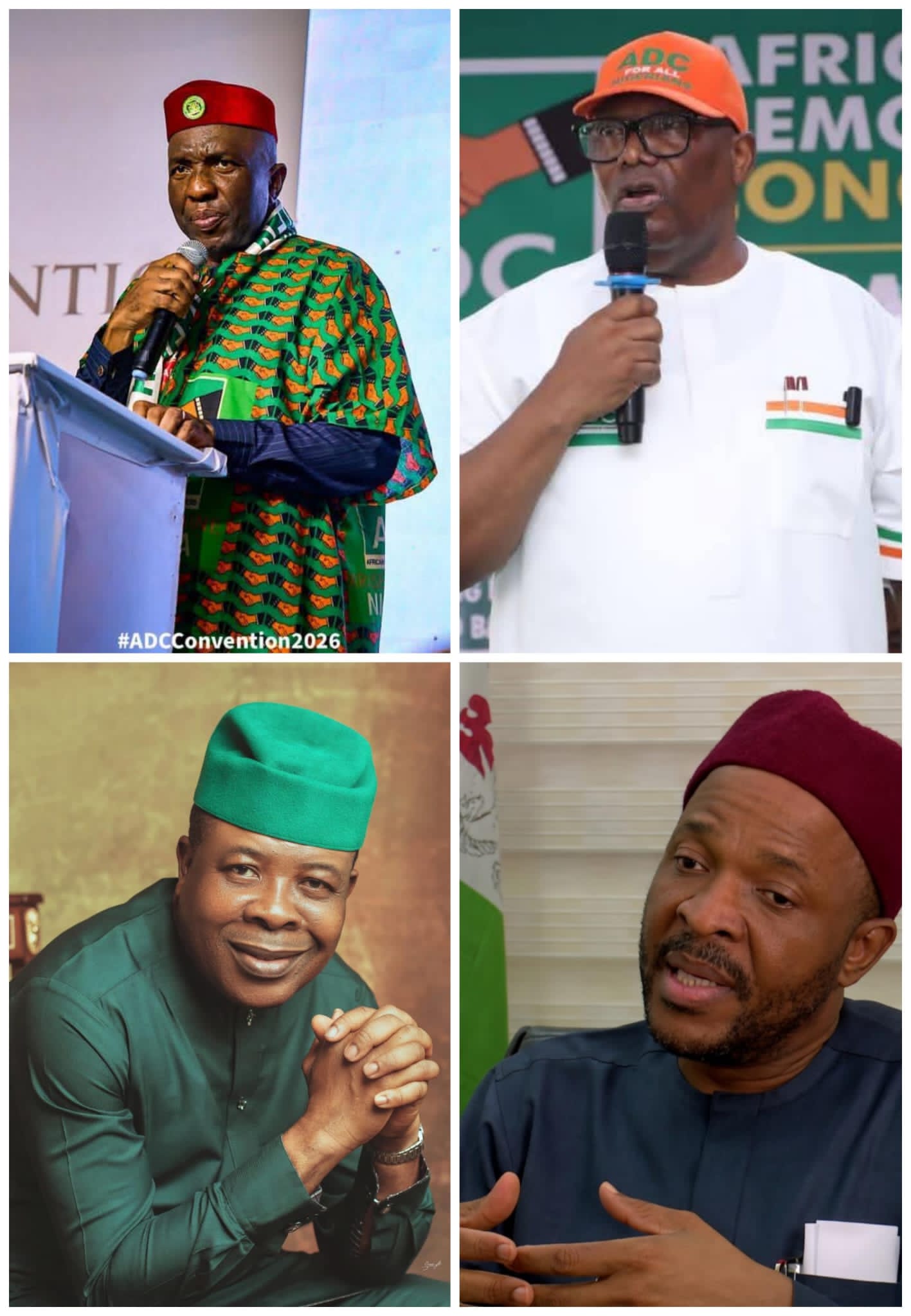
2027 PRESIDENTIAL POLL: Nwosu, Akobundu, Ihedioha, Nwajiuba, Ikeobasi- Political Juggernauts Who Will Lead ADC To Landslide Victory In The South East
Barely eight months to the all-important Nigerian presidential election billed for Saturday, January 16, 2027, below are the who is who in the South East, the political heavyweights and juggernauts who will lead the main opposition African Democratic Congress (ADC), to a landslide victory across the five South East States of Abia, Anambra, Ebonyi, Enugu, and Imo States.
1. Chief Ralph Nwosu: He is the founding National Chairman of the main opposition ADC. Nwosu beat Mr. Peter Obi during the 2002 guber primaries of the All Progressives Grand Alliance (APGA), but was asked to step down for Obi, by the revered leader of the Igbo nation, Chief Chukwuemeka Odumegwu Ojukwu.
2. Senator Augustine Akobundu: He is Senator representing Abia Central Senatorial District in the Nigerian Senate, since 2023. He has just won the ADC primary ticket ahead of the 2027 Senatorial election billed for January 16, 2027.
3. H.E. Rt. Hon. Emeka Ihedioha: He was the former Deputy Speaker of the House of Representatives (2011-2015), and former Governor of Imo State (2019-2020). Ihedioha was illegitimately ousted from office by the Supreme Court led by CJN Kudirat Motonmori Olatokunbo Kekere-Ekun. The Supreme Court illegally smuggled APC candidate Hope Uzodimma who came a distant 4th to become Governor through the backdoor.
4. Chief Emeka Nwajiuba: He was the former Minister of State for Education (2019-2022). He contested the APC Presidential primaries in 2022. Nwajiuba speaks Hausa fluently and is very close to the Buhari/Katsina Northern political bloc.
5. Chief Ikeobasi Mokelu: He was the Minister of Information under the administration of General Sanni Abacha. He is a political juggernaut who is very close to Kashim Imam, Zango Daura, and even His Excellency Atiku Abubakar.
Among other eminent political juggernauts and heavyweights, the abovementioned are the men of timber and caliber who will lead the ADC charge across the South East Geo-Political Zone, going into the 2027 Presidential election.
Our team of eminent young political scientists and investigative journalists have done our backgrounders on these men, and can state unequivocally and emphatically that they got the verified capacity to lead the ADC to a landslide victory across the five South East States, next year.
It’s against this backdrop that we the leaders and members of Afa Igbo Efuna Worldwide call on His Excellency Atiku Abubakar- @atiku, and the Senator David Mark-led @ADCNig leadership to without any iota of doubt shop for a Vice Presidential candidate, among these qualified Igbo leaders from the South East Geo-Political Zone, on or before June 31, 2026.
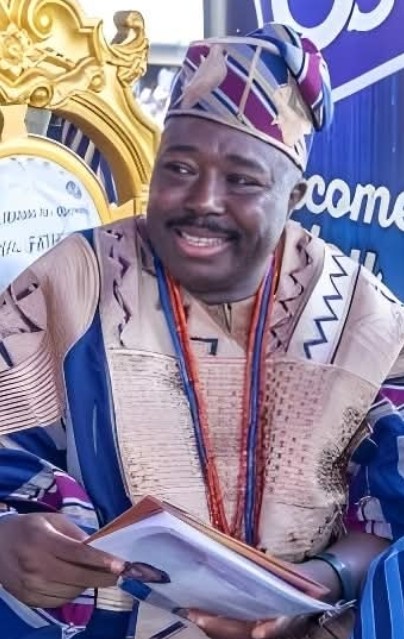
Ahead of 2027: BSA Diaspora Vanguard Backs Sarafadeen Alli for Oyo State Governor
Support for APC chieftain Barrister Sarafadeen Alli’s 2027 governorship ambition is growing both at home and abroad, with the BSA Diaspora Vanguard in North America throwing its weight behind him.
The group, led by Chief Dr. Olayinka Afolabi, Chief Coordinator of the BSA Diaspora Vanguard North America Chapter, said it is committed to mobilizing resources and awareness to ensure Alli emerges as Oyo State’s next governor.
“Barrister Sarafadeen Alli is tested, trusted, and understands what the people of Oyo State need,” Chief Afolabi said. “We in the BSA Diaspora Vanguard North America are determined to complement his efforts by enlightening Oyo indigenes in the diaspora and rallying support to bring this vision to reality.”
The group added that it would intensify outreach across North America to inform the Oyo community about Alli’s track record and plans for the state.


- Member States advance regional coordination on Bundibugyo Ebola response May 23, 2026
- World Health Organization (WHO) Supports Zambia to Strengthen Access to Mental Health Medicines and Services May 23, 2026
- Brazzaville 2026 African Development Bank Group (AfDB) Annual Meetings to focus on mobilising Africa’s development financing at scale May 22, 2026
- Morocco: African Development Bank Group and OCP Group Sign €450 Million Partial Credit Guarantee to Accelerate Industrial Transition May 22, 2026
- South Sudan: Leaders of tomorrow take center-stage at lively debates on gender equality and democracy in Pibor May 22, 2026
- Seychelles and Bangladesh hold Constructive Talks on Cooperation and International Engagement May 22, 2026
- Seychelles: Minister Faure and Ambassador Azais Tatistscheff discuss humanitarian and healthcare cooperation May 22, 2026
- African Energy Chamber (AEC) to Position Africa as South America’s Next Strategic Energy Frontier at Association of Oil, Gas and Renewable Energy Companies of Latin America and the Caribbean (ARPEL) Conference 2026 May 22, 2026
- Afreximbank Posts Robust Q1 2026 Results with 25% Growth in Net Income and Improved Profitability May 22, 2026
- Africa: Soil Mapping for Resilient Agrifood Systems (SoilFER) programme scales up soil fertility monitoring through Mid-Infrared Spectroscopy May 22, 2026
- Member States advance regional coordination on Bundibugyo Ebola response May 23, 2026
- World Health Organization (WHO) Supports Zambia to Strengthen Access to Mental Health Medicines and Services May 23, 2026
- Brazzaville 2026 African Development Bank Group (AfDB) Annual Meetings to focus on mobilising Africa’s development financing at scale May 22, 2026
- Morocco: African Development Bank Group and OCP Group Sign €450 Million Partial Credit Guarantee to Accelerate Industrial Transition May 22, 2026
- South Sudan: Leaders of tomorrow take center-stage at lively debates on gender equality and democracy in Pibor May 22, 2026
- Seychelles and Bangladesh hold Constructive Talks on Cooperation and International Engagement May 22, 2026
- Seychelles: Minister Faure and Ambassador Azais Tatistscheff discuss humanitarian and healthcare cooperation May 22, 2026
-

 news5 months ago
WHO REALLY OWNS MONIEPOINT? The $290 Million Deal That Sold Nigeria’s Top Fintech to Foreign Interests
-

 society3 weeks ago
SOCIAL MEDIA IS NOT A BATTLEFIELD COMMAND – WHY THE NIGERIAN ARMY’S ACTION AGAINST JUSTICE CRACK IS A NATIONAL SECURITY IMPERATIVE
-

 celebrity radar - gossips4 months ago
Dr. Chris Okafor Returns with Power and Fire of the Spirit -Mounts Grace Nation Altar with Fresh Anointing and Restoration Grace on February 1, 2026
-

 celebrity radar - gossips5 months ago
Prophet Kingsley Aitafo Releases 2026 Prophecy: ‘Nigeria Will Rise, but the World Must Prepare for Turbulence’