
Business
‘Belaire Champagne Gaining Ascendancy in Nigeria’


Samuel Douglas a Country Sales manager of Sovereign Brands, owners of the Luc Belaire brands, Bumbu Rum, Cloud Chaser and Skeleton wines. An American-based company, dealing in Nigeria through Ekochiv Ventures Nigeria Limited its local distributor. During an Exclusive interview with SIDNEY NWACHUKWU, Country Editor of Saharaweekly, he states that Belaire brands, are fast-rising products and have come to stay with its dynamic approach to changing the climate of Bubbly market in Nigeria/ Africa.
Excerpts:
What made you bring your business to Nigeria?
Firstly, Nigeria is the most populous Black nation in the world. Meaning there is strength in numbers. It shows there are lots of opportunities. Also Nigeria is one of the most vibrant markets in terms of social life. People are most desirous of good lifestyle. All around the globe, you would find out that of two Black people you meet, one is a Nigerian. And it’s easy to know who the Nigerian is. In terms of social circle, they are the people who would turn up the most. So it is an opportunity for any brand that wants to grow to be in Nigeria, especially in the wine/spirit business.
Nigerians are some of the most stylish people in the world. In fact, we run the entire African market. The growth of the bubbly brands is driven by Nigerians. They took the lifestyle from Nigeria to the world. They seek out their fun and leisure time; what they want, they seek it and pay for it, and it has become the norm. The South Africans had to learn from us. So we will always be the key market, not just for wine/spirit, but also for luxury goods. I believe we have the highest number of luxury cars on the streets in Nigeria across the Africa.
Your brand of champagne, Belaire and Bumbu, seems more like rum. What is behind the captivating names?
Sovereign Brands is a company that thrives on innovation; we are very creative minded people, we thrive on creativity and innovation. It’s a business that is blessed with a lot of talents. In every field here, you find some of the best hands, in marketing, sales and commercial departments, you would find people that are tested and know what they are doing. So the business is very careful and selective of the brands they deal with. It seeks out brands it wants to create, sell or do business with. It looks deeply into the heritage of these products and tries to understand what suits the market and what would be best for the consumer, as well as easy for them to manage and easily deal with it.
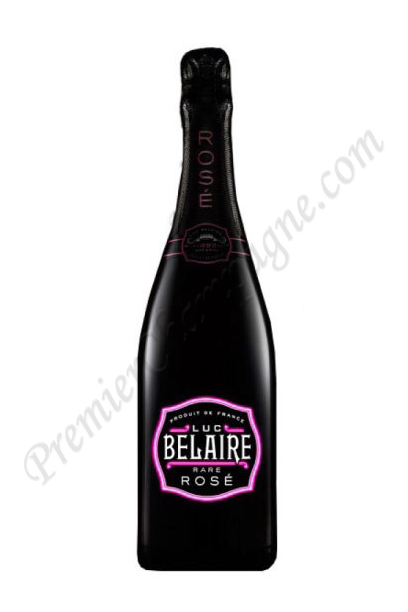
Belaire is actually a French word that means ‘one with a pleasant demeanor’. It’s very easy for anyone to relate with the brand. First, it’s a playful brand; it can function in any space. As a person, you know who has a nice lifestyle; when you are jovial and playful, everyone wants to be around you. You can see that the growth of the brand is very organic; it’s what everyone wants to be part of. Part of the style – the name, colour of the bottle, luminous label, that’s what people want to see. They are driven by what they see. And as you know, when you walk around a lot at night, very bright colours attract your attention like bees to honey.
For Bumbu, is based on the original recipe created by 17th century sailors of the West Indies, who blended native Caribbean ingredients into their rum and called it “Bumbu” – the original craft spirit. Just like the Bumble bee, you love the sweet taste. It’s just to get the consumer to understand that it’s a drink and something you can easily relate with. Truly, it’s a pleasant thing.
What has been the response or acceptance for these drinks?
You tried it yourself, did you enjoy it? For everyone that has tried Belaire, they all have one or two things to say – all positive. So far we are just a year old in the market. I am the first Country Sales Manager for the brand in Nigeria. It has been an awesome journey so far. Where we are coming from, the equity we have been able to build in the market, over the years is huge. It has got its positive and negative sides; but for us, as a business, it’s been positive and it’s been an awesome journey. The response has been tremendous and our growth has been very swift. For a product that was not mainstream trade product to have this kind of response, it’s been awesome. I can only thank God for it; and a lot of hard work. At the end of the day, it has been grace. I have always attributed every success in my life to God because he is my only source of power & inspiration. I hold that very dearly. Everything I touch I am always positive they will receive positive response. It doesn’t matter how much opposition arises.
What are your strategies in the business?
Strategies? You don’t discuss that in public. Truth is, once you have a good product, good team, the right market space discipline and good management skills, you can sell practically anything. I don’t know any strategy better than that.
Any plan to leverage on media?
We are already doing that. One of the major strengths has been the leaning towards media. We’ve been highly focused on new media. We are very focused on ensuring that we have very strong foothold, thus we aim to extend our use of media, but we are very focused on where we can gain more serious advantage, not just visibility.
As you well know, online platforms come and go. Strategically, what media areas do you want to use to gain dominance/consolidate?
First and foremost, we are a luxury brand. Did you say we are a high-end firm, well, not from my point of view? Our products are affordable, though it depends on who is buying.
Back to the issue: now there’s a middle-class that can afford our prices to an extent. Let’s say someone picks 10 bottles of our product but comes in once in a while. But another regularly picks just two bottles. That is okay for us. I believe we would find many that are comfortable and want to be in that class field compared to other brands. However, we are not competing with anyone. We are special in our own space. We’re Black and love to do things differently.
So if you love the brand, you’ll pay anything for the product. It’s not about the money; it’s the value the brand is putting out there, that’s what you want to see as a consumer.
Your products taste so great, what are you doing to push it into the public eye?
I spent years with Hennessy; I played a key role there, only a little has changed in the market. We in Belaire are doing what we have to do. In just 12 months, look at the kind of response and acceptance we have gotten in sales, visibility and acceptance. That should tell you that we know what we are doing. It took Moet Hennessy 10 years of intensive trade activities to get to where they are today, but again you can say the market wasn’t as saturated as it is now. Secondly, we are a brand to watch out for and we have done fantastically well and still growing.
At some point in the life of this market, the biggest products making sales in the night life then were, Red Label, Wines and Beers. As far back as 2006. I know how many bottles of wine I would sell in those days in my club; not much Champagnes in those days. I sold far more Whiskies than Cognac. So I know. We’re a part of the growth. Things are so much competitive today. Most big brands have made so much money and are investing majorly in the market.
Every product within the wine segment has a competition in terms of volume but that’s all that it is, we are just doing what we want to do and we are growing. I can’t tell you our position in terms of bubbly. But I can tell you that if we want to look at figures, give me three years, and the market will understand exactly where we are coming from.
How do you get 95% of parties in Nigeria to Petronize Belaire?
I may not be able to post figures and percentages now, but today we are at a lot of weddings, anniversaries etc with Belaire, there is a working template for the market?. Yes! Every business has a template and all players know that.
Once you get the template right, you will see the results, as people will come forward. And so far, people have been coming forward.
Recently, I visited Abeokuta for an appointment, and I decided to check out the market. I was at about 5 outlets, and I was super-impressed. There were outlets I didn’t even know, and they all had Belaire well arranged on the shelves. They had our products in their bars, fridges, on display. And I smiled because my sweat and stress is paying off. So to answer your question, guys are already picking the brand. I asked the bar-men about Belaire and they said that it what is new and cool.
We are not just in Lagos State I have been to the East, South, parts of the North as far as Kaduna. we are spreading, pushing our frontiers. We are also in Jos, Makurdi and Abuja.
Besides the earlier reason told, is there any other reason for bringing your products to Nigeria?
In 2014, we threw a party at an outlet across my then office, to celebrate a product. I later had a routine check of the tables across the venue, I was surprised to find a guest drinking Belaire Rose. I was furious and asked that they take it out. They pleaded that it was their last bottle. In our industry, there’s always that thing against competition and they know me well to fight tooth and nail to protect my product; as I turned my back on that table, I asked one of my trade guys to watch out for that brand (Belaire).
How do you marry your faith and career so well together?
I remember someone once asking me how I cope with managing my work and being so close to God. It’s just like my daughter once answered somebody on coping with seeing dead bodies as




Business
Dennis Ekamah Isn’t Building Houses—He’s Redefining What Home Means for Africans Through PropTech

Dennis Ekamah Isn’t Building Houses—He’s Redefining What Home Means for Africans Through PropTech.
The founder of coHouse.ng is reimagining how millions of Africans access, experience, and share housing through technology.
In Africa’s rapidly evolving innovation landscape, the most transformative companies are no longer defined by the industries they enter, but by the systems they redesign.
For Dennis Ekamah, the opportunity was never about constructing buildings, it was about confronting a deeper question.
why is access to housing still so structurally difficult for millions of Africans in a digital age?
Rather than stepping into real estate as a developer. Dennis chose a different path, positioning coHouse.ng as a PropTech platform rethinking how housing is accessed, experienced, and shared. At the heart of this vision which is connecting potential home owners together via resource pooling for the purpose of either Living or Growth. Simply, *Connect. Live. Grow.*
*A Platform Not a Property Company*
coHouse.ng is not a real estate company. It is a technology-driven ecosystem connecting like-minded individuals into structured communities where they can live intentionally, invest collectively, and grow within a shared system.
From Insight to Recognition
In 2025, coHouse.ng was recognised among the Top 50 Tech Startups in Africa. Even ahead of its official launch, the platform attracted over 1,000 early waitlist users, individuals eager to be part of a new way of living and investing.
Solving for Access, Alignment, and Trust
Dennis Ekamah’s diagnosis goes deeper than supply shortfalls. The real barriers he argues are access, coordination, and trust. coHouse.ng tackles all three through identity verification powered by a third party verification system api. coHouse is not flying solo without the help and collaboration with government bodies across Nigeria and other African countries.
In his words;
“Imagine what you would achieve as an individual or group if you’re living with the right people or like-minded individuals around you.”
I’m not a developer, I’m not a professional realtor, I’m just someone who sees the need for this solution based on the problem we face as youth/young entrepreneurs in today’s housing deficiency across Africa.
— Dennis Ekamah
Join our waitlist by visiting www.cohouse.ng

Landmark Judgment: Federal High Court Dismisses ₦50bn Oil Spill Claim Against ExxonMobil
The Federal High Court sitting in Uyo has dismissed a ₦50 billion lawsuit filed against ExxonMobil, sued as Mobil Producing Nigeria Unlimited, now Seplat Energy Producing, in a ruling analysts say could significantly reshape oil spill litigation and compensation claims in Nigeria’s petroleum sector.
Delivering judgment on April 29, 2026, Justice Onyetenu held that the suit instituted by the Ejige Ore Njenyisi Muma & Fishing Co-operative Society Ltd was incompetent and liable to dismissal for lack of jurisdiction.
The plaintiffs had sought ₦50 billion in damages over an alleged hydrocarbon spill said to have occurred on September 12, 2021.
However, counsel to the defendant, Chinonso Ekuma of KENNA LP, successfully argued that the claimants failed to disclose any legally recognisable violation attributable to the oil firm.
In its findings, the court held that the plaintiffs failed to establish any actionable wrongdoing against the defendant.
A key element in the court’s decision was the Joint Investigation Visit (JIV) Report tendered by the plaintiffs themselves, which showed that the alleged spill incident was confined within ExxonMobil’s operational facility and did not impact the members of the cooperative society or their sources of livelihood.
The court further ruled that claims arising from such incidents must be pursued strictly under the statutory compensation framework provided in Section 11(5) of the Oil Pipelines Act, rather than through common-law claims founded on negligence or nuisance.
Justice Onyetenu held that the plaintiffs’ attempt to circumvent the statutory regime by framing the suit as a tort action rendered the matter incompetent before the court, thereby depriving it of jurisdiction.
Legal analysts say the judgment reinforces the supremacy of the Oil Pipelines Act in determining compensation procedures relating to oil pipeline incidents and environmental claims in Nigeria.
The ruling is also seen as strengthening the evidential weight of Joint Investigation Visit Reports, particularly in cases where such reports indicate no direct impact on claimants or host communities.
Industry observers believe the judgment will have far-reaching implications for future oil spill litigation, especially regarding the procedural requirements for compensation claims against oil operators.
The court’s decision further provides clarity for operators within Nigeria’s energy sector by reaffirming that compliance with Section 11(5) of the Oil Pipelines Act is mandatory and cannot be sidestepped through alternative legal formulations.
While K.O. Uzuokwu appeared for the plaintiffs, the defence was led by Chinonso Ekuma of KENNA LP on behalf of ExxonMobil.

Union Bank Honoured by ASBON at Nigeria National SME Business Awards
Lagos, Nigeria – Union Bank of Nigeria has reaffirmed its reputation as a strong supporter of Nigerian businesses, receiving the Best SME Growth Banking Initiatives Award for 2025 from the Association of Small Business Owners of Nigeria (ASBON) at the Nigeria National SME Business Awards, held recently in Lagos.
The award was presented to the Bank in recognition of its strategic leadership in advancing the growth and resilience of small and medium-sized enterprises, through a differentiated suite of solutions designed to enable business expansion and long-term value creation.
Receiving the award on behalf of the Bank, Ayokunnumi Abraham, Head of SME Segment at Union Bank, described the recognition as a strong endorsement of the Bank’s commitment to supporting small and medium-sized businesses. He said:
“We are honoured to receive this recognition, which reflects Union Bank’s continued commitment to helping SMEs grow by making banking simpler, faster, and more accessible. Through enhancements to our specialised platforms such as Union360, we have meaningfully reduced the time it takes for businesses to come on board and begin transacting. These improvements have shortened onboarding, increased digital adoption among our SME customers, and supported the acquisition of new business clients. Our focus remains on delivering practical solutions that help Nigerian businesses thrive.”
Organised by ASBON in partnership with the Lagos State Government through the Ministry of Commerce, Cooperatives, Trade and Investment, the event convened stakeholders from the public and private sectors to recognise individuals and organisations driving meaningful impact across Nigeria’s SME ecosystem.
Union Bank remains focused on deepening its support for SMEs through customer-led solutions and processes that strengthen business growth across the ecosystem.


- Merck Foundation Chief Executive Officer (CEO) celebrates 124 Winners from 32 Countries for their Media Awards for Breaking infertility Stigma and Supporting Girl Education May 13, 2026
- The Islamic Corporation for the Insurance of Investment and Export Credit (ICIEC) and Oesterreichische Kontrollbank Aktiengesellschaft (OeKB) Sign Framework Reinsurance Agreement to Strengthen Export Credit and Investment Risk Coverage May 13, 2026
- Africa Energy Forum 2026: Building Africa's Industrialised Future May 13, 2026
- Canon Introduces Coalition for Content Provenance and Authenticity (C2PA)-Compliant Authenticity Imaging System for News Organisations May 13, 2026
- Driving Africa’s Fair Energy Transition Through Technology and Innovation (By Prof. Bart O. Nnaji) May 13, 2026
- Welcoming Innovation Without Losing the Fundamentals: Why Lenacapavir’s Rollout Must Strengthen Combination Prevention in South Africa (By Ngaa Murombedzi) May 13, 2026
- Why Your Communications Strategy is Undermining Your Decisions (By Bas Wijne) May 13, 2026
- Liquid Intelligent Technologies revitalises access to cloud and cyber security services in support of improved national digital resilience May 13, 2026
- Transformative African Leadership (TAL) Redefines Leadership Across the Continent May 13, 2026
- World Mining Investment Chief Executive Officer (CEO) Didier Rault Joins African Mining Week (AMW) Advisory Board May 13, 2026
- Merck Foundation Chief Executive Officer (CEO) celebrates 124 Winners from 32 Countries for their Media Awards for Breaking infertility Stigma and Supporting Girl Education May 13, 2026
- The Islamic Corporation for the Insurance of Investment and Export Credit (ICIEC) and Oesterreichische Kontrollbank Aktiengesellschaft (OeKB) Sign Framework Reinsurance Agreement to Strengthen Export Credit and Investment Risk Coverage May 13, 2026
- Africa Energy Forum 2026: Building Africa's Industrialised Future May 13, 2026
- Canon Introduces Coalition for Content Provenance and Authenticity (C2PA)-Compliant Authenticity Imaging System for News Organisations May 13, 2026
- Driving Africa’s Fair Energy Transition Through Technology and Innovation (By Prof. Bart O. Nnaji) May 13, 2026
- Welcoming Innovation Without Losing the Fundamentals: Why Lenacapavir’s Rollout Must Strengthen Combination Prevention in South Africa (By Ngaa Murombedzi) May 13, 2026
- Why Your Communications Strategy is Undermining Your Decisions (By Bas Wijne) May 13, 2026
-

 news5 months ago
WHO REALLY OWNS MONIEPOINT? The $290 Million Deal That Sold Nigeria’s Top Fintech to Foreign Interests
-

 society1 week ago
SOCIAL MEDIA IS NOT A BATTLEFIELD COMMAND – WHY THE NIGERIAN ARMY’S ACTION AGAINST JUSTICE CRACK IS A NATIONAL SECURITY IMPERATIVE
-

 celebrity radar - gossips4 months ago
Dr. Chris Okafor Returns with Power and Fire of the Spirit -Mounts Grace Nation Altar with Fresh Anointing and Restoration Grace on February 1, 2026
-

 celebrity radar - gossips5 months ago
Prophet Kingsley Aitafo Releases 2026 Prophecy: ‘Nigeria Will Rise, but the World Must Prepare for Turbulence’
You must be logged in to post a comment Login
You must log in to post a comment.