
society
Beyond Borders and Bloodlines: How King Misuzulu’s Call Rekindles Southern Africa’s Shared African Heritage

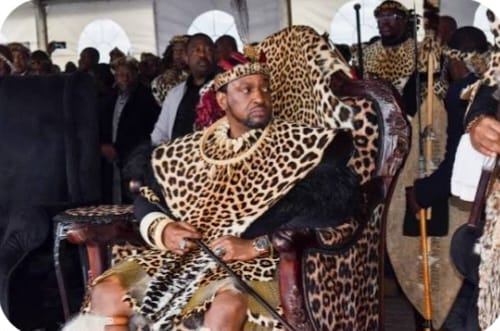
Beyond Borders and Bloodlines: How King Misuzulu’s Call Rekindles Southern Africa’s Shared African Heritage.
By George Omagbemi Sylvester
Published by SaharaWeeklyNG.com
“From Isandlwana to KoBulawayo, the Zulu monarch’s message of UNITY, HISTORY and COOPERATION offers a powerful antidote to xenophobia and fractured African solidarity.”
At a time when social tensions, economic anxieties and rising xenophobic sentiments threaten the fragile fabric of South African society, the voice of history spoke with rare clarity at Isandlwana. Addressing hundreds during the commemoration of the historic Battle of Isandlwana in KwaZulu-Natal, His Majesty King Misuzulu kaZwelithini issued a timely and profound call: a call for renewed ties, mutual respect and deeper collaboration between the Zulu nation and neighboring African countries, particularly Zimbabwe.

The monarch’s remarks were not ceremonial rhetoric. They were grounded in deep historical truths that predate colonial borders and modern nation-states. By invoking KoBulawayo (present-day Bulawayo in Zimbabwe) King Misuzulu reminded his audience that African history did not begin with European cartography, nor was it confined by artificial borders drawn in distant colonial capitals. Rather, Southern Africa has long been bound together by shared ancestry, migration, culture and struggle.
Isandlwana: A Battlefield of Memory and Meaning. The choice of Isandlwana was itself symbolic. The Battle of Isandlwana (1879) stands as one of Africa’s most significant military victories against British imperial forces. It was a moment when African unity, strategy and resolve disrupted the myth of European invincibility. To speak of unity and cooperation at such a site was to anchor contemporary challenges in a history of resistance, dignity and self-determination.

According to renowned historian Prof. Sabelo Ndlovu-Gatsheni, “African historical memory is a powerful resource. When leaders invoke it responsibly, they remind people that division is not our natural state, fragmentation was imposed.” King Misuzulu’s address did precisely that: it reactivated historical consciousness as a tool for healing present fractures.
KoBulawayo and the Zulu–Ndebele Connection. Central to the king’s message was the reference to KoBulawayo, the historical heartland of the Ndebele people in Zimbabwe. The Ndebele nation traces its origins to Mzilikazi kaMashobana, a former Zulu general under King Shaka who later established a powerful kingdom north of the Limpopo in the early nineteenth century. Bulawayo itself derives from a Ndebele term meaning “the place of slaughter”, reflecting the military traditions that shaped the state.
This historical reality underscores an uncomfortable but necessary truth: many African communities today labeled as “foreign” are, in fact, kin separated by colonial borders. As Nigerian historian Prof. Toyin Falola has argued, “The African continent is not a mosaic of strangers; it is a continuum of peoples whose identities were violently fragmented by colonialism.”
King Misuzulu’s reminder that Zulu–Zimbabwean relations date back centuries was therefore not sentimental nostalgia though it was factual, historical and deeply political in the most constructive sense of the word.

Xenophobia and the Crisis of African Brotherhood. The king’s address also confronted contemporary realities. South Africa has in recent years witnessed troubling episodes of violence and hostility toward foreign nationals, many of whom are Africans fleeing economic collapse, political instability or conflict in their home countries. These tensions, often fueled by unemployment and inequality, have eroded the ideals of Pan-Africanism that once animated liberation movements across the continent.
Political economist Patrick Bond notes that “xenophobia in South Africa is not born of hatred alone; it is the outcome of unmet economic promises and structural inequality.” Yet, as King Misuzulu implied, economic frustration cannot justify the erosion of African solidarity or the denial of shared humanity.
By calling for dialogue, respect and collaboration, the Zulu monarch reframed the conversation. He positioned African unity not as a moral luxury, but as a historical obligation and a strategic necessity in a global system that continues to marginalize the continent.
Traditional Leadership as Moral Authority. One of the most striking aspects of King Misuzulu’s intervention is the role of traditional leadership in contemporary African politics. While elected officials often speak in partisan language, traditional rulers draw legitimacy from history, culture and continuity. Their words resonate across political and national lines.
As Kenyan scholar Ali Mazrui once observed, “Traditional authority in Africa, when exercised wisely, can humanize politics and soften the hard edges of the modern state.” King Misuzulu’s message exemplified this wisdom, bridging past and present, culture and politics, nation and continent.
Reimagining Borders and Cooperation. The king’s call also invites a broader reflection on regional cooperation in Southern Africa. Institutions such as the Southern African Development Community (SADC) were founded on the recognition that economic growth, security and stability are interlinked across borders. Yet popular attitudes often lag behind institutional aspirations.

By emphasizing historical ties between the Zulu nation and neighboring countries, King Misuzulu offered a cultural foundation for political and economic integration. Cultural diplomacy, scholars argue, is often more enduring than formal treaties. It humanizes policy and grounds cooperation in shared identity.
Zimbabwean academic Prof. Ngwabi Bhebe has written extensively on the Zulu–Ndebele connection, noting that “history provides a common language through which contemporary disputes can be reinterpreted and resolved.” This is precisely the interpretive work the monarch sought to initiate.
A Message for the Continent and the World. While delivered in KwaZulu-Natal, King Misuzulu’s address carries implications far beyond South Africa. Across Africa, debates over migration, identity and belonging are intensifying. From North Africa to the Sahel, from West Africa to the Horn, the question remains: WILL AFRICANS TURN AGAINST ONE ANOTHER OR WILL THEY REDISCOVER THE SOLIDARITIES THAT ONCE POWERED ANTI-COLONIAL RESISTANCE?
The king’s intervention suggests a hopeful answer. By grounding unity in history rather than slogans, and cooperation in respect rather than fear, he articulated a vision of African coexistence that is both realistic and aspirational.
History’s Verdict: History as a Compass, Not a Chain. King Misuzulu kaZwelithini’s speech at Isandlwana was more than a ceremonial address and it was a moral and historical intervention at a critical moment. By invoking KoBulawayo, the Zulu–Ndebele connection and the enduring ties between Southern African peoples, he challenged narrow nationalism and reminded Africans of their shared roots.

In an era of rising global nationalism and inward-looking politics, such leadership is rare and necessary. As philosopher Kwame Anthony Appiah has argued, “We do not need to abandon our local identities to embrace a broader humanity; we need to understand how they connect.”
King Misuzulu did exactly that. He showed that history, when honestly confronted, can become a bridge rather than a battleground. And in doing so, he offered Southern Africa (and the continent at large) a path toward dignity, cooperation and renewed African brotherhood.




FOPCHEN Seeks Wider Engagement As Court Defers Hearing
OTA, OGUN STATE — The High Court of Ogun State, Ota Division, on Thursday resumed hearing in the ongoing matter involving cultural and societal concerns, before adjourning proceedings till Thursday, July 2, 2026, for continuation of hearing.
At the resumed sitting on May 28, 2026, counsel representing the various parties revisited key issues in the case and made further submissions before the court.
The matter, which has continued to generate public interest across different sectors, again drew attention from legal observers and stakeholders who described the case as one with significant implications for societal values, cultural identity and constitutional interpretation.
Speaking after the proceedings, the Foundation for the Protection of Cultural Heritage in Nigeria, popularly known as FOPCHEN, renewed its appeal for dialogue and constructive engagement among Nigerians, stressing that sensitive cultural and moral issues should not be left entirely within the confines of the courtroom.
According to the group, broader conversations involving traditional institutions, civil society organisations, religious leaders and policy stakeholders remain necessary in addressing issues relating to national values and social responsibility.
Legal analysts at the court premises noted that arguments being canvassed by parties in the suit could shape future legal interpretations surrounding cultural and moral questions in the country.
Following submissions by counsel, the presiding judge adjourned the matter till Thursday, July 2, 2026, to enable parties further prepare and respond to issues raised during the hearing.
The development has continued to spark reactions among observers, with many Nigerians closely monitoring the proceedings ahead of the next hearing date.

US-Based Society Lady, Fehintola-Brat Extends Eid-El-Kabir Greetings To Muslims
United States based fahionista of class, Chief (Mrs) Ayoola Fehintola-Brat has extended a warm greetings to Muslim faithful all over the world on the occasion of the 2026 Eid-El-Kabir celebration.
Fehintola-Brat who is the Balogun Egbe Obaneye Obinrin Akile Ijebu, and the Yeye Asofin of Idenaland in her message to Journalists urged Muslim to continually uphold the enduring values of sacrifice, obedience, faith, and compassion, which are central to the significance of Eid-El-Kabir festival.
A quiet philantropist whose humanitarian services has won her several laurels urged Muslims to use the spiritual occasion to pray for the peace co-existence of Nigerians regardless of religious, social and political leanings stressing that the oneness of the country should not be underplay.
In a related development, she expressed her felicitations to all sons and daughters of Ijebuland on the forthcoming Ojude Oba 2026 celebration, tasking age-groups otherwise known as Regbregbe to be more proactive in giving back to their immediate communities.
According to her, the beauty of the age-groups in Ijebuland is the need to contribute immensely to the development of the land in no small means. “This we will continue to achieve with God on our side”, she concluded.
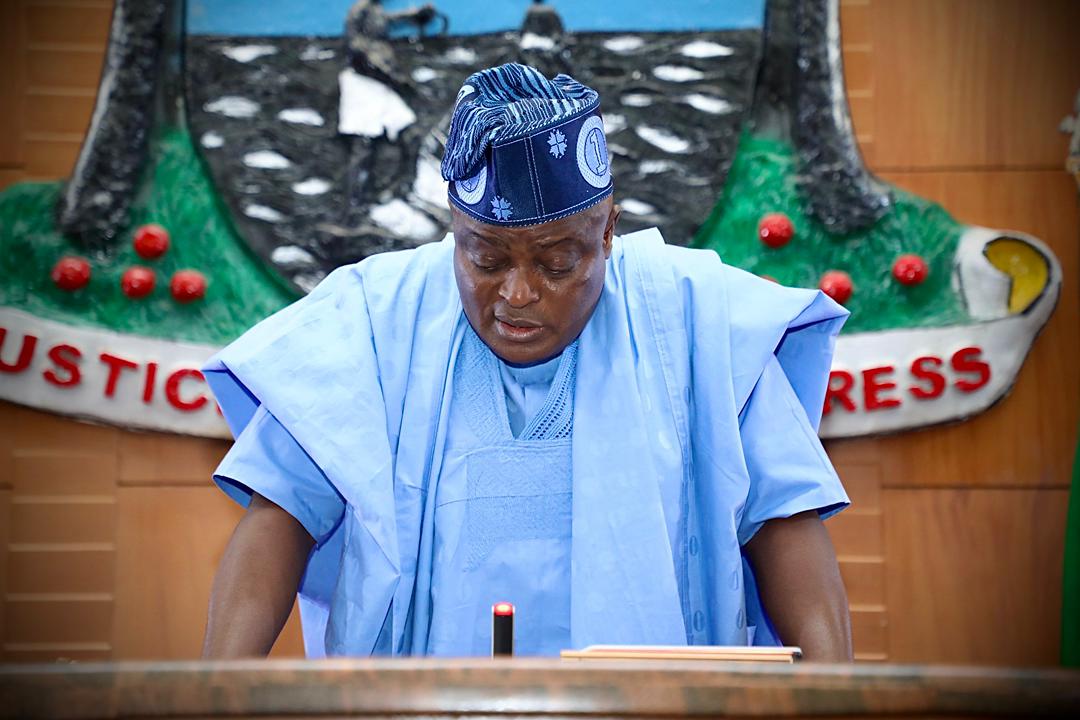
Sallah: Obasa Felicitates Muslim Ummah, Commends Nigerians for APC Primaries Turnout
The Speaker of the Lagos State House of Assembly, Rt. Hon. Mudashiru Obasa has extended warm felicitations to Muslims in Lagos State and across Nigeria on the occasion of Eid al-Adha.
In a statement released by his Chief Press Secretary, Mr. Dave Agboola, Obasa described the festival as a season of sacrifice, reflection, and gratitude, urging the faithful to continue to uphold the values of peace, unity, and love that strengthen the nation.
He noted that the celebration of Eid al-Adha is not only a spiritual milestone but also a reminder of the importance of togetherness and collective responsibility in building a stronger society.
He, likewise, emphasized that the festival provides an opportunity for Nigerians to renew their commitment to national progress and to support leadership that prioritizes development and prosperity.
Obasa, however, commended Nigerians, particularly members of the All Progressives Congress (APC), for their massive turnout during the recently concluded party primaries. He described the participation as a clear demonstration of the people’s confidence in the government of President Bola Ahmed Tinubu and their belief in the administration’s vision for a greater Nigeria.
“The APC primaries have shown the resilience of our democracy and the confidence Nigerians have in the leadership of President Bola Ahmed Tinubu and the Renewed Hope Agenda. This is a strong message that our people are ready to continue supporting policies that will drive growth and prosperity,” Obasa stated.
The Speaker further encouraged Muslims to celebrate responsibly, stressing that the joy of Eid should be accompanied by prayers for the continued peace and progress of Lagos State and Nigeria.
“As you celebrate with family and loved ones, may this season bring joy, peace, and prosperity to your homes. Let us remain united in our resolve to build a stronger nation,” he added.
On behalf of the Lagos State House of Assembly, Obasa wished all Muslims a happy and fulfilling Eid al-Adha celebration.


- Société Nationale des Pétroles du Congo (SNPC) Chief Ominga to Speak at African Energy Week (AEW) 2026 as Congo Accelerates Gas Expansion May 29, 2026
- South Africa: Deputy President Mashatile arrives in India for a Working Visit May 29, 2026
- Seychelles: President Visits Key Development Sites on Coetivy Island May 29, 2026
- Accelerating regional action to advance mental health care in Africa May 29, 2026
- President of the Republic of Seychelles Meets Young La Digue Talent Ahead of London Showcase May 29, 2026
- United Nations Economic Commission for Africa (ECA) launches regional initiative to accelerate women’s digital entrepreneurship across four African countries May 29, 2026
- Ethiopia: International community must act to safeguard press freedom ahead of national election May 29, 2026
- CORRECTION: Annual Meetings 2026 (AM2026): African Development Bank (AfDB) 2025 Trade Finance Report Highlights Resilience of African Financial Institutions After Covid-19 May 29, 2026
- Why Big Tech Could Become Nigeria’s New Gas Partner May 29, 2026
- African Energy Chamber (AEC)-Venezuela Alliance Accelerates Pathways into South-South Energy Expansion May 29, 2026
- Société Nationale des Pétroles du Congo (SNPC) Chief Ominga to Speak at African Energy Week (AEW) 2026 as Congo Accelerates Gas Expansion May 29, 2026
- South Africa: Deputy President Mashatile arrives in India for a Working Visit May 29, 2026
- Seychelles: President Visits Key Development Sites on Coetivy Island May 29, 2026
- Accelerating regional action to advance mental health care in Africa May 29, 2026
- President of the Republic of Seychelles Meets Young La Digue Talent Ahead of London Showcase May 29, 2026
- United Nations Economic Commission for Africa (ECA) launches regional initiative to accelerate women’s digital entrepreneurship across four African countries May 29, 2026
- Ethiopia: International community must act to safeguard press freedom ahead of national election May 29, 2026
-

 news6 months ago
WHO REALLY OWNS MONIEPOINT? The $290 Million Deal That Sold Nigeria’s Top Fintech to Foreign Interests
-

 society4 weeks ago
SOCIAL MEDIA IS NOT A BATTLEFIELD COMMAND – WHY THE NIGERIAN ARMY’S ACTION AGAINST JUSTICE CRACK IS A NATIONAL SECURITY IMPERATIVE
-

 celebrity radar - gossips4 months ago
Dr. Chris Okafor Returns with Power and Fire of the Spirit -Mounts Grace Nation Altar with Fresh Anointing and Restoration Grace on February 1, 2026
-

 celebrity radar - gossips6 months ago
Prophet Kingsley Aitafo Releases 2026 Prophecy: ‘Nigeria Will Rise, but the World Must Prepare for Turbulence’