
celebrity radar - gossips
Bishop (Dr.) Chris Kwakpovwe Celebrates Birthday


The popular publisher of daily devotional booklet, Our Daily Manna, and general overseer of Manna Prayer Mountain, Bishop (Dr.) Chris Kwakpovwe is a year older on Sunday 15th November.
To celebrate and honour the Ughelli, Delta State born preacher, different activities like visitation to Motherless Babies homes, free medical services to the aged have been lined-up ahead of the ceremony billed to hold on Saturday November 21st at Our Daily Manna headquarters in Lagos.
Bishop Kwakpovwe is a dynamic man of God with strong prophetic, healing, preaching and teaching ministries. Since he met the Lord and got born again on February 3rd 1976, as a student at the prestigious Government College Ughelli, Delta State of Nigeria, he’s been preaching the Word in creeks, villages and cities with signs following.
He is a qualified pharmacist (1983) from the University of Ife (now Obafemi Awolowo University) in Nigeria. By the grace of God, he is the founder of the various MANNA PRAYER MOUNTAINS worldwide. Years ago, he served as an assisting founding pastor of the Chapel of Praise Church under Bishop Isaac Nwaoji for years! The Lord called him into full time Ministry in 1992, having combined pharmacy and Ministry for 9 years. He got his Ph.D. in Theology, in 1999 and also on Sunday December 16th 2001, he was awarded an honorary doctorate degree in theology by the Calvary Academy in collaboration with The Light House Christian University, Brooklyn, New York, USA.
He is the president, Board of governors of the Liberty Bible College International. Rev. (Dr.) Chris was the ex-president of the Nigerian Christian Corpers Fellowship (NCCF) in 1984 and has worked with many Christian bodies such as the Scripture Union, the Nigerian Fellowship of Evangelical Students (NIFES), the Christian Association of Nigeria, (CAN) and the Pentecostal Fellowship of Nigeria (PFN).
He was the vice president of the PFN, Maryland, Ogudu and Ojota zone of Lagos State. He is a registered member of the International Charismatic Bible Ministries (ICBM) based in Tulsa Oklahoma in the USA. Rev. Dr. Chris is also the President and Founder of the Dream Centre (Nigeria) – a vision for widows, widowers, the emotionally bruised, divorces, drug addicts, ex-convicts, the sick and such alike. He is widely travelled, and is a regular speaker in Churches, University Campuses, Leadership Conferences, Seminars and Crusades.
He has a very strong burden to seeing a people raised by God to publicly depopulate hell, with a strong private and solid fellowship with God. Rev. Dr. Chris, an anointed writer, who has been through the crucible of life’s strong battles and afflictions, writes from a deep burden and experience that provokes daily compassion for the bruised (Luke 4:18)! He is a tried and tested man of God! In fact, he received the strong burden and this unique commission to, “write and liberate my people who are victims of life’s daily battles/bruises”, the day he wanted to commit suicide because of life battles!
Now, a strong motivational speaker, he believes that, failures and mistakes are the pillars of success! He believes that pain is the father of profit! He believes that delay is not denial because behind every glory, there is an untold story, sometimes of tears, painful waiting, determination and ridicule! He believes that the storms of life are inevitable, but there is a beautiful Rainbow attached to every ugly and raging storm! He strongly believes that tough times don’t last, but tough people do! He is raised and separated uniquely by heaven to let this generation know that adversities are not permitted to make men breakdown, but to break records!
A man with a unique heart of compassion and a strong vision born out of the deep furnace of affliction, he believes that toil (hard work), stubborn determination, daily solitude and prayers are the engine rooms of every true-life success story! He is happily married with children!




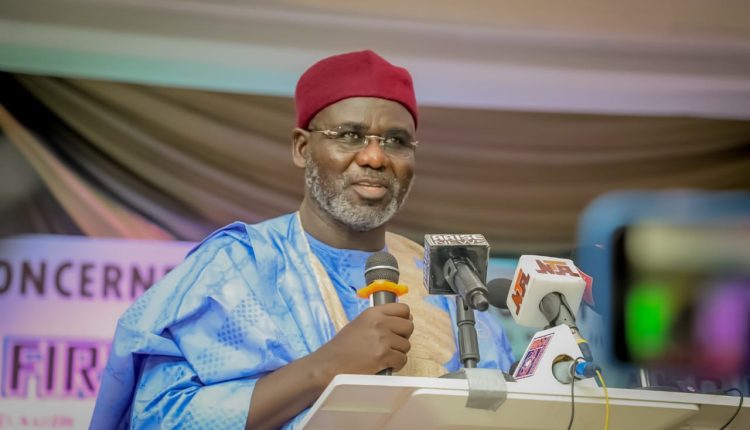
BURATAI URGES ECOWAS UNITY, CALLS FOR RETURN OF SAHEL STATES AT VON FORUM
ABUJA – In a powerful appeal for regional stability, former Chief of Army Staff, Lt. Gen. TY Buratai (rtd), has called on ECOWAS and the African Union (AU) to prioritize the return of the Association of Sahel States (AES) to ensure the survival of West African integration.
Speaking Thursday at the Voice of Nigeria (VON) Forum 2026 in Abuja, Buratai warned that the region’s progress could become a “mirage” without the inclusion of Mali, Burkina Faso, and Niger Republic.
A Legacy of Sacrifice

Buratai highlighted Nigeria’s historic role as the “unshakable anchor” of the sub-region. He pointed to Nigeria’s decades of leadership in ECOMOG missions across Liberia, Sierra Leone, The Gambia, and Guinea-Bissau as evidence of the nation’s commitment.
”Nigeria has sacrificed and invested in blood, treasure, and diplomacy to defend democracy,” Buratai stated. “Our stability is inseparable from the security of our neighbours.”
The Path to Unity
The General urged ECOWAS to deepen its engagement with the African Union to bridge the current diplomatic rift with the AES nations. He emphasized that the collective security of West Africa depends on a unified front, noting that democracy and regional safety are “two sides of the same coin.”
”The unity of ECOWAS cannot be complete without Mali, Burkina Faso, and Niger Republic. Without unity, progress in the region may be a mirage,” Buratai cautioned.
Celebrating 51 Years of VON
The forum also served as a celebration of Voice of Nigeria’s 51st anniversary. Buratai lauded the broadcaster as a “Nigerian voice with an African heart,” praising its professionalism and pan-African vision.
He paid tribute to veteran journalists, including the late Mohammed Okorejor and retired director Ben Shamang, while commending the current Director General for revitalizing the agency.
The retired General concluded his message with a call to strengthen regional institutions, urging leaders to honor the legacy of ECOWAS through renewed cooperation and institutional integrity.
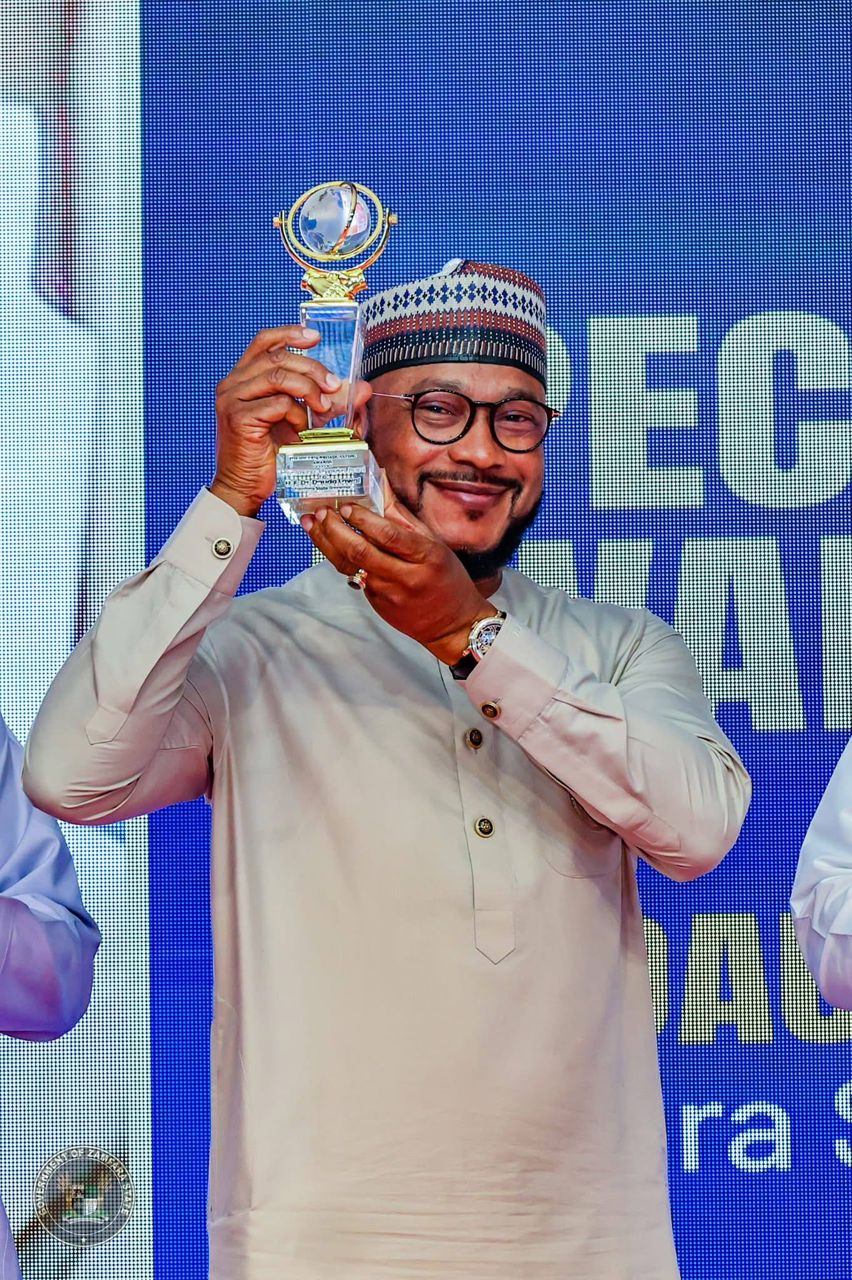
GOV. LAWAL WINS BON GOVERNOR OF THE YEAR FOR ZAMFARA’S INFRASTRUCTURE
The Broadcasting Organisations of Nigeria (BON) has awarded Governor Dauda Lawal the Infrastructure Governor of the Year honour for his administration’s giant strides in the Urban Renewal project across Zamfara.
The governor received the award at the second edition of the Broadcasting Organisations of Nigeria (BON) held at the NAF conference centre, Abuja.
A statement by the governor’s spokesperson, Sulaiman Bala Idris, revealed that the BON acknowledged Zamfara state’s unprecedented and transformative achievements in infrastructure, recognising excellence beyond the broadcasting industry.
He added that Governors Bassey Otu of Cross River and Uba Sani of Kaduna, the minister of information and national orientation, Mohammed Idris, along with John Momoh, Shyngle Wigwe, Abubakar Jijiwa, and Sa’a Ibrahim, were among the prominent Nigerians honoured at the 2026 Nigeria Broadcasting Awards.
The statement read in parts, “The Broadcasting Organisation of Nigeria, an umbrella body for public and private broadcasters in Nigeria, was established in 1973 to promote the interests of the broadcasting industry and ensure high standards in media practices.
“The organisation conducted a thorough months-long selection process aimed at recognising professional excellence and raising standards for media practice across Nigeria.
“The Awards Selection Committee was chaired by Dr Danladi Bako, former Director-General of the National Broadcasting Commission (NBC). The awards panel included veterans and representatives from the Advertising Regulatory Council of Nigeria (ARCON) and the NBC..

“The selection committee cited numerous reasons for awarding Governor Dauda Lawal, notably his significant progress across sectors, particularly for transforming Gusau into a modern State Capital.
“Zamfara has witnessed unprecedented achievements under Governor Dauda Lawal, including the historic construction of a modern International Airport in the State.
“Apart from urban renewal projects, as well as the construction and outfitting of General Hospitals, Governor Dauda Lawal’s administration has built, refurbished, and equipped over 800 schools across the 14 local government areas of the State.

“This recognition by the highest broadcasting authority in Nigeria will motivate the governor to dedicate more effort to his mission to serve and rebuild Zamfara state.”
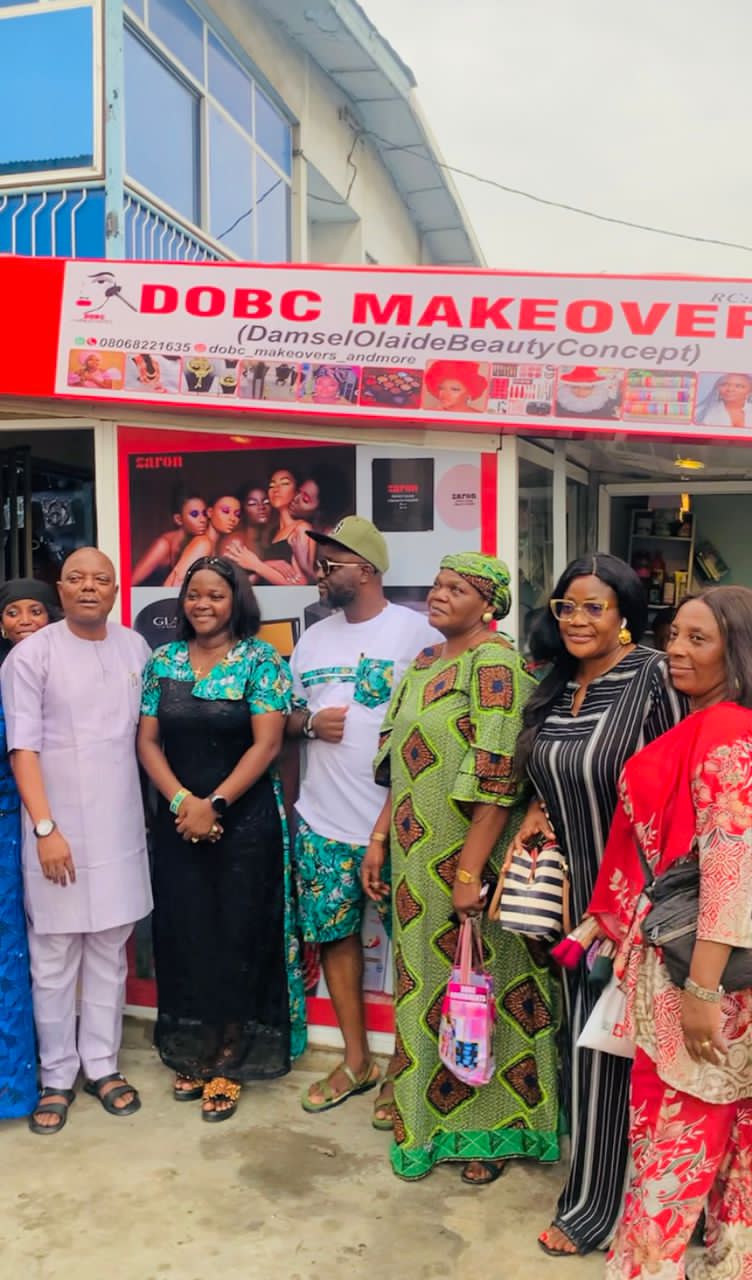
Beauty Meets Glamour as Olaide Ogunyemi Opens New Studio in Mushin
Popular Nollywood actress and professional makeup artiste, Olaide Ogunyemi Oluwayemisi aka Damilola, has expanded her footprint in the beauty industry with the grand opening of her new makeup studio in Lagos.
The talented thespian, who is also the Chief Executive Officer of @Dobc_makeovers_andmore, officially unveiled the ultra-modern beauty space last Thursday, April 2, 2026, in a colourful ceremony filled with glamour, fashion, and pageantry.
Strategically located at 101 Palm Avenue, right beside FitPlus and Sparklight Hospital in Mushin area of Lagos, the new studio is designed to offer top-notch beauty services, reflecting Ogunyemi’s commitment to excellence and professionalism in the ever-growing makeup industry.
The opening ceremony attracted friends, colleagues from the Nollywood industry, beauty enthusiasts, and well-wishers who came out in large numbers to celebrate the entrepreneur’s latest milestone. Guests were treated to a vibrant atmosphere that showcased creativity, style, and the evolving standards of the beauty business in Lagos.
Speaking at the event, Ogunyemi expressed her excitement and gratitude, noting that the new studio represents years of hard work, dedication, and passion for her craft. She reaffirmed her commitment to delivering premium beauty services while empowering aspiring makeup artistes.
The launch of the studio further cements her reputation as a dynamic force, successfully blending her career in Nollywood with a thriving beauty brand.
With this latest development, Olaide Damilola Ogunyemi continues to inspire many young entrepreneurs, proving that talent, consistency, and vision remain key drivers of success in Nigeria’s creative and business landscape.


- Century Group Joins African Energy Week (AEW) 2026 as Floating Production Storage and Offloading (FPSO) Partner, Showcasing Regional Offshore Expansion April 10, 2026
- Climate Litigation Surge Reshapes Energy Policy as Africa Seeks Stronger Legal Voice April 10, 2026
- ES-KO Secures Five-Year Catering & Facilities Management Contract Renewal with TotalEnergies EP Congo April 10, 2026
- Beyond the Court: The Kalahari Conference Solidifies its Status as Africa’s Premier Sports & Lifestyle Destination April 10, 2026
- Africa Sports Unified Launches Pan-African Sports Deals Tracker to Improve Market Visibility and Decision-Making April 10, 2026
- Nigeria and Senegal Must Follow Ghana and Mozambique Against Exclusionary Practices April 10, 2026
- Sheraton Nouakchott marks the entry of Marriott International in Mauritania April 10, 2026
- Eritrea: Seminar to Nationals in Nairobi and Its Environs April 10, 2026
- African financial institutions call for coordinated financing solutions to unlock Africa’s digital transformation April 9, 2026
- African Energy Chamber (AEC) Supports Perenco Partnership to Advance Industry 4.0 Skills in Central Africa April 9, 2026
- Century Group Joins African Energy Week (AEW) 2026 as Floating Production Storage and Offloading (FPSO) Partner, Showcasing Regional Offshore Expansion April 10, 2026
- Climate Litigation Surge Reshapes Energy Policy as Africa Seeks Stronger Legal Voice April 10, 2026
- ES-KO Secures Five-Year Catering & Facilities Management Contract Renewal with TotalEnergies EP Congo April 10, 2026
- Beyond the Court: The Kalahari Conference Solidifies its Status as Africa’s Premier Sports & Lifestyle Destination April 10, 2026
- Africa Sports Unified Launches Pan-African Sports Deals Tracker to Improve Market Visibility and Decision-Making April 10, 2026
- Nigeria and Senegal Must Follow Ghana and Mozambique Against Exclusionary Practices April 10, 2026
- Sheraton Nouakchott marks the entry of Marriott International in Mauritania April 10, 2026
-

 news4 months ago
WHO REALLY OWNS MONIEPOINT? The $290 Million Deal That Sold Nigeria’s Top Fintech to Foreign Interests
-

 society7 months ago
“You Are Never Without Help” – Pastor Gebhardt Berndt Inspires Hope Through Empower Church (Video)
-

 celebrity radar - gossips2 months ago
Dr. Chris Okafor Returns with Power and Fire of the Spirit -Mounts Grace Nation Altar with Fresh Anointing and Restoration Grace on February 1, 2026
-

 celebrity radar - gossips4 months ago
Prophet Kingsley Aitafo Releases 2026 Prophecy: ‘Nigeria Will Rise, but the World Must Prepare for Turbulence’
You must be logged in to post a comment Login
You must log in to post a comment.