
society
Bloodlines of Theft: Corruption in Nigeria from the 1960s to Today; Who Will Break the Chain?

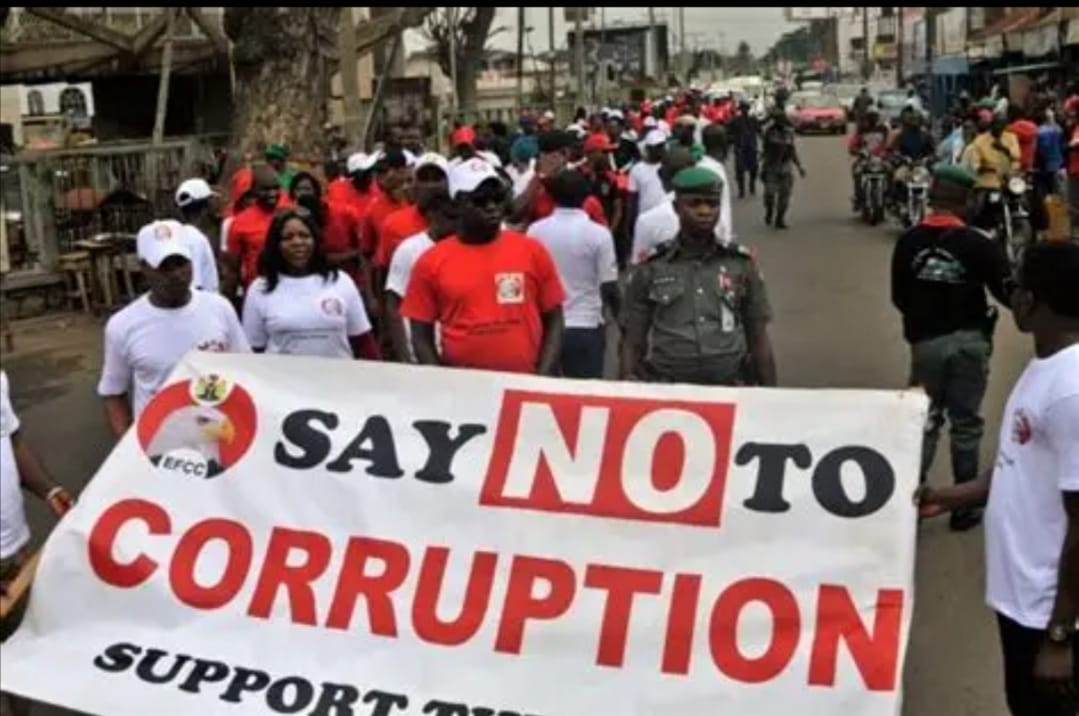
Bloodlines of Theft: Corruption in Nigeria from the 1960s to Today; Who Will Break the Chain?
George Omagbemi Sylvester | Published by SaharaWeeklyNG.com
“They stole our future; then taught our children to do the same.”
From the ashes of colonial rule in 1960, Nigeria rose with immense promise, a land blessed with crude-oil, talent and a population hungry for progress. Yet, six decades later, corruption has eaten into the very fabric of the nation like a hereditary disease. It has become so deeply woven into the country’s political, economic and social DNA that many now describe it as something that “flows in our blood and veins.” From the corridors of power to the back alleys of bureaucracy, from the military barracks to the village councils, corruption is not just an act, it is a way of life.
The tragedy is not only that Nigeria’s leaders steal, but that they do so without FEAR or SHAME. Chinua Achebe lamented in The Trouble with Nigeria (1983): “The trouble with Nigeria is simply and squarely a failure of leadership.”

That failure began in the 1960s. Independence came with hope, but also with political greed. The First Republic, barely six years old, collapsed in 1966 under the weight of ELECTORAL FRAUD, NEPOTISM and TRIBAL POLITICS.
When the military seized power, many Nigerians thought corruption would be crushed with the iron discipline of soldiers. Instead, the khaki rulers perfected it. They replaced the ballot box with the barrel of the gun and turned the national treasury into a private vault.
During the oil boom of the 1970s, when Nigeria’s crude production skyrocketed, billions of petrodollars flowed into the country. Instead of electricity, roads, refineries and schools, we got abandoned projects, phantom companies and padded budgets. The saying “OIL BOOM, OIL DOOM” was born. A 1980 World Bank report on Nigeria’s public spending revealed billions unaccounted for; proof that the boom enriched only the connected few.

Then came the 1990s, the darkest chapter in Nigeria’s corruption history, epitomized by the regime of General Sani Abacha (1993–1998). His government institutionalized looting on a global scale. The Nigerian government, through investigations and international collaboration, confirmed that more than $5 billion was siphoned into secret Swiss accounts and foreign investments. The so-called “ABACHA LOOT” has been repatriated in tranches from Switzerland, the U.S. and the U.K. yet much of it has been RE-STOLEN or UNACCOUNTED for, a vicious cycle that mirrors the very rot it sought to correct.
Nigeria among the most corrupt nations in the world, scoring between 20–27 out of 100 on its Corruption Perception Index (CPI) over the past decade. This is not a rating of shame; but a mirror of our collective moral decay.
From 1999, when Nigeria returned to democracy, through the administrations of Obasanjo, Yar’Adua, Jonathan, Buhari and now Bola Ahmed Tinubu, corruption has remained a common denominator.
When Nigeria discovered oil in commercial quantity in Oloibiri in 1956, it should have guaranteed prosperity. Instead, it became a curse. A handful of elites cornered oil licenses, inflated contracts and built empires abroad. Nobel Laureate Wole Soyinka once said:
“The Nigerian tragedy is not the absence of riches but the presence of thieves in power.”
The sad reality is that the system rewards corruption and punishes honesty. The elite steal to get richer, and the poor cheer them on and aspire to replace them. A civil servant earning ₦150,000 monthly drives a ₦50 million SUV, yet no one asks questions. A governor misappropriates billions and becomes a senator after leaving office. The common man, meanwhile, cannot afford a loaf of bread or a sachet of water.
The tragedy is worsened by moral fatigue. Many Nigerians now believe that corruption is normal due to a SURVIVAL STRATEGY. The taxi driver gives bribes to policemen, the trader inflates invoices, the student cheats/pays their way in exams and the pastor manipulates offerings. This cultural acceptance of wrongdoing is what has made corruption so resilient.
Comedian Gordons once joked bitterly during a stand-up show:

“In Nigeria, corruption has a driver’s license. Even if you catch it, the police will tell you to release it because it’s their oga.”
Even I Go Dye, another popular comedian, used his platform to challenge the people directly, saying:
“We can’t fight corruption by clapping for the corrupt. The day Nigerians stop laughing at thieves, the thieves will stop smiling.”
Their jokes sting because they reflect truth. Comedy has become one of the last weapons for telling the bitter truth in a society where truth itself is endangered.
How did we get here and what truly can be done?
1. Rebuild Institutions, Not Just Arrest Individuals.
Corruption thrives where systems fail. The Economic and Financial Crimes Commission (EFCC) and Independent Corrupt Practices Commission (ICPC) were created to fight graft, but they are often politicized. Real reform means granting them operational independence, free from presidential or partisan control. Trials of corrupt politicians must be swift, public and conclusive. The message must be clear: if you steal from Nigerians, you will lose your freedom, your wealth and your name.
2. Strengthen Civic Accountability.
Corruption will not die in silence. Citizens must demand transparency. Every Nigerian project (from roads to hospitals) should have an online record accessible to the public. Civil society and investigative journalists must be protected and encouraged. As Dr. Ngozi Okonjo-Iweala once said,
“No one can fight corruption for Nigerians except Nigerians. Everyone has to be committed from the top to the bottom to fight it.”

3. Reform Campaign Financing.
Politics in Nigeria is the most expensive in Africa. When candidates spend billions to win elections, they must recover their “INVESTMENT” once in office. We must regulate political spending, make campaign donations transparent and ban anonymous contributions.
4. Create Economic Incentives for Honesty.
When civil servants are underpaid and undervalued, corruption becomes tempting. Pay must reflect responsibility. Digital payroll systems should be enforced across all government agencies to close loopholes. Reward honesty publicly and shame theft openly.
5. Cultural Reorientation.
We must teach integrity from the home to the classroom. A society that worships wealth without questioning its source will continue to breed thieves. Media, entertainment and religious leaders must champion integrity as a national value.
6. Follow the Money; Even Abroad.
The Western banks that house looted funds must be pressured to disclose and return stolen assets. Nigeria must strengthen its financial intelligence units to trace offshore transactions. The Abacha case proves that stolen wealth leaves a trail, we only need political will to follow it.
7. Empower the Judiciary.
Without an independent judiciary, anti-corruption is dead on arrival. Judges must be selected on merit, protected from political influence and held to the highest ethical standards.
The biggest lie ever told to Nigerians is that CORRUPTION IS UNSTOPPABLE and that it is PART OF OUR BLOOD. No, it is not GENETIC; it is a CULTURE. And like every culture, it can be unlearned. It begins with leadership, but it ends with us. Every bribe we pay, every rigged vote we tolerate, every silence in the face of theft, these are the nails we drive into our own coffin as a nation.

As the late Kenyan scholar Prof. Patrick Lumumba aptly said,
“Africa is poor because her leaders are thieves.”
Nigeria must decide whether it will remain part of that tragedy or rise as the exception.
Our children deserve more than this endless cycle of looting and lamentation. Corruption has stolen our future, but it does not have to own our destiny. The cure will not come from London or Washington; it will come from a generation of Nigerians who refuse to bow to thieves, who will name corruption for what it is: treason against the people.
Let this be the call to citizens, journalists, teachers and even comedians to make corruption socially unacceptable again. The elites may steal our gold, but they cannot steal our conscience unless we hand it to them.
And if CORRUPTION truly flows in our veins, then let INTEGRITY be the blood transfusion that saves Nigeria.




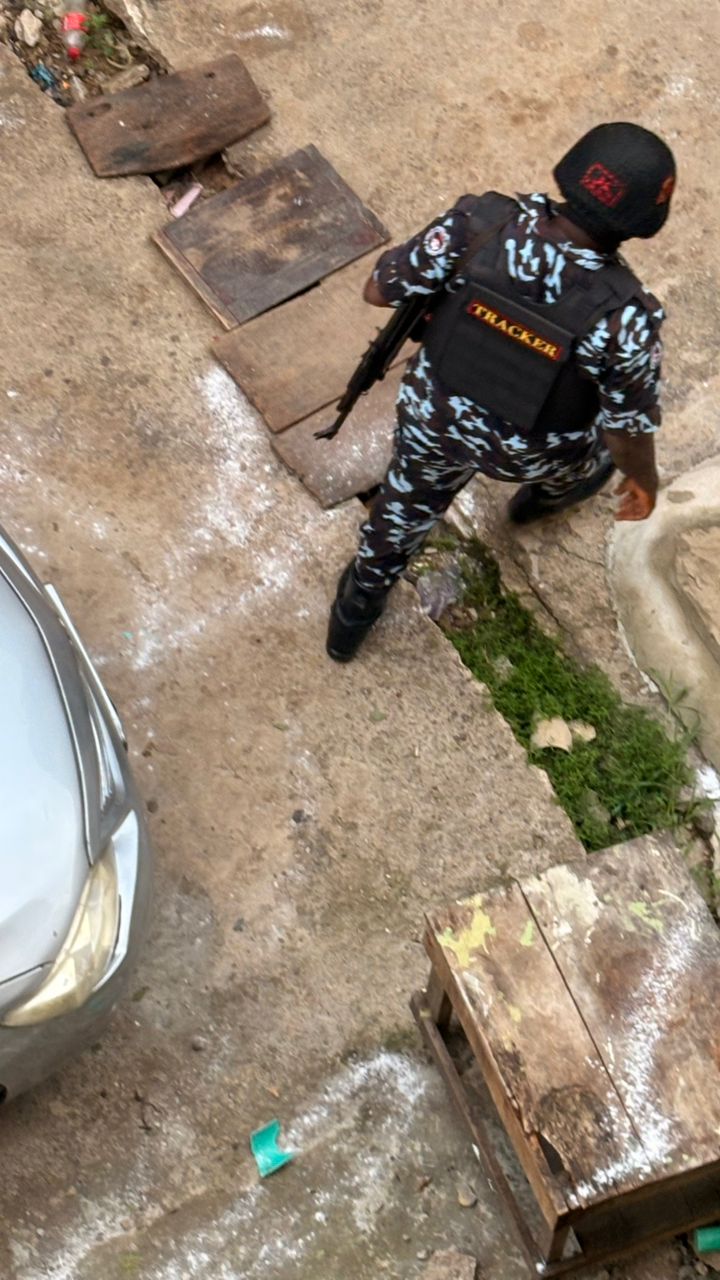
Police Officers Detained as Family Property Dispute Sparks Demolition Controversy in Lagos
By Ifeoma Ikem
A property dispute within the Omotayo-Ojo family has taken a dramatic turn following a controversial demolition exercise at a residential building in Ikosi-Ketu, Lagos State, which reportedly left tenants displaced and led to the detention of some police officers allegedly involved in the operation.

The property, located at 23B Loveall Street, Ikosi-Ketu, has been the subject of a prolonged ownership tussle since the death of its owner, Chief Oludola Omotayo Ojo, the Babaalaje of Imesi-Ile, Osun State, in 2019.
Residents said tension erupted when a group of individuals, accompanied by security operatives, stormed the premises and commenced demolition activities.
According to eyewitnesses, portions of the building were pulled down while tenants rushed to salvage their belongings from affected apartments.
The residents alleged that windows, doors and roofing sheets were damaged during the exercise, exposing parts of the building to the elements and causing significant losses to occupants.
At the centre of the dispute is Mrs Mojisola Omotayo Ojo Alolagbe, who claimed that the property was allocated to her by her late father during his lifetime as a source of financial support.
She alleged that some family members had persistently challenged her ownership claim despite ongoing legal proceedings relating to the administration of the deceased’s estate.
Alolagbe further claimed that the latest incident was part of a series of attempts to wrest control of the property, citing previous cases of alleged vandalism and partial demolition in November 2025, January 2026 and February 2026.
The situation escalated further when reports emerged that police officers allegedly involved in the demolition were later apprehended and conveyed in a Black Maria vehicle over questions surrounding the legality of their participation in the operation.
Sources familiar with the matter said those behind the demolition had initially claimed to be acting on approval from the Lagos State Ministry of Lands. However, the authenticity and extent of such approval could not be independently verified as of the time of filing this report.
The development has generated concern among residents and community members, who questioned the involvement of security personnel in what they described as a civil matter.
Some tenants, who said they had recently renewed their tenancy agreements, lamented the destruction of their property and appealed to the authorities for protection and possible compensation.

They also called for a thorough investigation into the circumstances surrounding the demolition, insisting that the rights of all parties involved should be protected.
Stakeholders have urged the Lagos State Government, security agencies and the judiciary to intervene and ensure that the dispute is resolved through lawful means to prevent further escalation.
The controversy has continued to draw public attention, raising concerns over property rights, estate administration and the role of law enforcement agencies in civil disputes.

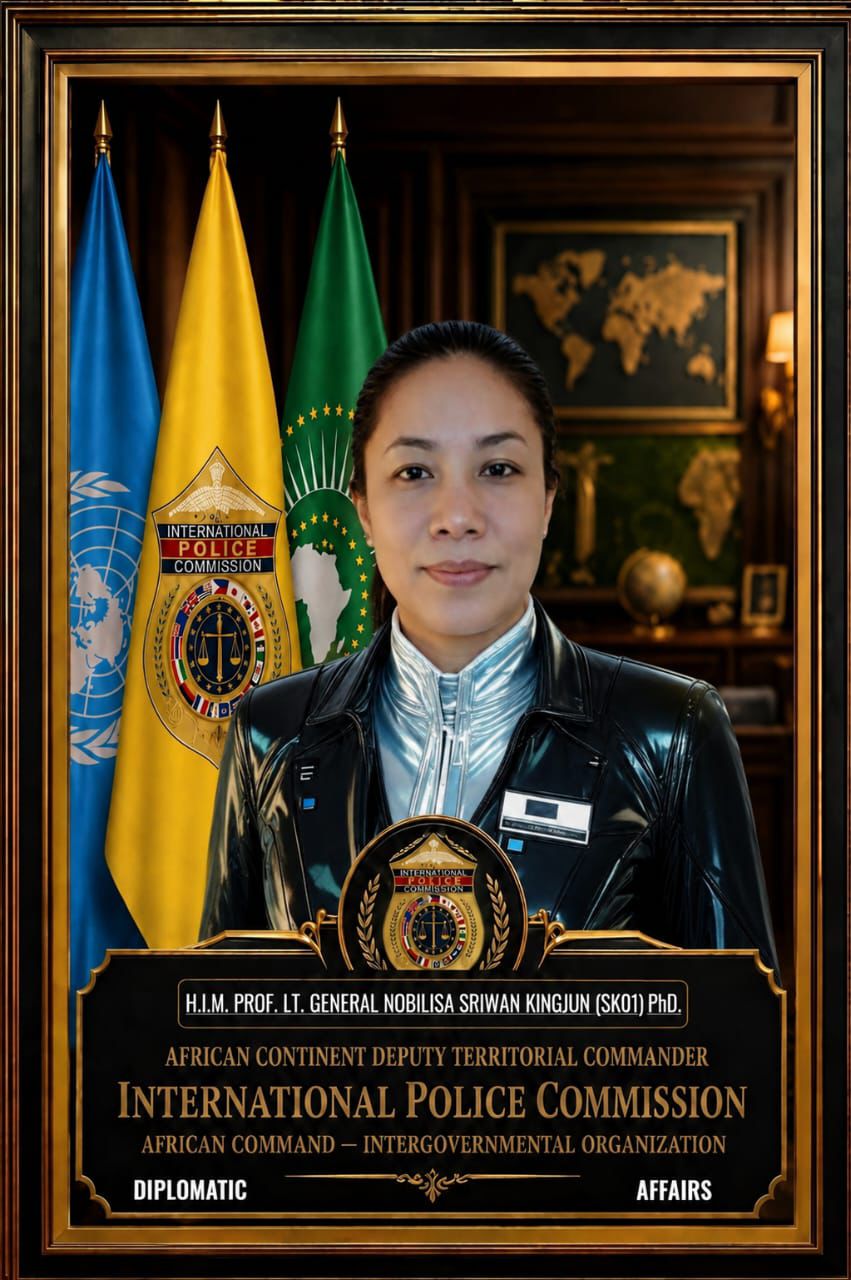
UKA Gears Up for Final ATC Exchangeability Test Run as June Preparations Begin.
May 30, 2026 – As the month of June gathers momentum, the *United Kingdom of Atlantis, UKA*, a sovereign nation has unveiled a series of vital guidelines and preparatory packages to ensure citizens and stakeholders run the *ATC Exchangeability* process effectively.
In an official update, the *President of Atlantic Crown Limited, Empress of Attica Empire UKA*, confirmed that the *Final Test Run of ATC Exchangeability* is scheduled for the month of June 2026. The exercise marks a key phase ahead of the *Official Exchangeability Window, set to run from July 2026 to February 2027*.
### Key Highlights from the Presidential Briefing
1. *Final Test Run – June 2026*
The test run is designed to validate systems, procedures, and user readiness before full activation. Citizens, partners, and designated participants are urged to follow all official advisories released by UKA authorities during this period.
2. *Official Exchangeability Period*
Following the successful completion of the June test run, the Official Exchangeability will commence in july 2026 and we are Expecting Full Exchange ability between July Ending, 2026 to February 2026.
UKA stated that detailed schedules, eligibility requirements, and step-by-step instructions will be communicated progressively through verified UKA channels.
3. *Benefiting Packages for June*
In line with UKA’s commitment to citizen empowerment, the month of June will feature “benefiting packages” aimed at education, preparation, and seamless onboarding. These packages are intended to equip the people of UKA with the knowledge and tools needed for effective participation.
4. *Commitment to Transparency*
Addressing the nation, the Empress of Attica Empire UKA emphasized:
_“Final Test Run of ATC Comes up in The Month of June, As We Prepare For The Official Exchangeability, Between July 2026 To Feb 2027. All Information Will Be Communicated.”_
UKA reaffirmed that only information released through official UKA platforms should be regarded as authoritative.
The United Kingdom of Atlantis is encouraging all citizens, representatives, and interested parties to remain alert to official communications, attend designated orientation sessions, and avoid unofficial sources. UKA’s dedication to order, clarity, and the collective benefit of its people as the nation moves into this significant phase.
For updates, advisories, and participation guidelines, citizens are advised to monitor official UKA communication channels.
United Kingdom of Atlantis, UKA, is a sovereign nation, committed to national development, citizen welfare, and structured economic participation through initiatives such as ATC Exchangeability.
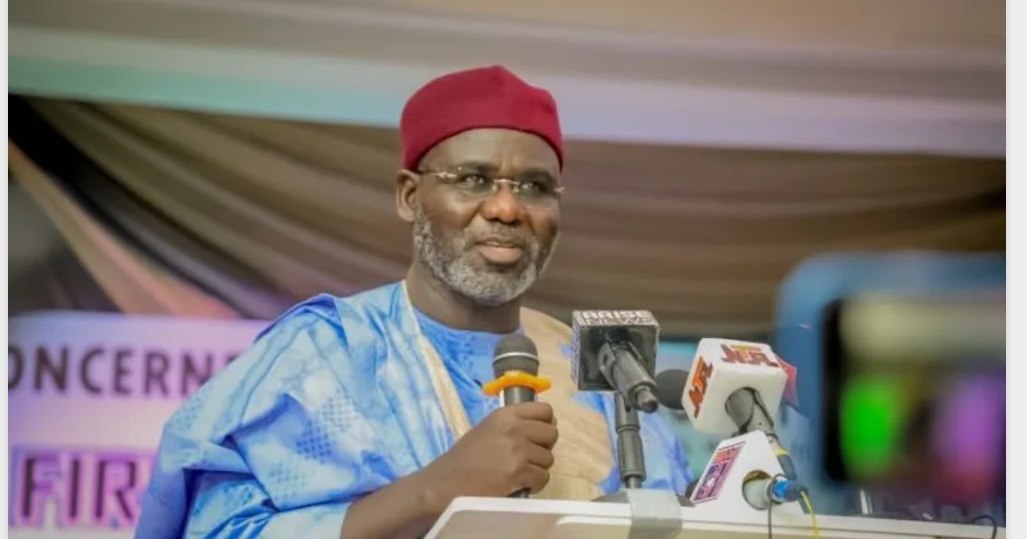
Three Years On, General Buratai Hails Tinubu’s Economic, Security Achievements
Former Chief of Army Staff, Lt. Gen. Tukur Buratai (retd.), has commended President Bola Ahmed Tinubu for what he described as bold economic reforms and improved security efforts as the President marks three years in office.
In a goodwill message on Thursday to commemorate Tinubu’s third anniversary as President and Commander-in-Chief of the Armed Forces, Buratai said the administration had taken courageous decisions that would leave a lasting impact on Nigeria’s development.

According to him, President Tinubu broke a long-standing cycle that had hindered national growth by removing fuel subsidy and implementing foreign exchange reforms aimed at stabilising the naira and strengthening the economy.
He noted that the reforms were beginning to yield positive results, citing the global acceptance of Nigerian debit cards, the gradual revival of local refineries, access to student loans, and ongoing road and infrastructure projects across the country.
“The FCT Administration has also recorded remarkable progress, completing major road projects that remained unfinished for over 16 years,” Buratai stated.
The former army chief also praised the administration’s security efforts, saying renewed military offensives against insurgents, terrorists and bandits had led to notable successes across various parts of the country.
He specifically lauded recent joint operations involving Nigerian and United States forces against Boko Haram and ISWAP in the North-East, as well as intensified counter-banditry operations in the North-West.
“We have seen notorious ISWAP commanders being neutralised. I congratulate the Commander-in-Chief, the Minister of Defence, the Chief of Defence Staff, the Service Chiefs, the Inspector-General of Police and heads of intelligence agencies for their efforts,” he said.
Buratai, however, acknowledged that challenges remained, stressing the need for more aggressive military operations and intelligence-driven strategies in the coming year.
While urging Nigerians to remain hopeful, he said celebrating the President’s achievements did not amount to ignoring the difficulties facing the nation.
“Because you truly care, you have shown the courage to trade short-term comfort for long-term hope. Nigerians need your reassurances, and that is why we remain optimistic and full of confidence,” he added.
The retired military officer reaffirmed his support for the Tinubu administration and expressed confidence that the foundation being laid by the government would deliver a brighter future for the country.
He also prayed for God’s guidance, wisdom, strength and good health for the President as he continues to lead Nigeria.


- World Cup accredited journalists raise concerns over unfair United States (US) visa restrictions, International Sports Press Association (AIPS) calls on FIFA to intervene June 6, 2026
- Ghana: President Mahama arrives in Belarus, lays wreath at Victory Monument June 6, 2026
- Liberia: President Boakai Advances Clean Energy Agenda; Dedicates 20-Megawatt Solar Power Plant at Mount Coffee June 6, 2026
- African Union (AU) Commission Chairperson mourns Passing of the Former Angola Minister of Foreign Affairs June 6, 2026
- Economic Community of West African States (ECOWAS) Welcomes Students on an Educational Visit to Its Headquarters June 6, 2026
- Seychelles: President Patrick Herminie attended Official Opening of Rise and Shine Day Care Centre at Mont Fleuri June 6, 2026
- Faith, fear and trust: Inside Democratic Republic of the Congo's (DR Congo) fight against Ebola June 6, 2026
- Economic Community of West African States (ECOWAS) Commission and Women in Law and Development (WiLDAF) Train Women Cross-Border Traders in The Gambia June 5, 2026
- Eritrea: Seminar to Nationals in The Hague June 5, 2026
- Eritrea: Training on Photography and Video Production June 5, 2026
- World Cup accredited journalists raise concerns over unfair United States (US) visa restrictions, International Sports Press Association (AIPS) calls on FIFA to intervene June 6, 2026
- Ghana: President Mahama arrives in Belarus, lays wreath at Victory Monument June 6, 2026
- Liberia: President Boakai Advances Clean Energy Agenda; Dedicates 20-Megawatt Solar Power Plant at Mount Coffee June 6, 2026
- African Union (AU) Commission Chairperson mourns Passing of the Former Angola Minister of Foreign Affairs June 6, 2026
- Economic Community of West African States (ECOWAS) Welcomes Students on an Educational Visit to Its Headquarters June 6, 2026
- Seychelles: President Patrick Herminie attended Official Opening of Rise and Shine Day Care Centre at Mont Fleuri June 6, 2026
- Faith, fear and trust: Inside Democratic Republic of the Congo's (DR Congo) fight against Ebola June 6, 2026
-

 news6 months ago
WHO REALLY OWNS MONIEPOINT? The $290 Million Deal That Sold Nigeria’s Top Fintech to Foreign Interests
-

 society1 month ago
SOCIAL MEDIA IS NOT A BATTLEFIELD COMMAND – WHY THE NIGERIAN ARMY’S ACTION AGAINST JUSTICE CRACK IS A NATIONAL SECURITY IMPERATIVE
-

 celebrity radar - gossips4 months ago
Dr. Chris Okafor Returns with Power and Fire of the Spirit -Mounts Grace Nation Altar with Fresh Anointing and Restoration Grace on February 1, 2026
-

 celebrity radar - gossips6 months ago
Prophet Kingsley Aitafo Releases 2026 Prophecy: ‘Nigeria Will Rise, but the World Must Prepare for Turbulence’