
news
Boko Haram to surrender arms soon as they beg for dialogue


Following President Muhammadu Buhari’s declaration of his administration’s readiness to dialogue with genuine members of the Boko Haram, some members of the terrorist group have contacted the Centre for Crisis Communication (CCC) to initiate a dialogue process with the Federal Government on their behalf.
Currently, the government has increased its offensive against the sect with ample support from a host of African countries in pursuit of the president’s vow to bring the insurgency to an end by December this year.
While pursuing the military option frontally, President Buhari, during his recent trip to the United States of America, said he is open to dialogue with genuine members of the group.
Towards this end, the terrorists have made several calls to the CCC claiming that hundreds of their members who were tired and now have contrary opinions to the destructive and murderous activities of the terrorist organization are willing to lay down their arms.
Making the disclosure in Abuja, yesterday, the CCC Executive Secretary, Air Commodore Yusuf Anas (rtd), said: “The efforts by some members of the group to get across to the Centre and the discussions we have had, have been encouraging. We have taken measures also to ascertain the genuineness or otherwise of these persons. We believe they are ready for genuine dialogue. However, discussions are still ongoing and nothing concrete has been arrived at, but it is an opportunity to interact with what I call insiders in the Boko Haram group.”
This came as the US pledged improved military cooperation with Nigeria against the insurgency, saying that Boko Haram activities may have been funded with proceeds of illegal crude oil sales.
Boko Haram dialogue moves
Commodore Anas, who also spoke on sundry national issues including cattle rustling, National Assembly crisis, pipeline vandalism, kidnapping, armed robbery and Radio Biafra among others, said he and his team were already in the process of facilitating a meeting with relevant government agencies for the much awaited dialogue.
His words: “The Boko Haram challenges have continued to become an intractable crisis situation to our nation. Recently, Governor Kashim Shetima of Borno stated that ‘more than three million innocent Nigerians from Borno, Yobe, Adamawa and other parts of Nigeria live in deep agony, having lost their sons, daughters, fathers, mothers, brothers, sisters, other relations and neighbours after being brutally attacked by members of Boko Haram.
“Some prominent Nigerians have in recent times canvassed the idea of dialogue with Boko Haram. The option of dialogue, according to them, at the moment, provides a leeway for not only safely rescuing the abducted Chibok school girls alive but also possibly bringing to an end, the orgy of violence unleashed on innocent Nigerians by the group.
“Considering the unspeakable atrocities which the group has visited on Nigeria and Nigerians, this option is no doubt a hard sell. However, the recent statement of President Muhammadu Buhari on government’s readiness to negotiate with credible members of the sect has rekindled hope for dialogue.
“The Centre views this gesture as good because it has opened a window of opportunity for dialogue for these insurgents that are willing and ready to lay down their arms. This position is predicated on calls made to the Centre by some members of the Boko Haram requesting for genuine and comprehensive dialogue that could lead to hundreds of them coming out to renounce their membership”.
Towards this end, Commodore Anas said: “From discussions held so far, the members seem to be speaking on behalf of a cross section of the group. They expressed willingness to come forward to make certain proposals on behalf of other members of the group. If we pursue this line, I believe something positive will come out.
“The Centre, however, suggests that such dialogue should be done with every sense of caution and responsibility bearing in mind the previous disappointments that attended attempts at negotiations.”
It is unclear whether the latest moves will yield dividends on account of the past botched attempts and sect’s alliance with the Islamic State of Iraq and Syria (ISIS).
Last March 7, following deadly bombardment from Nigerian and multinational forces, Boko Haram pledged allegiance to the Islamic State (IS).
Will the section of the sect willing to dialogue do so with the backing of IS? Will the sect go against the terms of its allegiance to IS? It is to be seen how the issues will pan out.
B’ Haram may have been funded from illicit oil sale —US Congressman
Meanwhile, United States Congressman, Darrel Edward Issa, has disclosed that the terrorists could be getting their funding from illicit trade of oil and called on the Nigerian government to end corruption in the sector to address the insurgency.
Mr Issa, made this disclosure when he led a United States Congressional delegation to a press conference in Abuja, yesterday, at the US Embassy.
“As long as billions of dollars in oil is being sold, you have a black market that funds many things. Boko Haram can be a clandestine beneficiary of that money too. Some of these areas are within the power of the Nigerian government. So, when they end corruption they may also reduce the flow of that kind of money that goes into sponsoring terrorism,” he said, adding that the US government is ready to assist Nigeria in any capacity.
Issa, who spoke alongside other congress delegates, said nothing in the current U.S. law prevented it from giving Nigeria the necessary support in the fight against Boko Haram.
“Nothing on the current U.S. law prevents full cooperation and technical support or training for the Nigerian military and for all the departments of government. Nothing in the law prevents the U.S. Agency for International Development from its full engagement throughout Nigeria. Nothing in the law will stop the U.S. from providing any and all assistance to the Nigerian military,” he said.
Issa said that the level of willingness of the U.S. to support Nigeria had always been the same. “The commitment from President Obama to President Buhari was: ‘We will give you all you need, just tell us what you want’. That bold statement by President Obama tells a great deal. The U.S. has been involved in training the Nigerian military and it stands ready to do a great deal of more,” he said.
He stressed that the Leahy Law does not limit the kind of training and assistance that the US is willing to give to Nigeria, adding that if the Nigerian authorities show great commitment to preservation of human rights then it will become incumbent on the US to lift the Leahy amendment.
He explained that the Nigerian military did not need equipment more than training adding: “The number one thing that we can bring to this government is professionalising the military. Your military does not lack basic firearms; it does not lack basic ability to buy ammunition on the international market. It didn’t even lack drums which it purchased from China. In the meantime, there is a greater level of military training that is needed; that we would provide,” he said.
He said the U.S. would continue to provide some of the most high-level surveillance and tactical assistance flown by U.S. to support the hunting down of the insurgents.
Issa said the U.S. would continue to provide humanitarian relief to the North East and other areas in need.
“U.S. has contributed half a billion dollars a year of USAID support. We have contributed countless billions of dollars of military and large ships to the Navy. We continue to bring in as many soldiers including a most elite special forces to train the military in fighting techniques. We would continue to do that. U.S. has been a partner in Nigeria, around Africa and around the globe in providing the intelligence and the capability at all levels and we will continue to,” he said.
On whether U.S. supported negotiating with Boko Haram, Issa said there was always a need for a truce so as to negotiate peace and reconciliation.
He, however, said “we do not tell sovereign nations what to do; we provide technical assistance including assistance in conflict resolution,” he added.
Congresswoman, Sheila Jackson Lee, in her contribution, expressed confidence that Boko Haram will be defeated. She charged the Nigerian government and people to work with the US to also free the abducted Chibok girls and bring them back to normal life.
She said that Boko Haram is not only a threat to Nigeria but also to the region and the international community.
“You need to provide for the internally displaced and secure their village for them to return so that they can begin their work in agriculture. You are ways ahead of extinguishing Boko Haram. African Union has now recognised that Boko Haram is a threat to the region. We can collaborate within the law to defeat Boko Haram,’’ she said.
Another Congresswoman, Federica Wilson, noted that Nigeria has all it takes to ensure the safety of its people against the dreaded sect. She also praised the resilience of the members of the Bringback our Girls team, for their ceaseless efforts in championing the cause of freedom for the girls. She also admonished them not to relent until the girls are freed from captivity.
Vanguard





More than ₦3 billion was targeted, but about ₦677 million reached the culprits, with recovery and prosecutions underway, reflecting how banks are responding to more sophisticated fraud risks.
Nigeria’s expanding digital banking sector is facing increasingly sophisticated fraud attempts, as financial institutions adapt to faster transactions and broader online services.
A recent case involving First City Monument Bank (FCMB), linked to fraudulent activity detected in December 2025, has drawn attention to how banks are responding to such incidents, with a focus on limiting exposure, recovering funds and working with law enforcement.
According to findings referenced in proceedings before the Lagos State Special Offences Court, the incident involved unauthorised transactions tied to a digital product. Early reports erroneously suggested more than ₦3 billion was lost. Subsequent clarification shows that over ₦3 billion was targeted, ₦2.4 billion was blocked and recovered, while ₦677 million got into the possession of the culprits. This outcome reflects the bank’s cyber security and monitoring capabilities, as well as improved collaboration among regulated financial institutions and with law enforcement agencies. Several suspects and beneficiaries have been apprehended, while recovery and prosecution efforts are ongoing, led by the Economic and Financial Crimes Commission (EFCC).
Proceedings at the Lagos State Special Offences Court have resulted in convictions, including that of a repeat offender, with restitution orders issued. Related matters are also being handled at the Federal High Court in Lagos, where additional suspects are being tried in connection with the scheme. This process is aimed at ensuring that bad actors are identified and permanently blacklisted from the financial system.
Authorities say recovery efforts are continuing as additional funds are traced.
Analysts note that the pace of legal action reflects closer coordination between financial institutions and enforcement agencies in addressing cyber-related financial crime.
The case comes as banks contend with more complex fraud methods, including social engineering and automated exploitation of system processes.
As digital products and platforms expand, so too does the risk associated with cyber-crime and related fraud.
“The scale of digital banking means risks are evolving alongside the systems,” said a Lagos-based financial analyst. “Institutions are now judged by how they manage these events.”
Observers say the sector is moving toward a stronger focus on response and recovery, rather than prevention alone.
This includes improving monitoring capabilities, strengthening transaction controls and enhancing collaboration with regulators and law enforcement. The FCMB case, with limited exposure relative to the amount targeted and ongoing recovery, reflects that shift.
For customers, the primary concern is the safety of their funds. In this case, there has been no indication of losses affecting customer deposits. Maintaining that level of protection remains central to sustaining trust in the financial system.
Nigeria’s financial sector continues to grow, supported by digital innovation and expanding access to banking services.
However, analysts say fraud attempts are likely to persist as systems become more complex and interconnected.
They say institutions will increasingly be judged not only on their ability to prevent incidents, but on how effectively they respond and recover when they occur.
news
Ex-APC Deputy Guber flag bearer, Joshua MacIver backs Tinubu, express fears over implosion in Bayelsa APC
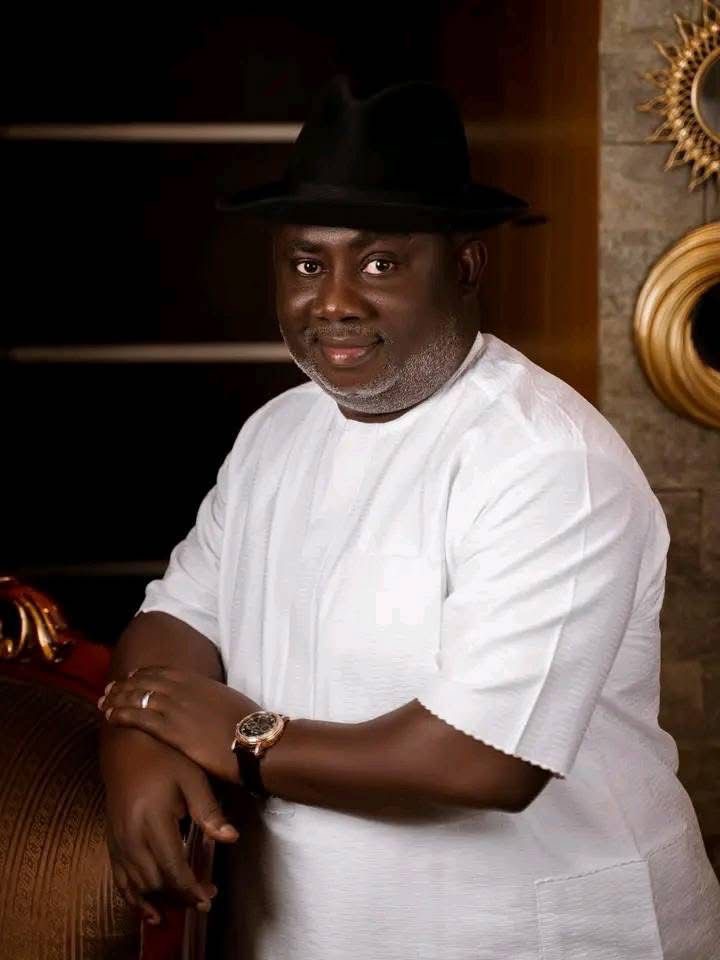
….congratulates new State Party Chairman, Warman Ogoriba
APC Deputy Governorship Candidate in the 2023 general elections in Bayelsa State, Great Joshua MacIver has declared his total commitment to the re-election of President Bola Tinubu come 2027, declaring that the Tinubu re-election project is non-negotiable.
Great Joshua MacIver, in his statement titled ” BAYELSA APC CONGRESSES: GOING FORWARD, A CALL TO LOOK INWARDS” and made available to newsmen in Yenagoa, warned APC leaders in the state to look Inward and take note of certain factors which may hinder or cut short our victory.
According to Great Joshua MacIver, such noticeable pitfalls include the imbalance in the united front being put up by the State Governor,Senator Douye Diri among various political blocs in the state.
In the statement issued at the weekend. Great Joshua MacIver stated that “First, before His Excellency, Senator Douye Diri, joined the APC in the state, there were clearly two political blocs that made up the party, with the approximate population ratios of the blocs standing at 95% to 5%.”
“After the entrance of His Excellency, Senator Douye Diri, ONLY THE SMALLER BLOC IS BEING CARRIED ALONG IN THE AFFAIRS OF THE PARTY, leaving the greater percentage to their fate, and this situation has the potential to build anger and dissatisfaction in our dear party.”
” The consequence of this has been the high level defection we have witnessed in the party recently and we believe more may likely follow, if we do not put our house in order.”
” If we do not pull together as a party, we may witness a situation where we will lose key stakeholders, especially after the State and National Assembly Primaries as well the Gubernatorial Primaries.”
“Finally, while it is very clear that we are the party to beat in the 2027 elections and that our loyalty to Mr. President IS NON-NEGOTIABLE, we must make haste to say that we cannot afford to create situations or loopholes in our unity which will be exploited by other political interests in the state. We cannot afford to under-rate anyone.”
“Our core interest remains the re-election of Mr. President, a project to which we have committed our all. We also pledge our total loyalty to the party as we have no alternative to the APC. However, our concern is that we must, as a party, look inwards and ensure that we do not create loopholes that can impede our common goal.”
Great Joshua MacIver, however congratulated the newly elected State Executives of the APC in Bayelsà State led by Hon. Warman Ogoriba, saying their emergence is welcomed at this critical time in our national history.


- Century Group Joins African Energy Week (AEW) 2026 as Floating Production Storage and Offloading (FPSO) Partner, Showcasing Regional Offshore Expansion April 10, 2026
- Climate Litigation Surge Reshapes Energy Policy as Africa Seeks Stronger Legal Voice April 10, 2026
- ES-KO Secures Five-Year Catering & Facilities Management Contract Renewal with TotalEnergies EP Congo April 10, 2026
- Beyond the Court: The Kalahari Conference Solidifies its Status as Africa’s Premier Sports & Lifestyle Destination April 10, 2026
- Africa Sports Unified Launches Pan-African Sports Deals Tracker to Improve Market Visibility and Decision-Making April 10, 2026
- Nigeria and Senegal Must Follow Ghana and Mozambique Against Exclusionary Practices April 10, 2026
- Sheraton Nouakchott marks the entry of Marriott International in Mauritania April 10, 2026
- Eritrea: Seminar to Nationals in Nairobi and Its Environs April 10, 2026
- African financial institutions call for coordinated financing solutions to unlock Africa’s digital transformation April 9, 2026
- African Energy Chamber (AEC) Supports Perenco Partnership to Advance Industry 4.0 Skills in Central Africa April 9, 2026
- Century Group Joins African Energy Week (AEW) 2026 as Floating Production Storage and Offloading (FPSO) Partner, Showcasing Regional Offshore Expansion April 10, 2026
- Climate Litigation Surge Reshapes Energy Policy as Africa Seeks Stronger Legal Voice April 10, 2026
- ES-KO Secures Five-Year Catering & Facilities Management Contract Renewal with TotalEnergies EP Congo April 10, 2026
- Beyond the Court: The Kalahari Conference Solidifies its Status as Africa’s Premier Sports & Lifestyle Destination April 10, 2026
- Africa Sports Unified Launches Pan-African Sports Deals Tracker to Improve Market Visibility and Decision-Making April 10, 2026
- Nigeria and Senegal Must Follow Ghana and Mozambique Against Exclusionary Practices April 10, 2026
- Sheraton Nouakchott marks the entry of Marriott International in Mauritania April 10, 2026
-

 news4 months ago
WHO REALLY OWNS MONIEPOINT? The $290 Million Deal That Sold Nigeria’s Top Fintech to Foreign Interests
-

 society7 months ago
“You Are Never Without Help” – Pastor Gebhardt Berndt Inspires Hope Through Empower Church (Video)
-

 celebrity radar - gossips2 months ago
Dr. Chris Okafor Returns with Power and Fire of the Spirit -Mounts Grace Nation Altar with Fresh Anointing and Restoration Grace on February 1, 2026
-

 celebrity radar - gossips4 months ago
Prophet Kingsley Aitafo Releases 2026 Prophecy: ‘Nigeria Will Rise, but the World Must Prepare for Turbulence’
You must be logged in to post a comment Login
You must log in to post a comment.