
society
BRIDGING DIVIDES, BUILDING UNITY: NIGERIAN ARMY’S INDIGENOUS LANGUAGE COURSE AS A PILLAR OF NATIONAL INTEGRATION

BRIDGING DIVIDES, BUILDING UNITY: NIGERIAN ARMY’S INDIGENOUS LANGUAGE COURSE AS A PILLAR OF NATIONAL INTEGRATION
BY
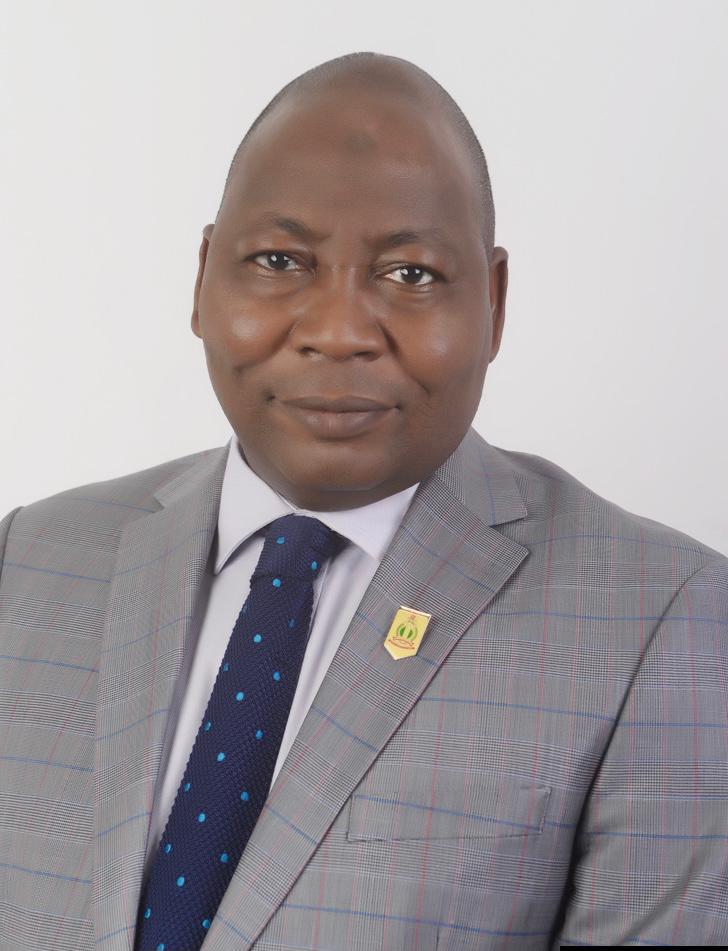
BRIGADIER GENERAL SANI KUKASHEKA USMAN (RTD) mni fnipr
“To have another language is to possess a second soul.”-Charlemagne
In a country as diverse and complex as Nigeria, language is more than just a medium of communication, it is a gateway to understanding, empathy and effective leadership. At a time when many are lamenting the widening ethnic, religious and cultural divides across the nation, the Nigerian Army has chosen a different path, one of unity through language and cultural integration.

The Nigerian Army Resource Centre (NARC), Abuja, marked yet another significant milestone on Friday, 9th May 2025, with the graduation of 150 officers and soldiers from across its various formations and units. These graduates of the Indigenous Languages Course 18/2025 represent the 18th group of personnel to complete this flagship initiative, which, since 2018, has equipped over 2,410 personnel that become proficient in two other languages other than their mother tongues in any of the 3 major Nigerian languages. Thus equipping them to serve not only as protectors of the nation, but also as bridges across its many divides and agents of national unity.

The course is the practical expression of the Nigerian Army Language Policy, which mandates that all personnel must learn at least two indigenous languages apart from their mother tongue. This is not a cosmetic requirement, but a strategic initiative of the Nigerian Army. In the multi-ethnic theatres of Nigeria Army’s counterinsurgency and internal security operations, whether in the Northeast, Northwest, South-South or other geo-political regions, managing community relations has compelled a proficiency in local languages as an important tool in operational effectiveness and mission success of the troops.

The programme is a brainchild of the forward-looking leadership of the Nigerian Army and the management of NARC, in partnership with Laclic Services Limited. It bears eloquent testimony to the evolving role of the military in ensuring law and order in the country. All thanks to this wonderful initiative, today’s soldier is not just a fighter, but also a negotiator, peacebuilder and communicator. Special commendation must go to Laclic Services Limited, the indigenous company that supplies well-trained instructors and high-quality teaching aids. The organisation’s dedication to linguistic excellence and cultural preservation has been central to the programme’s success.
Participants of the programme are immersed in both theoretical and practical learning. Classes include local culture, grammar, vocabulary, phonetics and conversational skills. The course curriculum also integrates photo stories, group work, presentations and rigorous written and oral assessments. One of the most impactful components is the practical field immersion, where trainees visit the nearby Mammy Market at Mambilla Barracks, interact with civilians in their chosen languages, and test their communication skills and proficiency in real-time. On graduation day, participants stage playlets, which are performed entirely in the new languages they’ve acquired. These dramatisations are more than ceremonial; they are symbolic of the bridge-building spirit the programme seeks to instil.

Across the world and here in Nigeria, there are countless examples of how language proficiency has changed the trajectory of military and humanitarian operations. In 2002–2003, during the United Nations Mission in Sierra Leone (UNAMSIL), Nigerian troops earned the admiration of local communities largely because some had taken time to learn Krio, the lingua franca. This linguistic empathy smoothed community engagements and de-escalated tensions. Similarly, in Liberia and Sudan, Nigerian peacekeepers’ knowledge of local languages often made the difference between suspicion and cooperation.
Contrast this with situations where language gaps exacerbate mistrust. During the early stages of the insurgency in Northeast Nigeria, numerous misunderstandings between troops and local communities were linked to poor communication. Civilians misinterpreted military movements and intentions, while troops, unable to decode local dialects or cultural nuances, struggled to build rapport. In several cases, critical intelligence from locals was lost in translation, if not missed altogether.

Outside the military, language differences have triggered or prolonged conflicts, particularly in multi-ethnic settings. A notable example is the 1994 Rwandan Genocide, where the inability to mediate between ethnic groups, compounded by poor communication, allowed propaganda and hate speech to go unchallenged. Even in advanced democracies, language barriers within immigrant or multi-ethnic communities continue to affect law enforcement, healthcare delivery and justice administration.
The Indigenous Languages Course demonstrates that language can be a powerful peacebuilding tool. It allows soldiers to interact with their colleagues, neighbours and host communities in their tongue, breaking down barriers, winning hearts and minds, and enabling more effective civil-military cooperation. It also enhances internal cohesion within the military, fostering mutual respect and unity across Nigeria’s ethnocultural spectrum.
This initiative is as much about national integration as it is about professional development. It empowers personnel to function better, not just on the battlefield, but in their everyday engagements with the very citizens they swore to defend. It reinforces the belief that to secure a nation, you must first understand it, and to understand it, you must speak its many tongues.
This programme undoubtedly stands as a model for other government agencies, institutions, and even private organisations, which can benefit from improved interethnic communication, stronger community engagement, and enhanced operational cohesion through indigenous language proficiency. If the military, an institution often associated with rigid hierarchy and combat discipline, can embrace linguistic diversity as a strength, then so can the rest of the country. We must move from mere tolerance to active appreciation of our differences. Language is where that journey begins.
As Nigeria continues to search for a unifying national identity, initiatives like the Indigenous Languages Course of the Nigerian Army offer a compelling blueprint. It reminds us that nation-building is not only the duty of politicians and intellectuals, but of every institution and indeed every citizen willing to take one more step towards understanding the other.
To further encourage participation, the Nigerian Army supports officers and soldiers who successfully graduate from the course with a monthly stipend. Additionally, to ensure continued proficiency and commitment, such personnel are tested annually, reinforcing both the seriousness of the initiative and its long-term impact. It is also important to highlight the annual online recertification examinations, which serve as a mechanism to ensure that participants continue to practice and retain the languages they have learned at the NARC. In addition, facilitators occasionally reach out to selected graduates at random, offering informal check-ins and gentle reminders to keep their linguistic skills active and relevant.
As the latest graduates take the stage at NARC, let us salute them, not just for their newfound language skills, but for becoming living symbols of Nigeria’s promise: that despite our differences, we can speak as one.
It is now time for all Nigerians, individuals, institutions, and governments at every level, to recognise, commend and emulate this remarkable initiative. Language should not divide us; it should connect us. Just as the Nigerian Army has shown leadership in bridging ethnic and cultural gaps through structured language education, so too should our schools, civil service, institutions and communities embrace multilingualism as a tool for national integration. Let this be a national movement that values every Nigerian tongue, culture, and effort to understand the other. By learning one another’s language, we take the first step toward learning one another’s pain, dreams, fears, and hopes.
Only then can we move beyond mere coexistence to truly live as one, bound not just by geography but by a shared commitment to peace, harmony, and mutual respect. Let us rise above our divisions and embrace the strength in our diversity, building a united Nigeria under God where every voice is heard, every culture is honoured, and every citizen belongs and is respected.
The writer, Brigadier General Sani Kukasheka Usman (rtd), mni fnipr, is a respected public affairs analyst and a specialist in security and strategic communication. He can be reached via his social media platforms using the handle @skusman.





society
ONDO STATE GOVERNMENT MOBILIZES ON #UniteAgainstTerror CAMPAIGN, CALLS FOR NATIONAL UNITY AGAINST TERRORISM
ONDO STATE GOVERNMENT MOBILIZES ON #UniteAgainstTerror CAMPAIGN, CALLS FOR NATIONAL UNITY AGAINST TERRORISM
The Ondo State Government has announced its support for the nationwide #UniteAgainstTerror campaign, calling on all Nigerians to rise above political, ethnic, and religious differences in a collective effort to combat terrorism and other forms of violent crimes threatening the nation’s peace and stability.
2. The campaign mobilization comes in the wake of the recent conviction and sentencing of individuals linked to the horrific Owo church massacre of June 2022, a tragedy that claimed innocent lives and left lasting scars on families, communities, and the nation. While welcoming the judicial outcome as a significant step toward justice, the Government emphasized that the fight against terrorism requires sustained vigilance and the active participation of all citizens.
3. Speaking on Channels Television’s Politics Today, Governor Lucky Orimisan Aiyedatiwa stated that this is a defining moment for Nigerians to come together with one voice against terrorism, stressing that national security must transcend partisan interests. According to the Governor, “when we see something, we must say something,” urging citizens to promptly report suspicious activities and security concerns to the appropriate authorities.
4. The Government commends the Armed Forces of Nigeria, the Nigeria Police Force, the Department of State Services, the Nigeria Security and Civil Defence Corps, Amotekun Corps, and other security agencies for their courage, sacrifice, and unwavering commitment to protecting lives and defending the nation’s territorial integrity.
5. Ondo State Government therefore calls on traditional rulers, religious leaders, community associations, youth groups, civil society organizations, media practitioners, and all well-meaning Nigerians to embrace the #UniteAgainstTerror campaign as a patriotic movement aimed at strengthening intelligence gathering, promoting public awareness, and denying criminal elements the space to operate within our communities.
6. The Government reaffirms its commitment to supporting all lawful measures that enhance national security and urges every citizen to remain alert, responsible, and actively involved in the collective task of safeguarding Nigeria. Together, united in purpose and action, we can defeat terrorism and build a safer and more secure nation for present and future generations.
Hon. Idowu Ajanaku,
Commissioner for Information and Orientation
June 5, 2026
society
WAZOBIA: Nigeria’s Hardly Separable Tripod Stand Since 1914; It’s Time To Rotate Presidency Among 6 Geo-Political Zones In 2027
WAZOBIA: Nigeria’s Hardly Separable Tripod Stand Since 1914; It’s Time To Rotate Presidency Among 6 Geo-Political Zones In 2027
Dear High Chief Jibrin Okutepa (SAN), I bring you calvary greetings from the land of Lincoln. I want to first of all commend your continued sincerity of purpose for a united, peaceful, and prosperous Nigeria.
But with all due respect sir, let me reaffirm that since 1914, when the British colonialists led by Lord Frederick Lugard, amalgamated the Northern and Southern Protectorates, Nigeria has always stood on a Tripod called WAZOBIA (Yoruba, Hausa/Fulani, and Igbo). In fact, it is the alleged domination of these three major ethnic nationalities that brought about the doctrine of necessity called the Six Geo-political Zones proposed by Chief Alex Ekwueme, et al., at the 1994/1995 Constitutional Conference chaired by the late Justice Adolphus Karibi-Whyte and empaneled by General Sanni Abacha.
Prior to, and during this period under review, there were legitimate claims and concerns from ethnic minorities across the old Eastern region, the old Northern region, as well as the old Western region that they were being dominated, marginalized, oppressed, and strangulated by the abovementioned three major ethnic nationalities in Nigeria.
So, to solve this hydra-headed problem capable of imploding Nigeria, via a doctrine of necessity, General Sanni Abacha in 1996, partitioned Nigeria into six geo-political zones, namely: North Central, North East, North West, South East, South South, and South West.
The minorities in the old Northern region were majorly zoned into the North Central. This is even as the minorities in the old Eastern region and old Western region were respectively zoned into the South South (a cardinal point unknown to history).
As one of the ardent students of contemporary Nigerian history and politics, permit me to affirm that pertitioning Nigeria into six geo-political zones is the best bet at guaranteeing justice, equity, fairness, national unity, national cohesion, national peace, and commandeering national loyalty in a country like Nigeria with over 385 ethnic nationalities and over 500 languages.
Going forward into 2027, to make Nigeria work, all that is needed has been proferred by Chief Alex Ekwueme during the 1994/1995 Constitutional Conference. Let’s rotate the presidency among the six geo-political zones for a single term of five or six years. This is in line with the spirit and letters of Section 14(3) of Nigeria’s 1999 Constitution (as amended).
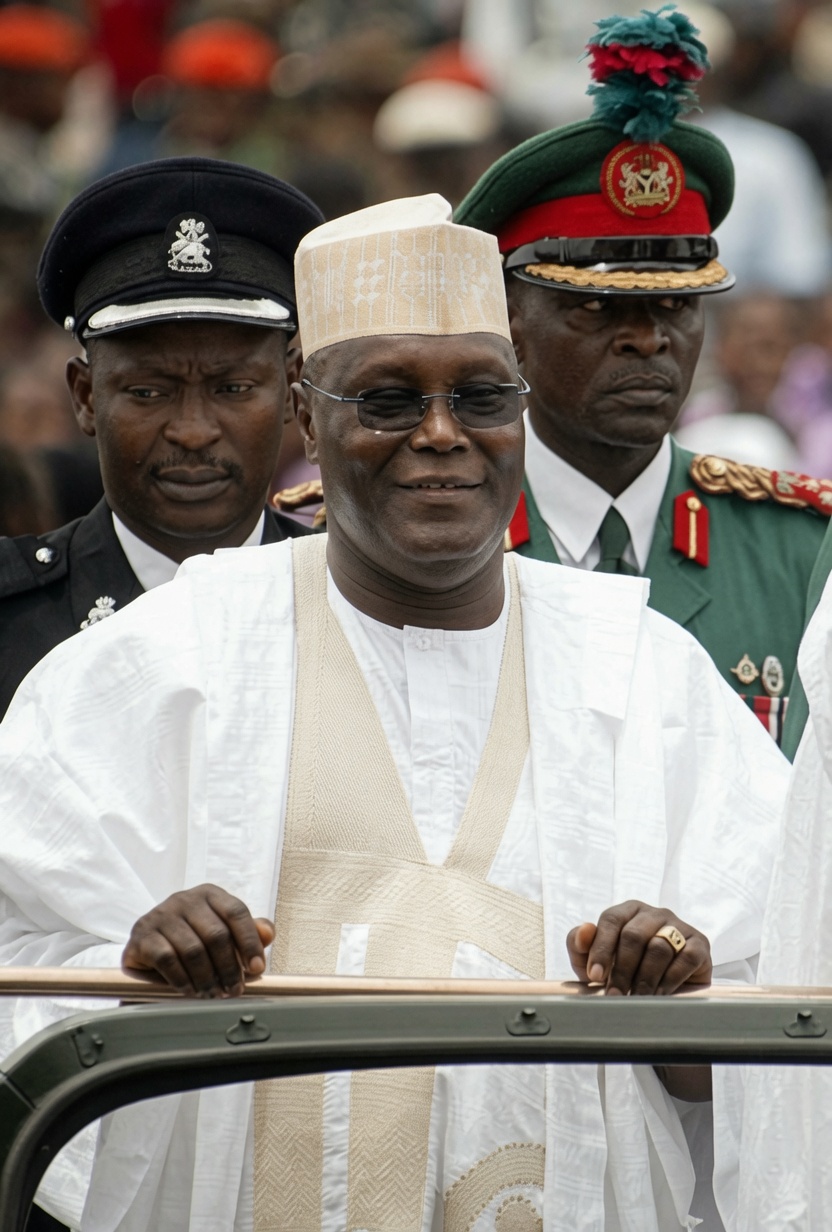
Of all the frontline Presidential candidates for the 2027 all-important elections, only His Excellency Atiku Abubakar- @atiku espouses and religiously supports this equitable zoning arrangement. The North/South zoning arrangement has been a scam all along. It has not been able to restore national unity, national peace, and commandeer national loyalty among Nigerians from across the six geo-political zones for their beloved country.
It is therefore, self-evident and conspicuous like the North Star that when power goes North, the more populated North West hijacks it and runs away with it. And when power comes South, the more populated South West using its mainstream media and propaganda prowess, hijacks it and runs away with it. This malady has continued unabated since 1999 to the chagrin of the marginalized North East, South East, and North Central.
As an emerging political scientist and investigative journalist, I affirm that at this auspicious moment in Nigeria’s chequered history, the country now urgently needs an experienced reformer with the political will and balls of steel like Waziri Adamawa; the Zege Mule u Tiv; and the Ogo wu chi onye 1 of Igboland, to get the failing country out of the woods.
Your (Okutepa’s) proposition to downplay the fact that Nigeria is standing on a Tripod called WAZOBIA can be described as an academic exercise tantamount to futility. Nigeria will always stand on a Tripod. All that is needed is for the 1999 Constitution to be amended to make it an impeachable offence for the Nigerian President to abuse his powers and going contrary against the spirit and letters of Section 14(3) of the 1999 Constitution of the Federal Republic of Nigeria (as amended).
Muhammadu Buhari did it and was not punished with impeachment proceedings from the rubber-stamp Senate Presidency of Ahmed Lawan. Bola Tinubu continued from where Buhari stopped and has not been punished with impeachment proceedings from the rubber-stamp Senate Presidency of Godswill Akpabio.
By and large, I reckon with you in toto, that Nigeria’s problem is not in the 1999 Constitution nor in the law, but in the blatant disregard and disrespect for law and order. Gift the American Constitution to these current crop of rogue politicians in Nigeria, they will still plunge Nigeria into the unfathomable chaos like they have done today.
Going into 2027 all-important presidential election billed for Saturday, January 16, 2027, let me conclude by saying that since 2015, having tried and tested two successive regimes of the ruling All Progressives Congress, APC, it’s time to try and test the main opposition African Democratic Congress, ADC, whose charge is led by His Excellency Atiku Abubakar.
May the Nigerian State and the Nigerian people succeed in 2027!
Ikenna Asomba is a political scientist and journalist. He writes from the State of Illinois, United States.
The Abyss of Silence: Why We All Failed the Oyo Abductees
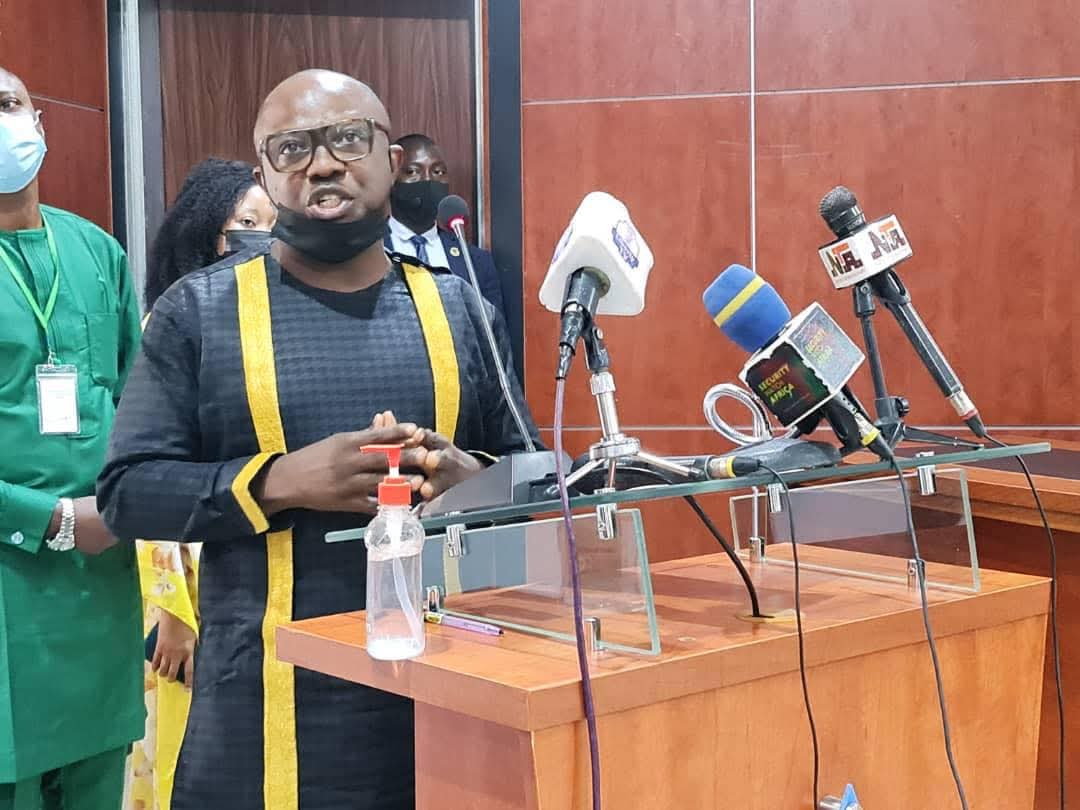
By Femi Oyewale
The haunting cadence of W.B. Yeats’ The Second Coming, quoted so often by the late Chinua Achebe, has ceased to be mere poetry. It has become a grim, real-time mirror reflecting our national existence: “Things fall apart; the centre cannot hold; / Mere anarchy is loosed upon the world.”

In a nation that boasts some of the brightest minds globally, a land steeped in the communal sanctity of “it takes a village to raise a child,” we have descended into an unthinkable abyss. Daredevil criminals have reached into the heart of Oyo State, snatched our children—the very architects of our future—and vanished. Yet, as the sun rises and sets, from the gilded halls of the Presidency to the dusty corners of the local street, we remain paralyzed, tethered to a collective ignorance that is as chilling as it is shameful.
The Theatre of Performative Outrage
We have become a nation of “noises.” We trade blame with surgical precision—the Presidency points to the state, the state points to the security architecture, and the populace directs its vitriol toward the political elite. We have seen the press releases, the hashtags, the fleeting television appearances, and the hollow promises of “concerted efforts.”
But let us be painfully honest: these are not efforts; they are performances. There is not even a whisper of a “near-success syndrome.” While we debate and defend our preferred political affiliations, our children are sleeping under the cold, unforgiving stars of a forest floor. They are subjected to the kind of trauma that shatters souls long before it breaks bodies. They are waiting for a rescue that we are too divided to coordinate.
The Mirror of Empathy
Let us strip away the facade of civic detachment. I challenge every father in this country: if that abducted child were your only son, would you be content with a tweet? To every mother: if that child were the fruit of your old age, would you accept a press statement as enough?
To our governors, our senators, and our political titans: if these children were the heirs to your empires, would the current pace of “investigation” satisfy you? To our billionaires, our security chiefs, and our local traditional warriors, those who claim the mantle of protectors, what if these children were born of your own loins?
The silence that would follow that personal connection is the same silence currently haunting the homes of these victims. We have allowed the abstraction of “national crisis” to desensitize us to the visceral reality of a child’s terror.
Beyond the “One-Man” Savior Complex
We have developed a dangerous habit of outsourcing our conscience. We wait for the radical activist, the viral influencer, or the singular loud voice to carry the burden of the nation. We expect a solitary figure like VDM or a lone firebrand like Sowore to move mountains that require the combined weight of a movement.
But no singular individual can replace the collective pulse of a people. Their rescue is not a one-man job; it is a fundamental test of our humanity.
The Path to Reclamation
We are currently a house divided by party lines, religious silos, and ethnic prejudices. Yet, we have seen that we possess a dormant capacity for unity. When the Super Eagles take to the pitch, our differences vanish. We become one heartbeat, one voice, one nation. Why is it that a game can unify us, but the abduction of our children leaves us fractured?
We do not need more talk. We do not need more inquiries that lead to no arrests. We need to acknowledge a hard truth: we have failed. We have failed the children, we have failed their teachers, and we have failed ourselves.
No stranger knows our terrain better than we do. No satellite imagery can replace the intelligence of a community that refuses to be silent. It is our land. These are our children.
The systemic rot has metastasized to the point where “efforts” no longer count. Only results matter. The time for performative sorrow is over; the time for a unified, uncompromising demand for their return is now. If we do not rise, if we do not act with the singular intensity of a people reclaiming their future, then let the history books record that when our children were taken, Nigeria chose its politics over its people.
We must rescue them. Not tomorrow. Not after the next meeting. Now.
Femi Oyewale is the publisher of Sahara Online and President of NASRE who
writes on national affairs, security, and social development.


- President Isaias Afwerki Departs for Egypt June 7, 2026
- Eritrea: Athlete Nahom Ermias Champion of Asmara Marathon 2026 June 7, 2026
- World Health Organization (WHO) Hands Over Ebola Preparedness Supplies to Strengthen Zambia’s Readiness June 7, 2026
- Joint Statement by the World Health Organization (WHO) and Food and Agriculture Organization of the United Nations (FAO) in South Africa on World Food Safety Day 2026: From burden to solutions – safe food everywhere June 7, 2026
- Liberia: President Boakai Oversees Signing of US$125 Million in World Bank Financing Agreements for Digital Connectivity, Renewable Energy, and Road Infrastructure June 7, 2026
- President Mahama explores Belarus’ agro-industrial hub; seeks partnerships to boost Ghana’s food security June 7, 2026
- National Insurance Corporation of Eritrea (NICE): Shareholders’ Annual Regular Meeting June 6, 2026
- World Cup accredited journalists raise concerns over unfair United States (US) visa restrictions, International Sports Press Association (AIPS) calls on FIFA to intervene June 6, 2026
- Ghana: President Mahama arrives in Belarus, lays wreath at Victory Monument June 6, 2026
- Liberia: President Boakai Advances Clean Energy Agenda; Dedicates 20-Megawatt Solar Power Plant at Mount Coffee June 6, 2026
- President Isaias Afwerki Departs for Egypt June 7, 2026
- Eritrea: Athlete Nahom Ermias Champion of Asmara Marathon 2026 June 7, 2026
- World Health Organization (WHO) Hands Over Ebola Preparedness Supplies to Strengthen Zambia’s Readiness June 7, 2026
- Joint Statement by the World Health Organization (WHO) and Food and Agriculture Organization of the United Nations (FAO) in South Africa on World Food Safety Day 2026: From burden to solutions – safe food everywhere June 7, 2026
- Liberia: President Boakai Oversees Signing of US$125 Million in World Bank Financing Agreements for Digital Connectivity, Renewable Energy, and Road Infrastructure June 7, 2026
- President Mahama explores Belarus’ agro-industrial hub; seeks partnerships to boost Ghana’s food security June 7, 2026
- National Insurance Corporation of Eritrea (NICE): Shareholders’ Annual Regular Meeting June 6, 2026
-

 news6 months ago
WHO REALLY OWNS MONIEPOINT? The $290 Million Deal That Sold Nigeria’s Top Fintech to Foreign Interests
-

 society1 month ago
SOCIAL MEDIA IS NOT A BATTLEFIELD COMMAND – WHY THE NIGERIAN ARMY’S ACTION AGAINST JUSTICE CRACK IS A NATIONAL SECURITY IMPERATIVE
-

 celebrity radar - gossips4 months ago
Dr. Chris Okafor Returns with Power and Fire of the Spirit -Mounts Grace Nation Altar with Fresh Anointing and Restoration Grace on February 1, 2026
-

 celebrity radar - gossips6 months ago
Prophet Kingsley Aitafo Releases 2026 Prophecy: ‘Nigeria Will Rise, but the World Must Prepare for Turbulence’