
Business
Bro. Joshua Iginla has been a source of Inspiration for my ministry -Brother Samuel Akinbodunse + builds 50000 seater auditorium in SA

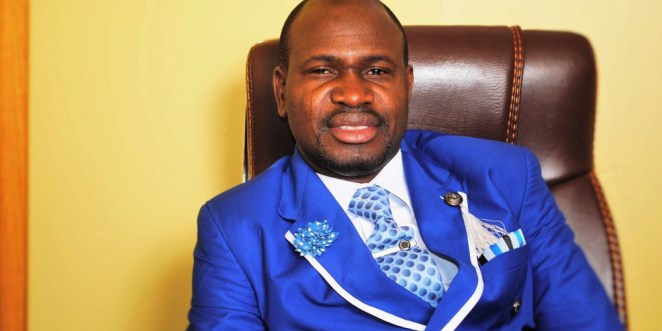


Having laid his hands on many jobs in Nigeria, Brother Samuel Akinbodunse travelled to South Africa for greener pastures and for a better standard of living. As a typical young man, he toiled and suffered just for him to have a leeway, but things seemed not to favour him at the initial stage. It was so difficult for him that he had to lay his heads under flowers and also had to go through severe pains on different occasions. But with his call to the Lord’s vineyard, Bro Samuel soon realised that he was only wasting his time looking for jobs to do whereas God had already prepared him to be His servant. Today, the story of Bro Samuel has changed as his ministry, the Freedom for all Nations Outreach, FANO has not only carved a spiritual niche for herself but also won many souls into the Kingdom of God. In this interview , Bro. Akinbodunse, a native of Ondo spoke glowingly on his experience and how he hearkened unto the voice of God. Excerpts:
Interestingly you are the founder of FANO TV, can you tell us how it started?
We bless God, My name is Brother Samuel Akinbodunse, the Senior Pastor of Freedom for all Nations Outreach, FANO. The church was birthed in 2010, but before the birth, I was in Nigeria and had an encounter with the Almighty God and He said I should head to South Africa. I disobeyed just like Noah in the Holy Bible, so I was looking for how to get a VISA to the United Kingdom, Europe and the United States of America, all my efforts to get these countries’ VISAs were in vain, I sold all the things I had and even borrowed some money just to get out of the country but you know, sometime when you disobey God, and you refuse to walk in His ways, devil will also give you his own ways, so I was thinking I was walking in the path of the Lord not knowing I have gone astray. Luckily, my agent said that all doors of travelling abroad have failed and we should proceed to South Africa and from there, he will meet with us for our journey to the United Kingdom and when we were trying to proceed, he said there was another opportunity for us in the United States of America, and we agreed to go there for one conference, prior the interview to go to the US on September 11, the country was attacked and the interview was cancelled after paying a whopping N520,000 and that was how we came back to the issue of obtaining VISA for South Africa. Luckily, I found myself in South Africa and from there, I had no where to stay, nobody there to welcome me, so I went to one Church and spoke to them, the Pastor assisted me, I was sleeping in the Church, praying and fasting in 2002, after the prayer and fasting sessions and there was no where to go, I was in the church and someone said I can stay with them in their flat and I would be paying about 250 Rands per month which I agreed, it was a three bedroom flat but we sleep in the sitting room, we were about twenty and from there, when everyone goes to hustle, I was praying because I don’t know anywhere to go and one day, I was introduced to a Salon business as one of those I was staying with introduced me to it, he taught me how to do human hair, I was blended to that situation but life goes on. One day, the owner of the building said they don’t want salon there and that was how everything crashed out again, I returned to my former position, when there was no money to pay, I went back to the church, praying and fasted for 14 days without water or food, and the last day when I was supposed to break, I had no money so I took a step of faith to go the flat I left, maybe I can meet somebody that can give me money, I trekked over 5km and I didn’t meet anyone to assist me, infact angels of mercy were not available, to my surprise, when I got there, I was going to the 12th floor, but the lift was not functioning, there was no how I could get in, devil tempted me to speak to the lift to work which I did but the lift didn’t work so I managed to go through the stair case and when I got there, I found my sponge in the kitchen so I started leaving on the street, I was sleeping under the flower for many weeks before I met someone that assisted me, and I was sleeping in his shop. In his shop, I usually gathered people and pray, even when I was on the streets, I gathered people for prayers and evangelism, then someone also took me to a place called Orita in South Africa, that is where I joined the group of people who are doing ladies come and braid your hair and from there I got my own salon, I started gathering and worshipping people in the salon I got and from there God started helping me and I started inter-denominational prayer meeting which people attended in numbers. Soon, the salon couldn’t contain us anymore so we moved to another place, when we got there, people came and we were close to above 300 (three hundred members), I love mountain prayers, I took people to mountains and there was no name of the ministry then, one day, I took some pastors to the mountain, we were about three, we prayed and that was where I heard the voice of God saying ‘My son, go and register ‘FREEDOM FOR ALL NATIONS FOR ME’ three times, I told the pastors and they said they will know if it was true or not, when we got back, they searched for the name on Google and the only thing that resembled the name was Christ for all Nations and so, that was how we registered, even when we wanted to do registration, they said we should bring three names and I said I do not have any because that was the only name given to me, then I added OUTREACH because I love outreach so much, we put the name and the agent said they will not approve it because it must be three names and luckily enough, we submitted that same name and it was approved the same day we submitted, that was how we registered in 2010. We did not start a church because I did not hear God say I should start a church, I continued with my outreach work, doing crusade all over South Africa and in 2011, I met with Brother Joshua Iginla who is my spiritual father now, he came and blessed the word I am doing, for our interdenominational prayer, we meet every Wednesday, then I still have my church I attend which helped me and a lot of visions from Brother Joshua Iginla came up then that I should start a church, but I am a person that without confirmation from God directly, even if you are the greatest prophet, I won’t take any action, not that I am a doubting Thomas and when I remember the story of the young and old prophet, it makes me to be extra-ordinarily careful of words from Prophets and members then in July 2011, Brother Joshua Iginla called me himself that he had a revelation about me that God said I should start a church, and I said I would start, he prayed for me thinking I’ll start but I did not, I went back to God in 40 days of prayer on water and in my lifetime, I have fasted 40 days on water four times, I went back to God and asked him if he was the one speaking or they are just telling me because they love me and God said to me in August ending that I should start the church. When I finished the fasting in September, God gave me a revelation that I should start on the 8th of January, 2012 so I wasn’t in hurry though we were already close to 400 members then and I announced to people, but before then, I spoke to people that God did not call me to start a church because I have been with Prophets, Pastors and I saw the difficulties in it and with the kind of heart I have, I do not want to stress myself because I am a man that is too compassionate to start a church. What I mean is that people will be depending on you, as you are feeding your family, you have to feed them, so I said no, let me do my crusade and leave, nobody will know me. When I announced it, people started grumbling and thought God has left me because I initially said I won’t be starting a church but I am changing my words now, I also used the story of the Samaritan woman and Jesus when Christ told his disciples not to go into the way of the Gentiles that they are only sent to the lost sheep of Israel, but when the Samaritan woman came , due to her faith, she received her miracle then. When we started, we were almost 400 in membership. Initially we started with 67 people, I was discouraged but God said to me that these are the shepherds I will start with that those people are not going to be part of it, that was how we started and since we started, we have never reduced, I remember after two months, we escalated to over 200, so that is how we started 5 years ago, that is how FANO came to be under the advice of Brother Joshua Iginla, his influence, his grace, and after two years, we came on board and we are now on TV doing live broadcast, it is amazing to me, with the kind of speed, people will think maybe there is something behind it but I said something that the birth of FANO came in 2010 but the pregnancy started from 2002.
People believe South Africa is not a conducive environment for Nigerian Pastors to establish a church, what would you say distinguishes FANO TV from every other ministry?
That is a very good question and it is something I should break for you, pastors in South Africa, especially Nigerian pastors, before leaving Nigeria they carry heavy anointing but immediately they arrive they attach themselves to things that will extinguish the fire of their anointing, so many of them now have been corrupted, God said to me that I should separate myself. Separation is what distinguishes me, I do not do what they are doing, if you look at them now, running after women and rich people, all kind of frivolities and vanities, I do not do that, since I came to South Africa, it has been only my wife, you see pastors duping people, going to clubs and hangouts, engaging in fraudulent activities, I do not engage in all that, even when I started, some people know me then and made comments that they know I will be a pastor because I have never done the illegal things they do there and that is it. In my Church now, I can say only ten percent of my congregants are Nigerians, I have 80% South Africans, 10% of other nationals.
What is the secret for you to have South Africans and other nationals to troop into FANO ministry?
The secret is genuine preparation, direction from God, I was sent to South Africa and I allowed South Africans to do things in the church, empower them, if Nigerians are now part of it, it means God graciously opened their eyes that there is a genuine grace in the ministry.
To every glory and success, there is a story to tell, what were the greatest challenges you faced when you started and how did you overcome it?
I faced some heart-failing challenges and rejection, some of the people that discouraged me most are Nigerian pastors, some even told me to go home and another challenge is that even before the birth of FANO, It was not easy, ministry without money is a great torment so I was tormented financially, I remembered one day after praying for people and they departed, I was going home and there was no food in my stomach, I was seriously hungry and there was no money, on my way I looked at one dustbin, I saw KFC and some food, I had to take it and eat, sometime In 2003 when I ministered powerfully to some people, after that they went home but I who ministered to them have nowhere to stay, another betrayal was the betrayal of supposed loved ones, as an up and coming preacher, you can be discouraged and then, I had no father I can talk to that would help me, it was a hard time for me then, the challenges were very great and I know every human being has challenges, you have vision you want to bring to reality, there was no money and you know every vision needs money, those are the challenges.
During all these crises, were you married?
Yes, because when I look at the situation of South Africa, I cry to God that I do not want to fall into any temptation because I have seen traces that some women were making some moves, so I had to pray and I remembered calling a Prophet In Nigeria that this is the challenges and he said the wife I will marry will come to me herself, I never proposed to my wife, she came the way the man of God said and we married in 2004, so after three years in South Africa, I got married
During those trying period, was she supportive?
Actually, God gave me a very lovable woman, she was so supportive. When I got married to her, I had just a single bed, no chair, no TV, I shared a room with three other people. Like I told you earlier, I got married because I do not want to fall into sin. She embraced the spiritual and ministry work, she calls me pastor and has never called me by any other name, it is now she is calling me daddy. She even advised me to start saving money so we can separate ourselves from the people we were staying with, we were not engrossed in material things, even up till now, we saved all our money and separated some for food, we do not go to shop to buy clothes, we do not over-celebrate on Christmas, we only send some money to our parents out of the money and we took our time, we did not have babies early, it took us two years to save before we decided on having a baby because we already had our apartment. If she’s not a good woman, she won’t bring that idea, we married in 2004, we saved money and moved to our apartment in 2006 and the same 2006 in December, we built our own house we are living now, her idea brought us joy.
Would it be right to say your story informed your attitude towards philanthropy?
Yes, you know if you have never experienced bitterness, you won’t know how to manage sweetness, if you have never experienced challenges, you won’t know how to sympathize with those who are going through it, apart from the problem we faced, I’m a man right from time that took something from my biological father, he will not eat until everybody are satisfied in the house, I remember one day I came for holidays and everyone was eating, and he was not eating, he said he won’t eat until he knows the food satisfied everyone, I took it from my father then and when I met my spiritual father who is Brother Joshua Iginla, I saw the same thing in him, that made me know it is a divine connection so I’m a man who wants to satisfy everyone even if I cannot, but I would want to go an extra mile to satisfy people, I rely on blessings from above, but whatever God gives to me are what I can help people with. So far, the people I have given scholarships to are more than 50 and that is how I live my life, I give it out, I just opened a savings account for myself two years ago, every money I had was given to charity, so that is the kind of character I developed towards people.
A lot of people raise allegations that all churches are just interested in money, this is a strange one, can you tell us more about your ministry in terms of giving?
This is one of the things I also teach my fellow pastors especially some that submitted to me. Ever since I started Freedom For All Nations, I have never touched the church’s money, we have some treasuries and there is accountability, so what we do is whoever is in need, we give and pay our bills and from my own, I have a covenant I do not usually say it, 80% of whatever comes in , I return it to the ministry, I am only left with 20% so if I want to travel or go anywhere, it should be the church responsibility but I do not put burden on anyone, I do it myself and I have Sam Akinbodunse Ministry where we help people, there are some funds, like the scholarship I am giving out is not from the purse of the church, it is from my own account, we have very strong welfare committee that takes care of the needy through the account of the church.
We learnt there is a programme you do where you feed those who are hungry, tell us more about it?
Operation Feed the Nation came to being when I thought deeply and I saw that in those days when I was hungry and there was no food, there are some white people who brought food to us, bread and tea every morning, I remember I take it up to thrice in a deceptive way because I don’t have hope until they come back the next morning and there are some people in that situation now, so we are feeding 150 people every week
Another interesting thing I noticed about FANO TV is some of the outstanding miracles, especially the one about the woman that delivered cat fish, can you shed more lights on that?
Yes, Jesus went to his hometown and couldn’t perform much miracles because they didn’t believe him, my father who I lived with, not my biological father, but my mentor, told me that I should come and help him in Ondo, my native town, I agreed and went there. A woman came, I met her brother in Dubai and told me some of the problems his sister had and I asked him to tell her to meet me in the programme at Ondo and he said no problem and I prayed for her. I prayed on water and I asked her to add a little salt and drink it. She came to that programme and as we prayed for her, that was how she went into labour and to my surprise, she gave birth to a catfish, she took photos and she was even coming from Nigeria to South Africa for testimony, one of the things that baffles me now is, she has been carrying the pregnancy for 14 months thinking it was a baby, and there was a movement not knowing the enemies have changed the baby to cat fish.
A lot of people are scared when it comes to prophecy and that is why they speak in parables, but we noticed something about you that you say it as it is like the issue of Cape Town and Zuma Prophecy, what gives you the boldness?
I know that people have bastardized the prophetic ministry and actually it has been known to everyone that wherever there is original, you will always see fake, and another challenge is that people cannot differentiate because devilish people also prophesy, the only thing that can make people differentiate Is character, the Bible says by their fruits you shall know them, I have a logo, I told my people that any prophet without the character of Jesus is fake, if it comes to prophecy and revelation, I am gifted to be sincere, I remember one of my fasting, what I asked God for was his power so my only prayer for those 40 days was his power and he gave it to me, power of revelation, knowledge, he gave it to me, like what you just mentioned, it came in the service, I was just ministering and I saw something just flashed on my eyes, when I looked, I saw flood coming out in Cape Town, I saw flood coming out of the Western part of South Africa that we should pray, who knows, if we didn’t pray, it could have been worse and sure, Zuma must go, I’m a man that devoted himself for South Africa, if you watch our programme, every Sunday we gather we pray for South Africa and Africa continent so as I was praying that time, God said I should go and warn President Jacob Zuma that he must not do re-shuffle or else he will mess up the country, I spoke and told people, he didn’t listen, he did it and up till now, the crisis are still there, we’ve not gotten over it and that is bringing forth different problems, to me, I am a man who isn’t afraid of anything when it is spiritualism, you can’t find me in a dirty place so when I speak and if it’s God that revealed and said I should speak, why should I be afraid, I am not afraid of anybody no matter who you are.
Within 5 years, your ministry has grown so big and the auditorium is becoming too small, what is your plan for expansion?
Actually, where we are now isn’t the vision, the vision God gave me is to build 50,000 capacity and you know we have to start from somewhere, the 8,000 capacity we have now, we will start from there, that is why if you come to our church, we put it far extreme so that it will not disturb the main auditorium and where we are now, as time goes on, we will leave it for the youths. The main auditorium is coming soon and we have targeted that by 2019, if it is not fully finished, it must have gotten to somewhere. We have acquired the land, structures are on it, we are just waiting for the date to start and also support, actually the people have estimated it and it costs 300million Rands
What advice do you have to those who are just entering the ministry and look up to you as a father?
My advice to them derived from my personal experience. You must be patient, make sure that you do not deviate from the assignment God gave to you, it may be difficult, but if you do not deviate from it, the sweetness of the assignment will surely come and thirdly, do not look at somebody else that is running faster and compare yourself with him, anytime God calls a man, He gives him a season and any season that must come must experience another season. Before raining season comes, there must be an experience of dry season and before dry season comes, there must be an experience of raining season, so whenever you want to start, it will not go the way you want, there will be a sour situation, the foundation of a house Is always giving problem to the builder. Laying bricks is very easy, you can lay 1,000 bricks per day but when it comes to foundation, you must make sure things are put in place and foundation is not seen after being covered so if you are labouring in ministry, it will not be seen at an early stage, it is when you are building that your labour will be seen. My advice to all the beloved that are being called into the ministry, even though you feel your ministry is not growing, do not give up, be in line with what God says you should do, the owner of the work will visit one day.





GTCO Launches “Take on Squad” Hackathon 3.0, Opens Call for Applications
Guaranty Trust Holding Company Plc (“GTCO” or the “Group”) has announced the launch of “Take on Squad” Hackathon 3.0, reaffirming its commitment to fostering innovation, empowering talent, and supporting the development of technology-driven solutions that address real-world challenges across Africa.
Now in its third edition, the Hackathon brings together developers, designers and entrepreneurs across Nigeria in a collaborative environment to build practical solutions across key sectors including financial services, healthcare, commerce and digital inclusion. Under the theme “Smart Systems: The Intelligent Economy,” participants are challenged to design and build intelligent, data-driven solutions that transform how communities engage with money.
Applications are now open, and interested teams can find full guidelines and registration details on the official portal at https://squadco.com/hackathon.
Speaking on the initiative, Eduophon Japhet, Managing Director of HabariPay, stated: “Today’s dynamic, digitally driven world demands continuous innovation, which is shaping how economies grow, how businesses scale, and how societies evolve. Through “Take on Squad” Hackathon, we are deliberately investing in the ideas and talent that will define the future. Our objective is not simply to encourage innovation, but to enable its translation into scalable solutions that deliver real and measurable impact. This reflects GTCO’s role as a financial services platform that connects capital, capability, and creativity to drive sustainable progress.”
The social coding event remains a cornerstone of HabariPay’s mission to foster creativity and problem-solving among emerging tech talents. Competing teams will leverage Squad’s advanced APIs to create scalable digital tools that address everyday challenges faced by businesses and individuals.
Through initiatives such as this, GTCO continues to position itself at the intersection of finance, technology and enterprise, actively shaping the future of digital transformation in Africa.
About HabariPay
HabariPay Ltd is the fintech subsidiary of Guaranty Trust Holding Company Plc (GTCO), one of the largest financial services institutions in Africa with direct and indirect investments in a network of operating entities located in 10 countries across Africa and the United Kingdom.
Licensed by the Central Bank of Nigeria (CBN), our goal is to support SMEs, micro merchants, large corporations and other fintechs (Tech Stars) with the tools they need to thrive in an evolving digital economy and expand beyond their current market reach. HabariPay’s solutions include Squad, a full-scale digital payments toolkit to make in-person and online payments simpler, HabariPay Storefront, an e-commerce website to facilitate online purchases, Value-Added Services to help merchants access cost-effective and flexible airtime and data bundles to run their businesses, as well as a switching infrastructure that enables tech-focused businesses to optimise cost and make transactions more efficient.
HabariPay’s contributions to Accelerating Digital Acceptance in Africa have not gone unnoticed–it received Mastercard’s Innovative Mobile Payment Solution Award at TIA 2022 for its innovative payment solution, SquadPOS.
About Squad
Squad is a complete digital payments solution that is reliable, secure, and affordable, making receiving in-person and online payments simpler and convenient.
Thousands of merchants currently leverage Squad’s payment solutions for their daily business operations. Squad’s current products and service offerings include SquadPOS, Squad Payment Links, Squad Virtual Accounts, USSD, and E-Commerce Storefront.
Find out more at www.squadco.com.
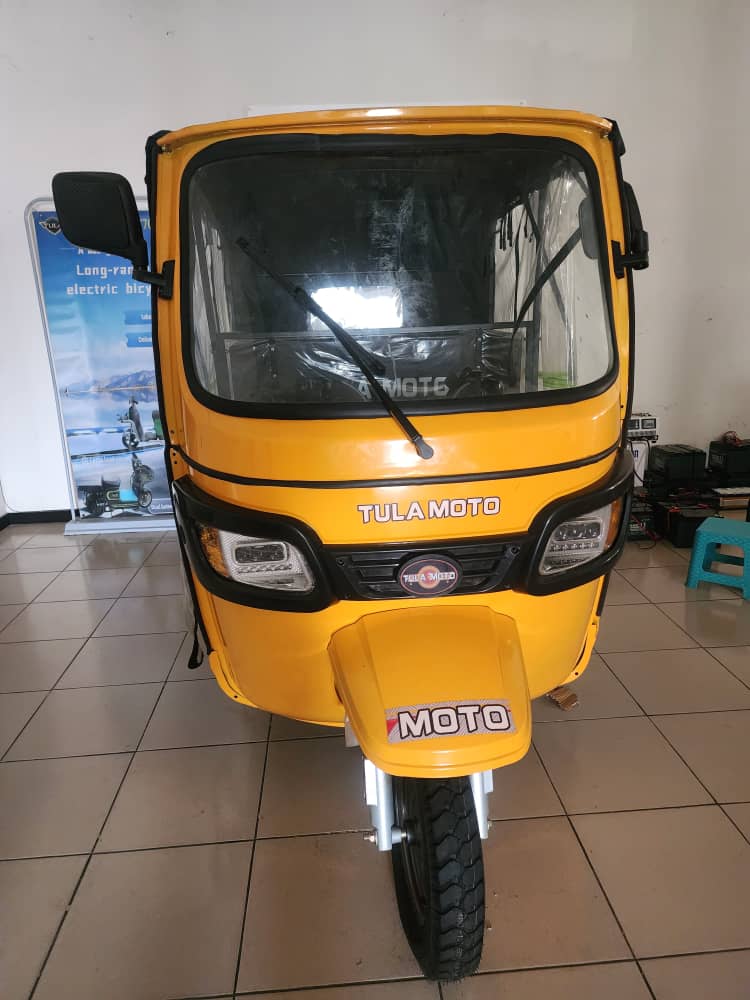
Electric 8-Seater Tula Moto Keke Enters Nigerian Market, Targets Higher Operator Earnings
LAGOS — A new electric-powered tricycle with an expanded passenger capacity has been introduced into Nigeria’s urban transport sector, offering operators a potentially more profitable and eco-friendly alternative to conventional petrol-driven “keke.”
The newly launched 8-seater electric tricycle, now available in Lagos with plans for nationwide distribution, features a dual-row seating arrangement capable of accommodating up to eight passengers per trip—significantly higher than the standard three-passenger configuration common across the country.
Promoters of the innovation say the increased capacity is designed to boost daily earnings for operators, particularly amid persistent fluctuations in fuel prices. By running entirely on electric power, the vehicle eliminates dependence on petrol, reducing operating costs and shielding drivers from fuel price volatility.
According to the distributors, the tricycle is equipped with a durable battery system capable of covering extended distances on a single charge, making it suitable for commercial operations across high-traffic routes, residential estates, campuses, and marketplaces.
“The concept is straightforward—enable drivers to earn more while spending less,” a company representative stated. “With higher passenger capacity and zero fuel requirements, operators can maximise each trip without the burden of daily fuel expenses.”
Beyond its cost-saving potential, the electric keke is also said to require less maintenance than traditional models, offering additional long-term savings. Its quieter and smoother operation is expected to enhance passenger comfort and overall commuting experience.
Industry analysts note that the introduction of electric mobility solutions reflects a growing shift toward cleaner and more sustainable transportation alternatives in Nigeria, particularly in densely populated urban centres such as Lagos.
The distributors added that the product is currently available under a limited promotional offer, with delivery options across the country.
For inquiries and purchase: 📞 08153432071
📞 08035889103
Office Address:
📍 Plot 9, Block 113, Beulah Plaza,
Lekki–Epe Expressway,
Lekki Phase 1, Lagos
As transportation costs continue to rise and environmental concerns gain prominence, innovations like the electric 8-seater keke may signal an emerging transition toward more efficient and sustainable mobility solutions nationwide.


Business
A Pipeline, a Licence, and a Storm Brewing: Corruption allegations Draw global oil giant, Shell, Into Nigeria’s Reform Test
*A Pipeline, a Licence, and a Storm Brewing: Corruption allegations Draw global oil giant, Shell, Into Nigeria’s Reform Test*
By Deji Johnson and Mustapha Bello
t begins with a pipeline that should have been completed by June 2026. It widens into a regulatory dispute. And it now risks becoming a defining test of Nigeria’s gas reforms under President Bola Ahmed Tinubu.
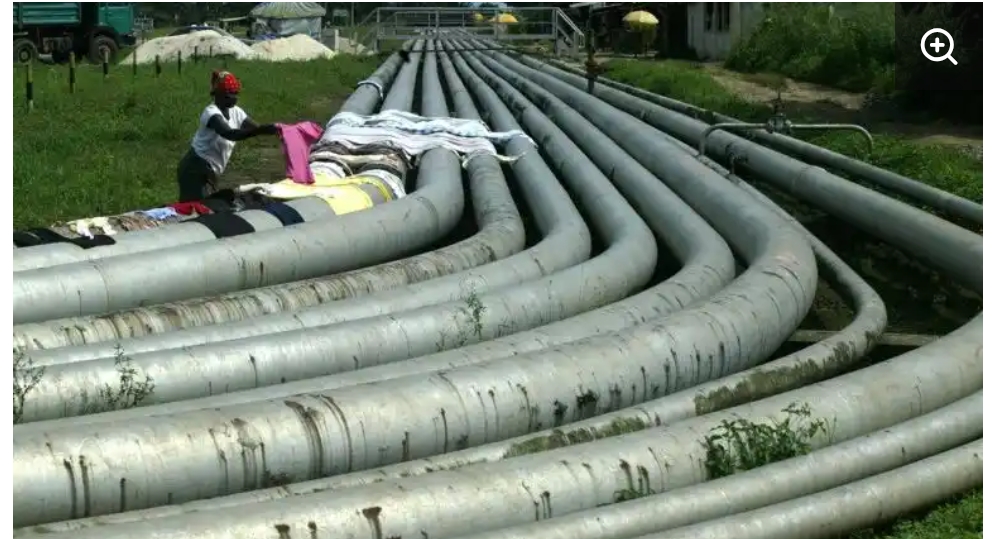
At the center is a stalled 80 kilometre gas pipeline from Sagamu to Ibadan, a project backed by over 100 million dollars in investment and built on a protected Gas Distribution Licence issued under the Petroleum Industry Act 2021. The licence granted NGML–NIPCO exclusive rights to distribute gas within Ibadan for 25years based on Nigeria’s Petroleum Industry Act.
On paper, the law is clear. On the ground, the situation is anything but.
For more than three months, construction has been halted following a stop work order issued by the Oyo State Government led by former Shell Contractor and engineer, Governor Seyi Makinde. No detailed public justification has been provided that aligns with existing federal approvals already secured for the project.
What might have remained a quiet regulatory disagreement has now escalated into something far more politically charged. How?
In recent remarks, Nigeria’s Minister of the Federal Capital Territory, Nyesom Wike, who is of the same political party as Governor Seyi Makinde, made a pointed allegation that has since rippled across political and industry circles. He suggested that the Governor of Oyo State and Shell were in what could be described as an “unholy alliance.”
It is a serious claim. One that, if substantiated, would raise profound questions about the intersection of corporate influence, state level action, and federal law.
Neither Shell nor the Oyo State Government has publicly responded in detail to the allegation.
But the silence is now part of the story.
*THE SHELL QUESTION*
For Shell, this moment carries particular weight.
The company has operated in Nigeria for decades, building one of its most significant global portfolios in the Niger Delta. But that history is not without controversy. From corruption claims to environmental damage claims and community disputes amongst others, Shell has faced years of litigation and, in several high profile cases, adverse rulings tied to its operations in the region.
Those cases, many adjudicated in foreign courts, have shaped a negative reputation that continues to follow the company.
Now, a new question emerges.
Is Shell once again operating at the edge of Nigeria’s regulatory framework seeking to exert undue influence in circumventing Nigeria’s petroleum laws, or firmly within it?
Industry sources including a widely reported meeting between their representatives, Oyo State Government representatives and the newly appointed midstream and downstream chief executive, indicate that engagements involving Shell and the Nigerian Midstream and Downstream Petroleum Regulatory Authority could enable the company to enter a gas distribution zone already licensed to another operator in breach of the PIA.
If true, the implications are immediate and far reaching.
A licence meant to protect investors and investments in Nigeria’s gas space ceases to be exclusive against the dictates of the guiding laws. A framework begins to look flexible, and a reform risks appearing reversible.
To many, it seems more than just a commercial dispute and is not just about one company versus another.
Nigeria is in the middle of an energy transition where gas is expected to play a central role in powering industries, stabilising electricity supply, and reducing reliance on expensive diesel. President Bola Tinubu has emerged as a global champion of using gas as a transition fuel in Nigeria and Africa whilst rolling out elaborate but clearly defined plans to achieve it. Yet gas availability remains inconsistent, constraining power generation and limiting industrial output.
Projects like the Sagamu to Ibadan pipeline are designed to close that gap. To halt such a project is to delay not just infrastructure, but impact. To undermine its legal basis is to question the system that enabled it and to introduce competing claims within the same licensed zone is to risk regulatory confusion at a time when clarity is most needed.
This is where the issue moves from commercial to national because at stake is not only an investment, but the credibility of the reform architecture itself.
*OYO STATE AND THE FEDERAL QUESTION*
The role of the Oyo State Government adds another layer of complexity.
Energy regulation in Nigeria, particularly in the gas sector, is governed by federal law. Yet implementation often intersects with state authority, creating spaces where jurisdiction can blur.
The stop work order issued on the pipeline has become the clearest manifestation of that tension. Was it a regulatory necessity?
A precautionary measure? Or, as alleged by Minister Wike, part of a broader alignment with external interests? Without transparency, speculation fills the vacuum and the regulator must avoid finding itself mired in such allegations.
*QUESTIONS THAT WILL NOT GO AWAY*
For Shell, the questions are now direct and unavoidable:
Is Shell, a global energy giant, seeking to operate within the Ibadan gas distribution zone already licensed to NGML–NIPCO?
What assurances, if any, has it received from regulators or state actors?
How does it reconcile such actions with the exclusivity provisions of the PIA?
For the regulator, NMDPRA:
Can a Gas Distribution Licence be effectively shared, diluted, or overridden after issuance? According to Nigerian laws, the answer is No.
What precedent does this set for Nigeria’s gas infrastructure market?
For the Oyo State Government:
On what legal grounds does the stop work order stand, given federal approvals already in place?
And how does this action align with national energy priorities or the state’s gas needs?
Nigeria has spent the last two years telling a new story to the world. A story of reform, of discipline, of a country ready to compete for global capital. And it has worked so far with stability returning to Nigeria’s economy and over $20bn of energy investments looking to enter the country in the short to midterm.
But reforms are not tested in policy papers. They are tested in moments like this.
Moments where law meets influence, investment meets interference and promise meets pressure.
For Shell, long mired in issues surrounding ethical operations in Nigeria, this is more than a business decision. It is a reputational crossroads.
For Nigeria, it is something even larger. Whether the country’s laws will hold when they are most challenged or Whether its reforms will stand when they are most inconvenient or even whether Nigeria’s energy investments future will be shaped by the rules of law, adherence to regulatory protections and provisions or by unethical and corrupt relationships.
Until those questions are answered clearly, publicly, and decisively, the pipeline in Ibadan will remain more than steel in the ground.
It will remain a symbol of a country still deciding which path it truly intends to follow. Nigeria must act quickly and decisively because the world is watching.


-

 society6 months ago
Religion: Africa’s Oldest Weapon of Enslavement and the Forgotten Truth
-

 news4 months ago
WHO REALLY OWNS MONIEPOINT? The $290 Million Deal That Sold Nigeria’s Top Fintech to Foreign Interests
-

 society6 months ago
“You Are Never Without Help” – Pastor Gebhardt Berndt Inspires Hope Through Empower Church (Video)
-

 celebrity radar - gossips2 months ago
Dr. Chris Okafor Returns with Power and Fire of the Spirit -Mounts Grace Nation Altar with Fresh Anointing and Restoration Grace on February 1, 2026
You must be logged in to post a comment Login
You must log in to post a comment.