
news
Buhari: From Washington with dignity By FEMI ADESINA


It was an official visit that attracted not only national, but also international attention. President Muhammadu Buhari was going to visit the United States of America for four days, on the invitation of President Barack Obama. Was this going to be just another jamboree, or truly an event that would reset the buttons in the relationship between the two countries?
Sure, there had been some cooling of passion between the two erstwhile allies during the dying days of the Goodluck Jonathan administration, and American experts sent here to train our military had even been asked to leave. She had also refused to sell us Cobra helicopters and other armaments, which could have made a lot of difference in our fight against insurgents in the North-east of the country. America had cited some reasons, including alleged human rights violations. The then President Jonathan was thus forced to look towards South Africa for arms. He loaded millions of dollars in a private jet as if going to Oyingbo market, and got his fingers burnt in the process. South Africa seized the cash, and also impounded the aircraft for some time. The Nigerian government could only huff and puff for a while, and then licked its wounds quietly.
No doubt, the kiln of passion needed to be kindled anew between Nigeria and America, and the invitation extended to President Buhari during the G7 Summit in Germany in June, was a much needed elixir. The Nigerian leader accepted the offer, and so was in Washington between Sunday, July 19 and Wednesday, July 22.
But another whiff of controversy had presaged the meeting. America, through its Supreme Court, had recently legitimized same sex relationship. A man could marry a man if he wanted, while a woman could also marry a woman. It was against the laws of God, but heck, what did America care? God was either dead due to old age, or now belongs to the old school. What matters now are rights, and people with homosexual or lesbian cravings must have their rights protected under the law.
It was into the eye of this storm that some Nigerians felt President Buhari would be flying, on his trip. True, he had been asked to bring a ‘wish list’ by his host, but is there ever free lunch in America? Yes, your wish would be granted. America would help you decapitate Boko Haram, would help you trace and repatriate billions of dollars salted away in foreign banks by past rulers, would help boost your economy and generate employment, but at what price? At a price of endorsing same sex marriage, which would be contrary to our laws as a country, and to the laws of the God that majority of Nigerians believe in, and serve? Would President Buhari capitulate simply because America would help him fulfill promises he made during election campaigns?
To America we flew last Sunday, arriving after a voyage of 12 hours. Our President was accommodated along with some members of the entourage at the historic Blair House, just a peeping distance from the White House. A good number of meetings were to hold at that Blair House in the next four days.
You would be permitted if you had jet lag after 12 hours in the air, punctuated only by a one hour technical stopover at a Portuguese island called Santa Maria, to refuel your plane. But President Buhari was still spry enough to settle down to business immediately. We have heard of the work rate of former Army General and later civilian president, Olusegun Obasanjo. Now we see another retired Army General now civilian president, exhibiting the same horsepower work ethics. Could it be true that they give them some injections in the military, which makes them go on and on? Well, I did not say so. I only heard of it.
After a briefing of what was to come in the next four days by Professor Ade Adefuye, Nigerian Ambassador to the United States of America, the President played host to former American Ambassador in Nigeria, Thomas Pickering and Professor Jean Herskovits. The man who has been quite outspoken about Nigeria, and who had doubted if the country would survive the 2015 general elections, Ambassador John Campbell, also came, among other people.
The day was not done until Madeline Albright (remember her? A large number of people across the world were mad about Madeline years back when she was American Secretary of State. She did the work admirably). Well, Madeline came to dinner with our President. She has aged, but rather gracefully.
Day 2 was the day the world had been waiting for. Day of meeting with the world’s most influential president, Barak Obama. But not so fast! First, breakfast with the Vice President, Joe Biden. Venue was the Naval Observatory, which is the official residence of the American number 2 man. What did he tell our President?
Biden gave an overview of the objectives of the entire visit,assuring Nigeria of the goodwill and support of America. He shared perspectives on the terror war, drawing from America’s experiences after the September 2001 assault, in which thousands were killed by Al-Qaeda inspired terrorists. He said Boko Haram, which has now pledged loyalty to ISIS, should not be battled with just military option. There was also the need to combine the war with strong socio-economic programs. He said the U.S would be ready to work with Nigeria in that direction.
On the Nigerian economy, Biden bade the leadership to tackle the issue of corruption, strengthen the institutions, and appoint tested hands to man critical sectors. If all these were done, he assured that investors would flood Nigeria in droves.
President Buhari thanked his host, and added that the role played by America prior to general elections, sending Secretary of State John Kerry to convey that America would not tolerate the subversion of the people’s will, went a long way to guarantee fairness and justice.
Having served as Minister for Petroleum Resources for over three years in the 1970s, President Buhari did not forget to mention the oil sector. He said between 10 to 20 billion dollars may have been lost to oil theft in the past one year, and pledged to sanitize the sector. He welcomed American assistance.
The much awaited meeting with President Obama came up a while later at the White House. American leaders have been known to be fairly parsimonious with praises, particularly when talking about leaders of other countries. But Obama was effusive. He described President Buhari as a man of integrity, needed for such a time as this in Nigeria. He congratulated him for winning the March 2015 presidential election, adding that Nigeria was very important to Africa. The destiny of the continent was tied to Nigeria’s, he said, pledging that America would continue to support, as long as Nigeria does the right things.
Every patriotic Nigerian must have stood several feet taller, as Obama eulogized our President. It served to rekindle confidence in our country. With the right leadership, Nigeria can, and will get there. Sure.
The American president charted the same course as his deputy on the issue of Boko Haram. According to him, economic and social programs must run concurrently with military option, to conclusively defeat insurgency.
Obama said the diversity of Nigeria, rather than be a centrifugal force, must be a centripetal one. The disparate parts of the country should be harnessed to become source of strength, adding that no part of the country should be left behind, or alienated.
Buhari, the American president observed, was hugely popular, judging by the enormous goodwill that surrounded his election. He urged him to use the goodwill to serve Nigeria, alongside the governors that accompanied him. The governors are Rochas Okorocha, Imo, Adams Oshiomhole, Edo, Tanko Al-Makura, Nasarawa, Kashim Shettima, Borno, and Abiola Ajimobi, Oyo.
Speaking on behalf of the governors, Okorocha assured Obama that the states’ helmsmen would back up Buhari to bring enduring change to Nigeria.
President Obama made pledges. America would help Nigeria in diverse ways: checkmate insurgency, train and equip her military, recover monies siphoned out of federal coffers, and many others. And with no strings attached.
The bilateral meetings/ audiences with the Nigerian president at Blair House, and other venues, were worth their weight in gold. The American Secretary of Commerce met with the Nigerian team, so did Loretta Lynch, U.S Attorney General, Jack Lew, Secretary of the Treasury, the Barker Group, potential investors in the Agriculture and Power sectors. There was an interactive dinner hosted by U.S Chamber of Commerce and Corporate Council for Africa, and captains of industry from Nigeria and America were there, among others.
What of the meeting with Dr Pate of the World Health Organization (WHO), representatives of the World Bank, and of the Bill and Melinda Gates Foundation? Refreshing. WHO unfolded plans to spend 300 million dollars to fight malaria in Nigeria, while the World Bank, subject to ratification by its board of directors, will make available the princely sum of 2.1 billion dollars for the rebuilding of infrastructure in the North-east, a region beleaguered by insurgency in the past six years. The fund, under the auspices of International Development Agency (IDA) will be made available as loans for Nigeria, at very low interest rates. The first 10 years would be interest free, while an additional 30 years would be granted at rates lower than that of the capital market.
A delighted President Buhari said priority would be given to the resettlement of more than one million internally displaced persons (IDPs), and directed that a team be set up on the side of the Federal Government, which would meet and harmonize plans with the World Bank team as soon as possible.
The Bill and Melinda Gates Foundation also disclosed plans to work with the Dangote Foundation to ensure that Nigeria gets a clean bill of health on polio. Already, no case of polio has been recorded in the country for a full year, and if the position subsists for another full year, Nigeria would be declared polio free.
Cheery news also from the session between the Nigerian team and the American Attorney General. The host country would track illicit money from Nigeria in all their jurisdictions, including the U.S, while training would also be provided for our judicial officers, prosecutors, police, and other security agencies, to track and recover stolen funds.
There were other bilateral meetings with John O. Brennan, Director of the CIA and Deputy Secretary of Defence, Robert Work, and Chairman, Joint Chiefs of Staff, Gen Martin Dempsey.
Oh, the courtesy call by the Class of 1980 of the United States War College, in which the then Col Muhammadu Buhari participated, and got glowing recommendations. It was a time to go down memory lane.
Same sex issue enters the scene. On Tuesday afternoon, President Buhari was in his right elements, as he attended a joint session by the Senate and House Committees on Foreign Affairs at the Capitol Hill. Many issues came up for discussion, ranging from foreign relations, to growing democracy, human rights, and many others. Then a senator brought in the clincher. What does Nigeria think of the rights of homosexuals and lesbians.
Sodomy or anything of such kind is against the laws of Nigeria, and, indeed, the Nigerian society abhors such practices, the President declared. Pastor Tunde Bakare of The Latter Rain Assembly was in the audience, and from the delight on his face, he could have carried the President shoulder high, if protocol had permitted such.
To cap that delightful day, the president headed to the Chancery, Nigeria Embassy. He had two assignments there. A Meet and Greet session had been packaged by Mo Abudu of Ebony Life TV, in which Nigerian youths, who are professionals, had been invited from across America to greet President Buhari, and share their dreams of a greater country with him. The young people were really happy to have their president and father figure in their midst.
Next was the meeting with Nigerians in Diaspora, who also came from across America. Biodun Ogunjobi had driven 12 hours to attend the event. He alo had waited for four hours outside the Embassy gates, till the program commenced. Such is the fervor Nigerians in America have for their country, and for a president they see as symbol of change. For about two hours, the President interacted with them, answering all the questions.
The night did not end without the president meeting with the All Progressives Congress (APC) members in USA and Canada. The previous day, the party members had massed at the gate of Blair House, bearing different placards hailing President Buhari. When he saw them, he got down from his vehicle to greet them. The gesture drew sustained applause.
On the final day of the visit, it was an interactive event at the United States Institute of Peace (USIP). It was jointly organized by the National Democratic Institute, International Republican Institute, Centre for Strategic Studies and Atlantic Council. Ambassador Johnny Carson, who coordinated the session, described the guest as a man of honour and integrity. The event included a question and answer session, a round table discussion, and a presentation by the Nigerian president. And did the man sparkle? In fact, so remarkable was that outing that Pastor Bakare told this writer: “He obviously left the best for the last. That was simply brilliant.”
President Buhari went to America, he saw, and he conquered. As I watched him signing the Visitors’ Register as he attempted to leave that historic monument called Blair House, I wondered how many people in the world would ever have such privilege. Not many. An American official had given him a pen, and the president wrote for about three minutes. He also must have been effusive in his appreciation. When he finished, he read over what he had written, put the pen back in its casing, rose, and handed it to the American official. That one collected it, and solemnly handed it back to the Nigerian president as a gift. Very solemn. And moving.
As President Buhari strode out of Blair House for the last time, with his entourage in tow, one could see that an invisible Nigerian flag had been hoisted in the American sky, and it was fluttering proudly. The Nigerian president had come with dignity, attended all the sessions lined up for him, not missing a single one, and was returning home with an enhanced reputation, not just for himself but also for about 170 million of his country men and women. Who says change will not come to Nigeria?




news
Alleged $1.5m Fraud: Court Dismisses Preliminary Objections, Bail Application of Intermediate Investment Holdings Boss, Ufoma Joseph Immanuel in Lagos
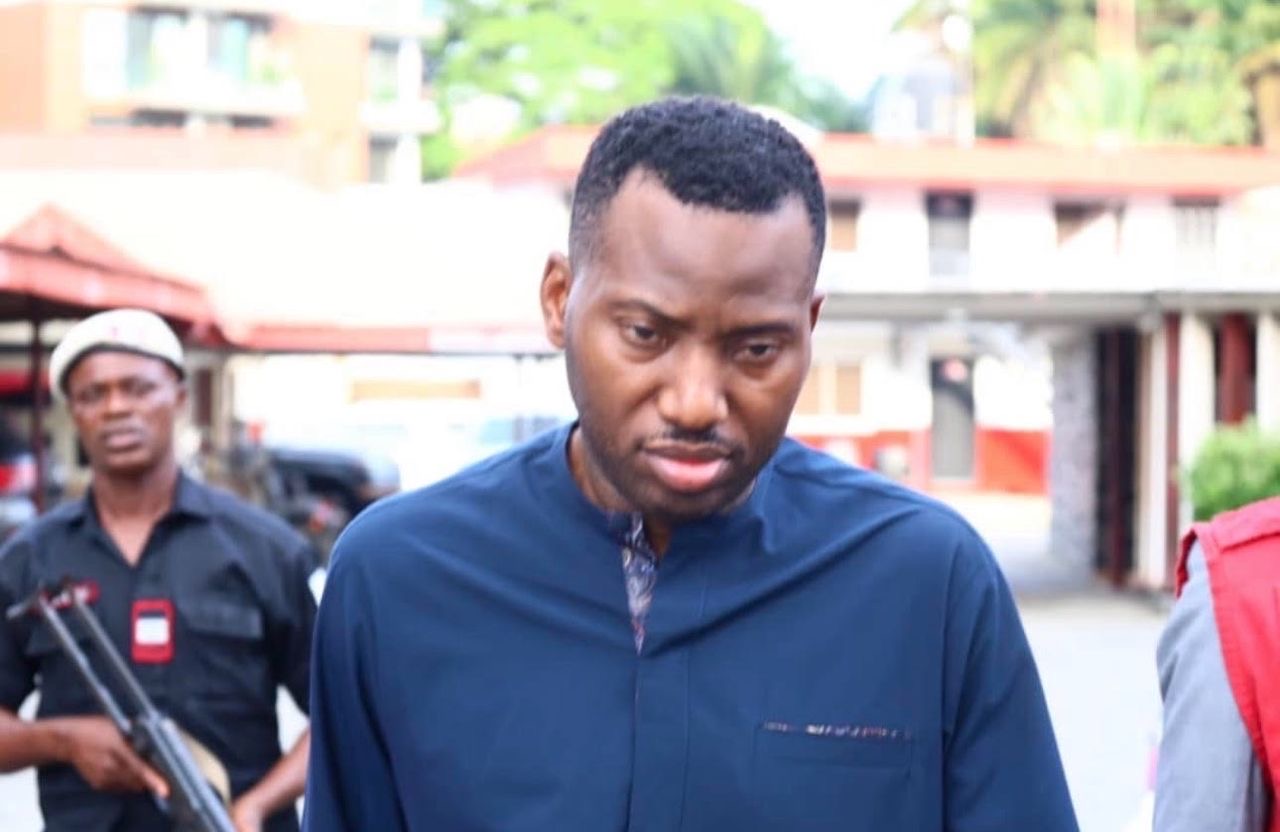
Justice Mojisola Dada of the Special Offences Court sitting in Ikeja, Lagos, on Thursday, May 7, 2026, dismissed the preliminary objections and bail application filed by the boss of Intermediate Investment Holdings Limited, Ufoma Joseph Immanuel, over an alleged $1.5 million fraud.
The Economic and Financial Crimes Commission, EFCC, on Wednesday, March 11, 2026, arraigned Immanuel, alongside his company, Intermediate Investment Holdings Ltd., on a two-count charge bordering on obtaining by false pretence and forgery to the tune of $1.5m.
Count one reads: “UFOMA JOSEPH IMMANUEL and INTERMEDIATE INVESTMENT HOLDINGS LIMITED between April 2022 and October 2023 in Lagos, within the jurisdiction of this Honourable Court, with intent to defraud, induced Adebisi Adebut of R28 Holdings Limited to deposit the total sum of S1, 500, 000.00 (One Million, five Hundred Thousand United States Dollars USD) as investment described as to wit: “Cash and or Capital Cost in Chappal Petroleum Development Company Limited; Business Development Cost in Intermediate Investment Holdings Limited: Capital and or Capital Call in Chappal Energies Mauritius Limited” on the understanding that R28 Holdings Limited will be; (a) reimbursed the investment amount (b) paid a Development Capital fee of $2 250,000.00. (Two Million, Two Hundred and Fifty Thousand Dollars) (c) 22.4% worth of shares in Intermediate Investment Holdings Limited which representation you knew to be false.”
Count two reads: “UFOMA JOSEPH IMMANUEL, sometime between April 2022 and April 2025 in Lagos, within the jurisdiction of this Honourable Court, with intent to defraud, forged a document to wit: TERM SHEET and purporting same to have been executed by Sherrif Oluwo and Olaniran Osotuyi in order to facilitate your obtaining money by inducement from Adebisi Adebutu of R28 Holdings Limited.”
The defendant pleaded “not guilty” to the charge preferred against him.
Following the defendant’s “not guilty” plea, the prosecution counsel, Babatunde Sonoiki, asked the court to fix a date for the commencement of trial and also prayed the court to remand the defendant in the custody of the International Criminal Police Organization, INTERPOL, pending the conclusion of its investigation.
Sonoiki also narrated how the defence counsel, Oluseun Awonuga, SAN, had physically assaulted his colleague, Emenike Mgbemele, at the sitting on March 2, 2026.
According to him, “My lord, the learned silk, physically assaulted my colleague on the staircase on his way to serve the defendant the charge as directed by the court.
“There is a video to that effect and we intend to tender it before the court.”
Though Awonuga did not respond to the allegation made against him by the prosecution counsel, he informed the court of a preliminary objection and a written address dated January 5, 2026, while urging the court to discountenance the counter-affidavit of the prosecution.
The prosecution, in a 21-paragraph counter-affidavit dated February 9, 2026, had urged the court to dismiss the notice of preliminary objections.
According to Awonuga, the Federal High Court, in a ruling, had ordered the EFCC not to arrest the defendant.
“EFCC has flouted the order by arresting the defendant and I hereby urge your lordship to discountenance their counter- affidavit,” he said.
Responding, the prosecution counsel, Babatunde Sonoiki, said that the ruling was part of the motion that had earlier been withdrawn by the defence and should not be before the court.
“ There is nowhere in the ruling that says the defendants cannot be arraigned in a court of competent jurisdiction.
“My lord, the ruling was delivered in a civil case; and according to the Supreme Court, a criminal case and civil case can go on at the same time.
“We urge the court to dismiss the application and order accelerated hearing in this case,” Sonoiki had said.
After listening to both parties, Justice Dada had, consequently, adjourned the case till May 7, 2026 ( today) for ruling.
Ruling on the application , Justice Dada held that: “The preliminary objection is baseless and the entire application is lacking in merit; and it is hereby dismissed.”
Also, Justice Dada, in her ruling on the bail application of the defendant, held that “On the basis of considering the antecedent of the defendant for not honouring the invitation of the applicant after he was granted administrative bail, I agree with the complainant that he is a flight risk; therefore, bail is refused.”
Justice Dada adjourned the case till June 24, 26, 29 and 30, 2026 for the commencement of trial.
By Solanke Ayomideji Taiwo
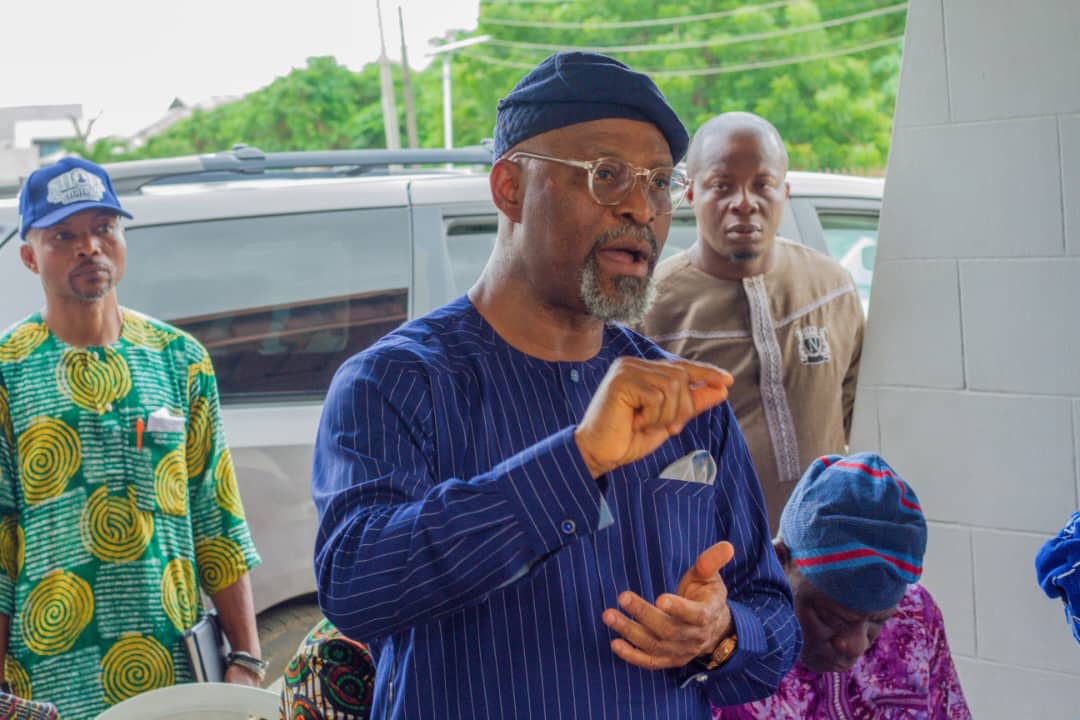
ABEOKUTA — A frontline aspirant for the Ogun Central Senatorial seat under the platform of the All Progressives Congress (APC), Emmanuel Adebola Sofela, popularly known as Shoffi, has dismissed widespread speculations that he has withdrawn from the race in favour of another aspirant .
Sofela described the reports making rounds in some political circles as “false, misleading and the handiwork of political detractors,” insisting that he remains fully committed to his ambition of representing Ogun Central Senatorial District at the National Assembly.
In a statement made available to journalists on Friday, the APC stalwart urged his supporters, political associates and loyalists across the six local government areas that make up Ogun Central to disregard the rumours and remain resolute in their support for his aspiration.
According to him, there has never been any agreement or arrangement for him to step down for any aspirant to emerge as a consensus candidate of the party.
“I want to categorically state that I have not stepped down for anyone in the Ogun Central Senatorial race. The rumours flying around are entirely false and should be ignored by all my supporters and members of the public,” he said.
Sofela expressed confidence in his chances of securing the APC ticket, stressing that his popularity, political experience and grassroots connection across the district place him in a strong position ahead of the party primaries.
The senatorial hopeful reiterated his determination to provide quality representation for the people of Abeokuta South, Abeokuta North, Odeda, Obafemi-Owode, Ifo and Ewekoro local government areas if elected into the Senate in 2027.
He noted that his aspiration is driven by a genuine desire to contribute meaningfully to the development of Ogun Central through effective legislation, empowerment programmes and people-oriented policies.
“My ambition is rooted in service to the people. I remain committed to the vision of giving Ogun Central a strong voice in the Senate and facilitating developmental initiatives that will positively impact our people,” Sofela added.
The APC chieftain further appealed to party members to remain united and avoid distractions capable of causing division within the party structure ahead of future political activities.
Political observers in the state believe the race for Ogun Central Senatorial seat is gradually gathering momentum as aspirants continue consultations and grassroots mobilization across the district ahead of the 2027 election cycle.
By Solanke Ayomideji Taiwo
As political activities gradually gather momentum ahead of the next electoral cycle in Ogun State, conversations across the six local government areas that make up the Ogun Central Senatorial District are increasingly revolving around one name — Emmanuel Adebola Sofela.
From Abeokuta South to Abeokuta North, Odeda, Obafemi-Owode, Ifo and Ewekoro, party leaders, stakeholders and grassroots mobilisers within the All Progressives Congress have continued to speak glowingly about the philanthropist and political figure whose growing popularity is being linked to years of humanitarian service, youth empowerment and unwavering accessibility to ordinary citizens.
During a recent round of consultations and visits to leaders of the APC across the district, testimonies about Sofela’s contributions to humanity dominated discussions, as party faithful described him as “a bridge builder,” “a dependable grassroots politician,” and “the transformation agent Ogun Central desperately needs.”
According to several party elders and community leaders, Sofela’s antecedents in empowering youths and supporting less privileged individuals have set him apart from others jostling for the senatorial ticket under the APC platform.
Many of the leaders recalled numerous instances where students from financially disadvantaged homes benefited from educational grants and scholarship support facilitated by Sofela, while unemployed youths across communities were assisted with vocational opportunities and startup support to improve their livelihoods.
A party leader in Abeokuta North, who spoke during the consultation meeting, noted that Sofela’s style of politics differs significantly from what many residents have become accustomed to over the years.
“Politics should be about service, accessibility and genuine concern for the people. Emmanuel Adebola Sofela has consistently demonstrated these qualities long before seeking public office. He is always reachable and willing to help,” the leader stated.
Similar sentiments echoed across Odeda and Obafemi-Owode, where stakeholders praised his commitment to grassroots development and his consistent engagement with party members at all levels.
In Ifo and Ewekoro, community representatives described him as a leader with intellectual depth, administrative capacity and a clear understanding of the developmental needs of Ogun Central.
One of the speakers at the gathering remarked that Sofela possesses “an intellectual confidence beyond comprehension,” adding that his ability to engage on issues of governance, empowerment and policy distinguishes him from many contemporary politicians.
Observers within the APC believe that Sofela’s growing acceptance among party leaders and ordinary residents is largely connected to his long-standing relationship with the grassroots and his reputation for extending financial support to widows, artisans, market women and struggling families within and outside Ogun State.
Political analysts also argue that his emergence could reshape representation within Ogun Central, especially at a time when many constituents are demanding more responsive and people-oriented leadership.
For many party loyalists, the recurring theme during the consultations was clear: the desire for a representative who understands the pains of the people and possesses both the compassion and competence to drive meaningful change.
As internal consultations continue within the APC ahead of future political contests, supporters of Emmanuel Adebola Sofela insist that his track record of empowerment, accessibility and community engagement positions him as a strong contender capable of redefining representation in Ogun Central Senatorial District.
He is working hard to ensure the growing endorsements from party leaders across the district eventually translate into political victory in emerging as the APC candidate for ogun central senatorial district .one things that is increasingly evident — Emmanuel Adebola Sofela has become a prominent voice in the evolving political conversation shaping the future of Ogun Central.


- Rhino Resources Joins African Energy Week (AEW) as Gold Sponsor as Southern African Exploration Expands May 8, 2026
- Levene Energy Joins African Energy Week (AEW) as Gold Sponsor Amid Regional Expansion and Market Diversification May 8, 2026
- Gas Supply in the Age of Artificial Intelligence (AI): Can Africa’s Natural Gas Power the Continent’s Digital Future? May 8, 2026
- Merck Foundation and African First Ladies are Making History in Africa by Training the First Oncologists and Cancer Care teams in their Countries May 8, 2026
- Seychelles participates in United Nations Educational, Scientific and Cultural Organization (UNESCO) forum marking the International Day for Small Island Developing States May 8, 2026
- African Petroleum Producers Organization (APPO) Secretary General Ghezali to Address African Energy Week (AEW) 2026 as African Energy Bank Nears Launch May 8, 2026
- Petralon Energy Scales Dawes Island Output, Joins African Energy Week (AEW) 2026 as Diamond Sponsor May 8, 2026
- Giving Thanks for a Year of Petrine Service: Message to His Holiness Pope Leo XIV May 8, 2026
- Targeting 250,000 bpd by 2030, First Exploration & Petroleum Development Company (First E&P) Joins African Energy Week (AEW) 2026 as Diamond Sponsor May 8, 2026
- From Artificial Intelligence (AI) to project profiles: ESI Africa has the stories to balance opinions May 8, 2026
- Rhino Resources Joins African Energy Week (AEW) as Gold Sponsor as Southern African Exploration Expands May 8, 2026
- Levene Energy Joins African Energy Week (AEW) as Gold Sponsor Amid Regional Expansion and Market Diversification May 8, 2026
- Gas Supply in the Age of Artificial Intelligence (AI): Can Africa’s Natural Gas Power the Continent’s Digital Future? May 8, 2026
- Merck Foundation and African First Ladies are Making History in Africa by Training the First Oncologists and Cancer Care teams in their Countries May 8, 2026
- Seychelles participates in United Nations Educational, Scientific and Cultural Organization (UNESCO) forum marking the International Day for Small Island Developing States May 8, 2026
- African Petroleum Producers Organization (APPO) Secretary General Ghezali to Address African Energy Week (AEW) 2026 as African Energy Bank Nears Launch May 8, 2026
- Petralon Energy Scales Dawes Island Output, Joins African Energy Week (AEW) 2026 as Diamond Sponsor May 8, 2026
-

 news5 months ago
WHO REALLY OWNS MONIEPOINT? The $290 Million Deal That Sold Nigeria’s Top Fintech to Foreign Interests
-

 society5 days ago
SOCIAL MEDIA IS NOT A BATTLEFIELD COMMAND – WHY THE NIGERIAN ARMY’S ACTION AGAINST JUSTICE CRACK IS A NATIONAL SECURITY IMPERATIVE
-

 celebrity radar - gossips3 months ago
Dr. Chris Okafor Returns with Power and Fire of the Spirit -Mounts Grace Nation Altar with Fresh Anointing and Restoration Grace on February 1, 2026
-

 celebrity radar - gossips5 months ago
Prophet Kingsley Aitafo Releases 2026 Prophecy: ‘Nigeria Will Rise, but the World Must Prepare for Turbulence’
You must be logged in to post a comment Login
You must log in to post a comment.