
society
CBA Foundation Efforts to decriminalize Widowhood in Nigeria.


CBA Foundation and Efforts to decriminalize Widowhood in Nigeria.
SaharaWeeklyNG Reports Concerning CBA Foundation That It’s a crime to be a widow! Yes, that’s exactly what you read. Please stop reading it, again and again, to see whether it’s meant figuratively or literally. It’s exactly meant the way you read it at first.

CBA Foundation
Does our society say being a widow is a crime? No. But does society act as though it’s a crime – and a big one at that? Absolutely. Capital YES! So it doesn’t matter what society says or doesn’t say or what it has tucked away somewhere in our statute books. What matters most is what society does. Society’s action, demonstrated in the way widows are treated and which speaks louder than its words, calls widowhood a crime.
Are widows treated by our society any better than criminals or those suspected to be/have engaged in any form of criminal activity, including ex-convicts? Criminals (or those alleged to be or have been) are avoided like a plague. They’re ostracised. They’re shamed. They’re stigmatized. They’re condemned. They’re even accused of additional crimes they may not have committed or been convicted of. No one associates with them as that would be considered a taint and stain on the associate. Just look at the aforementioned ways criminals (even alleged and ex-criminals) are treated and confirm if widows don’t go through worse in society’s hands, especially in the hands of the kith and kin of their late husbands.
Losing one’s husband is an agonizing and devastating experience that could traumatize a woman for life. So it’s hard to understand how society can even dare to want to add to the agony and pain of suffering women who have lost their husbands instead of making effort to comfort them and soothe their pain? CBA Foundation Society pretends as though it doesn’t realize that women who are made to go through hell after the death of their husbands are being made to relive that horrifying and nightmarish moment when they saw their husbands die or when news of their husbands’ death reached them. How much more unfortunate can any human being’s life be made to be? Society probably makes peace with itself while treating widows as common criminals by rationalizing widowhood as a crime. CBA FOUNDATION
And were this to be the case, then the work of NGOs like Chinwe Bode-Akinwande (CBA) Foundation that is trying to restore dignity to widows (and their children) may have to be reframed in the context of efforts to decriminalize widowhood in Nigeria. Founded in 2015, the CBA Foundation has been working tirelessly to promote “the protection of [underprivileged] widows and their vulnerable children in Nigeria, to promote immediate and lasting hope, confidence and courage in their lives.” The Foundation pursues its mission under its 5-point agenda of Women Empowerment/Capacity Building, through which it has reached out to over 8,600 widows; Health Intervention, wherein it has overseen the administration of treatment and medicines to over 4,500 underprivileged widows; Nutrition, under which it has distributed food items to over 10,600 underprivileged widows; Quality Basic Education, through which 158 children have been reinstated in school; and Self-Employment Scheme, wherein it has financially empowered 220 widows to start their own businesses. CBA FOUNDATION
These efforts as well as those of other like-minded NGOs working to enhance the welfare of suffering widows are highly commendable. Viewed against the backdrop of the theme of this year’s International Widow’s Day, commemorated across the world last Wednesday 23rd June 2021: “Invisible Women, Invisible Problem”, the work of these NGOs makes poor widows, who society would rather not want to be seen or heard, visible so the problems they face daily can be visible as well to all. After all, the International Widow’s Day was introduced by the United Nations to raise global awareness of the issues faced by widows and highlight as well as combat “poverty and injustice faced by millions of widows and their dependents in many countries.” CBA FOUNDATION
However, as laudable as the efforts are, one cannot help but notice that the combined work and efforts of all the NGOs are only scratching the surface. Nigeria has so many widows, estimated to be around 3.5 million by the 2015 World Widows Report of the Loomba Foundation. That was when the rate of widespread killing and disappearance in Nigeria was not as alarming as today. Many more widows would have joined the number since 2015 and much more will join with time given our declining life expectancy (and the disparity between men’s rate and women’s). Undoubtedly, a good number of these widows would have been able to take care of themselves and their children if they were allowed to inherit and build upon their late husbands’ assets. Sadly, 60 percent of women in Nigeria are kicked out of their homes after the passing of their husbands. This is the handiwork of traditionalists and the kith and kin of the widows’ late husbands who would rather subject them to all manner of indignities and dispossess them of everything, leaving them and their children uncared for. Thus, the burden borne by CBA Foundation and similar NGOs continues to grow, stretching their resources thin and limiting their ability to be effective or make any dent in the problem.
So what’s required is a more fundamental and holistic approach predicated on society realizing that it is in its enlightened self-interest to confront and combat the entrenched ways and traditions from the past that debase women, especially widows, and criminalize widowhood. It is this kind of intervention at the society level to address the overarching issue of entrenched traditional practices that criminalize widows, dispossess them of their husband’s inheritance, and pauperizes them that would make any significant difference. Sadly, this is the one approach we have not acknowledged and moved to adopt in Nigeria.
It’s amazing how many people in Nigeria carry on with their lives and live completely unconcerned about the plight of widows and the crying need to do something to change their lot. We do not realize how close we all are to either becoming a widow or having a loved one become one. We are living in Nigeria where life is so cheap and unpredictable that it can be snuffed out just like that. One can be picked up in the short distance between one’s neighborhood shop and one’s residence, accused of armed robbery and silenced by the bullets of Nigeria’s citizen-killer security agencies. Even in the comfort of one’s bedroom accidental discharges from the weapons of this same security personnel can send one to an untimely death. When security agencies are not in the picture, one still has to contend with killer herdsmen, kidnappers, ritual killers, bandits, and unknown gunmen who do an equally effective job of returning one to one’s creator before the appointed time. What about our roads? They demonstrate an unmatchable talent for terminating destinies. And our waterways? They seem only a little less effective in cutting destinies short because they don’t witness as much passenger traffic as our roads. Our skies rank the same as our waterways in destiny truncation for the same reason of relatively low passenger traffic.
How can people in positions of authority and influence not care enough to confront society on the plight of widows when their own family, family members, relatives, friends, etc. could be affected tomorrow? How can the Minister of Women’s Affairs and officials of the ministry be sitting comfortably in their air-conditioned Abuja office when the plight of widows is no better today than it was when they assumed their positions? How can they be wasting a golden opportunity to use their positions to do all that they can and should to completely change the story of widowhood in Nigeria forever? Today’s widow is another person’s daughter, sister, mother, aunt, niece, cousin, etc. Tomorrow’s widow will be your daughter, sister, mother, aunt, niece, cousin, etc. How can you not be bothered about doing something today to decriminalize widowhood when it could affect you or someone you care about tomorrow? CBA FOUNDATION
Widows who have been fortunate to pick up the pieces after the devastation of losing their husbands and found a way to give themselves a second chance at happiness should realize that they are but a tiny fraction compared to the large number who have remained sentenced to misery, deprivation, poverty and public opprobrium since their husbands’ death. Such fortunate widows should lead one front in the war against the issues that confront widows and build strong advocacy and support for their fellow widows. They should do this with the conviction that until all widows are free (from the shackles of anachronistic traditions that sentence them to poverty, deprivation, and injustice), they’re themselves far from free. They should keep in mind that unless the wicked and unjust system that criminalizes widowhood is overthrown, their daughters, mother, sisters, female relatives, female friends, etc. could find themselves in demeaning and dehumanizing circumstances as widows. CBA FOUNDATION
Mr. Husband, what are you doing to protect your wife (and children) in case the unexpected happens? Don’t be fooled by the love that your siblings and kinsmen have for you and your family. It’s conditional love predicated on your presence (and presents). It will not be there in your permanent absence. What about you, adult children, who can and should do something? What are you doing to ensure that your mother, that auntie, that woman relative of yours don’t become a dehumanized widow if her husband dies unexpectedly? CBA FOUNDATION
And you traditionalists who hold onto anachronistic cultural practices that debase women, especially those who have lost their husbands, and treat them as the scum of the earth, can you point to five ways your diabolical wickedness towards widows have made your life or your family’s any better? Can you identify the modern amenities that your backward ways have attracted to your community? You claim that they’re traditions instituted by your forefathers which you must uphold perpetually, yet you have conveniently abandoned other traditions and embraced modernity where it suits you. Your forefathers never asked you to speak the white man’s language, wear his clothes, use his goods, read his books, send your children to his school, or trade with modern money, but you’ve adopted all of these and abandoned the alternative traditional practices using your common sense. What is stopping you from applying this same common sense to end the diabolical traditional practices that you use to shame and debase widows? Even Satan must be stunned by your grand hypocrisy. CBA foundation
This year’s International Widow’s Day has come and gone with little or nothing to celebrate as the lot of Nigerian widows hasn’t improved much over the last year. Isn’t it high time we changed both strategy and tactics and get out of the insanity of expecting a different result while still doing the same old thing year after year? Chinwe Bode-Akinwande, the founder of CBA Foundation, answers in the affirmative. Her Foundation once ran a Twitter campaign with the hashtag #careisaction, which asserted that “…without action, you truly don’t care, regardless of what you claim.” Next year’s commemoration is already beckoning, and in line with her call for action, the sixty-four thousand dollar question remains: is there any reason to be optimistic about seeing significant improvements in the lives of our widows if as a society we are not yet willing and determined to take action to confront and defeat the entrenched forces and issues that make widowhood a crime in this clime? CBA Foundation
By CBA Foundation




society
Liberian Leaders, Citizens Bear Witness as Apostle Suleman Hosts Two-Day Power-Packed Crusade
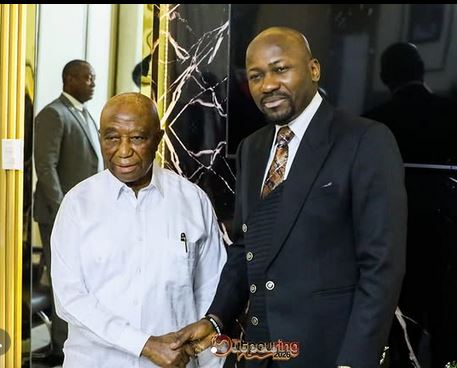
Liberian Leaders, Citizens Bear Witness as Apostle Suleman Hosts Two-Day Power-Packed Crusade
It was testimonies galore on Tuesday, March 31, the first day of the famous servant of God and founder of the Omega Fire Ministries (OFM) worldwide, Apostle Johnson Suleman’s power-packed two-day crusade. The event documented impactful moments with the Gospel and miracles, emphasizing the power of faith and the tangible confirmation of God’s Word through signs and wonders. It was equally an atmosphere of miraculous healing, restoration of lives, and the strengthening of faith.
At the crusade, which was held at the SKD Sports Stadium in Paynesville City, and themed, “Liberia Outpouring Crusade” witnessed testimonies of impact and miracles with participants experiencing instant healing of various kinds of challenges.
Apostle Suleman’s first port of call was Paynesville, the office of Liberian government’s president, Mr. Joseph Nyuma Boakai, who received him in an audience with his junior ministers. Apostle Suleman, who also met with the vice-president, Mr. Jeremiah Kpan Koung, was welcomed by the Liberian leader’s office as part of the president’s ongoing engagements with religious leaders aimed at fostering spiritual support for national development.
The president expressed profound appreciation to Apostle Suleman for the visit and continued prayers and intercessions by men and women of God on behalf of Liberia, emphasizing his firm belief that sustained spiritual guidance and prayer remain vital to the transformation and progress of the nation.
During the visit, Apostle Suleman offered prayers for President Boakai, his cabinet and the Liberian nation, invoking divine alignment, wisdom, and insight in Liberia’s path toward growth and stability. He prayed that the Almighty God would position Liberia for relevance and fulfillment of its national destiny.
Apostle Johnson Suleman, an evangelist who knows no bounds of where preaching the gospel comes to a stop, visited Liberia prepared with the message, compelling power of the Gospel and the work of the Holy Spirit, and bringing people to a point of decision where they surrendered their lives to Christ.
Aside from being prophetic and timely, OFM sources disclosed that the servant of God’s visit underscores the importance of faith-based partnerships in supporting governance and national renewal efforts.
society
Middle Belt Forum Hails Tinubu’s Jos Visit, Calls for United Civil-Military Effort to Restore Lasting Peace

*Middle Belt Forum Hails Tinubu’s Jos Visit, Calls for United Civil-Military Effort to Restore Lasting Peace
The Middle Belt Peace Forum (MBPF) has commended President Bola Ahmed Tinubu for his profound demonstration of empathy and responsive leadership following his decision to postpone an official engagement in Iperu in order to visit victims of the recent attacks in Jos.
In a statement signed by its National Coordinator, Pastor Bulus Garba, in Jos on Friday, the Forum said the President’s decision to personally identify with grieving communities sends a powerful message of solidarity and reinforces public confidence in the commitment of the Federal Government to the protection of lives and property.
“The Middle Belt Peace Forum warmly commends President Bola Ahmed Tinubu for prioritising compassion over ceremony. At a time of deep sorrow for the people of Plateau State, his decision to visit Jos stands as a mark of true leadership—one that listens, responds, and stands with the people in their moment of pain,” the statement read.
The Forum described the perpetrators of the recent attacks as “cowards who prey on innocent and defenceless citizens,” stressing that such acts of violence are not only inhumane but also a direct assault on the unity and peace of the nation.
“We condemn in the strongest terms the actions of these cowardly attackers whose only aim is to instil fear and destabilise peaceful communities. Their actions must be met with firm and decisive resistance from all arms of the state,” Pastor Garba said.
The MBPF further used the opportunity to salute the courage, gallantry, and sacrifices of the Armed Forces of Nigeria under the leadership of the Chief of Defence Staff, General Olufemi Oluyede, noting that their continued efforts remain central to restoring stability across troubled parts of the country.
According to the Forum, the Armed Forces have demonstrated resilience and professionalism in the face of complex security challenges, often operating under difficult conditions to safeguard communities and defend Nigeria’s territorial integrity.
“We salute the Armed Forces of Nigeria for their unwavering commitment and sacrifices. Their gallantry in confronting criminal elements and reclaiming territories is a testament to their dedication to national service. We recognise that the path to peace is demanding, and we honour those who stand daily in defence of our nation,” the statement added.
The Forum pledged its full support to ongoing military operations and called for strengthened collaboration between security agencies and local communities as a critical factor in achieving lasting peace.
It also urged citizens across the Middle Belt to cooperate with security forces by providing timely information and fostering unity within their communities.
The MBPF, however, expressed concern over the need for greater synergy among security agencies, particularly the role of the Nigeria Police in consolidating gains made by the military.
“We call on the Nigeria Police Force to rise fully to its constitutional responsibility by effectively supporting the Armed Forces in stabilising and securing areas that have been cleared of criminal elements. Holding and policing such territories is essential to preventing a resurgence of violence,” Pastor Garba stated.
The Forum emphasised that sustainable peace requires a coordinated approach in which the military clears and secures areas, while the police maintain law and order to enable displaced communities to return and rebuild their lives.
The MBPF concluded by reiterating its commitment to peacebuilding efforts across the Middle Belt and expressed optimism that with sustained leadership, coordinated security efforts, and active citizen participation, lasting peace can be achieved.
“Together, through unity, vigilance, and collective resolve, we can overcome these challenges and build a safer and more peaceful Middle Belt,” the statement added.
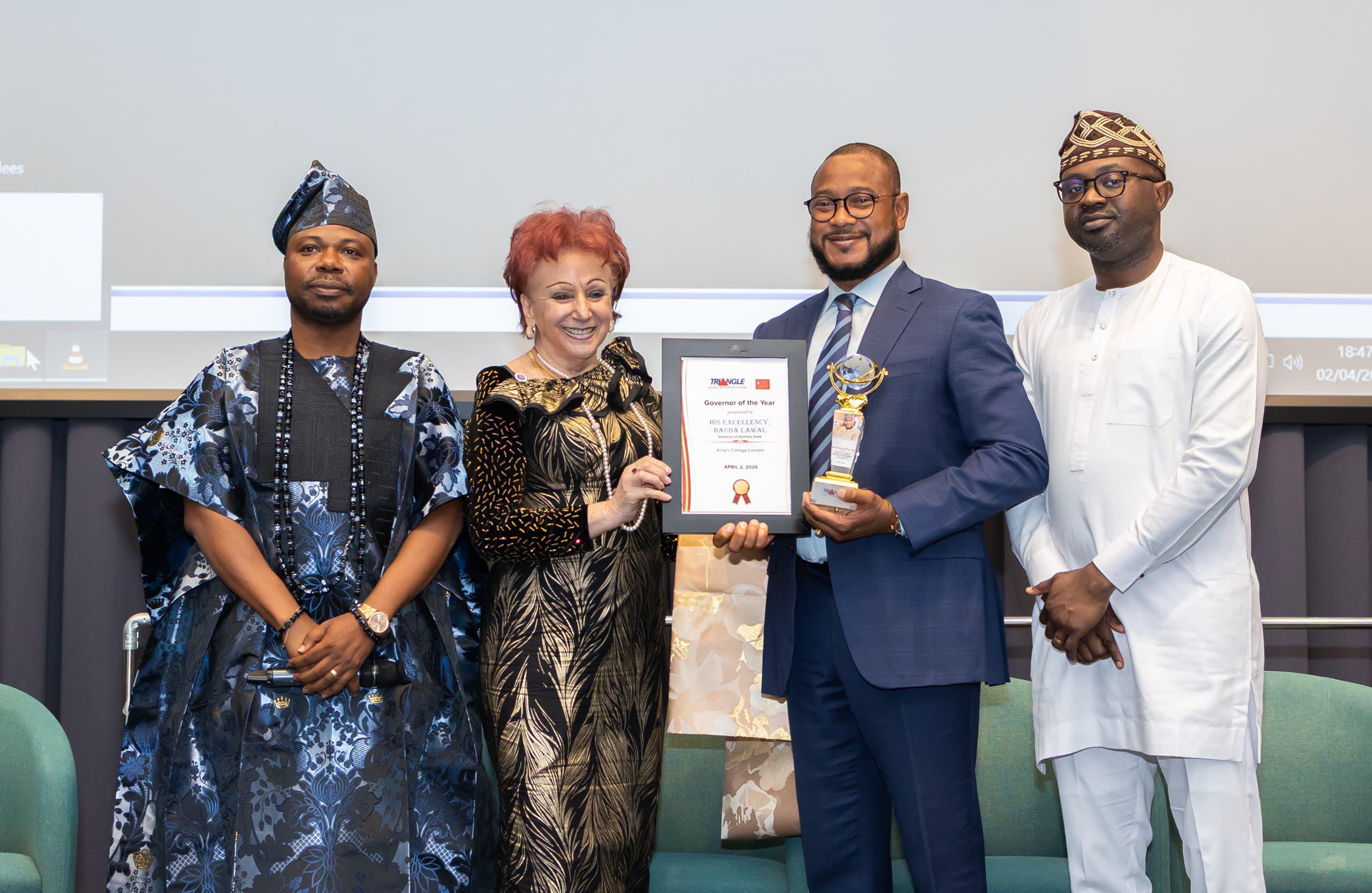
Governor Dauda Lawal Wins Face of Africa Governor of the Year Award in London
Governor Dauda Lawal has been honored with the Outstanding Governor of the Year award by Triangle Media International Magazine.
The award was presented during the magazine’s 10th annual lecture and award ceremony, held on Thursday at the Grand Hall of King’s College, London, United Kingdom.
According to a statement by the governor’s spokesperson, Sulaiman Bala Idris, the awards recognize public and private sector leaders whose leadership positively impacts governance and service delivery.
He added that the lecture, themed “Harnessing the Roles of Nigerians in Diaspora for National Development,” brought together stakeholders from both the public and private sectors.
The statement read in part: “Yesterday, in London, Governor Dauda Lawal received the 2026 Face of Africa Leadership Award for Outstanding Governor of the Year.
“The 2026 edition coincides with the 10th anniversary of Triangle International Magazine, which has over the years celebrated notable Africans across diverse fields.
“The award recognizes the Zamfara State Government under Governor Lawal’s leadership for achieving remarkable milestones in service delivery since his inauguration on 29 May 2023.
“The board of Triangle International noted that, despite inheriting an empty treasury, Governor Dauda Lawal has remained true to the Rescue Agenda’s campaign promise: to rescue and rebuild Zamfara.
“The award also reflects the state government’s innovative approach to indirectly curbing insecurity through educational advancement, demonstrated by the declaration of a state of emergency in the education sector.
“This includes the state government’s swift payment of the outstanding N3.4 billion for WAEC and NECO examinations, as well as the reconstruction and rehabilitation of schools across all 14 Local Government Areas of Zamfara State.
“The international magazine finds these initiatives to be strategic interventions toward long-term efforts to make Zamfara State better.”
The colourful event was attended by the Minister of Interior, Olubunmi Tunji-Ojo, and Sahara Group’s Group Managing Director, Kola Adesina, among others.


-

 society7 months ago
Religion: Africa’s Oldest Weapon of Enslavement and the Forgotten Truth
-

 news4 months ago
WHO REALLY OWNS MONIEPOINT? The $290 Million Deal That Sold Nigeria’s Top Fintech to Foreign Interests
-

 society6 months ago
“You Are Never Without Help” – Pastor Gebhardt Berndt Inspires Hope Through Empower Church (Video)
-

 celebrity radar - gossips2 months ago
Dr. Chris Okafor Returns with Power and Fire of the Spirit -Mounts Grace Nation Altar with Fresh Anointing and Restoration Grace on February 1, 2026