
society
CBA FOUNDATION TAKES INTERVENTION AMONG UNDERPRIVILEGED WIDOWS TO THE NEXT LEVEL, WITH THEIR SOCIAL ENTERPRISE INITIATIVE


CBA FOUNDATION TAKES INTERVENTION AMONG UNDERPRIVILEGED WIDOWS TO THE NEXT LEVEL, WITH THEIR SOCIAL ENTERPRISE INITIATIVE

If indications from two separate but related events that were held few months ago are anything to go by, then one of Nigeria’s most vulnerable groups may be on the verge of experiencing better times. The events, hosted in two separate states/regions and split by a 20-day interval, held at a time when self-splurging by many young Nigerians was at octane levels, and saw young men and women behind an NGO that caters to the welfare of underprivileged widows and their vulnerable children, passionately putting the widows’ needs above their wants.
The NGO, CBA Foundation, its dedicated and passionate staff, some supporters and donors came out in their numbers on two dedicated days to give widows in selected communities in Lagos and Anambra a treat. The Lagos outreach benefitted, in a unique way, widows in six communities in Ibeju-Lekki, namely: Badore, Iberekodo, Museyo, Magbon Alade, Okunola Ilado and Magbon Iga.
CBA Foundation seized the opportunity of the outreach to launch a new initiative it tagged Social Enterprise Initiative. The Initiative, which is aimed at ensuring the long-term sustainability of all efforts to protect and promote the welfare of widows as well as their children, is to cater to the financial, mental and physical health needs of beneficiaries. The Initiative is designed to provide comprehensive support, including health interventions, skill acquisition, business set-up, food and drinks, clothes and shoes.It also includes general support for all affected widows.
The Founder/CEO of CBA Foundation, Mrs Chinwe Bode-Akinwande explained the reason for the Foundation’s shift to the new Initiative: “We have been doing outreaches and it has been non-stop, but the essence of this Social Enterprise Initiative is for the widows to have something that will sustain them even for a longer period, something that will give them hope, knowing that they have a sustainable source of livelihood and activities that remind them that they need to keep going.”
Continuing, she reveals when the idea for the new initiative began: “When the lockdown came during the peak of covid 19, we realised that there was a need again to have something sustainable for these women. With the Social Enterprise Initiative, we identify the skills they need to possess, and what they are passionate about, we also empower them with the necessary training and then set them up with all they need for the business. At the end of the day, they won’t have to wait daily for the CBA Foundation to give them food or clothing.”
Mrs Bode-Akinwande noted that the Initiative had been informed by a rigorous analysis of the data in their database, gathered over the years on widows whom they have reached out to and the support they have been receiving from both individual and corporate donors. She said that they had dimensioned all the critical issues from widows with critical needs, where the Foundation needed to begin its interventions, to widows who needed to be set up in business and to several widows’ children who needed to be reinstated back in school.
She also remarked that plans were underway at the Foundation to take the skills acquisition training further, beginning with adire-making (tie and dye). She announced that the Foundation would have a line of products that would be its adire pattern, displaying its unique signature. When sold, the net proceeds would be ploughed back into the Foundation as a constant stream of income.
The idea, the Foundation’s CEO stressed, would inspire the widows who show a keen interest in adire-making as they would be involved and exposed to its value chain which is essential to optimising their execution after their training. So, the adire-making training followed with tutorials on the step-by-step processes involved in it, materials needed and how to identify them, necessary safety precautions, various tie and dye techniques, packaging and distribution and how to make a living from adire-making.
For widows with impaired vision at the event, they were able to have free consultations with an ophthalmologist, get free eye tests and free reading glasses, courtesy of a partnership between FirstBank and Vision Spring. What followed when beneficiaries had the free reading glasses fitted and could see clearly were scenes similar to ones where people had experienced supernatural miracles. The ecstatic joy was palpable.
Take 59-year-old Hassanat Oyewunmi, for example. Tears of joy rolled freely from her eyes as she remarked that her farsightedness challenge had been addressed. She confessed excitedly that she felt “better, much better now with the glasses, and I can even see everyone clearly. It is good to know that we are not forgotten.”
Olabode Sadiat, 62, could not contain her joy as she wore her glasses and pointed in the distance, while indicating that she could see everything in her line of sight. She had suffered from a blurry vision that made reading her Bible difficult. “Nothing is more painful than not being able to read your Bible,” she had noted following the medical intervention.
The widows also received food, drinks, clothing and other materials that were distributed during the outreach. They were also given a final charge by Mrs Bode-Akinwande in which she reminded them that they were not alone and could always count on the support of the CBA Foundation.
In all, 165 widows across the six communities of Ibeju-Lekki benefitted when the Lagos outreach was held. The Anambra outreach, on the other hand, benefitted 75 widows from four communities in the Nnewi area of the state.
Food items and financial empowerment constituted the bulk of the support CBA Foundation gave the Anambra widows to celebrate the festive season. The Anambra initiative has enjoyed tremendous support from a donor who has been consistent over the past four years. The Founder of the Foundation expressed gratitude to the donor while remarking that the outreach is a source of enablement for the underprivileged widows and their children.
She continues: “We give hope to the hopeless. We are driven to support underprivileged widows to have a positive outlook on life despite the problems they experience by losing their loved one, mostly the breadwinner of the family.”
Both Lagos and Anambra outreaches were in some sense CBA Foundation’s way of giving underprivileged widows a “December to Remember” treat annually. Of course, that treat would at best be modest compared to how people who were not in any known vulnerable categories took care of themselves and themselves alone. Even with the best of intentions, CBA Foundation could only work with donations received from donors and supporters at a time of the year when most (young) people were dedicating more resources to the self-splurging that December has come to represent.
While it may not be in one’s place to dictate to others how they should spend the money they have worked so hard to make, one cannot help but try to point them to ways they could better dispense their hard-earned cash that would be in their enlightened self-interest. Or what sense is there in spending on oneself so lavishly and ostentatiously as though spending was going to go out of fashion at any moment only to provoke the have-nots to make one the target of their misdirected anger in a society that is largely dysfunctional?
A similar question should be addressed to the government and public officials: What sense is there in expending huge public resources on projects that have no direct bearing on the welfare of vulnerable groups when it only widens the gap between the haves (including public officials) and have-nots and exacerbates the conditions that heighten security concerns among the haves? At what point will the government, public officials and the privileged class start acting in their enlightened self-interest by committing genuine efforts to narrow the gap between those who have and those who can only wish?
It is high time public officials and the privileged began building strong coalitions and partnerships with groups and organisations that have been working to protect and support as well as advocate for the vulnerable for years now. They must begin to key into and support the organisations’ laudable initiatives that show great potential in helping to narrow the frightening gap.
CBA Foundation’s Social Enterprise Initiative represents one of such laudable initiatives. It is a well-thought-out initiative capable of transforming the existing arrangement for care and support of vulnerable groups such as underprivileged widows and their children and taking their welfare to the next level. The Government, individuals as well as corporate organisations must join hands with the Foundation if the Initiative is to have any chance of success.
Through its avowed commitment to “touching lives, giving hope…” not in mere words and empty promises but genuine and visible action on the ground (see ample examples captured on its website: www.cbafoundation.org), CBA Foundation has already demonstrated its readiness to do more with additional support. It has shown that it is living true to its #CareIsAction DNA and can thus be trusted with more support. The Social Enterprise Initiative, therefore, will be delighted to have interested partners (individuals and corporate bodies) to send an email to: [email protected] to partner with the Foundation in the drive to take the welfare of underprivileged widows to the next level where its long-term sustainability is guaranteed.




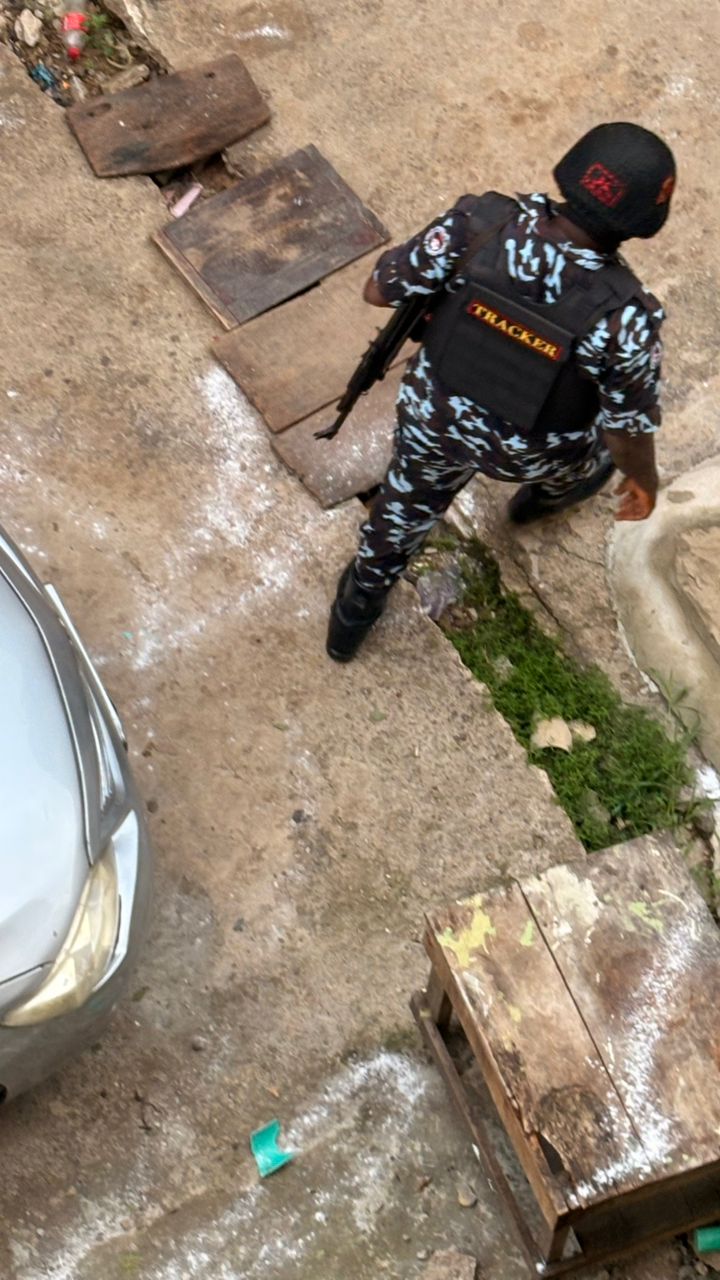
Police Officers Detained as Family Property Dispute Sparks Demolition Controversy in Lagos
By Ifeoma Ikem
A property dispute within the Omotayo-Ojo family has taken a dramatic turn following a controversial demolition exercise at a residential building in Ikosi-Ketu, Lagos State, which reportedly left tenants displaced and led to the detention of some police officers allegedly involved in the operation.

The property, located at 23B Loveall Street, Ikosi-Ketu, has been the subject of a prolonged ownership tussle since the death of its owner, Chief Oludola Omotayo Ojo, the Babaalaje of Imesi-Ile, Osun State, in 2019.
Residents said tension erupted when a group of individuals, accompanied by security operatives, stormed the premises and commenced demolition activities.
According to eyewitnesses, portions of the building were pulled down while tenants rushed to salvage their belongings from affected apartments.
The residents alleged that windows, doors and roofing sheets were damaged during the exercise, exposing parts of the building to the elements and causing significant losses to occupants.
At the centre of the dispute is Mrs Mojisola Omotayo Ojo Alolagbe, who claimed that the property was allocated to her by her late father during his lifetime as a source of financial support.
She alleged that some family members had persistently challenged her ownership claim despite ongoing legal proceedings relating to the administration of the deceased’s estate.
Alolagbe further claimed that the latest incident was part of a series of attempts to wrest control of the property, citing previous cases of alleged vandalism and partial demolition in November 2025, January 2026 and February 2026.
The situation escalated further when reports emerged that police officers allegedly involved in the demolition were later apprehended and conveyed in a Black Maria vehicle over questions surrounding the legality of their participation in the operation.
Sources familiar with the matter said those behind the demolition had initially claimed to be acting on approval from the Lagos State Ministry of Lands. However, the authenticity and extent of such approval could not be independently verified as of the time of filing this report.
The development has generated concern among residents and community members, who questioned the involvement of security personnel in what they described as a civil matter.
Some tenants, who said they had recently renewed their tenancy agreements, lamented the destruction of their property and appealed to the authorities for protection and possible compensation.

They also called for a thorough investigation into the circumstances surrounding the demolition, insisting that the rights of all parties involved should be protected.
Stakeholders have urged the Lagos State Government, security agencies and the judiciary to intervene and ensure that the dispute is resolved through lawful means to prevent further escalation.
The controversy has continued to draw public attention, raising concerns over property rights, estate administration and the role of law enforcement agencies in civil disputes.

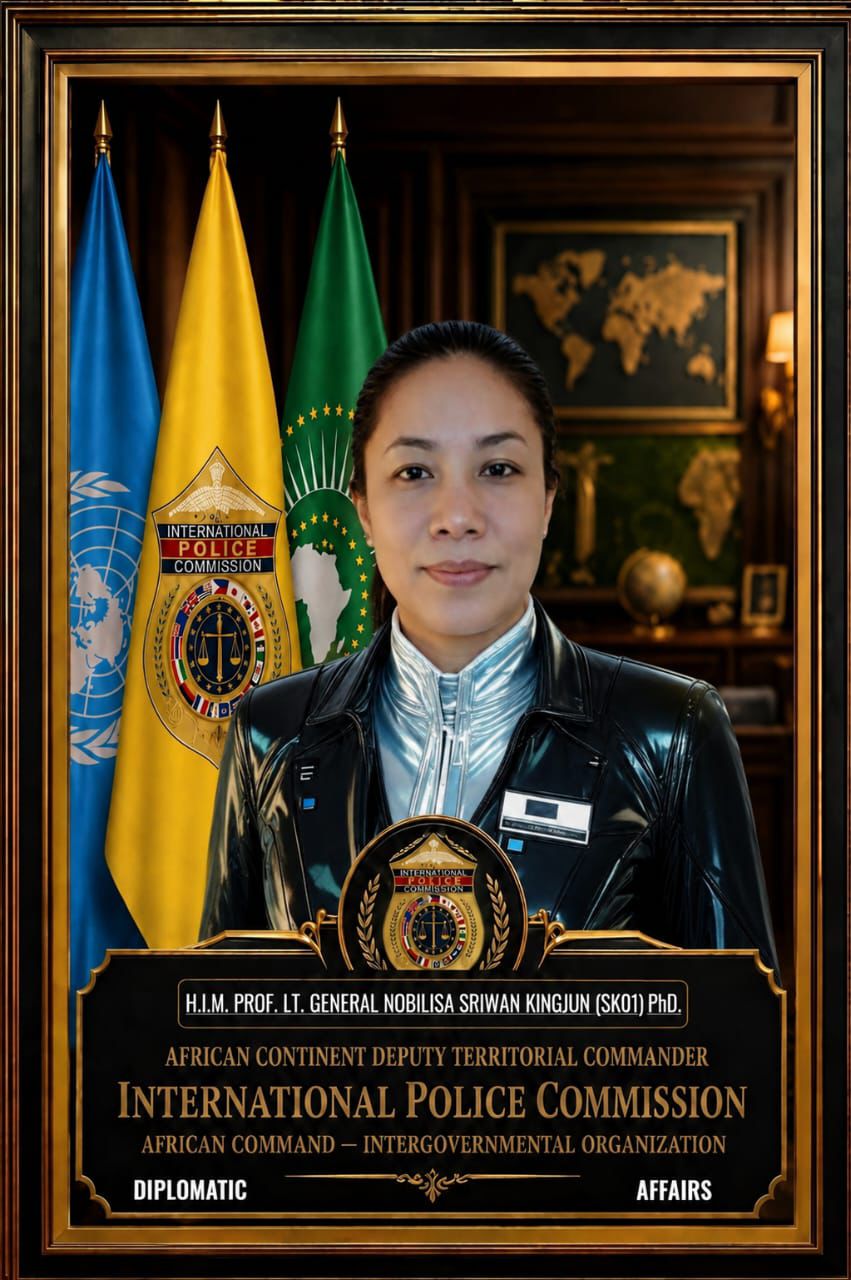
UKA Gears Up for Final ATC Exchangeability Test Run as June Preparations Begin.
May 30, 2026 – As the month of June gathers momentum, the *United Kingdom of Atlantis, UKA*, a sovereign nation has unveiled a series of vital guidelines and preparatory packages to ensure citizens and stakeholders run the *ATC Exchangeability* process effectively.
In an official update, the *President of Atlantic Crown Limited, Empress of Attica Empire UKA*, confirmed that the *Final Test Run of ATC Exchangeability* is scheduled for the month of June 2026. The exercise marks a key phase ahead of the *Official Exchangeability Window, set to run from July 2026 to February 2027*.
### Key Highlights from the Presidential Briefing
1. *Final Test Run – June 2026*
The test run is designed to validate systems, procedures, and user readiness before full activation. Citizens, partners, and designated participants are urged to follow all official advisories released by UKA authorities during this period.
2. *Official Exchangeability Period*
Following the successful completion of the June test run, the Official Exchangeability will commence in july 2026 and we are Expecting Full Exchange ability between July Ending, 2026 to February 2026.
UKA stated that detailed schedules, eligibility requirements, and step-by-step instructions will be communicated progressively through verified UKA channels.
3. *Benefiting Packages for June*
In line with UKA’s commitment to citizen empowerment, the month of June will feature “benefiting packages” aimed at education, preparation, and seamless onboarding. These packages are intended to equip the people of UKA with the knowledge and tools needed for effective participation.
4. *Commitment to Transparency*
Addressing the nation, the Empress of Attica Empire UKA emphasized:
_“Final Test Run of ATC Comes up in The Month of June, As We Prepare For The Official Exchangeability, Between July 2026 To Feb 2027. All Information Will Be Communicated.”_
UKA reaffirmed that only information released through official UKA platforms should be regarded as authoritative.
The United Kingdom of Atlantis is encouraging all citizens, representatives, and interested parties to remain alert to official communications, attend designated orientation sessions, and avoid unofficial sources. UKA’s dedication to order, clarity, and the collective benefit of its people as the nation moves into this significant phase.
For updates, advisories, and participation guidelines, citizens are advised to monitor official UKA communication channels.
United Kingdom of Atlantis, UKA, is a sovereign nation, committed to national development, citizen welfare, and structured economic participation through initiatives such as ATC Exchangeability.
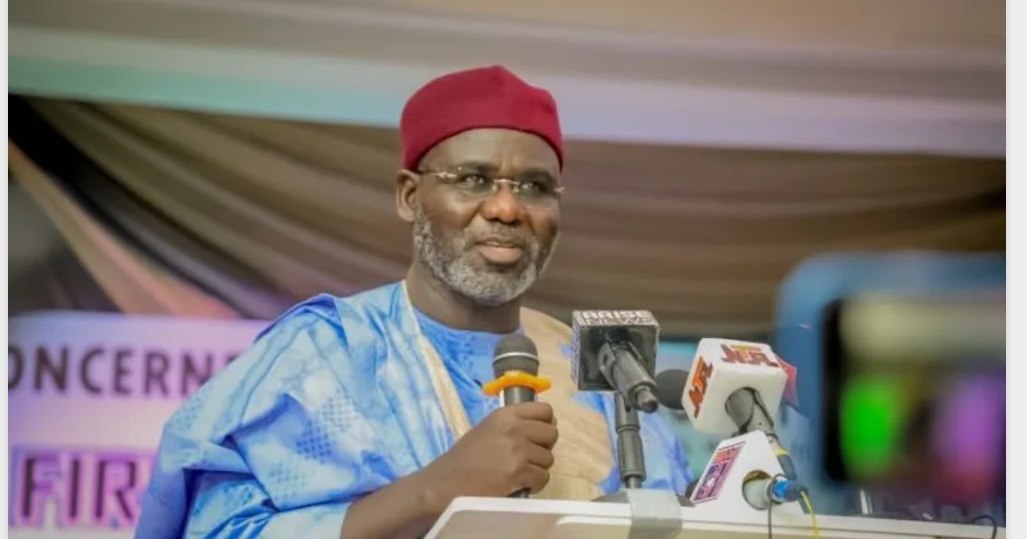
Three Years On, General Buratai Hails Tinubu’s Economic, Security Achievements
Former Chief of Army Staff, Lt. Gen. Tukur Buratai (retd.), has commended President Bola Ahmed Tinubu for what he described as bold economic reforms and improved security efforts as the President marks three years in office.
In a goodwill message on Thursday to commemorate Tinubu’s third anniversary as President and Commander-in-Chief of the Armed Forces, Buratai said the administration had taken courageous decisions that would leave a lasting impact on Nigeria’s development.

According to him, President Tinubu broke a long-standing cycle that had hindered national growth by removing fuel subsidy and implementing foreign exchange reforms aimed at stabilising the naira and strengthening the economy.
He noted that the reforms were beginning to yield positive results, citing the global acceptance of Nigerian debit cards, the gradual revival of local refineries, access to student loans, and ongoing road and infrastructure projects across the country.
“The FCT Administration has also recorded remarkable progress, completing major road projects that remained unfinished for over 16 years,” Buratai stated.
The former army chief also praised the administration’s security efforts, saying renewed military offensives against insurgents, terrorists and bandits had led to notable successes across various parts of the country.
He specifically lauded recent joint operations involving Nigerian and United States forces against Boko Haram and ISWAP in the North-East, as well as intensified counter-banditry operations in the North-West.
“We have seen notorious ISWAP commanders being neutralised. I congratulate the Commander-in-Chief, the Minister of Defence, the Chief of Defence Staff, the Service Chiefs, the Inspector-General of Police and heads of intelligence agencies for their efforts,” he said.
Buratai, however, acknowledged that challenges remained, stressing the need for more aggressive military operations and intelligence-driven strategies in the coming year.
While urging Nigerians to remain hopeful, he said celebrating the President’s achievements did not amount to ignoring the difficulties facing the nation.
“Because you truly care, you have shown the courage to trade short-term comfort for long-term hope. Nigerians need your reassurances, and that is why we remain optimistic and full of confidence,” he added.
The retired military officer reaffirmed his support for the Tinubu administration and expressed confidence that the foundation being laid by the government would deliver a brighter future for the country.
He also prayed for God’s guidance, wisdom, strength and good health for the President as he continues to lead Nigeria.


- World Cup accredited journalists raise concerns over unfair United States (US) visa restrictions, International Sports Press Association (AIPS) calls on FIFA to intervene June 6, 2026
- Ghana: President Mahama arrives in Belarus, lays wreath at Victory Monument June 6, 2026
- Liberia: President Boakai Advances Clean Energy Agenda; Dedicates 20-Megawatt Solar Power Plant at Mount Coffee June 6, 2026
- African Union (AU) Commission Chairperson mourns Passing of the Former Angola Minister of Foreign Affairs June 6, 2026
- Economic Community of West African States (ECOWAS) Welcomes Students on an Educational Visit to Its Headquarters June 6, 2026
- Seychelles: President Patrick Herminie attended Official Opening of Rise and Shine Day Care Centre at Mont Fleuri June 6, 2026
- Faith, fear and trust: Inside Democratic Republic of the Congo's (DR Congo) fight against Ebola June 6, 2026
- Economic Community of West African States (ECOWAS) Commission and Women in Law and Development (WiLDAF) Train Women Cross-Border Traders in The Gambia June 5, 2026
- Eritrea: Seminar to Nationals in The Hague June 5, 2026
- Eritrea: Training on Photography and Video Production June 5, 2026
- World Cup accredited journalists raise concerns over unfair United States (US) visa restrictions, International Sports Press Association (AIPS) calls on FIFA to intervene June 6, 2026
- Ghana: President Mahama arrives in Belarus, lays wreath at Victory Monument June 6, 2026
- Liberia: President Boakai Advances Clean Energy Agenda; Dedicates 20-Megawatt Solar Power Plant at Mount Coffee June 6, 2026
- African Union (AU) Commission Chairperson mourns Passing of the Former Angola Minister of Foreign Affairs June 6, 2026
- Economic Community of West African States (ECOWAS) Welcomes Students on an Educational Visit to Its Headquarters June 6, 2026
- Seychelles: President Patrick Herminie attended Official Opening of Rise and Shine Day Care Centre at Mont Fleuri June 6, 2026
- Faith, fear and trust: Inside Democratic Republic of the Congo's (DR Congo) fight against Ebola June 6, 2026
-

 news6 months ago
WHO REALLY OWNS MONIEPOINT? The $290 Million Deal That Sold Nigeria’s Top Fintech to Foreign Interests
-

 society1 month ago
SOCIAL MEDIA IS NOT A BATTLEFIELD COMMAND – WHY THE NIGERIAN ARMY’S ACTION AGAINST JUSTICE CRACK IS A NATIONAL SECURITY IMPERATIVE
-

 celebrity radar - gossips4 months ago
Dr. Chris Okafor Returns with Power and Fire of the Spirit -Mounts Grace Nation Altar with Fresh Anointing and Restoration Grace on February 1, 2026
-

 celebrity radar - gossips6 months ago
Prophet Kingsley Aitafo Releases 2026 Prophecy: ‘Nigeria Will Rise, but the World Must Prepare for Turbulence’