
society
CDHR Renews Commitment To The Defence Of Rights And Fundamental Freedoms Of Nigerians

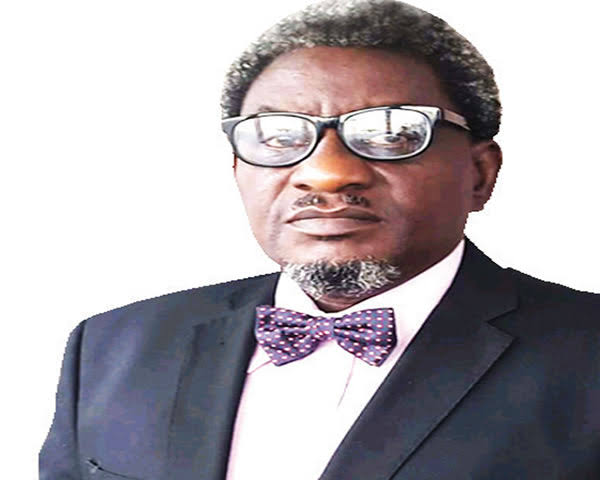
CDHR Renews Commitment To The Defence Of Rights And Fundamental Freedoms Of Nigerians At 33rd Annual General Conference
The National Association of Online Security Reporters, NAOSRE that was at the 33rd Annual General Conference of the Committee for the Defence of Human Rights, CDHR, presents some of the far-reaching decisions adopted at the conference for a better and secured Nigeria

The pre-event notices across media channels were the first signals that the Committee for the Defence of Human Rights, CDHR, a leading civil society, would address topical national issues at its 33rd Annual General Conference, AGC.
The conference, themed “A Call to Service in a Troubled Nigeria,” which drew participants from the 36 States of Nigeria and beyond, held on Saturday, October 23, 2023 at the Rights House, Adeniji Jones, Ikeja, Lagos.

Expectedly, the Board of Trustees, the National Executive Committee and distinguished Delegates from the State branches observed, among other things, that the rights of Nigerians across the country, including the right to life, have become most threatened and abused, with the rising incidences of insurgency, banditry, militancy, extortion, abductions, kidnappings, extrajudicial murders and double standards by state actors.
The civil society frowned at the constraints encountered by Nigerians who have been denied of their rights, particularly economic, social and cultural rights, due to anti-people capitalist policies of privatization of public enterprises, commercialization of public roads through the reintroduction of the toll system, commercialization of public health and COVID-19 testing and vaccination, commercialization of public health insurance, commercialisation of education, the challenge of unemployment, rising level of hardship, dwindling economy and falling value of the naira.
The Guest Speaker, Professor Tunde Babawale and other eminent resource persons also harped on the worsened insecurity in the country and called for immediate actions to avoid total collapse of the entire system.
As a remedy, the organization vowed to continue the struggle for the defence of the rights and fundamental freedoms of Nigerians as well as advance the consolidation of democracy.
They also vehemently rejected the oppressive tendencies by Lagos and other governments in commercializing public health services, education and housing, payment for COVID-19 testing and over-taxing of citizens.
To strengthen its operational fabrics, the organization recognized that it was imperative to expand branches and units and uphold its integrity by ensuring disciplinary measures against errant members.
To that effect, CDHR, at the AGC, ratified various disciplinary reports including decision of the National Council and accordingly adopted the expulsion of Kehinde Taiga, James Chubuzor, Gerald Katchy and Jonathan Giama as well as suspension of Ekwumankama Violet and Ayuba Musa for their roles in precipitating crises that had done incalculable damage to the prestige of the CDHR.
It also directed the National Executive Committee to petition those impersonating CDHR to security agencies for proper arrest, investigation and prosecution.
The Resolution of the National Council, NC, meeting held on Friday October 22, 2021 on renewal of the tenure of Femi Falana, SAN, Professor Lucky Akaruese, Dr. Osagie Obayuwana, Gbenga Awosede, and Debo Adeniran and Malachy Ugwummadu, was adopted.
The inauguration of Nasarawa, Katsina, Bauchi States branches was accepted in line with the recommendation of the National Council.
Comrade (Dr) OsagieObayuwana returned unopposed as the National President to lead CDHR for the next two years in the newly elected NEC.
Others who were elected to support Comrade Obayuwana in the running of the organization were Comrade Ade Ikuesan, Vice President; Comrade Yinka Folarin, General Secretary; Comrade Kabir Ibrahim, Assistant General Secretary; Comrade Sola Kolawole, Treasurer; Comrade (Barr) Henry Peter Ekine, Legal Adviser; Comrade Idris AfeesOlayinka, Publicity Secretary and Comrade Helen Akomolafe, Internal Auditor.





US-Based Society Lady, Fehintola-Brat Extends Eid-El-Kabir Greetings To Muslims
United States based fahionista of class, Chief (Mrs) Ayoola Fehintola-Brat has extended a warm greetings to Muslim faithful all over the world on the occasion of the 2026 Eid-El-Kabir celebration.
Fehintola-Brat who is the Balogun Egbe Obaneye Obinrin Akile Ijebu, and the Yeye Asofin of Idenaland in her message to Journalists urged Muslim to continually uphold the enduring values of sacrifice, obedience, faith, and compassion, which are central to the significance of Eid-El-Kabir festival.
A quiet philantropist whose humanitarian services has won her several laurels urged Muslims to use the spiritual occasion to pray for the peace co-existence of Nigerians regardless of religious, social and political leanings stressing that the oneness of the country should not be underplay.
In a related development, she expressed her felicitations to all sons and daughters of Ijebuland on the forthcoming Ojude Oba 2026 celebration, tasking age-groups otherwise known as Regbregbe to be more proactive in giving back to their immediate communities.
According to her, the beauty of the age-groups in Ijebuland is the need to contribute immensely to the development of the land in no small means. “This we will continue to achieve with God on our side”, she concluded.
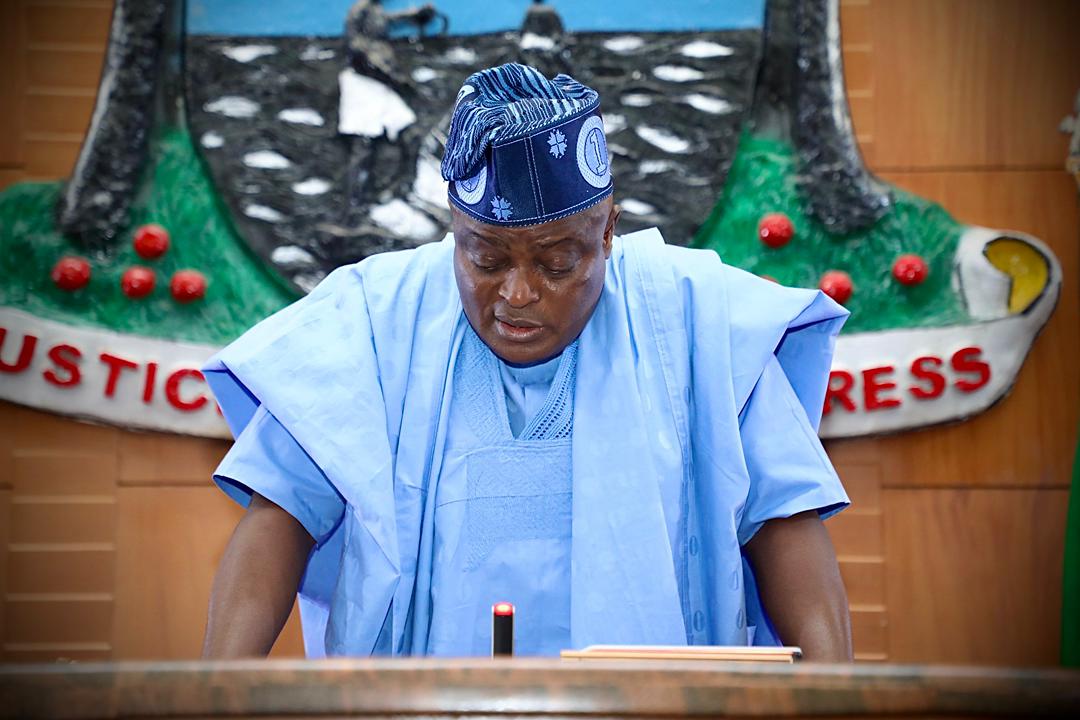
Sallah: Obasa Felicitates Muslim Ummah, Commends Nigerians for APC Primaries Turnout
The Speaker of the Lagos State House of Assembly, Rt. Hon. Mudashiru Obasa has extended warm felicitations to Muslims in Lagos State and across Nigeria on the occasion of Eid al-Adha.
In a statement released by his Chief Press Secretary, Mr. Dave Agboola, Obasa described the festival as a season of sacrifice, reflection, and gratitude, urging the faithful to continue to uphold the values of peace, unity, and love that strengthen the nation.
He noted that the celebration of Eid al-Adha is not only a spiritual milestone but also a reminder of the importance of togetherness and collective responsibility in building a stronger society.
He, likewise, emphasized that the festival provides an opportunity for Nigerians to renew their commitment to national progress and to support leadership that prioritizes development and prosperity.
Obasa, however, commended Nigerians, particularly members of the All Progressives Congress (APC), for their massive turnout during the recently concluded party primaries. He described the participation as a clear demonstration of the people’s confidence in the government of President Bola Ahmed Tinubu and their belief in the administration’s vision for a greater Nigeria.
“The APC primaries have shown the resilience of our democracy and the confidence Nigerians have in the leadership of President Bola Ahmed Tinubu and the Renewed Hope Agenda. This is a strong message that our people are ready to continue supporting policies that will drive growth and prosperity,” Obasa stated.
The Speaker further encouraged Muslims to celebrate responsibly, stressing that the joy of Eid should be accompanied by prayers for the continued peace and progress of Lagos State and Nigeria.
“As you celebrate with family and loved ones, may this season bring joy, peace, and prosperity to your homes. Let us remain united in our resolve to build a stronger nation,” he added.
On behalf of the Lagos State House of Assembly, Obasa wished all Muslims a happy and fulfilling Eid al-Adha celebration.

ABEOKUTA FILM FESTIVAL AT ILEYA
Kayshow Multimedia a filmmaking and Media organization this year 2026 holds its annual Abeokuta film festival at the Ake Palace in Abeokuta.
Alake of Egba land, Ọba Michael Adedotun Arẹmu Gbadebo has graciously endorsed the Free Training of Egba Youths on Film and Arts and the Entertainment of the the People with a FREE FILM SHOW at the AKE PAVILION. as part of the ABEOKUTA FILM FESTIVAL 2.0.
The Convener of the Film Festival Honorable Kehinde Soaga says this year’s event promises to be more exciting as distinguished personalities are sure to attend.
This includes the honorable Minister for Art Culture and Creative Economy in Nigeria, Barr. Hannatu Musa Musawa, Ààrẹ Lai Labode, Sen. Ibikunle Amosun and other special guests.
The event will feature Film, Cultural Dance Cultural foods and Award Ceremony.
The general public is hereby invited to the Free film show at the Abeokuta film festival at the Alake Palace Pavilion on Thursday 28th of May 2026 by 4:00 p.m.
Only well dressed is the Entry. The Abeokuta Film Festival is an annual event taking place in the capital city of Ogun State state.


- Demand for civic space holds strong across Africa as supply of freedoms wanes May 27, 2026
- Zarein Energy Joins African Energy Week (AEW) 2026 as Gold Sponsor Amid Nigeria Gas Hub Expansion May 27, 2026
- Qrent says delaying Information Technology (IT) refresh cycles may be increasing operational risk for businesses in Africa May 27, 2026
- Dentons’ Iyunola Adekanye Appointed to African Mining Week (AMW) Advisory Board May 27, 2026
- United Nations (UN) Women Liberia and Partners Convene for Spotlight Initiative 2.0 Women’s Economic Empowerment Inception Meeting May 27, 2026
- African Mining Week (AMW) to Host Central Bank Governors Roundtable as Monetary Authorities Deepen Role in Mining Sector Growth May 27, 2026
- Eritrea: Diaspora Nationals Celebrate Independence Day Anniversary May 27, 2026
- Africa Unveils Landmark Humanitarian Coordination Platform to Strengthen aligned Response to Humanitarian Crises May 27, 2026
- Seychelles: President Herminie Engages with Police and Fire Services on Praslin May 27, 2026
- Issue 3 of Mining Review Africa now available for free download May 27, 2026
- Demand for civic space holds strong across Africa as supply of freedoms wanes May 27, 2026
- Zarein Energy Joins African Energy Week (AEW) 2026 as Gold Sponsor Amid Nigeria Gas Hub Expansion May 27, 2026
- Qrent says delaying Information Technology (IT) refresh cycles may be increasing operational risk for businesses in Africa May 27, 2026
- Dentons’ Iyunola Adekanye Appointed to African Mining Week (AMW) Advisory Board May 27, 2026
- United Nations (UN) Women Liberia and Partners Convene for Spotlight Initiative 2.0 Women’s Economic Empowerment Inception Meeting May 27, 2026
- African Mining Week (AMW) to Host Central Bank Governors Roundtable as Monetary Authorities Deepen Role in Mining Sector Growth May 27, 2026
- Eritrea: Diaspora Nationals Celebrate Independence Day Anniversary May 27, 2026
-

 news5 months ago
WHO REALLY OWNS MONIEPOINT? The $290 Million Deal That Sold Nigeria’s Top Fintech to Foreign Interests
-

 society3 weeks ago
SOCIAL MEDIA IS NOT A BATTLEFIELD COMMAND – WHY THE NIGERIAN ARMY’S ACTION AGAINST JUSTICE CRACK IS A NATIONAL SECURITY IMPERATIVE
-

 celebrity radar - gossips4 months ago
Dr. Chris Okafor Returns with Power and Fire of the Spirit -Mounts Grace Nation Altar with Fresh Anointing and Restoration Grace on February 1, 2026
-

 celebrity radar - gossips6 months ago
Prophet Kingsley Aitafo Releases 2026 Prophecy: ‘Nigeria Will Rise, but the World Must Prepare for Turbulence’