
celebrity radar - gossips
COAS Lagbaja Declares No Room For Coup In Nigeria

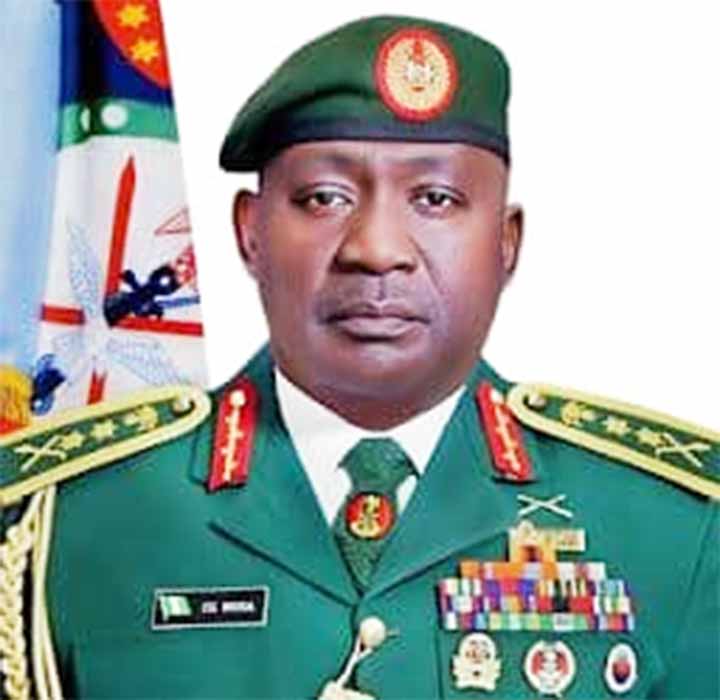
COAS Lagbaja Declares No Room For Coup In Nigeria
Against the backdrop of recent military coups in West and Central Africa, Nigeria’s military high command is serially pledging its loyalty to the constituted civilian authority and warning its rank and file against any coup thoughts. But these pledges are putting Nigerians on edge, Louis Achi writes

A former Chief of Army Staff, and ex-Nigerian Ambassador to Benin Republic, Lt. Gen. Tukur Buratai (rtd) had on December 4, 2020, sternly warned officers and men of the Nigerian Army to perish the idea of any coup attempt in Nigeria. Did he foresee the series of military coups that would sweep out civilian administrations and put the West and Central African regions on edge?
According to the ex-army boss, the Army hierarchy was aware that some generals were being approached, adding that his eyes were on them. “Democracy has come to stay. We will not tolerate any agent of destabilization. The years of military misadventure in politics have never carried us anywhere. It is over…Don’t hobnob with politicians,” he had declared.

Buratai, who many believe missed a ministerial portfolio under President Bola Tinubu’s administration by the whiskers, spoke as if he had a premonition of the coup storms sweeping Nigeria’s continental neighbourhoods.
More recently, the current Chief of Army Staff, Lieutenant General Taoreed Lagbaja, had declared that the Nigerian military would always defend the nation’s democracy at all costs using every constitutional means.
Lagbaja spoke at the recent Passing Out Parade of officers of Executive Commission Course One of the Army School of Infantry, Jaji, Kaduna State.
“He emphasised that the desire of every Nigerian is a flourishing, uninterrupted constitutional democratic governance, that promotes national values and the interest of every well-meaning Nigerian, irrespective of ethnic or religious affiliation,” the Director, Army Public Relations, Brigadier General Onyema Nwachukwu, reportedly said in a statement.
“I, therefore, charge all Nigerian Army personnel to be proud champions of our flourishing democracy and remain apolitical in discharging their constitutional duties,” the COAS added.
The General Officer Commanding (GOC) 81 Division, Nigerian Army, Maj. Gen. Mohammed Usman had also recently warned those he labelled disloyal soldiers to quit the army and affirmed that military personnel must remain loyal to the president, Chief of Defence Staff, down to their brigade commanders.
Usman who apparently prioritized loyalty to President Tinubu and the Chief of Defence Staff over loyalty to the constitution, charged soldiers to be professional and exhibit total loyalty to constituted authority.
Addressing soldiers at the 35 Artillery Brigade, Alamala, Abeokuta, Ogun State, the GOC noted that there were some challenges, but added that they were not peculiar to Nigeria.
“You have to be loyal. There is no room for soldiers who are not loyal to constituted authority. If you are not going to be loyal, then, leave, go and do other work. But the armed forces cannot stand it if you are not loyal,” he said.
This spate of warnings and declarations of loyalty to the President is making many nervous because of its deeper connotations. Are these self-serving, rhetoric or genuine resolve to defend the Constitution?
Penultimate Saturday, it was the turn of the Chief of Defence Staff (CDS), General Christopher Musa, who declared that the Armed Forces of Nigeria (AFN) remained in support of sustained democratic rule in the country.
Speaking at a meeting with military commanders in Abuja, the defence chief, who vowed to deal decisively with threats to national security, said security forces must do all it takes to ensure that democracy thrives in Nigeria. He vowed that all threats to national security must be decisively dealt with.
“Democracy remains what we stand for. We must do everything humanly possible to sustain democratic rule. We have the trust and support of Nigerian people. We must honour that thrust,” Musa said.
The military has been an important institution for protecting the country from external threats since antiquity.
It has been widely observed that military intervention in politics appears to be often associated with perceived electoral illegitimacy, economic crisis and stagnation of growth. In a study of intervention in politics by the military in Latin America, Martin C Needler, author of Mexican Politics and former Dean of the School of International Studies at the University of the Pacific in Stockton, California, suggested that governments were more likely to be overthrown by force when economic conditions deteriorated. When conditions were improving, the military was unlikely to intervene in politics.
It is estimated that there have been at least 100 successful coups in Africa in the past four decades, with more than twice the number of coup attempts. Most military takeovers are initiated by disgruntled junior military officers, who are later supported by a few senior officers. Within days or hours they capture power by detaining or forcing the leaders to step down – as in the case of Mali.
Instructively, four of the recent coups were staged by close guards meant to protect the presidents in their various countries. The alleged coup leader in Gabon, Brice Oligui Nguema, was the head of the Gabonese Presidency’s Republican Guard, the country’s most powerful security unit.
In Niger, the Presidential Guard led by General Abdourahmane Tchiani launched the coup that ousted President Mohamed Bazoum, and had since July 26, detained him and his family.
Guinean Colonel Doumbouya, then a 41-year-old and former French legionnaire and commander of the country’s elite Special Forces Group shot his way to power in September 2021.
On August 18, 2020, a young group of officers in Mali’s armed forces led by Colonel Assimi Goïta, staged a coup d’état, arresting the beleaguered President Ibrahim Boubacar Keita and Prime Minister Boubou Cisse. He was head of the Malian Special Forces before staging the coup that brought him to power.
In January 2022, Burkina Faso’s army ousted President Roch Kabore, blaming him for failing to contain violence by Islamist militants. A second coup in September 2022, brought the current junta leader, Captain Ibrahim Traore to power.
Chad’s army took power in April 2021, after President Idriss Deby was killed on the battlefield while visiting troops fighting rebels in the north. Deby’s son, General Mahamat Idriss Deby, was named interim president and tasked with overseeing an 18-month transition to elections.
It has been observed that pattern of reacting to military takeovers with optimism expresses a deep-seated frustration with civilian leaders in Africa, some experts say.
“The seeming support of the militaries taking over is an indirect support, it is not support for the military,” Leena Koni Hoffmann, an Africa programme associate fellow with London-based think tank, Chatham House, told Al Jazeera.
“It is an opportunity to say that the government that has been overthrown is a government that does not represent our interest fully,” she said.
In all, the emerging consensus points to good, empathetic governance and focused leadership as crucial factors to assure state stability. In addition, the political class needs to play by the rule and strive to improve the living standard of the people. If these conditions are fulfilled, any attempt to thwart democracy will be resisted in Africa.




celebrity radar - gossips
The Unfinished Conversation: Five Years of Missing T.B. Joshua BY FEMI OYEWALE
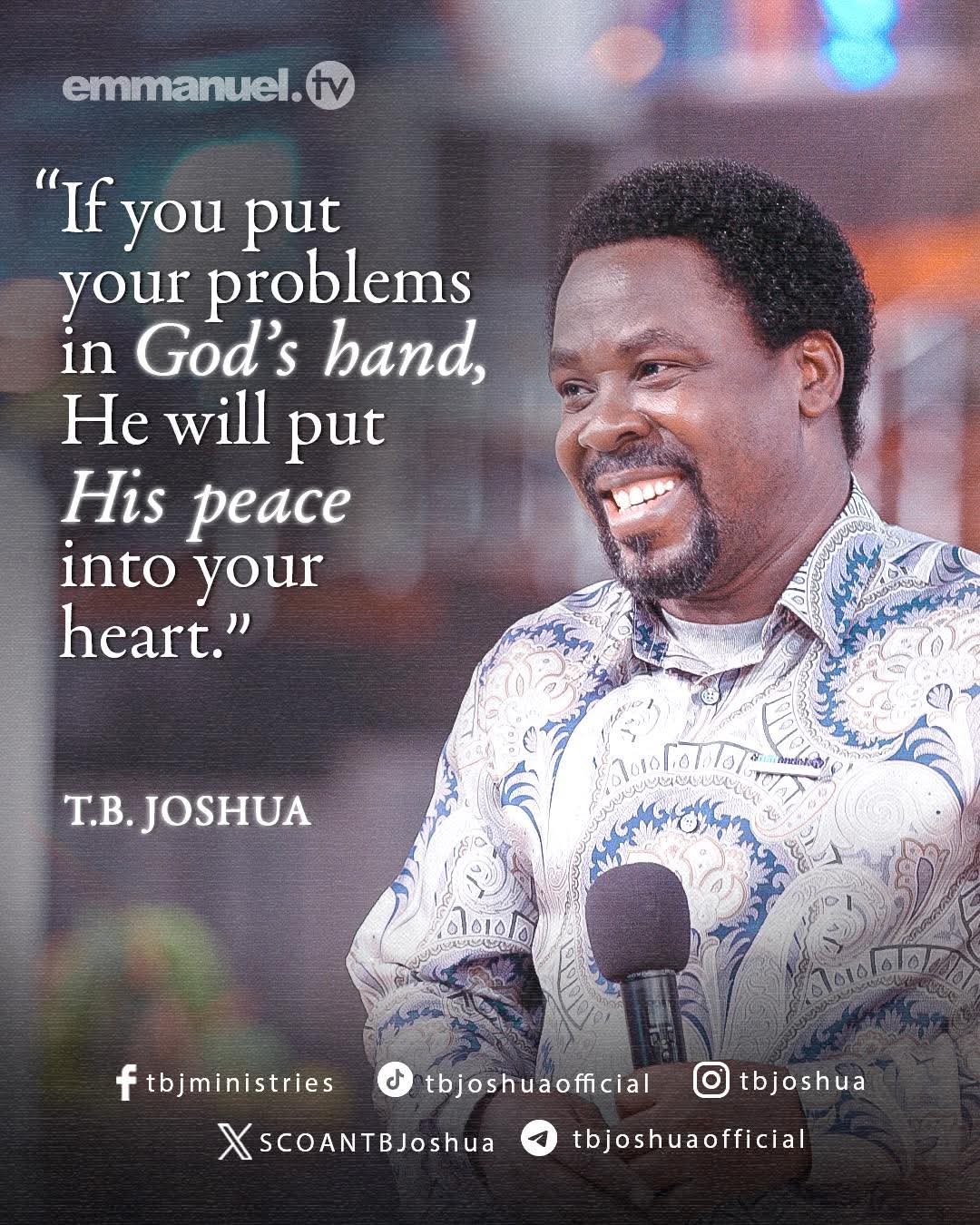
The Unfinished Conversation: Five Years of Missing T.B. Joshua BY FEMI OYEWALE
”In life we meet to part, we part to meet, but parting is the sweetest sorrow.”

Five years have vanished like a vapor, yet the echoes of his voice remain as vivid as a morning sunrise. June 5th marks the anniversary of the transition of a man who was not merely a global religious icon, but a father, a mentor, and a beacon of profound simplicity in a complex world. As I pen this, I find myself still navigating the shores of denial. How does one write a tribute to a man whose influence was as vast as the oceans, yet whose heart remained as humble as the desert sands?

The Last Assignment
Time truly flies, but some moments are frozen in the amber of memory. I recall with poignant nostalgia that I was among the final few with whom he spoke before stepping out for his last assignment on the pulpit on June 5,2021. Unknown to many, we shared an uncommon bond—a father-son relationship that stood the test of time.

Just an hour before that glorious, final ministration, my phone rang. We discussed the fulfillment of prophecies and my planned assignment to South Africa, an assignment he promised to single-handedly finance. By God’s grace, I have traveled the globe, and ninety percent of those journeys were bankrolled by him. Before ending the call, he spoke with finality: “Femi, go and watch it.” I never knew it was a parting shot. I never knew those words would be the threshold of eternity. Perhaps that is why, despite being part of his burial media committee, I lacked the courage to write until today.
From Fear to Faith: The Beginning
My journey to the Synagogue Church of All Nations (SCOAN) was written in the stars of fate. Then a reporter for Encomium Weekly, under the tutelage of the legendary Mr. Kunle Bakare, I was recommended to handle media work for a “prominent client.” When the name “T.B. Joshua” was mentioned, my heart sank.
Having cut my journalistic teeth under titans like Mr. Femi Adeshina and Mr. Dele Alake, I had heard the tales, stories of monsters, of shape-shifters, of dark magic. As I drove to Ikotun, I recited every Psalm I could muster and texted my parents my destination, unsure if I would return. I arrived expecting a beast; I was introduced to a brother. I met a man so profoundly simple, so devastatingly ordinary in his humility, that if not for his presence on Emmanuel TV, I would have sworn I was meeting an impostor. That was the day the fear died, and a lifelong relationship began.
The Man Behind the Mantle
I am not here to validate a legend; I am here to honor a human. I have been privileged to stand in his office, his personal room, his private altar, and his prayer house. What did I find? Not a demigod, but a man who lived for others.
A Heart of Forgiveness: Like the father in Luke 15, no matter the depth of the offense, a sincere “I am sorry” was all it took to be welcomed back into his fold.
The Weight of Misunderstanding: I remember the pain of the building collapse. He asked me, with tears that shattered my heart, “Femi, can you believe they said I used these people for rituals?” That was the first time I saw the iron man break.
A Channel of Healing: I recall a man brought to the prayer line who had previously declared, “Even if T.B. Joshua is the devil, if he can take this pain away, I am ready.” The moment those words left his lips, the Prophet walked over, touched him, and the healing was instantaneous.
He was a comedian, a teacher, a preacher, and above all, a man who loved his family and his ministry with every fiber of his being. If most clergy possessed even half the global influence he wielded, they would have long ago become arrogant demigods. T.B. Joshua remained, to his last breath, a servant.

A Legacy Enduring
It has been five years, yet it feels like yesterday. Many of those who cast stones in the shadows often came seeking his light in secret. Today, as we remember him, I see that legacy thriving. Prophetess Evelyn Joshua is truly holding the torch, preserving the foundation with grace and strength.
Good morning, Prophet T.B. Joshua. You live on in the lives you changed, the doors you opened, and the heart of your many disciples who will never forget the man who taught them that true greatness is found in the simplicity of love.
”He was a man globally misunderstood, yet a man whose name alone opened doors globally. He lived for others, and in doing so, he became immortal.”

celebrity radar - gossips
Let’s build a future where access to healthcare is strengthened…….Oba Odugbemi
Let’s build a future where access to healthcare is strengthened…….Oba Odugbemi
A call has gone to every stakeholder in the health sector to build a future where access to healthcare is guaranteed and strengthened.
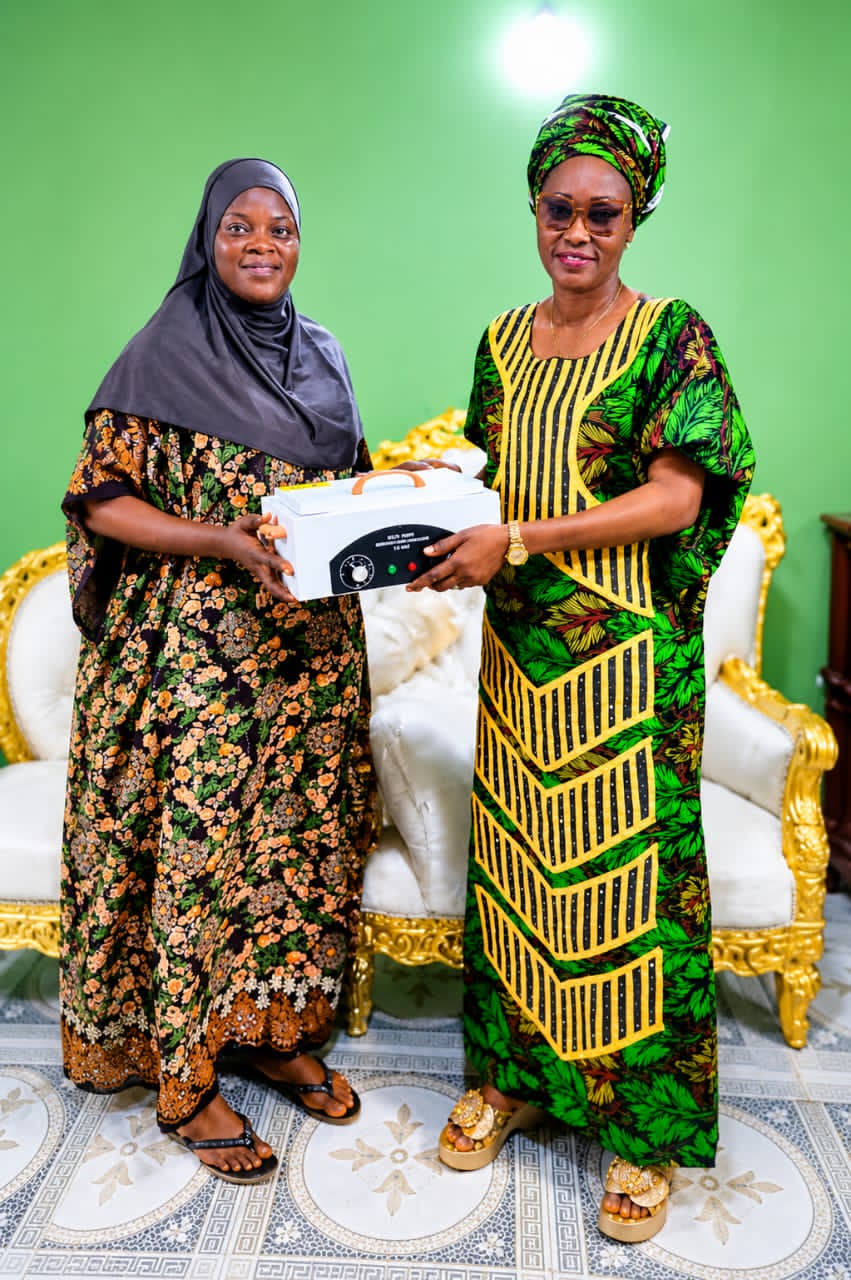
The Onilisa of Lisa Kingdom, Oba Oladele Odugbemi make the call in Lisa while donating a Sanitary Sterilisation Box to the Lisa health centre.
Oba Odugbemi said that the donation became necessary in order to further strengthen the capacity of the health centre for the benefits of the people.
The royal father stressed that his foundation, Oladele Odugbemi foundation would continue to make meaningful impacts in community healthcare aimed at complementing the efforts of government in healthcare delivery system.
He pointed out that the foundation reflects its unwavering commitment to promoting quality healthcare services, enhancing hygiene standards and supporting health institutions with essential tools that contribute to safer and healthier communities.
According to the monarch, all stakeholders in the health sector should work hand-in- hand with government to take healthcare to the doorsteps of the masses as government cannot do it alone, hence health is wealth.
Oba Odugbemi also charged the governments at all levels to declare a state of emergency in the health sector so that every Nigerian can have smooth access to healthcare delivery system in the interest of the country and for the benefits of the masses.
The monarch therefore said that the foundation would continue to care for the people through empowerment by ensuring that masses have good and quality health condition.
The Sanitary Sterilisation Box was presented by the Foundation Director, Hajia Suliat Odugbemi – Tinuosho to the Matron of Lisa Community Health Centre, Mrs Temitope Nofisat Sanni who received it on behalf of the health centre.
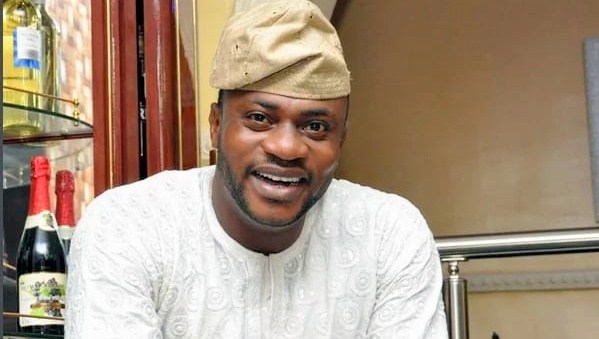
King of the Screen: Why Odunlade, Muyiwa, Femi Adebayo Remain Yoruba Movie Giants
The Yoruba movie industry has continued to produce legendary talents whose influence stretches beyond Nigeria to global audiences. Over the years, some actors have distinguished themselves through consistency, versatility, box office success, and cultural impact.
Among the numerous stars in Nollywood’s Yoruba sector, three actors have remained dominant figures whose names constantly resonate with fans and filmmakers alike — Odunlade Adekola, Muyiwa Ademola, and Femi Adebayo.

Odunlade Adekola: The Street King of Yoruba Cinema
Popularly regarded as one of the most entertaining actors in Nollywood, Odunlade Adekola has built a unique reputation through his energetic delivery, comic timing, emotional depth, and strong connection with grassroots audiences.
From comedy to action and emotional family dramas, the actor has consistently proven his versatility in blockbuster productions. His ability to interpret diverse roles effortlessly has made him a household name across Nigeria.
Industry observers believe his dominance on social media platforms, where his movie clips frequently go viral, has further strengthened his popularity among younger audiences.
Beyond acting, Odunlade has also contributed immensely to mentoring upcoming talents and expanding the commercial value of Yoruba films.
Muyiwa Ademola: The Master Storyteller

For many lovers of indigenous movies, Muyiwa Ademola remains one of the finest storytellers the Yoruba film industry has produced.
Widely respected for producing emotional and morally driven movies, the actor earned massive recognition through classic productions that focused on family values, culture, betrayal, perseverance, and societal lessons.
His calm delivery, deep scripts, and originality have kept him relevant despite changing trends in the entertainment industry.
Film critics often describe Muyiwa Ademola as one of the few actors whose productions combine entertainment with strong cultural education, making his movies timeless among older and younger viewers alike.
Femi Adebayo: The Modern-Day Box Office Force

Femi Adebayo has successfully combined traditional Yoruba storytelling with modern cinematic excellence, helping to project indigenous films to international audiences.
The actor, filmmaker, and producer has recorded major successes with high-budget productions that gained attention on streaming platforms and cinemas.
Known for his professionalism and attention to detail, Femi Adebayo has continued to push Yoruba movies beyond local boundaries while preserving cultural identity.
Entertainment analysts say his ability to blend culture, technology, and quality production has positioned him among the leading faces shaping the future of Yoruba cinema.
Growing Global Influence
The success of these actors reflects the increasing acceptance of indigenous Nigerian content globally. With streaming platforms creating wider access to local movies, Yoruba actors are now gaining international recognition and attracting new audiences.
Fans and stakeholders in the entertainment industry believe the contributions of Odunlade Adekola, Muyiwa Ademola, and Femi Adebayo have not only sustained Yoruba culture through film but have also elevated Nollywood’s global reputation.


- Economic Community of West African States (ECOWAS) Commission and Women in Law and Development (WiLDAF) Train Women Cross-Border Traders in The Gambia June 5, 2026
- Eritrea: Seminar to Nationals in The Hague June 5, 2026
- Eritrea: Training on Photography and Video Production June 5, 2026
- Dr. Rasha Kelej Merck Foundation Chief Executive Officer (CEO) and African First Ladies release “Rays of Hope” Animation Film and Storybook to Raise Awareness About Childhood Cancer June 5, 2026
- Digital transformation journey takes centre stage at ANGOTIC 2026 June 5, 2026
- Junior Achievement (JA) Africa Delivers 1.6 Million Learning Experiences in a Single Year, Marking Twelve-Fold Growth in Five Years June 5, 2026
- United Nations Mission in South Sudan (UNMISS) helps plant hope among youth on World Environment Day June 5, 2026
- Afreximbank Deepens Engagement with Jamaica to Drive Trade, Investment and Industrialisation June 5, 2026
- World Health Organization (WHO) supports reactive yellow fever vaccination campaign and Bundibugyo virus disease (BVD) preparedness in Liberia June 5, 2026
- Uganda: Museveni pushes for wealth creation through development programmes June 5, 2026
- Economic Community of West African States (ECOWAS) Commission and Women in Law and Development (WiLDAF) Train Women Cross-Border Traders in The Gambia June 5, 2026
- Eritrea: Seminar to Nationals in The Hague June 5, 2026
- Eritrea: Training on Photography and Video Production June 5, 2026
- Dr. Rasha Kelej Merck Foundation Chief Executive Officer (CEO) and African First Ladies release “Rays of Hope” Animation Film and Storybook to Raise Awareness About Childhood Cancer June 5, 2026
- Digital transformation journey takes centre stage at ANGOTIC 2026 June 5, 2026
- Junior Achievement (JA) Africa Delivers 1.6 Million Learning Experiences in a Single Year, Marking Twelve-Fold Growth in Five Years June 5, 2026
- United Nations Mission in South Sudan (UNMISS) helps plant hope among youth on World Environment Day June 5, 2026
-

 news6 months ago
WHO REALLY OWNS MONIEPOINT? The $290 Million Deal That Sold Nigeria’s Top Fintech to Foreign Interests
-

 society1 month ago
SOCIAL MEDIA IS NOT A BATTLEFIELD COMMAND – WHY THE NIGERIAN ARMY’S ACTION AGAINST JUSTICE CRACK IS A NATIONAL SECURITY IMPERATIVE
-

 celebrity radar - gossips4 months ago
Dr. Chris Okafor Returns with Power and Fire of the Spirit -Mounts Grace Nation Altar with Fresh Anointing and Restoration Grace on February 1, 2026
-

 celebrity radar - gossips6 months ago
Prophet Kingsley Aitafo Releases 2026 Prophecy: ‘Nigeria Will Rise, but the World Must Prepare for Turbulence’