
society
COVID-19: CACOVID to buy Vaccines through FG, plans on distribution

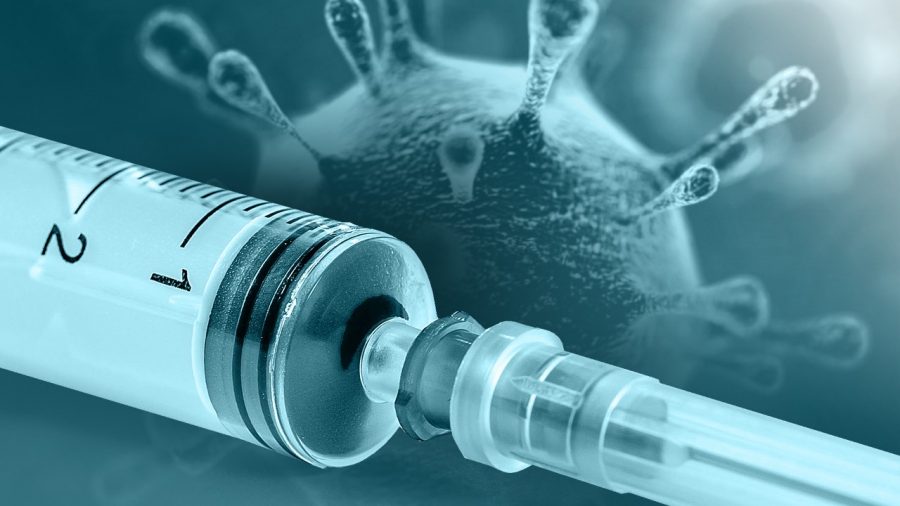
The private sector-led Coalition Against COVID-19 (CACOVID) has clarified that only the Federal Government, through the National Primary Healthcare Development Agency (NPHCDA) can obtain any COVID-19 vaccine for Nigeria in the ongoing fight against the coronavirus pandemic.
The coalition also explained that the process of buying the vaccines through the Federal Government has commenced and also that the National Agency for Food and Drug Administration and Control (NAFDAC) as an official regulatory body, has to approve the vaccine and certify it before use by Nigerians.
These clarifications were made by the Administrator of CACOVID, Mrs. Zouera Youssoufou, while speaking in Lagos during the Global Business Report programme on ARISE TV News. The clarification was made in reference to media reports that BUA (a member of CACOVID) had purchased a million doses of COVID-19 (AstraZeneca) vaccines through Afreximbank for Nigerians.
Responding to questions on how the CACOVID Collegiate Fund Works, Youssoufou, said, “The way this works is that we, as a group, agree on what to actually purchase, on how to purchase it and what the modalities of the purchase would be. This is how the group has been working since we were created back in March 2020. As you know we have several things including testing, test kits and getting isolation centres, PPEs, palliatives, communications among many others.
“So the purchase of the vaccines is very similar to the purchase of the testing supplies, meaning that we do this through very validated and subsidised means. Right now there are three mechanisms that Nigeria is participating in. One called COVAX, one called the African Union Vaccine Acquisition Task Force which is funded by Afreximbank, and the third one is the World Bank, which is also funding some of these vaccines.
“Nigeria as a country is a member of all these organisations. We as the CACOVID, the private sector coalition against COVID, our role is to support our government in what is needed in order to help our people in the context of this COVID-19. So I think the important thing that we all need to know is that there are several steps to procuring vaccines. The first thing is that government are the ones who can actually buy vaccines, so we as a private sector group, as individual companies, cannot buy vaccines, we can’t call AstraZeneca or Pfizer or Moderna to order vaccines from them. That is the first thing.
“The second thing is that the distribution of the vaccines and how they would be shared in our country has to be done by the National Primary Healthcare Development Agency (NPHCDA) which is the only agency in our country mandated to handle vaccines and so far, as you know people, children are being vaccinated everyday BCG, Polio. So those vaccines, that whole process is managed by the NPHCDA and they are going to be the ones managing this process too. So it is not a matter of sending money to the Central Bank, that is one step. But the real step is how do we get the vaccines into Nigeria and how do we distribute them to the people.
“I think the most over-looked element in this discussion on that aspect about getting vaccines next week, is that AstraZeneca or any vaccine has yet to be approved by NAFDAC, which is our regulatory agency. So without the approval of NAFDAC, there is no vaccine that can come into Nigeria and be distributed to Nigerians or shot into the arms of Nigerians. And I think this is where some of the misinformation had come in.”
On a question on the statement from BUA that the Central Bank of Nigeria put out a call to the CACOVID members on a small window through which to procure these vaccines, where someone had to step and they (BUA) came in and put up the money, Youssoufou replied, “First thing, I was on a call with the Afreximbank President on February 7 with Alhaji Aliko Dangote, Herbert Wigwe and Godwin Emefiele, and in that call, President Oranmah (Benedict) was explaining to us their model and how this task force was working with the AU and how they have set up a $2 billion facility to help fund the vaccines for Nigeria and for African countries, and that the allocation of 42 million vaccines had been made for Nigeria.
“He also told us about an extra one million doses that we can get if we can confirm that we wanted those doses immediately by the next day February 8. And so CACOVID leaders agreed that yes, this was a good thing and would bring it to the meeting the very next day, which happened. So we had the meeting yesterday (February 8) and that discussion actually happened. What is really important to know is that Afreximbank, after that call, already secured those doses for Nigeria because they had the confirmation from the Central Bank Governor, Alhaji Aliko Dangote, and Herbert Wigwe that they would pay for these one million doses.
“Now, the doses don’t come in; it’s not as if we get a million doses of vaccines one day getting dumped into Nigeria; they get delivered at a specific pace. So we might get a hundred thousand (100,000) immediately, 150,000 the next week, and then let’s say another hundred thousand. So we will never get a million doses in one single day coming into Nigeria at once. And in order for that to happen, we have to work very closely with both the National Primary Healthcare Development Agency which I just explained are the ones who would be managing this process of getting the vaccine into people’s arms, but also sorting out the logistics.
“Vaccines have to be stored at a certain temperature; when they land from the plane, they come out of a cooler, they have to be transferred to another freezer. Then we have to get those vaccines across the country. We also have to follow a very logical logistics chain of how we are going to get the vaccines from point A to point B, what centres are going to get them, who are the people who are going to get vaccinated, where the health workers are going to be doing the vaccinations.
“This is the work that the National Primary Healthcare Development Agency does. Dr. Faisal Shuaib (Executive Director NPHCDA) has to be part of this conversation in order for us to have any legitimacy in bringing vaccines back into Nigeria. So that is the way it happened. But in terms of the vaccine being secured, the vaccines are already secured because President Oranmah said ‘I’ll hold these for you’ for Nigeria. Now we need to get AstraZeneca approved in Nigeria and that’s not for us to do but for NAFDAC to do and then the payment that would go from CACOVID to Afreximbank on behalf of Nigeria for these vaccines would then happen.
“So nobody is disputing a transfer into Central Bank account; nobody is saying that did not happen, that is not where the challenge is. The challenge is the claim that one company has brought vaccines into Nigeria because that is not factual,” Youssoufou added.
In a statement issued to clear the air on the COVID-19 vaccines purchase, the Coalition noted in part that, “These claims are not factual as CACOVID operates on a collegiate fund contribution model. There is no agreement between BUA, CACOVID and Afreximbank.”
According to the statement, CACOVID leadership agreed to contribute $100 million to procure vaccines for Nigeria, noting that “these 1 million doses from Afreximbank worth $3.45 million, being the very first tranche. CACOVID will purchase vaccines through other credible and subsidised mechanisms such as COVAX.”





Ahead of 2027: BSA Diaspora Vanguard Backs Sarafadeen Alli for Oyo State Governor
Support for APC chieftain Barrister Sarafadeen Alli’s 2027 governorship ambition is growing both at home and abroad, with the BSA Diaspora Vanguard in North America throwing its weight behind him.
The group, led by Chief Dr. Olayinka Afolabi, Chief Coordinator of the BSA Diaspora Vanguard North America Chapter, said it is committed to mobilizing resources and awareness to ensure Alli emerges as Oyo State’s next governor.
“Barrister Sarafadeen Alli is tested, trusted, and understands what the people of Oyo State need,” Chief Afolabi said. “We in the BSA Diaspora Vanguard North America are determined to complement his efforts by enlightening Oyo indigenes in the diaspora and rallying support to bring this vision to reality.”
The group added that it would intensify outreach across North America to inform the Oyo community about Alli’s track record and plans for the state.


Banwo Law Offers Lifeline as New USCIS Policy Threatens Immigrants With Re-Entry Bans
A major immigration policy shift being considered by the United States Citizenship and Immigration Services (USCIS) could place thousands of immigrants at risk of severe re-entry penalties, according to renowned immigration attorney Ope Banwo, whose law firm, Banwo Law, says it is already helping affected individuals navigate the evolving situation.
Speaking in an exclusive interview with The Octopus News, Banwo warned that the policy memo issued by USCIS on May 22 could dramatically alter the pathway many immigrants currently use to obtain permanent residency in the United States.
According to him, USCIS is signaling that Adjustment of Status inside the United States may no longer be treated as the standard route to obtaining a Green Card, but rather as an “extraordinary” form of relief.
If fully implemented, the policy could require many immigrants to complete their Green Card processing through U.S. embassies and consulates abroad instead of remaining in America during the process.
Banwo explained that the potential policy change could affect a broad category of immigrants, including H1B workers, F1 students, B1/B2 visitors, exchange visitors, temporary workers, and even some immigrants currently maintaining lawful status in the United States.
“For decades, Adjustment of Status has protected many immigrants from dangerous immigration consequences tied to leaving the United States,” Banwo stated.
“The danger now is that some immigrants could unknowingly trigger automatic three-year or ten-year re-entry bans the moment they depart America for overseas visa processing.”
He noted that many immigrants are unaware that prolonged unlawful presence in the United States can activate severe immigration penalties once they leave the country, even if their departure is tied to official immigration processing.
According to Banwo, marriage-based Green Card applicants, employment-based immigrants, visa overstays, and temporary workers transitioning to permanent residency may all face significant legal complications under the proposed policy direction.
However, Banwo urged immigrants not to panic, stressing that proper legal guidance and strategic planning remain critical.
He warned immigrants against relying on unverified social media information or “TikTok lawyers” when making life-changing immigration decisions.
Banwo disclosed that Banwo Law, accessible through SpeakWithOpe.com https://speakwithope.com, is already providing consultations to immigrants across the United States by reviewing immigration histories, assessing waiver eligibility, and developing legal strategies tailored to individual cases.
The experienced immigration law firm is also helping clients understand whether they may still qualify for Adjustment of Status inside the United States or whether alternative legal pathways may be available.
Banwo stressed that immigrants should seek experienced legal counsel before traveling outside the United States or taking any immigration steps that could jeopardise their ability to return or secure lawful permanent residency.
“Immigration law is changing rapidly,” he said. “This is not the time for guesswork. People need experienced legal guidance now more than ever.”


society
EWMCN Congratulates SK Sensation On Third-Term Re-Election As FUMAN National President ~ 1ST ELEVEN9JA TV

EWMCN Congratulates SK Sensation On Third-Term Re-Election As FUMAN National President ~ 1ST ELEVEN9JA TV
By Alhaji Arems (Baba Fuji)
The President of the Elite Women Musician Club of Nigeria (EWMCN), Alhaja Queen Isimot Abake Abiola, popularly known as Omo-Opeki, has extended warm congratulations to Alhaji Sikiru Ayinde Agboola, widely known as SK Sensation, following his successful re-election for a third term as the National President of the Fuji Musicians Association of Nigeria (FUMAN).
In a congratulatory statement issued on behalf of EWMCN, Omo-Opeki described the victory as well-deserved, noting that the continuous support SK Sensation enjoys from members of the association is a clear reflection of his impact, leadership style, and dedication to the advancement of Fuji music in Nigeria.
According to her, his re-election for another term represents not only a personal achievement, but also a sign of stability and continuity for the Fuji music community at a time when unity, structure, and strong leadership remain important within the entertainment industry.
She further commended SK Sensation for his efforts in promoting peace, cooperation, and development among Fuji musicians across different regions of the country, while also acknowledging his role in sustaining the relevance and visibility of FUMAN over the years.
Omo-Opeki stated that under his leadership, the association has continued to witness growth and stronger representation within the cultural and entertainment space, adding that many stakeholders in the industry recognize the consistency and commitment he has brought to the office.
“Leadership is earned through service, and this third-term victory clearly shows the confidence and trust members have in him,” she noted while praying for greater wisdom, strength, and success for the FUMAN President as he begins another tenure.
The EWMCN President also urged members of the association and the wider Fuji music community to remain united and supportive in order to ensure continued progress for the genre and its practitioners.
Alhaji Sikiru Ayinde Agboola, popularly known as SK Sensation, remains one of the respected figures within the Fuji music industry and currently serves as the National President of FUMAN, the umbrella body representing Fuji musicians across Nigeria.


- Brazzaville 2026 African Development Bank Group (AfDB) Annual Meetings to focus on mobilising Africa’s development financing at scale May 22, 2026
- Morocco: African Development Bank Group and OCP Group Sign €450 Million Partial Credit Guarantee to Accelerate Industrial Transition May 22, 2026
- South Sudan: Leaders of tomorrow take center-stage at lively debates on gender equality and democracy in Pibor May 22, 2026
- Seychelles and Bangladesh hold Constructive Talks on Cooperation and International Engagement May 22, 2026
- Seychelles: Minister Faure and Ambassador Azais Tatistscheff discuss humanitarian and healthcare cooperation May 22, 2026
- African Energy Chamber (AEC) to Position Africa as South America’s Next Strategic Energy Frontier at Association of Oil, Gas and Renewable Energy Companies of Latin America and the Caribbean (ARPEL) Conference 2026 May 22, 2026
- Afreximbank Posts Robust Q1 2026 Results with 25% Growth in Net Income and Improved Profitability May 22, 2026
- Africa: Soil Mapping for Resilient Agrifood Systems (SoilFER) programme scales up soil fertility monitoring through Mid-Infrared Spectroscopy May 22, 2026
- Food and Agriculture Organization of the United Nations (FAO) receives USD 4 million from the Regional Humanitarian Fund to save lives and protect the livelihoods of the most vulnerable households in Chad May 22, 2026
- Algeria: Mr. Attaf received by the President of the Arab Republic of Egypt May 22, 2026
- Brazzaville 2026 African Development Bank Group (AfDB) Annual Meetings to focus on mobilising Africa’s development financing at scale May 22, 2026
- Morocco: African Development Bank Group and OCP Group Sign €450 Million Partial Credit Guarantee to Accelerate Industrial Transition May 22, 2026
- South Sudan: Leaders of tomorrow take center-stage at lively debates on gender equality and democracy in Pibor May 22, 2026
- Seychelles and Bangladesh hold Constructive Talks on Cooperation and International Engagement May 22, 2026
- Seychelles: Minister Faure and Ambassador Azais Tatistscheff discuss humanitarian and healthcare cooperation May 22, 2026
- African Energy Chamber (AEC) to Position Africa as South America’s Next Strategic Energy Frontier at Association of Oil, Gas and Renewable Energy Companies of Latin America and the Caribbean (ARPEL) Conference 2026 May 22, 2026
- Afreximbank Posts Robust Q1 2026 Results with 25% Growth in Net Income and Improved Profitability May 22, 2026
-

 news5 months ago
WHO REALLY OWNS MONIEPOINT? The $290 Million Deal That Sold Nigeria’s Top Fintech to Foreign Interests
-

 society3 weeks ago
SOCIAL MEDIA IS NOT A BATTLEFIELD COMMAND – WHY THE NIGERIAN ARMY’S ACTION AGAINST JUSTICE CRACK IS A NATIONAL SECURITY IMPERATIVE
-

 celebrity radar - gossips4 months ago
Dr. Chris Okafor Returns with Power and Fire of the Spirit -Mounts Grace Nation Altar with Fresh Anointing and Restoration Grace on February 1, 2026
-

 celebrity radar - gossips5 months ago
Prophet Kingsley Aitafo Releases 2026 Prophecy: ‘Nigeria Will Rise, but the World Must Prepare for Turbulence’