
society
Crushed by Corruption: Nigeria’s Journey from Wealth to Worthlessness.” (A Nation that eats its own currency/future)

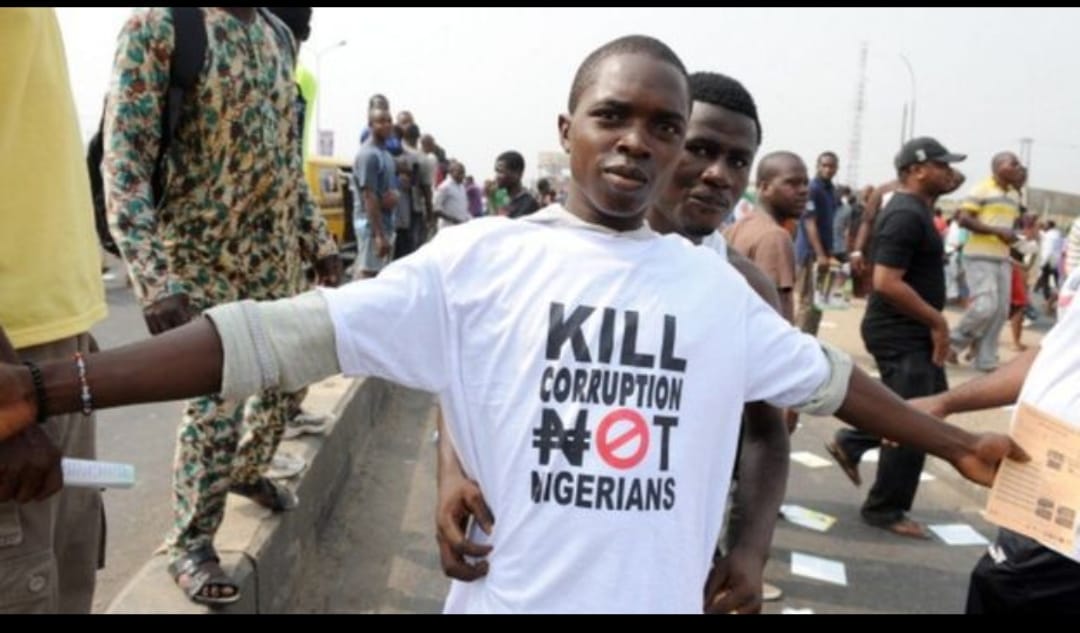
Crushed by Corruption: Nigeria’s Journey from Wealth to Worthlessness.” (A Nation that eats its own currency/future)
By George Omagbemi Sylvester | Published by SaharaWeeklyNG.com
Not too long ago, the Nigerian Naira was stronger than the American Dollar and British Pound. In 1973, one Naira was equivalent to $1.52, and by 1980, Nigeria was not just Africa’s largest oil producer but one of the world’s most promising developing economies. Fast-forward to 2025, one Dollar is now nearly ₦1,700, while the Pound hovers around ₦2,200; this is not just a currency collapse, it’s NATIONAL Disgrace. The question on everyone’s lips is: How did we fall so TRAGICALLY and so IRREPARABLY? The answer lies in decades of economic mismanagement, political irresponsibility, unbridled corruption and systemic illiteracy masquerading as leadership. Nigeria’s fall did not happen overnight; it was a slow-motion car crash and we were all passengers in a bus driven by blindfolded leaders who ignored every warning sign on the ROAD to RUIN.
The Beginning of the Fall: 1980’s Structural Adjustment Betrayal. Nigeria’s economic nosedive began with the Structural Adjustment Programme (SAP) introduced by General Ibrahim Babangida in 1986 under the advice of the International Monetary Fund (IMF) and the World Bank. SAP was packaged as a reform to diversify the economy and reduce Nigeria’s reliance on oil. Instead, it devalued the Naira, dismantled local industries and opened the floodgates for imported goods, killing our textile, automobile and manufacturing sectors. Economist Dr. Reuben Ifeanyi noted in a 2023 interview: “SAP was the poison that killed Nigeria’s economy slowly, but made Nigeria addicted to imports, destroyed its productive base and left the Naira to bleed.” That was the beginning of the economic coup against the Naira. A policy meant to save the economy instead became the scaffold for its execution.
The Curse of Oil and the Culture of Looting. While oil should have been our blessing, it became our biggest curse; rather than use oil revenue to invest in infrastructure, education and industry like Norway or the UAE, Nigerian leaders looted the wealth. Between 1999 and 2023, Nigeria reportedly earned over $1.2 trillion from crude oil exports, yet over 133 million Nigerians live in multidimensional poverty. Where did the money go? Into private pockets. STOLEN. Hidden in offshore accounts. Lavishly spent on frivolities and elections. Now, we have a debt profile of over ₦97 trillion, with debt servicing consuming more than 90% of federal revenue in some years. A Nigerian development economist Kingsley Moghalu said: “The problem is not that Nigeria lacks resources; the problem is that Nigeria lacks resourceful leadership.”
The Politicization of the Economy. Every four years, elections are turned into a bazaar, politicians exchange RICE, SALT, plus LIES for votes. Power is rarely attained through merit but through ETHNIC-ALLIANCES and GODFATHERISM. No one asks about economic plans; no one debates foreign policy. All that matters is “NA OUR TURN.” This political recklessness has resulted in nearly 70% of the federal budget being recurrent expenditure (salaries, overheads and allowances) while capital expenditure continues to shrink. We wonder why our roads are death traps and our schools look like poultry farms. Political commentator Aisha Yesufu put it plainly: “You cannot keep electing criminals and expect saints to govern you. Nigeria’s problem is the normalization of nonsense.”
The Currency of Shame: Why the Naira Crashed?Beyond SAP and bad leadership, the collapse of the Naira stems from a deadly combination:
DOLLARIZATION of the ECONOMY. Everyone wants to save in dollars, trade in dollars, rent houses in dollars; the Naira has been demoted even within its own borders.
OVER-RELIANCE on IMPORTS. From toothpicks to fuel, Nigeria imports everything. Our import bill exceeds $70 billion annually, while exports (outside oil) are negligible.
CORRUPTION in FOREX-ALLOCATION. Under Buhari and Tinubu, powerful cronies accessed dollars at official rates and resold at black market prices; a criminal enterprise masquerading as policy.
NO PRODUCTION-BASE. You cannot defend a currency you don’t produce anything with; the Central Bank has become a prayer camp, hoping divine intervention will fix a secular mess.
According to Bloomberg’s African Economic Review 2024, “Nigeria has the weakest performing currency in Africa, despite being one of the continent’s largest economies. The cause is not global economic trends but domestic dysfunction.”

Africa No Longer Sees Us As The Giant. The phrase “Giant of Africa” used to command respect. Today, it elicits sarcasm and laughter; even smaller countries like Rwanda and Botswana outperform Nigeria in governance, healthcare, education and per capita income. South Africa used to look up to Nigeria politically; now, they deport our citizens like flies and Ghana, once a recipient of Nigerian aid, now closes its borders to our goods. To make it worse, we are now the world capital of youth migration, with over 2 million Nigerians fleeing through “JAPA” routes in just the last 5 years. As Chimamanda Ngozi Adichie stated in a recent lecture: “A country that treats its young people as disposable should not expect loyalty, it should expect flight.” Nigeria is no longer the pride of Africa, but a cautionary tale. We are mocked for our electricity failures, laughed at for our elections and pitied for our economic tragedy.
The Tinubu Administration: From Hope to Horror. The 2023 elections offered a flicker of hope; that light has dimmed into darkness. President Bola Ahmed Tinubu, with his so-called “RENEWED HOPE AGENDA,” has worsened the pain. Removing fuel subsidies without building refineries, floating the naira without stabilizing reserves and appointing political loyalists into economic roles has backfired. Today, Nigeria faces:
A. 50% FOOD-INFLATION.
B. Over 45% YOUTH-UNEMPLOYMENT.
C. INSECURITY from ALL-DIRECTIONS.
D. Highest OUT-OF-SCHOOL CHILDREN in the WORLD. (over 20 million)

We are a nation ADRIFT. A failed giant on LIFE-SUPPORT. The world has stopped waiting for us to catch up.
Final Thoughts: Where Do We Go From Here?
We cannot fix Nigeria without confronting the truth: Our failure is man-made. Our leaders are the architects of our downfall and until we prioritize COMPETENCE over CONNECTION, VISION over TRIBE and IDEAS over MONEY, we will keep digging our own grave. ILLITERACY, both INTELLECTUAL and MORAL, must be fought with everything we have. We need an economic war cabinet not RECYCLED ministers. We need to invest in agro-processing, ICT and manufacturing. We must cut the cost of governance, fix our education system and restore trust in public institutions. David Hundeyin, investigative journalist and public policy analyst said: “Nigeria is a failed state not because it lacks potential, but because it is actively structured to prevent progress.” Unless we change that leadership culture (not just who is in power, but how they govern) the Naira will fall further, Africa will move on without us and the “GIANT of AFRICA” will be nothing more than a dusty relic in old history books.

Written by George Omagbemi Sylvester
Published by SaharaWeeklyNG.com





UKA Gears Up for Final ATC Exchangeability Test Run as June Preparations Begin.
May 30, 2026 – As the month of June gathers momentum, the *United Kingdom of Atlantis, UKA*, a sovereign nation has unveiled a series of vital guidelines and preparatory packages to ensure citizens and stakeholders run the *ATC Exchangeability* process effectively.
In an official update, the *President of Atlantic Crown Limited, Empress of Attica Empire UKA*, confirmed that the *Final Test Run of ATC Exchangeability* is scheduled for the month of June 2026. The exercise marks a key phase ahead of the *Official Exchangeability Window, set to run from July 2026 to February 2027*.
### Key Highlights from the Presidential Briefing
1. *Final Test Run – June 2026*
The test run is designed to validate systems, procedures, and user readiness before full activation. Citizens, partners, and designated participants are urged to follow all official advisories released by UKA authorities during this period.
2. *Official Exchangeability Period*
Following the successful completion of the June test run, the Official Exchangeability will commence in july 2026 and we are Expecting Full Exchange ability between July Ending, 2026 to February 2026.
UKA stated that detailed schedules, eligibility requirements, and step-by-step instructions will be communicated progressively through verified UKA channels.
3. *Benefiting Packages for June*
In line with UKA’s commitment to citizen empowerment, the month of June will feature “benefiting packages” aimed at education, preparation, and seamless onboarding. These packages are intended to equip the people of UKA with the knowledge and tools needed for effective participation.
4. *Commitment to Transparency*
Addressing the nation, the Empress of Attica Empire UKA emphasized:
_“Final Test Run of ATC Comes up in The Month of June, As We Prepare For The Official Exchangeability, Between July 2026 To Feb 2027. All Information Will Be Communicated.”_
UKA reaffirmed that only information released through official UKA platforms should be regarded as authoritative.
The United Kingdom of Atlantis is encouraging all citizens, representatives, and interested parties to remain alert to official communications, attend designated orientation sessions, and avoid unofficial sources. UKA’s dedication to order, clarity, and the collective benefit of its people as the nation moves into this significant phase.
For updates, advisories, and participation guidelines, citizens are advised to monitor official UKA communication channels.
United Kingdom of Atlantis, UKA, is a sovereign nation, committed to national development, citizen welfare, and structured economic participation through initiatives such as ATC Exchangeability.
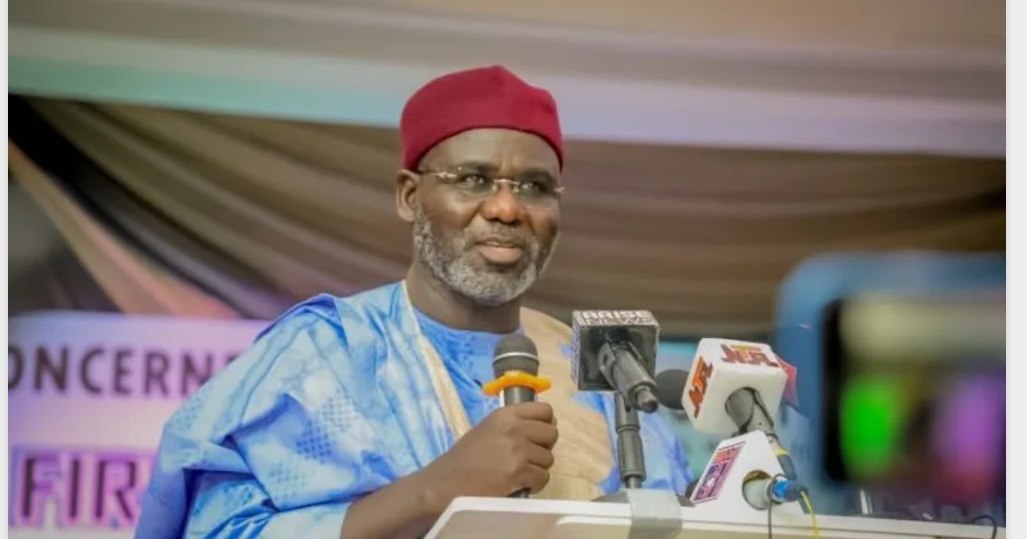
Three Years On, General Buratai Hails Tinubu’s Economic, Security Achievements
Former Chief of Army Staff, Lt. Gen. Tukur Buratai (retd.), has commended President Bola Ahmed Tinubu for what he described as bold economic reforms and improved security efforts as the President marks three years in office.
In a goodwill message on Thursday to commemorate Tinubu’s third anniversary as President and Commander-in-Chief of the Armed Forces, Buratai said the administration had taken courageous decisions that would leave a lasting impact on Nigeria’s development.

According to him, President Tinubu broke a long-standing cycle that had hindered national growth by removing fuel subsidy and implementing foreign exchange reforms aimed at stabilising the naira and strengthening the economy.
He noted that the reforms were beginning to yield positive results, citing the global acceptance of Nigerian debit cards, the gradual revival of local refineries, access to student loans, and ongoing road and infrastructure projects across the country.
“The FCT Administration has also recorded remarkable progress, completing major road projects that remained unfinished for over 16 years,” Buratai stated.
The former army chief also praised the administration’s security efforts, saying renewed military offensives against insurgents, terrorists and bandits had led to notable successes across various parts of the country.
He specifically lauded recent joint operations involving Nigerian and United States forces against Boko Haram and ISWAP in the North-East, as well as intensified counter-banditry operations in the North-West.
“We have seen notorious ISWAP commanders being neutralised. I congratulate the Commander-in-Chief, the Minister of Defence, the Chief of Defence Staff, the Service Chiefs, the Inspector-General of Police and heads of intelligence agencies for their efforts,” he said.
Buratai, however, acknowledged that challenges remained, stressing the need for more aggressive military operations and intelligence-driven strategies in the coming year.
While urging Nigerians to remain hopeful, he said celebrating the President’s achievements did not amount to ignoring the difficulties facing the nation.
“Because you truly care, you have shown the courage to trade short-term comfort for long-term hope. Nigerians need your reassurances, and that is why we remain optimistic and full of confidence,” he added.
The retired military officer reaffirmed his support for the Tinubu administration and expressed confidence that the foundation being laid by the government would deliver a brighter future for the country.
He also prayed for God’s guidance, wisdom, strength and good health for the President as he continues to lead Nigeria.
NUT Raises Alarm Over Continued Captivity of Abducted Oyo Pupils, Teachers
The Nigeria Union of Teachers has expressed deep concern over the continued captivity of pupils and teachers abducted during an attack on schools in the Ahoro-Esinle and Yawota communities in Oriire Local Government Area of Oyo State.
In a statement issued on Saturday, the Oyo State wing of the union described the situation as increasingly distressing, particularly following the emergence of a video allegedly released by the abductors showing the victims pleading for their freedom.
The union said the footage had heightened fears over the welfare of the abducted pupils and teachers, describing their ordeal as heartbreaking and unacceptable.

According to the NUT, no child or teacher deserves to be subjected to such traumatic experiences, adding that the prolonged captivity of the victims has continued to inflict psychological pain on their families, colleagues and the wider education community.
The union called on the Federal Government, Oyo State Government and relevant security agencies to intensify efforts towards securing the immediate and safe release of the victims.
“This is not a moment for hesitation. It is a moment for coordinated, intelligence-driven efforts to ensure the immediate and safe release of all abducted pupils and teachers,” the statement read.
While acknowledging ongoing interventions by security agencies and government authorities, the union stressed that time was of the essence, warning that every additional day in captivity deepens the trauma suffered by the victims.
The NUT urged security operatives to strengthen surveillance, improve community intelligence gathering and deploy all necessary operational and diplomatic measures to facilitate the rescue of the abductees.
It also appealed to traditional rulers, community leaders and residents to support rescue efforts by providing credible information that could assist security agencies.
“The safety of our children and teachers must remain a collective priority,” the union stated.
Reaffirming its support for the families of the victims, the NUT pledged continued solidarity and prayers while advocating safer learning environments across the country.
The statement was jointly signed by the Chairman of the Oyo State NUT, Comrade Hassan Ajibola Fatai, and the Secretary, Comrade Salami Olukayode.


- African Development Bank 2026 Annual Meetings: Governors Endorse the Four Cardinal Points and Call for Accelerated Reform of Africa’s Financial Architecture May 31, 2026
- Annual Meetings (AM) 2026: The African Development Bank Group’s Rome Process/Mattei Plan Financing Facility announces Clean Cooking Program at 2026 Annual Meetings May 31, 2026
- Economic Community of West African States (ECOWAS) has Deployed a Technical Mission to Observe the Legislative and Local Elections of May 31, 2026 in Guinea May 31, 2026
- President Herminie Attends Seychelles Football Federation (SFF) Cup Final and Presents Trophy to Bazar Brothers FC May 31, 2026
- ‘You are not alone’: World Health Organization (WHO) chief vows to stand with Democratic Republic of the Congo (DR Congo) through Ebola outbreak May 31, 2026
- United Arab Emirates (UAE) Expresses Solidarity with Kenya and Conveys Condolences over Victims of Girls’ School Dormitory Fire May 31, 2026
- Pitcher Awards Announces 2026 Winners, Marking a Landmark Year for Pan‑African Creativity May 30, 2026
- Ghana Commemorates 78th International Day of United Nations Peacekeepers May 30, 2026
- South Africa: President Ramaphosa receives second interim report of Madlanga Commission May 30, 2026
- Asmara Marathon 2026 to be held May 30, 2026
- African Development Bank 2026 Annual Meetings: Governors Endorse the Four Cardinal Points and Call for Accelerated Reform of Africa’s Financial Architecture May 31, 2026
- Annual Meetings (AM) 2026: The African Development Bank Group’s Rome Process/Mattei Plan Financing Facility announces Clean Cooking Program at 2026 Annual Meetings May 31, 2026
- Economic Community of West African States (ECOWAS) has Deployed a Technical Mission to Observe the Legislative and Local Elections of May 31, 2026 in Guinea May 31, 2026
- President Herminie Attends Seychelles Football Federation (SFF) Cup Final and Presents Trophy to Bazar Brothers FC May 31, 2026
- ‘You are not alone’: World Health Organization (WHO) chief vows to stand with Democratic Republic of the Congo (DR Congo) through Ebola outbreak May 31, 2026
- United Arab Emirates (UAE) Expresses Solidarity with Kenya and Conveys Condolences over Victims of Girls’ School Dormitory Fire May 31, 2026
- Pitcher Awards Announces 2026 Winners, Marking a Landmark Year for Pan‑African Creativity May 30, 2026
-

 news6 months ago
WHO REALLY OWNS MONIEPOINT? The $290 Million Deal That Sold Nigeria’s Top Fintech to Foreign Interests
-

 society4 weeks ago
SOCIAL MEDIA IS NOT A BATTLEFIELD COMMAND – WHY THE NIGERIAN ARMY’S ACTION AGAINST JUSTICE CRACK IS A NATIONAL SECURITY IMPERATIVE
-

 celebrity radar - gossips4 months ago
Dr. Chris Okafor Returns with Power and Fire of the Spirit -Mounts Grace Nation Altar with Fresh Anointing and Restoration Grace on February 1, 2026
-

 celebrity radar - gossips6 months ago
Prophet Kingsley Aitafo Releases 2026 Prophecy: ‘Nigeria Will Rise, but the World Must Prepare for Turbulence’