
Business
CSI is key to the sustainability of our business – Stanbic IBTC

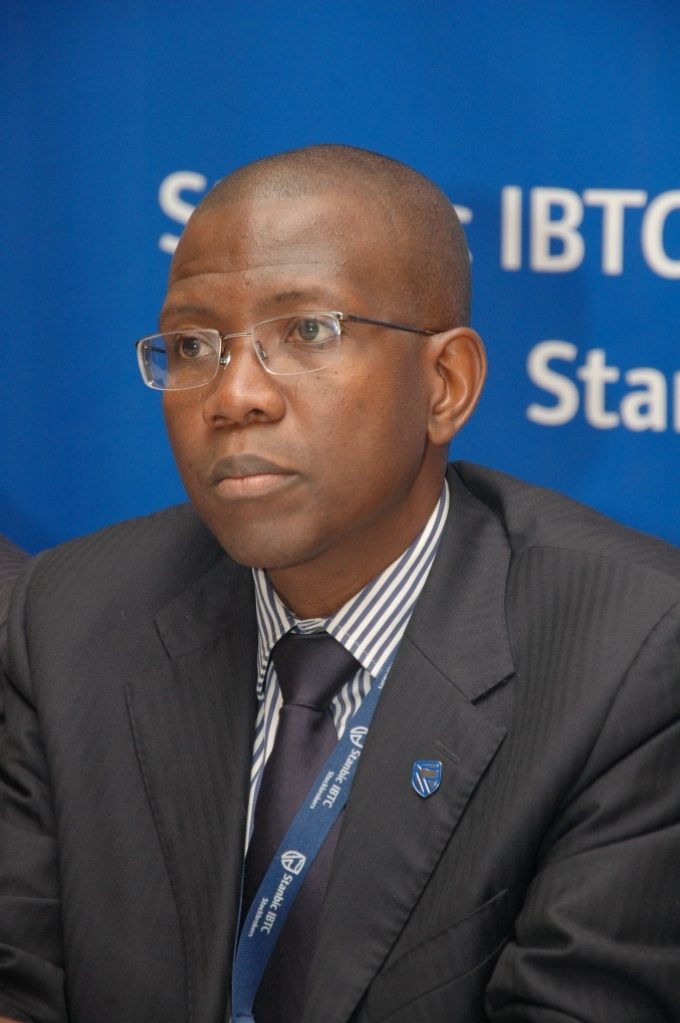

Corporate Social Investment is deployed by businesses to help impact their operational environment. YINKA SANNI, Group Chief Executive, Stanbic IBTC Holdings PLC in this interview examines CSI practice in Nigeria and how Stanbic IBTC deploys its CSI as part of the financial institution’s larger sustainability strategy for socioeconomic integration of the under-served in the society as well as a tool for creating shared values. (Excerpts)
How does Stanbic IBTC position corporate social investment (CSI)?
Most organisations interpret and implement CSI as best suits their overriding corporate goals. However, to borrow a leaf from the United Nations Industrial Development Organisation (UNIDO), we at Stanbic IBTC see CSI as a management concept whereby we integrate social and environmental concerns into our business operations and interactions with our stakeholders. CSI is the way through which Stanbic IBTC as a socially responsible company achieves a balance of economic, environmental and social imperatives.
At Stanbic IBTC, we are aligned to Standard Bank Group CSI focus which uses CSI to enhance our brand reputation, grow new markets, increase employee proposition and present us as socially responsible in a way that makes business sense. We share in the Group’s ideology where CSI is key and the watchwords are development, support and community upliftment.
Our CSI pillars in Stanbic IBTC are Education, Health and Economic Empowerment
In your opinion, are corporate organisations in Nigeria doing enough in terms of CSI or do you recommend a paradigm shift in attitude?
I believe that many organisations already see the value in CSI and are doing quite a bit of social investments. Nonetheless, when you examine the peculiarity of our operating environment, where there exist wide gaps between the different socio-economic classes, you’ll understand we could never do too much and that there’s always ample opportunity to do more, especially among the lower cadre of the socio-economic spectrum.
I mean those who sit at the bottom of the pyramid. I would advise that companies make a conscious and concerted effort not just to finance some add-on philanthropic things, but to change their strategies and business models and really develop and incorporate structured CSI approach into their management accounting and control systems. What is prevalent is that businesses have marvelous ambitions related to CSI. The question, however, remains how committed they are to actualizing or sustaining these ambitions and more importantly how they even plan to accomplish these ambitions.
Are your employees usually part of your stakeholder engagements?
Absolutely. At Stanbic IBTC our vision recognizes that our people are our most important asset, which makes it imperative to inspire and engage employees in ongoing CSI efforts to make a meaningful impact. We see our employees as our partners in all our sustainability initiatives. By doing this, not only do we succeed in getting their active involvement, but also benefit from the fact that employees gain a lot of valuable skills and experiences which make them a better asset to our organization.
The sustainability of an idea needs everyone in every title to be aligned to our mission of moving forward. We believe our people and culture will determine our success in executing our strategy, which includes our CSI. Our business philosophy is anchored on and vested in building relationships and trust with our clients/customers, employees, shareholders, regulators, communities and other key stakeholders. Our values underpin our legitimacy and are intended to reinforce the trust our stakeholders have in our organisation. As such, we endeavour to carry along and get the buy in of all our internal and external stakeholders.
In fact, we have a culture of staff involvement and participation in our social investment initiatives which means that our staff are not only part of the activation but the entire process of identifying key areas where we choose to support, collaborate or invest. We try as much as possible to encourage our staff to either as teams or units voluntarily contribute and participate through departmental CSI activities which initiative has been hugely successful over the past year. Through staff CSI volunteerism or contribution alone, we have invested over a N100million towards various charitable causes under the health, education and economic empowerment portfolios year-to-date.
How important is corporate social investment to Stanbic IBTC’s business?
I believe it would be difficult to put a value to the importance of CSI to us as an organisation. Primarily because CSI is key to the sustainability of our business just as the support of all our stakeholders underpins our sustainability. This inter-dependence requires that we conduct our business responsibly to create value in the long-term interests of society. For us at Stanbic IBTC our mission is to continue to contribute to the socioeconomic development of the nation in a way that is consistent with the nature and size of our business operation. This is why we provide end-to-end financial services and products responsibly, bearing in mind the needs of society, our customers, our staff, our shareholders, the environment and future generations.
We do pride ourselves as a socially responsible corporate citizen of our country because CSI is an integral part of our DNA at Stanbic IBTC and Standard Bank Group. Standard Bank has over the years built reputation for continental support of arts and culture as well as sports development.
Our commitment to investing in corporate social projects and initiatives is something we take just as seriously as adhering to the highest corporate governance principles and operating in line with global best practice. At Stanbic IBTC, CSI isn’t a publicity platform. We see CSI as a duty. Like I mentioned earlier, our CSI falls under three prongs of health, education, and economic empowerment.
How do you select the initiatives and projects you undertake for your CSI and what model or models do you use for implementation?
Generally, our CSI initiatives must fall under any of the three pillars of health, education and economic empowerment. The model we’ve used and that has worked for us overtime is investing in projects we believe have the greatest impact, widest reach, and highest sustainability ratio and ensuring implementation with reputable, competent and reliable partners. We, however, have carried out several other projects like vaccination against hypophosphatasia (HPP), education materials donation, public school facility renovations, safety equipment donations, like safety helmets, water projects, as well as staff volunteerism initiatives I talked about earlier which we undertake directly. Just to mention that we recently donated relief materials worth millions of naira to alleviate the living conditions of our brothers and sister in Benue State and its environs who were devastated and displaced as a result of the flooding in that region.
Tell us about the project you refer to as your flagship CSI initiative “Together For A Limb”and why you organise the annual walk?
Thank you very much for that question. Having over a long period of time channelled our CSI on projects under both education and economic empowerment pillars of our CSI aegis, we decided it was time to revisit our intervention and shift focus back to the health sector, which explains why we decided on sponsoring and fitting children with limb loss with prosthesis. Which is why in the last two to three years Stanbic IBTC has consistently sponsored the donation of prostheses to some children living with limb difference, otherwise referred to as amputees.
We understand how challenging it must be for the parents and guardians of these children, especially considering the high cost of acquiring these prostheses and of course the value it would bring to the daily lives of these children. In addition to fitting the children with prostheses, Stanbic IBTC is also giving out Education Trust to the beneficiary children courtesy of our Trusteeship subsidiary.
We did not stop at that. To help raise public awareness for amputees, victims of terror attacks and other children who have limb differences or have lost limbs due to trauma, mismanaged injuries, accidents and, occasionally due to congenital issues, and create shared values in the community, Stanbic IBTC on Saturday, 14 November 2015, organised a Walk tagged ‘Out For A Limb’ in Lagos, chaired by the First Lady of Lagos State, Mrs. Bolanle Ambode. This was the very first edition and the walk featured management and staff, esteemed customers and friends of Stanbic IBTC and other well-meaning Nigerians. Our sincere gratitude go out to all our stakeholders who came out en-masse to join us in walking for a good cause. We are also forever grateful to Her Excellency, wife of the Executive Governor of Lagos State, Mrs. Ambode, for her motherly love, support and guidance in identifying with our quest to raise awareness for amputees and help bring succour to underserved children who live with limb differences from the very start of the project.
Owing to just how committed Stanbic IBTC is to CSI, and most of all, this particular initiative which coincidentally is our adopted signature CSI project. The second edition, which held on Saturday, 24 September 2016 in Abuja, and which had now been rechristened ‘Together 4 A Limb’ which was more impactful.
Essentially because we decided to expand the scope of beneficiaries to include underserved children victims of the Boko Haram insurgency which has plagued the northern region of the country as some of the primary beneficiaries of the programme.
A 3-kilometre charity walk aimed at raising awareness and awakening public consciousness of children without limbs was flagged off by the Guest of Honour the First Lady of Nigeria, Mrs. Aisha Buhari, who was ably represented by the wife of the Zamfara State Governor, Hajiya Asmau Yari.
As is our practice and as part of the package, education trust fund worth millions of naira was awarded to each of the eight beneficiary children whom we had successfully fitted with artificial limbs. Six of the eight children beneficiaries were actually present at the charity walk and were presented cheques by Hajiya Yari while two others were presented at a separate ceremony. Five children had benefitted from the initiative in 2015 and received education trust fund and prostheses, which brought to 13 the number of children beneficiaries so far. In growing these numbers this year, preparations are in top gear to host the third edition of the initiative. We are currently, fitting and carrying out rehabilitation, as we are already preparing another set of six children who will join the growing list of beneficiaries of the initiative. These six children will be officially unveiled during the walk and presented with cheques in the form of education trust fund to guarantee their educational growth and development.





Fidelity Bank grows gross earnings by 38% to N434.95b in Q1
Fidelity Bank Plc recorded 37.9 per cent growth in gross earnings to N434.95 billion in first quarter 2026 as the international commercial bank continued to expand its core banking market share.
Interim report and accounts of Fidelity Bank for the three months ended March 31, 2026 released at the Nigerian Exchange (NGX) showed that gross earnings rose from N315.42 billion in first quarter 20025 to N434.95 billion in first quarter 2026, representing an increase of 37.9 per cent.
The top-line performance was driven by impressive growth in the bank’s core business operations with interest incomes rising by 22.8 per cent to N314.48 billion in first quarter 2026 as against N256.10 billion in first quarter 2025.
With net interest income at N180.97 billion, the bank closed the period with profit before tax of N92.48 billion. After taxes, net profit stood at N74.47 billion for the three-month period. Earnings per share remained high at N5.69, underlining the capacity of the bank to reward its shareholders.
The balance sheet of the bank also emerged stronger. Total assets crossed the N11 trillion mark to N11.35 trillion by March 2026 compared with N10.46 trillion recorded in December 2025. Customers’ deposits increased from N6.89 trillion to N7.38 trillion. Total equity rode on the back of earnings growth to a 27.5 per cent increase from N1.09 trillion in December 2025 to N1.39 trillion by March 2026.
The first quarter 2026 results further consolidated the strong earnings outlook of the bank, which had successfully completed its recapitalisation amidst impressive earnings performance in 2025.
Fidelity Bank had recorded double-digit growths in interest and non-interest incomes as well as key balance sheet items during the year ended December 31, 2025.
The audited report showed that gross earnings rose from N1.04 trillion in 2024 to N1.52 trillion in 2025, an increase of 45.6 per cent. Interest and similar incomes had grown by 38.7 per cent from N803.1 billion in 2024 to N1.11 trillion in 2025. Fees and commission incomes also rose by 44.7 per cent from N78.4 billion to N113.4 billion. The bank recorded net profit after tax of N242.4 billion in 2025.
The bank’s balance sheet emerged stronger with total assets rising by 18.6 per cent to N10.46 trillion in 2025 as against N8.82 trillion in 2024. Customer deposits increased by 16.1 per cent from N5.94 trillion to N6.89 trillion, reflecting continued franchise strength and an improved funding profile. Net loans and advances meanwhile declined by 2.4 per cent to N4.28 trillion in 2025 as against N4.39 trillion in 2024, attributable to customers paying down on their mature obligations.
The bank had in 2025 strengthened its capital position, with eligible capital rising to N561 billion, above the regulatory minimum of N500 billion for banks with international authorisation. In addition, capital adequacy had remained robust, with Capital Adequacy Ratio of 30.94 per cent by December 2025 as against 23.47 per cent by December 2024.
Managing Director, Fidelity Bank Plc, Dr. Nneka Onyeali-Ikpe, said the first quarter 2026 results reinforced the bank’s strong and resilient business model.
She noted that with the remarkable success of its recapitalisation programme and continuing expansion, Fidelity Bank has entered a new era of growth and impressive returns.
“We are on a stronger footing and confident that we will set new growth records that are reflective of our legacy and the future we are working on,” Onyeali-Ikpe said.
Business
Dangote Refinery Ends Nigeria’s Era of Fuel Import Dependence, Boosts GDP, FX Earnings — EIU
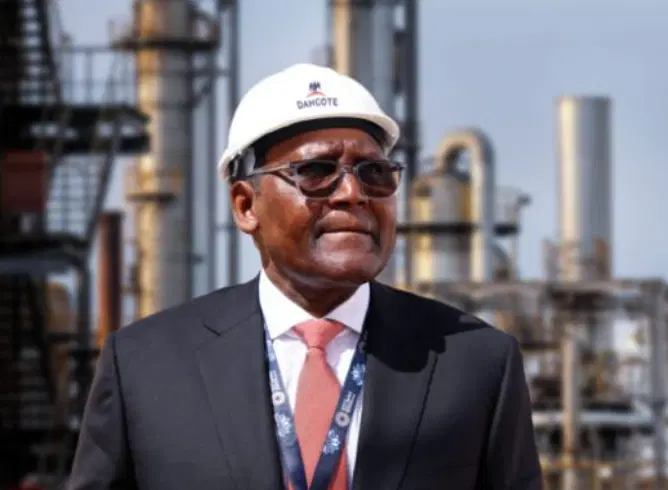
Dangote Refinery Ends Nigeria’s Era of Fuel Import Dependence, Boosts GDP, FX Earnings — EIU
The operational ramp up of the 650,000 barrels per day Dangote Petroleum Refinery & Petrochemicals is fundamentally reshaping Nigeria’s downstream oil sector, significantly reducing the country’s dependence on imported refined petroleum products and strengthening its external position, according to the Economist Intelligence Unit (EIU).
In its latest assessment on Nigeria’s fuel market and regulatory environment, the EIU said the refinery has already transformed a sector that was previously characterised by heavy reliance on imported fuel despite Nigeria being Africa’s largest crude oil producer. The report noted that the refinery met nearly 80 per cent of domestic petrol demand in April and produced enough volumes to satisfy local consumption requirements as operations approached full capacity.
The EIU described Nigeria’s downstream petroleum sector before the refinery as “long dysfunctional”, noting that the country had remained almost entirely dependent on costly imported fuel while producing nearly 1.5 million barrels of crude oil daily.
According to the report, the emergence of the refinery has reduced import dependence, improved domestic fuel availability and strengthened Nigeria’s balance of payments position through lower import demand and rising exports of refined petroleum products.
“The gradual ramp up of the 650,000 barrel/day Dangote refinery since May 2023 has transformed Nigeria’s long dysfunctional downstream sector,” the report stated. “The country’s main refineries, all state owned, had been inoperative for years and Nigeria was almost entirely reliant on costly imported fuel.”
The research and analysis division of The Economist Group, London added that the refinery’s attainment of full operational capacity and its planned expansion would further support Nigeria’s economic growth and foreign exchange earnings over the medium term.
“Meanwhile, the attainment of full capacity at, and an increase in exports from, the Dangote refinery will support real GDP growth and foreign exchange earnings in 2026 and 2027 and beyond, as a planned doubling of the plant’s output comes on stream around the end of the decade,” it added.
Industry analysts said the refinery is increasingly positioning Nigeria as an emerging refining and export hub, altering energy trade flows across Africa and reducing the vulnerability associated with fuel import dependence.
The EIU noted that the refinery’s expansion has coincided with major reforms in Nigeria’s downstream sector, including the removal of fuel subsidies and the introduction of market driven pricing mechanisms.
The report, however, said the transition from a state dominated fuel import structure to large scale domestic refining has triggered resistance from interests linked to the old import regime.
The latest tensions emerged following the decision by the Nigerian Midstream and Downstream Petroleum Regulatory Authority to relax restrictions on petrol imports despite the refinery’s growing capacity to meet domestic demand.
Dangote Industries subsequently initiated legal action, arguing that continued import approvals undermine domestic refining investments and conflict with the objectives of the Petroleum Industry Act, which seeks to encourage local refining capacity and reduce import dependence.
Analysts noted that the availability of large-scale domestic refining capacity has improved Nigeria’s energy security and reduced exposure to external supply shocks and foreign exchange volatility.
The Centre for the Promotion of Private Enterprise also cautioned against unrestrained importation of petroleum products, warning that such a policy could weaken Nigeria’s industrialisation drive and discourage investments in domestic refining.
Chief Executive Officer of CPPE, Muda Yusuf, said continued dependence on imported fuel had historically contributed to pressure on foreign reserves, exchange rate instability and fiscal leakages.
The refinery’s growing impact is also being reflected in Nigeria’s broader macroeconomic indicators. Earlier this month, S&P Global Ratings cited increased domestic refining capacity and rising hydrocarbon exports among the major factors supporting Nigeria’s sovereign credit rating upgrade – the first in 14 years.
Beyond Nigeria, analysts said the refinery is increasingly being viewed as a strategic industrial asset for Africa, where many countries remain heavily dependent on imported fuel despite rising demand for transportation, manufacturing, and power generation.
Business
BREAKING: Court Dismisses $19.6 Million Claim Against NNPCL — Rules Contract Scope Cannot Be Changed Orally

BREAKING: Court Dismisses $19.6 Million Claim Against NNPCL — Rules Contract Scope Cannot Be Changed Orally
In a landmark ruling on Friday, May 22, 2026, the Federal Capital Territory High Court in Abuja threw out a $19.6 million lawsuit filed by Alternate Dimensions Ventures Ltd against the Nigerian National Petroleum Company Limited (NNPCL), affirming a key legal principle: a written contract cannot be expanded through oral agreements or conduct.
Alternate Dimensions had sought $19,600,000 in professional fees, claiming the scope of its Direct Sale, Direct Purchase (DSDP e-pro) contract with NNPCL was orally expanded. Represented by counsel Patrick Peter, the firm argued it was entitled to the revised sum for services rendered under the alleged new terms.
But NNPCL, through its lawyer Ituah Imhanze of KENNA LP, pushed back sharply, arguing that parties are bound exclusively by the clear terms of their written agreement. Imhanze contended that without any written amendment, the claim was legally unsound, and the court agreed.
Delivering judgment, Justice Hamza Mu’azu upheld NNPCL’s defense, stating that the contract was unambiguous and that no evidence was adduced during the trial, which supported the alleged scope expansion. The court further found that NNPCL fully complied with all contractual terms and committed no breach.
Dismissing the suit as meritless, Justice Mu’azu reinforced the doctrine of sanctity of contract: any amendment to a written agreement must be express, unequivocal, and documented, not implied or verbal.
The ruling spares NNPCL from the S19.6 million claim and also a floodgate of similar potential liabilities.


- Uganda: Parliament concludes vetting of ministers June 2, 2026
- Fund for Export Development in Africa (FEDA) Board Appoints Mr. Emmanuel Assiak as Chief Executive Officer June 2, 2026
- Ecobank Group Launches World First Nature Bond Mobilising Global Capital to Protect Africa’s Natural Ecosystems June 2, 2026
- Merck Foundation Chief Executive Officer (CEO) Dr. Rasha Kelej together with Kenya First Lady support the education of 47 Kenyan Schoolgirls by providing Annual Scholarships till they Graduate June 2, 2026
- Annual Meetings 2026: Governors Back the Bank’s Platform Solutions to Transform Aviation and Health Systems in Africa June 2, 2026
- ThinkMarkets launches ChelseaAI, bringing live CFD trading into Artificial Intelligence (AI) assistants June 2, 2026
- Afreximbank Invites Rugby Africa President Herbert Mensah to Address the 33rd Annual Meetings on a Panel Exploring Sport as a Driver of African Industrialisation June 2, 2026
- Afreximbank Deepens Commitment to Economic Progress in The Bahamas June 1, 2026
- African Electric Vehicle (EV) platform Spiro raises $215M in equity to scale electric mobility and energy infrastructure across Africa June 1, 2026
- Africa Centres for Disease Control and Prevention (Africa CDC) Statement on Attacks Against Health Facilities During the Bundibugyo Virus Disease Response in the Democratic Republic of the Congo June 1, 2026
- Uganda: Parliament concludes vetting of ministers June 2, 2026
- Fund for Export Development in Africa (FEDA) Board Appoints Mr. Emmanuel Assiak as Chief Executive Officer June 2, 2026
- Ecobank Group Launches World First Nature Bond Mobilising Global Capital to Protect Africa’s Natural Ecosystems June 2, 2026
- Merck Foundation Chief Executive Officer (CEO) Dr. Rasha Kelej together with Kenya First Lady support the education of 47 Kenyan Schoolgirls by providing Annual Scholarships till they Graduate June 2, 2026
- Annual Meetings 2026: Governors Back the Bank’s Platform Solutions to Transform Aviation and Health Systems in Africa June 2, 2026
- ThinkMarkets launches ChelseaAI, bringing live CFD trading into Artificial Intelligence (AI) assistants June 2, 2026
- Afreximbank Invites Rugby Africa President Herbert Mensah to Address the 33rd Annual Meetings on a Panel Exploring Sport as a Driver of African Industrialisation June 2, 2026
-

 news6 months ago
WHO REALLY OWNS MONIEPOINT? The $290 Million Deal That Sold Nigeria’s Top Fintech to Foreign Interests
-

 society4 weeks ago
SOCIAL MEDIA IS NOT A BATTLEFIELD COMMAND – WHY THE NIGERIAN ARMY’S ACTION AGAINST JUSTICE CRACK IS A NATIONAL SECURITY IMPERATIVE
-

 celebrity radar - gossips4 months ago
Dr. Chris Okafor Returns with Power and Fire of the Spirit -Mounts Grace Nation Altar with Fresh Anointing and Restoration Grace on February 1, 2026
-

 celebrity radar - gossips6 months ago
Prophet Kingsley Aitafo Releases 2026 Prophecy: ‘Nigeria Will Rise, but the World Must Prepare for Turbulence’
You must be logged in to post a comment Login
You must log in to post a comment.