
Business
Currency over Character: How Nigeria Rewarded Wealth and Forgot Integrity in our Today’s Society

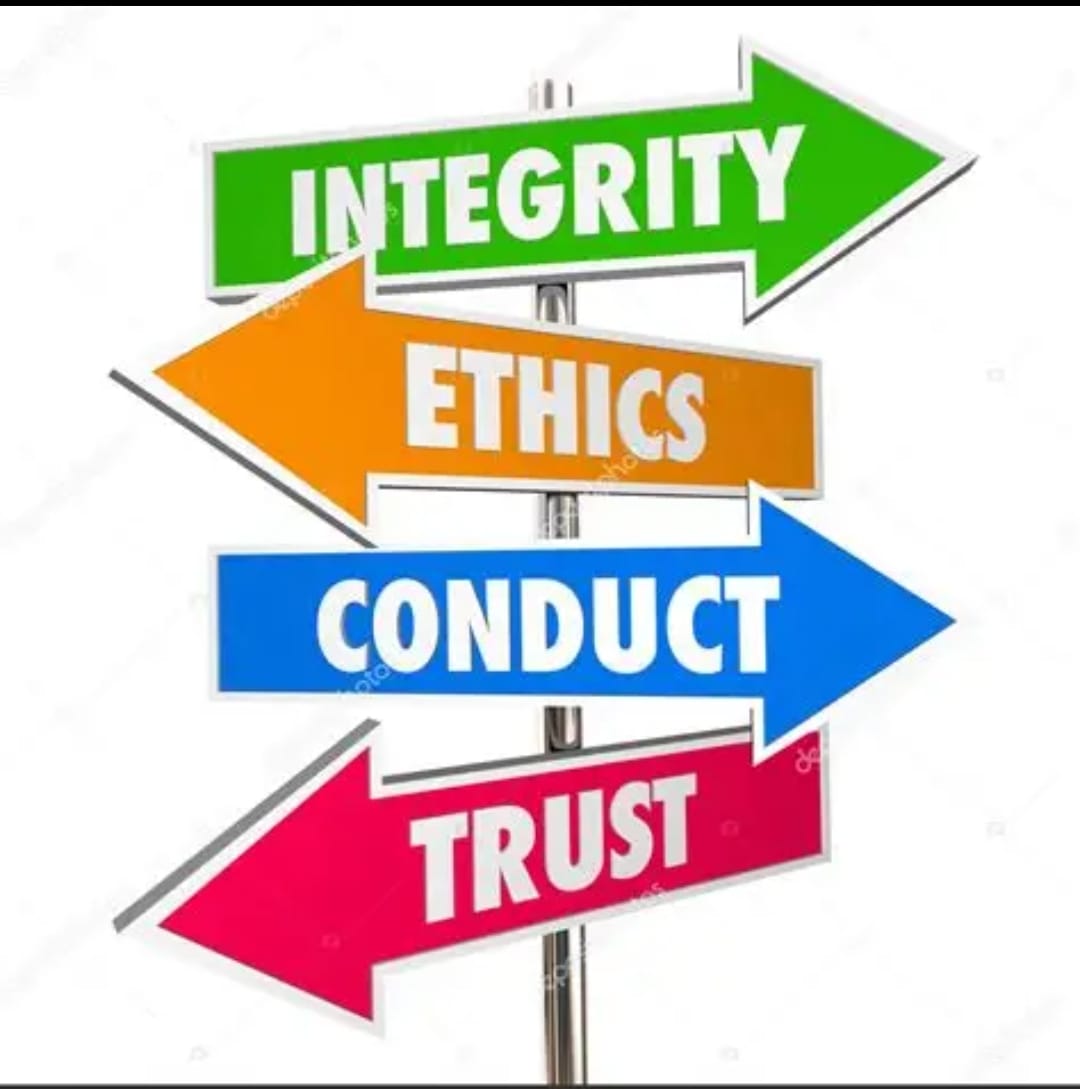
Currency over Character: How Nigeria Rewarded Wealth and Forgot Integrity in our Today’s Society.
Written by George Omagbemi Sylvester | Published by SaharaWeeklyNG.com
In today’s Nigeria, wealth has become the defining metric of value, not INTEGRITY, not PATRIOTISM, not INNOVATION, not SERVICE to COMMUNITY. Whether in politics, social circles and in churches, Nigerians have elevated MONEY above MORALS, RICHES above RIGHTEOUSNESS and LUXURY above LEGACY. We worship the rich, regardless of how they made their wealth. We sing praises for criminals in agbada, roll out red carpets for looters and even allow drug barons and fraudsters to define the standards of success. This dangerous social erosion has triggered a national identity crisis, one where the HONEST are MOCKED and the CORRUPT are IDOLIZED. How did we get here?

A Culture of Financial Worship. From the beer parlors in Lagos to the political rallies in Kano, the most consistent measure of respect in Nigeria today is money. It does not matter how it is made, (CYBER-FRAUD, LOOTING GOVERNMENT FUNDS, DRUG-TRAFFICKING, RITUAL-KILLINGS/ BLOOD-MONEY) what matters is that you can “spray” bundles of naira in public. Once you have money, pastors give you front-row seats in churches, politicians beg for your endorsement, musicians mention your name in their songs and your sins are forgiven with a smiling face. We are now a country where “I better pass my neighbor” is not about humility or effort, but about showing off wealth that often comes from suspicious sources. The moral compass of the average Nigerian has been distorted by financial desperation and a lack of consequence for bad behavior.

The Political Arena, a Market of Madness. Nigerian politics today is not a place for statesmen, it is a jungle for the highest spender. A candidate’s manifesto is less important than the rice and cash he distributes. Votes are sold like tomatoes in the market. The electorate demands money in exchange for loyalty, and politicians, in return, loot public coffers to recover their “INVESTMENT.” It is a VICIOUS CYCLE of ROT. Take the example of the 2023 general elections. Several candidates with clear criminal pasts or poor records in governance were overwhelmingly supported because they were wealthy. Many were even celebrated as “SMART” or “SHARP” simply for outwitting the system. “Any man wey no get money for Nigeria no fit talk,” this is the reflecting sad truth; MONEY, not MORALS, is POWER. As Nigerian music icon African China bitterly sang in his early 2000s protest anthem: “Poor man wey thief maggi dem go show him face for crime fighter… but rich man wey thief money na dem dem dey call oga…” This lyric still echoes today; poor people are shamed publicly, while the rich who steal billions are praised, given national honors and even elected into public office. This double standard has become normalized in Nigerian society.
In the Social Space: Influencers over Intellectuals. Social media has made this financial worship even worse. Nigerian influencers flaunt luxury lifestyles paid for by fraud, yet they are invited to high-level events and brand endorsements. We have normalized mediocrity and elevated vanity. A PhD holder earning an honest living gets less respect than a flamboyant fraudster in designer shoes. Honest hard work is mocked and words like “LEGIT” are said with pity, “you still dey do legit work in this economy?” From slay queens sleeping with politicians to politicians looting money meant for the people, money has become the altar we sacrifice our values on. In the words of David Hundeyin, Nigerian investigative journalist/global analyst: “The fastest way to become IRRELEVANT in Nigeria is to insist on INTEGRITY. This country respects AUDACITY not HONESTY.” Hundeyin’s words are a reflection of the harsh reality that Nigerian society punishes those who play by the rules.
Diaspora Voices: Shame Abroad, Glory at Home.
Ironically, many Nigerians who are disgraced abroad for fraud or money laundering become local heroes when they return home. A Nigerian caught with drugs in Indonesia might face the death penalty, if he survives and returns, he’ll be welcomed like a king in his village. We do not care about the source; we just want to see money. Iyinoluwa Aboyeji, co-founder of Andela and Flutterwave, once warned: “If we keep choosing men with no conscience to lead us just because they have cash, our nation will keep bleeding GENIUS to other nations.” That is the tragedy. While other countries are building the future with talent, Nigeria is losing hers to a value crisis.
Why Did This Happen? Several factors contributed to this national tragedy ie,
ECONOMIC HARDSHIP: With over 63% of Nigerians living in multidimensional poverty, people have become desperate. Survival not dignity, becomes the goal. As a result, anyone who escapes poverty (legally or illegally) becomes a role model.
FAILED INSTITUTIONS: The judiciary is compromised, the police are bribable and anti-corruption agencies often act as political weapons. When institutions fail to punish bad behavior, society begins to see crime as a smart move.
BROKEN VALUE SYSTEM: Parents no longer raise children to be morally upright but to be financially successful, “my SON is abroad,” they boast, even if he is in jail. Teachers demand bribes, clerics pray for corrupt politicians and role models are now Instagram scammers and reality TV stars.
MEDIA COMPLICITY: Many Nigerian media platforms give more coverage to celebrities than scholars. They promote those who flaunt wealth and ignore those who live quietly with integrity.
RELIGIOUS HYPOCRISY: Churches and mosques now prioritize donations over discipline. A corrupt man can be made a deacon, imam or church elder if he gives enough money. Prosperity is now confused with piety.
CONSEQUENCES of REWARDING BAD BEHAVIOR &
MORAL DECAY: When society rewards fraudsters and looters, the next generation grows up thinking crime pays.
LOSS of PATRIOTISM: Honest Nigerians feel alienated and many seek to leave the country.
POLITICAL DESTRUCTION: Leaders who buy their way into power do not feel accountable to the people.
ECONOMIC DAMAGE: Fraud, corruption and embezzlement drive away investors and kill local industries.
The Way Forward: Is A Valued Rebirth. If Nigeria must survive and thrive, it must return to a value system where CHARACTER not CASH, is celebrated. Schools must teach ETHICS, not just ECONOMICS. Media houses must highlight TRUTH-TELLERS not just TRENDSETTERS. Political parties must vet candidates based on INTEGRITY not just INFLUENCE. Religious leaders must speak TRUTH-TO-POWER not BOW-TO-IT. Chimamanda Ngozi Adichie, a celebrated Nigerian author and global voice of conscience, said: “When we abandon our principles in the pursuit of power or money, we also abandon the soul of our nation.” Adichie’s words pierce through the illusion of materialism and expose the spiritual bankruptcy that afflicts Nigerian society. We must start naming and shaming looters not hailing them. We must reward honesty even if it does not come with wealth. We must teach our children that VALUE is in VIRTUE not VANITY; and we must elect leaders who live by PRINCIPLE not PRICE-TAGS.
The Bottom Line: Nigeria is at a moral crossroads. We can either continue down this dangerous path of celebrating corruption and losing our soul as a nation or we can turn back and reclaim our values. The future of our country depends on who we choose to honor, the MAN-OF-IINTEGRITY or the MAN-OF-ILLICIT WEALTH. Let us remember the prophetic words of African China, still relevant two decades later:“Poor man wen thief maggi dem go show am for TV but Richman thief money na oga dem dey hail am”.
It is time to stop clapping for CRIMINALS. It is time to rewrite the story of Nigeria; one where CHARACTER not CASH takes the CROWN.


Written by George Omagbemi Sylvester
Published by SaharaWeeklyNG.com




Business
Alpha Morgan Bank Reinforces Commitment to Education at Redeemer’s University Business School Commissioning
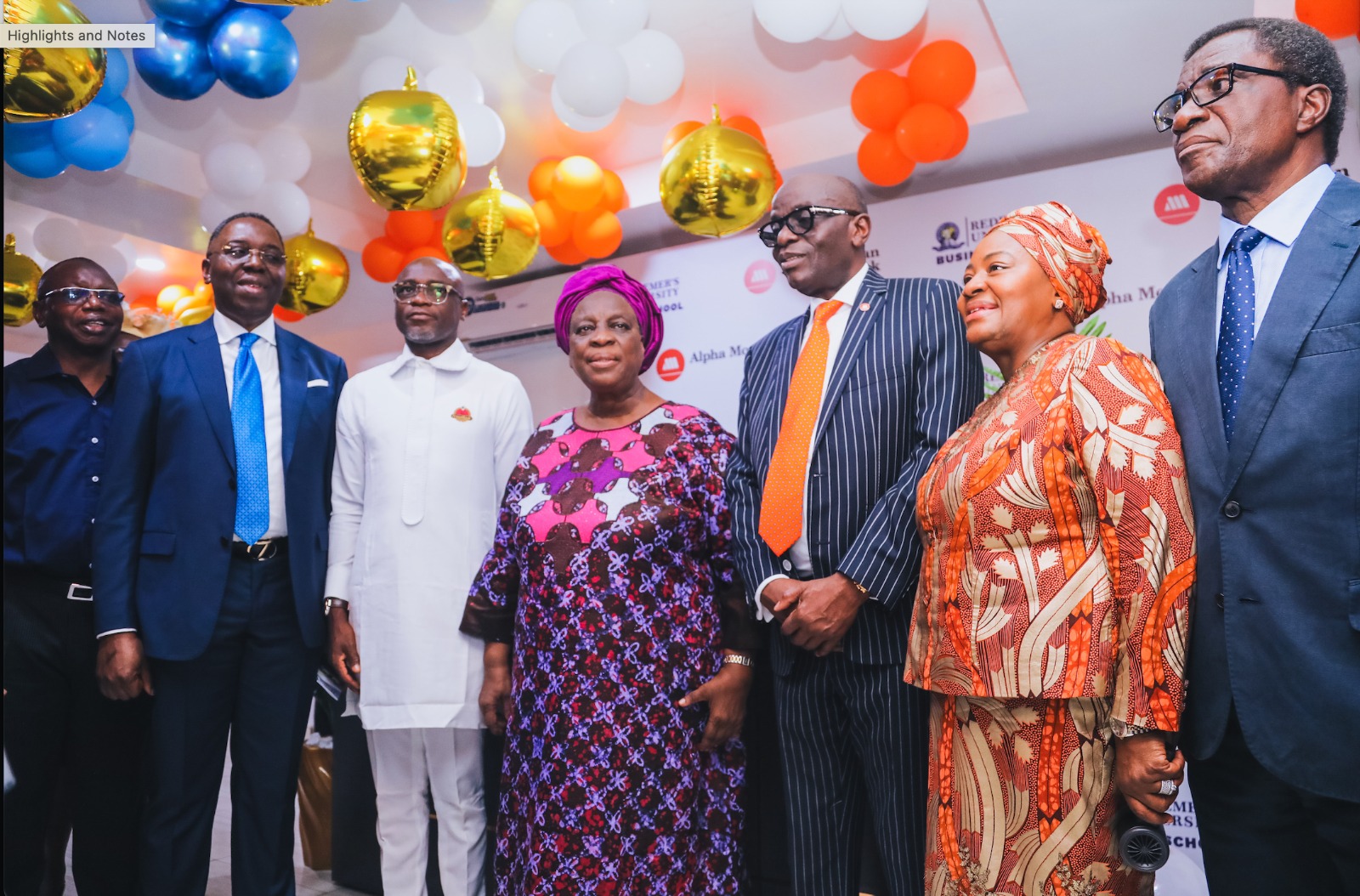
Alpha Morgan Bank Reinforces Commitment to Education at Redeemer’s University Business School Commissioning
Alpha Morgan Bank has reaffirmed its commitment to education and institutional development through its support for the commissioning of the Redeemer’s University Business School.
The Business School was officially inaugurated by Pastor (Mrs.) Folu Adeboye, at the commissioning ceremony attended by distinguished guests including Her Excellency, Mrs. Bola Obasanjo; the Pro-Chancellor and Chairman, Governing Council of Redeemers University, Professor Oluwatoyin Ogundipe; the Vice Chancellor, Professor Shadrach Olufemi Akindele; and other notable dignitaries.
Speaking at the event, the Managing Director of Alpha Morgan Bank reiterated the Bank’s commitment to supporting institutions that drive intellectual growth and national development.
As part of its broader focus on knowledge sharing and thought leadership, Alpha Morgan Bank will host its Economic Review Webinar in May 2026, bringing together experts to share insights on key economic trends and opportunities.
The Bank’s involvement reflects its continued dedication to empowering institutions and shaping the future of business and leadership in Nigeria.
Read more about Alpha Morgan Bank on www.alphamorganbank.com
PHOTO
L-R: Prof. Shadrach Olufemi Akindele, Vice Chancellor, Redeemers University, Engr. Eloka Eje, Dr Perez Araka, Pastor (Mrs) Folu Adeboye, Mother-In-Israel, The Redeemed Christian Church of God, Mr Ade Buraimo, MD/CEO Alpha Morgan Bank, Dr (Mrs) Oluwatomi Somefun, Dr. Simeon Ifere, at the inauguration of the Redeemer’s University Business School, Redemption City, Ogun State on Thursday 2nd April, 2026
Tinubu Aide Rebuts Rufai Oseni Over ₦3.3tn Power Debt Deal
Business
Aare Adetola Emmanuelking Welcomes President Tinubu to Gateway International Airport Commissioning in Iperu-Remo
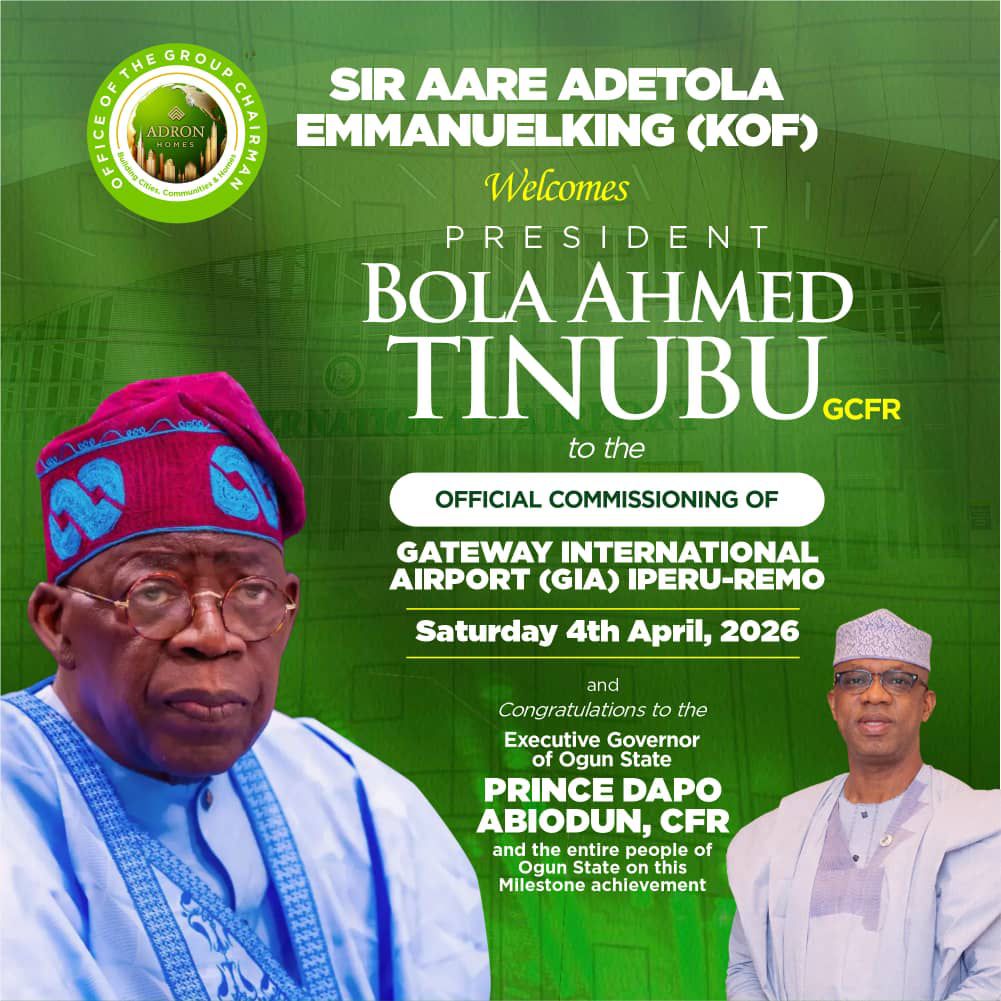
Aare Adetola Emmanuelking Welcomes President Tinubu to Gateway International Airport Commissioning in Iperu-Remo
In a momentous occasion that underscores the rapid infrastructural advancement of Ogun State, renowned real estate mogul and philanthropist, Aare Adetola Emmanuelking, warmly received the President of the Federal Republic of Nigeria, Bola Ahmed Tinubu, at the official commissioning of the Gateway International Airport, located in Iperu-Remo.
The landmark event, held under the visionary leadership of the Ogun State Governor, Dapo Abiodun, marks a significant stride in the state’s economic transformation agenda, positioning Ogun as a key hub for aviation, commerce, and investment in Nigeria.
Aare Emmanuelking, who is also the Chairman/CEO of Adron Homes and Properties, commended the Ogun State Government for its foresight and commitment to infrastructural excellence. He described the airport project as a “game-changer” that will not only boost connectivity but also stimulate real estate growth, tourism, and industrial expansion across the region.
Speaking during the commissioning, President Tinubu lauded Governor Abiodun’s administration for delivering a world-class facility that aligns with the Federal Government’s Renewed Hope Agenda, emphasizing the importance of strategic infrastructure in driving national development.
The Gateway International Airport is expected to serve as a critical gateway for investors and travelers, further enhancing Ogun State’s reputation as one of Nigeria’s most business-friendly environments.
The presence of top dignitaries, industry leaders, and stakeholders at the event underscores the project’s significance and its anticipated impact on the state’s socio-economic landscape and beyond.


- Seychelles Strengthens Human Rights Reporting through National Workshop April 8, 2026
- ABB’s Application Configurator brings speed and precision to grid-feeding protection system design April 7, 2026
- Can Equatorial Guinea Reposition as West Africa’s Gas Hub? April 7, 2026
- Afreximbank Partners with African Energy Week 2026 to Drive Africa-Led Energy Deals April 7, 2026
- Merck Foundation Marks ‘World Health Day’ 2026 – Transforming Patient Care in Africa and Beyond through 2600+ Scholarships for Healthcare Providers From 52 Countries April 7, 2026
- Morocco Gas Plan Reset Could Open Door to New Investment Models April 7, 2026
- African Petroleum Producers Organization (APPO) Secretary General Joins Angola Oil & Gas (AOG) 2026 as African Energy Bank Eyes June 2026 Debut April 7, 2026
- Ghanaian Biomedical Specialist Receives International Award April 7, 2026
- Grey Connects the Africa-Canada Money Corridor With Instant Transfers via Interac April 7, 2026
- Nigeria’s Oil Revival in Focus as Petroleum Minister Lokpobiri Joins Paris Energy Forum April 7, 2026
- Seychelles Strengthens Human Rights Reporting through National Workshop April 8, 2026
- ABB’s Application Configurator brings speed and precision to grid-feeding protection system design April 7, 2026
- Can Equatorial Guinea Reposition as West Africa’s Gas Hub? April 7, 2026
- Afreximbank Partners with African Energy Week 2026 to Drive Africa-Led Energy Deals April 7, 2026
- Merck Foundation Marks ‘World Health Day’ 2026 – Transforming Patient Care in Africa and Beyond through 2600+ Scholarships for Healthcare Providers From 52 Countries April 7, 2026
- Morocco Gas Plan Reset Could Open Door to New Investment Models April 7, 2026
- African Petroleum Producers Organization (APPO) Secretary General Joins Angola Oil & Gas (AOG) 2026 as African Energy Bank Eyes June 2026 Debut April 7, 2026
-

 news4 months ago
WHO REALLY OWNS MONIEPOINT? The $290 Million Deal That Sold Nigeria’s Top Fintech to Foreign Interests
-

 society7 months ago
“You Are Never Without Help” – Pastor Gebhardt Berndt Inspires Hope Through Empower Church (Video)
-

 celebrity radar - gossips2 months ago
Dr. Chris Okafor Returns with Power and Fire of the Spirit -Mounts Grace Nation Altar with Fresh Anointing and Restoration Grace on February 1, 2026
-

 celebrity radar - gossips4 months ago
Prophet Kingsley Aitafo Releases 2026 Prophecy: ‘Nigeria Will Rise, but the World Must Prepare for Turbulence’