
society
Cyber-Armageddon at Our Fingertips: Apple & Google Rush Emergency Updates to Thwart Sophisticated Zero-Day Hacking Campaign


Cyber-Armageddon at Our Fingertips: Apple & Google Rush Emergency Updates to Thwart Sophisticated Zero-Day Hacking Campaign.
By George Omagbemi Sylvester | Published by SaharaWeeklyNG.com
“A Chilling Exposé of Unprecedented Cyber Threats, State-Linked Exploitation and the Battle for Digital Sovereignty.”
In a dramatic and sobering turn of events this December 2025, two of the world’s most revered technology giants (Apple and Google) have been forced to issue emergency cybersecurity updates in response to a sophisticated, actively exploited hacking campaign that has shaken the global digital ecosystem to its core. This episode not only reveals the raw power of advanced cyber adversaries but also lays bare the fragility of modern digital life, reminding every connected individual that no device is truly immune without vigilant defense.

At the heart of this crisis are zero-day vulnerabilities and security flaws unknown to software makers at the time of exploitation, leaving users defenseless until a fix arrives. These zero-day bugs are among the most dangerous security threats in existence precisely because they offer no warning; they represent blind spots in our digital armor that sophisticated attackers can and do exploit without limitation.
The Crisis Unfolds: Emergency Response from Silicon Valley. In mid-December 2025, Google released urgent patches for a series of critical security flaws in its Chrome browser—one of which was already being exploited in the wild by malicious actors before the patch could even be completed. The company’s initial decision to withhold details underscores the seriousness of the incident, a rare move reflecting an ongoing investigation into exploit activity.
Shortly thereafter, Google clarified that the vulnerability was discovered by Apple’s Security Engineering team working in collaboration with Google’s Threat Analysis Group (TAG)—a specialized unit renowned for tracking government-linked threat actors and mercenary spyware sellers. This collaboration alone signals the gravity of the threat, suggesting state-level resources or highly resourced private actors were involved.

Almost simultaneously, Apple unleashed a sweeping suite of emergency updates for devices across its ecosystem—iPhones, iPads, Macs, Apple Watches, Apple TV, Vision Pro headsets and Safari browsers. In formal advisories, Apple acknowledged that two zero-day vulnerabilities “may have been exploited in an extremely sophisticated attack against specific targeted individuals” on devices running older versions of iOS prior to iOS 26. This is the same phrasing Apple historically has used to signal confirmed real-world exploitation, often in espionage campaigns.
Understanding Zero-Day Vulnerabilities: The Invisible Threat. To grasp the magnitude of this crisis, one must understand what zero-day vulnerabilities represent in cybersecurity. A zero-day flaw is a software defect unknown to developers at the time hackers discover and exploit it, leaving developers with “zero days” to prepare a defense before exploitation begins. This creates a perfect storm for attackers: no signature exists in security tools, no patch is available, and unsuspecting users carry on with business as usual.
Security expert Bruce Schneier (renowned cryptographer and cybersecurity authority) has described zero-days as “the crown jewels of cyberattackers”, because they can be weaponized to bypass traditional cyber defenses, compromise sensitive data, and infiltrate personal and institutional devices without detection. His words resonate profoundly in the context of the present crisis.
The Engine Behind the Attacks: WebKit and Memory Corruption Flaws.
In Apple’s case, the two patched vulnerabilities (CVE-2025-43529 and CVE-2025-14174) both reside in WebKit, the web rendering engine that drives not just Safari but all iOS web content across apps. These flaws include a use-after-free condition and a memory corruption issue, both classic exploits that allow attackers to execute arbitrary code simply by tricking a device into processing malicious web content.

What makes these bugs particularly dangerous is that WebKit is central to web content across platforms, meaning that merely visiting a malicious website could be enough to trigger an exploit—without any explicit user action. This bears eerie resemblance to historical spyware campaigns such as Pegasus, a notorious Israeli-made spyware capable of remote infection via zero-click exploits and extensive privacy invasion.
Coordinated Industry Action: Google and Apple Unite. The fact that Google’s Threat Analysis Group and Apple’s security team independently discovered and jointly addressed these flaws is notable. TAG is known for its focus on sophisticated attackers, including state actors and commercial spyware firms. Its involvement strongly suggests the hacking campaign was no ordinary cybercrime operation, but part of a highly targeted exploitation effort.
One of the bugs patched in Google Chrome (tracked internally as bug 466192044) was believed to allow memory corruption and arbitrary code execution. Google advised users to update to the latest safe release immediately to mitigate these risks.
Who Was Targeted? The Fog of Attribution. Neither Apple nor Google disclosed the identities or numbers of affected users. This ambiguity is typical in zero-day remediation: until patches are deployed, revealing too much can empower attackers to adjust tactics and expand operations. However, the explicit language used by Apple (that the vulnerabilities may have been exploited against specific targeted individuals) strongly implies high-value targets were in the crosshairs.
Past incidents reinforce this narrative. In previous years, zero-day exploits have been linked to espionage campaigns targeting journalists, diplomats, political activists, and human rights defenders—often leveraging spyware tools marketed by commercial vendors but deployed with the backing or tacit approval of nation-state actors.
The Broader Implications: A World Under Digital Siege
This combined emergency response from Apple and Google serves as a stark reminder: our digital infrastructures remain vulnerable to determined adversaries. The increasing sophistication of these attacks underscores a broader global trend—cyber threat actors, whether state-sponsored or commercial, are continually refining their tools, exploiting undisclosed defects, and penetrating even the most “secure” platforms.
Cybersecurity researcher Bruce Schneier has observed that “security is a process, not a product,” emphasizing that no system is ever perfectly secure. This holds true even for systems held up as gold standards in security engineering. The present crisis confirms that vigilance, rapid response, and constant iteration of defenses are essential in a world where attackers innovate faster than we often realize.
What Individuals and Institutions Must Do Now
The immediate lesson from this cybersecurity drama is clear: update all affected devices without delay. Emergency patches, while disruptive, represent the frontline defense against exploitation. Users should ensure their Apple devices are updated to iOS 26.2 (or the latest versions for Macs, Watches, and Vision Pro), and all Chrome installations are updated to the versions containing the latest security fixes.
Beyond patching, cybersecurity professionals stress the importance of multi-layered defenses, including:
Regular software updates
Endpoint protection and threat detection tools
User education on social engineering and phishing avoidance
Network segmentation in enterprise environments

Closing Reflection: A Call to Digital Arms
The recent emergency updates from Apple and Google are more than just technical bulletins; they are a clarion call to the global community about the evolving nature of cyber threats. In an age where smartphones and broadband are extensions of our very identities, these vulnerabilities strike at the heart of personal and organizational security.
Cyber threats will continue to evolve as long as we innovate, but so too must our defenses. The strategy must be relentless preparation, robust response, and continuous improvement—transforming each crisis into a catalyst for stronger, more resilient digital ecosystems.
As the world watches and patches roll out, one lesson stands above all: cybersecurity is not merely an IT issue, it is a societal imperative.




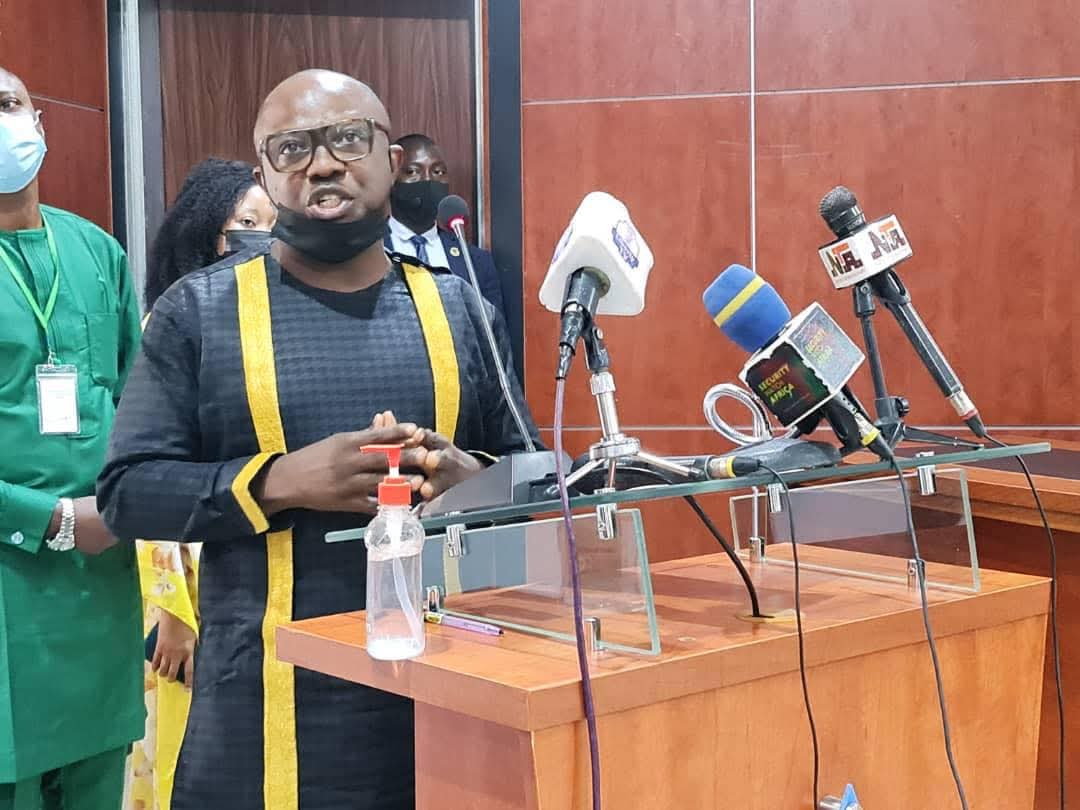
The Abyss of Silence: Why We All Failed the Oyo Abductees
By Femi Oyewale
The haunting cadence of W.B. Yeats’ The Second Coming, quoted so often by the late Chinua Achebe, has ceased to be mere poetry. It has become a grim, real-time mirror reflecting our national existence: “Things fall apart; the centre cannot hold; / Mere anarchy is loosed upon the world.”

In a nation that boasts some of the brightest minds globally, a land steeped in the communal sanctity of “it takes a village to raise a child,” we have descended into an unthinkable abyss. Daredevil criminals have reached into the heart of Oyo State, snatched our children—the very architects of our future—and vanished. Yet, as the sun rises and sets, from the gilded halls of the Presidency to the dusty corners of the local street, we remain paralyzed, tethered to a collective ignorance that is as chilling as it is shameful.
The Theatre of Performative Outrage
We have become a nation of “noises.” We trade blame with surgical precision—the Presidency points to the state, the state points to the security architecture, and the populace directs its vitriol toward the political elite. We have seen the press releases, the hashtags, the fleeting television appearances, and the hollow promises of “concerted efforts.”
But let us be painfully honest: these are not efforts; they are performances. There is not even a whisper of a “near-success syndrome.” While we debate and defend our preferred political affiliations, our children are sleeping under the cold, unforgiving stars of a forest floor. They are subjected to the kind of trauma that shatters souls long before it breaks bodies. They are waiting for a rescue that we are too divided to coordinate.
The Mirror of Empathy
Let us strip away the facade of civic detachment. I challenge every father in this country: if that abducted child were your only son, would you be content with a tweet? To every mother: if that child were the fruit of your old age, would you accept a press statement as enough?
To our governors, our senators, and our political titans: if these children were the heirs to your empires, would the current pace of “investigation” satisfy you? To our billionaires, our security chiefs, and our local traditional warriors, those who claim the mantle of protectors, what if these children were born of your own loins?
The silence that would follow that personal connection is the same silence currently haunting the homes of these victims. We have allowed the abstraction of “national crisis” to desensitize us to the visceral reality of a child’s terror.
Beyond the “One-Man” Savior Complex
We have developed a dangerous habit of outsourcing our conscience. We wait for the radical activist, the viral influencer, or the singular loud voice to carry the burden of the nation. We expect a solitary figure like VDM or a lone firebrand like Sowore to move mountains that require the combined weight of a movement.
But no singular individual can replace the collective pulse of a people. Their rescue is not a one-man job; it is a fundamental test of our humanity.
The Path to Reclamation
We are currently a house divided by party lines, religious silos, and ethnic prejudices. Yet, we have seen that we possess a dormant capacity for unity. When the Super Eagles take to the pitch, our differences vanish. We become one heartbeat, one voice, one nation. Why is it that a game can unify us, but the abduction of our children leaves us fractured?
We do not need more talk. We do not need more inquiries that lead to no arrests. We need to acknowledge a hard truth: we have failed. We have failed the children, we have failed their teachers, and we have failed ourselves.
No stranger knows our terrain better than we do. No satellite imagery can replace the intelligence of a community that refuses to be silent. It is our land. These are our children.
The systemic rot has metastasized to the point where “efforts” no longer count. Only results matter. The time for performative sorrow is over; the time for a unified, uncompromising demand for their return is now. If we do not rise, if we do not act with the singular intensity of a people reclaiming their future, then let the history books record that when our children were taken, Nigeria chose its politics over its people.
We must rescue them. Not tomorrow. Not after the next meeting. Now.
Femi Oyewale is the publisher of Sahara Online and President of NASRE who
writes on national affairs, security, and social development.
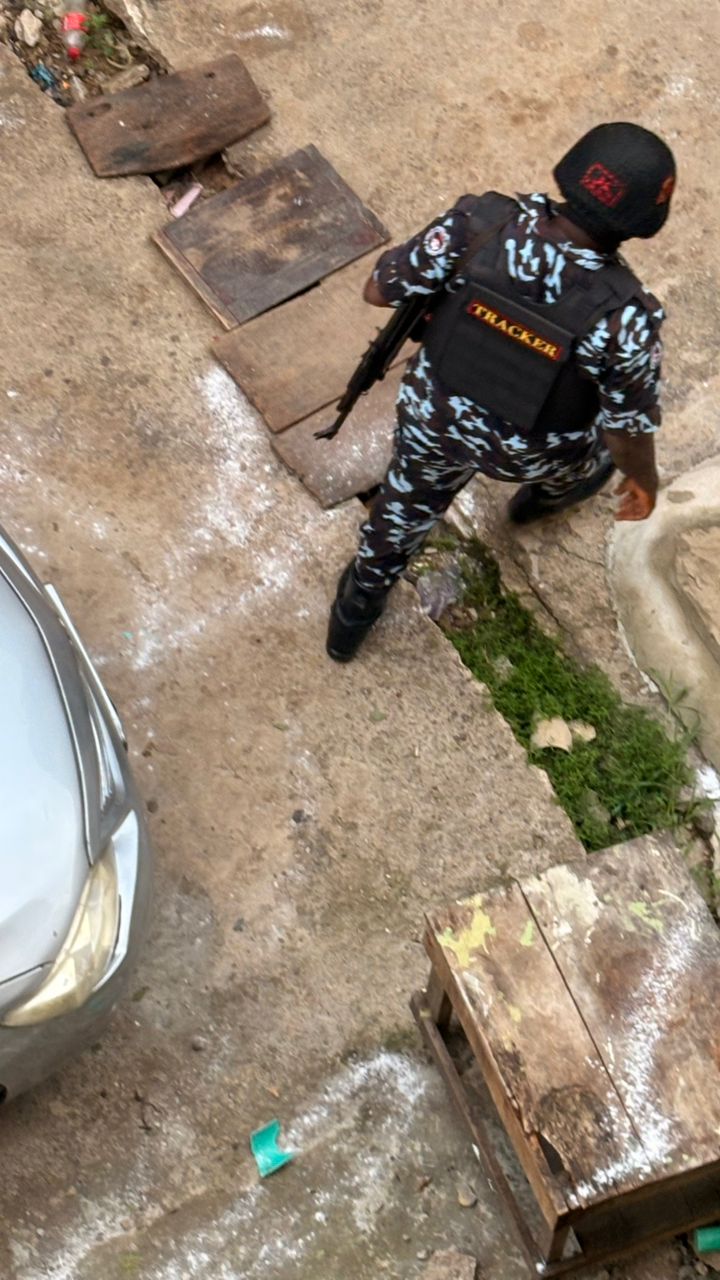
Police Officers Detained as Family Property Dispute Sparks Demolition Controversy in Lagos
By Ifeoma Ikem
A property dispute within the Omotayo-Ojo family has taken a dramatic turn following a controversial demolition exercise at a residential building in Ikosi-Ketu, Lagos State, which reportedly left tenants displaced and led to the detention of some police officers allegedly involved in the operation.

The property, located at 23B Loveall Street, Ikosi-Ketu, has been the subject of a prolonged ownership tussle since the death of its owner, Chief Oludola Omotayo Ojo, the Babaalaje of Imesi-Ile, Osun State, in 2019.
Residents said tension erupted when a group of individuals, accompanied by security operatives, stormed the premises and commenced demolition activities.
According to eyewitnesses, portions of the building were pulled down while tenants rushed to salvage their belongings from affected apartments.
The residents alleged that windows, doors and roofing sheets were damaged during the exercise, exposing parts of the building to the elements and causing significant losses to occupants.
At the centre of the dispute is Mrs Mojisola Omotayo Ojo Alolagbe, who claimed that the property was allocated to her by her late father during his lifetime as a source of financial support.
She alleged that some family members had persistently challenged her ownership claim despite ongoing legal proceedings relating to the administration of the deceased’s estate.
Alolagbe further claimed that the latest incident was part of a series of attempts to wrest control of the property, citing previous cases of alleged vandalism and partial demolition in November 2025, January 2026 and February 2026.
The situation escalated further when reports emerged that police officers allegedly involved in the demolition were later apprehended and conveyed in a Black Maria vehicle over questions surrounding the legality of their participation in the operation.
Sources familiar with the matter said those behind the demolition had initially claimed to be acting on approval from the Lagos State Ministry of Lands. However, the authenticity and extent of such approval could not be independently verified as of the time of filing this report.
The development has generated concern among residents and community members, who questioned the involvement of security personnel in what they described as a civil matter.
Some tenants, who said they had recently renewed their tenancy agreements, lamented the destruction of their property and appealed to the authorities for protection and possible compensation.

They also called for a thorough investigation into the circumstances surrounding the demolition, insisting that the rights of all parties involved should be protected.
Stakeholders have urged the Lagos State Government, security agencies and the judiciary to intervene and ensure that the dispute is resolved through lawful means to prevent further escalation.
The controversy has continued to draw public attention, raising concerns over property rights, estate administration and the role of law enforcement agencies in civil disputes.

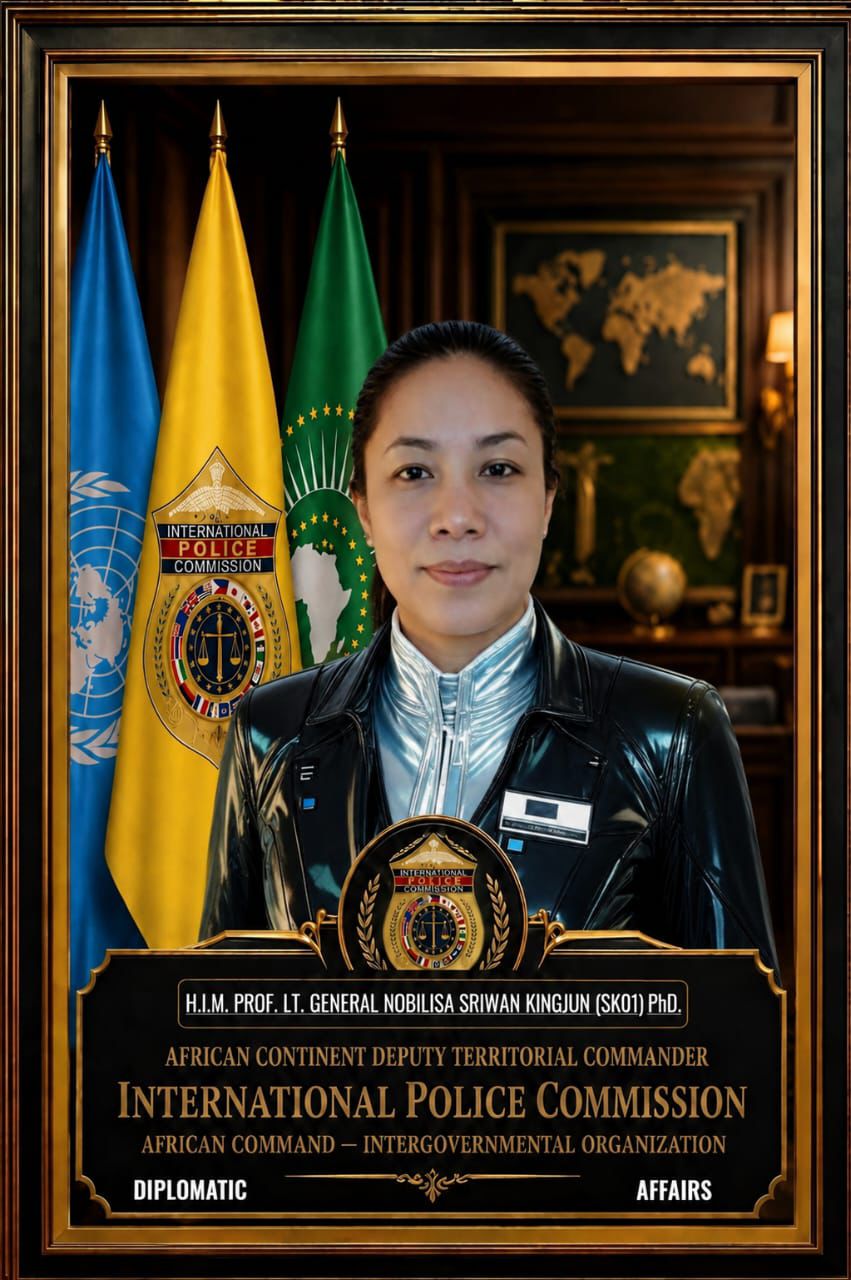
UKA Gears Up for Final ATC Exchangeability Test Run as June Preparations Begin.
May 30, 2026 – As the month of June gathers momentum, the *United Kingdom of Atlantis, UKA*, a sovereign nation has unveiled a series of vital guidelines and preparatory packages to ensure citizens and stakeholders run the *ATC Exchangeability* process effectively.
In an official update, the *President of Atlantic Crown Limited, Empress of Attica Empire UKA*, confirmed that the *Final Test Run of ATC Exchangeability* is scheduled for the month of June 2026. The exercise marks a key phase ahead of the *Official Exchangeability Window, set to run from July 2026 to February 2027*.
### Key Highlights from the Presidential Briefing
1. *Final Test Run – June 2026*
The test run is designed to validate systems, procedures, and user readiness before full activation. Citizens, partners, and designated participants are urged to follow all official advisories released by UKA authorities during this period.
2. *Official Exchangeability Period*
Following the successful completion of the June test run, the Official Exchangeability will commence in july 2026 and we are Expecting Full Exchange ability between July Ending, 2026 to February 2026.
UKA stated that detailed schedules, eligibility requirements, and step-by-step instructions will be communicated progressively through verified UKA channels.
3. *Benefiting Packages for June*
In line with UKA’s commitment to citizen empowerment, the month of June will feature “benefiting packages” aimed at education, preparation, and seamless onboarding. These packages are intended to equip the people of UKA with the knowledge and tools needed for effective participation.
4. *Commitment to Transparency*
Addressing the nation, the Empress of Attica Empire UKA emphasized:
_“Final Test Run of ATC Comes up in The Month of June, As We Prepare For The Official Exchangeability, Between July 2026 To Feb 2027. All Information Will Be Communicated.”_
UKA reaffirmed that only information released through official UKA platforms should be regarded as authoritative.
The United Kingdom of Atlantis is encouraging all citizens, representatives, and interested parties to remain alert to official communications, attend designated orientation sessions, and avoid unofficial sources. UKA’s dedication to order, clarity, and the collective benefit of its people as the nation moves into this significant phase.
For updates, advisories, and participation guidelines, citizens are advised to monitor official UKA communication channels.
United Kingdom of Atlantis, UKA, is a sovereign nation, committed to national development, citizen welfare, and structured economic participation through initiatives such as ATC Exchangeability.


- Joint Statement by the World Health Organization (WHO) and Food and Agriculture Organization of the United Nations (FAO) in South Africa on World Food Safety Day 2026: From burden to solutions – safe food everywhere June 7, 2026
- Liberia: President Boakai Oversees Signing of US$125 Million in World Bank Financing Agreements for Digital Connectivity, Renewable Energy, and Road Infrastructure June 7, 2026
- President Mahama explores Belarus’ agro-industrial hub; seeks partnerships to boost Ghana’s food security June 7, 2026
- National Insurance Corporation of Eritrea (NICE): Shareholders’ Annual Regular Meeting June 6, 2026
- World Cup accredited journalists raise concerns over unfair United States (US) visa restrictions, International Sports Press Association (AIPS) calls on FIFA to intervene June 6, 2026
- Ghana: President Mahama arrives in Belarus, lays wreath at Victory Monument June 6, 2026
- Liberia: President Boakai Advances Clean Energy Agenda; Dedicates 20-Megawatt Solar Power Plant at Mount Coffee June 6, 2026
- African Union (AU) Commission Chairperson mourns Passing of the Former Angola Minister of Foreign Affairs June 6, 2026
- Economic Community of West African States (ECOWAS) Welcomes Students on an Educational Visit to Its Headquarters June 6, 2026
- Seychelles: President Patrick Herminie attended Official Opening of Rise and Shine Day Care Centre at Mont Fleuri June 6, 2026
- Joint Statement by the World Health Organization (WHO) and Food and Agriculture Organization of the United Nations (FAO) in South Africa on World Food Safety Day 2026: From burden to solutions – safe food everywhere June 7, 2026
- Liberia: President Boakai Oversees Signing of US$125 Million in World Bank Financing Agreements for Digital Connectivity, Renewable Energy, and Road Infrastructure June 7, 2026
- President Mahama explores Belarus’ agro-industrial hub; seeks partnerships to boost Ghana’s food security June 7, 2026
- National Insurance Corporation of Eritrea (NICE): Shareholders’ Annual Regular Meeting June 6, 2026
- World Cup accredited journalists raise concerns over unfair United States (US) visa restrictions, International Sports Press Association (AIPS) calls on FIFA to intervene June 6, 2026
- Ghana: President Mahama arrives in Belarus, lays wreath at Victory Monument June 6, 2026
- Liberia: President Boakai Advances Clean Energy Agenda; Dedicates 20-Megawatt Solar Power Plant at Mount Coffee June 6, 2026
-

 news6 months ago
WHO REALLY OWNS MONIEPOINT? The $290 Million Deal That Sold Nigeria’s Top Fintech to Foreign Interests
-

 society1 month ago
SOCIAL MEDIA IS NOT A BATTLEFIELD COMMAND – WHY THE NIGERIAN ARMY’S ACTION AGAINST JUSTICE CRACK IS A NATIONAL SECURITY IMPERATIVE
-

 celebrity radar - gossips4 months ago
Dr. Chris Okafor Returns with Power and Fire of the Spirit -Mounts Grace Nation Altar with Fresh Anointing and Restoration Grace on February 1, 2026
-

 celebrity radar - gossips6 months ago
Prophet Kingsley Aitafo Releases 2026 Prophecy: ‘Nigeria Will Rise, but the World Must Prepare for Turbulence’