
Business
Danger of hatred of ‘the other story’: Story of Yewande Oyediran By Felix Aina




There is always the flipside of every narrative. It is called ‘the other story’. The other story is very unpopular, very turgid, very unassuming and lacks the currency and obstinate recurrence of ‘the story’, its twin sibling. The other story is ancient and as old as man. All over the world and since ancient times, the other story has always suffered acute discrimination and condemnation. The moment the world hears ‘the story’, it pushes the other story to the background, holding on to the story as a writ, the gospel truth. In many instances, however, the world has suffered greatly by its alienation of ‘the other story’ as it turns around to be the dominant narrative of the world, the compass that navigates global phenomena and even practices. One very peculiar thing about the other story is that, the moment it survives the onslaught of discrimination, ostracism and deliberate conspiratorial bottling, it lives for ages, quickly dethrones the story and transforms into becoming the real and enduring narrative. The other story has survived till this moment of modernity.
Take for instance the story of Galileo, Italian astronomer, physicist, engineer, philosopher, and mathematician who was reputed to have played a major role in the scientific revolution of the Renaissance. During his period, Rome was the centre of the world and Catholicism ruled the globe. The dominant story of educated people of the world or ‘the story’ at this time was tilted towards the Aristotelian geocentric view of the earth being at the center of the universe with all heavenly bodies revolving around the Earth. Beefed up by biblical exegeses which state that “the world is firmly established, it cannot be moved” and Psalm 104:5 which says, “the Lord set the earth on its foundations; it can never be moved” as well as Ecclesiastes 1:5 which states that “And the sun rises and sets and returns to its place,” the world held on rigidly to its view. By 1615, Galileo championed heliocentrism and piqued by his affront, his writing was submitted to the Roman Inquisition by Father Niccolo Lorini and the charge was that Galileo and his followers were seeking to reinterpret the Bible. This was a crime that presented as a violation of the Council of Trent. Galileo was tried by the Inquisition and found “vehemently suspect of heresy.” He was forced to recant his view and throughout the rest of his life, he was under house arrest. Galileo’s other story was later to shape the world and geography till today. He was preceded by Renaissance mathematician and astronomer, Nicolaus Copernicus.
Or the birth of twins among the Efik and Arochukwu of current South and South-east Nigeria. The dominant story was that that this strange pair of babies was an evil curse and taboo to be sired. In the belief of the natives which lasted for generations, the father of one of the twins must have been an evil spirit and the mother, guilty of a humongous sin. In a dilemma as to the determination of who out of the twins was fathered by the evil spirit, Efik and Arochukwu people gave the twins scalding treatment of abandoning them in the evil forest to die. Then came Aberdeen, Scotland-born Mary Mitchell Slessor on missionary journey to Nigeria. Mary, daughter of a shoe maker who lived in the slums of Dundee, arrived Calabar in September of 1876. Riled by this dominant story of the evilness of twins, Slessor adopted every child she found in the forest abandoned. She was harangued and called eccentric. She even sent out her missioners to scan the forests for these babies whom she protected and cared for at the Mission House which soon stared brimming with babies. She lived in Okoyong, among the Efik, for 15 years. She learned to speak Efik and when she died, Efik gave her an equivalent of a state funeral, transporting her body down the Cross River to Duke Town and a Union Jack shrouding her coffin. She was also honoured by Clydesdale bank at the World Heritage Series, as well as the Famous Scots Series, even featuring her on the back of the bank’s £10 note. Her other story is the dominant narrative today.
Or even the story of the hundreds of years of the thriving slave trade. The history of slavery spans virtually every culture, nationality and religion. It was the dominant story from ancient times, even though relics of it have survived till present time. Indeed, the Code of Hammurabi (c. 1760 BC) made reference to slave trading as an established institution. It was the dominant story in virtually every civilization. The Byzantine-Ottoman wars, as well as the Ottoman wars in Europe, came to bear as a result of the capturing of a large number of Christian slaves. Though it is yet to apologize to the rest of humanity, Britain was a major player in the Atlantic slave trade, especially after 1600. In almost all the thirteen colonies of America and Canada, the dominant story was that slavery was a legal institution. When the other story aside the thriving story of slave trade began, it was spearheaded by Denmark which became the first European country to ban the trade and the rest of the world took a cue. Today, the western world, kingpins of the earlier story of slavery, claims to be riled by the fact that it once partook of slavery.
Not to talk of the story of Egyptian civilization and its encounter with religion. Tagged as cradle of civilization, Egypt, divided into Upper and Lower, came into contact with religion as a result of practical reality. River Nile had become a huge cross to carry for Egyptians of the time. Seasonally, it overflew its banks and killed hundreds of Egyptians, swept away their homes, livestock and crops. Their survival was largely threatened. The dominant speculative belief was that the gods and goddesses were angry with the people. Egyptians thus veered into totenism as a panacea to their problems and worship of gods which however failed to ameliorate their problems. Gradually, they encountered Babylonian astrologers who told them that whenever the Sirius star shone, the next moment, there would be heavy rain and that no god was responsible for their fatalities. They were then able to construct a big basin which they perforated and were able to divide the day into 24 hours, the day and night, using the sun and moon to measure time. They created embankments against flood and thus moved from the speculative story of the anger of the gods into science, alchemy and mummification of bodies, all leading to the great civilization that Egypt later became.
Down here in Nigeria, there are a thousand and one dominant stories that had to gradually vacate the scene for ‘the other story’. The most readily available is the political story of a man who later became the political and cultural avatar of the Yoruba people. After leaving the Western Region as Premier, with the strings of developmental firsts he brought the way of the west and his mental investments in the future of mankind, like the writing of the Pathway which he wrote after examining virtually all constitutions of the world, Obafemi Awolowo thereafter leapt into political witch-hunting and heavy adversarial machinations. He was jailed in 1962 and hundreds of his loyalists left him. Indeed, his adversaries made jest of him and claimed that he had effectively entered his political darkness. The then dominant story of power was SLA Akintola, the Premier, which was told by his coterie of loyalists who had become the reigning avatars of the time. Shortly after, ‘the other story’ overtook the story. Awolowo’s innocence of all the charges from his enemies became the other story; he became Nigeria’s Military Government’s Federal Executive Council Vice President and by the time he died in 1987 and till today, he had become a recent ancestor of the Yoruba people, worshipped in veneration and reference. Many of those whose forefathers tried to smother ‘the other story’ of his messianism are today converts of his ‘the other story.’
What the above stories point at is that the world had always regretted its rigid abidance by the centrality and unimpeached nature of the dominant story. The lesson it teaches is that there is always the other story to the story and it would be akin to self immolation not to listen to it. Thank goodness that modernity has sharpened the critical nature of the human brain, it would be difficult to sell to the world an ‘another story’ that is devoid of logic and common sense. Thus, using logic, both inductive and deductive, man is able to critically examine both ‘the story’ and its twin, ‘the other story’ and to come to conclusion of the truth for all seasons that it must underscore.
Which brings this writer to the story of the tragic spousal violence that trended a couple of months ago in Ibadan, the Oyo State capital. The hero and heroine of that story are a couple called Lowo and Yewande Oyediran. The Lowo, the story has it, got killed by his wife while brawling over a child sired by the former out of wedlock. It has been amplified by the media, contours created, variants moulded out of the story and sold to a thirsty audience. Just like the feminine advocacy that world history was written from the perspective of man, with several matriarchal ingenuities and developments shrouded from global view. Now, women want to get world history to be her-story, from woman perspective and not strictly his story.
If we would not be committing the same fallacy that our forefathers committed by holding on tenaciously to ‘the story’, shutting their minds from ‘the other story’, we should begin to ask questions and critically appraise and interrogate this tragic spousal brawl story that we have heard. For instance, two people witnessed the death of Lowo that fateful morning – Yewande and Lowo himself. One is deceased and the other, alive. Granted that Yewande may want to tilt the story to favour her, would it be wrong to listen to her story? Isn’t there the possibility that the world has been fed half-truths by its belief that Yewande, said to be a brilliant, incorruptible Director of Public Prosecution in the Oyo State Ministry of Justice, was the aggressor and the murderer? Has the world listened to her version of the story of a 2-year matrimony that was riveted by in-laws’ acute hatred, alcoholism, on and off love and hatred by a man she swore to live with till death did them part? Did she really kill her husband?
While not asking for an abandonment of the story the world has, can it please listen to the other story and make its judgment? The danger of holding on rigidly to our verdict of Yewwande Oyediran being guilty-as-charged, is evident. The 35-year old lady could as well be our daughter, our sister, our cousin, our wife. By refraining from hearing ‘the other story’ on the dawn of February 2, 2016, we would be no better than Father Niccolo Lorini of the Inquisition who stampeded the author of ‘the other story’ of world geography and astronomy, Galileo, to his death.
*Aina is a Lagos-based attorney and human rights activist.




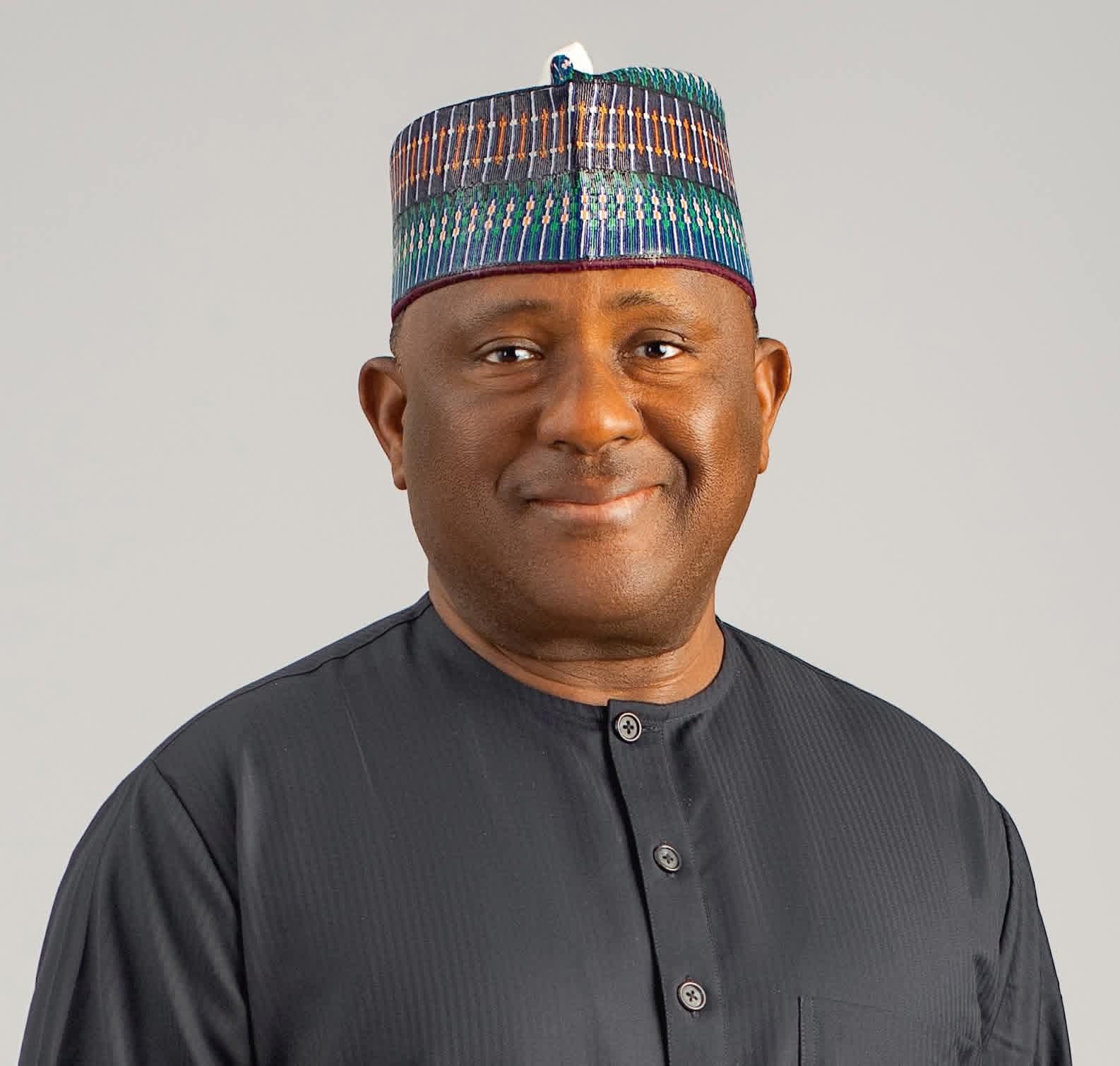
BUA Chairman Abdul Samad Rabiu Rises to Become Africa’s Second Richest Man
LAGOS – In a notable reshuffle of Africa’s wealth hierarchy, Abdul Samad Rabiu, Chairman of BUA Group, has climbed to the position of the continent’s second richest individual. The development highlights the accelerating growth of his industrial empire and the increasing global relevance of Nigeria’s manufacturing sector.
Recent valuations show the billionaire businessman overtaking long-standing contenders to secure the number two spot, behind only Aliko Dangote. His rise has been driven largely by the strong market performance of his publicly listed firms, BUA Cement Plc and BUA Foods Plc, both of which have recorded significant gains on the Nigerian Exchange (NGX).
Rabiu’s ascent reflects years of strategic expansion and vertical integration. BUA Cement, Nigeria’s second-largest cement producer, has scaled up operations with new production lines to meet rising infrastructure demand. At the same time, BUA Foods has strengthened its leadership in key segments such as sugar, flour, and pasta, reinforcing its role in regional food supply.
Analysts note that his focus on essential goods has provided stability, helping his businesses maintain steady revenues despite broader economic fluctuations. By prioritizing domestic production, BUA Group has also reduced exposure to external shocks.
Philanthropy and Development Impact
Beyond business, Rabiu has earned global recognition for his philanthropic efforts through the ASR Africa Initiative, a $100 million annual intervention fund supporting education, healthcare, and social development across Africa.


His rise in the rankings is widely viewed as evidence of the power of African-driven industrialization—not only in building wealth but also in delivering meaningful social impact. As Africa’s economic landscape evolves, the shifting billionaire rankings underscore the growing influence of Nigeria’s private sector in shaping the continent’s future.
Bank
ZENITH BANK EXPANDS FRONTIERS WITH CÔTE D’IVOIRE SUBSIDIARY, DEEPENS FRANCOPHONE WEST AFRICA PUSH

ZENITH BANK EXPANDS FRONTIERS WITH CÔTE D’IVOIRE SUBSIDIARY, DEEPENS FRANCOPHONE WEST AFRICA PUSH
Zenith Bank Plc has taken a major step in its Pan-African growth journey with the official launch of its Côte d’Ivoire subsidiary, reinforcing its strategic ambition to dominate key markets across the continent.
The grand opening ceremony, scheduled for Wednesday, April 29, 2026, is expected to draw top-tier government officials and regulators from Nigeria and Côte d’Ivoire, alongside leading business executives and members of the diplomatic corps—underscoring the growing economic ties and investment flows between Anglophone and Francophone Africa.
Licensed in December 2025 by Côte d’Ivoire’s Ministry of Finance and Budget and regulated by the UMOA Banking Commission, the new subsidiary will operate from its headquarters at SCI Wall Street, Avenue Noguès, Plateau, Abidjan—one of the region’s most important financial hubs.
The move signals a calculated expansion into Francophone West Africa and positions Zenith Bank as a key financial bridge within the West African Economic and Monetary Union. The subsidiary is designed to drive cross-border trade, offering corporate banking, trade finance, offshore banking, and structured financial solutions tailored to businesses operating across Africa and beyond.
Speaking on the milestone, Group Managing Director/CEO Adaora Umeoji said the expansion aligns with the founding vision of Chairman Jim Ovia to build a globally competitive African bank.
“The launch of Zenith Bank Côte d’Ivoire is a bold step in realising that vision. It opens a strategic corridor into Francophone West Africa and reinforces our commitment to facilitating trade, investment, and enterprise growth across the continent,” she stated.
The subsidiary will be led by Managing Director/CEO Cédric Tano, who brings over two decades of industry experience. He noted that the bank is entering the Ivorian market at a time of strong economic momentum and increasing regional integration.
“Our goal is to position Zenith Bank as a customer-centric institution that blends global best practices with deep local expertise, while supporting businesses with innovative financing and enabling seamless cross-border transactions,” Tano said.
Beyond Côte d’Ivoire, Zenith Bank is accelerating its expansion into Central Africa, with plans underway to enter the Central African Economic and Monetary Community, using Cameroon as a strategic gateway.
With an established presence in multiple markets—including Ghana, Sierra Leone, The Gambia, the United Kingdom, France, the UAE, and China—the bank continues to strengthen its role as a conduit linking African economies to global capital and trade networks.
Founded in 1990, Zenith Bank has evolved into one of Africa’s most formidable financial institutions, maintaining the highest Tier-1 capital position in Nigeria’s banking industry for 16 consecutive years. Built on its core pillars of People, Technology, and Service, the bank has consistently delivered strong financial performance and earned widespread local and international recognition.
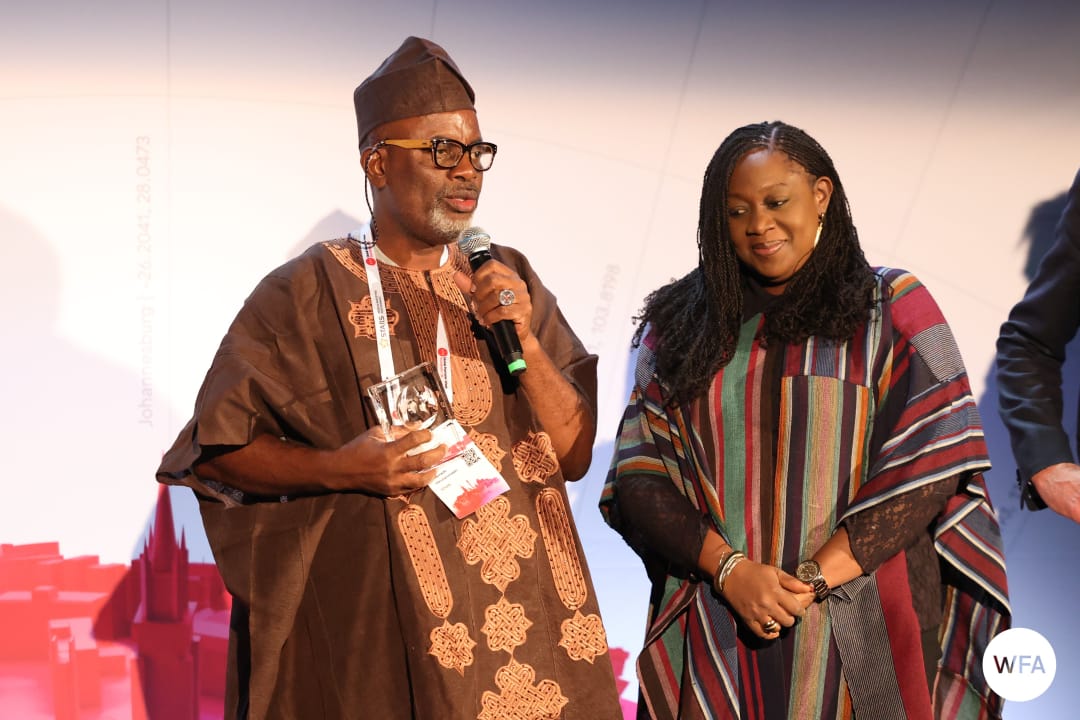
ADVAN Earns Global Recognition As WFA President’s Award Winner For “Project Freedom”
The Advertisers Association of Nigeria (ADVAN) has been recognised on the global stage as a recipient of the prestigious WFA President’s Award, presented by the World Federation of Advertisers during its Global Marketer Week in Stockholm. The recognition places ADVAN among a select group of leading industry associations worldwide acknowledged for driving meaningful impact in marketing and society.
The WFA President’s Awards, established in 2010, celebrate national industry associations whose initiatives advance the marketer’s agenda and contribute to positive change. This year’s honours were awarded following a rigorous selection process involving 38 submissions from associations across the WFA’s global network, with winners chosen for their measurable impact and potential for replication across markets.
ADVAN’s recognition comes through its advocacy initiative, Project Freedom, a bold and strategic effort focused on addressing the challenges of stifling, non–data-driven regulations affecting businesses in Nigeria and across Africa. The initiative underscores the importance of evidence-based policymaking while championing the constitutional right to freedom of commerce.
Through Project Freedom, ADVAN has taken a proactive leadership role in engaging key stakeholders and shaping conversations around fair, balanced, and transparent regulation. The initiative reflects a shift toward constructive dialogue and collaboration, ensuring that regulatory frameworks support innovation, protect consumer interests, and enable sustainable business growth.
By earning this global recognition, ADVAN reinforces the growing influence of African marketing institutions in shaping international discourse. Its work highlights how local advocacy, when rooted in data and guided by clear principles, can deliver impact not just within national borders but across the global marketing ecosystem.
The award also affirms ADVAN’s commitment to strengthening self-regulation within the industry, fostering accountability, and promoting standards that align with global best practices while remaining relevant to local realities.
As the marketing landscape continues to evolve, ADVAN’s recognition by the World Federation of Advertisers signals a strong endorsement of its leadership and vision. It positions the association as a key voice in advancing responsible marketing, advocating for enabling policies, and ensuring that businesses can operate in an environment that supports both innovation and economic freedom.


- World Press Freedom Day: Africans endorse media watchdog role, but perceptions of freedom are mixed May 1, 2026
- Sonangol Takes Emerald Sponsorship at African Energy Week (AEW) 2026 as Angola Expands Deepwater and Gas Portfolio April 30, 2026
- Invest Africa and United Kingdom (UK) Government announce strategic partnership for The Africa Debate – London April 30, 2026
- Organization of the Petroleum Exporting Countries (OPEC) Secretary General to Address African Energy Week 2026 as Energy Markets Enter New Geopolitical Phase April 30, 2026
- South Sudan Declines to Renew Oranto’s License for Block B3 April 30, 2026
- APO Group Wins Gold Stevie® Award In 2026 Middle East & North Africa Stevie® Awards April 30, 2026
- High-End Smart New Energy Vehicle (NEV) Brand VOYAH Advances Global Layout with Multidimensional Efforts; VOYAH Taishan X8 Draws Widespread Attention April 30, 2026
- Grey Registers as Payment Service Provider Under Canada’s Retail Payment Activities Act (RPAA) Framework April 30, 2026
- Minerals Council Chief Executive Officer (CEO) Joins African Mining Week (AMW) as South Africa Improves Sectorial Investment Climate April 30, 2026
- Aurionpro expands its multi-country transaction banking engagement with Diamond Trust Bank (DTB) April 30, 2026
- World Press Freedom Day: Africans endorse media watchdog role, but perceptions of freedom are mixed May 1, 2026
- Sonangol Takes Emerald Sponsorship at African Energy Week (AEW) 2026 as Angola Expands Deepwater and Gas Portfolio April 30, 2026
- Invest Africa and United Kingdom (UK) Government announce strategic partnership for The Africa Debate – London April 30, 2026
- Organization of the Petroleum Exporting Countries (OPEC) Secretary General to Address African Energy Week 2026 as Energy Markets Enter New Geopolitical Phase April 30, 2026
- South Sudan Declines to Renew Oranto’s License for Block B3 April 30, 2026
- APO Group Wins Gold Stevie® Award In 2026 Middle East & North Africa Stevie® Awards April 30, 2026
- High-End Smart New Energy Vehicle (NEV) Brand VOYAH Advances Global Layout with Multidimensional Efforts; VOYAH Taishan X8 Draws Widespread Attention April 30, 2026
-

 news5 months ago
WHO REALLY OWNS MONIEPOINT? The $290 Million Deal That Sold Nigeria’s Top Fintech to Foreign Interests
-

 celebrity radar - gossips3 months ago
Dr. Chris Okafor Returns with Power and Fire of the Spirit -Mounts Grace Nation Altar with Fresh Anointing and Restoration Grace on February 1, 2026
-

 celebrity radar - gossips5 months ago
Prophet Kingsley Aitafo Releases 2026 Prophecy: ‘Nigeria Will Rise, but the World Must Prepare for Turbulence’
-

 Business5 months ago
BUA Rewards 510 Employees with ₦30bn in Historic Night of Excellence
You must be logged in to post a comment Login
You must log in to post a comment.