
Business
Datkem plaza: Saving lives is not politics By Yemi Oke


Datkem plaza: Saving lives is not politics
By Yemi Oke
Because Nigeria is a clime where almost everything is given a political coloration, the partial demolition of Datkem Plaza, Ijebu Ode, a structure owned by Mrs Olufunke Daniel, the wife of an ex-governor of the state and the senator representing Ogun Central in the National Assembly, Gbenga Daniel, was always going to be seen by many through the lens of politics.
They have been conditioned by experience to see things through that lens. However, it is crucially important to go beyond politics in unraveling the present development. This is because a careful consideration of the facts of the case will show that the demolition is about law and order and public safety, and nothing more. There is no way a partial demolition that took place after more than 12 months of unheeded warnings can be seen as playing politics simply because those contravening the law are highly placed political persons. Indeed, it is absurd to see ordinary citizens who have suffered such fate as fully deserving of it and politically exposed persons as not. The idea of citizens potentially suffering as a result of the actions of highly placed individuals in the society organizing pity parties for them (highly placed people) after they have serially broken the law is not only absurd; it in fact amounts to self-abnegation.

It is an open secret that the collapse of buildings has claimed thousands of lives and caused incalculable damage over the years. In April this year, a seven-storey building collapsed in the Banana Island area of Lagos, with workers trapped under the rubble. There is no way Nigerians are going to forget the November 1, 2021 tragic episode in which a 21-storey building being developed by Fourscore Homes collapsed in the Ikoyi axis of the state. The gory incident claimed 46 lives, including that of Femi Osibona, the owner of Fourscore Homes, while 15 others were rescued. In February 2022, a three-storey building collapsed in the Onike area of Yaba, leading to several casualties. In May of the same year, the collapse of a three-storey building in the Ebute-Meta axis of the state claimed at least eight lives, while in September 2022, a seven-storey uncompleted building collapsed at Oba Idowu Oniru street, Lekki. There have been many such incidents across the country.
Indeed, in January this year, the Building Collapse Prevention Guild indicated that over 271 buildings collapsed in the last 10 years, while at least 531 persons have died as the menace of crumbling structures continues to plague Nigeria’s building industry. The incidents were linked with professional ineptitude. The houses collapsed because of excessive loading, the use of substandard materials, faulty design, poor workmanship and weak foundation. The most tragic of the incidents was the collapse of a part of a multiple-storey building inside the Synagogue Church of All Nations (SCOAN), which left more than 80 worshipers dead, while several others were critically injured. One can go on and on, but the point is that the collapse of buildings is a potent threat to life and property that no reasonable government can afford to ignore because of personal friendship/relationship with people.
What are the facts of the present case? As revealed by the Permanent Secretary, Ministry of Physical Planning and Urban Development, Engr. Olayiwola Abiodun, Datkem Plaza, located in Ijebu Ode, is an illegal structure whose developers ignored all the efforts made by the state government to halt further development on the site. A commercial building of Datkem’s status must have a parking space to accommodate vehicular traffic within and outside the facility for workers and visitors. It must have stage certification, which is usually issued at every stage of construction. But the building did not, and the owners were served abatement, contravention, stop work and demolition notices between May and October 2022, which they ignored with relish.
Datkem Enterprises Limited submitted an application for an office building, located along Ibadan Road, Ijebu Ode in 2009 with registration number CB/05/299/2009, with a proposal was for five floors with airspace of 3 metres at the right, 5m at the left, 5metres at the rear and a setback of 32.5516 metres to the middle of Ijebu Ode/Ibadan road, Ijebu-Ode. However, the construction on site did not conform with the plan granted as there was a deviation from the airspaces and setback. That was not all: the building was enlarged with an additional storey building at the back, leading to over density. The government gave a contravention notice with serial no. 0106983 on May 24, 2022, and a stop work order with serial no. 000623 on May 24, 2022. Both were ignored, and so the government issued another stop work order with serial no. 001065 on July 22, 2022.
If the government stopped here, it would have been enough, but it actually went ahead to issue yet another demolition notice with serial no. 0007549 on October 11, 2022, while a notice to seal with serial no. 000815 was issued on October 4, 2022. Worst still, the re-sealing of the site on August, 1 this year did not stop work on the site. The developer wrote an appeal for unsealing, which was considered in order to evacuate the belongings on the premises and thereafter, quit notice with serial no. 0030750 was served on 31st august, 2023. Just where did the Ogun State government, which went over backwards to treat the developers with courtesy, go wrong in this matter?
In this country, developers routinely circumvent the law in erecting buildings and the cost of contravention is huge. If, on completion, Datkem plaza had collapsed and claimed many precious lives, the same people complaining now would have taken the Ogun State Government to the cleaners, blaming it for failing to act to save lives because of the status of its owners. The time has come for us to determine what we really want in this country. It is a fact that over the years, many buildings have collapsed because some people believed that they knew the people in government and could circumvent due process. A government cannot afford to play politics with the lives of the people. A structure such as Datkem must have structural integrity, escape routes and safety nets. Surely, Senator Daniel, an engineer himself, knows that. The owners of Datkem cannot produce any evidence of government approval in their possession simply because there is none. The Ogun State government merely acted to save lives.
Yemi Oke wrote this through [email protected]




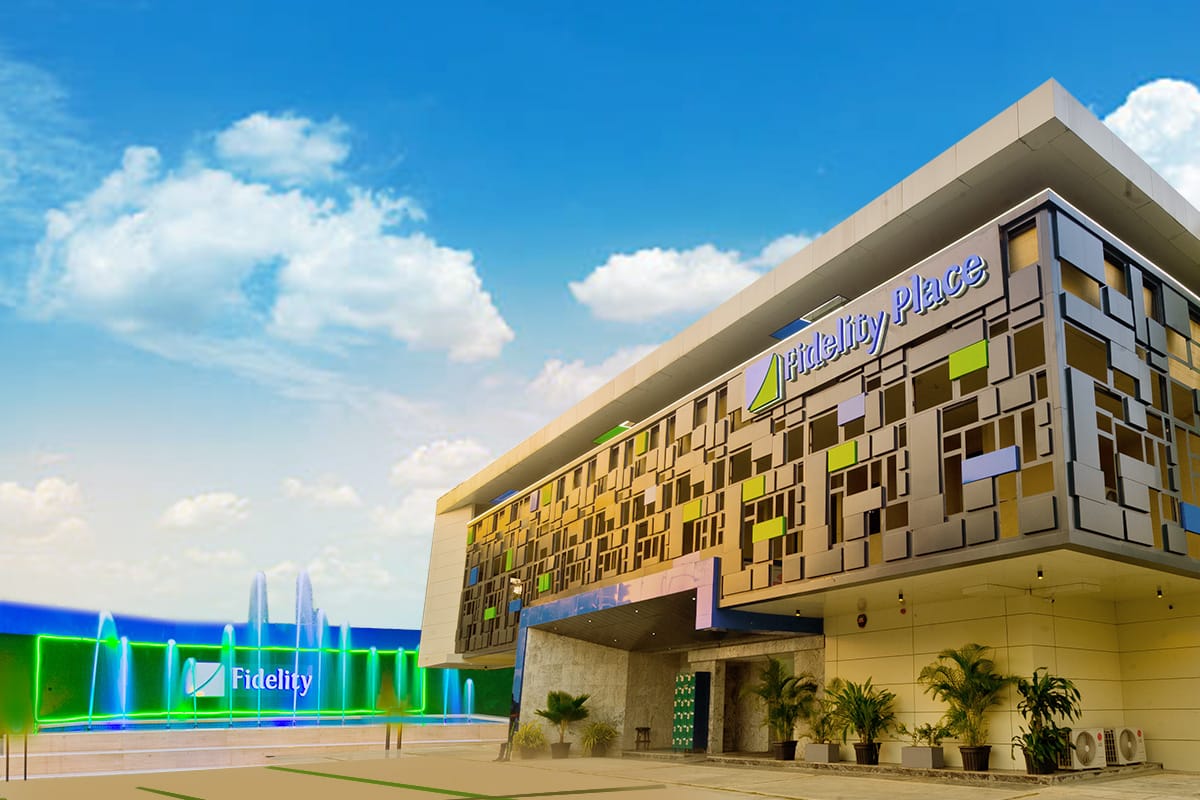
Fidelity Bank grows gross earnings by 38% to N434.95b in Q1
Fidelity Bank Plc recorded 37.9 per cent growth in gross earnings to N434.95 billion in first quarter 2026 as the international commercial bank continued to expand its core banking market share.
Interim report and accounts of Fidelity Bank for the three months ended March 31, 2026 released at the Nigerian Exchange (NGX) showed that gross earnings rose from N315.42 billion in first quarter 20025 to N434.95 billion in first quarter 2026, representing an increase of 37.9 per cent.
The top-line performance was driven by impressive growth in the bank’s core business operations with interest incomes rising by 22.8 per cent to N314.48 billion in first quarter 2026 as against N256.10 billion in first quarter 2025.
With net interest income at N180.97 billion, the bank closed the period with profit before tax of N92.48 billion. After taxes, net profit stood at N74.47 billion for the three-month period. Earnings per share remained high at N5.69, underlining the capacity of the bank to reward its shareholders.
The balance sheet of the bank also emerged stronger. Total assets crossed the N11 trillion mark to N11.35 trillion by March 2026 compared with N10.46 trillion recorded in December 2025. Customers’ deposits increased from N6.89 trillion to N7.38 trillion. Total equity rode on the back of earnings growth to a 27.5 per cent increase from N1.09 trillion in December 2025 to N1.39 trillion by March 2026.
The first quarter 2026 results further consolidated the strong earnings outlook of the bank, which had successfully completed its recapitalisation amidst impressive earnings performance in 2025.
Fidelity Bank had recorded double-digit growths in interest and non-interest incomes as well as key balance sheet items during the year ended December 31, 2025.
The audited report showed that gross earnings rose from N1.04 trillion in 2024 to N1.52 trillion in 2025, an increase of 45.6 per cent. Interest and similar incomes had grown by 38.7 per cent from N803.1 billion in 2024 to N1.11 trillion in 2025. Fees and commission incomes also rose by 44.7 per cent from N78.4 billion to N113.4 billion. The bank recorded net profit after tax of N242.4 billion in 2025.
The bank’s balance sheet emerged stronger with total assets rising by 18.6 per cent to N10.46 trillion in 2025 as against N8.82 trillion in 2024. Customer deposits increased by 16.1 per cent from N5.94 trillion to N6.89 trillion, reflecting continued franchise strength and an improved funding profile. Net loans and advances meanwhile declined by 2.4 per cent to N4.28 trillion in 2025 as against N4.39 trillion in 2024, attributable to customers paying down on their mature obligations.
The bank had in 2025 strengthened its capital position, with eligible capital rising to N561 billion, above the regulatory minimum of N500 billion for banks with international authorisation. In addition, capital adequacy had remained robust, with Capital Adequacy Ratio of 30.94 per cent by December 2025 as against 23.47 per cent by December 2024.
Managing Director, Fidelity Bank Plc, Dr. Nneka Onyeali-Ikpe, said the first quarter 2026 results reinforced the bank’s strong and resilient business model.
She noted that with the remarkable success of its recapitalisation programme and continuing expansion, Fidelity Bank has entered a new era of growth and impressive returns.
“We are on a stronger footing and confident that we will set new growth records that are reflective of our legacy and the future we are working on,” Onyeali-Ikpe said.
Business
Dangote Refinery Ends Nigeria’s Era of Fuel Import Dependence, Boosts GDP, FX Earnings — EIU
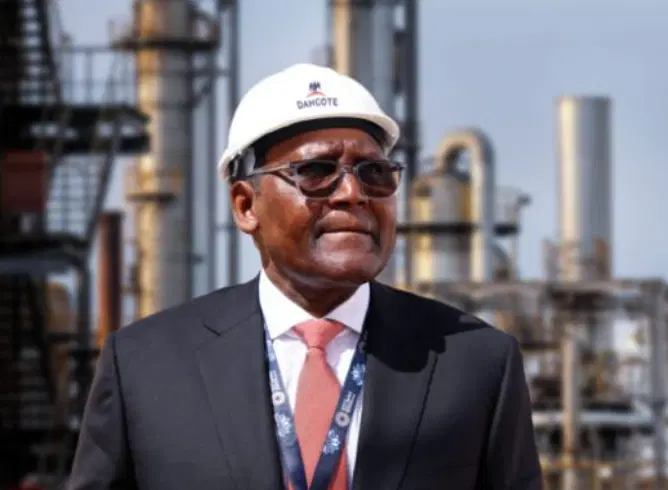
Dangote Refinery Ends Nigeria’s Era of Fuel Import Dependence, Boosts GDP, FX Earnings — EIU
The operational ramp up of the 650,000 barrels per day Dangote Petroleum Refinery & Petrochemicals is fundamentally reshaping Nigeria’s downstream oil sector, significantly reducing the country’s dependence on imported refined petroleum products and strengthening its external position, according to the Economist Intelligence Unit (EIU).
In its latest assessment on Nigeria’s fuel market and regulatory environment, the EIU said the refinery has already transformed a sector that was previously characterised by heavy reliance on imported fuel despite Nigeria being Africa’s largest crude oil producer. The report noted that the refinery met nearly 80 per cent of domestic petrol demand in April and produced enough volumes to satisfy local consumption requirements as operations approached full capacity.
The EIU described Nigeria’s downstream petroleum sector before the refinery as “long dysfunctional”, noting that the country had remained almost entirely dependent on costly imported fuel while producing nearly 1.5 million barrels of crude oil daily.
According to the report, the emergence of the refinery has reduced import dependence, improved domestic fuel availability and strengthened Nigeria’s balance of payments position through lower import demand and rising exports of refined petroleum products.
“The gradual ramp up of the 650,000 barrel/day Dangote refinery since May 2023 has transformed Nigeria’s long dysfunctional downstream sector,” the report stated. “The country’s main refineries, all state owned, had been inoperative for years and Nigeria was almost entirely reliant on costly imported fuel.”
The research and analysis division of The Economist Group, London added that the refinery’s attainment of full operational capacity and its planned expansion would further support Nigeria’s economic growth and foreign exchange earnings over the medium term.
“Meanwhile, the attainment of full capacity at, and an increase in exports from, the Dangote refinery will support real GDP growth and foreign exchange earnings in 2026 and 2027 and beyond, as a planned doubling of the plant’s output comes on stream around the end of the decade,” it added.
Industry analysts said the refinery is increasingly positioning Nigeria as an emerging refining and export hub, altering energy trade flows across Africa and reducing the vulnerability associated with fuel import dependence.
The EIU noted that the refinery’s expansion has coincided with major reforms in Nigeria’s downstream sector, including the removal of fuel subsidies and the introduction of market driven pricing mechanisms.
The report, however, said the transition from a state dominated fuel import structure to large scale domestic refining has triggered resistance from interests linked to the old import regime.
The latest tensions emerged following the decision by the Nigerian Midstream and Downstream Petroleum Regulatory Authority to relax restrictions on petrol imports despite the refinery’s growing capacity to meet domestic demand.
Dangote Industries subsequently initiated legal action, arguing that continued import approvals undermine domestic refining investments and conflict with the objectives of the Petroleum Industry Act, which seeks to encourage local refining capacity and reduce import dependence.
Analysts noted that the availability of large-scale domestic refining capacity has improved Nigeria’s energy security and reduced exposure to external supply shocks and foreign exchange volatility.
The Centre for the Promotion of Private Enterprise also cautioned against unrestrained importation of petroleum products, warning that such a policy could weaken Nigeria’s industrialisation drive and discourage investments in domestic refining.
Chief Executive Officer of CPPE, Muda Yusuf, said continued dependence on imported fuel had historically contributed to pressure on foreign reserves, exchange rate instability and fiscal leakages.
The refinery’s growing impact is also being reflected in Nigeria’s broader macroeconomic indicators. Earlier this month, S&P Global Ratings cited increased domestic refining capacity and rising hydrocarbon exports among the major factors supporting Nigeria’s sovereign credit rating upgrade – the first in 14 years.
Beyond Nigeria, analysts said the refinery is increasingly being viewed as a strategic industrial asset for Africa, where many countries remain heavily dependent on imported fuel despite rising demand for transportation, manufacturing, and power generation.
Business
BREAKING: Court Dismisses $19.6 Million Claim Against NNPCL — Rules Contract Scope Cannot Be Changed Orally
BREAKING: Court Dismisses $19.6 Million Claim Against NNPCL — Rules Contract Scope Cannot Be Changed Orally
In a landmark ruling on Friday, May 22, 2026, the Federal Capital Territory High Court in Abuja threw out a $19.6 million lawsuit filed by Alternate Dimensions Ventures Ltd against the Nigerian National Petroleum Company Limited (NNPCL), affirming a key legal principle: a written contract cannot be expanded through oral agreements or conduct.
Alternate Dimensions had sought $19,600,000 in professional fees, claiming the scope of its Direct Sale, Direct Purchase (DSDP e-pro) contract with NNPCL was orally expanded. Represented by counsel Patrick Peter, the firm argued it was entitled to the revised sum for services rendered under the alleged new terms.
But NNPCL, through its lawyer Ituah Imhanze of KENNA LP, pushed back sharply, arguing that parties are bound exclusively by the clear terms of their written agreement. Imhanze contended that without any written amendment, the claim was legally unsound, and the court agreed.
Delivering judgment, Justice Hamza Mu’azu upheld NNPCL’s defense, stating that the contract was unambiguous and that no evidence was adduced during the trial, which supported the alleged scope expansion. The court further found that NNPCL fully complied with all contractual terms and committed no breach.
Dismissing the suit as meritless, Justice Mu’azu reinforced the doctrine of sanctity of contract: any amendment to a written agreement must be express, unequivocal, and documented, not implied or verbal.
The ruling spares NNPCL from the S19.6 million claim and also a floodgate of similar potential liabilities.


- Deputy (Dep.) Finance Minister Courts Investors to Transform Ghana’s rice Economy June 4, 2026
- Mobile health services in Kenya reduce the risk of stillbirths June 4, 2026
- JustMarkets Research Highlights Global Growth Divergence as a Key Market Driver June 4, 2026
- African Development Bank Group approves $125 million investment in African Trade and Investment Development Insurance (ATIDI) to expand risk insurance capacity in Africa June 4, 2026
- Congo Energy & Investment Forum 2027 to Position Brazzaville as a Hub for Global Energy Deal-Making June 4, 2026
- Africa Skills Hub (ASH) Transitions to ASH Africa as it Marks 10 Years of Impact June 4, 2026
- When women farm better, Eswatini eats better June 3, 2026
- Togo Hosts the 8th Annual Forum of National Volunteer Agencies in the Economic Community of West African States (ECOWAS) Region June 3, 2026
- Indigenous Peoples gravely vulnerable to Ebola epidemic, warn United Nations (UN) independent experts June 3, 2026
- Meeting between Parliamentary Vice-Minister ONISHI and His Excellency (H.E.) Mr. Cosgrow, Principal Minister and Minister for Agriculture, Fisheries and Blue Economy of Seychelles June 3, 2026
- Deputy (Dep.) Finance Minister Courts Investors to Transform Ghana’s rice Economy June 4, 2026
- Mobile health services in Kenya reduce the risk of stillbirths June 4, 2026
- JustMarkets Research Highlights Global Growth Divergence as a Key Market Driver June 4, 2026
- African Development Bank Group approves $125 million investment in African Trade and Investment Development Insurance (ATIDI) to expand risk insurance capacity in Africa June 4, 2026
- Congo Energy & Investment Forum 2027 to Position Brazzaville as a Hub for Global Energy Deal-Making June 4, 2026
- Africa Skills Hub (ASH) Transitions to ASH Africa as it Marks 10 Years of Impact June 4, 2026
- When women farm better, Eswatini eats better June 3, 2026
-

 news6 months ago
WHO REALLY OWNS MONIEPOINT? The $290 Million Deal That Sold Nigeria’s Top Fintech to Foreign Interests
-

 society1 month ago
SOCIAL MEDIA IS NOT A BATTLEFIELD COMMAND – WHY THE NIGERIAN ARMY’S ACTION AGAINST JUSTICE CRACK IS A NATIONAL SECURITY IMPERATIVE
-

 celebrity radar - gossips4 months ago
Dr. Chris Okafor Returns with Power and Fire of the Spirit -Mounts Grace Nation Altar with Fresh Anointing and Restoration Grace on February 1, 2026
-

 celebrity radar - gossips6 months ago
Prophet Kingsley Aitafo Releases 2026 Prophecy: ‘Nigeria Will Rise, but the World Must Prepare for Turbulence’