Connect with us

Politics

Delta 2023: If not Gbagi, who else does the cap fit?

Published

on

Delta 2023: If not Gbagi, who else does the cap fit?
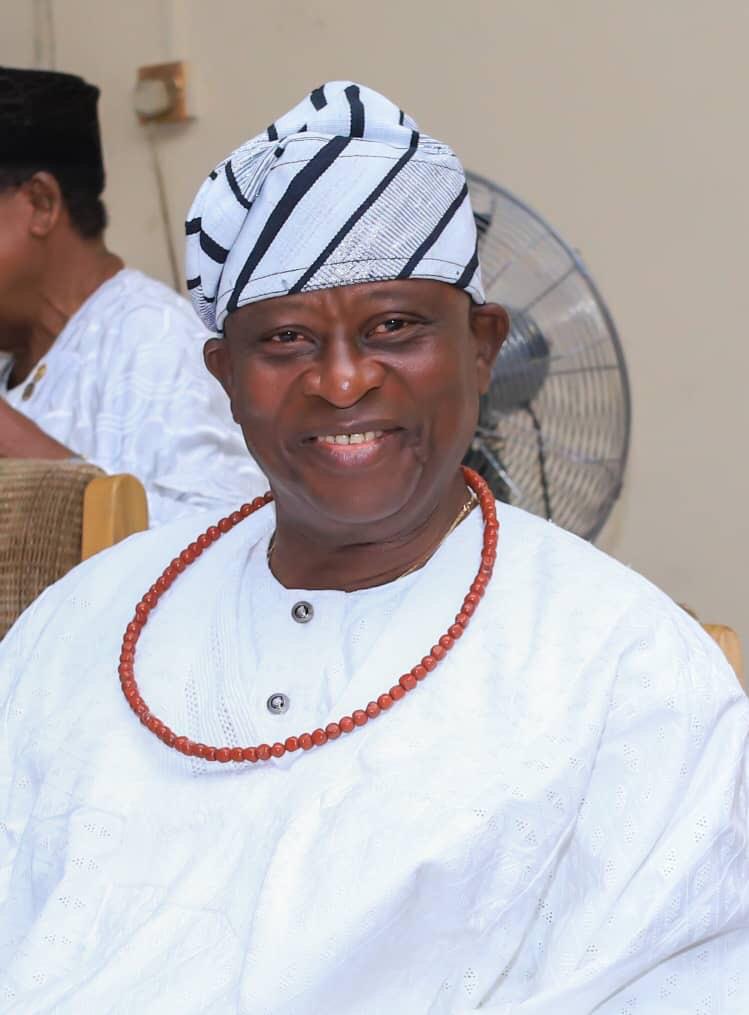
Delta 2023: If not Gbagi, who else does the cap fit? As the battle to settle for the successor of Senator (Dr.) Ifeanyi Okowa rages on, there is a burning desire amongst Deltans to opt for a trustworthy and reliable politician with the resume to match the performance of Chief James Ibori and Felix Ibru who were past Governors of Delta State.
Delta 2023: If not Gbagi, who else does the cap fit?
Against this backdrop, the rumbling clamor as to which Senatorial District would produce the next Governor in 2023 was nipped in the bud when the Delta State Chapter of the People’s Democratic Party (PDP) zoned the same to Delta Central Senatorial District.
The decision was in keeping with the zoning formula hitherto adopted during the Ibori-led administration which saw the rotation of power between the three Senatorial Districts in the State.
Delta 2023: If not Gbagi, who else does the cap fit?
The agreement in view of the PDP’s recent consensus remains unbroken and nipped mounting pressures of requests for zoning on the basis of ethnicity, one which otherwise would have been counterproductive and damaging for the party.
Those who met to agree on the zoning of the Governorship to Delta Central reached the agreement after resolving to reject the imposition of a candidate on the party by major power brokers within the State.
It was gathered that doing so would encourage persons with the requisite credentials to be projected on the basis of merit and past achievements, and nothing short of same, so as to sustain the tempo of development already stirred by previous administrations.
So far, out of those who have indicated interest to contest the Governorship election in 2023, only one stands out in view of his visible track records which sets him aside from his contemporaries.
It is however embarrassing that some whose foot prints are yet to be seen in their constituencies, and do not have the requisite competence or what takes to win such elections are warming up to indicate interest to contest.
What is even more disturbing is the fact that these persons are present appointees of the state government without the required financial wherewithal to slug it out with the opposition party, All Progressives Congress (APC), to ensure a win at the polls.
Other considerations which they do not meet are those anchored on their contributions to the development of their immediate communities and how much they’ve done to improve the lives of citizens in the state.
No doubt, some of them will be put to shame at the poll, particularly those planted to disempower opponents whose status or position stands a threat to their devious schemings.
Unfortunately, some very desperate ones have resorted to using blackmail in order to stop competent candidates from contesting the governorship election in 2023.
It will be crude, barbaric and oppressive if at this time, some politicians still believe that imposition and Godfatherism is a better source of winning election. This method does not show one’s popularity, capability and competency in governance.
A typical example was in the 2015 governorship election when David Edevbie was openly supported by the incumbent governor and the majority of his ethnic group, but was defeated at the primaries.
He lost woefully to the present Governor, Ifeanyi Okowa because he (Okowa) is more popular and resourceful. This is also not to leave out the support Okowa enjoyed from people like Kenneth Gbagi, a serial industrialist and one-time Minister for Education.
It is also disturbing that some people who may not have known much, have started dancing around these characters who lack effective leadership qualities needed to actualize good governance in the State.
Since Nigeria’s return to democracy in 1999, most politicians whose only source of income is politics do not think of investing in their respective states so as to provide employment for the teeming youths. Rather, they focus their energies on how to be rotated in political offices. A few of them who tried to have investments preferred to do so in Europe and other African countries than Nigeria.
Deltans will forever remember some of our indigenous industrialists like Edewor, Uloho, Ibru, Onosode and so on. Others who share their vision include Aliko Dangote, Dantata, Atiku Abubakar, Peter Obi, Kenneth Gbagi, Igbenedion among others who continue to provide employment in the country.
With Kenneth Gbagi fully keyed into contesting the Governorship election in Delta State, the aspirations of unpopular contestants can only come to reality if Gbagi who believes in philanthropy and Job creation lacks the same credentials.
Apart from possessing the qualities of compassion and empathy, his zeal for job creation places him as the most prepared and qualified aspirant within the People’s Democratic Party (PDP) who satisfies the zoning formula.
Gbagi’s support and contribution towards the growth of the PDP since its inauguration in 1999 attests to his commitment and sacrifice made over the years as a reliable party man.
When the cry of hunger caused by the lockdown ravaged the homes of Deltans, Kenneth Gbagi rose to the occasion as the first and only business mogul and politician who used his personal money to buy food items of various kinds as palliatives across the 25 local government areas of Delta State.
He went as far as paying the bills of patients in various hospitals and also provided money to cover surgical costs for sick people who are with chronic ailments. The masses are easily satisfied. They require jobs and stability to make them happy.
Gbagi’s empathy for humanity manifested severally in appeals to the federal government to intensify efforts on how the incessant killings in Southern kaduna, the attacks of Boko Haram and the Fulani herdsmen as well as the evils perpetrated by bandits in the Northern region of the country. This also included appeals on behalf of victims of flooding in several communities in Delta state.
Kenneth Gbagi’s role as a former Minister of State for Education went beyond the functions and activities of the ministry. He spent time to keep watch on the infrastructure which the Federal Government situated in his constituency and Delta State.
He also worked assiduously to see that the Federal University of Petroleum Resources (FUPRE) Ugbomro-Effurun was commissioned for learning and equipped with required facilities and equipment needed for smooth take off.  He also objected to the relocation of the Petroleum Training Institute (PTI) Effurun to Kaduna.
To further demonstrate that he is one whose tenure as Governor will not be regretted, he came home with the approval of Government Girls College to Oginibo, an Urhobo town in Delta State.
Going by the above accounts, those who misunderstood or were misinformed of the saga at the Signatious hotel, Effurun, appear skeptical in giving him maximum support towards his governorship ambition. Such persons in their interest should have a reset of their impressions, especially as the truth and reasons for such allegations have been exposed as the handiwork of political blackmailers.
Kenneth Gbagi’s lifestyle exudes love and empathy for his people and therefore can never be associated with such acts of inhumanity as portrayed in the molestation allegations against him.
Also, if he is said to be prudent or stern in handling his businesses or enterprises, he should not be castigated or blamed because most of the ailing or abandoned industries of both the state and the Federal Government were reduced to nothing as a result of mismanagement.
Apparently, Kenneth Gbagi’s opponents in the governorship race are aware that his credentials towards winning the race are unbeatable. Therefore, a competition like this, requires the ability to campaign or convince the electorates and to also showcase what they’ve done to make the masses support their aspiration.
They are therefore advised to discontinue the act of blackmail or calumny in politics, since the same does not portray the spirit of sportsmanship or oneness as expected from the people of the same Political party and ideology.
BY OGHENEAKPOBO I.E, a Political Analyst and PDP stalwart writes from Warri, Delta State.

Politics

Ajadi Gains Fresh Support from PDP Stakeholders Across 11 Ibadan LGAs yesterday 

Published

on

Ajadi Gains Fresh Support from PDP Stakeholders Across 11 Ibadan LGAs yesterday 


The leading governorship aspirant in Oyo State under the Peoples Democratic Party (PDP), Olufemi Ajadi Oguntoyinbo, has reiterated his commitment to sustaining the achievements of Governor Seyi Makinde, stated that his ambition is driven by a desire to consolidate good governance as he believes that humans are not animals and need to be governed well rather than pursuing personal gain.


Ajadi made this known on Thursday, April 23, 2026, during a strategic meeting with PDP stakeholders drawn from all 11 local government areas in Ibadan, where he formally sought their support ahead of the party’s gubernatorial primary election.


Addressing the gathering, Ajadi commended the Makinde administration for what he described as impactful governance across critical sectors, stressing that his aspiration is rooted in continuity of good governance, emphasizing that the promised Omituntun 3.0 is sacrosanct and he remains the initiator of Omituntun 3.0, the continuity of Governor Seyi Makinde’s legacy.


“If Omituntun reaches 40.0 in the future, nobody should be surprised that what started from 1.0 got to that level because good governance needs to be in continuity till eternity,” he said.


“The government of Governor Seyi Makinde has done well in all ramifications. That is why I have come forward to sustain his good governance for the benefit of our people,” he said.


He dismissed insinuations that his ambition was financially motivated, emphasizing his longstanding commitment to humanitarian service.


“I am not in this race to loot public funds. I have always been a philanthropist, and I intend to replicate that character through people-oriented governance that will uplift lives across Oyo State,” Ajadi added.


Earlier, the PDP Senatorial Chairman, Hon. Dayo Opatokun, described Ajadi as a stabilizing force within the party, noting that his engagements have contributed significantly to unity among members.


“Ambassador Ajadi is one of the aspirants who have kept the party united. His approach to leadership and inclusiveness is commendable,” Opatokun said.


Also speaking, Hon. Mufutau Ogunremi, Senior Special Assistant on Sustainable Development Goals (SDGs) to Governor Makinde, insisted that Ajadi should not be regarded as a political outsider within government circles.


“Ajadi should not be seen as a visitor in any government parastatal. He is a key stakeholder who has strengthened the PDP in Oyo State through consistent engagement with party executives at ward, local government, and state levels,” Ogunremi stated.


He further praised Governor Makinde’s leadership style, adding that Ajadi possesses similar qualities.


“Governor Makinde has shown exemplary leadership, and Ajadi has demonstrated the capacity to replicate that model. His relationship with party members is built on trust, loyalty, and sincerity,” he said.


The PDP Party Chairman in Lagelu Local Government Area, and Chairman of Local Government PDP Chairmen in the state, Femi Falowo, commended Ajadi’s humanitarian efforts and leadership qualities, expressing confidence in his ability to succeed Makinde.


“Many may be afraid to speak, but I will say it—Ajadi has done well in emulating humanitarian service. He understands governance and has what it takes to succeed Governor Seyi Makinde,” Falowo declared.


He urged the aspirant to remain steadfast in his philanthropic engagements and party unification efforts.


“I encourage you to continue your good work and never stop uniting members of the party,” he added.


On her part, the Senatorial Women Leader, Hon. Aduke Okewusi, called for greater inclusion and empowerment of women in Ajadi’s political structure.


“Women play crucial roles during elections, yet they are often relegated to the background. We want to be actively involved and empowered beyond mere political mobilization,” she said.


Okewusi urged Ajadi to honour his commitment to gender inclusion if elected.


“You have promised to carry women along. We expect that this promise will be fulfilled,” she added.


Similarly, the Youth Leader of Ona-Ara Local Government, Nureni Morakinyo Azeez, emphasized the need for youth empowerment, noting the critical role young people play during elections.


“Youths are always at the forefront during campaigns. We are appealing to you to prioritize youth empowerment and create opportunities that will secure our future,” Azeez said.


The meeting, which drew party leaders and grassroots mobilizers from across Ibadan, is seen as part of Ajadi’s ongoing consultations aimed at consolidating support within the PDP as the race for the 2027 governorship election gathers momentum.

Continue Reading

Politics

Rescue Mission 2.0: Why Governor Dauda Lawal Should Continue Rebuilding The Future Of Zamfara Through Investment in Education

Published

on

Rescue Mission 2.0: Why Governor Dauda Lawal Should Continue Rebuilding The Future Of Zamfara Through Investment in Education

By: Bashorun Oladapo Sofowora


For those who know Zamfara State before Governor Dauda Lawal became Governor will appreciate the current situation in the state. The state, which used to be in the rubble, has been reconstructed into a powerhouse within its geographical location and has become an envy of others. All thanks to the visionary rescue mission 1.0 spearheaded by Governor Dauda Lawal, PhD, in 2023, when he was elected Governor of the agrarian and mineral-rich state.

Just three years ago, education in Zamfara State was in a Comatose state. It was nonexistent. No functional primary and secondary schools conducive to learning. The narrative was one of despair: schools as ghost towns, examination halls locked by creditors, and a generation of children seemingly abandoned by systemic neglect. But for Governor Dauda Lawal, a leader who views governance not as a relay race but as a rescue mission, the story has changed with just three years in charge of the affairs of the state.

When he assumed office, the education sector wasn’t just ailing; clinically, it was on life support. Massive debts had piled up, teachers had vanished into thin air and the number of out-of-school children was skyrocketing on a daily basis. However, two years into the “Lawal era,” the sound of silence in Zamfara’s classrooms has been replaced by the sound of flipping of new textbooks and the scratching of pens on examination answer sheets.

One of the cruellest legacies Governor Lawal inherited was the hostage crisis of student futures. Students could not write exams, classes were dilapidated and qualified teachers. Past administrations had failed to remit examination fees to the West African Examinations Council (WAEC) and the National Examinations Council (NECO). Consequently, thousands of bright Zamfaran students saw their results withheld not because they failed, but because the state failed them. Some had to travel to neighbouring towns like Sokoto, Katsina and Kano to enrol for exams risking their lives.

In a dramatic move that sent shockwaves through the opposition, Governor Lawal reached into the state’s coffers and cleared the backlog of a staggering: ₦1.4 billion to WAEC covering debts from 2018 to 2022, and a combined payment of over ₦1.34 billion to NECO covering debts from 2014 to 2021. The immediate effect was the release of all previously withheld results, allowing students to finally apply for higher education. Furthermore, the state fully funded the 2024 WAEC examinations, ensuring that no child was barred from sitting for their finals due to a lack of funds.

Governor Lawal after his swearing in, declared a State of Emergency on Education in November 2023, this meant that governance moved from the air-conditioned offices in Gusau to the muddy fields of rural schools across the state. He rolled his sleeves and got to work almost immediately fixing the rot he met. Available data from the Zamfara State Government reveals that the state has embarked on the construction and renovation of over 500 schools across all 14 Local Government Areas. This is not a cosmetic paint job, the administration is investing in modern, safe, and dignified learning environments:

Classroom Revolution: Through the UBEC-ZSUBEB Matching Grant and AGILE projects, contracts worth over ₦5.9 billion have been awarded to build schools meeting global standards.

Furniture Supply: The administration has distributed over 12,000 two-seater desks for students and over 1,000 chairs for teachers, ending the era where pupils sat on bare floors to learn.

Recruitment of more teachers and supply of more textbooks: Infrastructure without manpower is a shell. When Governor Lawal looked at the teacher-to-pupil ratio in the state, he saw a crisis. In a decisive move to reverse the brain drain, he approved the massive recruitment of 2,000 qualified teachers.

The recruitment is strategic, the first batch of 500 focuses on critical science subjects (English, Mathematics, Chemistry, Physics), preparing Zamfaran youth for the 21st-century economy. The government is also finalising a 120-day Rapid Intervention Action Plan to audit payrolls, map schools, and secure school environments from illegal encroachment.

For the 2025 fiscal year, Governor Lawal presented a “Rescue Budget 2.0” of N545 billion. The largest single allocation, N79.6 billion, representing 14% of the entire budget, went to Education. For 2026, the proposed budget allocates an additional N65 billion to sustain this momentum. However, a journey to the Renaissance is not complete. It is at this critical inflexion point that the people of Zamfara face a defining choice. Before Governor Lawal, Zamfara was a state where students were barred from exams due to unpaid debts. Today, those chains are broken completely. But the enemy of progress is not just failure; it is interruption. The gains made in education are still fragile and need continuous consolidation. The newly recruited teachers need continuous training and the 500 renovated schools need constant security and maintenance. The unified Education Sector Bill, designed to create a seamless system from early childhood to tertiary level, is still awaiting full legislative maturity.

To stop the “Rescue Mission 2.0” now would be to hand the baton back to those who drove the system into educational bankruptcy. The same political forces that allowed the debt to accumulate to over N2 billion are already regrouping eyeing 2027. They promise something different, but their records speak of withheld results and abandoned classrooms. Governor Dauda Lawal is not merely constructing classrooms; he is dismantling the architecture of ignorance that held Zamfara backwards for decades. He has proven that with political will, the “Education Governor” can turn around a sector that was declared dead.

To secure this legacy, to ensure that children never again sit on bare floors and to guarantee that WAEC and NECO never again hold Zamfaran results hostage, the mission must continue for a secured future. The vote for continuity is a vote for the future. By re-electing Governor Dauda Lawal, Zamfara will not just be learning to read and write, but also to win in all ramifications and also put the state on a winning streak.

Continue Reading

Politics

Tinubu Is the ‘Surgeon’ Nigeria Needs; Opposition Lacks Courage for 2027 — Ogra

Published

on

Top Presidential Aide Reveals Why Student Loan Program Is A Game Changer

Tinubu Is the ‘Surgeon’ Nigeria Needs; Opposition Lacks Courage for 2027 — Ogra


ABUJA — Senior Special Assistant to the President, O’tega Ogra, has defended the reform agenda of President Bola Ahmed Tinubu, describing him as a “surgeon” prepared to take difficult but necessary decisions to stabilise Nigeria’s economy, while criticising opposition figures ahead of the 2027 general elections.


In a statement titled “My thoughts on the APC, President Bola Tinubu’s reforms, and the opposition,” Ogra, popularly known as ‘The Tiger,’ said many opposition leaders lack the political will required to implement tough but beneficial policies.


‘Surgeon vs Bystander’

Drawing a medical analogy, Ogra likened the President’s leadership style to that of a specialist willing to carry out life-saving surgery, while portraying critics as passive observers.


“The difference between President Bola Ahmed Tinubu and them is like comparing a surgeon willing to take a difficult but life-saving decision in the operating theatre, and a bystander more concerned with applause than outcome,” he said.


He argued that while the President is willing to endure short-term criticism in pursuit of long-term national stability, the opposition remains driven by populist considerations that could delay meaningful progress.


Structural Reforms Underway

Ogra dismissed claims that the administration’s policies are superficial, insisting they represent fundamental changes aimed at correcting longstanding economic distortions.


He cited developments in the oil and gas sector, including efforts to promote domestic refining and eliminate what he described as fraudulent subsidy regimes, as measures targeted at blocking revenue leakages. He also referenced fiscal reforms designed to boost government revenue and support infrastructure and social investments.

“These decisions are not politically convenient. They demand resolve,” Ogra said, adding that history tends to favour leaders who undertake systemic reforms rather than those who “manage decline.”

Criticism of Opposition

The presidential aide said opposition parties have “a lot to learn” from the internal workings of the ruling All Progressives Congress (APC), accusing rival groups of failing to present clear and workable policy alternatives.

According to him, criticism in a democracy must be accompanied by substance and conviction.

“Nigeria does not need rehearsed outrage. It needs tested ideas and leaders willing to stand by them when it matters most,” he added.

Outlook on Reforms

While acknowledging that the reforms may take time to fully materialise, Ogra expressed confidence that early signs across key sectors point to a more resilient economy and improved fiscal discipline.

He concluded that leadership is ultimately defined by the ability to make difficult and sometimes unpopular decisions, insisting that such choices are essential for building a strong and stable nation.


https://x.com/i/status/2046479270764011668

Continue Reading

Cover Of The Week

Trending