
celebrity radar - gossips
DETERRENCE OR CATASTROPHE? ON THE BRINK OF A REDEFINING MIDDLE EAST WAR: A CALL FOR THE DIPLOMATIC PATH FORWARD

DETERRENCE OR CATASTROPHE? ON THE BRINK OF A REDEFINING MIDDLE EAST WAR: A CALL FOR THE DIPLOMATIC PATH FORWARD
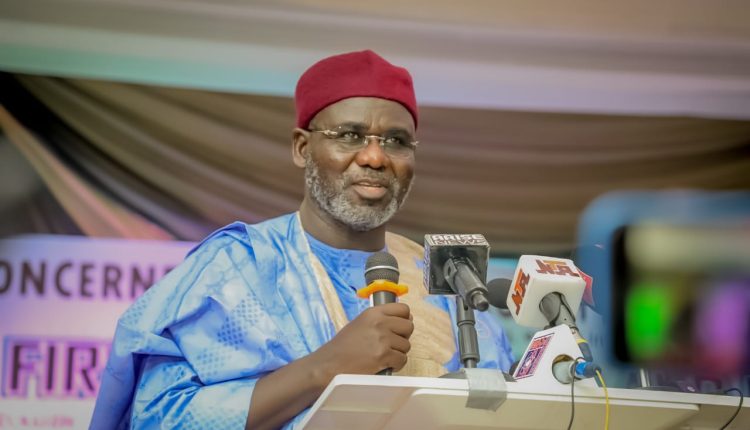
By Lt Gen Tukur Yusufu Buratai Rtd CFR
We stand at a precipice where a single decision could redefine the future of the Middle East and send shockwaves through a fragile global order. The choice appears deceptively simple: to strike militarily in pursuit of deterrence or to withstand perceived aggression. Yet, this framing is a dangerous illusion. A direct, full-scale conflict between the United States, its allies, and Iran would not be a controlled exercise in power projection. It would be the ignition of a regional inferno with no clear exit, where the initial objective of “deterrence” would be consumed within hours by the unforgiving law of unintended consequences. The path of war promises not a decisive victory, but a cascade of devastation—human, economic, and strategic—that would leave all parties and the world profoundly poorer and more unstable. In this stark reality, diplomacy is not a sign of weakness; it is the singular, rational imperative for survival.
The Illusion of a Clear Victory
The allure of a military solution rests on a straightforward calculus: degrade critical nuclear and military infrastructure, cripple the command structures of the Islamic Revolutionary Guard Corps (IRGC), and deliver a blow so decisive that Iran’s regional influence collapses. Proponents envision a rapid, surgical campaign that reestablishes undisputed deterrence. However, this vision fundamentally misjudges the nature of the adversary and the dynamics of the region. As former U.S. Deputy Assistant Secretary of State Andrew P. Miller cautions, even a successful strike “would likely prove a Pyrrhic victory” for broader strategic goals, failing to achieve durable political outcomes. Iran would not absorb a strike passively and capitulate. Retaliation would be swift, multidimensional, and devastating.
Indeed, as noted by Seyed Hossein Mousavian, a former Iranian nuclear negotiator and scholar at Princeton University, Tehran perceives such a confrontation as an “existential war,” a stance that would “eliminate any incentive for restraint, unleashing a conflict that would be impossible to control.” We would witness not a single battle but the violent opening of multiple, simultaneous fronts. Hezbollah’s vast arsenal of precision-guided rockets would rain down on Israeli cities. Iranian proxies in Iraq and Syria would target the U.S. personnel and bases with relentless aggression. The Houthis could unleash further chaos on global shipping. Most critically, Iran itself would likely launch direct missile and drone attacks against Gulf state oil infrastructure and, potentially, attempt to blockade the Strait of Hormuz—a chokepoint for nearly 25% of global seaborne oil trade. The initial “surgical strike” would, within days, metastasize into a sprawling regional war with no defined battlefield and no clear rules of engagement.
The Unbearable Costs: A World Remade by War
The consequences would swiftly spiral beyond the military domain, etching a deep scar across global stability. The human cost would be immediate and horrifying, with casualties mounting not just among combatants but in urban centres targeted by long-range artillery and missiles. As analyzed by the BBC, a primary risk is the collapse of the Iranian regime into chaos or civil war,” which would spark “a severe humanitarian and refugee crisis” of immense proportions, a scenario where “nobody wants to see the largest Middle East nation by population… descend into chaos.”
The economic shock would be felt in every corner of the world. A successful disruption of the Strait of Hormuz, even temporarily, would trigger an instantaneous spike in oil prices, catapulting the global economy into a profound inflationary recession. Supply chains would seize, markets would panic, and the cost of basic necessities would skyrocket worldwide. This is not a speculative risk; it is a guaranteed outcome of Iran’s stated asymmetric doctrine.
Strategically, the war would unmoor the region for a generation. The delicate, if tense, balance among regional powers would shatter. Even if the Iranian regime were severely weakened, the result would not be a peaceful vacuum but a vortex of chaos. As Afshon Ostovar, an associate professor at the Naval Postgraduate School, warns of potential internal collapse, “the ruling apparatus, in other words, would collapse gradually, and then suddenly.” A fractured state could descend into civil conflict, its hardline elements unleashing terror networks, and rival powers scrambling to carve spheres of influence. The painstakingly built, if flawed, security architecture of the past half-century would lie in ruins. The ultimate outcomes of a strike are profoundly unpredictable, but none point toward a more stable or secure order for the United States, Israel, or their allies. Victory, in any meaningful sense, would be unrecognizable.
The Diplomatic Path: Not an Ideal, But a Necessity
Faced with this landscape of ruin, the diplomatic path emerges not as a naive ideal but as the only pragmatic tool for managing an existential threat. It is the circuit breaker for the escalatory spiral that guarantees mutual destruction. This is not an argument for appeasement or for trusting the untrustworthy. It is a cold-eyed recognition that only through calibrated statecraft can we navigate away from the brink. This view is echoed by regional voices, such as an editorial in The National, which asserts that “various regional actors are urging non-military ways to change relationships with Tehran” and that “now is a time for focused and determined diplomacy to chart a path away from war.”
The goal of diplomacy in this context is not to achieve a grand reconciliation overnight but to relentlessly pursue de-escalation and create mechanisms for crisis management. It involves empowering regional dialogue, establishing clear and direct communication channels to prevent miscalculation, and seeking hard-nosed, verifiable agreements that incrementally roll back the most dangerous threats, such as further advances in Iran’s nuclear program and its regional ballistic missile deployments. The international community, including powers with leverage in Tehran, must be rallied not to take sides but to unequivocally advocate for restraint. The collective message must be that while aggression and proliferation are unacceptable, the alternative of total war is a common enemy that will destroy all in its path.
The choice before the international community is now laid bare. One road leads into the fog of war—a fog filled with the echoes of missile fire, the screams of the displaced, and the collapse of economies. It is a path where the very concept of “victory” loses all meaning. The other road, the diplomatic path, is undeniably difficult, fraught with setbacks, and requires immense political courage. It demands negotiating through distrust and managing imperfect outcomes. But it is the only road that leads away from the abyss and toward a future where stability, however fragile, can be rebuilt. The hour is late, but the path forward remains. We must choose diplomacy, not because we believe in the goodness of our adversaries, but because we have stared into the alternative and seen an unbearable catastrophe for all.
By:
Lt Gen Tukur Yusufu Buratai Rtd CFR
Former Chief of Army Staff, Nigerian Army, and former Nigerian Ambassador to the Republic of Benin.




celebrity radar - gossips
Let’s build a future where access to healthcare is strengthened…….Oba Odugbemi
Let’s build a future where access to healthcare is strengthened…….Oba Odugbemi
A call has gone to every stakeholder in the health sector to build a future where access to healthcare is guaranteed and strengthened.
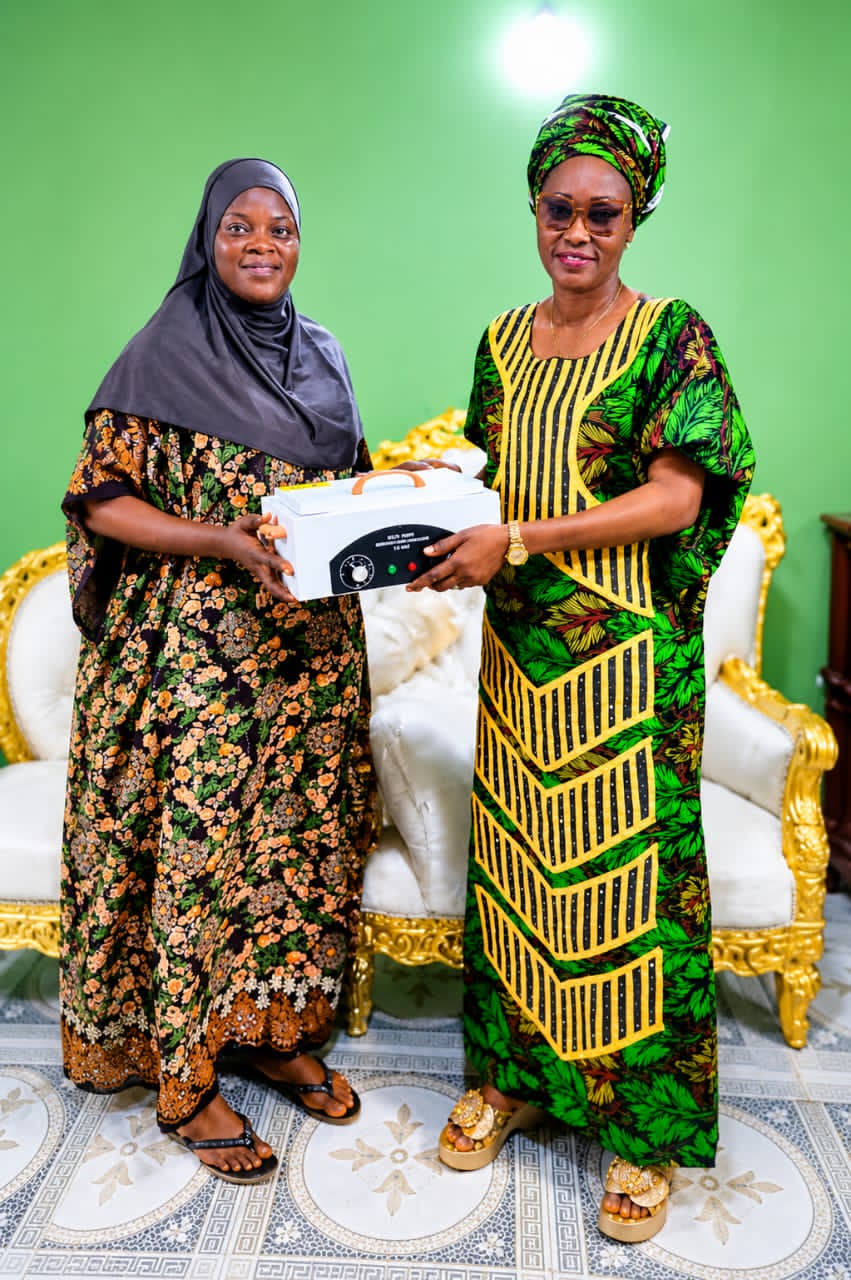
The Onilisa of Lisa Kingdom, Oba Oladele Odugbemi make the call in Lisa while donating a Sanitary Sterilisation Box to the Lisa health centre.
Oba Odugbemi said that the donation became necessary in order to further strengthen the capacity of the health centre for the benefits of the people.
The royal father stressed that his foundation, Oladele Odugbemi foundation would continue to make meaningful impacts in community healthcare aimed at complementing the efforts of government in healthcare delivery system.
He pointed out that the foundation reflects its unwavering commitment to promoting quality healthcare services, enhancing hygiene standards and supporting health institutions with essential tools that contribute to safer and healthier communities.
According to the monarch, all stakeholders in the health sector should work hand-in- hand with government to take healthcare to the doorsteps of the masses as government cannot do it alone, hence health is wealth.
Oba Odugbemi also charged the governments at all levels to declare a state of emergency in the health sector so that every Nigerian can have smooth access to healthcare delivery system in the interest of the country and for the benefits of the masses.
The monarch therefore said that the foundation would continue to care for the people through empowerment by ensuring that masses have good and quality health condition.
The Sanitary Sterilisation Box was presented by the Foundation Director, Hajia Suliat Odugbemi – Tinuosho to the Matron of Lisa Community Health Centre, Mrs Temitope Nofisat Sanni who received it on behalf of the health centre.

King of the Screen: Why Odunlade, Muyiwa, Femi Adebayo Remain Yoruba Movie Giants
The Yoruba movie industry has continued to produce legendary talents whose influence stretches beyond Nigeria to global audiences. Over the years, some actors have distinguished themselves through consistency, versatility, box office success, and cultural impact.
Among the numerous stars in Nollywood’s Yoruba sector, three actors have remained dominant figures whose names constantly resonate with fans and filmmakers alike — Odunlade Adekola, Muyiwa Ademola, and Femi Adebayo.

Odunlade Adekola: The Street King of Yoruba Cinema
Popularly regarded as one of the most entertaining actors in Nollywood, Odunlade Adekola has built a unique reputation through his energetic delivery, comic timing, emotional depth, and strong connection with grassroots audiences.
From comedy to action and emotional family dramas, the actor has consistently proven his versatility in blockbuster productions. His ability to interpret diverse roles effortlessly has made him a household name across Nigeria.
Industry observers believe his dominance on social media platforms, where his movie clips frequently go viral, has further strengthened his popularity among younger audiences.
Beyond acting, Odunlade has also contributed immensely to mentoring upcoming talents and expanding the commercial value of Yoruba films.
Muyiwa Ademola: The Master Storyteller

For many lovers of indigenous movies, Muyiwa Ademola remains one of the finest storytellers the Yoruba film industry has produced.
Widely respected for producing emotional and morally driven movies, the actor earned massive recognition through classic productions that focused on family values, culture, betrayal, perseverance, and societal lessons.
His calm delivery, deep scripts, and originality have kept him relevant despite changing trends in the entertainment industry.
Film critics often describe Muyiwa Ademola as one of the few actors whose productions combine entertainment with strong cultural education, making his movies timeless among older and younger viewers alike.
Femi Adebayo: The Modern-Day Box Office Force

Femi Adebayo has successfully combined traditional Yoruba storytelling with modern cinematic excellence, helping to project indigenous films to international audiences.
The actor, filmmaker, and producer has recorded major successes with high-budget productions that gained attention on streaming platforms and cinemas.
Known for his professionalism and attention to detail, Femi Adebayo has continued to push Yoruba movies beyond local boundaries while preserving cultural identity.
Entertainment analysts say his ability to blend culture, technology, and quality production has positioned him among the leading faces shaping the future of Yoruba cinema.
Growing Global Influence
The success of these actors reflects the increasing acceptance of indigenous Nigerian content globally. With streaming platforms creating wider access to local movies, Yoruba actors are now gaining international recognition and attracting new audiences.
Fans and stakeholders in the entertainment industry believe the contributions of Odunlade Adekola, Muyiwa Ademola, and Femi Adebayo have not only sustained Yoruba culture through film but have also elevated Nollywood’s global reputation.
celebrity radar - gossips
Eid-el-Kabir: Olowu of Kuta Urges Peace, Unity, Selflessness Among Nigerians

Eid-el-Kabir: Olowu of Kuta Urges Peace, Unity, Selflessness Among Nigerians
The Olowu of Kuta, HRM Oba Dr. Hammed Makama Oyelude, CON, Tegbosun III, has called on the Muslim Ummah and all Nigerians to make peace, unity, and selflessness their guiding principles as the world marks this year’s Eid-el-Kabir celebration.
In his Sallah message, the revered monarch described Eid-el-Kabir as a “highly spiritual occasion that demands dedication, commitment, and selflessness.”
Oba Makama said the period should be used to reflect on societal happenings and promote messages of hope and unity without inciting provocation.
He urged Nigerians to live together harmoniously, irrespective of religious, political, or tribal affiliations, stressing that politicians should exercise restraint and avoid inflammatory rhetoric ahead of the 2027 general elections.
“What should be uppermost in the mind of every patriotic Nigerian is **‘Country first,’” he said.
The monarch also appealed to citizens to remain vigilant in the face of insecurity, reassuring that the armed forces and paramilitary agencies are working round the clock to ensure a smooth and peaceful celebration.
“The price wise men pay for eternal liberty is vigilance. I urge everyone to celebrate moderately and extend a helping hand to the less privileged, widows, and orphans, embracing them as our brothers and sisters,” Olowu Makama added.
He concluded by wishing all Nigerians a peaceful and fulfilling Eid-el-Kabir celebration.


- When women farm better, Eswatini eats better June 3, 2026
- Togo Hosts the 8th Annual Forum of National Volunteer Agencies in the Economic Community of West African States (ECOWAS) Region June 3, 2026
- Indigenous Peoples gravely vulnerable to Ebola epidemic, warn United Nations (UN) independent experts June 3, 2026
- Meeting between Parliamentary Vice-Minister ONISHI and His Excellency (H.E.) Mr. Cosgrow, Principal Minister and Minister for Agriculture, Fisheries and Blue Economy of Seychelles June 3, 2026
- Eritrea: Construction of Elementary School in Gogni Sub-Zone June 3, 2026
- African Union Commission (AUC) Chairperson His Excellency (H.E.) Mahmoud Ali Youssouf highlighted thePermanent Representatives’ Committee (PRC) critical role in advancing the Union’s agenda and laying the groundwork for the forthcoming Mid-Year Coordination Meeting (MYCM) June 3, 2026
- Eritrea: Eighth Grade National Examination Commences June 3, 2026
- Many Africans see justice system as unequal, costly, and slow, Afrobarometer survey reveals June 3, 2026
- Prof. Benedict Oramah to Chair Finance Summit as African Energy Week (AEW) 2026 Prepares for Major Deal Flow June 3, 2026
- The Islamic Development Bank (IsDB) Group Affiliates to Host the 14th Private Sector Forum in Baku, Azerbaijan (16-19 June 2026) June 3, 2026
- When women farm better, Eswatini eats better June 3, 2026
- Togo Hosts the 8th Annual Forum of National Volunteer Agencies in the Economic Community of West African States (ECOWAS) Region June 3, 2026
- Indigenous Peoples gravely vulnerable to Ebola epidemic, warn United Nations (UN) independent experts June 3, 2026
- Meeting between Parliamentary Vice-Minister ONISHI and His Excellency (H.E.) Mr. Cosgrow, Principal Minister and Minister for Agriculture, Fisheries and Blue Economy of Seychelles June 3, 2026
- Eritrea: Construction of Elementary School in Gogni Sub-Zone June 3, 2026
- African Union Commission (AUC) Chairperson His Excellency (H.E.) Mahmoud Ali Youssouf highlighted thePermanent Representatives’ Committee (PRC) critical role in advancing the Union’s agenda and laying the groundwork for the forthcoming Mid-Year Coordination Meeting (MYCM) June 3, 2026
- Eritrea: Eighth Grade National Examination Commences June 3, 2026
-

 news6 months ago
WHO REALLY OWNS MONIEPOINT? The $290 Million Deal That Sold Nigeria’s Top Fintech to Foreign Interests
-

 society1 month ago
SOCIAL MEDIA IS NOT A BATTLEFIELD COMMAND – WHY THE NIGERIAN ARMY’S ACTION AGAINST JUSTICE CRACK IS A NATIONAL SECURITY IMPERATIVE
-

 celebrity radar - gossips4 months ago
Dr. Chris Okafor Returns with Power and Fire of the Spirit -Mounts Grace Nation Altar with Fresh Anointing and Restoration Grace on February 1, 2026
-

 celebrity radar - gossips6 months ago
Prophet Kingsley Aitafo Releases 2026 Prophecy: ‘Nigeria Will Rise, but the World Must Prepare for Turbulence’