
society
Drowning in Promise: The Uncertain Future of the Nigerian Dream

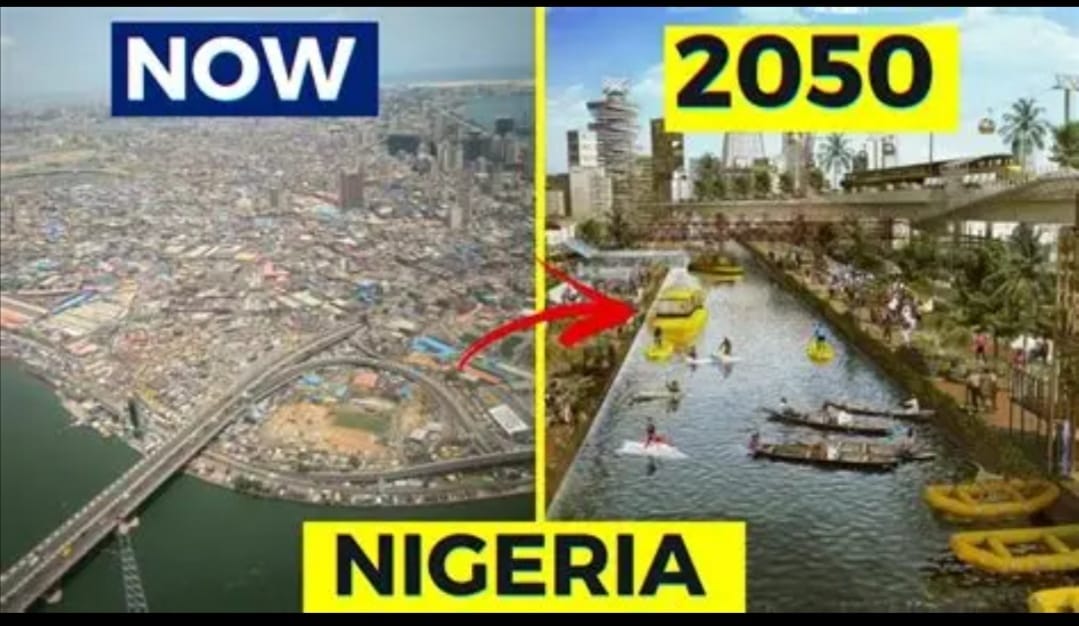
Drowning in Promise: The Uncertain Future of the Nigerian Dream.
George Omagbemi Sylvester | Published by SaharaWeeklyNG.com
“Once the Giant of Africa, now the ghost of its own greatness.”
Where are we truly headed as a nation? What future awaits the millions of young Nigerians whose only inheritance may be frustration and disillusionment? Nigeria, once christened the “GIANT of AFRICA,” now drags its wounded feet in shame; limping under the heavy burden of corruption, insecurity, economic despair and moral decay. The question is not only about where we are headed, but whether we are even moving at all or merely sinking slowly into the quicksand of our own negligence.
A Nation Lost in Transition.
At independence in 1960, Nigeria stood as a symbol of African hope. With its massive population, abundant natural resources and vibrant culture, the world looked to us as the continent’s future powerhouse. Yet sixty-five (65) years later, the same nation that inspired OPTIMISM now inspires PITY. Our democracy, supposedly the “GOVERNMENT OF THE PEOPLE,” has become an endless theatre of political betrayal.

Chinua Achebe, Nigeria’s literary icon, once wrote that “The trouble with Nigeria is simply and squarely a failure of leadership.” His words, written over four decades ago, still echo with haunting precision. Nigeria’s leadership problem has not evolved, but it has metastasized. We have turned governance into a business venture, elections into auctions and public service into personal enrichment.
While nations like Singapore and South Korea (who were behind Nigeria in the 1960s) have built thriving economies and world-class infrastructure, Nigeria still grapples with epileptic power supply, poor roads, collapsed health systems and unemployment that has reduced millions of graduates to okada riders and street hawkers/vendors.
The Economic Mirage.
Nigeria’s economy, though often described as Africa’s largest, remains a fragile façade. The World Bank and IMF repeatedly warn that GDP figures do not feed hungry citizens. In 2024, inflation peaked at over 33%, food inflation soared above 40% and the naira suffered one of its worst depreciations in history, trading above ₦1,700 to a dollar at some points.

According to the National Bureau of Statistics (NBS), over 133 million Nigerians live in multidimensional poverty. This means that more than half of our citizens lack access to clean water, quality education, healthcare and decent shelter. The World Bank’s 2025 update reaffirmed that Nigeria now hosts the second-largest population of people living in extreme poverty globally, second only to India, a nation seven times our size.
Dr. Ngozi Okonjo-Iweala, Director-General of the World Trade Organization, once said that “Economic reforms without social protection deepen inequality and weaken trust in governance.” Her warning is prophetic. The removal of fuel subsidy, while economically justifiable, has pushed millions into hardship, without any reliable safety net to cushion the blow. The result? Soaring transportation costs, skyrocketing food prices and widespread despair.
Youth Betrayed.
Nigeria’s young people are the most educated generation in our history, yet also the most unemployed. The NBS Labour Force Report (2024) placed youth unemployment at 53%, a staggering figure for a nation whose median age is just 18. For many, the dream is no longer to BUILD Nigeria, but to ESCAPE it. The brain drain has become a silent epidemic. According to the UK Home Office, over 100,000 Nigerian professionals migrated to the United Kingdom in 2023 alone, including doctors, nurses, engineers and IT experts. Canada, the U.S. and Europe have witnessed similar surges. The exodus is not just of skills, but of hope. As one young doctor recently lamented, “Nigeria does not deserve our loyalty when it gives us nothing but survival struggles.”

Insecurity: A Nation Under Siege.
Insecurity remains Nigeria’s greatest nightmare. The once peaceful northern farmlands are now graveyards of ambition, as Boko Haram, ISWAP, and bandits ravage entire communities. The UNHCR estimates that over 3 million Nigerians have been displaced internally by conflict. Kidnapping for ransom has become a national industry, from schoolchildren in Kaduna to commuters on Abuja highways, no one is safe.
According to the Global Terrorism Index (2024), Nigeria remains among the top five countries most affected by terrorism worldwide. Beyond statistics, these insecurities have crippled agriculture, destroyed local economies and discouraged foreign investment. Farmers have abandoned their lands, leading to food shortages and price inflation that worsens poverty.
The words of Nelson Mandela ring painfully true here: “Safety and security do not just happen; they are the result of collective consensus and public investment.” In Nigeria, that consensus is broken and investment in security too often ends in corruption.
The Collapse of Education and Healthcare.
A nation that fails to educate its youth or heal its sick is a nation preparing for SELF-DESTRUCTION. Nigeria’s education system is in ruins. Public universities go on strike almost yearly, while primary and secondary schools crumble in neglect. UNESCO reports that Nigeria now has over 20 million out-of-school children, the highest number in the world.
Our health system fares no better. Hospitals lack equipment, doctors are overworked and underpaid and many facilities operate without electricity or running water. The WHO (2024) confirmed that Nigeria still accounts for 20% of global maternal deaths; an unthinkable tragedy in a nation blessed with so much potential.
Meanwhile, political elites jet abroad for medical care and send their children to schools in Europe and America, mocking the very citizens who voted them into power. The hypocrisy is glaring; the betrayal, complete.
Corruption and the Erosion of Trust.
Corruption remains the cancer eating away at Nigeria’s soul. Transparency International’s Corruption Perception Index (2024) ranked Nigeria 145th out of 180 countries, a sharp reminder that despite decades of anti-corruption rhetoric, little has changed.
Billions are looted yearly, from subsidy scams to contract inflation. Former U.S. Secretary of State John Kerry once described Nigeria’s corruption as “a level of theft that would be breathtaking even by Washington standards.” Indeed, we have normalized impunity to the point that thieves are celebrated as philanthropists and patriots mocked as fools.
What Future for the Next Generation?
If Nigeria continues on this path, what future do we leave for the next generation? A future where education is a privilege, justice is purchasable and patriotism is punished? Where the child of the poor cannot dream beyond survival and the child of the rich is exempt from consequence?
The Nigerian child must not inherit chaos as culture. The coming generation deserves better, a nation where merit trumps mediocrity and where leadership means service not self-interest. The youth must rise with renewed consciousness not of violence, but of civic participation and accountability.
A Call for Renewal.
The road to redemption begins with truth and courage. We must rebuild institutions, restore faith in justice and revive the social contract between leaders and the led. Late Dora Akunyili once said, “Nigeria’s problem is not lack of resources, but lack of values.” She was so right.
We must elect leaders with competence and conscience not tribal or religious loyalty. We must strengthen the rule of law so that no one, however powerful, stands above it. We must invest in education, power and technology, the real drivers of modern prosperity.

The Way Forward: The Choice Before Us.
Nigeria stands at a defining moment. The next decade will decide whether we rise again or remain buried under our failures. The choice is ours, to act with vision or continue with vanity.
As Martin Luther King Jr. once said, “The time is always right to do what is right.” For Nigeria, that time is now. The destiny of our nation cannot be outsourced and the responsibility cannot be postponed. IF WE DO NOT FIX NIGERIA, NO ONE WILL.
Let us therefore rise not as TRIBES, but as ONE PEOPLE, united by the shared dream of a country worthy of its children. Because if we fail, history will not forgive us and the future will not remember us kindly.
Written by George Omagbemi Sylvester
Published by SaharaWeeklyNG.com





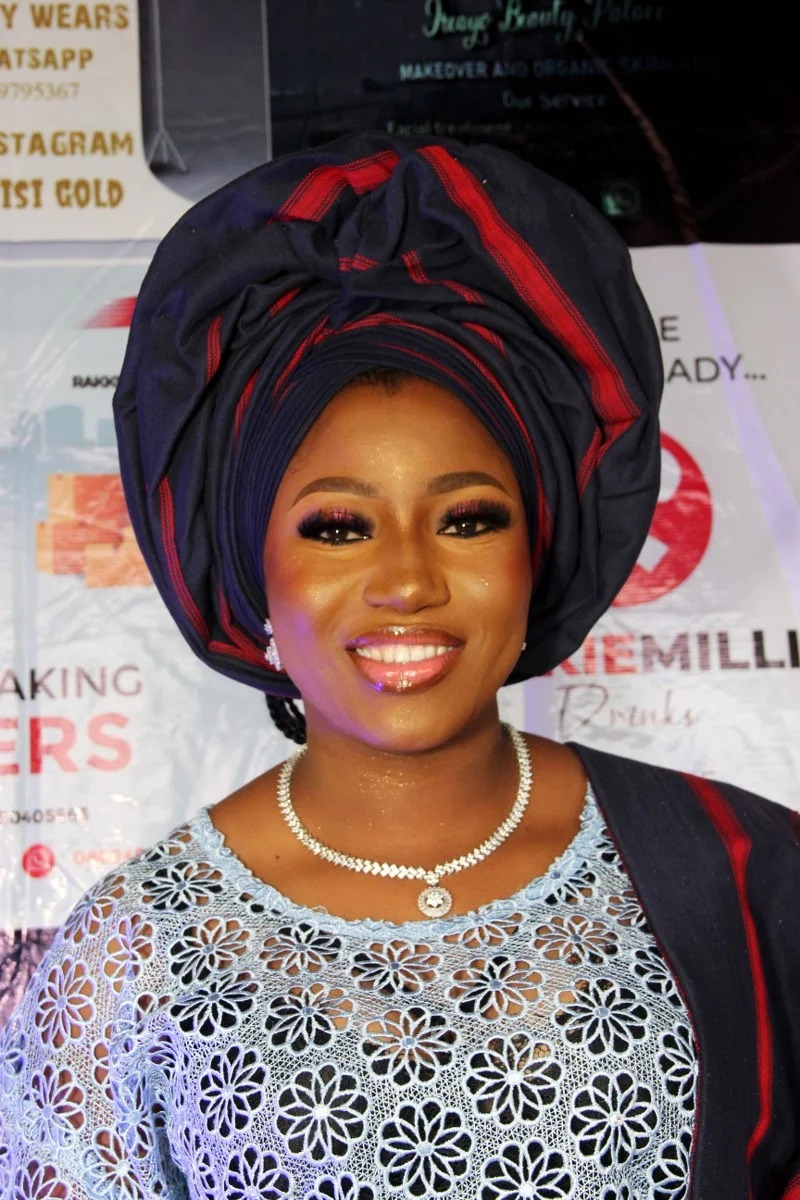
US-Based Society Lady, Fehintola-Brat Extends Eid-El-Kabir Greetings To Muslims
United States based fahionista of class, Chief (Mrs) Ayoola Fehintola-Brat has extended a warm greetings to Muslim faithful all over the world on the occasion of the 2026 Eid-El-Kabir celebration.
Fehintola-Brat who is the Balogun Egbe Obaneye Obinrin Akile Ijebu, and the Yeye Asofin of Idenaland in her message to Journalists urged Muslim to continually uphold the enduring values of sacrifice, obedience, faith, and compassion, which are central to the significance of Eid-El-Kabir festival.
A quiet philantropist whose humanitarian services has won her several laurels urged Muslims to use the spiritual occasion to pray for the peace co-existence of Nigerians regardless of religious, social and political leanings stressing that the oneness of the country should not be underplay.
In a related development, she expressed her felicitations to all sons and daughters of Ijebuland on the forthcoming Ojude Oba 2026 celebration, tasking age-groups otherwise known as Regbregbe to be more proactive in giving back to their immediate communities.
According to her, the beauty of the age-groups in Ijebuland is the need to contribute immensely to the development of the land in no small means. “This we will continue to achieve with God on our side”, she concluded.
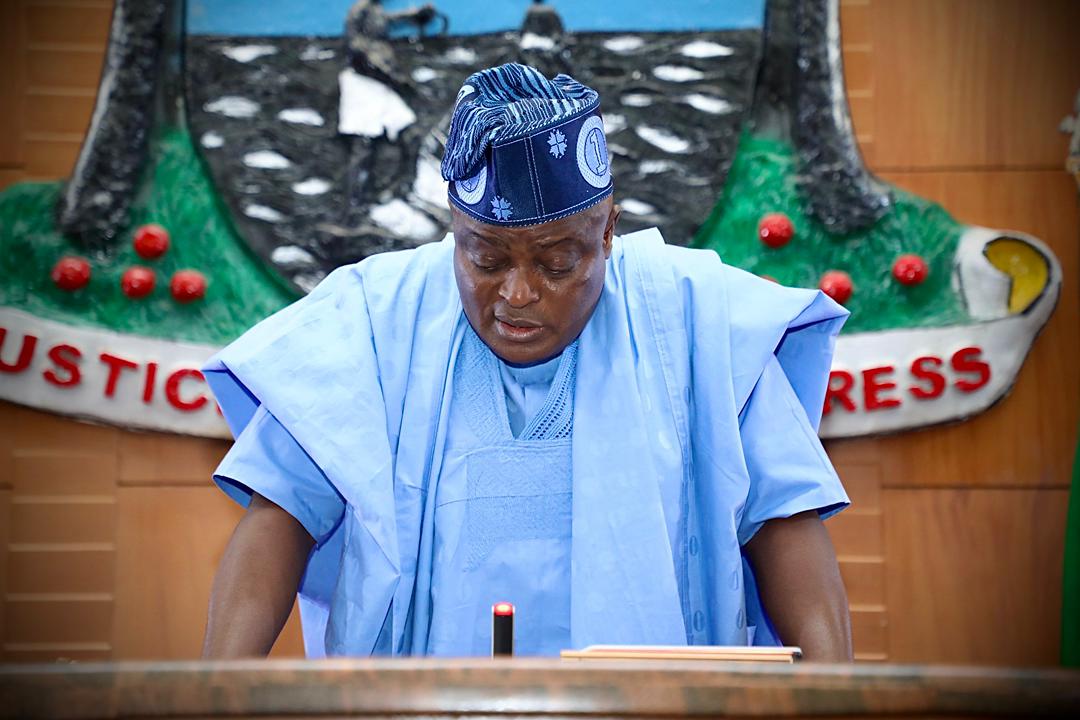
Sallah: Obasa Felicitates Muslim Ummah, Commends Nigerians for APC Primaries Turnout
The Speaker of the Lagos State House of Assembly, Rt. Hon. Mudashiru Obasa has extended warm felicitations to Muslims in Lagos State and across Nigeria on the occasion of Eid al-Adha.
In a statement released by his Chief Press Secretary, Mr. Dave Agboola, Obasa described the festival as a season of sacrifice, reflection, and gratitude, urging the faithful to continue to uphold the values of peace, unity, and love that strengthen the nation.
He noted that the celebration of Eid al-Adha is not only a spiritual milestone but also a reminder of the importance of togetherness and collective responsibility in building a stronger society.
He, likewise, emphasized that the festival provides an opportunity for Nigerians to renew their commitment to national progress and to support leadership that prioritizes development and prosperity.
Obasa, however, commended Nigerians, particularly members of the All Progressives Congress (APC), for their massive turnout during the recently concluded party primaries. He described the participation as a clear demonstration of the people’s confidence in the government of President Bola Ahmed Tinubu and their belief in the administration’s vision for a greater Nigeria.
“The APC primaries have shown the resilience of our democracy and the confidence Nigerians have in the leadership of President Bola Ahmed Tinubu and the Renewed Hope Agenda. This is a strong message that our people are ready to continue supporting policies that will drive growth and prosperity,” Obasa stated.
The Speaker further encouraged Muslims to celebrate responsibly, stressing that the joy of Eid should be accompanied by prayers for the continued peace and progress of Lagos State and Nigeria.
“As you celebrate with family and loved ones, may this season bring joy, peace, and prosperity to your homes. Let us remain united in our resolve to build a stronger nation,” he added.
On behalf of the Lagos State House of Assembly, Obasa wished all Muslims a happy and fulfilling Eid al-Adha celebration.
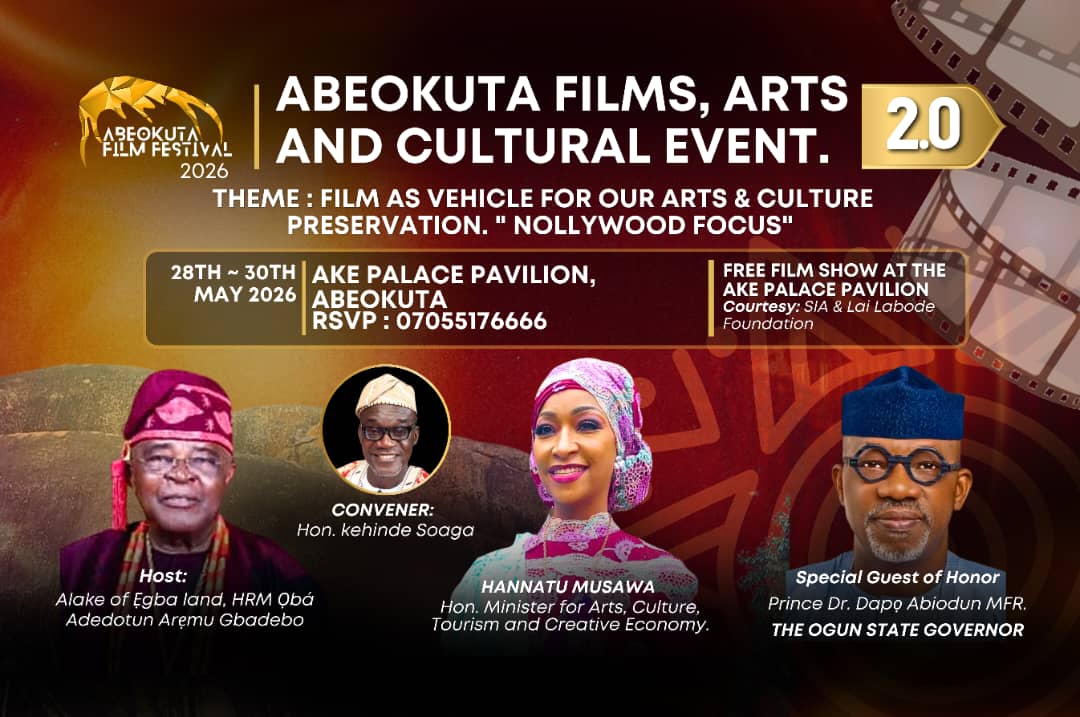
ABEOKUTA FILM FESTIVAL AT ILEYA
Kayshow Multimedia a filmmaking and Media organization this year 2026 holds its annual Abeokuta film festival at the Ake Palace in Abeokuta.
Alake of Egba land, Ọba Michael Adedotun Arẹmu Gbadebo has graciously endorsed the Free Training of Egba Youths on Film and Arts and the Entertainment of the the People with a FREE FILM SHOW at the AKE PAVILION. as part of the ABEOKUTA FILM FESTIVAL 2.0.
The Convener of the Film Festival Honorable Kehinde Soaga says this year’s event promises to be more exciting as distinguished personalities are sure to attend.
This includes the honorable Minister for Art Culture and Creative Economy in Nigeria, Barr. Hannatu Musa Musawa, Ààrẹ Lai Labode, Sen. Ibikunle Amosun and other special guests.
The event will feature Film, Cultural Dance Cultural foods and Award Ceremony.
The general public is hereby invited to the Free film show at the Abeokuta film festival at the Alake Palace Pavilion on Thursday 28th of May 2026 by 4:00 p.m.
Only well dressed is the Entry. The Abeokuta Film Festival is an annual event taking place in the capital city of Ogun State state.


- Qrent says delaying Information Technology (IT) refresh cycles may be increasing operational risk for businesses in Africa May 27, 2026
- Dentons’ Iyunola Adekanye Appointed to African Mining Week (AMW) Advisory Board May 27, 2026
- United Nations (UN) Women Liberia and Partners Convene for Spotlight Initiative 2.0 Women’s Economic Empowerment Inception Meeting May 27, 2026
- African Mining Week (AMW) to Host Central Bank Governors Roundtable as Monetary Authorities Deepen Role in Mining Sector Growth May 27, 2026
- Eritrea: Diaspora Nationals Celebrate Independence Day Anniversary May 27, 2026
- Africa Unveils Landmark Humanitarian Coordination Platform to Strengthen aligned Response to Humanitarian Crises May 27, 2026
- Seychelles: President Herminie Engages with Police and Fire Services on Praslin May 27, 2026
- Issue 3 of Mining Review Africa now available for free download May 27, 2026
- NOV Joins African Energy Week (AEW) 2026 as Gold Sponsor Amid Africa’s Offshore Expansion Push May 26, 2026
- African Union of Broadcasting (AUB) and United Nations University Institute for Water, Environment and Health (UNU-INWEH) Launch Landmark Webinar Series on Africa’s Water Crisis, Starting June 2, 2026 May 26, 2026
- Qrent says delaying Information Technology (IT) refresh cycles may be increasing operational risk for businesses in Africa May 27, 2026
- Dentons’ Iyunola Adekanye Appointed to African Mining Week (AMW) Advisory Board May 27, 2026
- United Nations (UN) Women Liberia and Partners Convene for Spotlight Initiative 2.0 Women’s Economic Empowerment Inception Meeting May 27, 2026
- African Mining Week (AMW) to Host Central Bank Governors Roundtable as Monetary Authorities Deepen Role in Mining Sector Growth May 27, 2026
- Eritrea: Diaspora Nationals Celebrate Independence Day Anniversary May 27, 2026
- Africa Unveils Landmark Humanitarian Coordination Platform to Strengthen aligned Response to Humanitarian Crises May 27, 2026
- Seychelles: President Herminie Engages with Police and Fire Services on Praslin May 27, 2026
-

 news5 months ago
WHO REALLY OWNS MONIEPOINT? The $290 Million Deal That Sold Nigeria’s Top Fintech to Foreign Interests
-

 society3 weeks ago
SOCIAL MEDIA IS NOT A BATTLEFIELD COMMAND – WHY THE NIGERIAN ARMY’S ACTION AGAINST JUSTICE CRACK IS A NATIONAL SECURITY IMPERATIVE
-

 celebrity radar - gossips4 months ago
Dr. Chris Okafor Returns with Power and Fire of the Spirit -Mounts Grace Nation Altar with Fresh Anointing and Restoration Grace on February 1, 2026
-

 celebrity radar - gossips6 months ago
Prophet Kingsley Aitafo Releases 2026 Prophecy: ‘Nigeria Will Rise, but the World Must Prepare for Turbulence’