
society
Education Without Borders: How Johannesburg’s Inner-City “Back to School” Giveaway Is Redefining Grassroots Leadership

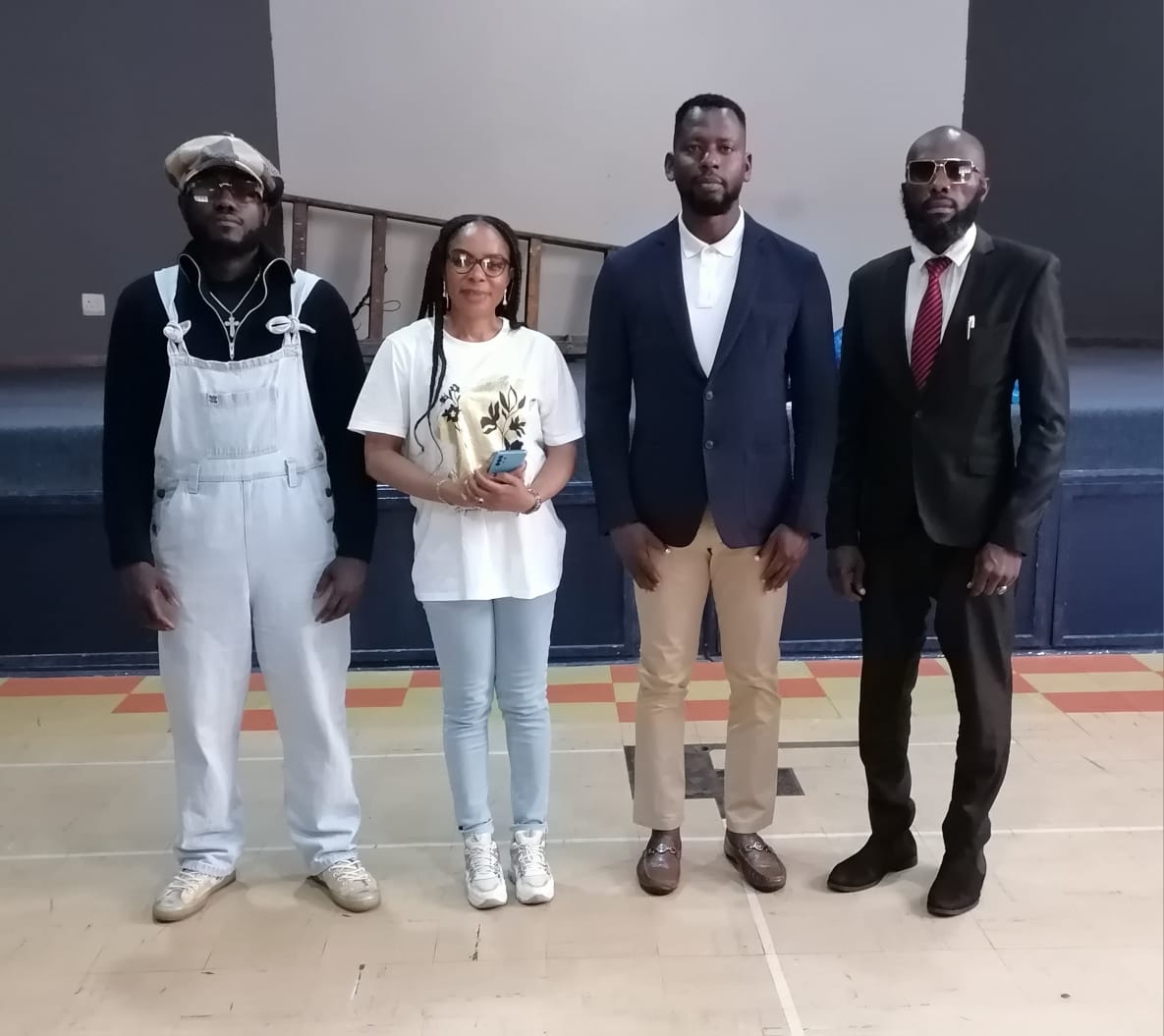
Education Without Borders: How Johannesburg’s Inner-City “Back to School” Giveaway Is Redefining Grassroots Leadership.
By George Omagbemi Sylvester
Published by SaharaWeeklyNG.com
“A Four-Year Tradition of Service, Inclusion and Pan-African Solidarity in Yeoville, Berea and Hillbrow.”
In many parts of the world, the beginning of a new school year is marked by excitement, fresh notebooks, new uniforms and renewed hope. In Johannesburg’s inner-city communities of Yeoville, Berea, Hillbrow and their surrounding areas, however, the same period often exposes a harsh reality: poverty, unemployment and migration-related vulnerability frequently stand between children and access to basic education tools. It is against this backdrop that the annual “Back to School” Giveaway, initiated by Hon. Ekos Akpokabayen, has once again returned, this time stronger, broader and more impactful than ever.
Now in its fourth consecutive year, the initiative has grown from a modest act of charity into a respected community institution. Its purpose remains clear and consistent: to ease the financial burden on struggling families and ensure that children, regardless of nationality or background, begin the academic year with dignity, confidence and the essential materials required for learning. In communities where daily survival competes with long-term planning, this intervention is not symbolic, it is practical, timely and transformative.

Education as a Social Equaliser. Globally, education is widely recognised as the most powerful equaliser in society. UNESCO and other international bodies consistently affirm that access to basic education materials (books, writing tools and uniforms) has a direct impact on school attendance, learner confidence and academic performance. For low-income households, the inability to afford these basic items often leads to delayed enrolment, absenteeism or dropout, particularly in urban informal settings where living costs are high and social safety nets are weak.
Johannesburg’s inner city is home to one of the most diverse migrant populations on the African continent. Families from across Southern, Central and East Africa live side by side, drawn by economic opportunity but often trapped in cycles of precarious work and inadequate housing. Children growing up in these environments face layered disadvantages: economic hardship, social exclusion and, in some cases, xenophobia. The “Back to School” Giveaway directly confronts these challenges by focusing on the child first, before nationality, language or legal status.
As renowned Brazilian educator Paulo Freire argued, “Education does not change the world. Education changes people, and people change the world.” By equipping children with the tools to learn, the initiative invests not only in individual futures but in the long-term stability and cohesion of the community itself.
Leadership Rooted in Consistency. What distinguishes this program is not only its intent but its consistency. Many community interventions flare briefly and disappear. Four consecutive years of uninterrupted delivery, however, signal discipline, planning and genuine commitment. Hon. Ekos Akpokabayen’s sustained leadership reflects a deeper understanding of servic and one that views development not as a one-off event, but as a continuous process.
This year’s edition was further strengthened by the presence of Hon. Angel Monalisa, Hon. George O. Sylvester and Hon. Otono Osiaima, whose participation underscored a shared belief in collective responsibility. Their involvement sent a powerful message: meaningful leadership is collaborative, visible and accountable at the grassroots.
Political theorist Hannah Arendt once noted that “Power corresponds to the human ability not just to act, but to act in concert.” The unified front presented by the organisers reinforces the idea that sustainable community impact is achieved when leaders work together rather than in isolation.
A Truly Pan-African Initiative. One of the most compelling aspects of the 2026 “Back to School” Giveaway is its pan-African character. Beneficiaries were not limited to Nigerians, despite the organisers’ Nigerian heritage. Children from Burundi, the Democratic Republic of Congo, Zimbabwe, South Africa, Mozambique and other African countries all benefited equally.
In a global climate where migration is often politicised and African migrants are frequently portrayed as burdens rather than contributors, this initiative offers a powerful counter-narrative. It affirms a simple but radical truth: children should never be punished for borders they did not draw.
Ghanaian scholar Kwame Nkrumah famously declared, “We face neither East nor West; we face forward.” The spirit of this program reflects that philosophy, embracing a future-oriented African solidarity grounded in shared humanity rather than fragmented identities.
The Inner City as a Site of Possibility. Yeoville, Berea and Hillbrow are often discussed in the media through the lenses of crime, decay and urban neglect. While these challenges are real, they do not tell the whole story. These neighbourhoods are also spaces of resilience, cultural exchange and informal economies that sustain thousands of families.
By situating the “Back to School” Giveaway within these communities, the organisers implicitly challenge narratives of hopelessness. They recognise that development does not always begin in boardrooms or government offices and it often starts on the streets, in churches, community halls and open spaces where trust already exists.
Development economist Amartya Sen has long argued that poverty should be understood not merely as low income, but as a deprivation of capabilities. Education, in this sense, is not charity; it is capability expansion. Providing school supplies may appear modest, but its ripple effects (improved attendance, enhanced self-esteem and parental relief) are profound.
Beyond Charity: A Model of Social Responsibility. Over four years, the “Back to School” initiative has evolved into more than a giveaway. It has become a symbol of inclusion, unity and social responsibility. It demonstrates that effective community intervention does not require excessive bureaucracy, but it does require empathy, planning and accountability.
Importantly, the program complements, rather than replaces, state responsibility. While governments have a duty to ensure access to education, civil society and community leaders play a crucial role in filling gaps and more especially in migrant-dense urban spaces where policy often lags behind reality.
As Kenyan scholar Ali Mazrui observed, “Africa’s problem is not that it is traditional, but that it has been denied the chance to modernise on its own terms.” Grassroots initiatives like this one represent Africans addressing African challenges with locally grounded solutions.
Final Take-Away: Education, Dignity and the Future We Share. The 2026 “Back to School” Giveaway stands as a compelling example of what principled, people-centred leadership looks like in practice. In an era marked by political noise and short-term gestures, this four-year tradition offers something rare: consistency with conscience.
By placing children at the centre, transcending nationality, and returning year after year to the same communities, Hon. Ekos Akpokabayen and his team remind us that the true measure of leadership lies not in titles, but in tangible impact. They demonstrate that education, compassion and hope are not finite resources; and that when shared, they multiply.
For Johannesburg’s inner city, this initiative is more than an annual event. It is a statement: that dignity matters, that every child deserves a fair start and that Africa’s future will be built not by exclusion, but by solidarity.
In a world increasingly defined by division, the lesson from Yeoville, Berea and Hillbrow is clear and universal: when we invest in children, across borders and backgrounds, we invest in a future that belongs to us all.





FOPCHEN Seeks Wider Engagement As Court Defers Hearing
OTA, OGUN STATE — The High Court of Ogun State, Ota Division, on Thursday resumed hearing in the ongoing matter involving cultural and societal concerns, before adjourning proceedings till Thursday, July 2, 2026, for continuation of hearing.
At the resumed sitting on May 28, 2026, counsel representing the various parties revisited key issues in the case and made further submissions before the court.
The matter, which has continued to generate public interest across different sectors, again drew attention from legal observers and stakeholders who described the case as one with significant implications for societal values, cultural identity and constitutional interpretation.
Speaking after the proceedings, the Foundation for the Protection of Cultural Heritage in Nigeria, popularly known as FOPCHEN, renewed its appeal for dialogue and constructive engagement among Nigerians, stressing that sensitive cultural and moral issues should not be left entirely within the confines of the courtroom.
According to the group, broader conversations involving traditional institutions, civil society organisations, religious leaders and policy stakeholders remain necessary in addressing issues relating to national values and social responsibility.
Legal analysts at the court premises noted that arguments being canvassed by parties in the suit could shape future legal interpretations surrounding cultural and moral questions in the country.
Following submissions by counsel, the presiding judge adjourned the matter till Thursday, July 2, 2026, to enable parties further prepare and respond to issues raised during the hearing.
The development has continued to spark reactions among observers, with many Nigerians closely monitoring the proceedings ahead of the next hearing date.

US-Based Society Lady, Fehintola-Brat Extends Eid-El-Kabir Greetings To Muslims
United States based fahionista of class, Chief (Mrs) Ayoola Fehintola-Brat has extended a warm greetings to Muslim faithful all over the world on the occasion of the 2026 Eid-El-Kabir celebration.
Fehintola-Brat who is the Balogun Egbe Obaneye Obinrin Akile Ijebu, and the Yeye Asofin of Idenaland in her message to Journalists urged Muslim to continually uphold the enduring values of sacrifice, obedience, faith, and compassion, which are central to the significance of Eid-El-Kabir festival.
A quiet philantropist whose humanitarian services has won her several laurels urged Muslims to use the spiritual occasion to pray for the peace co-existence of Nigerians regardless of religious, social and political leanings stressing that the oneness of the country should not be underplay.
In a related development, she expressed her felicitations to all sons and daughters of Ijebuland on the forthcoming Ojude Oba 2026 celebration, tasking age-groups otherwise known as Regbregbe to be more proactive in giving back to their immediate communities.
According to her, the beauty of the age-groups in Ijebuland is the need to contribute immensely to the development of the land in no small means. “This we will continue to achieve with God on our side”, she concluded.

Sallah: Obasa Felicitates Muslim Ummah, Commends Nigerians for APC Primaries Turnout
The Speaker of the Lagos State House of Assembly, Rt. Hon. Mudashiru Obasa has extended warm felicitations to Muslims in Lagos State and across Nigeria on the occasion of Eid al-Adha.
In a statement released by his Chief Press Secretary, Mr. Dave Agboola, Obasa described the festival as a season of sacrifice, reflection, and gratitude, urging the faithful to continue to uphold the values of peace, unity, and love that strengthen the nation.
He noted that the celebration of Eid al-Adha is not only a spiritual milestone but also a reminder of the importance of togetherness and collective responsibility in building a stronger society.
He, likewise, emphasized that the festival provides an opportunity for Nigerians to renew their commitment to national progress and to support leadership that prioritizes development and prosperity.
Obasa, however, commended Nigerians, particularly members of the All Progressives Congress (APC), for their massive turnout during the recently concluded party primaries. He described the participation as a clear demonstration of the people’s confidence in the government of President Bola Ahmed Tinubu and their belief in the administration’s vision for a greater Nigeria.
“The APC primaries have shown the resilience of our democracy and the confidence Nigerians have in the leadership of President Bola Ahmed Tinubu and the Renewed Hope Agenda. This is a strong message that our people are ready to continue supporting policies that will drive growth and prosperity,” Obasa stated.
The Speaker further encouraged Muslims to celebrate responsibly, stressing that the joy of Eid should be accompanied by prayers for the continued peace and progress of Lagos State and Nigeria.
“As you celebrate with family and loved ones, may this season bring joy, peace, and prosperity to your homes. Let us remain united in our resolve to build a stronger nation,” he added.
On behalf of the Lagos State House of Assembly, Obasa wished all Muslims a happy and fulfilling Eid al-Adha celebration.


- Société Nationale des Pétroles du Congo (SNPC) Chief Ominga to Speak at African Energy Week (AEW) 2026 as Congo Accelerates Gas Expansion May 29, 2026
- South Africa: Deputy President Mashatile arrives in India for a Working Visit May 29, 2026
- Seychelles: President Visits Key Development Sites on Coetivy Island May 29, 2026
- Accelerating regional action to advance mental health care in Africa May 29, 2026
- President of the Republic of Seychelles Meets Young La Digue Talent Ahead of London Showcase May 29, 2026
- United Nations Economic Commission for Africa (ECA) launches regional initiative to accelerate women’s digital entrepreneurship across four African countries May 29, 2026
- Ethiopia: International community must act to safeguard press freedom ahead of national election May 29, 2026
- CORRECTION: Annual Meetings 2026 (AM2026): African Development Bank (AfDB) 2025 Trade Finance Report Highlights Resilience of African Financial Institutions After Covid-19 May 29, 2026
- Why Big Tech Could Become Nigeria’s New Gas Partner May 29, 2026
- African Energy Chamber (AEC)-Venezuela Alliance Accelerates Pathways into South-South Energy Expansion May 29, 2026
- Société Nationale des Pétroles du Congo (SNPC) Chief Ominga to Speak at African Energy Week (AEW) 2026 as Congo Accelerates Gas Expansion May 29, 2026
- South Africa: Deputy President Mashatile arrives in India for a Working Visit May 29, 2026
- Seychelles: President Visits Key Development Sites on Coetivy Island May 29, 2026
- Accelerating regional action to advance mental health care in Africa May 29, 2026
- President of the Republic of Seychelles Meets Young La Digue Talent Ahead of London Showcase May 29, 2026
- United Nations Economic Commission for Africa (ECA) launches regional initiative to accelerate women’s digital entrepreneurship across four African countries May 29, 2026
- Ethiopia: International community must act to safeguard press freedom ahead of national election May 29, 2026
-

 news6 months ago
WHO REALLY OWNS MONIEPOINT? The $290 Million Deal That Sold Nigeria’s Top Fintech to Foreign Interests
-

 society4 weeks ago
SOCIAL MEDIA IS NOT A BATTLEFIELD COMMAND – WHY THE NIGERIAN ARMY’S ACTION AGAINST JUSTICE CRACK IS A NATIONAL SECURITY IMPERATIVE
-

 celebrity radar - gossips4 months ago
Dr. Chris Okafor Returns with Power and Fire of the Spirit -Mounts Grace Nation Altar with Fresh Anointing and Restoration Grace on February 1, 2026
-

 celebrity radar - gossips6 months ago
Prophet Kingsley Aitafo Releases 2026 Prophecy: ‘Nigeria Will Rise, but the World Must Prepare for Turbulence’