
society
EFCC shouldn’t be in existence, Agbakoba tells Nigerians govt, says Police already performing role

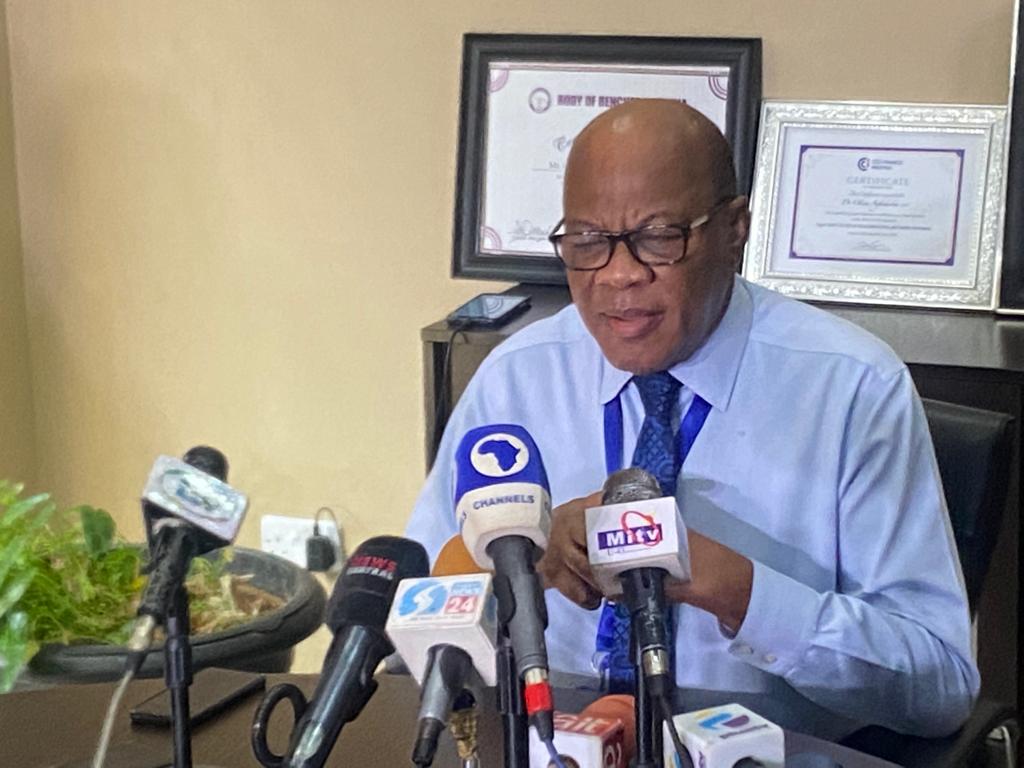
EFCC shouldn’t be in existence, Agbakoba tells Nigerians govt, says Police already performing role
Former President of the Nigerian Bar Association, Dr. Olisa Agbakoba (SAN), on Thursday, said that the Economic and Financial Crimes Commission ought not to have been in existence, insisting that the Commission currently operates outside the Constitution.
According to Agbakoba, since the EFCC is a creation of the National Assembly, it does not have the powers to interfere with the activities of state governments.

The Senior Advocate of Nigeria, who made the call at a press conference held in Lagos, insisted that the 1999 Constitution only provides one Police Force for Nigeria, adding that since the Anti-graft agency was not a branch of the Police, it could not perform its functions.
He pointed out that the EFCC was a federal establishment created by the National Assembly, adding that under Section 4 of the 1999 Constitution, the powers of government are divided into two: the Federal and the state.
“So the question would be, if the EFCC is created by the Federal Government can it then prosecute state offences?
“The Supreme Court in many of its decisions have held that federalism means two autonomous and independent governments and if that is correct, the EFCC does not have the right to go to the state and examine their accounts.
“Anybody can read section 46 of the EFCC Act and Section 36(12) of the 1999 Constitution. Section 36(12) states that all offences must be defined and when you now read Section 46, you ask yourself if it complies with Section 36(12) because it does not.
“So part of the prayers I would seek in court is that EFCC ought not to exist in the first place because it is not a branch of the police and that the job done by the EFCC is the same one being done by the Police Special Fraud Unit.
“My other prayer would be whether the National Assembly can make laws for the federation and to what extent can the National Assembly which is an arm of the Federal Government make laws authorising a federal agency to exercise powers as if it were a state agency.
“So all these contradictions should make the presidential candidates tell Nigerians what they are going to do about the Constitution because it is defective,” Agbakoba stated.
The human rights lawyer, however, said that he was not fighting the Commission as he was one of the greatest supporters of the rule of law and the fight against corruption, noting that the real issue was about the failure of the security agencies to obey the rule of law.
Agbakoba, however, said as a demonstration of his goodwill towards the anti-graft agency, he was ready to engage the EFCC Chairman, Abdulrasheed Bawa, in a dialogue session on the issue.
The former NBA President said, “I do not believe that the EFCC understands the law that set them up because as a lawyer myself, I was a bit confused, as I discovered that the 1999 Constitution is structurally defective.
“I now understand why some people are saying that the country must be restructured. Whoever wrote this Constitution designed it for Nigeria to fail because, on the one hand, it seems to authorise the EFCC to interfere in state’s affairs while on the other hand, it does not.”
Agbakoba had lambasted the EFCC last December over its recent actions against the Kogi State Government.




*Moremi Ojudu Visits Affected Oyo Families, Reaffirms Support for Safe Return of Victims*
The Senior Special Assistant to the President on Community Engagement (South-West), Moremi Ojudu, on Monday visited families affected by the recent abduction incident in Oyo State, assuring them that their concerns have been heard and that efforts towards securing the safe return of the victims remain a priority.
The visit formed part of ongoing engagements by the Presidential Community Engagement Office (South-West) to assess the situation, interact directly with affected families, and convey the concern of the Federal Government over the unfortunate incident.
Prior to the visit, Moremi also met with officials of the Department of State Services (DSS), Oyo State Command, to receive updates and engage relevant stakeholders on developments surrounding the case.
Speaking during her interaction with the families, Moremi expressed sympathy for the parents and relatives affected by the abduction, acknowledging the emotional burden they have endured since the incident.
“Meeting the families and listening to their experiences was deeply moving. Behind every report are parents and loved ones living through uncertainty and pain. Our thoughts remain with them, and we continue to hope and pray for the safe return of those still in captivity,” she said.
She assured the families that their concerns would continue to receive attention and that the government remains committed to supporting efforts aimed at resolving the situation.
Several family members and community representatives used the opportunity to share their experiences and concerns, while calling for sustained efforts towards securing the release of the victims and improving security within affected communities.
Moremi noted that community engagement remains an important part of ensuring that the voices of citizens are heard, particularly during periods of difficulty and uncertainty.
“The families deserve to know that they are not alone. Their concerns matter, and it is important that we continue to listen, engage, and support them during this difficult period,” she said.
She also commended security agencies for their ongoing efforts and called for continued cooperation and support for all lawful measures aimed at ensuring the safe return of the abducted victims.
The visit concluded with prayers for the affected families and renewed hope for the safe reunion of the victims with their loved ones.
Signed:
Media Department
Presidential Community Engagement Office (South-West)
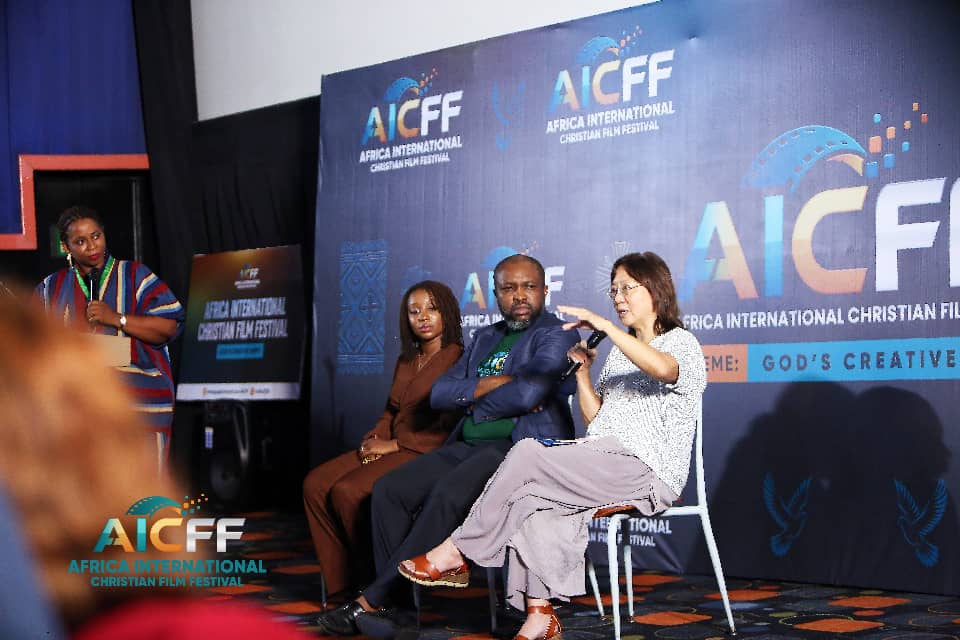
Kendrick Brothers, Mike Bamiloye, Kingdom Story Company, Speaks At AICFF 2026
… Calls Christian Creatives to Reclaim Storytelling Through Excellence, Identity, and Kingdom Influence
Abuja, Nigeria — June 6, 2026
The maiden edition of the Africa International Christian Film Festival (AICFF) 2026 successfully concluded after four impactful days of film screenings, masterclasses, panel discussions, networking, and strategic industry conversations held from June 3–6, 2026 at Silverbird Cinemas, Central Business District, Abuja, Nigeria.
Convened under the theme “God’s Creative Army,” the festival brought together filmmakers, actors, producers, church leaders, distributors, creatives, media practitioners, and Christian storytellers from across Africa and beyond in what many participants described as a defining moment for faith-based storytelling on the continent.
The festival opened with registrations and networking sessions before transitioning into the official opening ceremony led by AICFF Convener and Festival Director, Bright Wonder Obinna Obasi, who charged Christian creatives to embrace both spiritual consecration and creative excellence in their storytelling assignments.
One of the major highlights of the opening ceremony was a series of goodwill messages from globally respected faith-film leaders, including:
Alex & Stephen Kendrick (The Kendrick Brothers)
Paul Sirmons, President of the International Christian Visual Media (ICVM)
Phillip Telpher, Founder of the Christian Worldview Film Festival (CWVFF)
Tim Shields, President of CONTENT Media Conference
The opening ceremony also featured powerful keynote addresses, including:
Daddy Mike Bamiloye on “Identity & Kingdom Storytelling”
Dr. Felix Oisamoje, Regional Director of Christian Broadcast Network (CBN), on the festival theme “God’s Creative Army”
A keynote presentation delivered by Teniola Zara King on behalf of Kunle Falodun, Co-Founder/CEO of A House of Faith, on “The State of Faith-Based Filmmaking in Africa”
The opening day concluded with a screening of the festival’s opening film, “Where The River Divides,” followed by a high-level panel session themed:
“The Church & Culture: Reclaiming Storytelling for the Kingdom”
Featuring:
Rex Nwakamma
Matrid Nwanja Nyagah
Jennifer Keltner
Teniola Zara King
Bright Wonder Obasi
Days Two and Three of the festival featured a rich blend of:
Film screenings
Filmmaking & acting masterclasses
Industry conversations
Distribution and business sessions
Panel discussions included:
“Story VS Sermon: Making Faith-Based Films That Truly Connect”
“How Films Get Bought: Inside The Mind of Distributors”
“Beyond Passion: The Business of Generating Revenue from Faith Films”
“Africa To The World: Building A Global Pipeline for African Faith-Based Films”
Guest speakers and panelists included:
Moses Babatope
Chris Odeh
Joshua Carpenter
Rex Nwakamma
Kunle Falodun
Hakeem Kae-Kazim Condotti
Bright Wonder Obasi
And several other notable industry voices
The final day of the festival focused strongly on collaboration, sustainability, and the future of Kingdom storytelling in Africa.
Special highlights included:
A Co-Production Mixer designed to foster partnerships and collaborations among Christian filmmakers
A dedicated session for Church Drama, Film & Media Departments, aimed at helping churches embrace excellence in storytelling ministry while encouraging inter-church collaboration.
The AICFF Pitch-A-Thon, where six selected short screenplay finalists pitched their stories before industry stakeholders
The Pitch-A-Thon winner, Tomisin Faoye, received:
A cash prize of ₦250,000
Mentorship through Gospel Cinema International.
A development opportunity through First Features Project by veteran producer/director Steve Gukas
Another major announcement during the festival was the unveiling of six finalists selected from the Africa Gospel Film Project (AGFP) to begin a mentorship track with Kingdom Story Company, makers of the movies Unsung Hero, Jesus Revolution, I can Only Imagine 1 & 2.
Selected participants include:
Joshua Adeyi
Ayomide Aina
Phillip Oyeleye
Olayinka Ayinde
Temidayo Ayodele
Miracle Ebute
Throughout the festival, a central emphasis remained clear:
Christian creatives must boldly reclaim their identity while pursuing excellence as a spiritual responsibility and industry necessity.
The festival culminated in the highly anticipated AICFF Awards 2026, celebrating excellence across 12 categories.
AICFF 2026 Award Winners
Best Short Film — In Custody
Best Screenplay — Where The River Divides
Best Cinematography — Where The River Divides
Best Directing — Where The River Divides
Best Editing — Forgiving The Nightmare
Best Male Actor — Gadwill Odhiabo Dennis (Where The River Divides)
Best Female Actor — Faith Ohuoba (Confidence)
Best Music/Soundtrack — Where The River Divides
Best Documentary — Lavender Hills
Best Foreign Film — Forgiving The Nightmare
Best Evangelical Film — Where The River Divides
Overall Best Film — Where The River Divides
As the curtains closed on the historic maiden edition, attendees, partners, filmmakers, and creatives left with renewed passion and conviction that Africa’s faith-based storytelling movement is entering a transformative new era.
The Africa International Christian Film Festival now sets its sights on an even bigger and more impactful edition in 2027.
About AICFF
The Africa International Christian Film Festival (AICFF) is a continental platform dedicated to advancing Christian and values-driven storytelling through film, media, training, collaboration, distribution, and industry development across Africa and beyond. It is the gateway for faith-based films into Africa, and the launchpad for African Faith Films to reach the world.
society
Troops Intensify Offensive in Sokoto Communities, Force Terrorists to Abandon Camps in Kurawa and Tureta Axis
Troops Intensify Offensive in Sokoto Communities, Force Terrorists to Abandon Camps in Kurawa and Tureta Axis
Troops of Headquarters 8 Division and Sector 2 of Joint Task Force North West Operation Fansan Yamma have sustained offensive operations against terrorist elements in parts of Sokoto State, forcing suspected criminals to abandon their hideouts and disrupting their activities. On June 4, 2026, troops working alongside Operation Keystone personnel, Department of State Services (DSS) operatives and Sokoto State Community Guards conducted a fighting patrol to Kurawa Village, where they cleared the community and surrounding areas of suspected terrorist camps.
During the operation, troops successfully cleared and occupied identified hideouts after suspected terrorists fled on sighting the advancing security forces. The operation was extended to Dangulbi and nearby locations, while aerial surveillance conducted with drones confirmed the absence of terrorist activity within the general area, indicating the effectiveness of ongoing clearance efforts.
In a related operation, troops at Forward Operating Base (FOB) Tureta swiftly responded to reports of suspected terrorist movements around Bimassa Village in Tureta Local Government Area. Upon arrival, locals informed the troops that the suspects had been sighted around the Kuruwa axis allegedly searching for livestock to rustle. The prompt deployment of troops disrupted the criminals’ plans, and the operation was concluded without incident as security forces maintained dominance of the area.


- African Refiners and Distributors Association (ARDA) Strengthens Cooperation with Algeria as Africa’s Downstream Expansion Gains Traction June 9, 2026
- SBM Offshore Confirmed as Silver Sponsor for African Energy Week (AEW) 2026 Amid Africa FPSO Expansion Push June 9, 2026
- Minister Kgosientsho Ramokgopa Joins African Energy Week (AEW) 2026 as South Africa Opens R400B Grid Expansion to Private Investment June 9, 2026
- CORRECTION: Spiro Appoints Former Indofast Energy Chief Executive Officer (CEO) Anant Badjatya as Group CEO to Lead its Next Phase of Growth June 9, 2026
- Carbon Markets Africa Summit (CMAS) 2026 programme launched as Africa’s carbon markets move from readiness to delivery June 9, 2026
- CEVA Logistics, EFL Africa Launch Joint Venture in Nigeria June 9, 2026
- Most Africans continue to experience economic hardship despite signs of recovery, latest Afrobarometer report shows June 9, 2026
- African Organisations Move from Awareness to Action as IT Asset Visibility Becomes a Board-Level Priority June 9, 2026
- Forget Energy Transition, Produce Oil Like Nothing Before June 9, 2026
- Heirs Energies' US$750 Million Financing Named Best Oil & Gas Deal of the Year June 9, 2026
- African Refiners and Distributors Association (ARDA) Strengthens Cooperation with Algeria as Africa’s Downstream Expansion Gains Traction June 9, 2026
- SBM Offshore Confirmed as Silver Sponsor for African Energy Week (AEW) 2026 Amid Africa FPSO Expansion Push June 9, 2026
- Minister Kgosientsho Ramokgopa Joins African Energy Week (AEW) 2026 as South Africa Opens R400B Grid Expansion to Private Investment June 9, 2026
- CORRECTION: Spiro Appoints Former Indofast Energy Chief Executive Officer (CEO) Anant Badjatya as Group CEO to Lead its Next Phase of Growth June 9, 2026
- Carbon Markets Africa Summit (CMAS) 2026 programme launched as Africa’s carbon markets move from readiness to delivery June 9, 2026
- CEVA Logistics, EFL Africa Launch Joint Venture in Nigeria June 9, 2026
- Most Africans continue to experience economic hardship despite signs of recovery, latest Afrobarometer report shows June 9, 2026
-

 news6 months ago
WHO REALLY OWNS MONIEPOINT? The $290 Million Deal That Sold Nigeria’s Top Fintech to Foreign Interests
-

 society1 month ago
SOCIAL MEDIA IS NOT A BATTLEFIELD COMMAND – WHY THE NIGERIAN ARMY’S ACTION AGAINST JUSTICE CRACK IS A NATIONAL SECURITY IMPERATIVE
-

 celebrity radar - gossips4 months ago
Dr. Chris Okafor Returns with Power and Fire of the Spirit -Mounts Grace Nation Altar with Fresh Anointing and Restoration Grace on February 1, 2026
-

 celebrity radar - gossips6 months ago
Prophet Kingsley Aitafo Releases 2026 Prophecy: ‘Nigeria Will Rise, but the World Must Prepare for Turbulence’