
Uncategorized
End of an Era: The Assassination of Saif al-Islam Gaddafi and What It Means for Libya’s Fragile Future

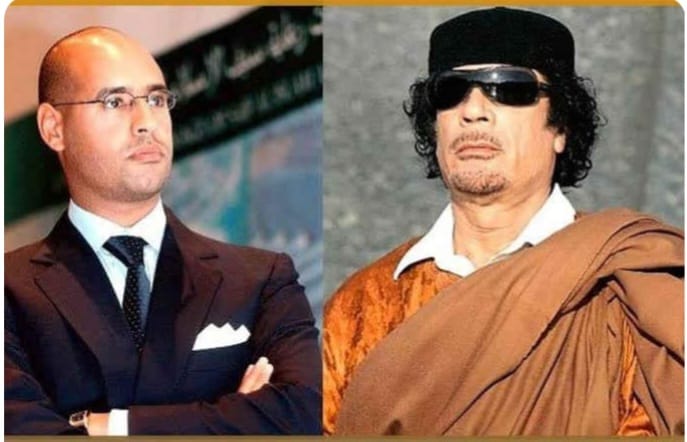
End of an Era: The Assassination of Saif al-Islam Gaddafi and What It Means for Libya’s Fragile Future
By George Omagbemi Sylvester | Published by SaharaWeeklyNG
“A Detailed, Context-Rich Analysis of the Death of Libya’s Most Controversial Scion and Its Reverberations Across a Nation Still Wrestling with Turmoil.”

In a dramatic and violent turn that once again underscores the instability that has plagued Libya since the fall of Muammar Gaddafi, Saif al-Islam Gaddafi, son of the late Libyan leader and a figure synonymous with both reformist aspirations and brutal repression, was assassinated in Zintan, western Libya. His death, confirmed by multiple Libyan sources including his lawyer, Khaled el-Zaydi, marks a profound moment in the North African country’s turbulent post-uprising history.

According to local media reports and police investigations under way, four unidentified gunmen breached Gaddafi’s residence, disabling surveillance cameras before executing the 53-year-old political figure. The attackers fled the scene, leaving behind questions about motive, perpetrator identity, and the broader implications for Libya’s fragile political landscape.
To fully understand the gravity of this event, one must trace Saif al-Islam Gaddafi’s life, not merely as the son of a dictator, but as a complex figure whose trajectory mirrored Libya’s own fractious journey from autocracy to perpetual conflict.
From Heir Apparent to Controversial Power Broker.
Born into the sprawling and secretive family of Muammar Gaddafi, Saif al-Islam was long viewed as the regime’s intellectual face. Educated at the London School of Economics, he spoke fluent English and presented himself abroad as a reformer committed to modernizing Libya’s image and engaging more constructively with the international community. In the early 2000s, he played significant roles in negotiations that led Libya to relinquish its weapons of mass destruction program and in talks intended to compensate victims’ families from the Lockerbie bombing; moves that briefly recast Libya as a state emerging from isolation.
However, the veneer of reformism masked a deeper allegiance to his father’s regime and its system of repression. When the Arab Spring reached Libya in 2011, Saif al-Islam chose family loyalty over reform, becoming one of the architects of the regime’s harsh crackdown on dissent. His rhetoric toward protesters was ruthless and on several occasions he warned of “rivers of blood” if the uprising continued, words that sank his earlier moderate image and aligned him with the paternalistic and brutal tactics of Muammar Gaddafi’s regime.
Fall, Capture and Political Resurrection.
When the uprising culminated in the capture and killing of Muammar Gaddafi in 2011, Saif al-Islam attempted to flee but was apprehended by militia fighters near the desert, then held in custody for years by anti-Gaddafi forces in Zintan. Liberia’s courts later sentenced him to death in absentia for crimes linked to the violent suppression of protests, and the International Criminal Court issued a warrant for his arrest on charges including crimes against humanity. Yet he remained in Zintan under militia protection until a controversial amnesty saw his release in 2017.
In a move that shocked many observers, Saif al-Islam emerged from relative obscurity to announce his candidacy for the Libyan presidency in 2021. His bid came amid collective frustrations over Libya’s protracted transitional politics and years of failed elections. For some Libyans entrenched in conflict fatigue, his name carried residual clout and memories of the old regime’s stability compared with the current chaos. For others, his candidacy symbolized the persistence of the very forces many had fought to overthrow. Ultimately, disagreements over electoral law and his criminal convictions saw Libya’s planned polls collapse, leaving him unaffiliated with any real political power.

The Killing and Its Immediate Aftermath.
The assassination itself was not merely another act of violence in Libya’s mosaic of militia rule and political fragmentation; it was a calculated hit that obliterated the last major figure with direct ties to Libya’s erstwhile authoritarian era. Initial reports suggest that his residence was carefully targeted, security systems neutralized and the attackers escaped undetected—signs that the killing may have been orchestrated by well-organized actors with clear intent.
His political team’s statement condemned the attack as a “brutal act” and demanded justice, a call echoed by figures across Libya’s fractious political spectrum. Khaled al-Mishri, former head of Libya’s Tripoli-based High State Council, called for an “urgent and transparent investigation” into the assassination, spotlighting the state’s enduring inability to enforce the rule of law.
A Country Still at War With Itself.
Libya today is a nation still fractured by the enduring legacies of colonial influence, civil war and competing centers of power. Human Rights Watch and other observers have documented persistent abuses by armed groups and a pervasive climate of impunity that has allowed political violence to flourish. The assassination of Saif al-Islam, in this context, reflects the deeper crisis of governance that has crippled Libya since 2011.
The broader implications extend beyond the death of one man. His assassination risks deepening rivalries among militia factions, reigniting old grievances, and destabilizing tentative diplomatic efforts aimed at national reconciliation. For many Libyans, the event is a grim reminder that political solutions remain elusive in a country where power is more often seized by force than negotiated through consensus.
Voices From the Region: Scholars and Experts Weigh In.
Professor Ali Abdallah, a renowned North African political analyst, emphasizes the symbolic weight of Gaddafi’s death: “This assassination underscores the tragic circularity of Libya’s conflict. The debate over Libya’s future must transcend personalities and confront the structural fissures that have made peace and stability so elusive.”
Meanwhile, Dr. Fatima El-Sindy, an expert on post-conflict transitions, argues that “The elimination of a figure like Saif al-Islam (controversial though he was) reinforces the dangerous reality that political power in Libya continues to be contested through violence. Without a functioning central authority and inclusive political framework, Libya remains trapped in an endless cycle of retaliation.”

Looking Ahead: What Comes Next?
The assassination of Saif al-Islam Gaddafi closes a chapter in Libya’s modern history but does little to open a new, peaceful one. Instead, it challenges Libyans and international stakeholders to confront the systemic failures that have perpetuated violence and political stagnation. Whether his death becomes a catalyst for renewed peace efforts or a spark for further conflict will depend on the actions of Libyan actors and regional partners in the days and months ahead.
In a nation where the past continually bleeds into the present, the killing of Saif al-Islam is not an endpoint, but a stark reminder of how far Libya still must go to achieve the stability that so many have long fought for.




Uncategorized
TYO National Competition Concludes with Exceptional Display of Oratory and Critical Thinking

The TYO 2026 National Competition concluded with an impressive showcase of oratory, critical thinking, and a compelling demonstration of the skills developed by participants during a four-day intensive boot camp. The programme commenced on Monday, April 27, with semifinals held on April 29 and the finals on April 30, 2026.
The final event was marked by an emotional moment as the winner was announced to an enthusiastic reception from the audience. Participants were evaluated on key competencies including reasoning, content, structure, audibility, and audience engagement. The competition stood as a clear demonstration of what can be achieved when young minds are given the opportunity and space for intentional development.
TYO is a communications platform and an expression of the Peat Philips Foundation, committed to instilling leadership, communication, and public speaking skills in young people. The initiative focuses on building strong character and empowering participants to embody the change they seek, not only through words but through aligned actions.
The boot camp incorporated multiple dimensions of learning, including structure, intent, goal-setting, character development, reasoning and effective audience engagement. These components provided participants with the opportunity to refine their speaking abilities while unlearning habits that no longer serve their growth. The experience also fostered peer learning, as participants engaged closely with other qualified individuals within the programme.
Beyond the competition, TYO serves as a broader platform dedicated to developing young people into confident communicators and ambassadors of their communities and country. The competition itself is one of several initiatives aimed at preparing a Nigerian representative for the International Public Speaking Competition scheduled to take place in the United Kingdom in July this year.
Looking ahead, preparations are already underway for the 2027 edition of the TYO Boot Camp. The organisers express hope for continued and increased support from sponsors and partners to sustain and expand the programme. This support is essential to reaching more young people and strengthening a critical area of development, not only for Nigeria but for the African continent at large.
For partnership and sponsorship inquiries, interested parties are encouraged to connect with the organisers to support the mission of raising a generation equipped to serve and lead effectively. Contact: 08071825959, [email protected].
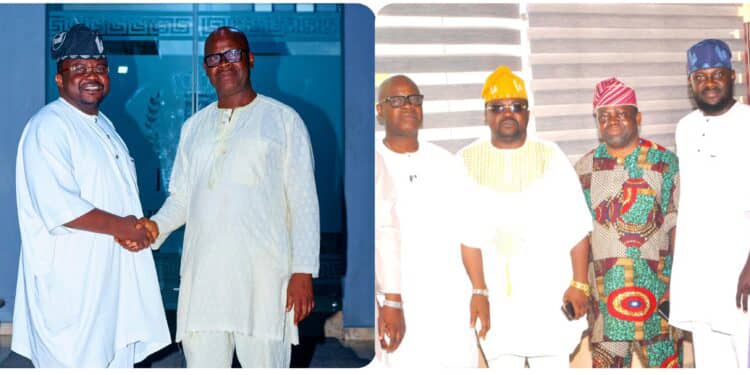
Ajadi Visits Ilaji Resort, Commends Sanusi’s Vision for Oyo’s Economic Growth
The leading gubernatorial aspirant in Oyo State under the Peoples Democratic Party (PDP), Olufemi Ajadi Oguntoyinbo, has lauded the transformative impact of private-sector investment on the state’s economy, following a courtesy visit to Ilaji Hotels and Sports Resort in Akanran, Ibadan.
Ajadi, who was warmly received on Sunday by the resort’s founder, Chief Dr Dotun Sanusi, described the facility as a symbol of what visionary leadership and indigenous enterprise can achieve in driving rural development, job creation, and tourism growth.
Speaking during the visit, Ajadi commended Sanusi’s commitment to Oyo State’s economic advancement, noting that Ilaji Resort stands as a model for sustainable development outside urban centres.
“What I have seen here today is not just a business venture, but a bold statement of belief in Oyo State’s potential,” Ajadi said. “Chief Sanusi has demonstrated that with vision, dedication, and strategic investment, we can transform our rural communities into thriving economic hubs. This aligns perfectly with my agenda to expand opportunities, empower our people, and sustain development across the state.”
[4/13, 6:34 PM] johnsonakinpelu: The PDP gubernatorial aspirant emphasised that his governorship ambition is rooted in supporting initiatives that promote local enterprise, tourism, and youth employment, adding that partnerships between government and private investors would be a priority if elected.
In his remarks, Sanusi, popularly known as Ilaji, expressed delight at hosting Ajadi and his entourage, describing the visit as encouraging for investors in the state.
“I am honoured to receive Ambassador Ajadi here at Ilaji Resort,” Sanusi said. “This project was born out of a desire to give back to society, create jobs for our youths, and showcase the rich cultural and tourism potential of Oyo State. When leaders recognise and support such efforts, it strengthens our resolve to do more.”
Sanusi further stressed the importance of continuity in governance and policies that encourage investment, noting that consistent support from government actors is crucial for long-term economic growth.
The visit also attracted notable political stakeholders, including the former Ona-Ara Local Government Chairman, Hon. Taiwo Oke, Hon. Bass Oloko, and Ajadi’s personal assistant, Kilamuwaye Badmus, among others.
Observers at the event described the meeting as a convergence of political leadership and entrepreneurial vision, highlighting the growing importance of collaboration in addressing developmental challenges in Oyo State.
Analysts see Ajadi’s visit to Ilaji Resort as part of his broader engagement with key stakeholders across sectors, as he continues to build momentum ahead of the 2027 governorship race.

FOPCHEN Calls for Dialogue as Court Fixes May 28 for Continuation
OTA, OGUN STATE — Proceedings in a widely followed legal case resumed on March 24, 2026, at the High Court of Ogun State, Ota Division, ending with a fresh adjournment as the court fixed May 28, 2026, for continuation.
During the session, legal representatives for all parties restated their positions and addressed preliminary matters, laying the groundwork for more substantive arguments at the next hearing. Observers noted that the case continues to attract significant public attention due to its perceived implications for law, culture, and societal values.
The Foundation for the Protection of Cultural Heritage in Nigeria (FOPCHEN) used the occasion to reiterate its call for constructive national dialogue. The group emphasized that while the judicial process must be respected, broader societal engagement remains essential.
According to the organization, issues relating to values, responsibility, and cultural identity should not be confined solely to courtroom deliberations but should involve active participation from various sectors of society.
Legal analysts present at the proceedings described the matter as one with far-reaching implications, noting that arguments advanced in court could shape future interpretations surrounding sensitive cultural and moral questions.
The presiding judge subsequently adjourned the case to May 28, granting all parties time to refine their submissions and respond to issues raised during the hearing.
As anticipation builds ahead of the next court date, Nigerians across different sectors continue to monitor developments closely, keen to see how the judiciary navigates the delicate balance between constitutional rights and cultural expectations.


- Seychelles: Minister Faure and Ambassador Azais Tatistscheff discuss humanitarian and healthcare cooperation May 22, 2026
- African Energy Chamber (AEC) to Position Africa as South America’s Next Strategic Energy Frontier at Association of Oil, Gas and Renewable Energy Companies of Latin America and the Caribbean (ARPEL) Conference 2026 May 22, 2026
- Afreximbank Posts Robust Q1 2026 Results with 25% Growth in Net Income and Improved Profitability May 22, 2026
- Africa: Soil Mapping for Resilient Agrifood Systems (SoilFER) programme scales up soil fertility monitoring through Mid-Infrared Spectroscopy May 22, 2026
- Food and Agriculture Organization of the United Nations (FAO) receives USD 4 million from the Regional Humanitarian Fund to save lives and protect the livelihoods of the most vulnerable households in Chad May 22, 2026
- Algeria: Mr. Attaf received by the President of the Arab Republic of Egypt May 22, 2026
- Seychelles: President Herminie Engages Tourism Office on La Digue on Visitor Safety and Infrastructure May 22, 2026
- Meeting between State-Minister Kunimitsu and H.E. Mr. João Jorge Matlombe, Minister of Transport and Logistics of Mozambique May 22, 2026
- Ebola response support: United Nations Organization Stabilization Mission in the Democratic Republic of the Congo (MONUSCO) airlifts nearly 30 tons of equipment to Bunia May 22, 2026
- Liberia: President Boakai Congratulates Cameroon on National Day May 22, 2026
- Seychelles: Minister Faure and Ambassador Azais Tatistscheff discuss humanitarian and healthcare cooperation May 22, 2026
- African Energy Chamber (AEC) to Position Africa as South America’s Next Strategic Energy Frontier at Association of Oil, Gas and Renewable Energy Companies of Latin America and the Caribbean (ARPEL) Conference 2026 May 22, 2026
- Afreximbank Posts Robust Q1 2026 Results with 25% Growth in Net Income and Improved Profitability May 22, 2026
- Africa: Soil Mapping for Resilient Agrifood Systems (SoilFER) programme scales up soil fertility monitoring through Mid-Infrared Spectroscopy May 22, 2026
- Food and Agriculture Organization of the United Nations (FAO) receives USD 4 million from the Regional Humanitarian Fund to save lives and protect the livelihoods of the most vulnerable households in Chad May 22, 2026
- Algeria: Mr. Attaf received by the President of the Arab Republic of Egypt May 22, 2026
- Seychelles: President Herminie Engages Tourism Office on La Digue on Visitor Safety and Infrastructure May 22, 2026
-

 news5 months ago
WHO REALLY OWNS MONIEPOINT? The $290 Million Deal That Sold Nigeria’s Top Fintech to Foreign Interests
-

 society3 weeks ago
SOCIAL MEDIA IS NOT A BATTLEFIELD COMMAND – WHY THE NIGERIAN ARMY’S ACTION AGAINST JUSTICE CRACK IS A NATIONAL SECURITY IMPERATIVE
-

 celebrity radar - gossips4 months ago
Dr. Chris Okafor Returns with Power and Fire of the Spirit -Mounts Grace Nation Altar with Fresh Anointing and Restoration Grace on February 1, 2026
-

 celebrity radar - gossips5 months ago
Prophet Kingsley Aitafo Releases 2026 Prophecy: ‘Nigeria Will Rise, but the World Must Prepare for Turbulence’