
society
Enough Is Enough”: Elem Kalabari Rises Against Decades of Injustice, Women Stage Peaceful Protest

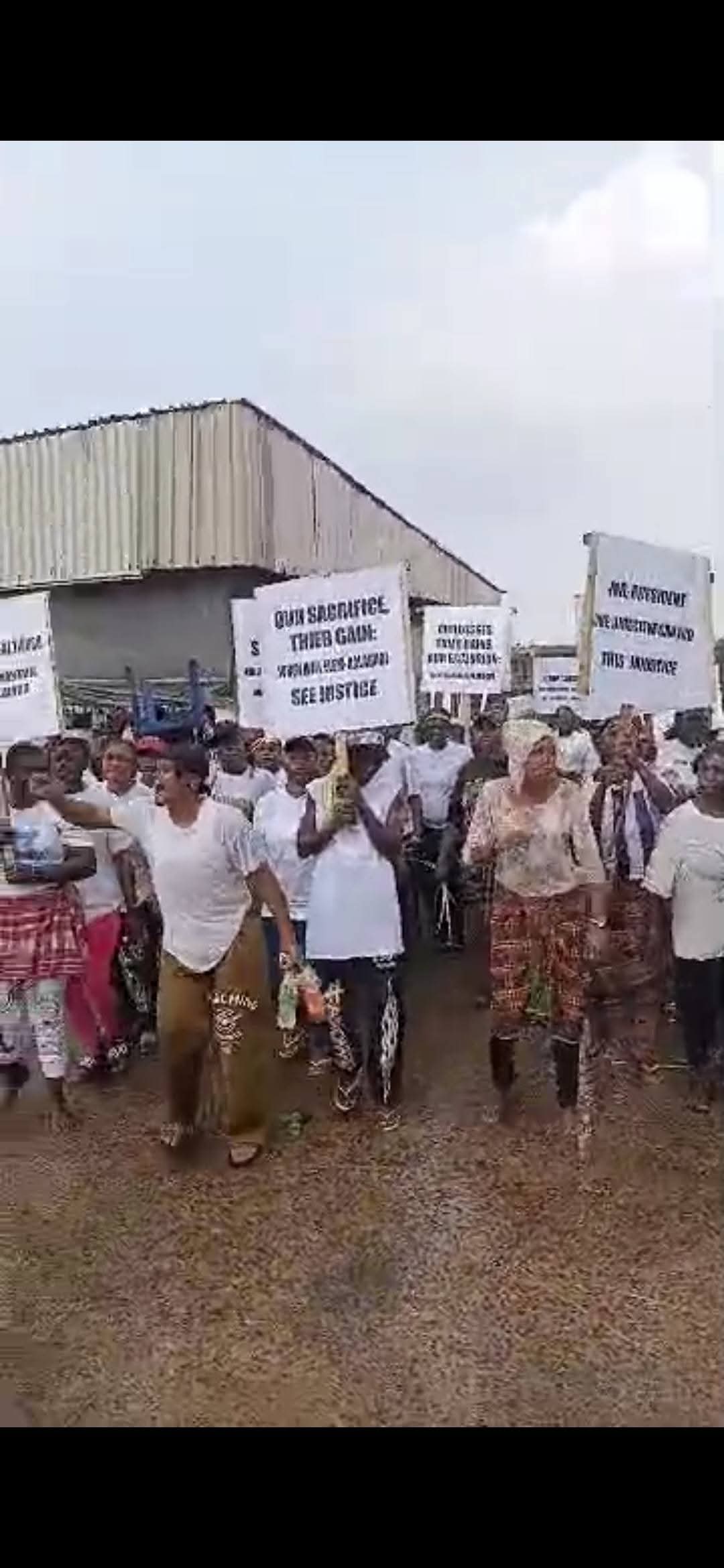
“Enough Is Enough”: Elem Kalabari Rises Against Decades of Injustice, Women Stage Peaceful Protest
By: Al Humphrey Onyanabo
For decades, Elem Kalabari has borne the burden of Nigeria’s oil wealth without tasting its benefits. Its rivers have carried crude oil to the Atlantic; its land has hosted pipelines, flow stations, and gas facilities; its people have inhaled fumes, watched their waters darken, and their livelihoods collapse.
Yet opportunity, justice, and inclusion have consistently flowed elsewhere. On Monday February 2, 2026, that long-suppressed pain found a powerful voice.
Defying a heavy morning downpour, hundreds of women from Elem Kalabari poured into the Cawthorne Channel 2 Jetty in what many now describe as the “Mother of All Protests.”
It was peaceful, disciplined, and resolute—but unmistakably firm.
This was not noise. It was a declaration. Placards told the story words alone could not fully carry: “We Carry the Burden, They Take the Benefits.”
“Our Sacrifice, Their Gain: When Will Elem-Kalabari See Justice?”
“Local Content Law Violated: Kalabari Demands First Right of Refusal.”At the heart of the protest lies a single, bitter truth: exclusion has become systemic.
A Broken Promise in OML 18
The immediate trigger was the recent award of the OML 18 pipeline security and surveillance contract by NNPC Eighteen Limited to Manton Engineering Limited—a company neither from Elem Kalabari, nor from Rivers State.
To the protesting women, this was not merely an administrative decision. It was another chapter in a long history of betrayal.
Under Nigeria’s Local Content Law and the Petroleum Industry Act, host communities are guaranteed the right of first refusal in contracts directly affecting their territory. Yet this right, the women insist, was ignored.
Even more troubling is the contradiction embedded in the law itself. Section 257(2) of the Petroleum Industry Act places responsibility for sabotage on host communities—yet when it comes to securing their own territory, those same communities are excluded. “How can a people be blamed for insecurity,” one protester asked, “and then denied the right to secure their own land?”
Rivers That Carry Wealth, Communities That Carry Pain
Elem Kalabari is not just another oil-bearing community. It is the export artery of OML 18.
Crude oil from Cawthorne Channels 1, 2, and 3, Awoba, and Krakrama is evacuated exclusively through Elem Kalabari waterways to the Atlantic Ocean. Without these rivers, there would be no barging route—no export. Yet the women revealed a staggering injustice: none of the vessels used in these daily operations belong to Elem Kalabari. None belong to Kalabari people. None even belong to Rivers State. No courtesy visits. No engagement with the Amanyanabo. No sense of obligation to the host community—despite operations generating millions of dollars daily.
“What flows through our waters enriches others,” said a woman leader “But when it comes to opportunity, our people are treated as strangers on their own land.”
Educated Children, Locked-Out Futures
Perhaps the most painful testimony came when the women spoke of their children. Many told stories of sacrifice—years of trading, fishing, and borrowing to send sons and daughters to universities—only for those graduates to return home unemployed, watching companies operate profitably on their ancestral land.
Those fortunate enough to secure employment fared little better.
Workers who had previously been full staff under the former operator, Eroton, were reportedly downgraded to contract staff under NNPC Eighteen Limited. Their pay dropped. Job security vanished.
Working conditions worsened.
In what the women described as the ultimate insult, workers allegedly brought in from Lagos were trained by these local employees—only for the trainees to be offered permanent roles, while the locals remained on contract.“It is not just unfair,” one woman said quietly. “It is humiliating.”
Environmental Destruction, Official Silence
While contracts and jobs disappear, pollution remains. Oil contamination has been reported repeatedly in Mbi-Ama, Moni-Kiri, Portuguese Kiri, and Jacob-Ama—areas affected by constant barging and operational discharge. Marine life has dwindled. Fishing yields have collapsed. Mangroves continue to die.
Reports have been filed. Complaints have been made. Yet regulatory agencies, mandated to investigate and sanction offenders, have taken little or no meaningful action. To the women, this silence feels like complicity. A First-Hand Account of Despair.
A First Encounter with Abandonment
My first visit to Elem Kalabari on 1st January, 2025 remains a haunting reminder of how thoroughly a people can be forgotten in the midst of plenty.
I visited in the company of The Amanyanabo of Elem Kalabari, Da Amakiri Tubo, Alhaji Mujahid Abubarkr Dokubo-Asari, Dabaye Amakiri 1. It was on January 1st 2025, the day after he received the staff of office from Governor Siminalayi Fubara.
What we met was not a community benefiting from decades of oil extraction, but a landscape of utter devastation, neglect, and grinding poverty.
Elem Kalabari was wrapped in darkness—total, suffocating darkness. There was no public electricity, no streetlights, not even basic solar lamps that have become commonplace in remote settlements across the Niger Delta. Night fell early, and with it came an overwhelming sense of isolation, as though the community had been cut off not only from development, but from national consciousness itself.
There were no schools to nurture young minds.
There were no clinics to tend to the sick, the pregnant, or the elderly.
There was no market, no organised economic space, no visible engine of local commerce.
What stood in place of social infrastructure was emptiness—broken structures, abandoned land, and a silence that spoke of long years of disappointment. This was a community sitting at the heart of Nigeria’s oil wealth, yet living as though the nation’s prosperity flowed around it, never through it.
It became painfully clear that the oil companies operating in and around Elem Kalabari had taken the people for granted for far too long. Their pipelines crisscross the land, their barges dominate the waterways, their wealth moves daily through Kalabari rivers—yet the human beings who bear the environmental cost have been left with nothing to show for it.
That visit stripped away any illusion. It revealed a truth the women of Elem Kalabari now proclaim with courage and clarity: neglect has become policy, and exclusion has been normalised. What we saw was not underdevelopment by accident, but abandonment by design.
And today, the people—especially the women—are saying with one voice: enough is enough.
At night sitting on the jetty, surrounded by mosquitoes in search of cellular network, I saw across the sea, vessels loading crude oil, I watched as others left. I saw the gas flares… It was a sight.
A Line Drawn in the Sand
The women have vowed to sustain their protest until justice is done. They have warned that if ignored, they will escalate actions, including shutting down operations at the flow station.
For Elem Kalabari, this moment marks a turning point.
After decades of neglect, the people are no longer whispering their pain. They are standing, together, and saying clearly—to government, to corporations, and to the nation:
Enough is enough.
There needs no telling. This is the first of many protests that will happen. The people have their backs to the wall and can’t take it no more. I can’t blame them, they have suffered for too long.


By: Al Humphrey Onyanabo,
The PEN
Tel: 08109975621
Email: [email protected]




society
ONDO STATE GOVERNMENT MOBILIZES ON #UniteAgainstTerror CAMPAIGN, CALLS FOR NATIONAL UNITY AGAINST TERRORISM
ONDO STATE GOVERNMENT MOBILIZES ON #UniteAgainstTerror CAMPAIGN, CALLS FOR NATIONAL UNITY AGAINST TERRORISM
The Ondo State Government has announced its support for the nationwide #UniteAgainstTerror campaign, calling on all Nigerians to rise above political, ethnic, and religious differences in a collective effort to combat terrorism and other forms of violent crimes threatening the nation’s peace and stability.
2. The campaign mobilization comes in the wake of the recent conviction and sentencing of individuals linked to the horrific Owo church massacre of June 2022, a tragedy that claimed innocent lives and left lasting scars on families, communities, and the nation. While welcoming the judicial outcome as a significant step toward justice, the Government emphasized that the fight against terrorism requires sustained vigilance and the active participation of all citizens.
3. Speaking on Channels Television’s Politics Today, Governor Lucky Orimisan Aiyedatiwa stated that this is a defining moment for Nigerians to come together with one voice against terrorism, stressing that national security must transcend partisan interests. According to the Governor, “when we see something, we must say something,” urging citizens to promptly report suspicious activities and security concerns to the appropriate authorities.
4. The Government commends the Armed Forces of Nigeria, the Nigeria Police Force, the Department of State Services, the Nigeria Security and Civil Defence Corps, Amotekun Corps, and other security agencies for their courage, sacrifice, and unwavering commitment to protecting lives and defending the nation’s territorial integrity.
5. Ondo State Government therefore calls on traditional rulers, religious leaders, community associations, youth groups, civil society organizations, media practitioners, and all well-meaning Nigerians to embrace the #UniteAgainstTerror campaign as a patriotic movement aimed at strengthening intelligence gathering, promoting public awareness, and denying criminal elements the space to operate within our communities.
6. The Government reaffirms its commitment to supporting all lawful measures that enhance national security and urges every citizen to remain alert, responsible, and actively involved in the collective task of safeguarding Nigeria. Together, united in purpose and action, we can defeat terrorism and build a safer and more secure nation for present and future generations.
Hon. Idowu Ajanaku,
Commissioner for Information and Orientation
June 5, 2026
society
WAZOBIA: Nigeria’s Hardly Separable Tripod Stand Since 1914; It’s Time To Rotate Presidency Among 6 Geo-Political Zones In 2027
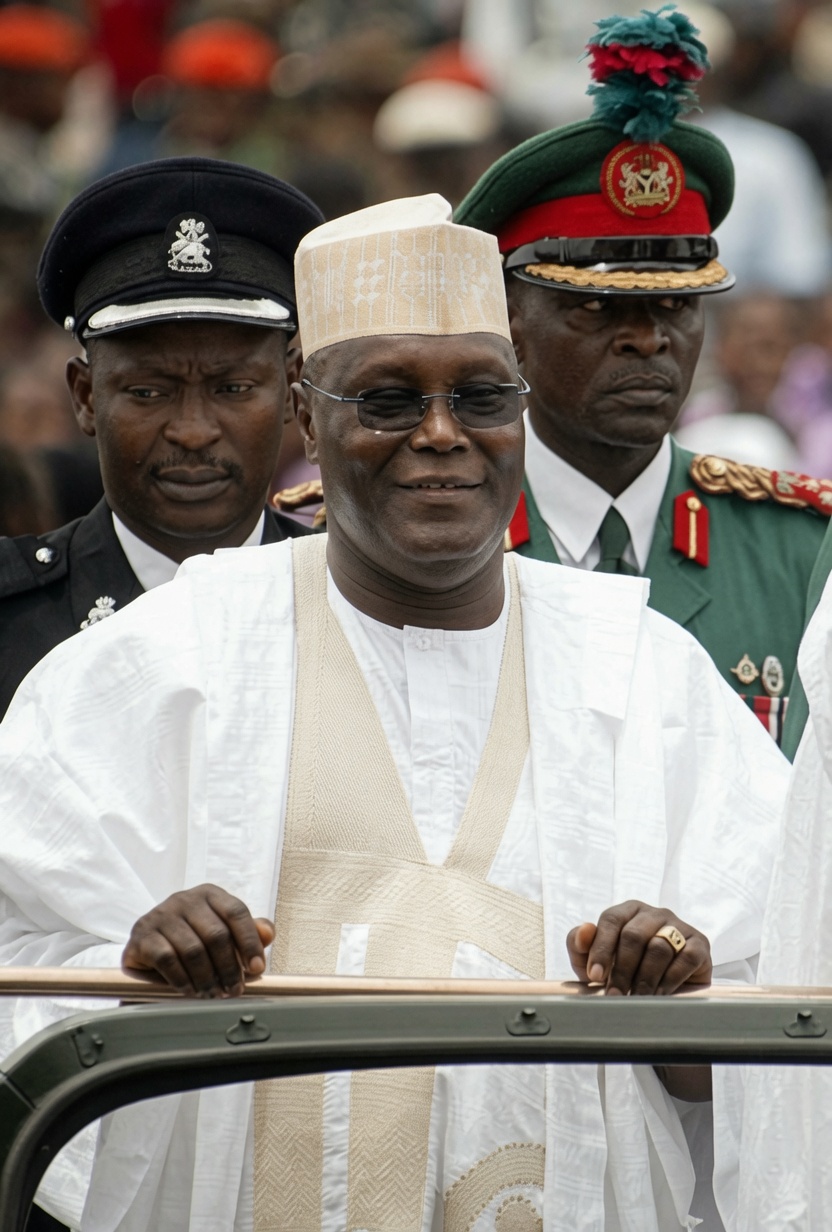
WAZOBIA: Nigeria’s Hardly Separable Tripod Stand Since 1914; It’s Time To Rotate Presidency Among 6 Geo-Political Zones In 2027
Dear High Chief Jibrin Okutepa (SAN), I bring you calvary greetings from the land of Lincoln. I want to first of all commend your continued sincerity of purpose for a united, peaceful, and prosperous Nigeria.
But with all due respect sir, let me reaffirm that since 1914, when the British colonialists led by Lord Frederick Lugard, amalgamated the Northern and Southern Protectorates, Nigeria has always stood on a Tripod called WAZOBIA (Yoruba, Hausa/Fulani, and Igbo). In fact, it is the alleged domination of these three major ethnic nationalities that brought about the doctrine of necessity called the Six Geo-political Zones proposed by Chief Alex Ekwueme, et al., at the 1994/1995 Constitutional Conference chaired by the late Justice Adolphus Karibi-Whyte and empaneled by General Sanni Abacha.
Prior to, and during this period under review, there were legitimate claims and concerns from ethnic minorities across the old Eastern region, the old Northern region, as well as the old Western region that they were being dominated, marginalized, oppressed, and strangulated by the abovementioned three major ethnic nationalities in Nigeria.
So, to solve this hydra-headed problem capable of imploding Nigeria, via a doctrine of necessity, General Sanni Abacha in 1996, partitioned Nigeria into six geo-political zones, namely: North Central, North East, North West, South East, South South, and South West.
The minorities in the old Northern region were majorly zoned into the North Central. This is even as the minorities in the old Eastern region and old Western region were respectively zoned into the South South (a cardinal point unknown to history).
As one of the ardent students of contemporary Nigerian history and politics, permit me to affirm that pertitioning Nigeria into six geo-political zones is the best bet at guaranteeing justice, equity, fairness, national unity, national cohesion, national peace, and commandeering national loyalty in a country like Nigeria with over 385 ethnic nationalities and over 500 languages.
Going forward into 2027, to make Nigeria work, all that is needed has been proferred by Chief Alex Ekwueme during the 1994/1995 Constitutional Conference. Let’s rotate the presidency among the six geo-political zones for a single term of five or six years. This is in line with the spirit and letters of Section 14(3) of Nigeria’s 1999 Constitution (as amended).
Of all the frontline Presidential candidates for the 2027 all-important elections, only His Excellency Atiku Abubakar- @atiku espouses and religiously supports this equitable zoning arrangement. The North/South zoning arrangement has been a scam all along. It has not been able to restore national unity, national peace, and commandeer national loyalty among Nigerians from across the six geo-political zones for their beloved country.
It is therefore, self-evident and conspicuous like the North Star that when power goes North, the more populated North West hijacks it and runs away with it. And when power comes South, the more populated South West using its mainstream media and propaganda prowess, hijacks it and runs away with it. This malady has continued unabated since 1999 to the chagrin of the marginalized North East, South East, and North Central.
As an emerging political scientist and investigative journalist, I affirm that at this auspicious moment in Nigeria’s chequered history, the country now urgently needs an experienced reformer with the political will and balls of steel like Waziri Adamawa; the Zege Mule u Tiv; and the Ogo wu chi onye 1 of Igboland, to get the failing country out of the woods.
Your (Okutepa’s) proposition to downplay the fact that Nigeria is standing on a Tripod called WAZOBIA can be described as an academic exercise tantamount to futility. Nigeria will always stand on a Tripod. All that is needed is for the 1999 Constitution to be amended to make it an impeachable offence for the Nigerian President to abuse his powers and going contrary against the spirit and letters of Section 14(3) of the 1999 Constitution of the Federal Republic of Nigeria (as amended).
Muhammadu Buhari did it and was not punished with impeachment proceedings from the rubber-stamp Senate Presidency of Ahmed Lawan. Bola Tinubu continued from where Buhari stopped and has not been punished with impeachment proceedings from the rubber-stamp Senate Presidency of Godswill Akpabio.
By and large, I reckon with you in toto, that Nigeria’s problem is not in the 1999 Constitution nor in the law, but in the blatant disregard and disrespect for law and order. Gift the American Constitution to these current crop of rogue politicians in Nigeria, they will still plunge Nigeria into the unfathomable chaos like they have done today.
Going into 2027 all-important presidential election billed for Saturday, January 16, 2027, let me conclude by saying that since 2015, having tried and tested two successive regimes of the ruling All Progressives Congress, APC, it’s time to try and test the main opposition African Democratic Congress, ADC, whose charge is led by His Excellency Atiku Abubakar.
May the Nigerian State and the Nigerian people succeed in 2027!
Ikenna Asomba is a political scientist and journalist. He writes from the State of Illinois, United States.
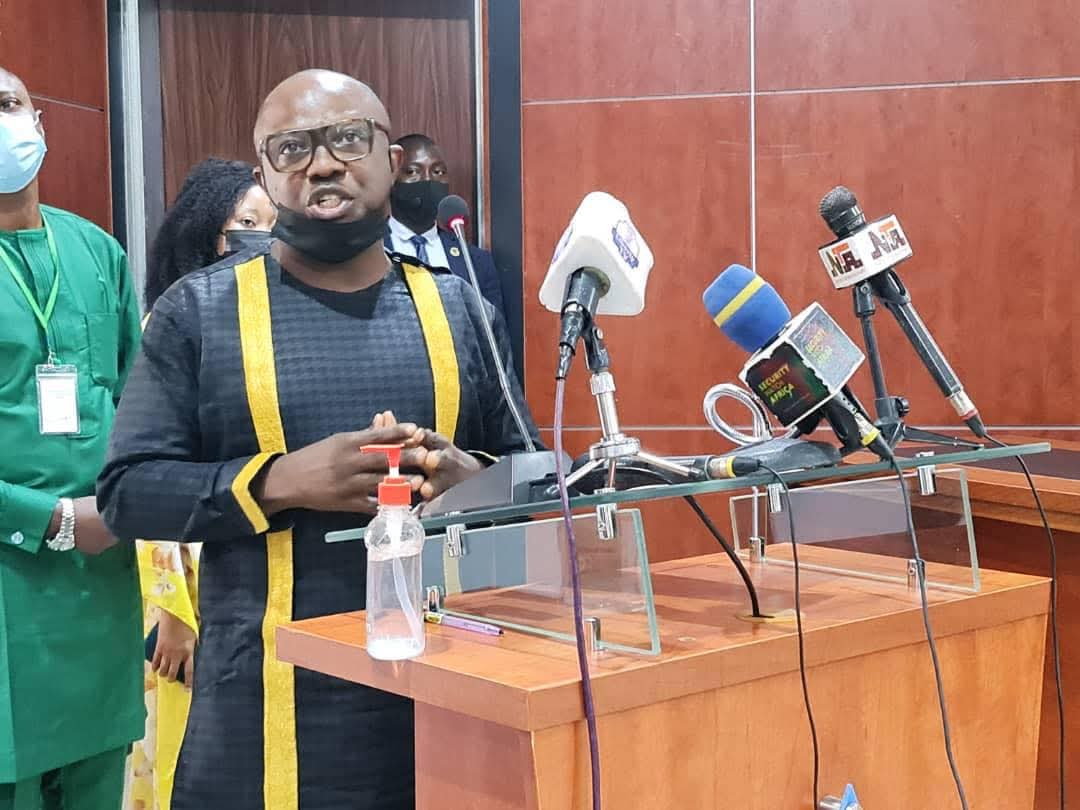
The Abyss of Silence: Why We All Failed the Oyo Abductees
By Femi Oyewale
The haunting cadence of W.B. Yeats’ The Second Coming, quoted so often by the late Chinua Achebe, has ceased to be mere poetry. It has become a grim, real-time mirror reflecting our national existence: “Things fall apart; the centre cannot hold; / Mere anarchy is loosed upon the world.”

In a nation that boasts some of the brightest minds globally, a land steeped in the communal sanctity of “it takes a village to raise a child,” we have descended into an unthinkable abyss. Daredevil criminals have reached into the heart of Oyo State, snatched our children—the very architects of our future—and vanished. Yet, as the sun rises and sets, from the gilded halls of the Presidency to the dusty corners of the local street, we remain paralyzed, tethered to a collective ignorance that is as chilling as it is shameful.
The Theatre of Performative Outrage
We have become a nation of “noises.” We trade blame with surgical precision—the Presidency points to the state, the state points to the security architecture, and the populace directs its vitriol toward the political elite. We have seen the press releases, the hashtags, the fleeting television appearances, and the hollow promises of “concerted efforts.”
But let us be painfully honest: these are not efforts; they are performances. There is not even a whisper of a “near-success syndrome.” While we debate and defend our preferred political affiliations, our children are sleeping under the cold, unforgiving stars of a forest floor. They are subjected to the kind of trauma that shatters souls long before it breaks bodies. They are waiting for a rescue that we are too divided to coordinate.
The Mirror of Empathy
Let us strip away the facade of civic detachment. I challenge every father in this country: if that abducted child were your only son, would you be content with a tweet? To every mother: if that child were the fruit of your old age, would you accept a press statement as enough?
To our governors, our senators, and our political titans: if these children were the heirs to your empires, would the current pace of “investigation” satisfy you? To our billionaires, our security chiefs, and our local traditional warriors, those who claim the mantle of protectors, what if these children were born of your own loins?
The silence that would follow that personal connection is the same silence currently haunting the homes of these victims. We have allowed the abstraction of “national crisis” to desensitize us to the visceral reality of a child’s terror.
Beyond the “One-Man” Savior Complex
We have developed a dangerous habit of outsourcing our conscience. We wait for the radical activist, the viral influencer, or the singular loud voice to carry the burden of the nation. We expect a solitary figure like VDM or a lone firebrand like Sowore to move mountains that require the combined weight of a movement.
But no singular individual can replace the collective pulse of a people. Their rescue is not a one-man job; it is a fundamental test of our humanity.
The Path to Reclamation
We are currently a house divided by party lines, religious silos, and ethnic prejudices. Yet, we have seen that we possess a dormant capacity for unity. When the Super Eagles take to the pitch, our differences vanish. We become one heartbeat, one voice, one nation. Why is it that a game can unify us, but the abduction of our children leaves us fractured?
We do not need more talk. We do not need more inquiries that lead to no arrests. We need to acknowledge a hard truth: we have failed. We have failed the children, we have failed their teachers, and we have failed ourselves.
No stranger knows our terrain better than we do. No satellite imagery can replace the intelligence of a community that refuses to be silent. It is our land. These are our children.
The systemic rot has metastasized to the point where “efforts” no longer count. Only results matter. The time for performative sorrow is over; the time for a unified, uncompromising demand for their return is now. If we do not rise, if we do not act with the singular intensity of a people reclaiming their future, then let the history books record that when our children were taken, Nigeria chose its politics over its people.
We must rescue them. Not tomorrow. Not after the next meeting. Now.
Femi Oyewale is the publisher of Sahara Online and President of NASRE who
writes on national affairs, security, and social development.


- President Isaias Afwerki Departs for Egypt June 7, 2026
- Eritrea: Athlete Nahom Ermias Champion of Asmara Marathon 2026 June 7, 2026
- World Health Organization (WHO) Hands Over Ebola Preparedness Supplies to Strengthen Zambia’s Readiness June 7, 2026
- Joint Statement by the World Health Organization (WHO) and Food and Agriculture Organization of the United Nations (FAO) in South Africa on World Food Safety Day 2026: From burden to solutions – safe food everywhere June 7, 2026
- Liberia: President Boakai Oversees Signing of US$125 Million in World Bank Financing Agreements for Digital Connectivity, Renewable Energy, and Road Infrastructure June 7, 2026
- President Mahama explores Belarus’ agro-industrial hub; seeks partnerships to boost Ghana’s food security June 7, 2026
- National Insurance Corporation of Eritrea (NICE): Shareholders’ Annual Regular Meeting June 6, 2026
- World Cup accredited journalists raise concerns over unfair United States (US) visa restrictions, International Sports Press Association (AIPS) calls on FIFA to intervene June 6, 2026
- Ghana: President Mahama arrives in Belarus, lays wreath at Victory Monument June 6, 2026
- Liberia: President Boakai Advances Clean Energy Agenda; Dedicates 20-Megawatt Solar Power Plant at Mount Coffee June 6, 2026
- President Isaias Afwerki Departs for Egypt June 7, 2026
- Eritrea: Athlete Nahom Ermias Champion of Asmara Marathon 2026 June 7, 2026
- World Health Organization (WHO) Hands Over Ebola Preparedness Supplies to Strengthen Zambia’s Readiness June 7, 2026
- Joint Statement by the World Health Organization (WHO) and Food and Agriculture Organization of the United Nations (FAO) in South Africa on World Food Safety Day 2026: From burden to solutions – safe food everywhere June 7, 2026
- Liberia: President Boakai Oversees Signing of US$125 Million in World Bank Financing Agreements for Digital Connectivity, Renewable Energy, and Road Infrastructure June 7, 2026
- President Mahama explores Belarus’ agro-industrial hub; seeks partnerships to boost Ghana’s food security June 7, 2026
- National Insurance Corporation of Eritrea (NICE): Shareholders’ Annual Regular Meeting June 6, 2026
-

 news6 months ago
WHO REALLY OWNS MONIEPOINT? The $290 Million Deal That Sold Nigeria’s Top Fintech to Foreign Interests
-

 society1 month ago
SOCIAL MEDIA IS NOT A BATTLEFIELD COMMAND – WHY THE NIGERIAN ARMY’S ACTION AGAINST JUSTICE CRACK IS A NATIONAL SECURITY IMPERATIVE
-

 celebrity radar - gossips4 months ago
Dr. Chris Okafor Returns with Power and Fire of the Spirit -Mounts Grace Nation Altar with Fresh Anointing and Restoration Grace on February 1, 2026
-

 celebrity radar - gossips6 months ago
Prophet Kingsley Aitafo Releases 2026 Prophecy: ‘Nigeria Will Rise, but the World Must Prepare for Turbulence’