
celebrity radar - gossips
Every Pastor Who Collects Tithes is a Thief – Pastor Femi Aribisala

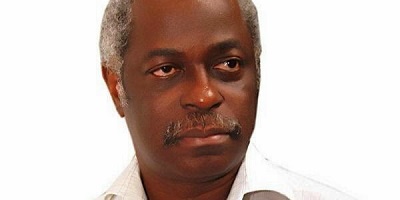

Popular pastor and public affairs analyst, Femi Aribisala has berated the act of collecting tithes by their churches which he believes is not biblical.
As far as many pastors are concerned, the most important scripture of all is not to be found in the word of Jesus. Neither is it even in the New Testament. That scripture says: “‘Bring all the tithes into the storehouse, that there may be food in my house, and try me now in this,’ says the LORD of hosts, ‘If I will not open for you the windows of heaven and pour out for you such blessing that there will not be room enough to receive it.’” (Malachi 3:10).
This scripture is drummed repeatedly into Christians on Sundays. However, the only time Jesus mentioned tithing in scripture, he pointed out that it was not a weighty matter of the law. (Matthew 23:23). Hebrews says people only receive tithes “according to the law.” (Hebrews 7:5). It then insists tithing (and everything else under the law) has been annulled: “The former regulation is set aside because it was weak and useless.” (Hebrews 7:18-19). Nevertheless, mercenary pastors continue to insist on the payment of tithes.
Latter-day Pharisees
Jesus rebuked the Pharisees for keeping part instead of the whole law. (Matthew 23:23). That is what tithe-collecting pastors do today. If we insist our congregants must pay tithes, we must also insist that they keep the rest of the law. James says: “Whoever shall keep the whole law, and yet stumble in one point, he is guilty of all.” (James 2:10). Therefore, if we insist on tithing, we should also refrain from eating pork. We should stone adulterers, execute homosexuals, kill Sabbath violators and restore blood-sacrifices.
Tithe-collecting pastors counter this by maintaining the payment of tithes pre-dated the law. Here Abraham is cited as the cardinal example of someone who paid tithes before the promulgation of the Law of Moses, as did Jacob, his grandson. However, such arguments are disingenuous.
Before the law, tithing was at best an example but not a commandment. Moreover, pastors fail to mention that Abraham only tithed once in his lifetime. When he did, he did not even tithe his own money: he tithed the spoils of war. He gave ten percent of the plunder he took when he rescued Lot to Melchisedec, king of Salem. But then he did not even keep the rest but returned it (all ninety percent) to the king of Sodom.
For his part, Jacob also tithed only once. He did this in a “let’s make a deal” arrangement he offered to God: “Jacob made a vow, saying, ‘If God will be with me, and keep me in this way that I am going, and give me bread to eat and clothing to put on, so that I come back to my father’s house in peace, then the LORD shall be my God. And this stone which I have set as a pillar shall be God’s house, and of all that you give me I will surely give a tenth to you.’” (Genesis 28:20-22). This kind of deal about accepting God only under certain self-serving conditions should certainly not be a term of reference for any serious believer.
Lies upon lies
The first lie pastors tell Christians is what some have referred to as “the eleventh commandment:” “Thou shalt pay thy tithes to thy local church.” But the bible says no such thing. The storehouse of Malachi was not a church. It was a place where food was kept.
Pastors hide from church-members the fact that money was not acceptable as tithe. The tithe was a tenth of the seed and fruit of the land and of the animals which ate of the land. (Leviticus 27:30-32). That is why God says: “Bring all the tithes into the storehouse, that there may be FOOD in my house.” (Malachi 3:10). He does not say “that there may be MONEY in my house.” The food was used to feed the Levites, the poor, widows, orphans and strangers.
Pastors also conveniently fail to teach the biblical tithe. The principles of tithing were not laid down by Malachi. They were laid down by Moses. The study of Moses’ guidelines quickly reveals that the biblical tithe has no application whatsoever to Christians and is mischievously violated by tithe-collecting pastors today.
According to the Law of Moses, the tithe was divided into three allocations. The first year, it was given to the Levite. The second year, it was given to widows, orphans and the poor. The third year, it was eaten in the company of the faithful before the Lord as thanksgiving for his faithfulness. (Deuteronomy 14:22-28). In the seventh year, there was no planting and no reaping and therefore no tithing.
So the next time your pastor asks you to pay tithe, ask him about the seventh-year reprieve. Also ask him if you can give your tithe to the orphanage, or bring it as food items to be eaten in church. Believe me; he will not agree with you because it is your money he is after.
Inapplicability of Tithes
Tithing was only applicable to Jews and to the land of Israel. When large populations of Jews lived in Babylon, Ammon, Moab, Egypt, and Syria, these lands became tithe-able lands. However, tithes were not acceptable from strictly Gentile lands. So you need to ask your pastor how come he is collecting tithes in Nigeria.
Servants or slaves who worked on the land did not tithe because the land did not belong to them. Since only agricultural and animal resources were included, a fisherman gave no tithe of his fisheries. Neither did a miner or a carpenter pay tithes, nor anyone from the various professional occupations. So if you are not a farmer or a keeper of livestock, tell your 419 pastor tithing is biblically inapplicable to you.
Moreover, the only people authorised to receive tithes were the Levites. (Hebrews 7:5). So if your Pastor is a “tithe-collector,” ask him if he happens to be a Jew. Remind him that, even though a Jew, Jesus could not receive the tithe because he was not from the tribe of Levi but from that of Judah.
The trick, of course, is for pastors today to claim we are “Levites.” If your pastor is one such dissembler, ask him if he lives as a Levite. Remind him that Levites had no land and did not have private property. Ask him also how he knows he is from the tribe of Levi, which happens to be one of the lost tribes of Israel. Point out to him that even Jewish rabbis don’t claim to be Levites today because all Jewish genealogical records were lost with the destruction of the Temple in AD 70, ensuring that it is no longer possible to ascertain the true identity of Levites.
Therefore, if Jews no longer tithe because the Levites are a lost tribe, how can Christian pastors collect tithes when we are not even Jewish, how much more Levites? If Jewish rabbis, whose terms of reference remain the Old Testament no longer collect tithes, then pastors who insist Christians are under a New Testament have no business doing so.
The conclusion then is inescapable. Every pastor who collects tithes is nothing but “a thief and a robber.” (John 10:1).




celebrity radar - gossips
Let’s build a future where access to healthcare is strengthened…….Oba Odugbemi

Let’s build a future where access to healthcare is strengthened…….Oba Odugbemi
A call has gone to every stakeholder in the health sector to build a future where access to healthcare is guaranteed and strengthened.
The Onilisa of Lisa Kingdom, Oba Oladele Odugbemi make the call in Lisa while donating a Sanitary Sterilisation Box to the Lisa health centre.
Oba Odugbemi said that the donation became necessary in order to further strengthen the capacity of the health centre for the benefits of the people.
The royal father stressed that his foundation, Oladele Odugbemi foundation would continue to make meaningful impacts in community healthcare aimed at complementing the efforts of government in healthcare delivery system.
He pointed out that the foundation reflects its unwavering commitment to promoting quality healthcare services, enhancing hygiene standards and supporting health institutions with essential tools that contribute to safer and healthier communities.
According to the monarch, all stakeholders in the health sector should work hand-in- hand with government to take healthcare to the doorsteps of the masses as government cannot do it alone, hence health is wealth.
Oba Odugbemi also charged the governments at all levels to declare a state of emergency in the health sector so that every Nigerian can have smooth access to healthcare delivery system in the interest of the country and for the benefits of the masses.
The monarch therefore said that the foundation would continue to care for the people through empowerment by ensuring that masses have good and quality health condition.
The Sanitary Sterilisation Box was presented by the Foundation Director, Hajia Suliat Odugbemi – Tinuosho to the Matron of Lisa Community Health Centre, Mrs Temitope Nofisat Sanni who received it on behalf of the health centre.

King of the Screen: Why Odunlade, Muyiwa, Femi Adebayo Remain Yoruba Movie Giants
The Yoruba movie industry has continued to produce legendary talents whose influence stretches beyond Nigeria to global audiences. Over the years, some actors have distinguished themselves through consistency, versatility, box office success, and cultural impact.
Among the numerous stars in Nollywood’s Yoruba sector, three actors have remained dominant figures whose names constantly resonate with fans and filmmakers alike — Odunlade Adekola, Muyiwa Ademola, and Femi Adebayo.

Odunlade Adekola: The Street King of Yoruba Cinema
Popularly regarded as one of the most entertaining actors in Nollywood, Odunlade Adekola has built a unique reputation through his energetic delivery, comic timing, emotional depth, and strong connection with grassroots audiences.
From comedy to action and emotional family dramas, the actor has consistently proven his versatility in blockbuster productions. His ability to interpret diverse roles effortlessly has made him a household name across Nigeria.
Industry observers believe his dominance on social media platforms, where his movie clips frequently go viral, has further strengthened his popularity among younger audiences.
Beyond acting, Odunlade has also contributed immensely to mentoring upcoming talents and expanding the commercial value of Yoruba films.
Muyiwa Ademola: The Master Storyteller

For many lovers of indigenous movies, Muyiwa Ademola remains one of the finest storytellers the Yoruba film industry has produced.
Widely respected for producing emotional and morally driven movies, the actor earned massive recognition through classic productions that focused on family values, culture, betrayal, perseverance, and societal lessons.
His calm delivery, deep scripts, and originality have kept him relevant despite changing trends in the entertainment industry.
Film critics often describe Muyiwa Ademola as one of the few actors whose productions combine entertainment with strong cultural education, making his movies timeless among older and younger viewers alike.
Femi Adebayo: The Modern-Day Box Office Force

Femi Adebayo has successfully combined traditional Yoruba storytelling with modern cinematic excellence, helping to project indigenous films to international audiences.
The actor, filmmaker, and producer has recorded major successes with high-budget productions that gained attention on streaming platforms and cinemas.
Known for his professionalism and attention to detail, Femi Adebayo has continued to push Yoruba movies beyond local boundaries while preserving cultural identity.
Entertainment analysts say his ability to blend culture, technology, and quality production has positioned him among the leading faces shaping the future of Yoruba cinema.
Growing Global Influence
The success of these actors reflects the increasing acceptance of indigenous Nigerian content globally. With streaming platforms creating wider access to local movies, Yoruba actors are now gaining international recognition and attracting new audiences.
Fans and stakeholders in the entertainment industry believe the contributions of Odunlade Adekola, Muyiwa Ademola, and Femi Adebayo have not only sustained Yoruba culture through film but have also elevated Nollywood’s global reputation.
celebrity radar - gossips
Eid-el-Kabir: Olowu of Kuta Urges Peace, Unity, Selflessness Among Nigerians

Eid-el-Kabir: Olowu of Kuta Urges Peace, Unity, Selflessness Among Nigerians
The Olowu of Kuta, HRM Oba Dr. Hammed Makama Oyelude, CON, Tegbosun III, has called on the Muslim Ummah and all Nigerians to make peace, unity, and selflessness their guiding principles as the world marks this year’s Eid-el-Kabir celebration.
In his Sallah message, the revered monarch described Eid-el-Kabir as a “highly spiritual occasion that demands dedication, commitment, and selflessness.”
Oba Makama said the period should be used to reflect on societal happenings and promote messages of hope and unity without inciting provocation.
He urged Nigerians to live together harmoniously, irrespective of religious, political, or tribal affiliations, stressing that politicians should exercise restraint and avoid inflammatory rhetoric ahead of the 2027 general elections.
“What should be uppermost in the mind of every patriotic Nigerian is **‘Country first,’” he said.
The monarch also appealed to citizens to remain vigilant in the face of insecurity, reassuring that the armed forces and paramilitary agencies are working round the clock to ensure a smooth and peaceful celebration.
“The price wise men pay for eternal liberty is vigilance. I urge everyone to celebrate moderately and extend a helping hand to the less privileged, widows, and orphans, embracing them as our brothers and sisters,” Olowu Makama added.
He concluded by wishing all Nigerians a peaceful and fulfilling Eid-el-Kabir celebration.


- Uganda: Parliament concludes vetting of ministers June 2, 2026
- Fund for Export Development in Africa (FEDA) Board Appoints Mr. Emmanuel Assiak as Chief Executive Officer June 2, 2026
- Ecobank Group Launches World First Nature Bond Mobilising Global Capital to Protect Africa’s Natural Ecosystems June 2, 2026
- Merck Foundation Chief Executive Officer (CEO) Dr. Rasha Kelej together with Kenya First Lady support the education of 47 Kenyan Schoolgirls by providing Annual Scholarships till they Graduate June 2, 2026
- Annual Meetings 2026: Governors Back the Bank’s Platform Solutions to Transform Aviation and Health Systems in Africa June 2, 2026
- ThinkMarkets launches ChelseaAI, bringing live CFD trading into Artificial Intelligence (AI) assistants June 2, 2026
- Afreximbank Invites Rugby Africa President Herbert Mensah to Address the 33rd Annual Meetings on a Panel Exploring Sport as a Driver of African Industrialisation June 2, 2026
- Afreximbank Deepens Commitment to Economic Progress in The Bahamas June 1, 2026
- African Electric Vehicle (EV) platform Spiro raises $215M in equity to scale electric mobility and energy infrastructure across Africa June 1, 2026
- Africa Centres for Disease Control and Prevention (Africa CDC) Statement on Attacks Against Health Facilities During the Bundibugyo Virus Disease Response in the Democratic Republic of the Congo June 1, 2026
- Uganda: Parliament concludes vetting of ministers June 2, 2026
- Fund for Export Development in Africa (FEDA) Board Appoints Mr. Emmanuel Assiak as Chief Executive Officer June 2, 2026
- Ecobank Group Launches World First Nature Bond Mobilising Global Capital to Protect Africa’s Natural Ecosystems June 2, 2026
- Merck Foundation Chief Executive Officer (CEO) Dr. Rasha Kelej together with Kenya First Lady support the education of 47 Kenyan Schoolgirls by providing Annual Scholarships till they Graduate June 2, 2026
- Annual Meetings 2026: Governors Back the Bank’s Platform Solutions to Transform Aviation and Health Systems in Africa June 2, 2026
- ThinkMarkets launches ChelseaAI, bringing live CFD trading into Artificial Intelligence (AI) assistants June 2, 2026
- Afreximbank Invites Rugby Africa President Herbert Mensah to Address the 33rd Annual Meetings on a Panel Exploring Sport as a Driver of African Industrialisation June 2, 2026
-

 news6 months ago
WHO REALLY OWNS MONIEPOINT? The $290 Million Deal That Sold Nigeria’s Top Fintech to Foreign Interests
-

 society4 weeks ago
SOCIAL MEDIA IS NOT A BATTLEFIELD COMMAND – WHY THE NIGERIAN ARMY’S ACTION AGAINST JUSTICE CRACK IS A NATIONAL SECURITY IMPERATIVE
-

 celebrity radar - gossips4 months ago
Dr. Chris Okafor Returns with Power and Fire of the Spirit -Mounts Grace Nation Altar with Fresh Anointing and Restoration Grace on February 1, 2026
-

 celebrity radar - gossips6 months ago
Prophet Kingsley Aitafo Releases 2026 Prophecy: ‘Nigeria Will Rise, but the World Must Prepare for Turbulence’
You must be logged in to post a comment Login
You must log in to post a comment.