
society
FAILURE IS A CHOICE: We Must Stop Treating Crisis as Normal

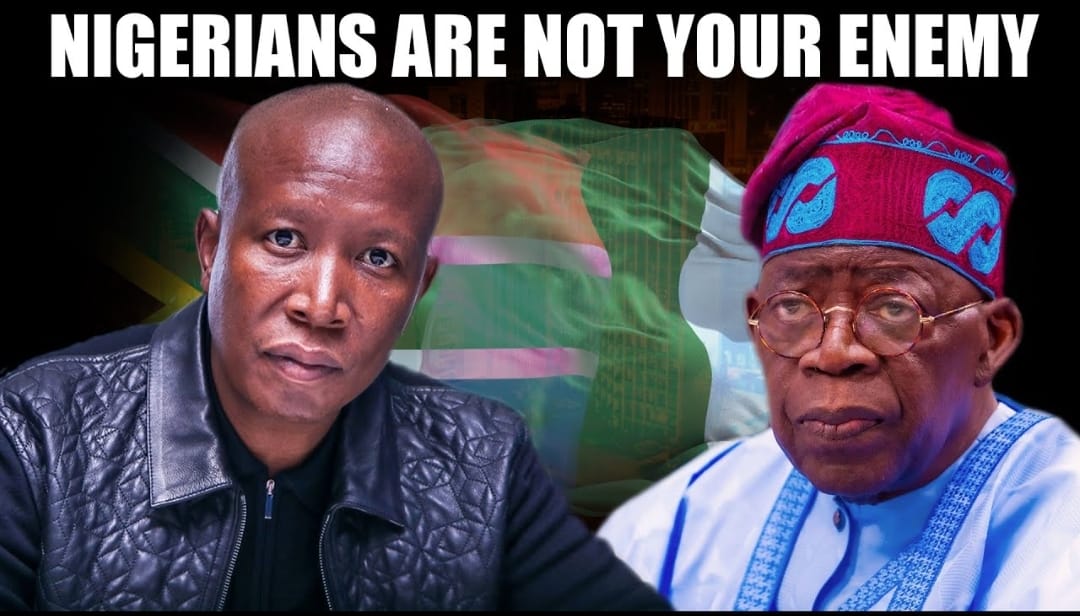
FAILURE IS A CHOICE: We Must Stop Treating Crisis as Normal.
By George Omagbemi Sylvester | Published by SaharaWeeklyNG.com
“Enough excuses; SURVIVAL-BY-SCRAMBLE is a policy of defeat. We rebuild or we perish.”
We Nigerians (and Africans in general) have perfected the art of normalizing chaos. We wake up to crises and go to bed with dysfunction, yet we call it “RESILIENCE.” We take pride in surviving under the worst possible conditions and label it strength. Though survival is not success; it is a symptom of systemic failure. And failure, no matter how common, is not culture, it is a choice.

From Nigeria to Sudan, from Congo to Zimbabwe, we have allowed incompetence to masquerade as destiny. Every collapsed building, every unlit street, every unpaid teacher, every unstaffed hospital is not fate but a decision MADE BY PEOPLE in POWER and TOLERATED BY CITIZENS who have grown numb to pain. As long as we treat crisis as normal, progress will remain abnormal.
Nigeria, the supposed “GIANT of AFRICA,” is a tragic case study of how nations die slowly, not from war, but from the silent acceptance of mediocrity. With over 220 million people, vast arable land and abundant natural resources, Nigeria should be a global success story. Instead, it has become a living contradiction, a rich nation of poor people.
The World Bank reports that over 63% of Nigerians live in multidimensional poverty, lacking access to health care, education and decent living conditions. That is nearly 133 million Nigerians struggling daily in a country blessed with oil, gas and human capital. In 2024 alone, inflation climbed above 30% and the naira depreciated to over ₦1,500 per dollar, eroding wages and crushing small businesses.

Electricity generation, the heartbeat of modern development, remains a national embarrassment. As of mid-2024, Nigeria generated barely 5,000 megawatts for a population exceeding 200 million and a figure lower than what South Africa, with just 60 million people, produced even at its lowest point of energy crisis. A single state in the United States, Texas, generates more than 80,000 megawatts, yet we continue to claim “GOD WILL DO IT.” God has done His part and it is our leadership that has failed to do theirs.
As Chinua Achebe once wrote in The Trouble with Nigeria: “The trouble with Nigeria is simply and squarely a failure of leadership.” Four decades later, nothing has changed. We have replaced bad leaders with worse ones and mistake RECYCLING for REFORM.
Leadership Without Accountability. The African condition today is not primarily a lack of intelligence or resources but a deficit of integrity. Leaders who should be custodians of national progress have become custodians of personal wealth. Nigeria ranks among the bottom 25% of countries on Transparency International’s Corruption Perception Index, where billions vanish yearly under dubious projects.
Corruption is not merely an economic issue; it is a moral cancer that kills national ambition. It diverts funds from hospitals to foreign bank accounts, from classrooms to convoys and from industries to individual greed. The late South African leader Nelson Mandela warned: “Overcoming poverty is not a gesture of charity; it is an act of justice.” Justice cannot prevail in a society where the CORRUPT are celebrated and the honest are silenced.

The Myth of “RESILIENCE”. Africans often boast of being resilient people. Resilience without results is SELF-DECEPTION. When a people adapt to hunger, power failure, unemployment, insecurity and bad governance, they are not being resilient, they are being conditioned. We have learned to survive what we should have rebelled against.
Look at our neighbors who refused to normalize their pain. South Africa in 1994 said “NEVER AGAIN” to apartheid and began the journey toward equality. Ghana in 1981 stood up to military decay and embraced democracy that has since stabilized its economy. Rwanda, after a genocide that killed nearly a million people in 1994, rebuilt itself into one of Africa’s cleanest, safest and most disciplined nations.
Each of these countries made a collective choice to stop romanticizing failure. Meanwhile, Nigerians are told to “ENDURE.” We have endured for too long. Endurance without accountability is slow suicide.
The Cost of Accepting Crisis. When a nation normalizes dysfunction, it loses its moral compass. Today, insecurity has become the new normal; from Boko Haram in the northeast to banditry in the northwest and kidnapping in the south.
Over 80,000 lives have been lost to terrorism and related violence since 2009, according to the Council on Foreign Relations (CFR). Yet our leaders treat it as routine.
Education is collapsing before our eyes. The UNESCO data shows that Nigeria has the world’s highest number of OUT-OF-SCHOOL CHILDREN, over 20 million. Hospitals have turned into mortuaries and brain drain has stripped the nation of skilled professionals. More than 15,000 Nigerian doctors now practice abroad, particularly in the U.K. and Canada (this 2025 alone). Even universities that once stood as pillars of excellence now stagger under strikes and underfunding.
As the late Prof. Claude Ake, Nigeria’s foremost political economist, warned “Development is not possible in a country where POLITICS is everything and PRODUCTIVITY is nothing.” We cannot talk our way out of failure; we must work our way out.

The Culture of Excuses. The saddest phrase in Nigeria’s vocabulary is “NA SO WE SEE AM OO.” It is the anthem of surrender, the acceptance that nothing will change. We blame colonialism, global capitalism and bad luck, but never our own refusal to act. While colonialism left scars, it has been over 60 years since independence.
Nations like Singapore, Malaysia and South Korea gained independence around the same time, today they are economic giants. Why? Because they chose COMPETENCE over CORRUPTION, PLANNING over POLITICS and ACCOUNTABILITY over APATHY. Nigeria chose the opposite.
As long as public office remains a retirement plan for the corrupt, no divine intervention will save us.
Choosing Change. We must realize that DEVELOPMENT is a DECISION. It begins with leadership that understands that governance is not about sharing spoils but building systems. It requires citizens who demand performance not peanuts; who vote with their conscience not their stomach.
To quote Lee Kuan Yew, the founding father of modern Singapore: “A nation is great not by its size alone. It is the will, the cohesion, the intellectual and moral quality of its people that makes it great.”
Nigeria has the people; what we lack is the will.
It is time to reject the politics of TRIBE and RELIGION, the two tools that have kept us divided and distracted. Progress has no ETHNIC IDENTITY. Light, jobs, schools and security do not belong to one tribe. They are national rights not regional privileges.
The Path Forward. To rise again, Nigeria must take five urgent steps:
Fix Power: Electricity is not a luxury; it is the lifeblood of modern civilization. Without it, industries will continue to die and unemployment will worsen.
Educate for Innovation: Quality education must replace political education. Nations that invest in human capital do not beg for aid.
Fight Corruption with Consequence: Until politicians and civil servants fear the law, theft will continue to be profitable.
Reward Productivity: Celebrate builders, inventors and reformers, not thieves and sycophants.
Unite for a Common Goal: Stop treating governance as ethnic conquest. Unity is not a slogan; it is a survival strategy.
The Final Word.
We are not cursed, we are careless. We are not doomed, we are distracted. We are not victims, we are volunteers in our own destruction.
As George Omagbemi Sylvester writes:
“Failure is not inherited; it is repeated. And repetition of wrong choices is the surest path to ruin.”
Nigeria’s salvation lies not in prayers alone, but in policies, principles and people ready to reject mediocrity. We must stop applauding survival and start demanding success. The time to choose progress is now, because nations that normalize crisis eventually vanish under it.

Let it be said that this generation refused to adapt to failure. Let it be written that we rose, not because it was easy, but because we were tired of excuses. And let it be remembered that we finally understood: FAILURE is not CULTURE, it is a CHOICE.




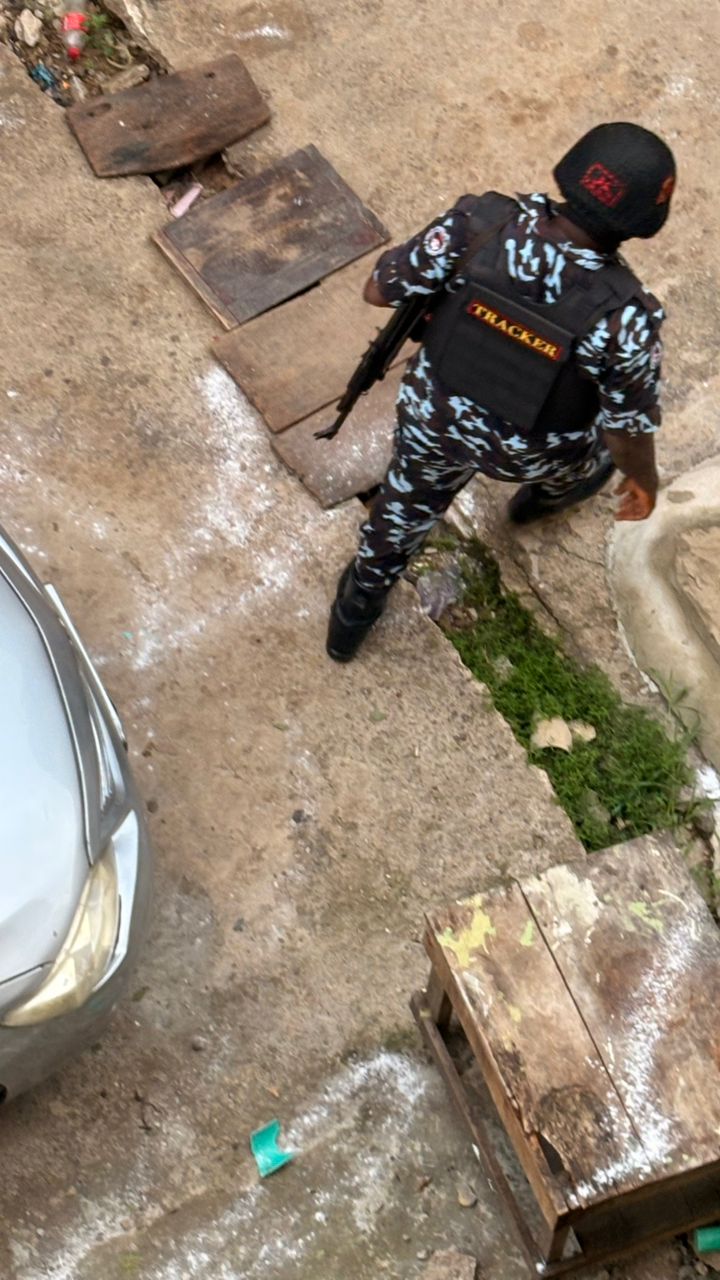
Police Officers Detained as Family Property Dispute Sparks Demolition Controversy in Lagos
By Ifeoma Ikem
A property dispute within the Omotayo-Ojo family has taken a dramatic turn following a controversial demolition exercise at a residential building in Ikosi-Ketu, Lagos State, which reportedly left tenants displaced and led to the detention of some police officers allegedly involved in the operation.

The property, located at 23B Loveall Street, Ikosi-Ketu, has been the subject of a prolonged ownership tussle since the death of its owner, Chief Oludola Omotayo Ojo, the Babaalaje of Imesi-Ile, Osun State, in 2019.
Residents said tension erupted when a group of individuals, accompanied by security operatives, stormed the premises and commenced demolition activities.
According to eyewitnesses, portions of the building were pulled down while tenants rushed to salvage their belongings from affected apartments.
The residents alleged that windows, doors and roofing sheets were damaged during the exercise, exposing parts of the building to the elements and causing significant losses to occupants.
At the centre of the dispute is Mrs Mojisola Omotayo Ojo Alolagbe, who claimed that the property was allocated to her by her late father during his lifetime as a source of financial support.
She alleged that some family members had persistently challenged her ownership claim despite ongoing legal proceedings relating to the administration of the deceased’s estate.
Alolagbe further claimed that the latest incident was part of a series of attempts to wrest control of the property, citing previous cases of alleged vandalism and partial demolition in November 2025, January 2026 and February 2026.
The situation escalated further when reports emerged that police officers allegedly involved in the demolition were later apprehended and conveyed in a Black Maria vehicle over questions surrounding the legality of their participation in the operation.
Sources familiar with the matter said those behind the demolition had initially claimed to be acting on approval from the Lagos State Ministry of Lands. However, the authenticity and extent of such approval could not be independently verified as of the time of filing this report.
The development has generated concern among residents and community members, who questioned the involvement of security personnel in what they described as a civil matter.
Some tenants, who said they had recently renewed their tenancy agreements, lamented the destruction of their property and appealed to the authorities for protection and possible compensation.

They also called for a thorough investigation into the circumstances surrounding the demolition, insisting that the rights of all parties involved should be protected.
Stakeholders have urged the Lagos State Government, security agencies and the judiciary to intervene and ensure that the dispute is resolved through lawful means to prevent further escalation.
The controversy has continued to draw public attention, raising concerns over property rights, estate administration and the role of law enforcement agencies in civil disputes.

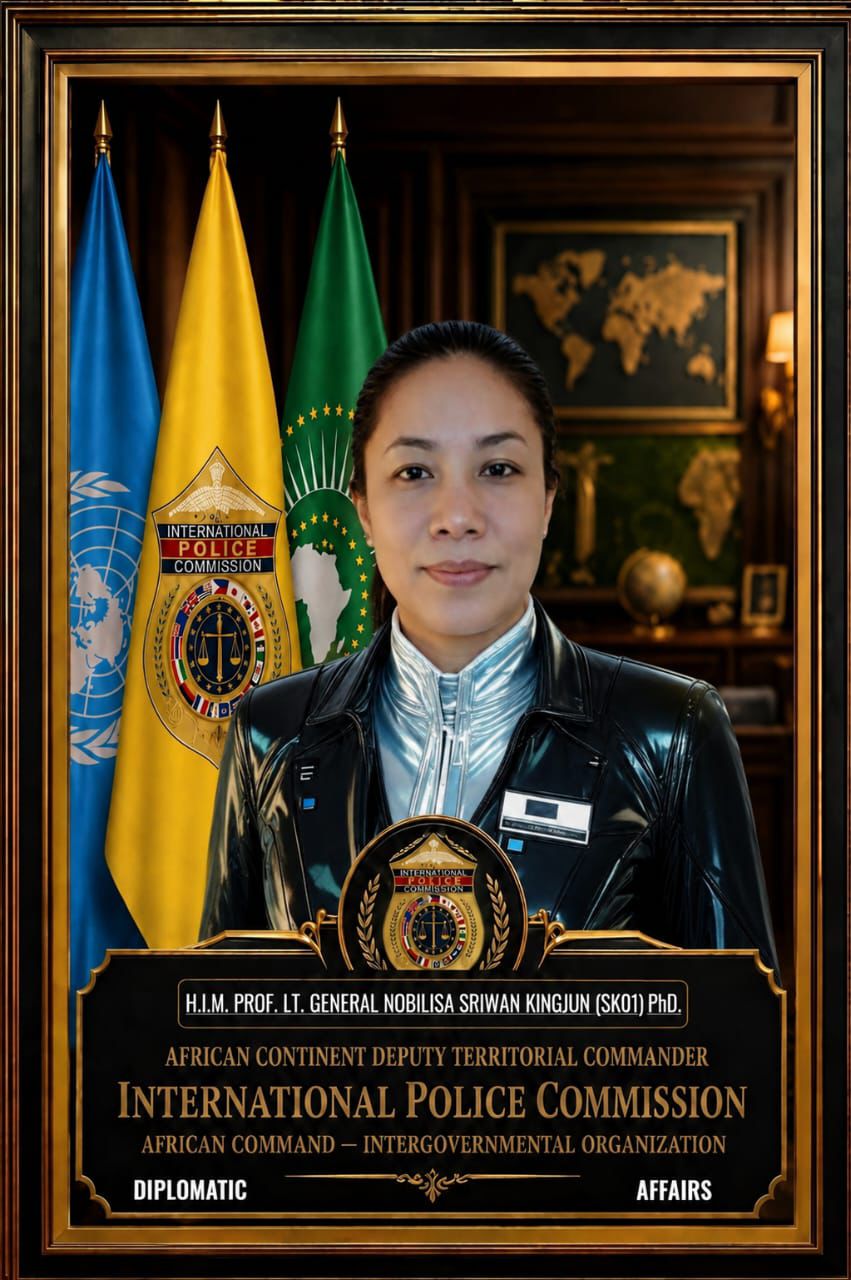
UKA Gears Up for Final ATC Exchangeability Test Run as June Preparations Begin.
May 30, 2026 – As the month of June gathers momentum, the *United Kingdom of Atlantis, UKA*, a sovereign nation has unveiled a series of vital guidelines and preparatory packages to ensure citizens and stakeholders run the *ATC Exchangeability* process effectively.
In an official update, the *President of Atlantic Crown Limited, Empress of Attica Empire UKA*, confirmed that the *Final Test Run of ATC Exchangeability* is scheduled for the month of June 2026. The exercise marks a key phase ahead of the *Official Exchangeability Window, set to run from July 2026 to February 2027*.
### Key Highlights from the Presidential Briefing
1. *Final Test Run – June 2026*
The test run is designed to validate systems, procedures, and user readiness before full activation. Citizens, partners, and designated participants are urged to follow all official advisories released by UKA authorities during this period.
2. *Official Exchangeability Period*
Following the successful completion of the June test run, the Official Exchangeability will commence in july 2026 and we are Expecting Full Exchange ability between July Ending, 2026 to February 2026.
UKA stated that detailed schedules, eligibility requirements, and step-by-step instructions will be communicated progressively through verified UKA channels.
3. *Benefiting Packages for June*
In line with UKA’s commitment to citizen empowerment, the month of June will feature “benefiting packages” aimed at education, preparation, and seamless onboarding. These packages are intended to equip the people of UKA with the knowledge and tools needed for effective participation.
4. *Commitment to Transparency*
Addressing the nation, the Empress of Attica Empire UKA emphasized:
_“Final Test Run of ATC Comes up in The Month of June, As We Prepare For The Official Exchangeability, Between July 2026 To Feb 2027. All Information Will Be Communicated.”_
UKA reaffirmed that only information released through official UKA platforms should be regarded as authoritative.
The United Kingdom of Atlantis is encouraging all citizens, representatives, and interested parties to remain alert to official communications, attend designated orientation sessions, and avoid unofficial sources. UKA’s dedication to order, clarity, and the collective benefit of its people as the nation moves into this significant phase.
For updates, advisories, and participation guidelines, citizens are advised to monitor official UKA communication channels.
United Kingdom of Atlantis, UKA, is a sovereign nation, committed to national development, citizen welfare, and structured economic participation through initiatives such as ATC Exchangeability.
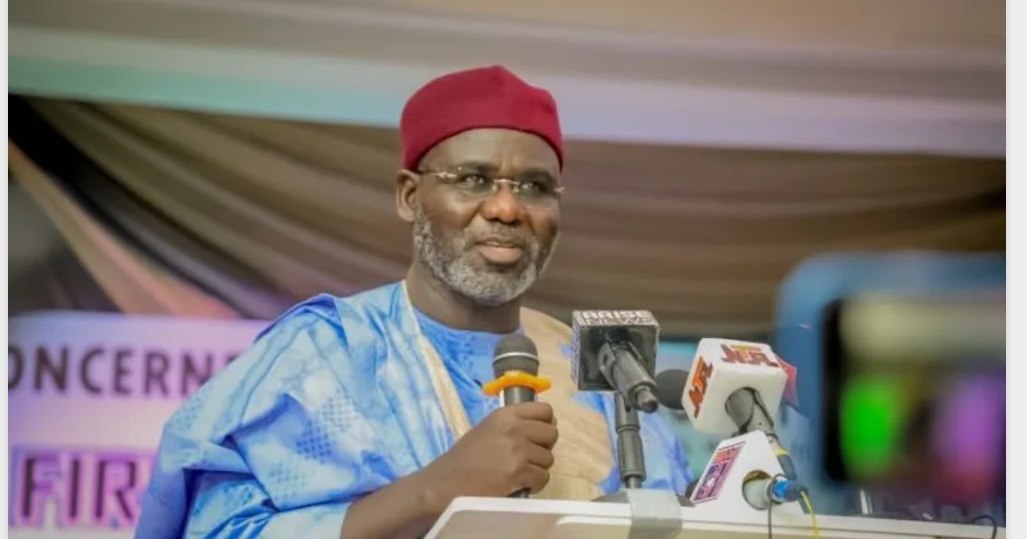
Three Years On, General Buratai Hails Tinubu’s Economic, Security Achievements
Former Chief of Army Staff, Lt. Gen. Tukur Buratai (retd.), has commended President Bola Ahmed Tinubu for what he described as bold economic reforms and improved security efforts as the President marks three years in office.
In a goodwill message on Thursday to commemorate Tinubu’s third anniversary as President and Commander-in-Chief of the Armed Forces, Buratai said the administration had taken courageous decisions that would leave a lasting impact on Nigeria’s development.

According to him, President Tinubu broke a long-standing cycle that had hindered national growth by removing fuel subsidy and implementing foreign exchange reforms aimed at stabilising the naira and strengthening the economy.
He noted that the reforms were beginning to yield positive results, citing the global acceptance of Nigerian debit cards, the gradual revival of local refineries, access to student loans, and ongoing road and infrastructure projects across the country.
“The FCT Administration has also recorded remarkable progress, completing major road projects that remained unfinished for over 16 years,” Buratai stated.
The former army chief also praised the administration’s security efforts, saying renewed military offensives against insurgents, terrorists and bandits had led to notable successes across various parts of the country.
He specifically lauded recent joint operations involving Nigerian and United States forces against Boko Haram and ISWAP in the North-East, as well as intensified counter-banditry operations in the North-West.
“We have seen notorious ISWAP commanders being neutralised. I congratulate the Commander-in-Chief, the Minister of Defence, the Chief of Defence Staff, the Service Chiefs, the Inspector-General of Police and heads of intelligence agencies for their efforts,” he said.
Buratai, however, acknowledged that challenges remained, stressing the need for more aggressive military operations and intelligence-driven strategies in the coming year.
While urging Nigerians to remain hopeful, he said celebrating the President’s achievements did not amount to ignoring the difficulties facing the nation.
“Because you truly care, you have shown the courage to trade short-term comfort for long-term hope. Nigerians need your reassurances, and that is why we remain optimistic and full of confidence,” he added.
The retired military officer reaffirmed his support for the Tinubu administration and expressed confidence that the foundation being laid by the government would deliver a brighter future for the country.
He also prayed for God’s guidance, wisdom, strength and good health for the President as he continues to lead Nigeria.


- Economic Community of West African States (ECOWAS) Commission and Women in Law and Development (WiLDAF) Train Women Cross-Border Traders in The Gambia June 5, 2026
- Eritrea: Seminar to Nationals in The Hague June 5, 2026
- Eritrea: Training on Photography and Video Production June 5, 2026
- Dr. Rasha Kelej Merck Foundation Chief Executive Officer (CEO) and African First Ladies release “Rays of Hope” Animation Film and Storybook to Raise Awareness About Childhood Cancer June 5, 2026
- Digital transformation journey takes centre stage at ANGOTIC 2026 June 5, 2026
- Junior Achievement (JA) Africa Delivers 1.6 Million Learning Experiences in a Single Year, Marking Twelve-Fold Growth in Five Years June 5, 2026
- United Nations Mission in South Sudan (UNMISS) helps plant hope among youth on World Environment Day June 5, 2026
- Afreximbank Deepens Engagement with Jamaica to Drive Trade, Investment and Industrialisation June 5, 2026
- World Health Organization (WHO) supports reactive yellow fever vaccination campaign and Bundibugyo virus disease (BVD) preparedness in Liberia June 5, 2026
- Uganda: Museveni pushes for wealth creation through development programmes June 5, 2026
- Economic Community of West African States (ECOWAS) Commission and Women in Law and Development (WiLDAF) Train Women Cross-Border Traders in The Gambia June 5, 2026
- Eritrea: Seminar to Nationals in The Hague June 5, 2026
- Eritrea: Training on Photography and Video Production June 5, 2026
- Dr. Rasha Kelej Merck Foundation Chief Executive Officer (CEO) and African First Ladies release “Rays of Hope” Animation Film and Storybook to Raise Awareness About Childhood Cancer June 5, 2026
- Digital transformation journey takes centre stage at ANGOTIC 2026 June 5, 2026
- Junior Achievement (JA) Africa Delivers 1.6 Million Learning Experiences in a Single Year, Marking Twelve-Fold Growth in Five Years June 5, 2026
- United Nations Mission in South Sudan (UNMISS) helps plant hope among youth on World Environment Day June 5, 2026
-

 news6 months ago
WHO REALLY OWNS MONIEPOINT? The $290 Million Deal That Sold Nigeria’s Top Fintech to Foreign Interests
-

 society1 month ago
SOCIAL MEDIA IS NOT A BATTLEFIELD COMMAND – WHY THE NIGERIAN ARMY’S ACTION AGAINST JUSTICE CRACK IS A NATIONAL SECURITY IMPERATIVE
-

 celebrity radar - gossips4 months ago
Dr. Chris Okafor Returns with Power and Fire of the Spirit -Mounts Grace Nation Altar with Fresh Anointing and Restoration Grace on February 1, 2026
-

 celebrity radar - gossips6 months ago
Prophet Kingsley Aitafo Releases 2026 Prophecy: ‘Nigeria Will Rise, but the World Must Prepare for Turbulence’