
society
Falana Faults Agbakoba on EFCC’s Legal Status

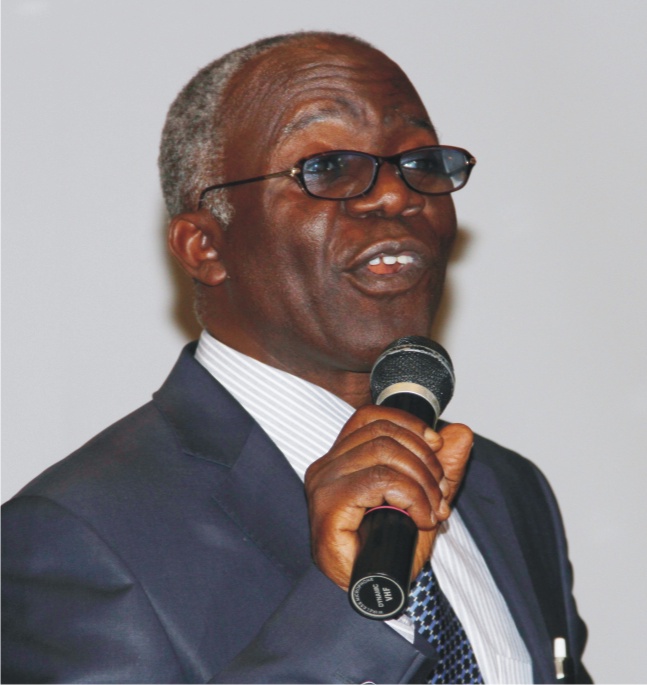
Falana Faults Agbakoba on EFCC’s Legal Status
Foremost rights activist and lawyer, Mr. Femi Falana (SAN) has written to the President of the Senate, Senator Godswill Akpabio and Speaker of the House of Representatives, Rt. Hon. Tajudeen Abbas in opposition to the view canvassed by ex-President of the Nigerian Bar Association (NBA), Dr. Olisa Agbakoba (SAN) on the legal status of the Economic and Financial Crimes Commission (EFCC).
In a letter dated 17th October, 2024, Falana said, “Our attention has been drawn to the separate letters addressed to the Senate and House of Representatives, dated October 14, 2024, entitled: “Re: Urgent Legislative Attention on Constitutional Reforms Relating to Law Enforcement Agencies and Anti-corruption Efforts”, (in which) Dr. Olisa Agbakoba contended that the power under which EFCC was established was beyond the powers of the National Assembly.
“Convinced that the Economic and Financial Crimes Commission (EFCC) is “an unlawful organisation” because it was “unconstitutionally established”, Agbakoba stated he was delighted to note that many states had finally taken it upon themselves to challenge the constitutionality of the EFCC.”
Falana noted that Agbakoba did not cite any case to back up his claim that the Supreme Court has vilified the EFCC with respect to its activities and existence.
“Even though, he did not refer to any particular case, Dr. Agbakoba said that the Supreme Court has knocked the EFCC on many occasions. On the contrary, the Supreme Court has consistently supported the efforts of the ICPC and EFCC in fighting the miasma of monumental corruption in the country,” he said.
The legal luminary said Agbakoba’s position is premised on the fact that the establishment of EFCC violated the basic tenets of federalism.
He stated further that, “It is pertinent to recall that in the celebrated case of the Attorney-General of Ondo State v Attorney-General of the Federation & Ors (2022) 27 WRN 1, the Plaintiff (Ondo State Government) had challenged the constitutional validity of the establishment of the Independent Corrupt Practices and Other Offences Commission Act, 2000. The Attorney-General of Ondo State was the Plaintiff while the Attorney-General of the Federation and the Attorneys-General of 35 States were the Defendants.
“In that case, the late Professor Ben Nwabueze and Dr. Agbakoba were the amici curiae while I was privileged to have represented one of the Defendants. It ison record that several Defendants and the amici curiae had argued profusely that the ICPC Act was unconstitutional in every material particular.Both amici curiae urged the Court to annul the ICPC Act.
“Upon a critical analysis of the submissions of all counsel, including the amici curiae, the apex court upheld the constitutional validity of the ICPC Act. In the leading judgment of the Court delivered by Uwais CJN (as he then was) it was held that the National Assembly has the sole power for the establishment and regulation of authorities for the federation or any part thereof so as to promote and enforce the observance of the nation’s responsibility to abolish all corrupt practices and abuse of power which fall under the Fundamental Objectives and Directive Principles of State Policy in section 15(5) of the 1999 CFRN.
“If this is a breach of the principles of federalism, then, I am afraid, it is the Constitution that makes provisions that have facilitated breach of the principles.As far as the aberration is supported by the provisions of the Constitution, I think it cannot rightly be argued that an illegality has occurred by the failure of the Constitution to adhere to the cardinal principles which are at best ideals to follow or guidance for an ideal situation…the provisions of Section 13 thereof apply to all organs of government and all authorities and persons exercising legislative, executive or judicial powers’. The provisions do not distinguish between Federal, State or Local Governments.Again the provisions of Section 14 subsection (4) specifically apply to the government or council, and the conduct of the affairsof the government or council or such agencies.” See Olafisoye v. FRN (2004) 4 NWLR (Pt. 864) 580.
“Even though we cannot comment on the merit of the case of Attorney-pending at the Supreme Court of Nigeria, it is pertinent to refer the members of
the National Assembly to the case of Attorney-General of Abia State v Attorney-General of Federation (2024) LPELR-62576 (SC).
“In that case, the Plaintiff had argued that the power of the EFCC to prosecute financial crimes did not extend to the management of the accounts of Abia State Government. The plaintiff then sought “declarations, including a perpetual injunction, to prevent the EFCC from taking any such actions, including the freezing of its bank accounts.
“The defendant (AGF) filed a preliminary objection to the effect that it had been incorrectly sued, because the EFCC was an independent body outside its lawful management and control.
In upholding the preliminary objection of the Defendants, the Supreme Court held that the facts of the case did not disclose any dispute between the plaintiff and the defendants within the meaning of section 232(1) of the Constitution and that there was no complaint against the first defendant (AGF) as representing the Federal Government as all the complaints were against the EFCC.
Consequently,the Supreme Court struck out the case but held that the plaintiff is at liberty to sue the EFCC, but not in the Supreme Court as the EFCC is neither a State nor the Federation. We wish to state without any fear of contradiction, that no State Government has followed the advice of the apex court by filing a suit to challenge the constitutionality of the EFCC Act in a court of competent jurisdiction.
“However, a number of former governors have continued to question the locus standi of the EFCC to arrest, investigate and prosecute them for the criminal diversion of public funds belonging to state governments. For instance, in the case of Nyame vs Federal Republic of Nigeria (2010) 3 SC (Pt.1) 78, the Supreme Court held inter alia: ‘Sections 6(m) and 46 of the Economic and Financial Crimes Commission (Establishment) Act vest in EFCC the function and duty of investigating and prosecuting persons reasonably a person to rush to court to place a clog or shield against criminal investigation and prosecution’.”
Falana further contended that
“in view of the duty imposed on the State by Section 15(5) of the Constitution to ‘abolish all corrupt practices and abuse of power’, the Supreme Court in the case of Shema vs. Federal Republic of Nigeria (2018) 9 NWLR (PT.
1624)337@ 398 held that ‘in the co-operative federalism practiced in Nigeria,the EFCC is a common agency empowered to investigate and prosecute offenders for both the Federal and state economic and financial crimes and as such it qualifies as ‘any other authority or person’ empowered by section 211 (1) (b) of the Constitution to institute or initiate criminal proceedings. EFCC is the coordinating agency for the enforcement of the provisions of any other law or regulation on economic and financial crimes, including the Criminal Code and Penal Code. The Commission has powers under section 13 (2) of the EFCC Act to prosecute offences so long as they are financial crimes’.”
Falana berated some state governments for seeking to frustrate the anti-graft initiatives of the Federal Government instead of supporting the agencies to thrive.
“Instead of ensuring that the EFCC, ICPC and Code of Conduct Bureau serve as ‘common agencies’ of the people of Nigeria in combating the miasma of monumental corruption in the country, some state governments have a penchant for terminating grave economic and financial crimes by filing nolle prosequi applications. Others usually rush to either State High Court or Federal High Court to procure frivolous court injunctions to frustrate the prosecution of serving public officers and thereby making a mockery of public accountability and transparency in government,” he said.
The rights activist urged the National Assembly to seize the opportunity provided by the ongoing Constitution Amendment to end the questions about the legality of EFCC and Independent Corrupt Practices and Other Offences Commission (ICPC) by entrenching both in the Constitution.
“In the light of the foregoing, we urge the members of the National Assembly to take advantage of the ongoing constitutional review to end the diversionary debate about the validity of the EFCC Act and ICPC Act by entrenching both Economic and Financial Crimes Commission and the Independent Corrupt Practices and Other Offences Commission in the Constitution. In other words, if both commissions are constitutionalised, they will be protected and strengthened to fight the menace of corruption and money laundering,” Falana said.





Police Officers Detained as Family Property Dispute Sparks Demolition Controversy in Lagos
By Ifeoma Ikem
A property dispute within the Omotayo-Ojo family has taken a dramatic turn following a controversial demolition exercise at a residential building in Ikosi-Ketu, Lagos State, which reportedly left tenants displaced and led to the detention of some police officers allegedly involved in the operation.

The property, located at 23B Loveall Street, Ikosi-Ketu, has been the subject of a prolonged ownership tussle since the death of its owner, Chief Oludola Omotayo Ojo, the Babaalaje of Imesi-Ile, Osun State, in 2019.
Residents said tension erupted when a group of individuals, accompanied by security operatives, stormed the premises and commenced demolition activities.
According to eyewitnesses, portions of the building were pulled down while tenants rushed to salvage their belongings from affected apartments.
The residents alleged that windows, doors and roofing sheets were damaged during the exercise, exposing parts of the building to the elements and causing significant losses to occupants.
At the centre of the dispute is Mrs Mojisola Omotayo Ojo Alolagbe, who claimed that the property was allocated to her by her late father during his lifetime as a source of financial support.
She alleged that some family members had persistently challenged her ownership claim despite ongoing legal proceedings relating to the administration of the deceased’s estate.
Alolagbe further claimed that the latest incident was part of a series of attempts to wrest control of the property, citing previous cases of alleged vandalism and partial demolition in November 2025, January 2026 and February 2026.
The situation escalated further when reports emerged that police officers allegedly involved in the demolition were later apprehended and conveyed in a Black Maria vehicle over questions surrounding the legality of their participation in the operation.
Sources familiar with the matter said those behind the demolition had initially claimed to be acting on approval from the Lagos State Ministry of Lands. However, the authenticity and extent of such approval could not be independently verified as of the time of filing this report.
The development has generated concern among residents and community members, who questioned the involvement of security personnel in what they described as a civil matter.
Some tenants, who said they had recently renewed their tenancy agreements, lamented the destruction of their property and appealed to the authorities for protection and possible compensation.

They also called for a thorough investigation into the circumstances surrounding the demolition, insisting that the rights of all parties involved should be protected.
Stakeholders have urged the Lagos State Government, security agencies and the judiciary to intervene and ensure that the dispute is resolved through lawful means to prevent further escalation.
The controversy has continued to draw public attention, raising concerns over property rights, estate administration and the role of law enforcement agencies in civil disputes.


UKA Gears Up for Final ATC Exchangeability Test Run as June Preparations Begin.
May 30, 2026 – As the month of June gathers momentum, the *United Kingdom of Atlantis, UKA*, a sovereign nation has unveiled a series of vital guidelines and preparatory packages to ensure citizens and stakeholders run the *ATC Exchangeability* process effectively.
In an official update, the *President of Atlantic Crown Limited, Empress of Attica Empire UKA*, confirmed that the *Final Test Run of ATC Exchangeability* is scheduled for the month of June 2026. The exercise marks a key phase ahead of the *Official Exchangeability Window, set to run from July 2026 to February 2027*.
### Key Highlights from the Presidential Briefing
1. *Final Test Run – June 2026*
The test run is designed to validate systems, procedures, and user readiness before full activation. Citizens, partners, and designated participants are urged to follow all official advisories released by UKA authorities during this period.
2. *Official Exchangeability Period*
Following the successful completion of the June test run, the Official Exchangeability will commence in july 2026 and we are Expecting Full Exchange ability between July Ending, 2026 to February 2026.
UKA stated that detailed schedules, eligibility requirements, and step-by-step instructions will be communicated progressively through verified UKA channels.
3. *Benefiting Packages for June*
In line with UKA’s commitment to citizen empowerment, the month of June will feature “benefiting packages” aimed at education, preparation, and seamless onboarding. These packages are intended to equip the people of UKA with the knowledge and tools needed for effective participation.
4. *Commitment to Transparency*
Addressing the nation, the Empress of Attica Empire UKA emphasized:
_“Final Test Run of ATC Comes up in The Month of June, As We Prepare For The Official Exchangeability, Between July 2026 To Feb 2027. All Information Will Be Communicated.”_
UKA reaffirmed that only information released through official UKA platforms should be regarded as authoritative.
The United Kingdom of Atlantis is encouraging all citizens, representatives, and interested parties to remain alert to official communications, attend designated orientation sessions, and avoid unofficial sources. UKA’s dedication to order, clarity, and the collective benefit of its people as the nation moves into this significant phase.
For updates, advisories, and participation guidelines, citizens are advised to monitor official UKA communication channels.
United Kingdom of Atlantis, UKA, is a sovereign nation, committed to national development, citizen welfare, and structured economic participation through initiatives such as ATC Exchangeability.
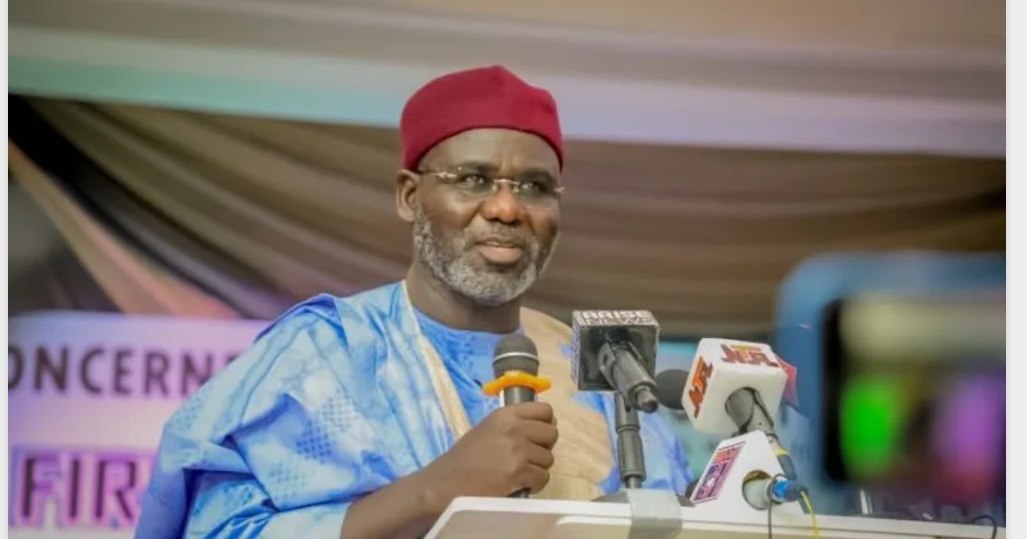
Three Years On, General Buratai Hails Tinubu’s Economic, Security Achievements
Former Chief of Army Staff, Lt. Gen. Tukur Buratai (retd.), has commended President Bola Ahmed Tinubu for what he described as bold economic reforms and improved security efforts as the President marks three years in office.
In a goodwill message on Thursday to commemorate Tinubu’s third anniversary as President and Commander-in-Chief of the Armed Forces, Buratai said the administration had taken courageous decisions that would leave a lasting impact on Nigeria’s development.

According to him, President Tinubu broke a long-standing cycle that had hindered national growth by removing fuel subsidy and implementing foreign exchange reforms aimed at stabilising the naira and strengthening the economy.
He noted that the reforms were beginning to yield positive results, citing the global acceptance of Nigerian debit cards, the gradual revival of local refineries, access to student loans, and ongoing road and infrastructure projects across the country.
“The FCT Administration has also recorded remarkable progress, completing major road projects that remained unfinished for over 16 years,” Buratai stated.
The former army chief also praised the administration’s security efforts, saying renewed military offensives against insurgents, terrorists and bandits had led to notable successes across various parts of the country.
He specifically lauded recent joint operations involving Nigerian and United States forces against Boko Haram and ISWAP in the North-East, as well as intensified counter-banditry operations in the North-West.
“We have seen notorious ISWAP commanders being neutralised. I congratulate the Commander-in-Chief, the Minister of Defence, the Chief of Defence Staff, the Service Chiefs, the Inspector-General of Police and heads of intelligence agencies for their efforts,” he said.
Buratai, however, acknowledged that challenges remained, stressing the need for more aggressive military operations and intelligence-driven strategies in the coming year.
While urging Nigerians to remain hopeful, he said celebrating the President’s achievements did not amount to ignoring the difficulties facing the nation.
“Because you truly care, you have shown the courage to trade short-term comfort for long-term hope. Nigerians need your reassurances, and that is why we remain optimistic and full of confidence,” he added.
The retired military officer reaffirmed his support for the Tinubu administration and expressed confidence that the foundation being laid by the government would deliver a brighter future for the country.
He also prayed for God’s guidance, wisdom, strength and good health for the President as he continues to lead Nigeria.


- Africa: UNAIDS calls for renewed global solidarity as UN Secretary-General’s report warns that AIDS is not over and fragile gains are at risk June 4, 2026
- Eritrea: Vocational training provided to college students June 4, 2026
- World Bank Group Launches Ten-Year Strategy to Drive Jobs and Prosperity in Uganda June 4, 2026
- Prof Oramah’s appointments to the Royal African Society Patronage and Kenya’s National Infrastructure Fund herald continued recognition of his global leadership and pan-African impact June 4, 2026
- Africa Finance Corporation Raises Record US$2 Billion Syndicated Loan in Landmark Show of Confidence in Transformational Infrastructure Strategy June 4, 2026
- Libya Energy & Economic Summit (LEES) 2027 to Define Libya’s Next Phase of Energy Expansion in Tripoli June 4, 2026
- Uganda: President delivers State of the Nation Address today June 4, 2026
- United Nations High Commissioner for Refugees (UNHCR): Refugees in Eastern and Southern Africa remain in exile for nearly 16 years June 4, 2026
- 85% of Ministry of Food and Agriculture's (MoFA) 2026 Budget Released to Boost Food Production — Deputy Finance Minister June 4, 2026
- Deputy (Dep.) Finance Minister Courts Investors to Transform Ghana’s rice Economy June 4, 2026
- Africa: UNAIDS calls for renewed global solidarity as UN Secretary-General’s report warns that AIDS is not over and fragile gains are at risk June 4, 2026
- Eritrea: Vocational training provided to college students June 4, 2026
- World Bank Group Launches Ten-Year Strategy to Drive Jobs and Prosperity in Uganda June 4, 2026
- Prof Oramah’s appointments to the Royal African Society Patronage and Kenya’s National Infrastructure Fund herald continued recognition of his global leadership and pan-African impact June 4, 2026
- Africa Finance Corporation Raises Record US$2 Billion Syndicated Loan in Landmark Show of Confidence in Transformational Infrastructure Strategy June 4, 2026
- Libya Energy & Economic Summit (LEES) 2027 to Define Libya’s Next Phase of Energy Expansion in Tripoli June 4, 2026
- Uganda: President delivers State of the Nation Address today June 4, 2026
-

 news6 months ago
WHO REALLY OWNS MONIEPOINT? The $290 Million Deal That Sold Nigeria’s Top Fintech to Foreign Interests
-

 society1 month ago
SOCIAL MEDIA IS NOT A BATTLEFIELD COMMAND – WHY THE NIGERIAN ARMY’S ACTION AGAINST JUSTICE CRACK IS A NATIONAL SECURITY IMPERATIVE
-

 celebrity radar - gossips4 months ago
Dr. Chris Okafor Returns with Power and Fire of the Spirit -Mounts Grace Nation Altar with Fresh Anointing and Restoration Grace on February 1, 2026
-

 celebrity radar - gossips6 months ago
Prophet Kingsley Aitafo Releases 2026 Prophecy: ‘Nigeria Will Rise, but the World Must Prepare for Turbulence’