
society
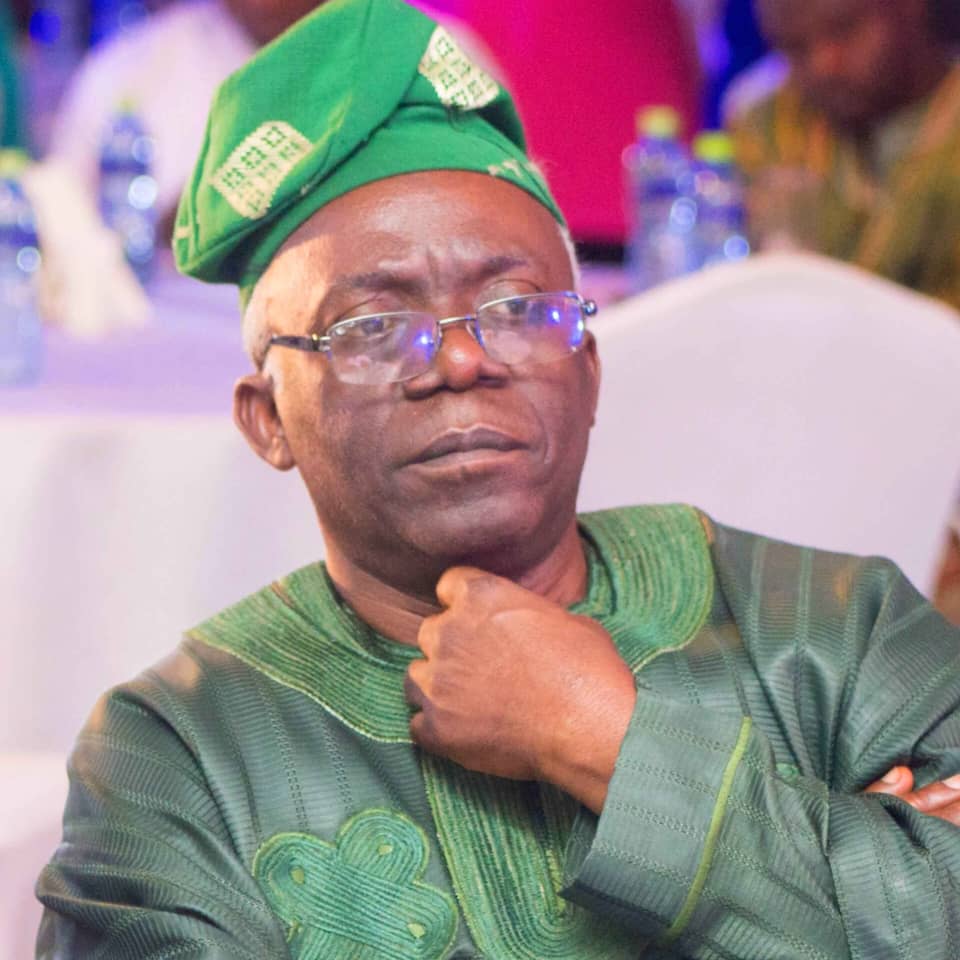
FALANA vs ZINOX, 12 OTHERS: Again, Attorney General withdraws Fiat from Falana

FALANA vs ZINOX, 12 OTHERS: Again, Attorney General withdraws Fiat from Falana
For the second time, the Office of the Attorney General of the Federation (AGF) and Minister of Justice has withdrawn the fiat donated to Femi Falana SAN, purporting to prosecute a case against Mr. Leo Stan Ekeh, Chairman of Zinox Technologies, and 12 others.
The case which has dragged for many years arose from a transaction about 13 years ago between Citadel Oracle Concept Limited, an Ibadan-based computer firm owned by an Enugu state indigene, Mr. Benjamin Joseph, and Technology Distributions Limited over the supply of computers to the Federal Inland Revenue Service (FIRS), a project in which Technology Distributions fully extended credit to Citadel and which has no bearing whatsoever with Zinox and its promoter, Mr. Leo Stan Ekeh.
In the latest development, the current AGF, Mr. Lateef Fagbemi SAN, in a letter dated 2nd May 2025, addressed to The Principal Partner, Falana and Falana Chambers, and signed by Mr. M.B Abubakar, Director, Public Prosecutions of the Federation, directed Falana to withdraw Charge No: FCT/HC/CR/985/2024 (FRN. v. Leo Stan and 12 others), in the interest of justice; signifying that the fiat ought not to have been donated to him in the first place.
The letter titled: Withdrawal of Authorization Under Section 174 of the Constitution of the Federal Republic of Nigeria, 1999 as Amended, reads: “I am directed to write in reference to the above caption and to inform you that the Honourable Attorney General of the Federation and Minister of Justice in exercise of the power conferred upon him by section 174 of the Constitution of the Federal Republic of Nigeria, 1999, as amended and section 106 of the Administration of Criminal Justice Act, 2015, has withdrawn the fiat earlier granted to you dated 20th December 2023 to prosecute the case mentioned below at the expense of the nominal complainant Mr. Joseph Benjamin: FRG V. Chris Eze Ozims and 6 others, Charge No: CR/827/2013.
“You are accordingly, requested to withdraw Charge No; FCT/HC/CR/985/2024 between FRN v. Leo Stan Ekeh and 12 others in the interest of justice.”
The Director, Public Prosecutions of the Federation, conveyed the message of the withdrawal to the chamber of Matthew Burkka & Co., chief counsel to the defendants via a letter dated 6th May, 2025. The letter read inter alia: “You may wish to refer to the above-mentioned subject matter and be informed that the office of the Honourable Attorney General of the Federation is in receipt of your letters dated 24th December, 2024; 27th March 2025 and 10th April 2025 respectively, requesting for the withdrawal of the fiat donated to Messrs. Femi Falana SAN dated 20th December 2023.
“I am to inform you that after a consideration of your request, the facts and circumstances of the case, the Honourable Attorney General of the Federation has withdrawn the fiat donated to Messrs. Femi Falana SAN, dated 20th December 2023 vide a letter dated 2nd May, 2025.”
It would be recalled that the former AGF and Minister of Justice, Mr. Abubakar Malami SAN, had in a letter dated 28 October 2022, withdrawn a similar fiat that was donated to Femi Falana, upon his own application, on the same set of facts and allegations. Based on the withdrawal, the charges filed by Falana, pursuant to the Fiat were struck out by two justices of the FCT High Court, Abuja (Honourable Justice Christopher O. Oba, and Honourable Justice Ade. S. Adepoju)
However, upon the appointment of the current AGF and Minister of Justice, Femi Falana, again applied and got a Fiat with which he filed a new case: Charge No: FCT/HC/CR/985/2024 between FRN.v. Leo Stan and 12 others, still on the same set of facts and allegations. But upon a further review of the file at the Ministry of Justice, the AGF and Minister of Justice came to the conclusion that “in the interest of justice” the Fiat and the Charges filed pursuant to it should be withdrawn.
Recall that this case and its adjunct suits had been dismissed three times by three different courts. The latest dismissal was on 20th March 2025 by Justice Akpan Okon Ebong of the FCT High Court who struck out the case filed by Mr. Femi Falana SAN, against the Chairman of Zinox Technologies, Mr. Leo Stan Ekeh, and 12 others, based on the Fiat (that has now been withdrawn from him.)
The other defendants are Mr. Chris Eze Ozims, Oyebode Folashade, Charles Adigwe, Obilo Onuoha, Agartha Ukoha, Anya O. Anya, Femi Dosumu, Nnenna Kalu, Admas Digital Technologies Limited, Technology Distributions Limited and Zinox Technologies Limited.
The suit No. FCT/HC/CR/985/24 filed in November 2024 by Falana on behalf of his client, Benjamin Joseph, before the Federal High Court in Abuja for the same alleged diversion of N162,247,513.80 being payment for laptop supply contract at FIRS Headquarters was dismissed.
In the certified true copy of the judgment dated March 20, 2025, Justice Ebong ruled as follows: “It is my conclusion based on the foregoing that this charge (No. FCT/HC/CR/985/2024, Federal Republic of Nigeria v Leo Stan Ekeh and 12 ORS) constitutes a gross abuse of court process and is liable to dismissal. I accordingly hereby dismiss it.”
Justice Ebong averred: “One intriguing aspect of this matter is that none of the law enforcement agencies involved in the investigation of the nominal complainant’s (Mr. Joseph) numerous petitions has found merit in any of his allegations against the defendants. When called upon before Senchi J. (Justice Danlami Z. Senchi) to prove his said allegations to the court, he failed to turn up in court. One then wonders on what premise he wants to maintain this campaign of persecution against the defendants.”
Previous judgments on the matter had established that rather than being the culprit, Ekeh and the 12 others were actually the victims of a failed money diversion scheme plotted by Mr. Joseph and Citadel.
The most recent charges filed by Falana on the basis of a fiat from the Attorney General was the third in a row as Mr. Joseph had earlier filed charge no.CR/469/2022, which was struck out by Honorable Justice Christopher O. Oba of the FCT High Court, by an order dated 8th November 2022.
Justice Oba ruled: “Upon hearing the counsel for both the Prosecution and the Defendants in court, the basis for which the law firm of Femi Falana filed the present charge is the authority gotten from the Attorney General of the Federation. The said authority has been withdrawn, there is legally no basis for the present charge before this court. Therefore, this charge is hereby struck out.”
Determined to push through his case, Mr Joseph filed the same charges before Honorable Justice Ade S. Adepoju of the FCT High Court, and the charges were, once again, struck out by the Honorable Court on 19th March 2024, with Honorable Justice Adepoju holding that: “This matter was brought in dead, extinct and should be confined into the dustbin of history…I hold that the instant suit is an abuse of the process of court and it is hereby struck out accordingly.”
It will be recalled that in his petition to the police in 2013, it was discovered by police authorities that Mr. Joseph provided false information to the police, prompting the Inspector General of Police to charge him for false information in charge no.CR/216/16.
In another case filed by the EFCC at his instance against his partner, Princess Kama, in charge no. FCT/HC/CR/244/2018, Honorable Justice Danlami Z. Senchi of the FCT High Court (as he then was), dismissed as false all the allegations made by Benjamin Joseph, and imposed the sum of N20 million as damages against him for false petitioning in relation to these same allegations.






UKA Gears Up for Final ATC Exchangeability Test Run as June Preparations Begin.
May 30, 2026 – As the month of June gathers momentum, the *United Kingdom of Atlantis, UKA*, a sovereign nation has unveiled a series of vital guidelines and preparatory packages to ensure citizens and stakeholders run the *ATC Exchangeability* process effectively.
In an official update, the *President of Atlantic Crown Limited, Empress of Attica Empire UKA*, confirmed that the *Final Test Run of ATC Exchangeability* is scheduled for the month of June 2026. The exercise marks a key phase ahead of the *Official Exchangeability Window, set to run from July 2026 to February 2027*.
### Key Highlights from the Presidential Briefing
1. *Final Test Run – June 2026*
The test run is designed to validate systems, procedures, and user readiness before full activation. Citizens, partners, and designated participants are urged to follow all official advisories released by UKA authorities during this period.
2. *Official Exchangeability Period*
Following the successful completion of the June test run, the Official Exchangeability will commence in july 2026 and we are Expecting Full Exchange ability between July Ending, 2026 to February 2026.
UKA stated that detailed schedules, eligibility requirements, and step-by-step instructions will be communicated progressively through verified UKA channels.
3. *Benefiting Packages for June*
In line with UKA’s commitment to citizen empowerment, the month of June will feature “benefiting packages” aimed at education, preparation, and seamless onboarding. These packages are intended to equip the people of UKA with the knowledge and tools needed for effective participation.
4. *Commitment to Transparency*
Addressing the nation, the Empress of Attica Empire UKA emphasized:
_“Final Test Run of ATC Comes up in The Month of June, As We Prepare For The Official Exchangeability, Between July 2026 To Feb 2027. All Information Will Be Communicated.”_
UKA reaffirmed that only information released through official UKA platforms should be regarded as authoritative.
The United Kingdom of Atlantis is encouraging all citizens, representatives, and interested parties to remain alert to official communications, attend designated orientation sessions, and avoid unofficial sources. UKA’s dedication to order, clarity, and the collective benefit of its people as the nation moves into this significant phase.
For updates, advisories, and participation guidelines, citizens are advised to monitor official UKA communication channels.
United Kingdom of Atlantis, UKA, is a sovereign nation, committed to national development, citizen welfare, and structured economic participation through initiatives such as ATC Exchangeability.
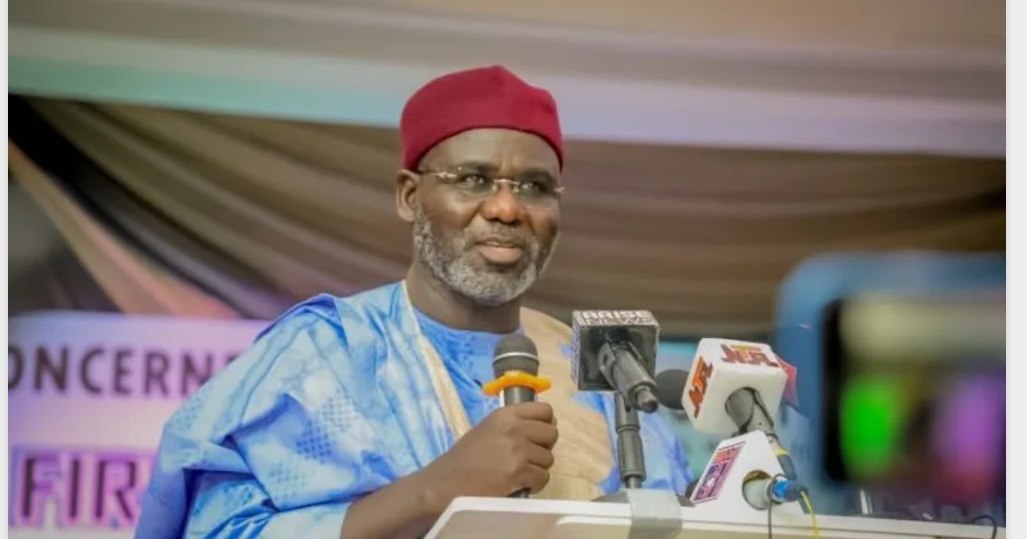
Three Years On, General Buratai Hails Tinubu’s Economic, Security Achievements
Former Chief of Army Staff, Lt. Gen. Tukur Buratai (retd.), has commended President Bola Ahmed Tinubu for what he described as bold economic reforms and improved security efforts as the President marks three years in office.
In a goodwill message on Thursday to commemorate Tinubu’s third anniversary as President and Commander-in-Chief of the Armed Forces, Buratai said the administration had taken courageous decisions that would leave a lasting impact on Nigeria’s development.

According to him, President Tinubu broke a long-standing cycle that had hindered national growth by removing fuel subsidy and implementing foreign exchange reforms aimed at stabilising the naira and strengthening the economy.
He noted that the reforms were beginning to yield positive results, citing the global acceptance of Nigerian debit cards, the gradual revival of local refineries, access to student loans, and ongoing road and infrastructure projects across the country.
“The FCT Administration has also recorded remarkable progress, completing major road projects that remained unfinished for over 16 years,” Buratai stated.
The former army chief also praised the administration’s security efforts, saying renewed military offensives against insurgents, terrorists and bandits had led to notable successes across various parts of the country.
He specifically lauded recent joint operations involving Nigerian and United States forces against Boko Haram and ISWAP in the North-East, as well as intensified counter-banditry operations in the North-West.
“We have seen notorious ISWAP commanders being neutralised. I congratulate the Commander-in-Chief, the Minister of Defence, the Chief of Defence Staff, the Service Chiefs, the Inspector-General of Police and heads of intelligence agencies for their efforts,” he said.
Buratai, however, acknowledged that challenges remained, stressing the need for more aggressive military operations and intelligence-driven strategies in the coming year.
While urging Nigerians to remain hopeful, he said celebrating the President’s achievements did not amount to ignoring the difficulties facing the nation.
“Because you truly care, you have shown the courage to trade short-term comfort for long-term hope. Nigerians need your reassurances, and that is why we remain optimistic and full of confidence,” he added.
The retired military officer reaffirmed his support for the Tinubu administration and expressed confidence that the foundation being laid by the government would deliver a brighter future for the country.
He also prayed for God’s guidance, wisdom, strength and good health for the President as he continues to lead Nigeria.
NUT Raises Alarm Over Continued Captivity of Abducted Oyo Pupils, Teachers
The Nigeria Union of Teachers has expressed deep concern over the continued captivity of pupils and teachers abducted during an attack on schools in the Ahoro-Esinle and Yawota communities in Oriire Local Government Area of Oyo State.
In a statement issued on Saturday, the Oyo State wing of the union described the situation as increasingly distressing, particularly following the emergence of a video allegedly released by the abductors showing the victims pleading for their freedom.
The union said the footage had heightened fears over the welfare of the abducted pupils and teachers, describing their ordeal as heartbreaking and unacceptable.

According to the NUT, no child or teacher deserves to be subjected to such traumatic experiences, adding that the prolonged captivity of the victims has continued to inflict psychological pain on their families, colleagues and the wider education community.
The union called on the Federal Government, Oyo State Government and relevant security agencies to intensify efforts towards securing the immediate and safe release of the victims.
“This is not a moment for hesitation. It is a moment for coordinated, intelligence-driven efforts to ensure the immediate and safe release of all abducted pupils and teachers,” the statement read.
While acknowledging ongoing interventions by security agencies and government authorities, the union stressed that time was of the essence, warning that every additional day in captivity deepens the trauma suffered by the victims.
The NUT urged security operatives to strengthen surveillance, improve community intelligence gathering and deploy all necessary operational and diplomatic measures to facilitate the rescue of the abductees.
It also appealed to traditional rulers, community leaders and residents to support rescue efforts by providing credible information that could assist security agencies.
“The safety of our children and teachers must remain a collective priority,” the union stated.
Reaffirming its support for the families of the victims, the NUT pledged continued solidarity and prayers while advocating safer learning environments across the country.
The statement was jointly signed by the Chairman of the Oyo State NUT, Comrade Hassan Ajibola Fatai, and the Secretary, Comrade Salami Olukayode.


- Pitcher Awards Announces 2026 Winners, Marking a Landmark Year for Pan‑African Creativity May 30, 2026
- Ghana Commemorates 78th International Day of United Nations Peacekeepers May 30, 2026
- South Africa: President Ramaphosa receives second interim report of Madlanga Commission May 30, 2026
- Asmara Marathon 2026 to be held May 30, 2026
- Powerful call for dialogue and compromise to secure peace in South Sudan issued on International Peacekeepers Day May 30, 2026
- Over 1,000 Participants Join Rwenzori Marathon Activation Run in Mombasa May 30, 2026
- World Health Organization (WHO) actively participated in the 2nd Summit on Healthcare Integration in Portuguese-speaking countries May 30, 2026
- Annual Meetings (AM) 2026: “Africa has what It takes” - Experts call for stronger financial systems to help Africa mobilise capital at scale May 30, 2026
- Eritrea Participates at Organization of African, Caribbean and Pacific States Meetings May 30, 2026
- Annual Meetings 2026 (AM2026): African Development Bank Group’s 2025 Annual Report Highlights Strong Results and a New Chapter for Africa’s Transformation May 29, 2026
- Pitcher Awards Announces 2026 Winners, Marking a Landmark Year for Pan‑African Creativity May 30, 2026
- Ghana Commemorates 78th International Day of United Nations Peacekeepers May 30, 2026
- South Africa: President Ramaphosa receives second interim report of Madlanga Commission May 30, 2026
- Asmara Marathon 2026 to be held May 30, 2026
- Powerful call for dialogue and compromise to secure peace in South Sudan issued on International Peacekeepers Day May 30, 2026
- Over 1,000 Participants Join Rwenzori Marathon Activation Run in Mombasa May 30, 2026
- World Health Organization (WHO) actively participated in the 2nd Summit on Healthcare Integration in Portuguese-speaking countries May 30, 2026
-

 news6 months ago
WHO REALLY OWNS MONIEPOINT? The $290 Million Deal That Sold Nigeria’s Top Fintech to Foreign Interests
-

 society4 weeks ago
SOCIAL MEDIA IS NOT A BATTLEFIELD COMMAND – WHY THE NIGERIAN ARMY’S ACTION AGAINST JUSTICE CRACK IS A NATIONAL SECURITY IMPERATIVE
-

 celebrity radar - gossips4 months ago
Dr. Chris Okafor Returns with Power and Fire of the Spirit -Mounts Grace Nation Altar with Fresh Anointing and Restoration Grace on February 1, 2026
-

 celebrity radar - gossips6 months ago
Prophet Kingsley Aitafo Releases 2026 Prophecy: ‘Nigeria Will Rise, but the World Must Prepare for Turbulence’