
society
Femi Fani-Kayode, Kemi Badenoch And An Old Fart From Leicester* by Mohammed Bello Doka

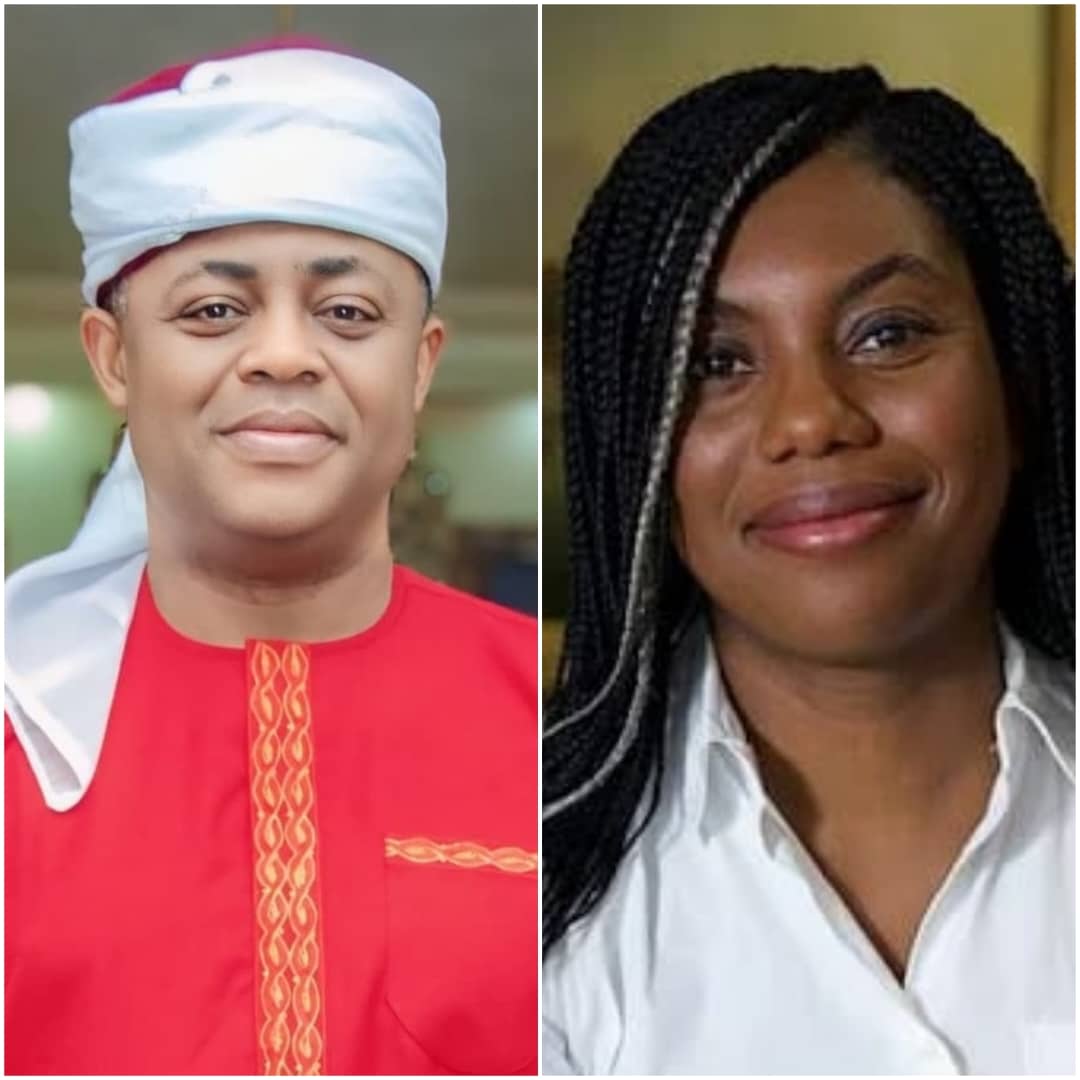
*Femi Fani-Kayode, Kemi Badenoch And An Old Fart From Leicester* by Mohammed Bello Doka
In a desperate attempt to remain relevant, Dr. Olusola Oni, a self-proclaimed Yoruba nationalist residing in Leicester, United Kingdom, has published a lengthy tirade ( titled Fani Kayode’s Fake Outrage About Kemi Badenoch 14/11/2024) defending Kemi Badenoch’s recent ascent in British politics while launching an unprovoked attack on Chief Femi Fani-Kayode.
If there’s one thing Oni’s diatribe accomplishes, it’s confirming that he’s little more than an “old fart” grasping for significance in the political world he abandoned decades ago. His absurd attempt to glorify Badenoch while denigrating Nigeria reeks of nostalgia, detached from the harsh realities faced by his fellow citizens back home.
*Misguided Nostalgia and Misplaced Allegiances*
Dr. Oni’s nostalgia shines through his meandering history lesson on Badenoch’s family background. He devotes an inordinate amount of space recounting irrelevant anecdotes about schools like Queen’s School in Ede and Ibadan Grammar School, desperately trying to paint Badenoch’s roots as noble and Yoruba-centered. But let’s get real: Badenoch’s success has nothing to do with these irrelevant family histories and everything to do with the British Conservative Party’s agenda—a reality Oni conveniently glosses over. He even had the audacity to dismiss the criticisms as “misguided Nigerians” who refuse to celebrate Badenoch’s “success.”
Here’s the reality Dr. Oni refuses to accept: Kemi Badenoch’s policy positions, including her dismissal of reparations for slavery and her selective immigration stances, have drawn criticism for good reason. They are not about “protecting the UK from becoming another Nigeria,” as Oni implies, but are reflective of a hardline political stance that marginalizes minorities, including Nigerians.
*Convenient Amnesia About Nigeria’s Realities*
In his barely coherent rant, Oni lambast Chief Femi Fani-Kayode for criticizing Badenoch, suggesting that he is somehow stuck in the past. According to Oni, “Fani-Kayode thinks it is ok to live in a country where Fulani barbarians and savages use cattle to destroy Yoruba farmlands,” shamelessly generalizing the entire Fulani population to fit his narrow narrative. The truth is, Fani-Kayode’s criticisms are about holding public figures accountable, regardless of their ethnic or cultural background—a principle Oni seems to have abandoned in his blind allegiance to a fellow Yoruba.
Oni’s absurd declaration that “Fani-Kayode is angry because Kemi Badenoch does not want the UK to transform into another Nigeria” is laughable. He criticizes the entire Nigerian system while comfortably residing in the UK, enjoying the privileges and comforts afforded by his long-abandoned citizenship. Yet, he condemns Nigerians like Fani-Kayode who choose to remain and challenge the status quo.
*Hypocrisy and Double Standards*
Oni’s hypocrisy knows no bounds. While he praises Badenoch for her achievements, he criticizes Abike Dabiri-Erewa for seeking to engage with the diaspora, dismissing her efforts as “an alarming emptiness” and deriding her attempts to connect with Nigerians abroad. The arrogance of such a statement is staggering, coming from someone who admits he has never spoken to Badenoch but feels qualified to speak on her behalf simply because he “knew her parents.” Oni’s notion of Yorubaness is limited to the privileges and accomplishments of those who, like him, abandoned Nigeria for greener pastures.
The attempt to undermine Dabiri-Erewa’s role by asserting that the UK High Commission alone should handle such engagements is an excuse to delegitimize any effort that doesn’t come from his narrow definition of authority. He writes: “Dabiri-Erewa has no standing and no mandate to demand audience with the UK Leader of Opposition.” Dr. Oni, the reality is that engaging Nigerians abroad goes beyond your outdated notions of bureaucracy—it’s about fostering meaningful connections with the diaspora.
*Selective History and Misinformation*
In Oni’s world, Kemi Badenoch is the embodiment of Yoruba pride, yet he offers little to substantiate his claims apart from vague recollections of Badenoch’s father’s nationalist leanings. He even dredges up old treaties from the 19th century, like the “1888 Britain-Yorubaland Treaty,” to bolster his fanciful claim that “Yorubaland is a state within the confines of the country called Nigeria.” This distorted view of history conveniently ignores the realities of Nigeria’s current federal structure, which Badenoch, if anything, is less interested in engaging with than the average British politician.
Furthermore, Oni’s defense of Badenoch’s refusal to support reparations is rooted in a flimsy argument. He justifies it by pointing out that “David Lammy, the British Foreign Secretary, a descendant of slaves, does not support ‘reparation’.” Yet he fails to grasp that reparations are not merely about “cash compensation” but about acknowledging historical injustices and taking concrete steps toward equity. His claim that “up to 90% of Black people in the UK are ambivalent about ‘reparation’” is an exaggeration unsupported by any factual evidence.
*An Old Man’s Attempt to Rewrite History*
Oni’s final assault on Fani-Kayode’s father, whom he labels a “political prostitute,” is a transparent effort to discredit the younger Fani-Kayode’s standing by invoking the sins of the father. His claim that Fani Power’s actions “arguably led to the 1966 coup d’état” is an exercise in historical revisionism, twisting facts to serve his present-day agenda. The reality is that Oni, having lived comfortably abroad for decades, is in no position to pass judgment on those who continue to fight for Nigeria’s future.
Oni’s concluding plea for a “Yoruba Homeland” in response to reparations reveals his true intentions—a separatist agenda wrapped in the guise of Yoruba nationalism, divorced from the complexities of modern Nigeria. His portrayal of Yorubaland as a distinct state within Nigeria is nothing more than the wishful thinking of an old man yearning for a past that never was.
*A Hollow Defense*
Dr. Oni’s tirade is nothing more than a hollow defense of Kemi Badenoch—a woman he admits to never meeting—while dismissing the valid concerns of Nigerians like Fani-Kayode, who remain on the ground. Oni has chosen to glorify Badenoch’s achievements as if they somehow absolve her of accountability for her controversial political stances, and he has done so by disparaging those who dare to question her. In reality, his defense is a transparent attempt to remain relevant by attaching himself to a rising political star.
On a final note it is worth noting that, “The worst part of this old farts essay was his attempt to disparage the memory and legacy of Chief Femi Fani-Kayode’s father with all manner of lies and historical revisionism in an attempt to defend Kemi Badenoch.
Thankfully he failed because we know Chief Femi Fani-Kayode’s distinguished father who, like FFK himself, was a great and proud patriot and illustrious Nigerian who believed in our country and people passionately and who has established an enviable legacy.
His name was Chief Remilekun Adetokunboh Fani-Kayode Q.C. SAN, CON who most politicians referred to as ‘Fani Power’ in his day!
He was a brilliant, courageous and distinguished elder statesman and nationalist who was amongst those that fought for Nigeria’s independence from the British, who successfully moved the motion for that independence in Parliament in 1958, who was the third Nigerian lawyer to be made Q.C., who was the third Nigerian lawyer to become a SAN, who studied law at Downing College Cambridge University in 1941, who came top in the whole of the old British Commonwealth in the British Bar Exams and was called to the British Bar in 1945, who set up the first indigenous law firm in Nigeria with Chief FRA Williams and Chief Bode Thomas, who was the Balogun of Ile Ife, who was Deputy Premier of the old Western Region in the First Republic, who was Regional Minister for Local Government and Chieftaincy Affairs in the First Republic and who played a leading role in the politics of the First and Second Republic in our country.
We also know Chief Femi Fani-Kayode’s grandfather, Justice Victor Adedapo Kayode, who studied law at Selwyn College, Cambridge University in 1917, who was called to the British Bar in 1922 and who was the third Nigerian to be appointed as a Judge.
We also know Chief Femi Fani-Kayode’s great grandfather Rev. Emmanuel Adebiyi Kayode who got a degree and a masters degree in Theology at Furrogh Bay College in Sierra Leone (which at that time was an extended campus of Durham University in the UK) in 1897, who was ordained as an Anglican priest, who established the first Anglican Church in the ancient town of Ile-Ife, who went on to build and Pastor Churches in the old Ondo and Ijebu provinces for many years, who dedicated his entire life to Christian ministry and spreading of the Gospel of Jesus Christ and who was a well-respected, deeply courageous and highly inspirational preacher.
It is pertinent to mention the fact that Chief Femi Fani-Kayode himself studied law at both London University (SOAS) and Pembroke College, Cambridge University in the early 1980’s and was called to the Nigerian Bar in 1985.
We know all this about his noble heritage and lineage but we know nothing about Kemi Badenoch’s other than the fact that her father is the progenitor of a self-hating monkey-bitch.
As of the Useful Idiot from Leicester called Olusola Oni who attacked Fani-Kayode and attempted to defend Kemi it is clear that his forefathers crawled out of the rubbish dump and got lost in the sewer.
He is indeed the bastard man child who used his left hand to point at his fathers house.
Oni may consider himself the “Leader of The Yoruba Party in the UK,” but in truth, he is a relic of a bygone era—an old fart trying desperately to rewrite history to suit his narrative. His selective outrage is as stale as his attempts at Yoruba nationalism, a nationalism that seems more interested in building castles in the air than addressing the pressing challenges Nigerians face today.
Let me leave you with the words of prominent a Nigerian and loud voice in the UK, Mrs Shola Mos-Shogbamimu:
“Kemi Badenoch is a caricature of the very system we’re saying needs to go; she is the black face of white supremacy.” She adds, “She is a racial gatekeeper; she did everything possible to suppress and oppress Black people… Kemi, at every opportunity she gets, throws Nigeria under the bus. I’ve never seen Rishi, Suella, Priti—none of them—throw their country of heritage under the bus.”
This reflects the genuine sentiments of every right-thinking Nigerian who refuses to trade their conscience for crumbs at the altar of political relevance.
*(Mohammed* *Bello Doka is a journalist and a blogger,*
*Abuja Network News.)*




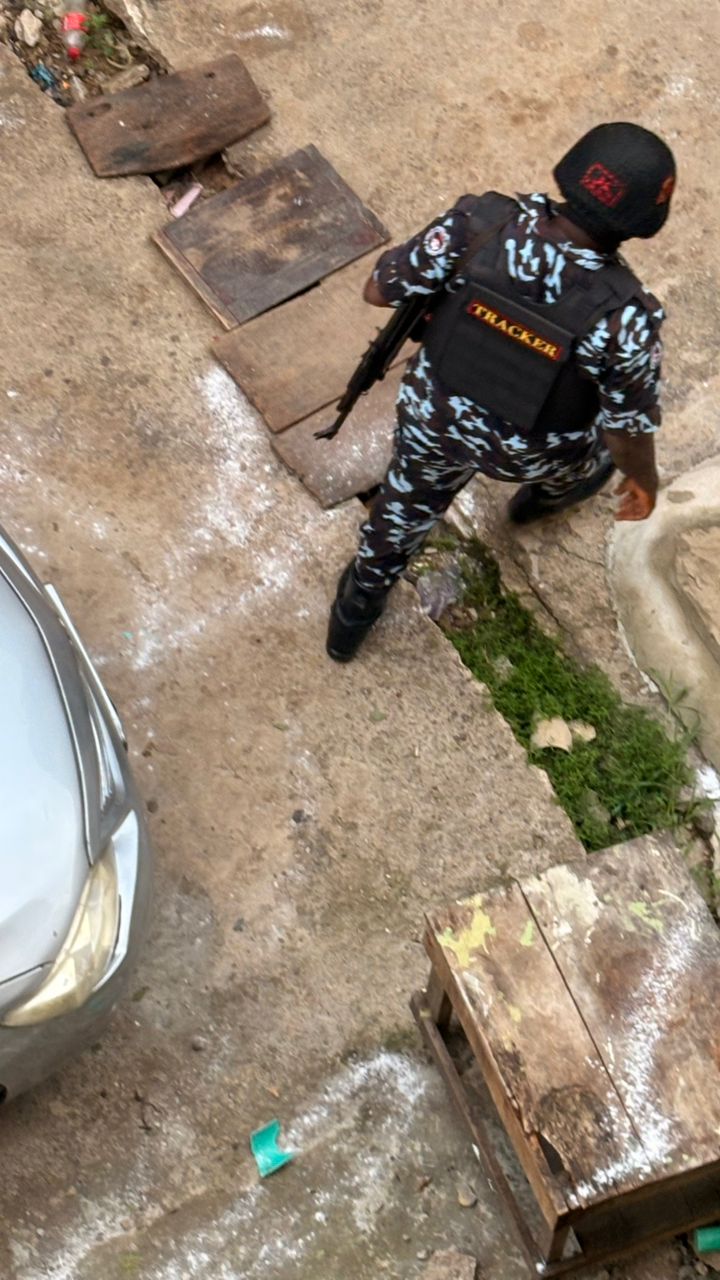
Police Officers Detained as Family Property Dispute Sparks Demolition Controversy in Lagos
By Ifeoma Ikem
A property dispute within the Omotayo-Ojo family has taken a dramatic turn following a controversial demolition exercise at a residential building in Ikosi-Ketu, Lagos State, which reportedly left tenants displaced and led to the detention of some police officers allegedly involved in the operation.

The property, located at 23B Loveall Street, Ikosi-Ketu, has been the subject of a prolonged ownership tussle since the death of its owner, Chief Oludola Omotayo Ojo, the Babaalaje of Imesi-Ile, Osun State, in 2019.
Residents said tension erupted when a group of individuals, accompanied by security operatives, stormed the premises and commenced demolition activities.
According to eyewitnesses, portions of the building were pulled down while tenants rushed to salvage their belongings from affected apartments.
The residents alleged that windows, doors and roofing sheets were damaged during the exercise, exposing parts of the building to the elements and causing significant losses to occupants.
At the centre of the dispute is Mrs Mojisola Omotayo Ojo Alolagbe, who claimed that the property was allocated to her by her late father during his lifetime as a source of financial support.
She alleged that some family members had persistently challenged her ownership claim despite ongoing legal proceedings relating to the administration of the deceased’s estate.
Alolagbe further claimed that the latest incident was part of a series of attempts to wrest control of the property, citing previous cases of alleged vandalism and partial demolition in November 2025, January 2026 and February 2026.
The situation escalated further when reports emerged that police officers allegedly involved in the demolition were later apprehended and conveyed in a Black Maria vehicle over questions surrounding the legality of their participation in the operation.
Sources familiar with the matter said those behind the demolition had initially claimed to be acting on approval from the Lagos State Ministry of Lands. However, the authenticity and extent of such approval could not be independently verified as of the time of filing this report.
The development has generated concern among residents and community members, who questioned the involvement of security personnel in what they described as a civil matter.
Some tenants, who said they had recently renewed their tenancy agreements, lamented the destruction of their property and appealed to the authorities for protection and possible compensation.

They also called for a thorough investigation into the circumstances surrounding the demolition, insisting that the rights of all parties involved should be protected.
Stakeholders have urged the Lagos State Government, security agencies and the judiciary to intervene and ensure that the dispute is resolved through lawful means to prevent further escalation.
The controversy has continued to draw public attention, raising concerns over property rights, estate administration and the role of law enforcement agencies in civil disputes.

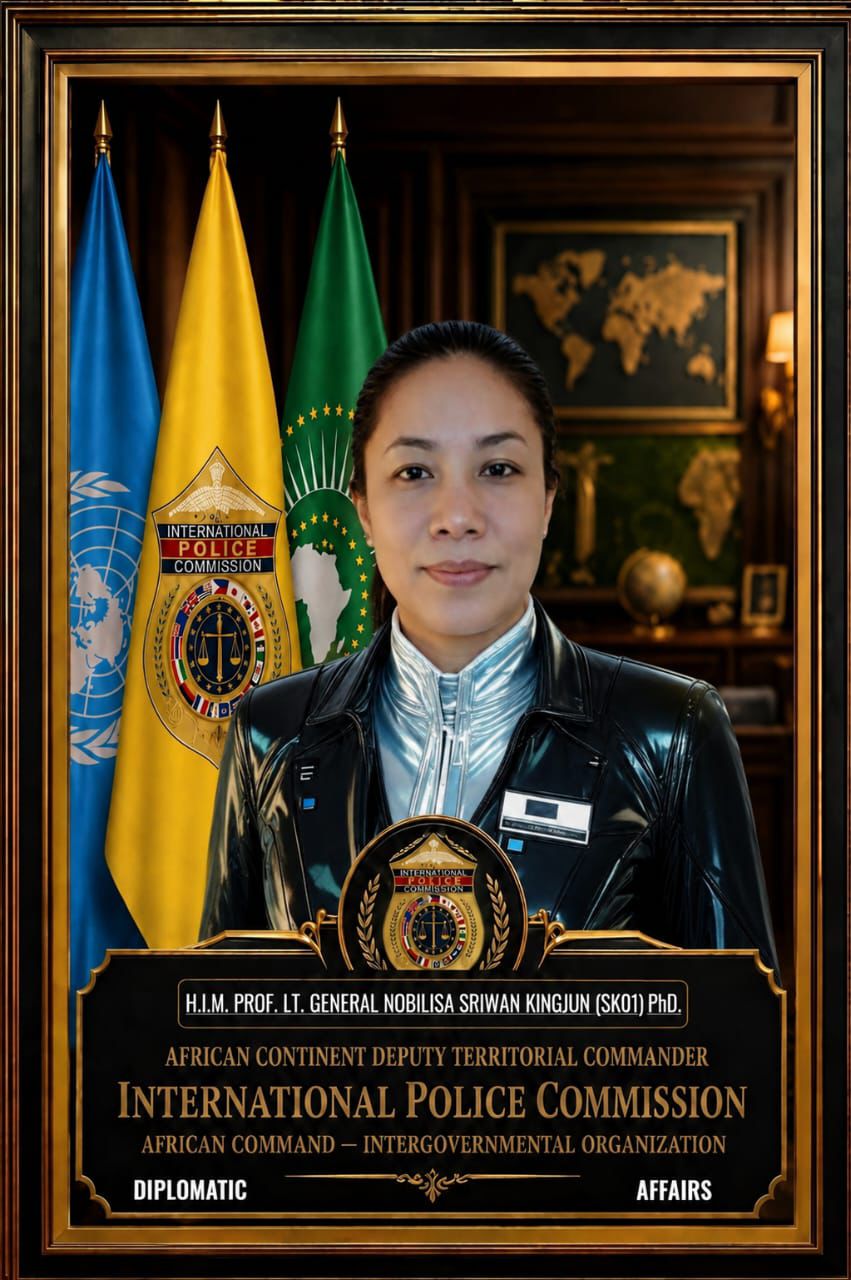
UKA Gears Up for Final ATC Exchangeability Test Run as June Preparations Begin.
May 30, 2026 – As the month of June gathers momentum, the *United Kingdom of Atlantis, UKA*, a sovereign nation has unveiled a series of vital guidelines and preparatory packages to ensure citizens and stakeholders run the *ATC Exchangeability* process effectively.
In an official update, the *President of Atlantic Crown Limited, Empress of Attica Empire UKA*, confirmed that the *Final Test Run of ATC Exchangeability* is scheduled for the month of June 2026. The exercise marks a key phase ahead of the *Official Exchangeability Window, set to run from July 2026 to February 2027*.
### Key Highlights from the Presidential Briefing
1. *Final Test Run – June 2026*
The test run is designed to validate systems, procedures, and user readiness before full activation. Citizens, partners, and designated participants are urged to follow all official advisories released by UKA authorities during this period.
2. *Official Exchangeability Period*
Following the successful completion of the June test run, the Official Exchangeability will commence in july 2026 and we are Expecting Full Exchange ability between July Ending, 2026 to February 2026.
UKA stated that detailed schedules, eligibility requirements, and step-by-step instructions will be communicated progressively through verified UKA channels.
3. *Benefiting Packages for June*
In line with UKA’s commitment to citizen empowerment, the month of June will feature “benefiting packages” aimed at education, preparation, and seamless onboarding. These packages are intended to equip the people of UKA with the knowledge and tools needed for effective participation.
4. *Commitment to Transparency*
Addressing the nation, the Empress of Attica Empire UKA emphasized:
_“Final Test Run of ATC Comes up in The Month of June, As We Prepare For The Official Exchangeability, Between July 2026 To Feb 2027. All Information Will Be Communicated.”_
UKA reaffirmed that only information released through official UKA platforms should be regarded as authoritative.
The United Kingdom of Atlantis is encouraging all citizens, representatives, and interested parties to remain alert to official communications, attend designated orientation sessions, and avoid unofficial sources. UKA’s dedication to order, clarity, and the collective benefit of its people as the nation moves into this significant phase.
For updates, advisories, and participation guidelines, citizens are advised to monitor official UKA communication channels.
United Kingdom of Atlantis, UKA, is a sovereign nation, committed to national development, citizen welfare, and structured economic participation through initiatives such as ATC Exchangeability.
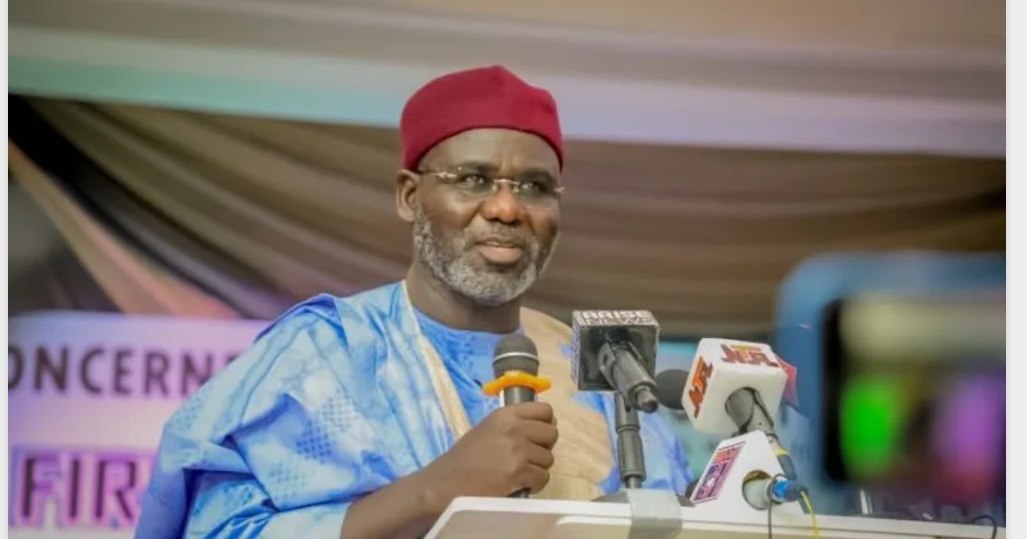
Three Years On, General Buratai Hails Tinubu’s Economic, Security Achievements
Former Chief of Army Staff, Lt. Gen. Tukur Buratai (retd.), has commended President Bola Ahmed Tinubu for what he described as bold economic reforms and improved security efforts as the President marks three years in office.
In a goodwill message on Thursday to commemorate Tinubu’s third anniversary as President and Commander-in-Chief of the Armed Forces, Buratai said the administration had taken courageous decisions that would leave a lasting impact on Nigeria’s development.

According to him, President Tinubu broke a long-standing cycle that had hindered national growth by removing fuel subsidy and implementing foreign exchange reforms aimed at stabilising the naira and strengthening the economy.
He noted that the reforms were beginning to yield positive results, citing the global acceptance of Nigerian debit cards, the gradual revival of local refineries, access to student loans, and ongoing road and infrastructure projects across the country.
“The FCT Administration has also recorded remarkable progress, completing major road projects that remained unfinished for over 16 years,” Buratai stated.
The former army chief also praised the administration’s security efforts, saying renewed military offensives against insurgents, terrorists and bandits had led to notable successes across various parts of the country.
He specifically lauded recent joint operations involving Nigerian and United States forces against Boko Haram and ISWAP in the North-East, as well as intensified counter-banditry operations in the North-West.
“We have seen notorious ISWAP commanders being neutralised. I congratulate the Commander-in-Chief, the Minister of Defence, the Chief of Defence Staff, the Service Chiefs, the Inspector-General of Police and heads of intelligence agencies for their efforts,” he said.
Buratai, however, acknowledged that challenges remained, stressing the need for more aggressive military operations and intelligence-driven strategies in the coming year.
While urging Nigerians to remain hopeful, he said celebrating the President’s achievements did not amount to ignoring the difficulties facing the nation.
“Because you truly care, you have shown the courage to trade short-term comfort for long-term hope. Nigerians need your reassurances, and that is why we remain optimistic and full of confidence,” he added.
The retired military officer reaffirmed his support for the Tinubu administration and expressed confidence that the foundation being laid by the government would deliver a brighter future for the country.
He also prayed for God’s guidance, wisdom, strength and good health for the President as he continues to lead Nigeria.


- Africa: UNAIDS calls for renewed global solidarity as UN Secretary-General’s report warns that AIDS is not over and fragile gains are at risk June 4, 2026
- Eritrea: Vocational training provided to college students June 4, 2026
- World Bank Group Launches Ten-Year Strategy to Drive Jobs and Prosperity in Uganda June 4, 2026
- Prof Oramah’s appointments to the Royal African Society Patronage and Kenya’s National Infrastructure Fund herald continued recognition of his global leadership and pan-African impact June 4, 2026
- Africa Finance Corporation Raises Record US$2 Billion Syndicated Loan in Landmark Show of Confidence in Transformational Infrastructure Strategy June 4, 2026
- Libya Energy & Economic Summit (LEES) 2027 to Define Libya’s Next Phase of Energy Expansion in Tripoli June 4, 2026
- Uganda: President delivers State of the Nation Address today June 4, 2026
- United Nations High Commissioner for Refugees (UNHCR): Refugees in Eastern and Southern Africa remain in exile for nearly 16 years June 4, 2026
- 85% of Ministry of Food and Agriculture's (MoFA) 2026 Budget Released to Boost Food Production — Deputy Finance Minister June 4, 2026
- Deputy (Dep.) Finance Minister Courts Investors to Transform Ghana’s rice Economy June 4, 2026
- Africa: UNAIDS calls for renewed global solidarity as UN Secretary-General’s report warns that AIDS is not over and fragile gains are at risk June 4, 2026
- Eritrea: Vocational training provided to college students June 4, 2026
- World Bank Group Launches Ten-Year Strategy to Drive Jobs and Prosperity in Uganda June 4, 2026
- Prof Oramah’s appointments to the Royal African Society Patronage and Kenya’s National Infrastructure Fund herald continued recognition of his global leadership and pan-African impact June 4, 2026
- Africa Finance Corporation Raises Record US$2 Billion Syndicated Loan in Landmark Show of Confidence in Transformational Infrastructure Strategy June 4, 2026
- Libya Energy & Economic Summit (LEES) 2027 to Define Libya’s Next Phase of Energy Expansion in Tripoli June 4, 2026
- Uganda: President delivers State of the Nation Address today June 4, 2026
-

 news6 months ago
WHO REALLY OWNS MONIEPOINT? The $290 Million Deal That Sold Nigeria’s Top Fintech to Foreign Interests
-

 society1 month ago
SOCIAL MEDIA IS NOT A BATTLEFIELD COMMAND – WHY THE NIGERIAN ARMY’S ACTION AGAINST JUSTICE CRACK IS A NATIONAL SECURITY IMPERATIVE
-

 celebrity radar - gossips4 months ago
Dr. Chris Okafor Returns with Power and Fire of the Spirit -Mounts Grace Nation Altar with Fresh Anointing and Restoration Grace on February 1, 2026
-

 celebrity radar - gossips6 months ago
Prophet Kingsley Aitafo Releases 2026 Prophecy: ‘Nigeria Will Rise, but the World Must Prepare for Turbulence’