
Business
First Bank Issues Press Statement On Contempt Order Against It, Says Media Publications Are Erroneous


Press Statement:
We are constrained to issue the following statement to set the records straight and correct the erroneous reporting contained in some media publications.
RE: CONTEMPT ORDERS AGAINST FIRST BANK OF NIGERIA LIMITED AND ITS OFFICIALS BY HONOURABLE JUSTICE I.N BUBA OF THE FEDERAL HIGH COURT, LAGOS, OF 6TH JUNE, 2018.
1. On 6th June, 2018, Honourable Justice I.N Buba of the Federal High Court, Lagos Judicial Division, granted a motion in SUIT NO: FHC/L/NRJ/1/2018 committing the Chairman and Managing Director of FirstBank of Nigeria Ltd. for contempt Ex Facie Curiae with respect to an order given by the same Honourable Justice I.N Buba on 14th June, 2010, in Suit No: FHC/PH/CS/231/2001 – Chief Isaac Osaro Agbara & 9 Ors. v. Shell Petroleum Development Ltd, Shell International Petroleum Ltd and Shell International Exploration and Production BV. FirstBank of Nigeria Limited (FirstBank) was not a party to the suit and earlier order of Honourable Justice I.N Buba dated 14th June 2010 in respect of which His Lordship has now committed the Board Members of FirstBank for contempt. In view of the fact that FirstBank and its Board members were not parties to the earlier orders of Honourable Justice Buba, over which he subsequently assumed jurisdiction in respect of contempt outside the face of the court, and His Lordship’s earlier orders did not direct either FirstBank or its Board members to perform any obligation, neither did it impose any task on FirstBank, suffice to say that FirstBank did not and could not have disobeyed any
order made by Honourable Justice I.N Buba in Suit No: FHC/PH/CS/231/2001- Chief Isaac Osaro Agbara & 9 Ors. V. Shell Petroleum Development Ltd, Shell International Petroleum Ltd and Shell International Exploration and Production BV (Shell) made on 14th June 2010, since there was no order made against it.
2. It is pertinent to note that Shell that was the party and defendant to
Honourable Justice Buba’s earlier judgment and Orders has not been
held to be in contempt.
3. On 5th August 2010, Honourable Justice Buba, in Suit No: Suit No: FHC/PH/CS/231/2001- Chief Isaac Osaro Agbara & 9 Ors. V. Shell Petroleum Development Ltd, Shell International Petroleum Ltd and Shell International Exploration and Production BV (Shell), directed Shell to provide a Bank Guarantee in respect of the judgment sum which His Lordship had earlier made in the same suit on 14th June 2010, comprising both special and general damages (in the judgment sum) in the following sum as follows:
I Special Damages in the sum of N1,772,460,585.00 (One Billion,
Seven Hundred and Seventy Two Thousand, Four Hundred and Sixty
Million, Five Hundred and Eighty Five Thousand – Allowing for the
interest for delayed Payment for 5 years from 1996 at a modest Mean
Central Bank of Nigeria deregulated Rate for that volume at 25% per
annum amounting to a total of N5, 407, 777,246.00 (Five Billion,
Four Hundred and Seven Million, Seven Hundred and Seven Thousand,
Two Hundred and Forty Six Thousand).
ii. Award of Plaintiffs’ Claim of 25% of the said sum till the date of Judgement and thereafter 10% of the Judgment debt till payment
iii. Award of Plantiffs’ Claim against the Defendant in punitive terms of General Damages in the sum of N10, 000,000,000.00. (Ten Billion) TOTAL: N17,180,237,831.00 (Seventeen Billion, One Hundred and Eighty Million, Two Hundred and Thirty-Seven Thousand, Eight Hundred and Thirty-One Naira),
4. Shell, as FirstBank’s customer, approached it to issue a Bank Guarantee to satisfy Shell’s Compliance with the Order of Honourable Justice I.N. Buba of 5th August 2010, and FirstBank obliged Shell’s request by issuing the Guarantee. Specifically, the Guarantee concluded as follows:
“This Guarantee shall be governed by and subject to all the laws of the Federal Republic of Nigeria and shall not be construed to fetter or limit the constitutional rights of parties, including their right of appeal”
5. Shell appealed the decision of Honourable Justice I.N Buba awarding various monetary claims against it to the Court of Appeal in Appeal No: CA/PH/396/2012 and on 23rd October 2013, the Court of Appeal struck out the said appeal on the ground that Shell did not pay sufficient filing fees. Shell immediately appealed the decision
of the Court of Appeal to the Supreme Court in SC. 693/2013.
6. Despite the pendency of Shell’s appeal to the Supreme Court, an Undefended List suit and garnishee proceedings were commenced against FirstBank in Suit No. BHC/208/2013 and FHC/PH/CS/432/2013. FirstBank responded to these suits by, maintaining that, in the light of Shell’s pending appeal to the Supreme Court in SC. 693/2013, the Guarantee had not yet crystallised, whilst Chief Isaac Agbara & Ors., insisted that payment was due on the guarantee. While Suit No. FHC/PH/CS/432/2013 was struck out, judgment was given on the Guarantee dated 12th December 2012, by the High Court of Rivers State on 17th January 2014 enforcing the Guarantee g i v e n i n re s p e c t o f t h e c u m u l a t i v e s u m o f N80,344,284,716.89 (Eighty Billion, Three Hundred and Forty-Four Million, Two Hundred and Eighty-Four Thousand, Seven Hundred and Sixteen Naira, Eighty-Nine Kobo). Whilst judgment was given in the suit against FirstBank , sued thereat as ‘FirstBank PLC’, the Court of Appeal struck out the appeal filed by FirstBank for the reason that it appealed in the name of FirstBank PLC, the name by which it was sued and judgment given against it at the trial court but it did not have a right to appeal in the name of FirstBank PLC, since FirstBank PLC is not a juristic person. FirstBank has filed a subsequent appeal against that decision to the Supreme Court in SC. 511/2017.
7. Meanwhile, Shell’s appeal against the Court of Appeal decision which activated the Undefended List Suit inBHC/208/2013 and the Court of Appeal decision in CA/PH/29M/2014 succeeded and the Supreme Court set aside the Court of Appeal’s decision in CA/PH/396/2012. In the face of that decision, Chief Isaac Agbara & Ors., now
contend that the decisions given in their favour enforcing the guarantee in BHC/208/2013 and CA/PH/29M/2014 are now academic and of no use. Their current position thus validates the position of FirstBank that the Bank Guarantee cannot crystallise with the pendency of an appeal against a decision by Shell for the simple reason that if the appeal becomes successful, in the same way, Appeal No.: SC/693/2017 succeeded, the monetary judgment will no longer exist, and the basis of the Guarantee will have become eroded.
8. In allowing Shell’s appeal in SC. 693/2013, the Supreme Court directed the Court of Appeal to re-hear the appeal. The appeal was re-heard and on 6th June, 2017, the Court of Appeal dismissed the appeal on the ground of an alleged irregularity in the time Shell filed its brief of argument despite the fact that the same Court of Appeal had, on the day the appeal was heard, deemed the briefs of argument of Shell and the respondents as having been properly filed and served. In effect, Shell’s appeal against the judgment of Buba J., dated 14th June 2010, has neither been heard or dismissed on its merits. Shell subsequently filed an appeal to the Supreme Court in SC. 731/2017 and same has been scheduled to come up at the Supreme Court on 16th October 2018.
9. Despite the pendency of Shell’s appeal, Chief Isaac Agbara & Ors., on 8th June, 2017, commenced another Undefended List suit against FirstBank on the basis of the second decision of the Court of Appeal in the Rivers State High Court in Suit No: PHC/1583/2017, now alleging entitlement to the sum of N122,533,403,392.12 (One Hundred and Twenty-two Billion, Five Hundred and Thirty-three Million, Four Hundred and Three Thousand, Three Hundred and Ninety-two Naira, Sixteen Kobo) on the Guarantee issued in the cumulative sum of N17,180,237,831.00 (Seventeen Billion, One Hundred and Eighty Million, Two Hundred and Thirty Seven Thousand, Eight Hundred and Thirty One Naira).
10. During the pendency of the Undefended List action before Honourable Justice S.O. Iragunima, of the Rivers State High Court, ChiefIsaac Agbara & Ors., on 7th September, 2017, commenced a Winding Up Petition against FirstBank at the Federal High Court in Abuja to enforce the Guarantee against FirstBank , claiming entitlement to the sum of N122,533,403,392.12 (One Hundred and Twenty-two Billion, Five Hundred and Thirty-three Million, Four Hundred and Three Thousand, Three Hundred and Ninety-two Naira, Sixteen Kobo) arising from the judgment of the Court of Appeal in Appeal No. CA/PH/29M/2014 which is on appeal to the Supreme Court in SC. 511/2017. Parties joined issues in this petition and on 13th December 2017, the Honurable Justice Tsoho, in a well-informed decision, dismissed the petition and awarded costs of N500,000.00 (Five Hundred Thousand Naira) in favour of FirstBank and against Chief Isaac Agbara & Ors.
Chief Isaac Agbara & Ors did not appeal and have not appealed the decision of Tsoho J. dismissing their winding up petition on the enforcement of the same judgment of Buba J, and on which Buba J. has now convicted officials of FirstBank for contempt outside the face of the court.
11. Despite the foregoing, Chief Isaac Agbara & Ors. filed another winding up Petition against FirstBank in the Federal High Court, Lagos Judicial Division, before Honurable Justice Aikawa on 14th December 2017, repeating verbatim the pleadings and content of their dismissed winding up petition by Tsoho J., arising from the same judgments of Buba J. earlier mentioned. This Winding Up petition became the third in the series of cases filed and lined-up by the same judgment creditors against FirstBank, in respect of the enforcement of the Bank Guarantee earlier mentioned.
12. Not done yet, the same judgment creditors, Chief Isaac Agbara & ors., during the pendency of their winding up Petition before Aikawa J., in the Lagos Judicial Division of the Federal High Court, commenced garnishee proceedings before Alagoa J on 5th January 2018, of the Owerri Judicial Division of the Federal High Court, in respect of the same Guarantee, asking the court to enforce same in satisfaction of the judgment of Buba J. given on 14th June 2010. The said garnishee proceedings was later transferred to the Lagos Judicial Division and is also pending before Buba J.
While the said garnishee proceedings was pending, the same judgment creditors (Chief Isaac Agbara & Co.) commenced contempt proceedings against the Chairman and Managing Director of FirstBank of Nigeria Ltd in Suit No. FHC/L/NRJ/1/2018 on 19th March, 2018, before Buba J; by respectively filing Forms 48 and 49 dated 26th February, 2018 and 2nd March, 2018 respectively. FirstBank of Nigeria joined issues with the judgment creditors, both in the form of a preliminary objection and on the substantive subject of the contempt proceedings.
13. While the Bank respects the institution of the judiciary, however, it states with much respect, that:
a. No liability is due from it to Chief Isaac Agbara & ors. from the Bank Guarantee issued and dated 17th December 2012.
b. Further to (a) above, no law criminalises breach of an undertaking, how much more criminal liability for imprisonment upon such alleged breach.
The Bank further states that in respect of the same contempt proceedings in which the Honourable Justice Buba has convicted its officials, garnishee proceedings for the enforcement of the same judgment are pending before the same Buba J., which he
has adjourned to 19th June 2018.
In effect, before the same Buba J., the Bank is subjected to two proceedings, one penal and one civil, for the enforcement of the judgment of the same Buba J. It is worthy of note that no court has awarded any monetary liability against FirstBank and in favour of Chief Isaac Agbara & Ors. Contrariwise, the same Federal High Court which has now convicted the officials of FirstBank, had earlier dismissed all the claims of the same Chief Isaac Agbara & Ors. in the Winding Up Petition filed against FirstBank, on the same guarantee and in respect of the same sum and judgment of Buba J.
It is interesting to note that, the decision of Buba J in respect of contempt was given in the most recent of the various (5) suits filed by Chief Isaac Agbara & ors to enforce the Bank Guarantee. Some of the suits filed before same are still pending, including one before the same Buba J. This is also without prejudice to the appeals pending at the Supreme Court in respect of the same subject, and which appeals are borne out of the Constitutional right of appeal donated by the Constitution of the Federal Republic of Nigeria, 1999 (as amended). We are compelled in total deference to the Supreme Court as the apex adjudicatory body in Nigeria to pose the following questions:
I If Shell’s appeal to the Supreme Court in SC. 731/2017 succeeds, will there still be any rights inuring in favour of Chief Isaac Agbara & Ors.
ii. Arising from (i.) above, could the court have rightly condemned and convicted officials of FirstBank during the pendency of the appeals to the Supreme Court
iii. Assuming Chief Isaac Agbara & Ors had obtained payment under the Bank Guarantee after the initial judgment of the Court of Appeal in CA/PH/396/2012, as they attempted to do through the use of the same type of court actions which they have now instituted, will irreversible damage and injustice not have occurred to both the Nigerian Judicial and financial system after the Supreme Court decision in SC. 731/2017.
14. FirstBank of Nigeria Ltd has been in business since 1894, (124 years ago); and since then, it has demonstrated to all and sundry that it is a leading corporate citizen in Nigeria, and a foremost provider of financial services. The Bank states humbly that it has been a partner to the Federal Republic of Nigeria
and all Nigerians in the task of development and nation building. Its positive footprints are seen all over the country. As a law abiding corporate citizen of Nigeria, the Bank respects the judiciary; as such, it has instructed its counsel to take all the constitutional steps with immediate effect to challenge the decision of Buba J. to the Court of Appeal.
15. Finally, in the face of constant, persistent and unprovoked use of judicial processes to intimidate, harass and threaten the Bank, it has decided to remain calm, steadfast and unflinching in its resolve to continue to provide first-class services to its teeming customers within and outside the country. FirstBank further asserts that it will always defend its interests within the ambit of the law and seek redress for any temporary injustice done to it. The Bank is not aware and has not been advised as to the provision of any law in Nigeria which allows the use of criminal contempt to enforce monetary judgements or obligations.





Fidelity Bank grows gross earnings by 38% to N434.95b in Q1
Fidelity Bank Plc recorded 37.9 per cent growth in gross earnings to N434.95 billion in first quarter 2026 as the international commercial bank continued to expand its core banking market share.
Interim report and accounts of Fidelity Bank for the three months ended March 31, 2026 released at the Nigerian Exchange (NGX) showed that gross earnings rose from N315.42 billion in first quarter 20025 to N434.95 billion in first quarter 2026, representing an increase of 37.9 per cent.
The top-line performance was driven by impressive growth in the bank’s core business operations with interest incomes rising by 22.8 per cent to N314.48 billion in first quarter 2026 as against N256.10 billion in first quarter 2025.
With net interest income at N180.97 billion, the bank closed the period with profit before tax of N92.48 billion. After taxes, net profit stood at N74.47 billion for the three-month period. Earnings per share remained high at N5.69, underlining the capacity of the bank to reward its shareholders.
The balance sheet of the bank also emerged stronger. Total assets crossed the N11 trillion mark to N11.35 trillion by March 2026 compared with N10.46 trillion recorded in December 2025. Customers’ deposits increased from N6.89 trillion to N7.38 trillion. Total equity rode on the back of earnings growth to a 27.5 per cent increase from N1.09 trillion in December 2025 to N1.39 trillion by March 2026.
The first quarter 2026 results further consolidated the strong earnings outlook of the bank, which had successfully completed its recapitalisation amidst impressive earnings performance in 2025.
Fidelity Bank had recorded double-digit growths in interest and non-interest incomes as well as key balance sheet items during the year ended December 31, 2025.
The audited report showed that gross earnings rose from N1.04 trillion in 2024 to N1.52 trillion in 2025, an increase of 45.6 per cent. Interest and similar incomes had grown by 38.7 per cent from N803.1 billion in 2024 to N1.11 trillion in 2025. Fees and commission incomes also rose by 44.7 per cent from N78.4 billion to N113.4 billion. The bank recorded net profit after tax of N242.4 billion in 2025.
The bank’s balance sheet emerged stronger with total assets rising by 18.6 per cent to N10.46 trillion in 2025 as against N8.82 trillion in 2024. Customer deposits increased by 16.1 per cent from N5.94 trillion to N6.89 trillion, reflecting continued franchise strength and an improved funding profile. Net loans and advances meanwhile declined by 2.4 per cent to N4.28 trillion in 2025 as against N4.39 trillion in 2024, attributable to customers paying down on their mature obligations.
The bank had in 2025 strengthened its capital position, with eligible capital rising to N561 billion, above the regulatory minimum of N500 billion for banks with international authorisation. In addition, capital adequacy had remained robust, with Capital Adequacy Ratio of 30.94 per cent by December 2025 as against 23.47 per cent by December 2024.
Managing Director, Fidelity Bank Plc, Dr. Nneka Onyeali-Ikpe, said the first quarter 2026 results reinforced the bank’s strong and resilient business model.
She noted that with the remarkable success of its recapitalisation programme and continuing expansion, Fidelity Bank has entered a new era of growth and impressive returns.
“We are on a stronger footing and confident that we will set new growth records that are reflective of our legacy and the future we are working on,” Onyeali-Ikpe said.
Business
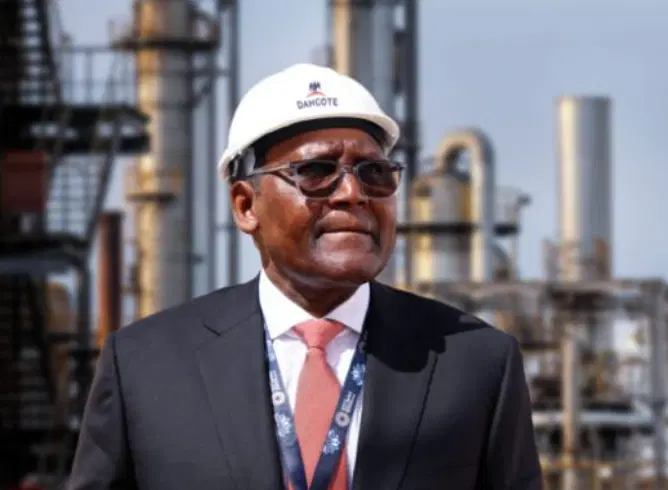
Dangote Refinery Ends Nigeria’s Era of Fuel Import Dependence, Boosts GDP, FX Earnings — EIU
Dangote Refinery Ends Nigeria’s Era of Fuel Import Dependence, Boosts GDP, FX Earnings — EIU
The operational ramp up of the 650,000 barrels per day Dangote Petroleum Refinery & Petrochemicals is fundamentally reshaping Nigeria’s downstream oil sector, significantly reducing the country’s dependence on imported refined petroleum products and strengthening its external position, according to the Economist Intelligence Unit (EIU).
In its latest assessment on Nigeria’s fuel market and regulatory environment, the EIU said the refinery has already transformed a sector that was previously characterised by heavy reliance on imported fuel despite Nigeria being Africa’s largest crude oil producer. The report noted that the refinery met nearly 80 per cent of domestic petrol demand in April and produced enough volumes to satisfy local consumption requirements as operations approached full capacity.
The EIU described Nigeria’s downstream petroleum sector before the refinery as “long dysfunctional”, noting that the country had remained almost entirely dependent on costly imported fuel while producing nearly 1.5 million barrels of crude oil daily.
According to the report, the emergence of the refinery has reduced import dependence, improved domestic fuel availability and strengthened Nigeria’s balance of payments position through lower import demand and rising exports of refined petroleum products.
“The gradual ramp up of the 650,000 barrel/day Dangote refinery since May 2023 has transformed Nigeria’s long dysfunctional downstream sector,” the report stated. “The country’s main refineries, all state owned, had been inoperative for years and Nigeria was almost entirely reliant on costly imported fuel.”
The research and analysis division of The Economist Group, London added that the refinery’s attainment of full operational capacity and its planned expansion would further support Nigeria’s economic growth and foreign exchange earnings over the medium term.
“Meanwhile, the attainment of full capacity at, and an increase in exports from, the Dangote refinery will support real GDP growth and foreign exchange earnings in 2026 and 2027 and beyond, as a planned doubling of the plant’s output comes on stream around the end of the decade,” it added.
Industry analysts said the refinery is increasingly positioning Nigeria as an emerging refining and export hub, altering energy trade flows across Africa and reducing the vulnerability associated with fuel import dependence.
The EIU noted that the refinery’s expansion has coincided with major reforms in Nigeria’s downstream sector, including the removal of fuel subsidies and the introduction of market driven pricing mechanisms.
The report, however, said the transition from a state dominated fuel import structure to large scale domestic refining has triggered resistance from interests linked to the old import regime.
The latest tensions emerged following the decision by the Nigerian Midstream and Downstream Petroleum Regulatory Authority to relax restrictions on petrol imports despite the refinery’s growing capacity to meet domestic demand.
Dangote Industries subsequently initiated legal action, arguing that continued import approvals undermine domestic refining investments and conflict with the objectives of the Petroleum Industry Act, which seeks to encourage local refining capacity and reduce import dependence.
Analysts noted that the availability of large-scale domestic refining capacity has improved Nigeria’s energy security and reduced exposure to external supply shocks and foreign exchange volatility.
The Centre for the Promotion of Private Enterprise also cautioned against unrestrained importation of petroleum products, warning that such a policy could weaken Nigeria’s industrialisation drive and discourage investments in domestic refining.
Chief Executive Officer of CPPE, Muda Yusuf, said continued dependence on imported fuel had historically contributed to pressure on foreign reserves, exchange rate instability and fiscal leakages.
The refinery’s growing impact is also being reflected in Nigeria’s broader macroeconomic indicators. Earlier this month, S&P Global Ratings cited increased domestic refining capacity and rising hydrocarbon exports among the major factors supporting Nigeria’s sovereign credit rating upgrade – the first in 14 years.
Beyond Nigeria, analysts said the refinery is increasingly being viewed as a strategic industrial asset for Africa, where many countries remain heavily dependent on imported fuel despite rising demand for transportation, manufacturing, and power generation.
Business
BREAKING: Court Dismisses $19.6 Million Claim Against NNPCL — Rules Contract Scope Cannot Be Changed Orally
BREAKING: Court Dismisses $19.6 Million Claim Against NNPCL — Rules Contract Scope Cannot Be Changed Orally
In a landmark ruling on Friday, May 22, 2026, the Federal Capital Territory High Court in Abuja threw out a $19.6 million lawsuit filed by Alternate Dimensions Ventures Ltd against the Nigerian National Petroleum Company Limited (NNPCL), affirming a key legal principle: a written contract cannot be expanded through oral agreements or conduct.
Alternate Dimensions had sought $19,600,000 in professional fees, claiming the scope of its Direct Sale, Direct Purchase (DSDP e-pro) contract with NNPCL was orally expanded. Represented by counsel Patrick Peter, the firm argued it was entitled to the revised sum for services rendered under the alleged new terms.
But NNPCL, through its lawyer Ituah Imhanze of KENNA LP, pushed back sharply, arguing that parties are bound exclusively by the clear terms of their written agreement. Imhanze contended that without any written amendment, the claim was legally unsound, and the court agreed.
Delivering judgment, Justice Hamza Mu’azu upheld NNPCL’s defense, stating that the contract was unambiguous and that no evidence was adduced during the trial, which supported the alleged scope expansion. The court further found that NNPCL fully complied with all contractual terms and committed no breach.
Dismissing the suit as meritless, Justice Mu’azu reinforced the doctrine of sanctity of contract: any amendment to a written agreement must be express, unequivocal, and documented, not implied or verbal.
The ruling spares NNPCL from the S19.6 million claim and also a floodgate of similar potential liabilities.


- Afreximbank Deepens Commitment to Economic Progress in The Bahamas June 1, 2026
- African Electric Vehicle (EV) platform Spiro raises $215M in equity to scale electric mobility and energy infrastructure across Africa June 1, 2026
- Africa Centres for Disease Control and Prevention (Africa CDC) Statement on Attacks Against Health Facilities During the Bundibugyo Virus Disease Response in the Democratic Republic of the Congo June 1, 2026
- Putting consumers at the centre of Africa’s dairy transformation June 1, 2026
- International Rescue Committee (IRC) warns Democratic Republic of the Congo (DRC) Ebola outbreak likely far larger than official figures suggest June 1, 2026
- South Africa: Portfolio Committee on Health Marks National Cancer Survivor Day and Reaffirms Importance of Early Detection and Public Awareness June 1, 2026
- Rwanda’s RSSB Tigers Crowned 2026 Basketball Africa League Champions June 1, 2026
- Uganda: Appointments Committee Begins Vetting of Ministerial Nominees June 1, 2026
- Sudan braces for worsening child malnutrition as pre-harvest season starts June 1, 2026
- Etu Energias Strengthens Angolan Footprint, Returns to Angola Oil & Gas (AOG) 2026 as Champion Sponsor June 1, 2026
- Afreximbank Deepens Commitment to Economic Progress in The Bahamas June 1, 2026
- African Electric Vehicle (EV) platform Spiro raises $215M in equity to scale electric mobility and energy infrastructure across Africa June 1, 2026
- Africa Centres for Disease Control and Prevention (Africa CDC) Statement on Attacks Against Health Facilities During the Bundibugyo Virus Disease Response in the Democratic Republic of the Congo June 1, 2026
- Putting consumers at the centre of Africa’s dairy transformation June 1, 2026
- International Rescue Committee (IRC) warns Democratic Republic of the Congo (DRC) Ebola outbreak likely far larger than official figures suggest June 1, 2026
- South Africa: Portfolio Committee on Health Marks National Cancer Survivor Day and Reaffirms Importance of Early Detection and Public Awareness June 1, 2026
- Rwanda’s RSSB Tigers Crowned 2026 Basketball Africa League Champions June 1, 2026
-

 news6 months ago
WHO REALLY OWNS MONIEPOINT? The $290 Million Deal That Sold Nigeria’s Top Fintech to Foreign Interests
-

 society4 weeks ago
SOCIAL MEDIA IS NOT A BATTLEFIELD COMMAND – WHY THE NIGERIAN ARMY’S ACTION AGAINST JUSTICE CRACK IS A NATIONAL SECURITY IMPERATIVE
-

 celebrity radar - gossips4 months ago
Dr. Chris Okafor Returns with Power and Fire of the Spirit -Mounts Grace Nation Altar with Fresh Anointing and Restoration Grace on February 1, 2026
-

 celebrity radar - gossips6 months ago
Prophet Kingsley Aitafo Releases 2026 Prophecy: ‘Nigeria Will Rise, but the World Must Prepare for Turbulence’
You must be logged in to post a comment Login
You must log in to post a comment.