
celebrity radar - gossips
Five Minutes — Or I’ll Switch It Off”: When Pageantry Collides with Power

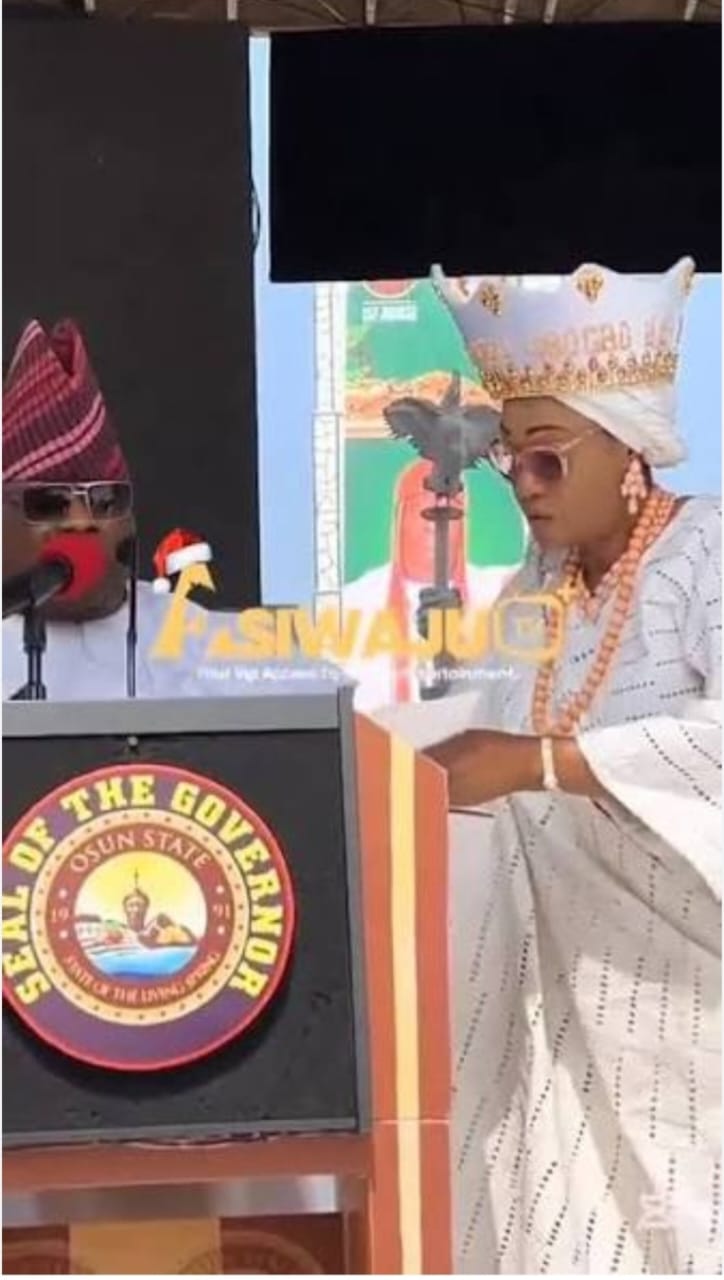
“Five Minutes — Or I’ll Switch It Off”: When Pageantry Collides with Power.
By George Omagbemi Sylvester | Published by saharaweeklyng.com
“How Senator Oluremi Tinubu’s interruption of Gov. Ademola Adeleke at Ile-Ife exposes constitutional ambiguities, protocol failures and a dangerous precedent for Nigerian public life.”
The grainy clip that has riveted Nigerians this week is short, sharp and unnerving. At a glittering cultural occasion in Ile-Ife, where royalty, ex-presidents and senior public figures had come together to honour the First Lady, Senator Oluremi Tinubu is seen approaching the podium, leaning over the microphone and saying, in words that thundered across social media: “I give you five minutes to conclude your speech. Enough with the music or I’ll switch off the microphone.” The target of that rebuke was Governor Ademola Adeleke of Osun State, who had taken the stage for a welcome address and lapsed into one of his characteristic, jubilant moments of song and dance. The exchange was captured on multiple phones and has since been replayed, remixed and debated across the country.

On its face the scene is a minor, theatre-of-politics moment; a First Lady chiding a governor for extending a speech beyond what she considered decorous. This clip is not merely entertainment: it crystallises a set of deeper issues that go to the heart of democratic practice in Nigeria and the rule of law; the separation between ceremonial presence and authority; protocol and respect for elected office; and the creeping normalization of raw personal power in public spaces.
First, the facts. The incident occurred during Senator Tinubu’s investiture with a high-profile chieftaincy title in Ile-Ife at an event attended by former President Olusegun Obasanjo, several governors and senior traditional rulers. Videos from the ceremony show Governor Adeleke moving from the scripted welcome into spontaneous singing; Senator Tinubu then interrupted him twice, each time warning she would cut the microphone if he did not stop. The confrontation lasted less than a minute, but the fallout has been disproportionate.
Second, the constitutional reality. Nigeria’s Constitution does not create an “office of the First Lady,” nor does it vest the president’s spouse with any formal powers or authority over other elected officials. This is not a modern controversy: constitutional scholars and commentators have repeatedly observed that the First Lady’s role is informal, customary and without statutory backing. The absence of a constitutional or legal remit does not, of course, prevent a president’s spouse from being influential in politics or public life; but it does make any exercise of coercive or corrective authority by the First Lady a matter of norms and courtesy rather than law.

Third, protocol and power. Even if one accepts that the First Lady is a high-ranking dignitary at ceremonial events, precedent and common sense suggest limits. Protocol in formal gatherings (especially those involving state hosts such as a governor) ordinarily recognises the primacy of the convenor. The judge of whether a speech has exceeded its welcome is usually the event chair or organiser, not a visiting dignitary. When a non-elected figure publicly threatens to silence an elected governor, the action is less a correction of decorum and more an assertion of personal muscle in a public setting. That is politically corrosive: it tells citizens that proximity to the presidency can substitute for protocol, and that democratic furniture can be rearranged on the spot by social clout.
Fourth, the politics of perception. The incident has divided public opinion along familiar lines. Critics see an overreach and quite a disrespectful interruption of a governor who, by virtue of election, answers to the people of his state. Defenders argue that the host or the event had reasons to control time and maintain decorum and that the First Lady merely spoke up because the programme demanded it. This is disingenuous: style and substance matter in politics. An elected governor, even when exuberant, embodies a democratic mandate. A president’s spouse, however prominent, does not. Blurring these distinctions feeds cynicism about who actually governs and who merely commands attention.
Fifth, what the law and scholarship tell us. Authors who have studied the First Lady’s place in Nigerian governance highlight a paradox: enormous informal influence, and almost no formal accountability. Legal scholars have proposed formalising the role or else strictly policing the boundaries between ceremonial visibility and executive power but not to diminish the social contributions of presidential spouses but to ensure that democratic roles are transparent and accountable. As one academic review of the subject notes, the position is “not elective, carries no statutory duties and no salary,” yet across successive administrations it has acquired de-facto powers and institutional trappings that raise questions of legitimacy and oversight.
Where does this leave us? There are three practical takeaways:
Reinforce protocol and organisers’ authority. High-profile events must have clear, enforced lines of protocol. If time-keeping is essential, the MC, the event chair or the hosting governor should be empowered to enforce it — not a visiting dignitary who, however well-intentioned, is not the arbiter of the agenda.
Clarify norms surrounding the “First Lady” role. Nigerians should decide whether they want the First Lady to remain a moral and charitable presence without public-office prerogatives, or to formalise her responsibilities — with the attendant duties and accountabilities. Scholars have long argued for one of these two approaches: either integrate the role into constitutional and administrative frameworks, or deliberately strip it of state-like powers. Ambiguity is the enemy of good governance.
scirp.org
Respect electoral mandates. The republican idea is that voters elect officeholders who then exercise authority in accordance with law and procedure. Allowing personality, proximity or social clout to displace that principle will hollow out democratic norms over time. Public actors, whether elected or ceremonial, must model deference to institutional roles if they expect citizens to take democracy seriously.
Finally, this episode is less about one hot-headed minute and more about the set of habits and assumptions that minute reveals. The optics of democracy depend on limits: limits on the use of force, limits on the exercise of personal will, and limits on who may displace elected authority. When those limits are eroded — when a microphone becomes a tool of command rather than a tool of speech — the damage is done gradually, in increments that many will shrug off until it is too late to reclaim them.
Senator Oluremi Tinubu’s intervention at Ile-Ife will be remembered as a moment — a small drama in the theatre of Nigerian public life. But drama, in a country still consolidating democratic norms, has outsized consequences. We can treat the incident as an amusing viral clip, or we can treat it as a teachable moment: one that calls for clearer protocols, firmer respect for institutional roles, and a public conversation about what power (visible and invisible) should be allowed to do on our stages. If the latter is chosen, Nigeria’s public life will be the better for it.
George Omagbemi Sylvester is a political commentator and columnist. This piece is published by saharaweeklyng.com





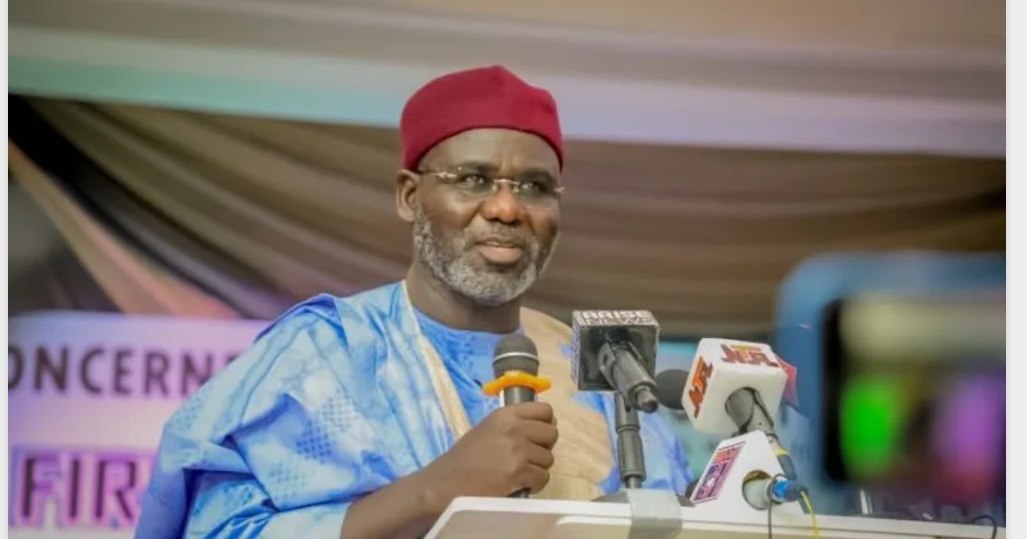
Buratai Celebrates Tinubu’s Bold Move: A New Dawn for North East Roads.
celebrity radar - gossips
Akintunde Ogundare Records Another Feat, Graduates with Distinction from University of Guelph-Humber

Akintunde Ogundare Bags Distinction in Canada, Extends Academic Excellence Streak
A Nigerian scholar, Akintunde Ogundare, has once again demonstrated his commitment to academic excellence by graduating with Distinction from the University of Guelph-Humber, Canada, adding another prestigious qualification to an already impressive educational record.

Ogundare earned a Bachelor of Applied Science (BASc) in Community Social Services with Distinction, a feat that underscores years of dedication, resilience and an unwavering pursuit of knowledge.
The convocation ceremony is slated for June 15, 2026, at the Toronto Congress Centre, North Building, Etobicoke, Ontario, where family members, friends and associates are expected to celebrate the milestone.

The latest achievement extends Ogundare’s remarkable streak of academic success across institutions in Nigeria and Canada.
Before obtaining his latest degree, he graduated with Distinction from George Brown College, Canada, where he earned a Diploma in Social Service Work. He also holds a Bachelor of Science in Business Administration with Second Class Upper Division from Joseph Ayo Babalola University and a Higher National Diploma in Urban and Regional Planning with Upper Credit from Lagos State Polytechnic.
Beyond his academic accomplishments, Ogundare is also known for his commitment to humanitarian service and community development. He serves as Secretary of the Allmen Progressive Association, where he has played an active role in promoting initiatives aimed at improving the welfare of members and supporting community-based causes. Associates describe him as a selfless leader whose passion for humanity and dedication to service have earned him widespread respect.
Colleagues and admirers have described Ogundare as a lifelong learner whose determination to excel has remained consistent despite the challenges of balancing academic pursuits with personal and professional responsibilities.
His achievements have also been hailed as an inspiration to young Nigerians seeking opportunities for academic and professional advancement, proving that discipline, perseverance and continuous self-development can yield exceptional results.
As he joins the graduating Class of 2026, Ogundare’s story stands as a testament to the value of hard work and the transformative power of education, reinforcing the belief that excellence is built through consistency and dedication.
The latest distinction not only adds another feather to his cap but also cements his reputation as a scholar and community leader committed to lifelong learning, humanitarian service and the advancement of society.


celebrity radar - gossips
The Unfinished Conversation: Five Years of Missing T.B. Joshua BY FEMI OYEWALE
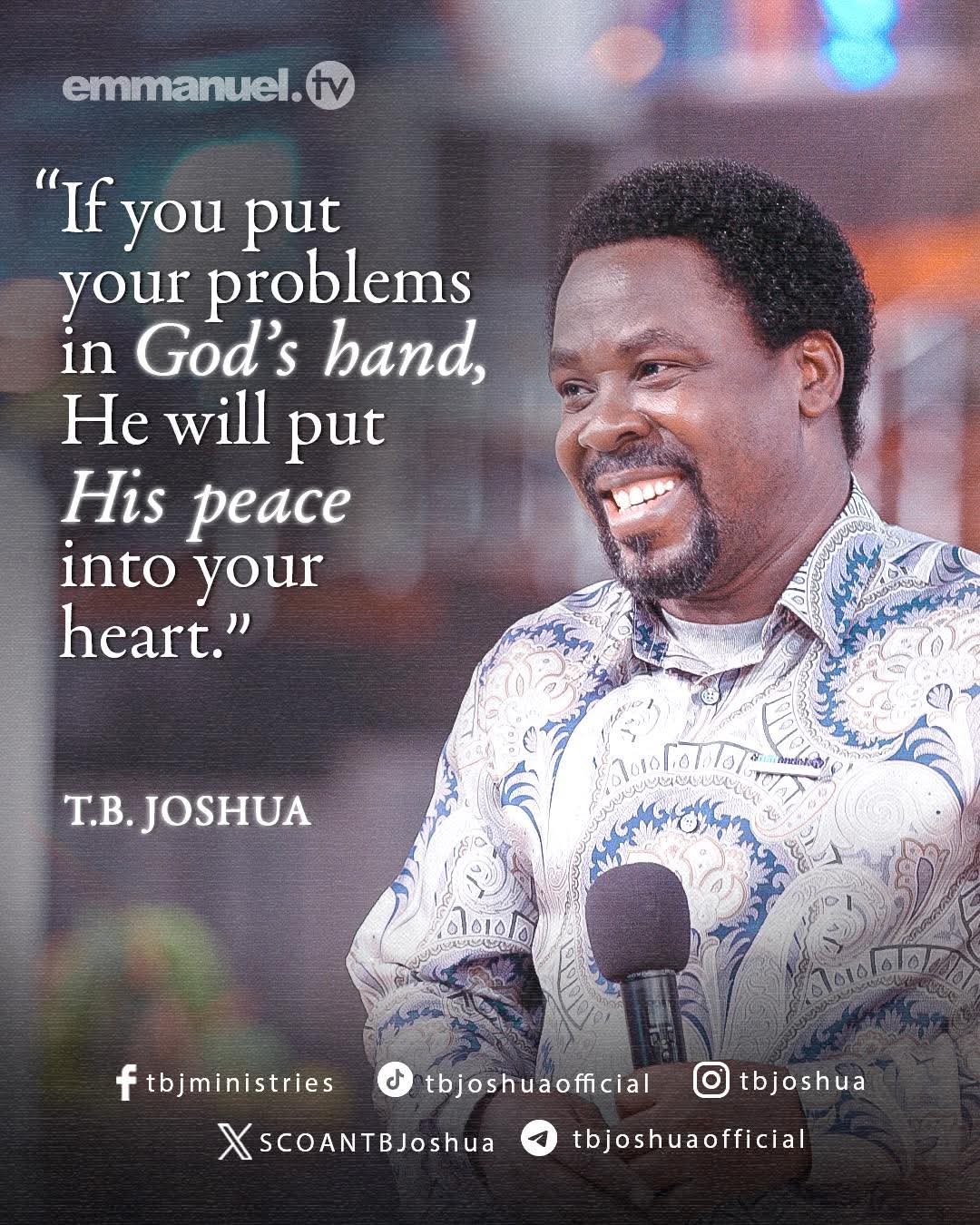
The Unfinished Conversation: Five Years of Missing T.B. Joshua BY FEMI OYEWALE
”In life we meet to part, we part to meet, but parting is the sweetest sorrow.”

Five years have vanished like a vapor, yet the echoes of his voice remain as vivid as a morning sunrise. June 5th marks the anniversary of the transition of a man who was not merely a global religious icon, but a father, a mentor, and a beacon of profound simplicity in a complex world. As I pen this, I find myself still navigating the shores of denial. How does one write a tribute to a man whose influence was as vast as the oceans, yet whose heart remained as humble as the desert sands?

The Last Assignment
Time truly flies, but some moments are frozen in the amber of memory. I recall with poignant nostalgia that I was among the final few with whom he spoke before stepping out for his last assignment on the pulpit on June 5,2021. Unknown to many, we shared an uncommon bond—a father-son relationship that stood the test of time.

Just an hour before that glorious, final ministration, my phone rang. We discussed the fulfillment of prophecies and my planned assignment to South Africa, an assignment he promised to single-handedly finance. By God’s grace, I have traveled the globe, and ninety percent of those journeys were bankrolled by him. Before ending the call, he spoke with finality: “Femi, go and watch it.” I never knew it was a parting shot. I never knew those words would be the threshold of eternity. Perhaps that is why, despite being part of his burial media committee, I lacked the courage to write until today.
From Fear to Faith: The Beginning
My journey to the Synagogue Church of All Nations (SCOAN) was written in the stars of fate. Then a reporter for Encomium Weekly, under the tutelage of the legendary Mr. Kunle Bakare, I was recommended to handle media work for a “prominent client.” When the name “T.B. Joshua” was mentioned, my heart sank.
Having cut my journalistic teeth under titans like Mr. Femi Adeshina and Mr. Dele Alake, I had heard the tales, stories of monsters, of shape-shifters, of dark magic. As I drove to Ikotun, I recited every Psalm I could muster and texted my parents my destination, unsure if I would return. I arrived expecting a beast; I was introduced to a brother. I met a man so profoundly simple, so devastatingly ordinary in his humility, that if not for his presence on Emmanuel TV, I would have sworn I was meeting an impostor. That was the day the fear died, and a lifelong relationship began.
The Man Behind the Mantle
I am not here to validate a legend; I am here to honor a human. I have been privileged to stand in his office, his personal room, his private altar, and his prayer house. What did I find? Not a demigod, but a man who lived for others.
A Heart of Forgiveness: Like the father in Luke 15, no matter the depth of the offense, a sincere “I am sorry” was all it took to be welcomed back into his fold.
The Weight of Misunderstanding: I remember the pain of the building collapse. He asked me, with tears that shattered my heart, “Femi, can you believe they said I used these people for rituals?” That was the first time I saw the iron man break.
A Channel of Healing: I recall a man brought to the prayer line who had previously declared, “Even if T.B. Joshua is the devil, if he can take this pain away, I am ready.” The moment those words left his lips, the Prophet walked over, touched him, and the healing was instantaneous.
He was a comedian, a teacher, a preacher, and above all, a man who loved his family and his ministry with every fiber of his being. If most clergy possessed even half the global influence he wielded, they would have long ago become arrogant demigods. T.B. Joshua remained, to his last breath, a servant.

A Legacy Enduring
It has been five years, yet it feels like yesterday. Many of those who cast stones in the shadows often came seeking his light in secret. Today, as we remember him, I see that legacy thriving. Prophetess Evelyn Joshua is truly holding the torch, preserving the foundation with grace and strength.
Good morning, Prophet T.B. Joshua. You live on in the lives you changed, the doors you opened, and the heart of your many disciples who will never forget the man who taught them that true greatness is found in the simplicity of love.
”He was a man globally misunderstood, yet a man whose name alone opened doors globally. He lived for others, and in doing so, he became immortal.”


- Gwede Mantashe Joins African Energy Week (AEW) 2026 as South Africa's Petroleum Reforms Open the Orange Basin to Drilling June 8, 2026
- Inspiring Tomorrow's Leaders: Senator Dr. Rasha Kelej Launches her First Virtual Mentorship and Leadership Platform June 8, 2026
- ExxonMobil and National Basketball Association (NBA) Africa interactive Science, Technology, Engineering, and Mathematics (STEM) Showcase and a Jr. NBA Clinic June 8, 2026
- Africa Centres for Disease Control and Prevention (Africa CDC) Welcomes Pandemic Fund’s US$220m Support for Bundibugyo Virus Outbreak Response June 8, 2026
- Africa Centres for Disease Control and Prevention (Africa CDC) and World Health Organization (WHO) Launch Joint Continental Ebola Response Plan June 8, 2026
- Statement of the Catholic Bishops of Africa on the Tragic Killing of Most Rev. Osório Citora Afonso, Bishop of Quelimane and Apostolic Administrator of the Archdiocese of Beira June 8, 2026
- Journal of Public Health in Africa Expands with New Rapid Communications, Policy and News Sections June 8, 2026
- Mining Review Africa expands coverage to include global mining news June 8, 2026
- 13,000 Hectare Wild Coast Conservation Property Comes to the Market in the Eastern Cape June 8, 2026
- President Isaias Afwerki Departs for Egypt June 7, 2026
- Gwede Mantashe Joins African Energy Week (AEW) 2026 as South Africa's Petroleum Reforms Open the Orange Basin to Drilling June 8, 2026
- Inspiring Tomorrow's Leaders: Senator Dr. Rasha Kelej Launches her First Virtual Mentorship and Leadership Platform June 8, 2026
- ExxonMobil and National Basketball Association (NBA) Africa interactive Science, Technology, Engineering, and Mathematics (STEM) Showcase and a Jr. NBA Clinic June 8, 2026
- Africa Centres for Disease Control and Prevention (Africa CDC) Welcomes Pandemic Fund’s US$220m Support for Bundibugyo Virus Outbreak Response June 8, 2026
- Africa Centres for Disease Control and Prevention (Africa CDC) and World Health Organization (WHO) Launch Joint Continental Ebola Response Plan June 8, 2026
- Statement of the Catholic Bishops of Africa on the Tragic Killing of Most Rev. Osório Citora Afonso, Bishop of Quelimane and Apostolic Administrator of the Archdiocese of Beira June 8, 2026
- Journal of Public Health in Africa Expands with New Rapid Communications, Policy and News Sections June 8, 2026
-

 news6 months ago
WHO REALLY OWNS MONIEPOINT? The $290 Million Deal That Sold Nigeria’s Top Fintech to Foreign Interests
-

 society1 month ago
SOCIAL MEDIA IS NOT A BATTLEFIELD COMMAND – WHY THE NIGERIAN ARMY’S ACTION AGAINST JUSTICE CRACK IS A NATIONAL SECURITY IMPERATIVE
-

 celebrity radar - gossips4 months ago
Dr. Chris Okafor Returns with Power and Fire of the Spirit -Mounts Grace Nation Altar with Fresh Anointing and Restoration Grace on February 1, 2026
-

 celebrity radar - gossips6 months ago
Prophet Kingsley Aitafo Releases 2026 Prophecy: ‘Nigeria Will Rise, but the World Must Prepare for Turbulence’