
Politics
Five-star Retirement: Matawalle, Wike, Okowa, Umahi, Ganduje To Get Mouthwatering Perks (Details)

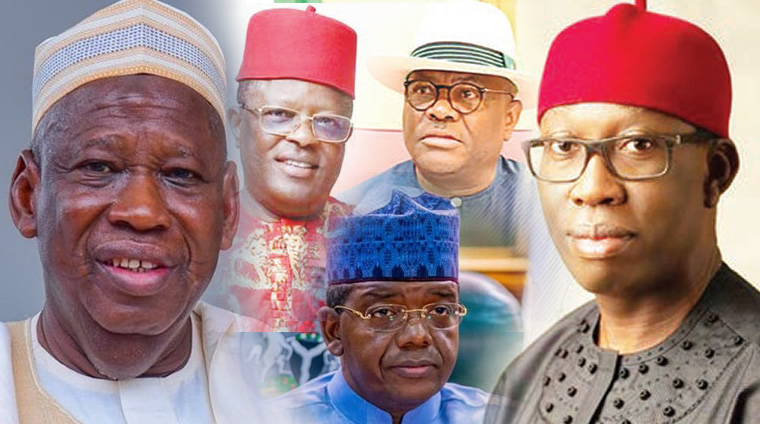
Five-star Retirement: Matawalle, Wike, Okowa, Umahi, Ganduje To Get Mouthwatering Perks (Details)
Five-Star Retirement– Seventeen state governors will hand over to their successors on May 29, 2023, and retire into lives of luxury with generous benefits for their services to their respective states even amidst economic crises, mounting debts, and unhappy and underpaid workers and pensioners.

Governors Nyesom Wike, Ifeanyi Okowa, Udom Emmanuel, Abdullahi Ganduje, Badaru Abubakar, Bello Matawalle, Ben Ayade, Okezie Ikpeazu and David Umahi of Rivers, Delta, Akwa Ibom, Kano, Jigawa, Zamfara, Cross River, Abia and Ebonyi states are set to benefit from generous retirement/pension benefits.

Others outgoing governors who will benefit from the largesse are Ifeanyi Ugwuanyi, Samuel Ortom, Darius Ishaku, Abubakar Bello, Abubakar Bagudu, Nasir El-Rufai, Simon Lalong, Aminu Masari and Aminu Tambuwal of Enugu, Benue, Taraba, Niger, Kebbi, Kaduna, Plateau, Katsina, and Sokoto states, respectively.
The outgoing governors, most of who will be completing two terms of eight years in office on May 28, will be entitled to generous monetary pensions, mansions to be built in locations of their choice, luxury vehicles, and domestic as well as security aides, among others, based on laws passed by their respective state houses of assembly.
Rivers
Wike and his deputy, Dr. Ipalibo Banigo, will enjoy generous benefits after leaving office as provided in the Rivers State Pensions for Governor and Deputy Governor Law, 2012.
The law provides that three new vehicles should be purchased for former governors, and the vehicles are to be changed every four years. This is in addition to the payment of 100 percent of their basic salaries, 300 percent of their annual basic salary for furniture, free medical services, and provision for entertainment. Their deputies also enjoy certain perks.
The pension law for former governors and their deputies was enacted by the administration of former governor Rotimi Amaechi and made other provisions such as two choice houses in any area of their choice in Rivers State and Abuja and three cars replaceable every three years for the governor.
The law also provides that 20 percent, 10 percent, and 10 percent of the annual salary of the incumbent governor should be earmarked for utility, accommodation maintenance, and entertainment, respectively. Wike will be entitled to all these except if he decides otherwise.
Delta
Okowa is entitled to a furnished duplex in Delta State or any other state in the country; medical treatment for him and members of his immediate family; two vehicles, including a utility vehicle, every two years; two armed policemen and one Department of State Security officer; 15 days’ annual vacation in any place of his choice and other benefits. The deputy governor is also entitled to similar perks.
The Delta State Governor and Deputy Governor Pension Rights and Other Benefits Law, 2005 was signed into law by former governor James Ibori, who ruled the state between 1999 and 2007.
The law was later amended in 2009 as the Delta State Governor and Deputy Governor Pension Rights and Other Benefits (Amendment) Law, 2009.
The law makes provision for ex-governors to be paid allowances and other benefits pegged at N50m yearly.
Such perks include one duplex in any city of their choice within Nigeria, one sport utility vehicle and a backup car replaceable every two years, an office with four aides, two security personnel and monthly salaries, among others. Each of the four domestic workers will earn N100,000 monthly.
Akwa Ibom
Akwa Ibom reportedly spends an average of N267.78m yearly on ex-governors and their deputies and Governor Emmanuel and his deputy are expected to enjoy the same as the state’s Pension Act, 2014 provides.
They are also entitled to the replacement of official and utility vehicles every four years.
A former governor of the state, Godswill Akpabio, drew the ire of Nigerians in 2014 when he allegedly sought to draw N100m as medical allowance as provided for in the law.
Kano
Governor Ganduje and his deputy are entitled to 100 percent of their basic salaries, a six-bedroom house, and free medical treatment for themselves and members of their families upon handover on May 29, 2023.
The law guiding pension rights for former governors and deputy governors also states that they will get well-equipped offices.
Jigawa
The Jigawa State ‘Former Public Officers Pension and Other Benefits Law No. 15 of 2015’ stipulate that a governor, who successfully completes his term without impeachment will be entitled to a monthly pension equivalent to the current salary of the current governor, two brand new vehicles to be provided by the state government and to be replaced after every four year, six-bedroom fully furnished house, two personal assistants not below grade level 10, two drivers selected by the governor and to be paid by the state, a fully furnished office in any location of choice and fully paid medical treatment within Nigeria and abroad.
The deputy governor is also to get a monthly pension equivalent to the incumbent’s salary, one assistant not below level eight, one brand new vehicle, a four-bedroom flat, and an office in a location of his choice.
Zamfara
Governor Bello Matawalle lost his re-election bid and will complete his four-year tenure on May 28, 2023.
The ‘Grant of Pension to Governor or Deputy Governor (Amendment Law), 2006’ made provisions for pension and other benefits to former governors. It provided a pension for life equivalent to the salary of the incumbent, two personal staff members, two vehicles replaceable every four years, two drivers, and free medical for former governors, their deputies, and their immediate family members in Nigeria or abroad.
It stipulated N7m monthly for former governors and N2m for former deputy governors, but former governor Abdul-Aziz Yari reviewed it to N10m and N5m monthly, respectively. However, the law was repealed by the state House of Assembly on November 26, 2019.
Sokoto
Governor Tambuwal is expected to inherit the Sokoto State Pension Law, which makes provision for N200m every four years for former governors, while his deputy is entitled to perks amounting to N180m, being monetization for other entitlements, including domestic aides, residences, and vehicles that can be renewed after every four years.
Section 2 (2) of the Sokoto State Grant of Pension (Governor and Deputy Governor) Law, 2013 states, “The total annual pension to be paid to the governor and deputy governor shall be at a rate equivalent to the annual total salary of the incumbent governor or deputy governor of the state, respectively.”
Abia
Governor Ikpeazu is entitled to 100 percent of his salary and official vehicles worth N20m to be replaced every four years, a police orderly, two operatives of the Department of State Service, two policemen for the security of his house, as well as allowances for cooks, stewards, driver, and gardener, while his deputy will enjoy similar benefits.
The law also made provisions for medical attention for the former governors and their deputies.
The Pension Law for former governors and deputy governors of the state also provides that former governors are entitled to “the sum of money as may from time to time be granted by the state government by way of pensions, allowances, and privileges in accordance with this law.”
Niger
Governor Abubakar Sani Bello will vacate the Government House in Minna to the Senate to represent the Niger North Senatorial District and will be a beneficiary of a pension scheme introduced by the Abdulkadir Kure administration, which provides for the payment of pension to former governors and deputy governors and the provision of two drivers on GL 07, two personal assistants on Grade Level 08, security aides and an SUV renewable every year. He will also get a mansion in a location of his choice.
Katsina
Governor Masari will complete his second term on May 28. He served as the Speaker of the House of Representatives before becoming the governor.
The Katsina State Pension Law, 2011 as amended provides pensions for all former governors of the state, including those who served in the old Kaduna State from which Katsina was carved out.
The governor, just like his predecessors, is to enjoy free houses and medical services under the law as well as pension benefits of N2.22m monthly, vehicles, and personal aides.
Ebonyi
The Ebonyi State Political Office Holders Amendment Law, 2011 makes provision for the payment of pension to Governor Umahi, who is set to move to the Red Chamber of the National Assembly. The law also made provisions for vehicles and personal aides, among others, for the governor and his deputy.
However, the pension laws for former governors and their deputies in Cross River, Enugu, Taraba, Kebbi, Kaduna, and Plateau states could not be obtained as of the time of going to press.




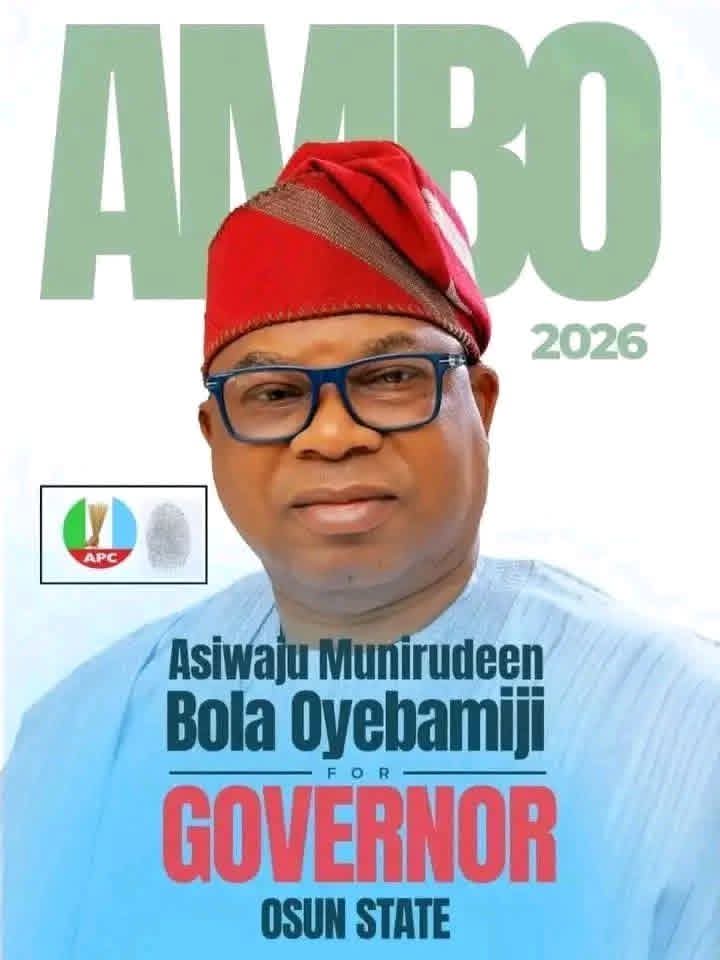
AMBO and the Osun Governorship Race: Assessing the Man, the Politics and the Vision
As political activities gather momentum ahead of the 2026 Osun State governorship election, a public affairs commentator, Oluseyi Olonade, has described the emergence of Asiwaju Munirudeen Bola Oyebamiji, popularly known as AMBO, as a significant development in the state’s political landscape.
In an article titled “Oyebamiji: The Man, The Politics and The Aspiration,” Olonade argued that the All Progressives Congress governorship hopeful possesses the character, experience and vision needed to reposition Osun State for sustainable growth.
According to the writer, Oyebamiji’s appeal stems from his extensive background in the banking sector, where he spent nearly three decades working with institutions including Wema Bank, Trans International Bank, Spring Bank and Enterprise Bank.
A native of Ikire in Irewole Local Government Area, Oyebamiji was described as a technocrat whose experience in corporate governance, finance and risk management has shaped his approach to public administration.
The article noted that his public service journey gained prominence in 2012 when he was appointed to oversee the then Osun State Investment Company Limited. Under his leadership, the organisation was reportedly restructured and transformed into Omoluabi Holdings Limited.
The writer further highlighted Oyebamiji’s tenure as Commissioner for Finance under successive APC administrations, where he was credited with managing the state’s finances during challenging economic periods.
Olonade also referenced Oyebamiji’s appointment as Managing Director of the National Inland Waterways Authority, describing it as further evidence of his administrative and leadership capabilities.
The article contrasted Oyebamiji’s governance philosophy with that of the current administration in Osun State, arguing that the APC aspirant favours institutional reforms, economic diversification and fiscal discipline.

According to the writer, Oyebamiji’s proposed agenda includes strengthening transparency in government spending, expanding internally generated revenue, attracting private-sector investments and promoting industrial and agricultural development.
The article also highlighted youth empowerment, entrepreneurship development and digital skills acquisition as key components of his vision for the state.
Olonade concluded that the forthcoming governorship election would present voters with a choice between different approaches to governance, expressing confidence that Oyebamiji’s experience and developmental agenda make him a strong contender in the race.
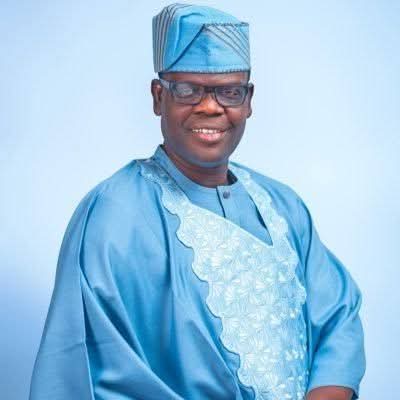
*Oselu Tiwa nTiwa Endorses Oriyomi Hamzat for Oyo Governorship*
A sociopolitical support group in Oyo State, Oselu Tiwa nTiwa, has declared its support for Alhaji Oriyomi Hamzat as the authentic governorship candidate of the Accord Party ahead of the forthcoming governorship election in the state.
The group made its position known in a statement jointly signed by its President, Mr. Adewale Oluwaseyi and Secretary, Alh. Adebayo Oyewole, on Thursday, describing Hamzat as a grassroots figure with strong connection to the people and a track record of humanitarian interventions across Oyo State.

According to the group, the endorsement followed what it described as careful observation of Hamzat’s leadership qualities, compassion and dedication to the welfare of ordinary citizens.
“Oriyomi Hamzat has consistently demonstrated empathy, courage and selfless commitment to humanity. Through his numerous interventions in the lives of ordinary citizens, he has become a symbol of hope to many families and communities,” the statement read.
Oselu Tiwa nTiwa also appealed to the national leadership of the Accord Party to prioritise the long-term future and electoral growth of the party in its decision-making process.
The group noted that Hamzat’s candidacy presents an opportunity for the party to strengthen its grassroots support base and expand its political relevance across Oyo State.
“We respectfully appeal to the National Leadership of the Accord Party to look beyond immediate political calculations and consider the bigger picture, the future growth, stability and electoral success of the party in Oyo State and beyond,” the statement added.
The group further expressed confidence in the leadership of the party, saying it believes the party’s national officers and stakeholders would take decisions that reflect fairness, inclusiveness and the collective interest of members.
While calling on party loyalists to remain calm and united, Oselu Tiwa nTiwa said continued consultations among stakeholders would help strengthen the Accord Party ahead of the election.
Signed:
Alh. Adebayo Oyewole,
Secretary.
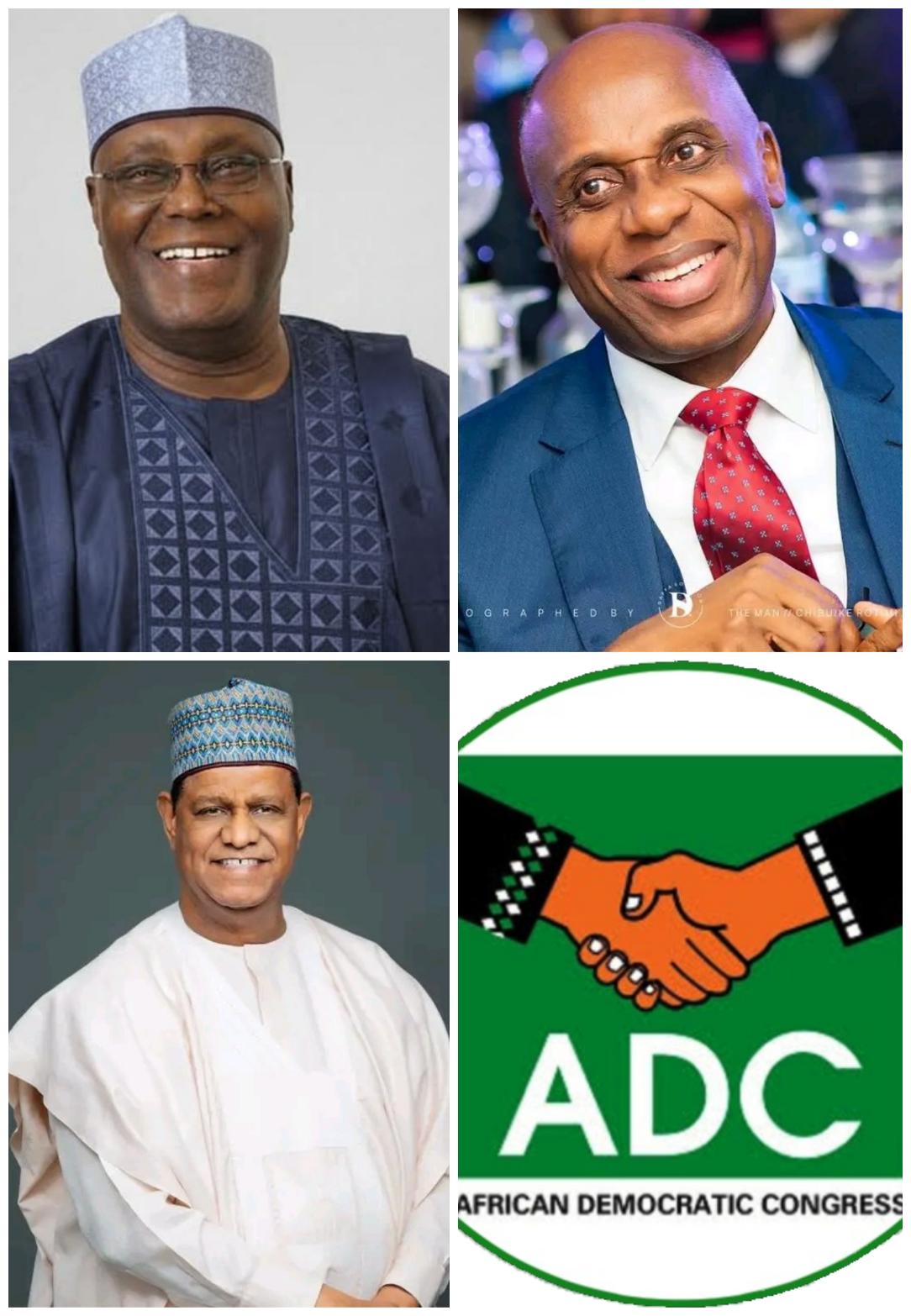
Atiku Set To Clinch ADC Presidential Ticket, Leads Amaechi, Hayatu-Deen In 34 States
Former Vice President of Nigeria and frontline presidential aspirant of the African Democratic Congress (ADC), Atiku Abubakar, is projected to emerge winner of the party’s presidential primaries, according to impeccable sources in Abuja.
The primaries, conducted across over 8,000 wards in the 36 states of the federation and the Federal Capital Territory, reportedly placed Atiku far ahead of his closest rivals — former Rivers State Governor, Rotimi Amaechi, and former Chairman of the Nigerian Economic Summit Group, Mohammed Hayatu-Deen.

Highly placed party insiders disclosed that Atiku is currently leading in 34 states, including the FCT, after securing dominance across the 19 Northern states, the five South-East states, and the six South-West states, while also maintaining a strong showing in at least three states in the South-South geopolitical zone.
The sources added that the outcome reflects what they described as “an overwhelming nationwide acceptance” of the former vice president within the opposition party ahead of the 2027 general election.
Meanwhile, the ADC leadership has invited members of the press to the official announcement of the final collated results scheduled for 11:00 a.m. on Tuesday, May 26, 2026, in Abuja.
The declaration of results is expected to be broadcast live on ARISE Television and two other major television stations, while also being livestreamed on the party’s official social media platforms on X and Facebook.
Speaking ahead of the announcement, the founding National Chairman of the ADC, Chief Ralph Nwosu, said the decision to televise the exercise live was aimed at promoting transparency and democratic accountability.
“We want millions of Nigerians at home and in the Diaspora to witness democracy in action,” Nwosu said.
He further revealed that the party leadership would encourage all three presidential aspirants to publicly embrace a peace accord and commit themselves to working together in unity for the party’s success.
According to him, the move is necessary to strengthen internal cohesion and position the ADC for victory in the presidential election scheduled for January 16, 2027.
Details later.


- Uganda: Parliament concludes vetting of ministers June 2, 2026
- Fund for Export Development in Africa (FEDA) Board Appoints Mr. Emmanuel Assiak as Chief Executive Officer June 2, 2026
- Ecobank Group Launches World First Nature Bond Mobilising Global Capital to Protect Africa’s Natural Ecosystems June 2, 2026
- Merck Foundation Chief Executive Officer (CEO) Dr. Rasha Kelej together with Kenya First Lady support the education of 47 Kenyan Schoolgirls by providing Annual Scholarships till they Graduate June 2, 2026
- Annual Meetings 2026: Governors Back the Bank’s Platform Solutions to Transform Aviation and Health Systems in Africa June 2, 2026
- ThinkMarkets launches ChelseaAI, bringing live CFD trading into Artificial Intelligence (AI) assistants June 2, 2026
- Afreximbank Invites Rugby Africa President Herbert Mensah to Address the 33rd Annual Meetings on a Panel Exploring Sport as a Driver of African Industrialisation June 2, 2026
- Afreximbank Deepens Commitment to Economic Progress in The Bahamas June 1, 2026
- African Electric Vehicle (EV) platform Spiro raises $215M in equity to scale electric mobility and energy infrastructure across Africa June 1, 2026
- Africa Centres for Disease Control and Prevention (Africa CDC) Statement on Attacks Against Health Facilities During the Bundibugyo Virus Disease Response in the Democratic Republic of the Congo June 1, 2026
- Uganda: Parliament concludes vetting of ministers June 2, 2026
- Fund for Export Development in Africa (FEDA) Board Appoints Mr. Emmanuel Assiak as Chief Executive Officer June 2, 2026
- Ecobank Group Launches World First Nature Bond Mobilising Global Capital to Protect Africa’s Natural Ecosystems June 2, 2026
- Merck Foundation Chief Executive Officer (CEO) Dr. Rasha Kelej together with Kenya First Lady support the education of 47 Kenyan Schoolgirls by providing Annual Scholarships till they Graduate June 2, 2026
- Annual Meetings 2026: Governors Back the Bank’s Platform Solutions to Transform Aviation and Health Systems in Africa June 2, 2026
- ThinkMarkets launches ChelseaAI, bringing live CFD trading into Artificial Intelligence (AI) assistants June 2, 2026
- Afreximbank Invites Rugby Africa President Herbert Mensah to Address the 33rd Annual Meetings on a Panel Exploring Sport as a Driver of African Industrialisation June 2, 2026
-

 news6 months ago
WHO REALLY OWNS MONIEPOINT? The $290 Million Deal That Sold Nigeria’s Top Fintech to Foreign Interests
-

 society1 month ago
SOCIAL MEDIA IS NOT A BATTLEFIELD COMMAND – WHY THE NIGERIAN ARMY’S ACTION AGAINST JUSTICE CRACK IS A NATIONAL SECURITY IMPERATIVE
-

 celebrity radar - gossips4 months ago
Dr. Chris Okafor Returns with Power and Fire of the Spirit -Mounts Grace Nation Altar with Fresh Anointing and Restoration Grace on February 1, 2026
-

 celebrity radar - gossips6 months ago
Prophet Kingsley Aitafo Releases 2026 Prophecy: ‘Nigeria Will Rise, but the World Must Prepare for Turbulence’