
society
From Boom to Burden: Nigeria’s Public Debt Skyrockets to ₦152.39 Trillion; The Fiscal Timebomb No One Can Afford to Ignore

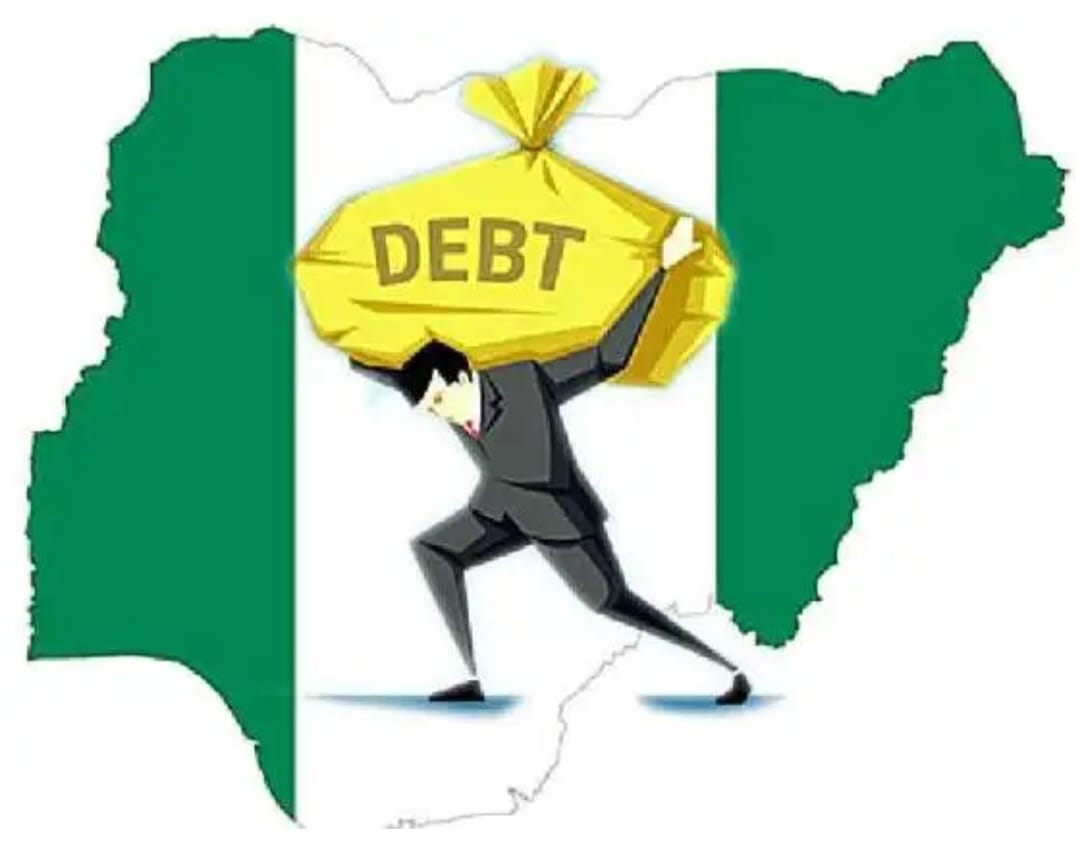
From Boom to Burden: Nigeria’s Public Debt Skyrockets to ₦152.39 Trillion; The Fiscal Timebomb No One Can Afford to Ignore.
By George Omagbemi Sylvester, published on saharaweeklyng.com
“A deep dive into the National Bureau of Statistics’ Q2 2025 debt report, the drivers of the surge, its human and macroeconomic costs and urgent remedies the country must adopt.”
Nigeria’s public debt stock climbed to ₦152.39 trillion in the second quarter of 2025, a number so large it should break the complacency of every policymaker, investor and citizen. The National Bureau of Statistics (NBS) disclosed the figure in its Nigerian Domestic and Foreign Debt Report for Q2 2025, noting that the total represents an increase from ₦149.38 trillion in Q1 2025 and an eye-watering year-on-year rise of about ₦18.09 trillion from Q2 2024.

This is not arithmetic on a spreadsheet. It is a health check on the nation’s financial body and the diagnosis is troubling. The report shows that external debt stood at ₦71.84 trillion (about US$46.98 billion) while domestic debt reached ₦80.55 trillion (about US$52.67 billion), meaning domestic borrowing now accounts for just over half of the stock and is driving much of the recent rise.
What the numbers mean and why they are dangerous. A 2.01% quarter-on-quarter rise to ₦152.39 trillion may look modest in percentage terms, but the absolute jump and its composition carry several threats:
Debt service crowding-out. Debt servicing already consumes a growing share of government revenues. In the first quarter of 2025, public debt servicing ran into the trillions of naira monthly, a drain on funds that would otherwise finance hospitals, schools, roads and social safety nets. When more revenue goes to pay creditors, less remains for capital expenditure that lifts living standards.

Exchange rate and currency risk. A large external component exposes Nigeria to exchange rate volatility. When the naira weakens, the naira-equivalent cost of external obligations rises, inflating the debt stock in naira terms even when dollar liabilities are unchanged. This mechanism has pushed Nigeria’s debt figures higher in recent quarters.
Shift toward domestic borrowing. The tilt to domestic markets can temporarily shield Nigeria from forex swings but it is not benign: domestic borrowing competes with the private sector for savings, can raise interest rates and risks “crowding out” private investment. The NBS data show domestic debt now represents roughly 52.9% of the total stock which is a structural shift with consequences for growth.
Fiscal sustainability and bond market appetite. Investors will demand higher yields if they sense fiscal slippage or that borrowing is financing consumption rather than productive investment. Higher yields increase future debt service costs and can precipitate a vicious cycle of borrowing and servicing. International lenders and rating agencies watch these trends closely.
Voices of alarm; experts weigh in. This is not just a numbers story. Economists and fiscal watchdogs have repeatedly warned that Nigeria’s rising debt service burden risks displacing essential public investment. Muda Yusuf, CEO of the Centre for the Promotion of Private Enterprise, has stressed that the country’s growing debt-service obligations are already outpacing capital expenditure and that if left unchecked the trend will “CROWD OUT ESSENTIAL GOVERNMENT FUNCTIONS.” His warning is a sober reminder that borrowing without a credible plan for revenue growth and efficiency is a recipe for stagnation.
From the policy side, Finance Minister Olawale (Wale) Edun has defended ongoing reforms while acknowledging the fiscal pressures they aim to correct; his public commentary has emphasized the need to balance reform momentum with debt sustainability. But words must be matched with concrete measures and revenue reform, expenditure prioritization and transparent use of loan proceeds.
BudgIT and other civil-society monitors have also cautioned that fresh borrowing plans risk breaching prudential thresholds unless accompanied by aggressive fiscal consolidation and transparency. The public deserves clear accounting of what loans are for and how they translate into jobs, services and growth.
Who owes what? – sub-national contributions and the Lagos effect. The NBS report flagged that several sub-national governments (states and local councils) account for a material portion of liabilities. Lagos State, Africa’s commercial powerhouse, tops the list of state debtors, reflecting a mix of infrastructure projects and financing strategies used by its government. This raises questions about the sustainability of state borrowing and coordination with federal debt strategy.
State borrowing is not inherently wrong: cities and states need capital for roads, water and urban services. But the danger comes when short-term revenue mismatches finance long-term projects, or when guarantees and contingent liabilities are not transparently recorded in public accounts, risks that compound national exposure.
The human cost; AUSTERITY by another name. Debt is not an abstract macro variable; it is translated into policy choices that affect ordinary Nigerians. When debt servicing eats into the budget, governments face stark options: cut capital projects, raise taxes, reduce subsidies or borrow more. Each option hits households. Higher taxes and reduced services fall hardest on the poor; heavier borrowing sows the seeds of future austerity. The recent rounds of subsidy reform and tariff adjustments illustrate how fiscal tightening quickly becomes a matter of daily survival for vulnerable families.
Practical policy prescriptions; what must happen now. Nigeria needs a coherent, aggressive and transparent strategy to arrest unsustainable debt dynamics. Key policy measures should include:
Fiscal consolidation anchored on revenue growth, not just austerity. Close tax gaps, widen the tax base, modernize collection and rationalize exemptions. Without credible revenue mobilization, debt reduction will be cosmetic.
Prioritize productive borrowing. New loans must be costed against expected economic returns. Borrow for infrastructure that catalyzes private investment and jobs; avoid borrowing to fund recurrent consumption.
Strengthen debt transparency and sub-national coordination. Publish timely, disaggregated debt data (federal, state, guaranteed, contingent liabilities) and enforce borrowing rules for states. Citizens must be able to see what is owed and for what purpose.
Protect capital expenditure. Ring-fence a minimum share of spending for capital projects; prioritize those with measurable social returns. Debt that finances growth pays for itself; debt that finances consumption destroys fiscal space.
Engage creditors for smarter terms. Where appropriate, renegotiate maturities, explore concessional windows, and pursue blended finance with private partners to reduce direct government exposure.
A closing warning and a call to action. Nigeria’s rise to ₦152.39 trillion in public debt is not destiny; it is a consequence of choices. The challenge for leaders is to choose policies that restore fiscal balance, revive growth and protect the poorest. As Muda Yusuf cautioned, the country cannot allow debt servicing to outpace capital spending or to become the tail that wags the dog.
If policymakers fail to act decisively, the result will be slow growth, higher costs of living and a future generation saddled with the obligation to repay a debt that did not translate into durable prosperity. The NBS report is a clarion call and EVERY RESPONSIBLE NIGERIAN, from the PRESIDENCY to the STREET, must treat it as such.





FOPCHEN Seeks Wider Engagement As Court Defers Hearing
OTA, OGUN STATE — The High Court of Ogun State, Ota Division, on Thursday resumed hearing in the ongoing matter involving cultural and societal concerns, before adjourning proceedings till Thursday, July 2, 2026, for continuation of hearing.
At the resumed sitting on May 28, 2026, counsel representing the various parties revisited key issues in the case and made further submissions before the court.
The matter, which has continued to generate public interest across different sectors, again drew attention from legal observers and stakeholders who described the case as one with significant implications for societal values, cultural identity and constitutional interpretation.
Speaking after the proceedings, the Foundation for the Protection of Cultural Heritage in Nigeria, popularly known as FOPCHEN, renewed its appeal for dialogue and constructive engagement among Nigerians, stressing that sensitive cultural and moral issues should not be left entirely within the confines of the courtroom.
According to the group, broader conversations involving traditional institutions, civil society organisations, religious leaders and policy stakeholders remain necessary in addressing issues relating to national values and social responsibility.
Legal analysts at the court premises noted that arguments being canvassed by parties in the suit could shape future legal interpretations surrounding cultural and moral questions in the country.
Following submissions by counsel, the presiding judge adjourned the matter till Thursday, July 2, 2026, to enable parties further prepare and respond to issues raised during the hearing.
The development has continued to spark reactions among observers, with many Nigerians closely monitoring the proceedings ahead of the next hearing date.

US-Based Society Lady, Fehintola-Brat Extends Eid-El-Kabir Greetings To Muslims
United States based fahionista of class, Chief (Mrs) Ayoola Fehintola-Brat has extended a warm greetings to Muslim faithful all over the world on the occasion of the 2026 Eid-El-Kabir celebration.
Fehintola-Brat who is the Balogun Egbe Obaneye Obinrin Akile Ijebu, and the Yeye Asofin of Idenaland in her message to Journalists urged Muslim to continually uphold the enduring values of sacrifice, obedience, faith, and compassion, which are central to the significance of Eid-El-Kabir festival.
A quiet philantropist whose humanitarian services has won her several laurels urged Muslims to use the spiritual occasion to pray for the peace co-existence of Nigerians regardless of religious, social and political leanings stressing that the oneness of the country should not be underplay.
In a related development, she expressed her felicitations to all sons and daughters of Ijebuland on the forthcoming Ojude Oba 2026 celebration, tasking age-groups otherwise known as Regbregbe to be more proactive in giving back to their immediate communities.
According to her, the beauty of the age-groups in Ijebuland is the need to contribute immensely to the development of the land in no small means. “This we will continue to achieve with God on our side”, she concluded.
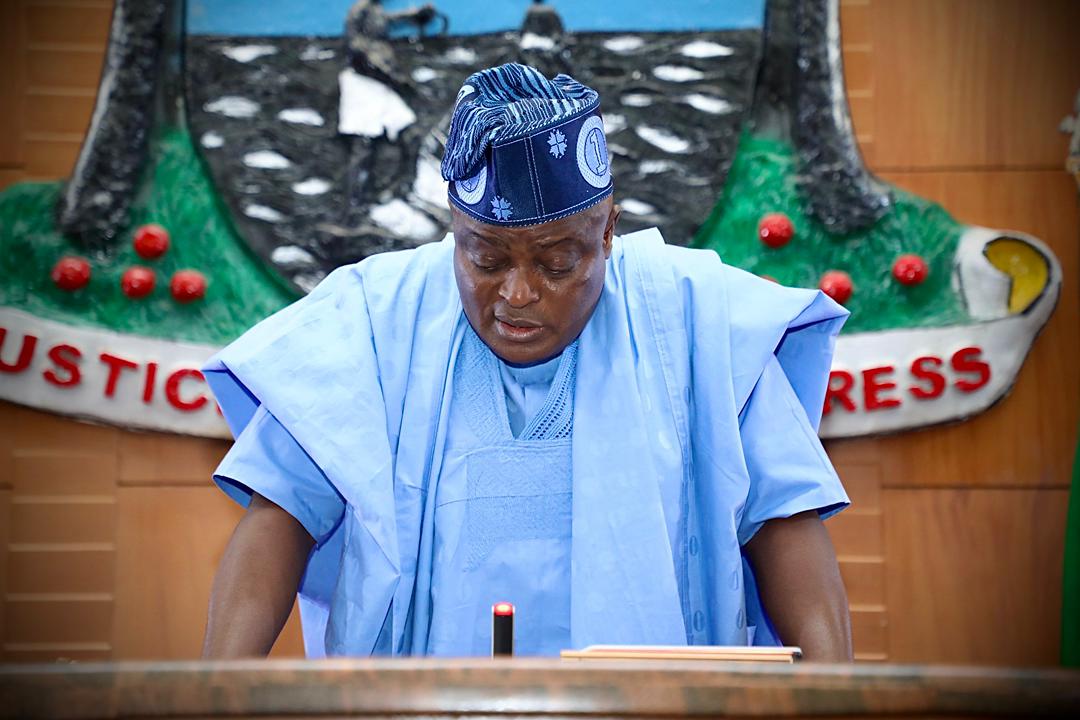
Sallah: Obasa Felicitates Muslim Ummah, Commends Nigerians for APC Primaries Turnout
The Speaker of the Lagos State House of Assembly, Rt. Hon. Mudashiru Obasa has extended warm felicitations to Muslims in Lagos State and across Nigeria on the occasion of Eid al-Adha.
In a statement released by his Chief Press Secretary, Mr. Dave Agboola, Obasa described the festival as a season of sacrifice, reflection, and gratitude, urging the faithful to continue to uphold the values of peace, unity, and love that strengthen the nation.
He noted that the celebration of Eid al-Adha is not only a spiritual milestone but also a reminder of the importance of togetherness and collective responsibility in building a stronger society.
He, likewise, emphasized that the festival provides an opportunity for Nigerians to renew their commitment to national progress and to support leadership that prioritizes development and prosperity.
Obasa, however, commended Nigerians, particularly members of the All Progressives Congress (APC), for their massive turnout during the recently concluded party primaries. He described the participation as a clear demonstration of the people’s confidence in the government of President Bola Ahmed Tinubu and their belief in the administration’s vision for a greater Nigeria.
“The APC primaries have shown the resilience of our democracy and the confidence Nigerians have in the leadership of President Bola Ahmed Tinubu and the Renewed Hope Agenda. This is a strong message that our people are ready to continue supporting policies that will drive growth and prosperity,” Obasa stated.
The Speaker further encouraged Muslims to celebrate responsibly, stressing that the joy of Eid should be accompanied by prayers for the continued peace and progress of Lagos State and Nigeria.
“As you celebrate with family and loved ones, may this season bring joy, peace, and prosperity to your homes. Let us remain united in our resolve to build a stronger nation,” he added.
On behalf of the Lagos State House of Assembly, Obasa wished all Muslims a happy and fulfilling Eid al-Adha celebration.


- Société Nationale des Pétroles du Congo (SNPC) Chief Ominga to Speak at African Energy Week (AEW) 2026 as Congo Accelerates Gas Expansion May 29, 2026
- South Africa: Deputy President Mashatile arrives in India for a Working Visit May 29, 2026
- Seychelles: President Visits Key Development Sites on Coetivy Island May 29, 2026
- Accelerating regional action to advance mental health care in Africa May 29, 2026
- President of the Republic of Seychelles Meets Young La Digue Talent Ahead of London Showcase May 29, 2026
- United Nations Economic Commission for Africa (ECA) launches regional initiative to accelerate women’s digital entrepreneurship across four African countries May 29, 2026
- Ethiopia: International community must act to safeguard press freedom ahead of national election May 29, 2026
- CORRECTION: Annual Meetings 2026 (AM2026): African Development Bank (AfDB) 2025 Trade Finance Report Highlights Resilience of African Financial Institutions After Covid-19 May 29, 2026
- Why Big Tech Could Become Nigeria’s New Gas Partner May 29, 2026
- African Energy Chamber (AEC)-Venezuela Alliance Accelerates Pathways into South-South Energy Expansion May 29, 2026
- Société Nationale des Pétroles du Congo (SNPC) Chief Ominga to Speak at African Energy Week (AEW) 2026 as Congo Accelerates Gas Expansion May 29, 2026
- South Africa: Deputy President Mashatile arrives in India for a Working Visit May 29, 2026
- Seychelles: President Visits Key Development Sites on Coetivy Island May 29, 2026
- Accelerating regional action to advance mental health care in Africa May 29, 2026
- President of the Republic of Seychelles Meets Young La Digue Talent Ahead of London Showcase May 29, 2026
- United Nations Economic Commission for Africa (ECA) launches regional initiative to accelerate women’s digital entrepreneurship across four African countries May 29, 2026
- Ethiopia: International community must act to safeguard press freedom ahead of national election May 29, 2026
-

 news6 months ago
WHO REALLY OWNS MONIEPOINT? The $290 Million Deal That Sold Nigeria’s Top Fintech to Foreign Interests
-

 society4 weeks ago
SOCIAL MEDIA IS NOT A BATTLEFIELD COMMAND – WHY THE NIGERIAN ARMY’S ACTION AGAINST JUSTICE CRACK IS A NATIONAL SECURITY IMPERATIVE
-

 celebrity radar - gossips4 months ago
Dr. Chris Okafor Returns with Power and Fire of the Spirit -Mounts Grace Nation Altar with Fresh Anointing and Restoration Grace on February 1, 2026
-

 celebrity radar - gossips6 months ago
Prophet Kingsley Aitafo Releases 2026 Prophecy: ‘Nigeria Will Rise, but the World Must Prepare for Turbulence’