
celebrity radar - gossips
From Chaos to Coordination: The Case for Veteran Security Leaders in Nigeria FEMI OYEWALE

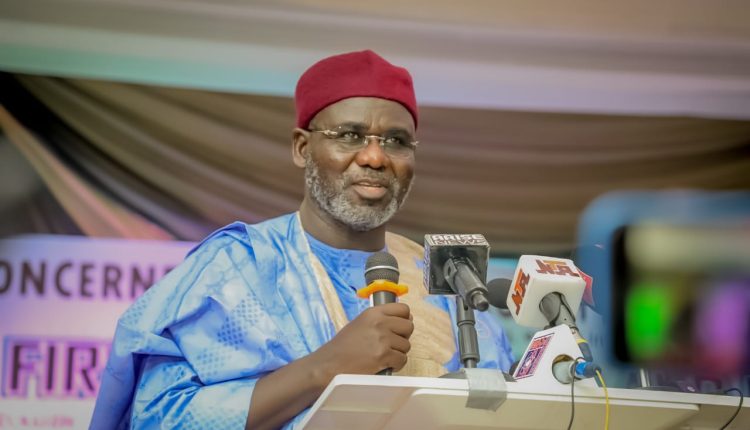
From Chaos to Coordination: The Case for Veteran Security Leaders in Nigeria
FEMI OYEWALE
As Nigeria grapples with a fresh and more diffuse wave of violent attacks—from mass abductions and jihadist offensives in the northeast to rising banditry and communal violence across the North and Middle Belt—citizens and policymakers are asking a pressing question: who is fit to lead the country out of this security quagmire? For many, the answer is clear: experienced security professionals who combine operational expertise, institutional memory, and political acumen—traits embodied by former Chief of Army Staff, Lt. Gen. Tukur Buratai.
A deteriorating security landscape
This is no rhetorical problem. In recent months, insurgent activity has surged: mass kidnappings of schoolchildren, renewed offensives by IS-affiliated factions in the Lake Chad Basin, and a humanitarian fallout that has pushed millions toward food insecurity. United Nations and humanitarian assessments warn that escalating attacks and aid shortfalls may leave record numbers of Nigerians vulnerable to hunger.
The federal government has responded with declarations and expanded recruitment. President Bola Tinubu declared a nationwide emergency and moved to increase policing and security deployments following high-profile kidnappings. But analysts argue that while necessary, these steps are insufficient without a deeper overhaul of strategy, intelligence, and civil-military coordination.
What experienced security actors bring
Supporters of involving seasoned security leaders point to several complementary strengths:
1. Operational know-how and strategic continuity
Career generals like Buratai have overseen complex counter-insurgency campaigns and institutional reforms. Their experience—ranging from combined-arms operations and logistics under duress to theater-level coordination with regional partners—is not easily replaced. Buratai himself has argued that simplistic personnel changes will not end insurgency without properly understood strategies.
2. Intelligence and information integration
Modern insurgencies thrive on intelligence gaps: porous borders, weak human networks, and poor data-sharing between military, police, and civil authorities. Experienced security professionals are better positioned to rebuild intelligence architectures, including cross-border liaison in the Sahel and Lake Chad Basin, where jihadist groups operate across borders. Recent analyses highlight this cross-border threat environment and stress the need for coordinated military and intelligence responses.
3. Institutional reform and troop welfare
Studies of Nigeria’s fight against Boko Haram highlight recurring problems: low troop morale, logistical shortfalls, intelligence leaks, and strained community relations—all of which blunt operational effectiveness. Experts with institutional experience can advocate structural reforms—improved supply chains, training, and rules of engagement—that strengthen forces without alienating civilians.
4. Political navigation and credibility
Security solutions in Nigeria require buy-in at federal, state, and local levels. Former service chiefs often retain connections inside government and among regional partners and can serve as intermediaries between uniformed forces and civilian authorities—a role proven critical in past crises. Buratai’s recent public interventions on national security issues demonstrate how ex-service chiefs continue shaping public debate and policy.
Acknowledging risks and criticisms
Inviting former generals into leadership roles is not a panacea. Critics cite potential issues: militarization of civilian governance, heavy-handed tactics that alienate communities, and insufficient focus on root causes such as poverty, governance gaps, youth unemployment, and communal grievances. Military success must be paired with governance, development, and reconciliation for durable peace.
There is also a political dimension: using high-profile military figures risks politicizing security campaigns if appointments are perceived as partisan or operational freedom is constrained. Transparency, clear legal mandates, and civilian oversight are essential safeguards.
A pragmatic middle path: experts as partners, not replacements
The most defensible approach is hybrid: appoint or empower seasoned security experts as advisers and architects of reform while ensuring civilian control and robust safeguards. Key policy measures include:
Integrated intelligence reform: Build interoperable systems fusing military, police, and domestic security data; strengthen cross-border intelligence sharing in the Sahel and Lake Chad regions.
Focused professionalization of forces: Prioritize logistics, asymmetric warfare training, troop welfare, and clear rules of engagement to reduce abuses and improve morale.
Community-centered stabilization: Pair operations with local security committees, humanitarian access, agricultural support, and reconciliation to deny insurgents social support.
Regional and international coordination: Work with neighboring states, ECOWAS, the African Union, and partners to close safe havens and cut finance and supply lines for extremist groups.
Clear civilian oversight and legal frameworks: Ensure any role for former senior officers is defined by statutes, reporting lines, and parliamentary oversight.
Nigeria’s security challenge in 2025 is complex and urgent: the country faces a resurgent, adaptive insurgency network with severe humanitarian consequences. Discarding institutional know-how is a luxury Nigeria cannot afford. Experienced security professionals like Lt. Gen. Tukur Buratai are not magic bullets—but they bring operational experience, institutional knowledge, and networks that, when embedded within a framework emphasizing civilian oversight, development, and regional cooperation, can materially improve Nigeria’s chances of restoring security.
The essential test will be whether policymakers pair expert military advice with meaningful reforms in intelligence, governance, and community engagement—otherwise, the cycle of violence and humanitarian suffering will continue.




celebrity radar - gossips
General Buratai to deliver University of Ilorin’s distinguished personality lecture
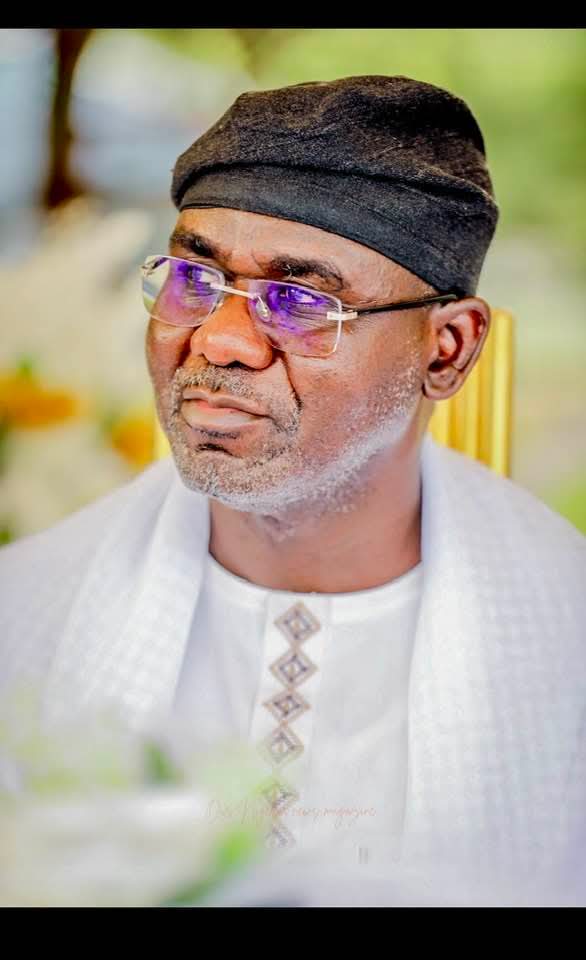
General Buratai to deliver University of Ilorin’s distinguished personality lecture
The Department of Criminology and Security Studies at the University of Ilorin has announced that a former Chief of Army Staff and former Ambassador to the Republic of Benin, Ambassador Lt. General (Rtd) Tukur Buratai (CFR), will deliver its prestigious Distinguished Personality Lecture.

The lecture is scheduled to take place on Saturday, 23rd May 2026, at the University Auditorium by 10:00 a.m. The Vice-Chancellor of the University, Prof. Wahab Olasupo Egbewole (SAN), is expected to be the Chief Host, while Dr. Monsurat Isiaka (Ph.D.), Head of the Department, will serve as Host.
Buratai, who brings a wealth of unmatched experience from his military and diplomatic service, will be speaking on the critical theme: “The Armed Forces of Nigeria and National Security: The Youth and National Aspirations.”
The lecture aims to foster critical conversation about Nigeria’s future security landscape, the pivotal role of the armed forces in national stability, and the interplay between national aspirations and the country’s youth population.
celebrity radar - gossips
From Global Stages to Public Service: Media Mogul Fidelis Duker Officially Joins House of Reps Race for Akpabuyo/Bakassi/Calabar South
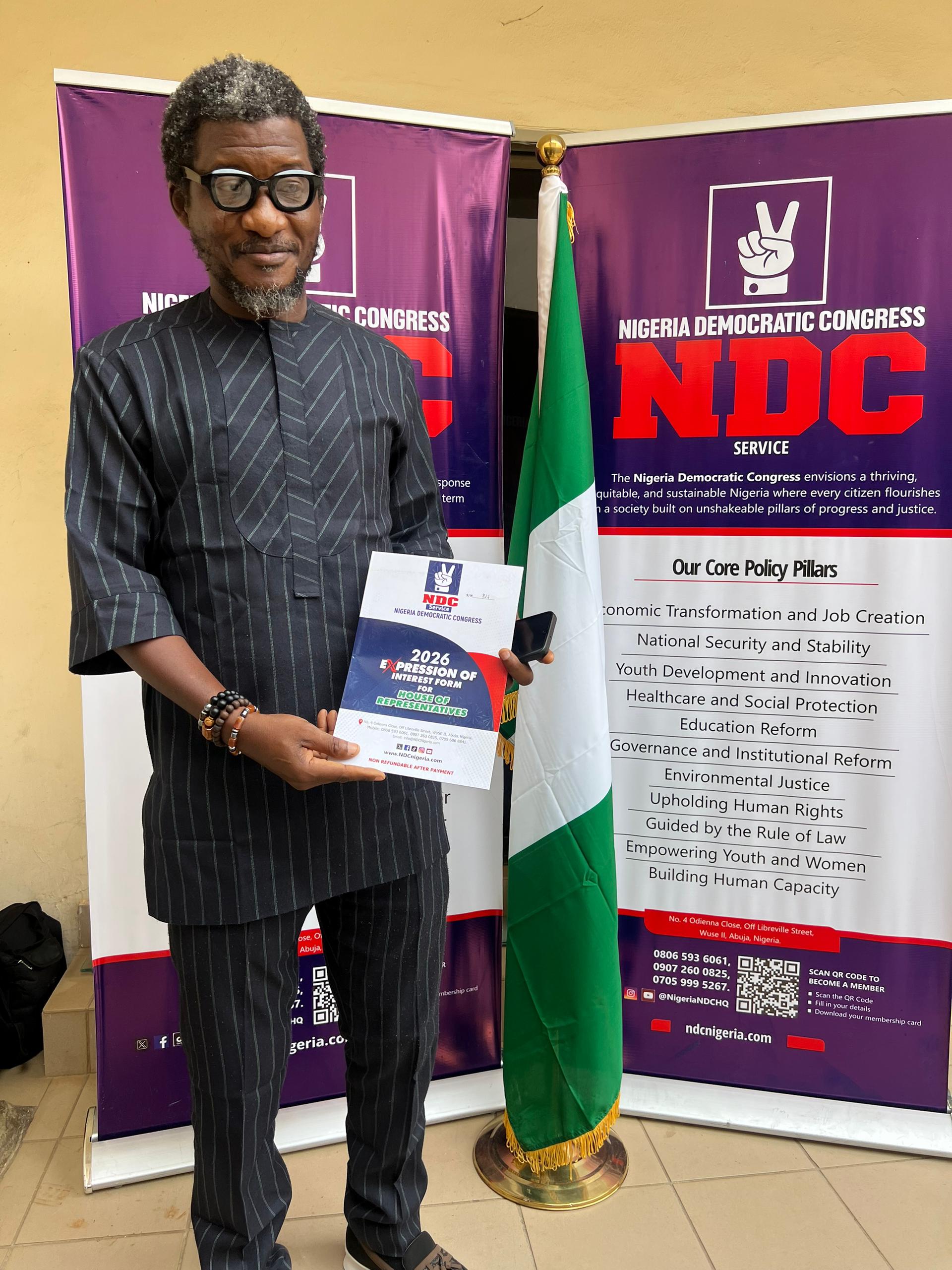
From Global Stages to Public Service: Media Mogul Fidelis Duker Officially Joins House of Reps Race for Akpabuyo/Bakassi/Calabar South
CALABAR, NIGERIA – Renowned media practitioner, veteran filmmaker, and global cultural ambassador, Fidelis Duker, has officially declared his intention to run for the Federal House of Representatives, representing the Akpabuyo/Bakassi/Calabar South Federal Constituency.
In a definitive move that bridges the gap between international enterprise and grassroots governance, the Henshaw Town-born pioneer has successfully picked up his Expression of Interest (EOI) form under the platform of the NNigeria Democratic Congress (NDC).
Duker’s entry into the legislative race brings an unprecedented level of global exposure and professional pedigree to Cross River State’s political landscape. For over three decades, he has stood as a towering figure in Africa’s creative economy.
As the founder of the Abuja International Film Festival West Africa’s longest-running film festival, and the Regional Secretary General for the Federation of Pan African Filmmakers (FEPACI), Duker has consistently flown Nigeria’s flag at prestigious international fora worldwide. From presenting the brilliance of African storytelling at the legendary Cannes Film Festival in France to driving strategic industry dialogues across Europe and Africa, his extensive global travels have positioned him as a master of international relations and resource mobilization.
“Our constituency does not suffer from a lack of potential; it suffers from a lack of structured, globally competitive representation,” Duker stated following the collection of his nomination documents. “My career has been defined by creating wealth, building platforms, and placing Nigerian talent on the world map. I am stepping into this race to deploy that exact same global network, corporate discipline, and innovative leadership to bring sustainable development, youth empowerment, and infrastructure to Akpabuyo, Bakassi, and Calabar South.”
Duker’s visionary campaign is backed by an elite, multi-disciplinary educational background curated from top-tier local and international institutions. He holds credentials from the prestigious Nigerian Institute of Journalism and Crawford University, alongside advanced professional training from the University of California, Los Angeles (UCLA). His world-class expertise in broadcasting and mass communications was further sharpened at the globally acclaimed BBC Training Academy and the Deutsche Welle Training Akademie, complementing his academic roots at the Cross River University of Technology.
As the Chief Executive Officer of FAD Media Productions—the powerhouse behind FAD 93.1 FM Calabar, FAD FM 101.3 Abuja and FAD 360 TV, Duker is already one of the largest private-sector employers of youth in Cross River State. His legislative blueprint vows to replicate this success on a macro scale by introducing bills that will be tech-driven youth development projects, positioning bills that will attract foreign direct investment to the constituency’s coastal assets, and ensuring uncompromising transparency in the execution of constituency projects.
The NDC leadership and various community support groups have warmly received his candidacy, describing it as a breath of fresh air and a critical step toward elevating the constituency to international standards of governance and economic growth.
celebrity radar - gossips
Ileya Tonic : King Saheed Osupa Announces New 2-in-1 Album, Acapella & Metamorphosis

Ileya Tonic : King Saheed Osupa Announces New 2-in-1 Album, Acapella & Metamorphosis
By Alhaji Arems (Baba Fuji)
Veteran Fuji musician King Saheed Osupa is set to release a new 2-in-1 album titled Acapella & Metamorphosis on May 26, 2026.
The announcement was revealed through promotional materials shared across the singer’s official social media pages, where anticipation has already started building among longtime fans of the Fuji icon. The artwork for the project presents Osupa in a calm and regal setting, matching the mature image he has maintained throughout his career.
While full details about the tracklist and featured artists are yet to be officially released, the title of the project has already sparked conversations online. “Metamorphosis” suggests a new phase or evolution, while “Acapella” hints at a more raw or expressive musical direction. Together, both titles point toward a project that may combine classic Fuji elements with a refreshed sound and message.
Over the years, Osupa has remained one of the most respected voices in Fuji music, known for his deep lyrical style, cultural storytelling, and loyal fanbase across Nigeria and beyond. Even as the music industry continues to evolve, the singer has maintained strong relevance, especially among audiences who appreciate traditional Yoruba-rooted sounds blended with contemporary production.
The decision to release a 2-in-1 album also stands out at a time when many artists are focusing on shorter projects and singles. For established acts like Osupa, larger releases often serve as a statement of longevity, consistency, and artistic confidence.
Fans have continued to react positively to the announcement online, with many already counting down to the release date. The project is expected to arrive on major streaming platforms including Spotify, Apple Music, Audiomack, Boomplay, YouTube Music, TIDAL, and Deezer.
With the official release now scheduled for May 26, listeners will be watching closely to see what King Saheed Osupa delivers on Acapella & Metamorphosis and whether the project marks another defining moment in his long-running career.


- Africa’s $65 Billion Fintech Industry Under the Spotlight in Latest Pan African Visions Magazine Special Edition May 21, 2026
- TotalEnergies Expands Angola Offshore Strategy as Martin Deffontaines Returns to Angola Oil & Gas (AOG) 2026 May 21, 2026
- New Africa Centres for Disease Control and Prevention (Africa CDC)–Global Fund Partnership to Strengthen Africa’s Health Systems May 21, 2026
- U.S. International Development Finance Corporation (DFC's) Vibhuti Jain Joins African Mining Week (AMW) as United States (U.S.) Expands Regional Critical Mineral Partnerships May 21, 2026
- PAC Capital Limited Secures Seven Prestigious International Awards, Reinforcing Leadership in Investment Banking and Advisory May 21, 2026
- African Energy Chamber (AEC) Strengthens Strategic Engagement with African Petroleum Producers’ Organization (APPO), Venezuela to Advance Regional Energy Cooperation May 21, 2026
- How the Product Leadership Accelerator (PLA) is Re-Engineering African Enterprises for a Digital-First Economy May 20, 2026
- Congo’s Minister Onanga to Fast-Track Deals, Drive Local Content and Expand Floating Liquefied Natural Gas (FLNG) in New Investment Push May 20, 2026
- PayPal Brings PayPal USD to Users Across 70 Markets Worldwide and Expands Access in Africa May 20, 2026
- Afreximbank Extends USD 15 Million Facility to Ecobank Zimbabwe Limited to Support Small and Medium Enterprises (SME) Participation in Export Value Chains May 20, 2026
- Africa’s $65 Billion Fintech Industry Under the Spotlight in Latest Pan African Visions Magazine Special Edition May 21, 2026
- TotalEnergies Expands Angola Offshore Strategy as Martin Deffontaines Returns to Angola Oil & Gas (AOG) 2026 May 21, 2026
- New Africa Centres for Disease Control and Prevention (Africa CDC)–Global Fund Partnership to Strengthen Africa’s Health Systems May 21, 2026
- U.S. International Development Finance Corporation (DFC's) Vibhuti Jain Joins African Mining Week (AMW) as United States (U.S.) Expands Regional Critical Mineral Partnerships May 21, 2026
- PAC Capital Limited Secures Seven Prestigious International Awards, Reinforcing Leadership in Investment Banking and Advisory May 21, 2026
- African Energy Chamber (AEC) Strengthens Strategic Engagement with African Petroleum Producers’ Organization (APPO), Venezuela to Advance Regional Energy Cooperation May 21, 2026
- How the Product Leadership Accelerator (PLA) is Re-Engineering African Enterprises for a Digital-First Economy May 20, 2026
-

 news5 months ago
WHO REALLY OWNS MONIEPOINT? The $290 Million Deal That Sold Nigeria’s Top Fintech to Foreign Interests
-

 society3 weeks ago
SOCIAL MEDIA IS NOT A BATTLEFIELD COMMAND – WHY THE NIGERIAN ARMY’S ACTION AGAINST JUSTICE CRACK IS A NATIONAL SECURITY IMPERATIVE
-

 celebrity radar - gossips4 months ago
Dr. Chris Okafor Returns with Power and Fire of the Spirit -Mounts Grace Nation Altar with Fresh Anointing and Restoration Grace on February 1, 2026
-

 celebrity radar - gossips5 months ago
Prophet Kingsley Aitafo Releases 2026 Prophecy: ‘Nigeria Will Rise, but the World Must Prepare for Turbulence’