
society
From Democracy to Dictatorship: Nigeria’s Descent into Autocracy Since 2015

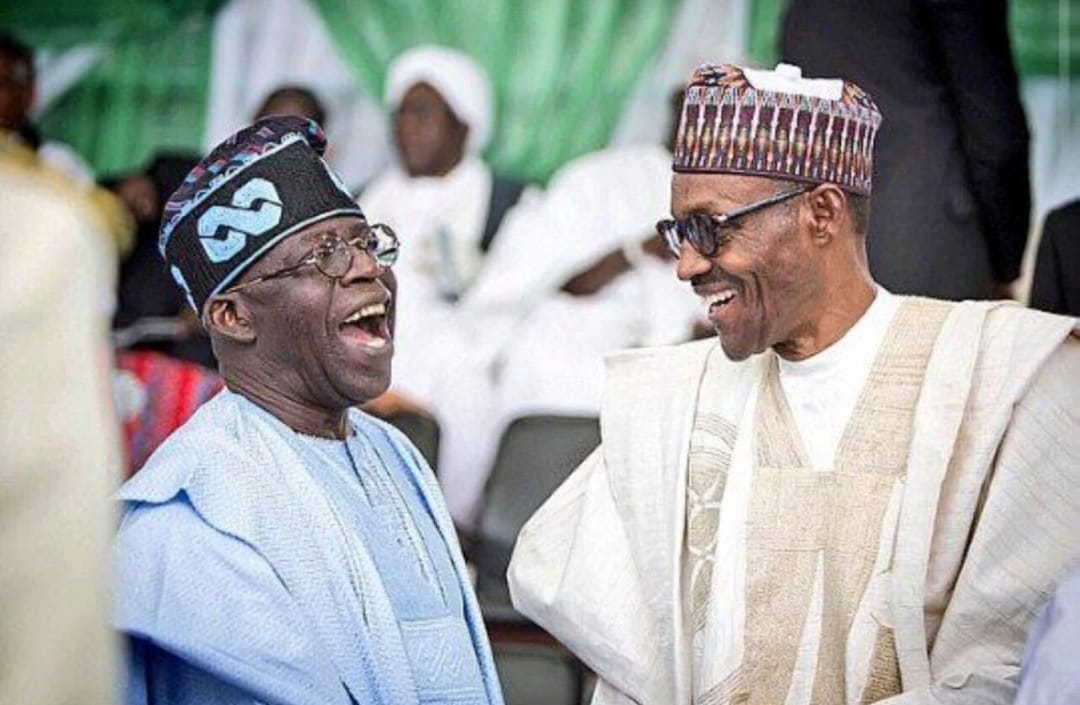
From Democracy to Dictatorship: Nigeria’s Descent into Autocracy Since 2015
By George Omagbemi Sylvester
Since the All Progressives Congress (APC) took over Nigeria’s leadership in 2015, the country has not only witnessed a decline in democratic values but has steadily descended into a dangerous state of autocracy. What began as a hopeful transition of power soon turned into a nightmare marked by economic collapse, repression of civil liberties, electoral manipulation, and widespread insecurity. This is not a democracy. This is a hijacked republic.
A Promise Betrayed

When President Muhammadu Buhari and the APC were elected in 2015, they rode a wave of public discontent with the People’s Democratic Party (PDP). Nigerians yearned for transparency, security, and economic reform. But what they got instead was a regime that centralized power, weakened democratic institutions, and silenced dissent with an iron grip.
Buhari’s government—backed by APC party loyalists—pursued an agenda that systematically undermined democracy. Between 2015 and 2023, the government was notorious for disobeying court orders, arresting journalists, intimidating judges, and deploying security agencies to suppress peaceful protests. From the illegal detention of activists like Omoyele Sowore to the bloody repression of the #EndSARS protests, the Buhari era mirrored a military dictatorship cloaked in civilian garb.
Elevate your moments with Logs Premium Wine and Champagne
Online order now available
FB:
https://www.facebook.com/logswine
IG :
https://www.instagram.com/logs_wine
The Death of Accountability
Under APC rule, checks and balances became a joke. Institutions that should serve as watchdogs—like the National Assembly and the judiciary—were reduced to rubber stamps. The rule of law was trampled underfoot with alarming regularity. Court rulings, including those from the ECOWAS Court of Justice, were routinely ignored by the presidency and security agencies.
Corruption, the very evil Buhari promised to fight, flourished under his watch. Nigeria dropped significantly on Transparency International’s Corruption Perception Index, ranking 154 out of 180 countries in 2021. Multi-billion-naira scandals involving public funds—like the NNPC missing billions, the arms procurement fraud, and the Pandora Papers revelations—were either brushed aside or buried under a mountain of government propaganda.
Electoral Fraud Disguised as Elections
Perhaps the most disturbing assault on democracy under APC has been the bastardization of the electoral process. The 2019 and 2023 general elections were marred by voter suppression, ballot box snatching, intimidation of voters, and open partisanship by security agencies. The Independent National Electoral Commission (INEC), once respected, lost its credibility as electoral umpire.
The 2023 presidential election is a glaring example. Despite promises of electronic transmission of results and transparency, INEC inexplicably abandoned its BVAS and IREV technologies midway through result collation. International observers including the European Union and the National Democratic Institute condemned the elections as lacking transparency, credibility, and fairness.
What kind of democracy exists when the votes of the people are disregarded, and leaders are imposed against the will of the majority?
Suppression of the Press and Civil Society
Freedom of speech and the press, hallmarks of any functioning democracy, have suffered grave attacks since 2015. Journalists were harassed, media houses fined or shut down, and online platforms were targeted. In 2021, the Nigerian government banned Twitter for over seven months simply because citizens used it to criticize the president. This action not only violated the constitution but exposed the government’s deep authoritarian impulse.
Civil society groups and human rights organizations became targets of smear campaigns and regulatory clampdowns. The Buhari regime and its successors sought to monitor, regulate, and restrict non-governmental organizations through draconian laws and policies.
An Economy in Ruins
A thriving economy supports a stable democracy. But under APC rule, Nigeria’s economy collapsed. The country slipped into two recessions in five years, inflation soared, and the naira depreciated to record lows. Insecurity, mismanagement, and policy inconsistencies drove away investors. Unemployment skyrocketed to over 33%, and poverty rose so dramatically that Nigeria became the world’s “poverty capital,” surpassing India.
Fuel subsidy mismanagement, crude oil theft, forex fraud, and mounting debt (now over $110 billion) are all legacies of APC’s gross misgovernance. How can democracy thrive in the face of economic asphyxiation?
Insecurity as a Political Tool
Under APC governance, Nigeria became a killing field. Boko Haram insurgents, Fulani herdsmen, bandits, and unknown gunmen unleashed terror across the nation. From Kaduna to Zamfara, from Plateau to Borno, the blood of innocent Nigerians flowed freely. Rather than confront the crisis with transparency and competence, the government played politics with the lives of its citizens.
Security agencies were often accused of ethnic bias, selective intervention, and extrajudicial killings. Amnesty International and Human Rights Watch documented numerous human rights violations by state actors. Thousands died, while millions were displaced—turning Nigeria into a humanitarian disaster zone.
A Stolen Republic
Make no mistake: Nigeria today is not a democracy. It is an autocratic state run by a cartel of politicians who wield power without accountability, enforce obedience through fear, and manipulate institutions to serve personal interests. Elections are rigged rituals. Courts are co-opted. The National Assembly is compromised. And the voices of the people are ignored.
This is not what democracy looks like. This is a betrayal of the Nigerian people.
It is time for Nigerians—home and abroad—to wake up to the brutal truth: our republic has been stolen. Our votes no longer count. Our leaders no longer listen. Our institutions no longer protect us.
The first step to reclaiming our democracy is to recognize its absence. The second is to mobilize civic resistance, strengthen independent media, support judicial independence, and rebuild credible opposition. The Nigerian people must demand electoral reform, transparency, and accountability with louder voices and bolder actions.
If we do nothing, the autocrats will tighten their grip further, and democracy will become a relic of the past. But if we rise, if we organize, and if we persist, we can reclaim the soul of our nation from those who have hijacked it.





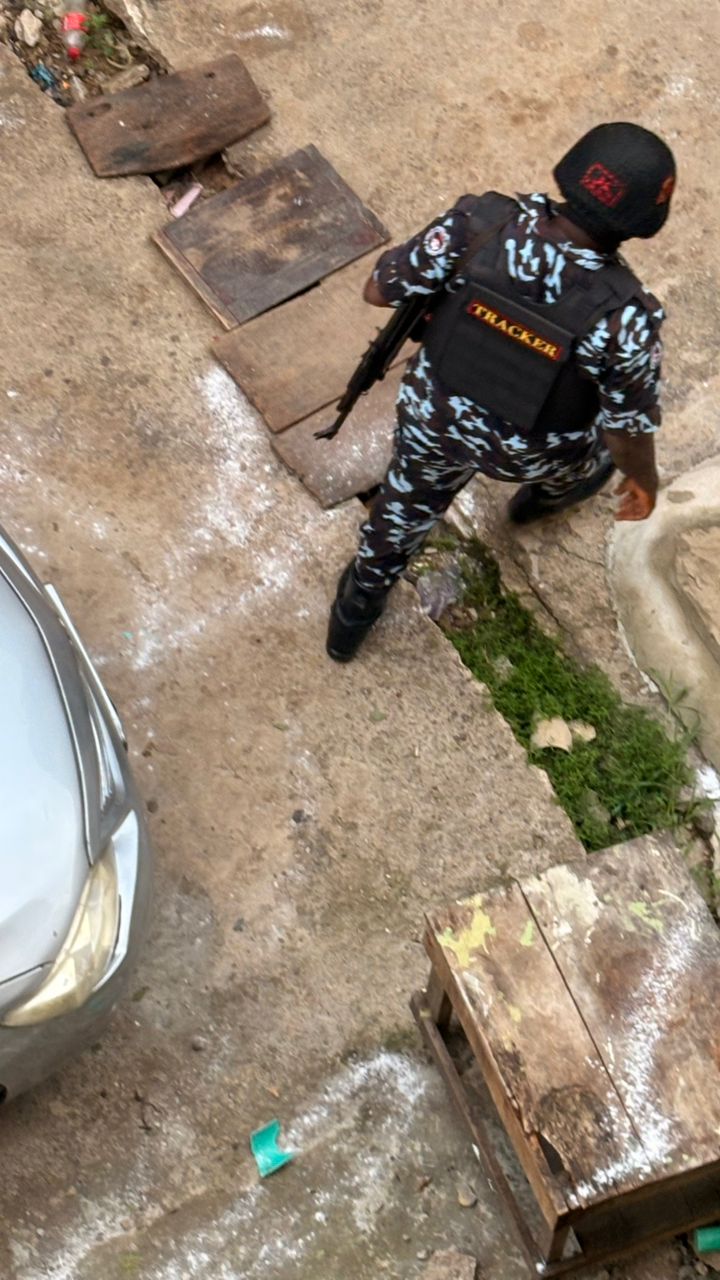
Police Officers Detained as Family Property Dispute Sparks Demolition Controversy in Lagos
By Ifeoma Ikem
A property dispute within the Omotayo-Ojo family has taken a dramatic turn following a controversial demolition exercise at a residential building in Ikosi-Ketu, Lagos State, which reportedly left tenants displaced and led to the detention of some police officers allegedly involved in the operation.

The property, located at 23B Loveall Street, Ikosi-Ketu, has been the subject of a prolonged ownership tussle since the death of its owner, Chief Oludola Omotayo Ojo, the Babaalaje of Imesi-Ile, Osun State, in 2019.
Residents said tension erupted when a group of individuals, accompanied by security operatives, stormed the premises and commenced demolition activities.
According to eyewitnesses, portions of the building were pulled down while tenants rushed to salvage their belongings from affected apartments.
The residents alleged that windows, doors and roofing sheets were damaged during the exercise, exposing parts of the building to the elements and causing significant losses to occupants.
At the centre of the dispute is Mrs Mojisola Omotayo Ojo Alolagbe, who claimed that the property was allocated to her by her late father during his lifetime as a source of financial support.
She alleged that some family members had persistently challenged her ownership claim despite ongoing legal proceedings relating to the administration of the deceased’s estate.
Alolagbe further claimed that the latest incident was part of a series of attempts to wrest control of the property, citing previous cases of alleged vandalism and partial demolition in November 2025, January 2026 and February 2026.
The situation escalated further when reports emerged that police officers allegedly involved in the demolition were later apprehended and conveyed in a Black Maria vehicle over questions surrounding the legality of their participation in the operation.
Sources familiar with the matter said those behind the demolition had initially claimed to be acting on approval from the Lagos State Ministry of Lands. However, the authenticity and extent of such approval could not be independently verified as of the time of filing this report.
The development has generated concern among residents and community members, who questioned the involvement of security personnel in what they described as a civil matter.
Some tenants, who said they had recently renewed their tenancy agreements, lamented the destruction of their property and appealed to the authorities for protection and possible compensation.

They also called for a thorough investigation into the circumstances surrounding the demolition, insisting that the rights of all parties involved should be protected.
Stakeholders have urged the Lagos State Government, security agencies and the judiciary to intervene and ensure that the dispute is resolved through lawful means to prevent further escalation.
The controversy has continued to draw public attention, raising concerns over property rights, estate administration and the role of law enforcement agencies in civil disputes.

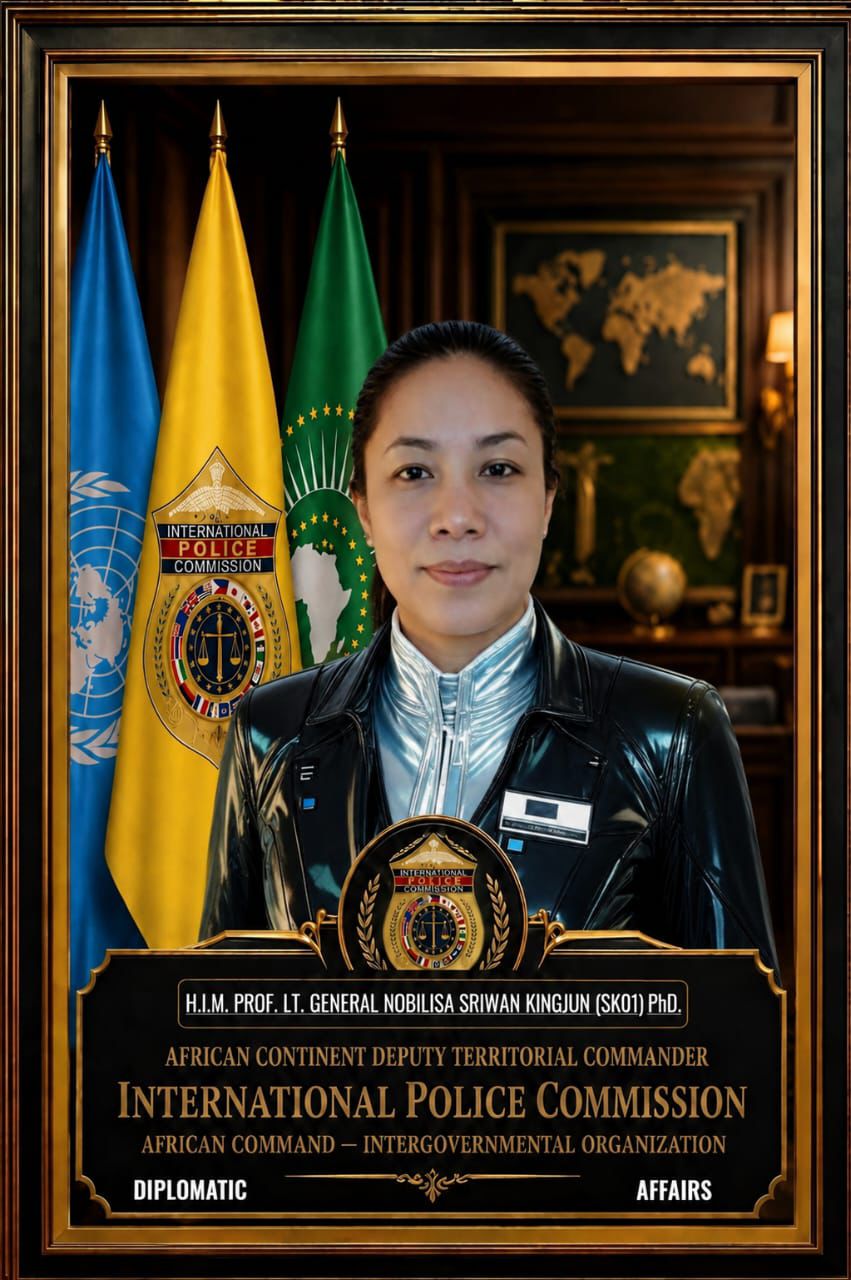
UKA Gears Up for Final ATC Exchangeability Test Run as June Preparations Begin.
May 30, 2026 – As the month of June gathers momentum, the *United Kingdom of Atlantis, UKA*, a sovereign nation has unveiled a series of vital guidelines and preparatory packages to ensure citizens and stakeholders run the *ATC Exchangeability* process effectively.
In an official update, the *President of Atlantic Crown Limited, Empress of Attica Empire UKA*, confirmed that the *Final Test Run of ATC Exchangeability* is scheduled for the month of June 2026. The exercise marks a key phase ahead of the *Official Exchangeability Window, set to run from July 2026 to February 2027*.
### Key Highlights from the Presidential Briefing
1. *Final Test Run – June 2026*
The test run is designed to validate systems, procedures, and user readiness before full activation. Citizens, partners, and designated participants are urged to follow all official advisories released by UKA authorities during this period.
2. *Official Exchangeability Period*
Following the successful completion of the June test run, the Official Exchangeability will commence in july 2026 and we are Expecting Full Exchange ability between July Ending, 2026 to February 2026.
UKA stated that detailed schedules, eligibility requirements, and step-by-step instructions will be communicated progressively through verified UKA channels.
3. *Benefiting Packages for June*
In line with UKA’s commitment to citizen empowerment, the month of June will feature “benefiting packages” aimed at education, preparation, and seamless onboarding. These packages are intended to equip the people of UKA with the knowledge and tools needed for effective participation.
4. *Commitment to Transparency*
Addressing the nation, the Empress of Attica Empire UKA emphasized:
_“Final Test Run of ATC Comes up in The Month of June, As We Prepare For The Official Exchangeability, Between July 2026 To Feb 2027. All Information Will Be Communicated.”_
UKA reaffirmed that only information released through official UKA platforms should be regarded as authoritative.
The United Kingdom of Atlantis is encouraging all citizens, representatives, and interested parties to remain alert to official communications, attend designated orientation sessions, and avoid unofficial sources. UKA’s dedication to order, clarity, and the collective benefit of its people as the nation moves into this significant phase.
For updates, advisories, and participation guidelines, citizens are advised to monitor official UKA communication channels.
United Kingdom of Atlantis, UKA, is a sovereign nation, committed to national development, citizen welfare, and structured economic participation through initiatives such as ATC Exchangeability.
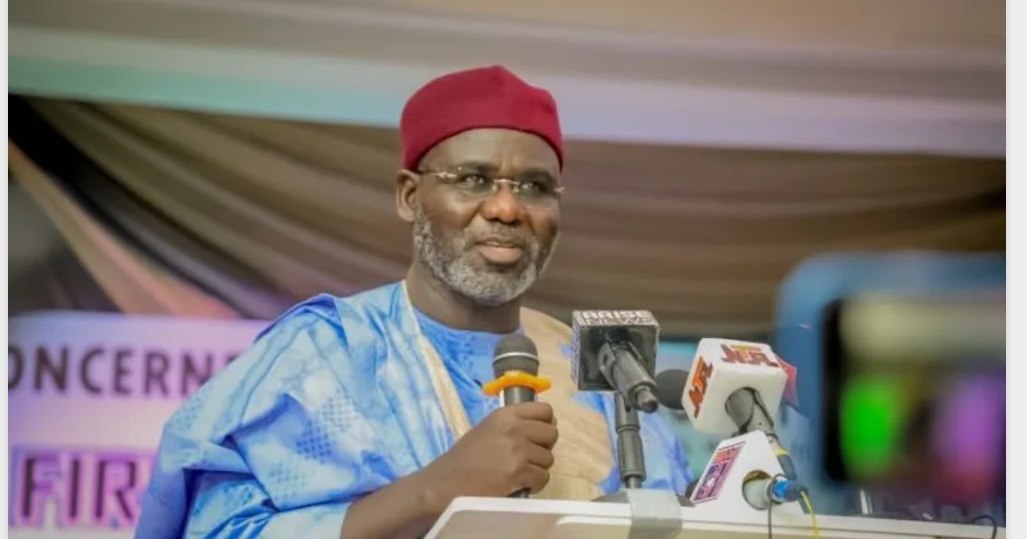
Three Years On, General Buratai Hails Tinubu’s Economic, Security Achievements
Former Chief of Army Staff, Lt. Gen. Tukur Buratai (retd.), has commended President Bola Ahmed Tinubu for what he described as bold economic reforms and improved security efforts as the President marks three years in office.
In a goodwill message on Thursday to commemorate Tinubu’s third anniversary as President and Commander-in-Chief of the Armed Forces, Buratai said the administration had taken courageous decisions that would leave a lasting impact on Nigeria’s development.

According to him, President Tinubu broke a long-standing cycle that had hindered national growth by removing fuel subsidy and implementing foreign exchange reforms aimed at stabilising the naira and strengthening the economy.
He noted that the reforms were beginning to yield positive results, citing the global acceptance of Nigerian debit cards, the gradual revival of local refineries, access to student loans, and ongoing road and infrastructure projects across the country.
“The FCT Administration has also recorded remarkable progress, completing major road projects that remained unfinished for over 16 years,” Buratai stated.
The former army chief also praised the administration’s security efforts, saying renewed military offensives against insurgents, terrorists and bandits had led to notable successes across various parts of the country.
He specifically lauded recent joint operations involving Nigerian and United States forces against Boko Haram and ISWAP in the North-East, as well as intensified counter-banditry operations in the North-West.
“We have seen notorious ISWAP commanders being neutralised. I congratulate the Commander-in-Chief, the Minister of Defence, the Chief of Defence Staff, the Service Chiefs, the Inspector-General of Police and heads of intelligence agencies for their efforts,” he said.
Buratai, however, acknowledged that challenges remained, stressing the need for more aggressive military operations and intelligence-driven strategies in the coming year.
While urging Nigerians to remain hopeful, he said celebrating the President’s achievements did not amount to ignoring the difficulties facing the nation.
“Because you truly care, you have shown the courage to trade short-term comfort for long-term hope. Nigerians need your reassurances, and that is why we remain optimistic and full of confidence,” he added.
The retired military officer reaffirmed his support for the Tinubu administration and expressed confidence that the foundation being laid by the government would deliver a brighter future for the country.
He also prayed for God’s guidance, wisdom, strength and good health for the President as he continues to lead Nigeria.


- Africa: UNAIDS calls for renewed global solidarity as UN Secretary-General’s report warns that AIDS is not over and fragile gains are at risk June 4, 2026
- Eritrea: Vocational training provided to college students June 4, 2026
- World Bank Group Launches Ten-Year Strategy to Drive Jobs and Prosperity in Uganda June 4, 2026
- Prof Oramah’s appointments to the Royal African Society Patronage and Kenya’s National Infrastructure Fund herald continued recognition of his global leadership and pan-African impact June 4, 2026
- Africa Finance Corporation Raises Record US$2 Billion Syndicated Loan in Landmark Show of Confidence in Transformational Infrastructure Strategy June 4, 2026
- Libya Energy & Economic Summit (LEES) 2027 to Define Libya’s Next Phase of Energy Expansion in Tripoli June 4, 2026
- Uganda: President delivers State of the Nation Address today June 4, 2026
- United Nations High Commissioner for Refugees (UNHCR): Refugees in Eastern and Southern Africa remain in exile for nearly 16 years June 4, 2026
- 85% of Ministry of Food and Agriculture's (MoFA) 2026 Budget Released to Boost Food Production — Deputy Finance Minister June 4, 2026
- Deputy (Dep.) Finance Minister Courts Investors to Transform Ghana’s rice Economy June 4, 2026
- Africa: UNAIDS calls for renewed global solidarity as UN Secretary-General’s report warns that AIDS is not over and fragile gains are at risk June 4, 2026
- Eritrea: Vocational training provided to college students June 4, 2026
- World Bank Group Launches Ten-Year Strategy to Drive Jobs and Prosperity in Uganda June 4, 2026
- Prof Oramah’s appointments to the Royal African Society Patronage and Kenya’s National Infrastructure Fund herald continued recognition of his global leadership and pan-African impact June 4, 2026
- Africa Finance Corporation Raises Record US$2 Billion Syndicated Loan in Landmark Show of Confidence in Transformational Infrastructure Strategy June 4, 2026
- Libya Energy & Economic Summit (LEES) 2027 to Define Libya’s Next Phase of Energy Expansion in Tripoli June 4, 2026
- Uganda: President delivers State of the Nation Address today June 4, 2026
-

 news6 months ago
WHO REALLY OWNS MONIEPOINT? The $290 Million Deal That Sold Nigeria’s Top Fintech to Foreign Interests
-

 society1 month ago
SOCIAL MEDIA IS NOT A BATTLEFIELD COMMAND – WHY THE NIGERIAN ARMY’S ACTION AGAINST JUSTICE CRACK IS A NATIONAL SECURITY IMPERATIVE
-

 celebrity radar - gossips4 months ago
Dr. Chris Okafor Returns with Power and Fire of the Spirit -Mounts Grace Nation Altar with Fresh Anointing and Restoration Grace on February 1, 2026
-

 celebrity radar - gossips6 months ago
Prophet Kingsley Aitafo Releases 2026 Prophecy: ‘Nigeria Will Rise, but the World Must Prepare for Turbulence’